Downloaded 18 times



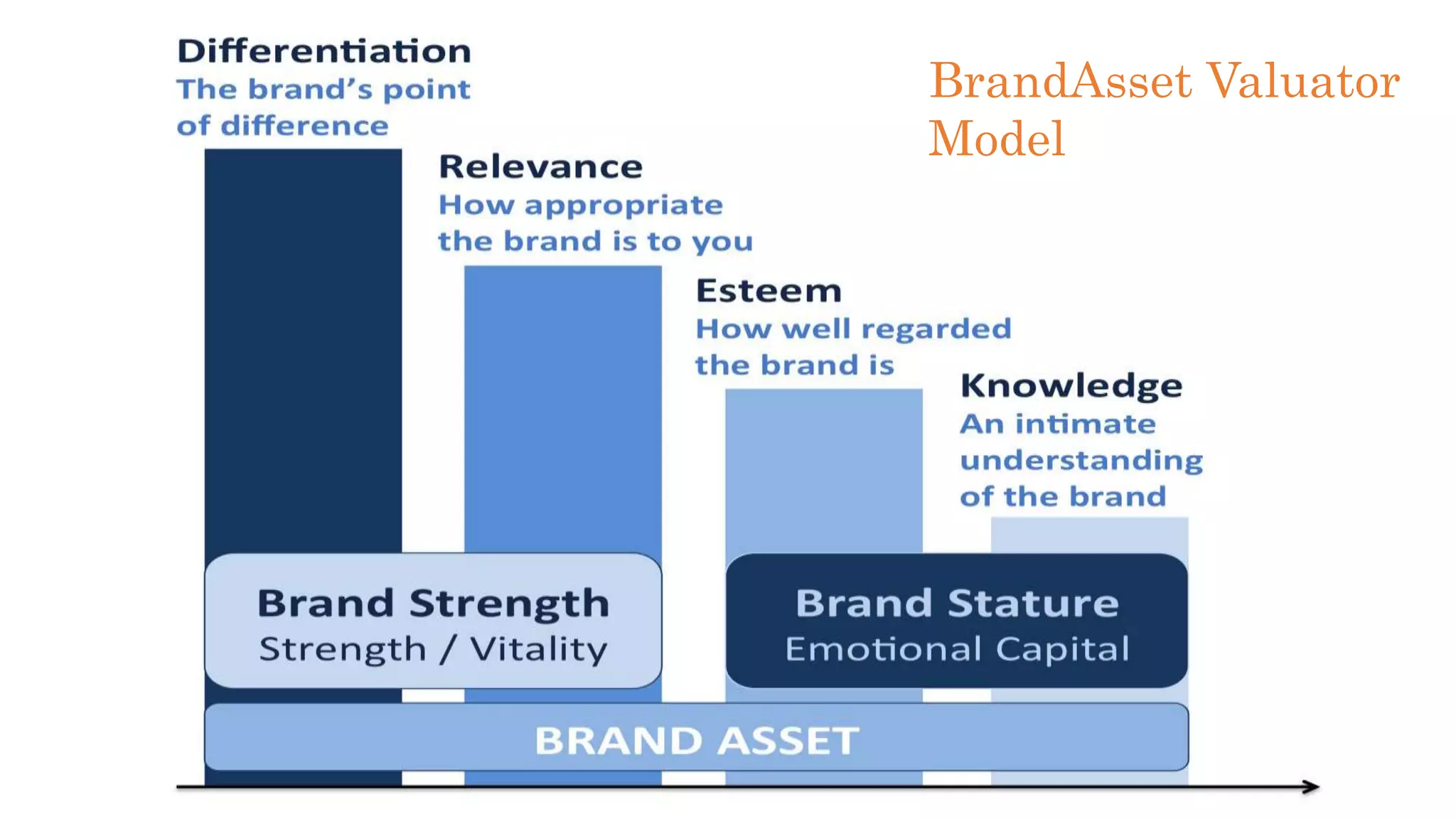

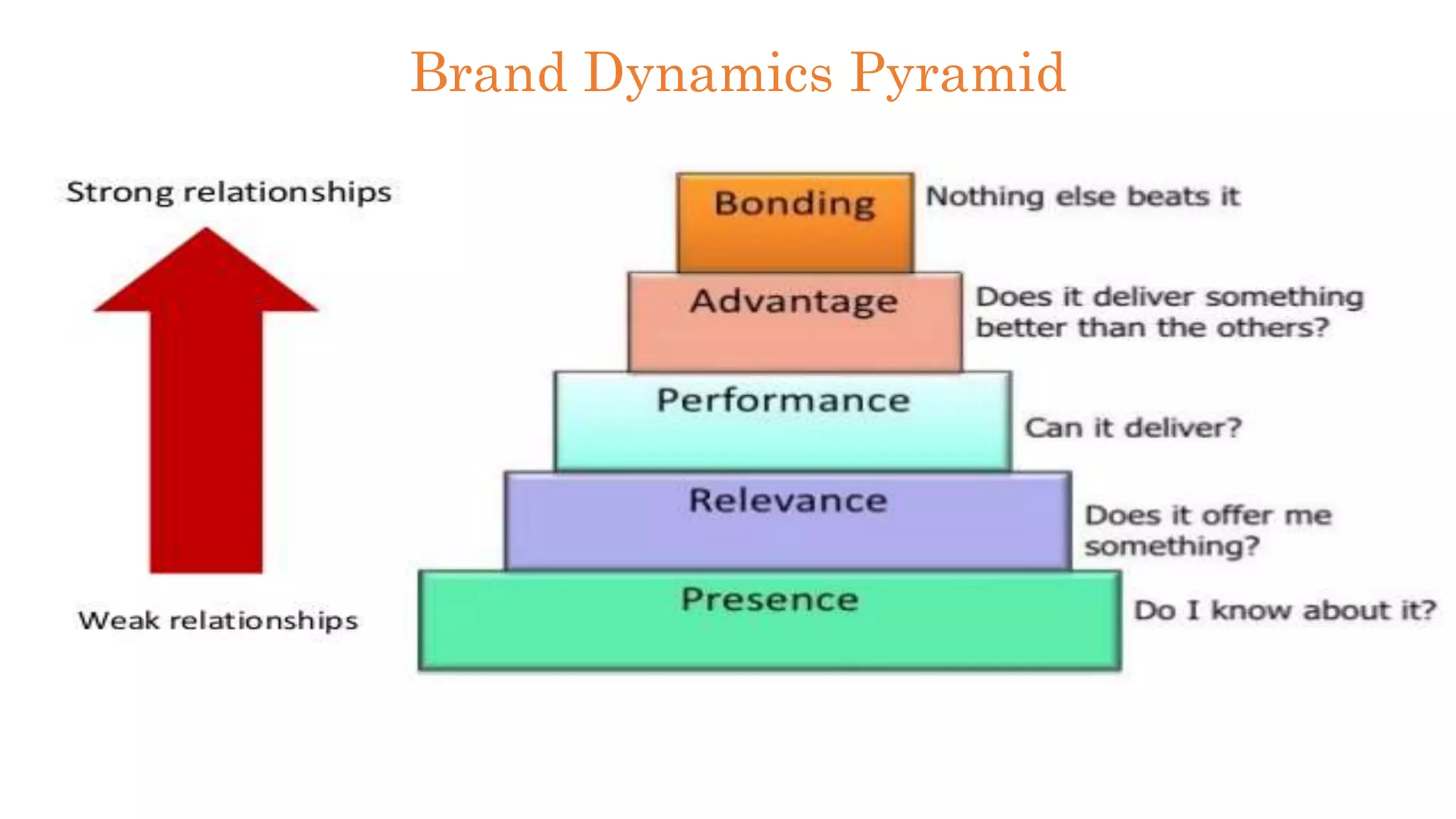





Brand equity provides added value to products and services from a customer perspective. There are three key ingredients to customer-based brand equity: 1) Differences in consumer response arise from brand knowledge, thoughts, and feelings about the brand over time. 2) Consumer brand knowledge, thoughts, feelings, images and beliefs are responsible for differences in response. 3) Brand equity is reflected in perceptions, preferences, and behaviors related to marketing the brand. The document then discusses several models of measuring brand equity, including the BrandAsset Valuator, BrandZ, and Brand Resonance Model.


![[Assignment 8.1] Market research - Segmentation vs brand equity](https://cdn.slidesharecdn.com/ss_thumbnails/marketresearch-segmentationvsbrandequity-150320010432-conversion-gate01-thumbnail.jpg?width=640&height=640&fit=bounds)


