 Conventional braking system 
 Regenerative braking system 
 How does it works 
 Types of regenerative braking system 
 Regenerative braking efficiency 
 Limitations 
 Models having RBS 
 Conclusion
 Friction is used for braking. 
 Excessive heat energy is created 
during braking. 
 This heat energy dissipates into the 
air wasting as much as the vehicle 
80% of the vehicle generated power 
 Conventional Braking reduced 
fuel efficiency.
 Regenerative braking means recapturing the 
kinetic energy of the vehicle motion and 
turning into another energy during braking. 
 Commonly, kinetic energy is converted into 
electric energy 
 This energy is stored in storage battery and 
used later to power the vehicle in hybrid or 
fully electric vehicles.
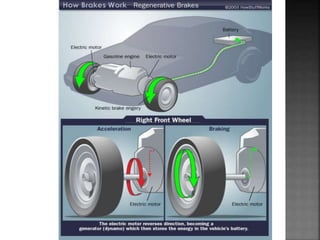
 By applying brakes, the electric motors 
coupled with drive wheels, rotated in reverse 
mode slowing down the car’s wheels. 
 A properly designed motor becomes an 
electric generator, converting into electrical 
energy. 
 This energy is feeding back into storage 
battery and used to accelerate the vehicle.
 Flywheel energy storage 
 Compressed gas energy storage 
 Capacitor energy storage
REGENERATIVE BRAKING EFFICIENCY 
The energy efficiency of a conventional 
car is about 20 percent. About 80% is lost 
in heat energy. 
 Regenerative systems can capture and 
return around half of the energy lost in 
braking. 
Reducing fuel use about 25 to 45 percent.
CARS HAVING 
REGENERATIVE 
BRAKING SYSTEM 
CHEVROLET VOLT
BMW’S 5 SERIES 
TESLA ROADSTER
HONDA FIT EV 
NISSAN LEAF
 Regenerative braking only works on “drive wheels.” 
 Regenerative brakes typically don’t provide enough 
braking force under panic stop conditions. 
 The friction brake is a necessary back-up in the event 
of failure of the regenerative brake 
 The efficiency of a regenerative system is limited by 
factors like the capacity of the energy storage system 
and the output of the electric motor
 Regeneration braking can minimize the wear 
of the brake pads, and reduce the 
maintenance cost significantly. 
 It gives a good future to fully electric and 
hybrid vehicle. 
 Regenerative brake is a small but important 
step toward our eventual independence from 
fossil fuel.
 http://alternativefuels.about.com/od/glossary/g/regenbr 
aking.htm 
 http://auto.howstuffworks.com/auto-parts/brakes/brake-types/ 
regenerative-braking.htm 
 www.driveforinnovation.com 
 www.gizmag.com 
 www.carsdirect.com 
 http://en.wikipedia.org/wiki/Regenerative_brake 
 www.wisegeek.com
PRESENTED BY: 
AKASH KUMAR BHANDARI 
11MEB325 
GC1416

Braking system

  • 2.
     Conventional brakingsystem  Regenerative braking system  How does it works  Types of regenerative braking system  Regenerative braking efficiency  Limitations  Models having RBS  Conclusion
  • 3.
     Friction isused for braking.  Excessive heat energy is created during braking.  This heat energy dissipates into the air wasting as much as the vehicle 80% of the vehicle generated power  Conventional Braking reduced fuel efficiency.
  • 4.
     Regenerative brakingmeans recapturing the kinetic energy of the vehicle motion and turning into another energy during braking.  Commonly, kinetic energy is converted into electric energy  This energy is stored in storage battery and used later to power the vehicle in hybrid or fully electric vehicles.
  • 5.
     By applyingbrakes, the electric motors coupled with drive wheels, rotated in reverse mode slowing down the car’s wheels.  A properly designed motor becomes an electric generator, converting into electrical energy.  This energy is feeding back into storage battery and used to accelerate the vehicle.
  • 7.
     Flywheel energystorage  Compressed gas energy storage  Capacitor energy storage
  • 8.
    REGENERATIVE BRAKING EFFICIENCY The energy efficiency of a conventional car is about 20 percent. About 80% is lost in heat energy.  Regenerative systems can capture and return around half of the energy lost in braking. Reducing fuel use about 25 to 45 percent.
  • 9.
    CARS HAVING REGENERATIVE BRAKING SYSTEM CHEVROLET VOLT
  • 10.
    BMW’S 5 SERIES TESLA ROADSTER
  • 11.
    HONDA FIT EV NISSAN LEAF
  • 12.
     Regenerative brakingonly works on “drive wheels.”  Regenerative brakes typically don’t provide enough braking force under panic stop conditions.  The friction brake is a necessary back-up in the event of failure of the regenerative brake  The efficiency of a regenerative system is limited by factors like the capacity of the energy storage system and the output of the electric motor
  • 13.
     Regeneration brakingcan minimize the wear of the brake pads, and reduce the maintenance cost significantly.  It gives a good future to fully electric and hybrid vehicle.  Regenerative brake is a small but important step toward our eventual independence from fossil fuel.
  • 14.
     http://alternativefuels.about.com/od/glossary/g/regenbr aking.htm  http://auto.howstuffworks.com/auto-parts/brakes/brake-types/ regenerative-braking.htm  www.driveforinnovation.com  www.gizmag.com  www.carsdirect.com  http://en.wikipedia.org/wiki/Regenerative_brake  www.wisegeek.com
  • 15.
    PRESENTED BY: AKASHKUMAR BHANDARI 11MEB325 GC1416