Downloaded 112 times



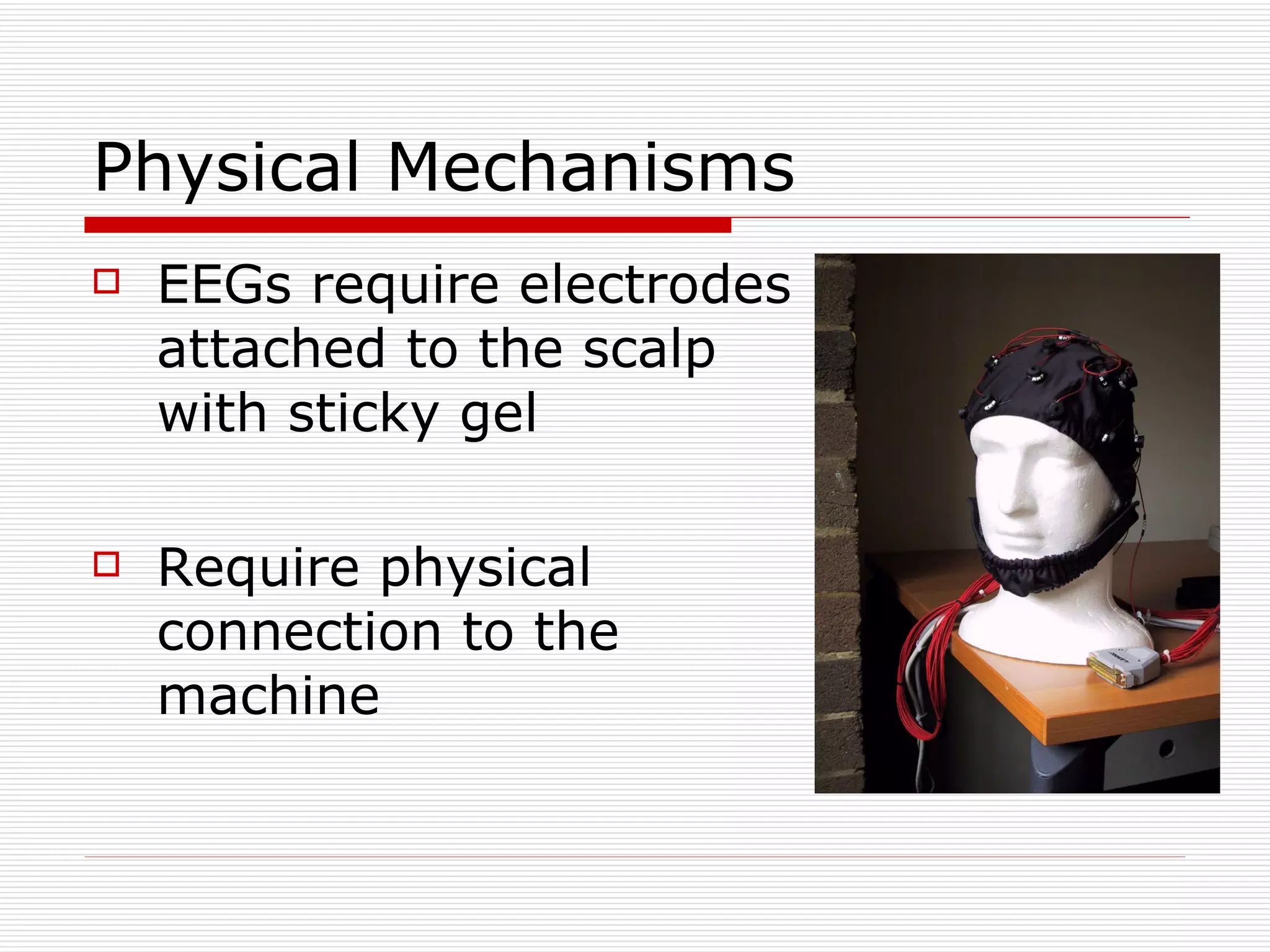
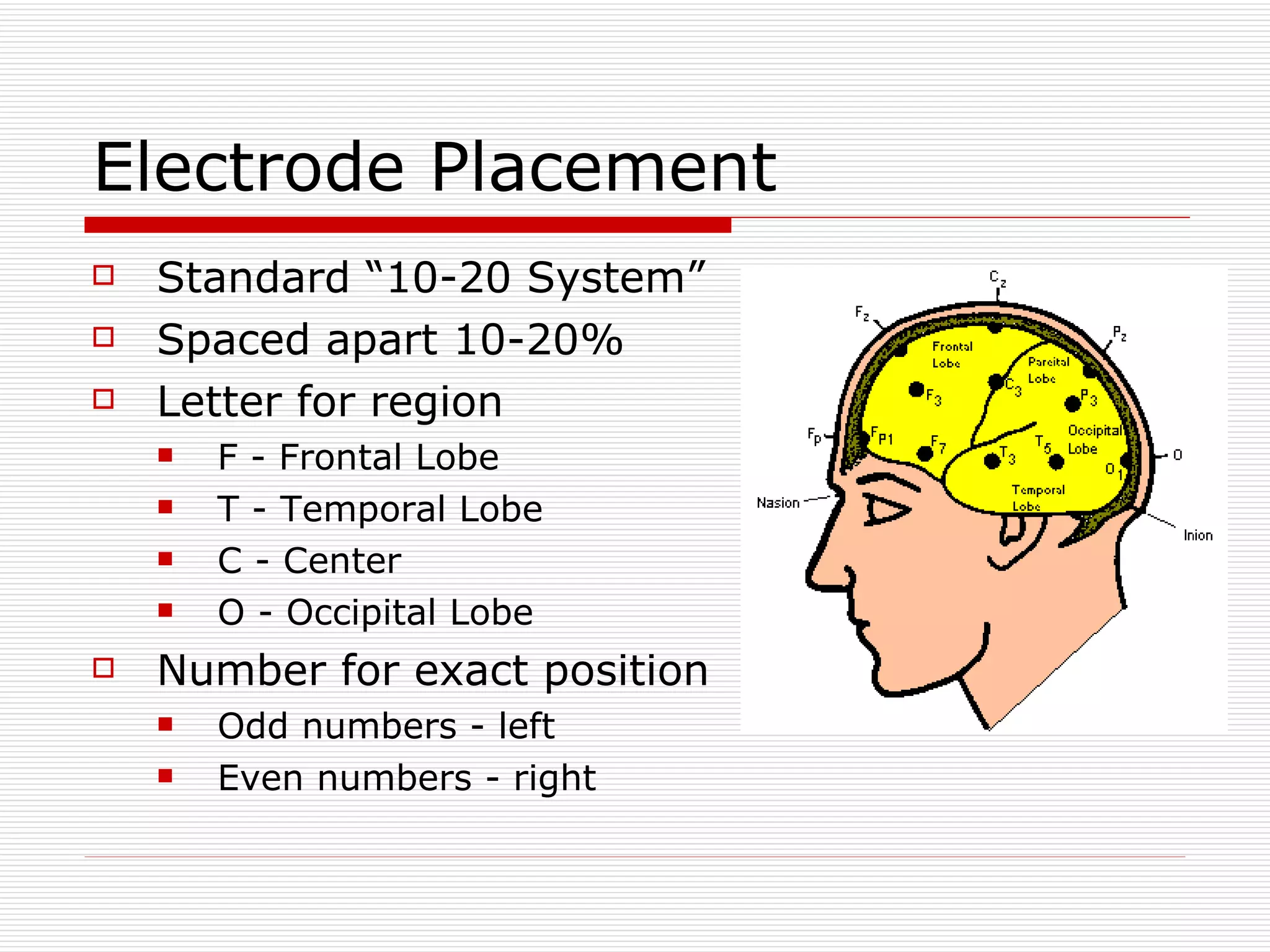

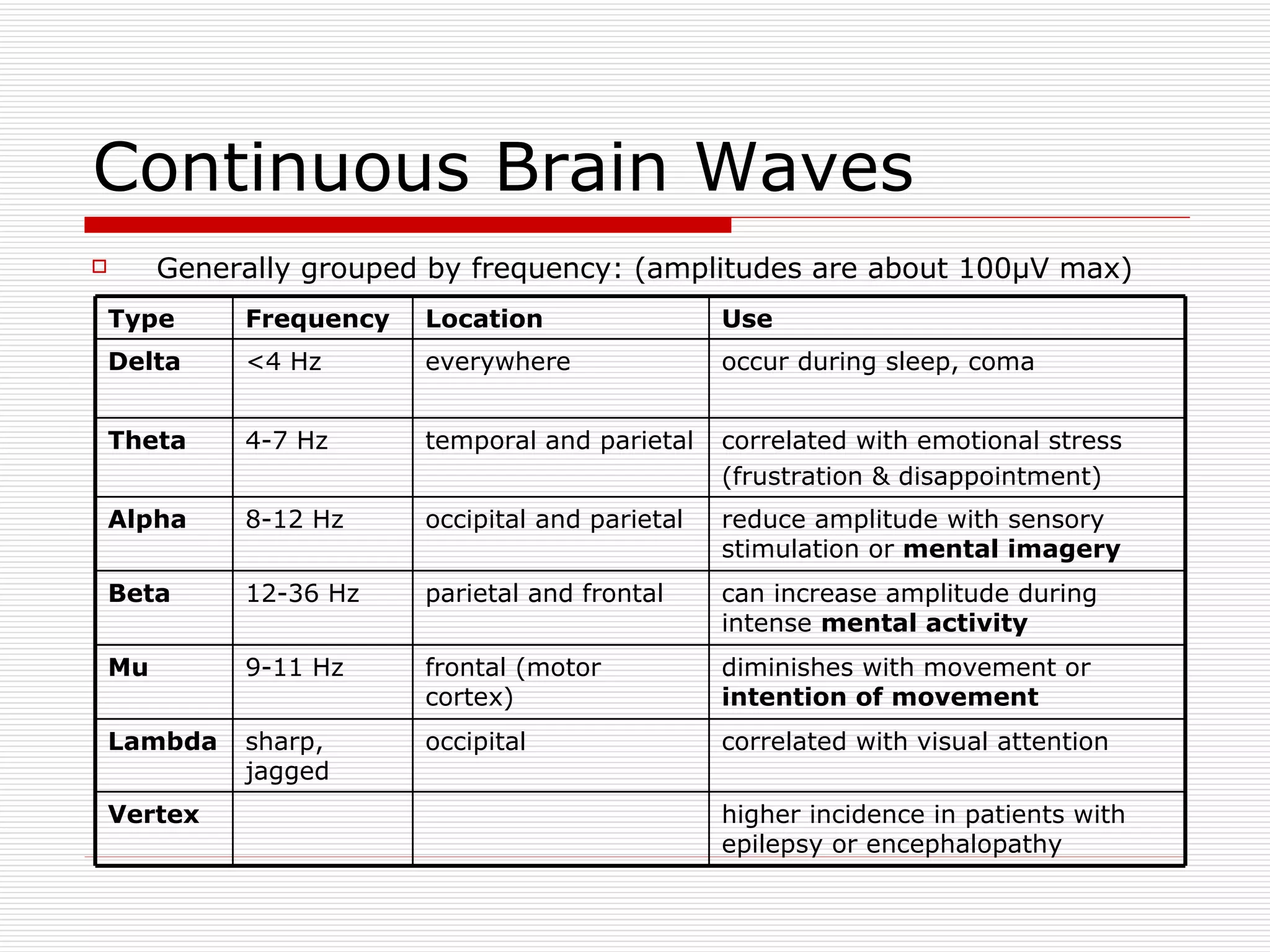


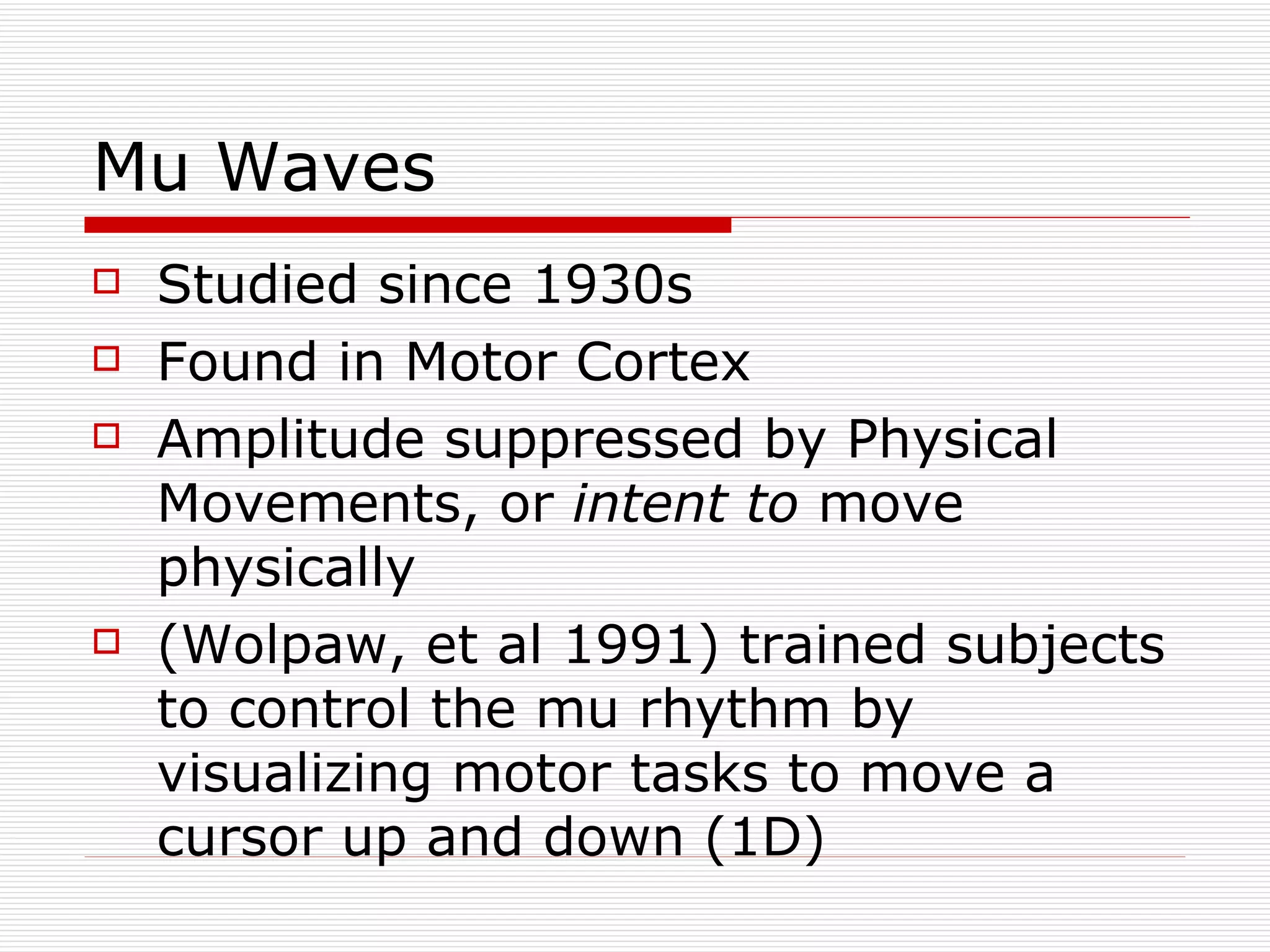
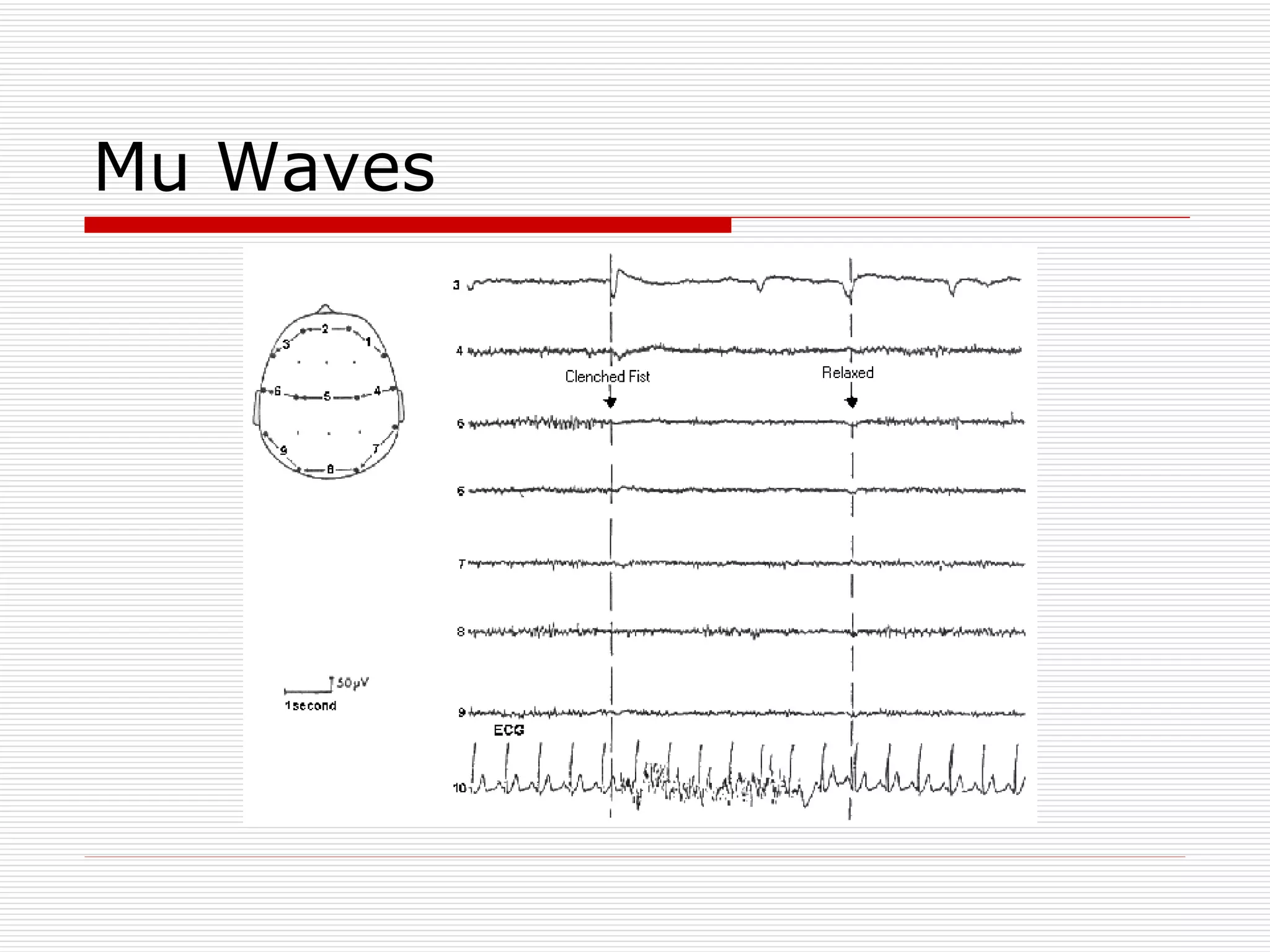
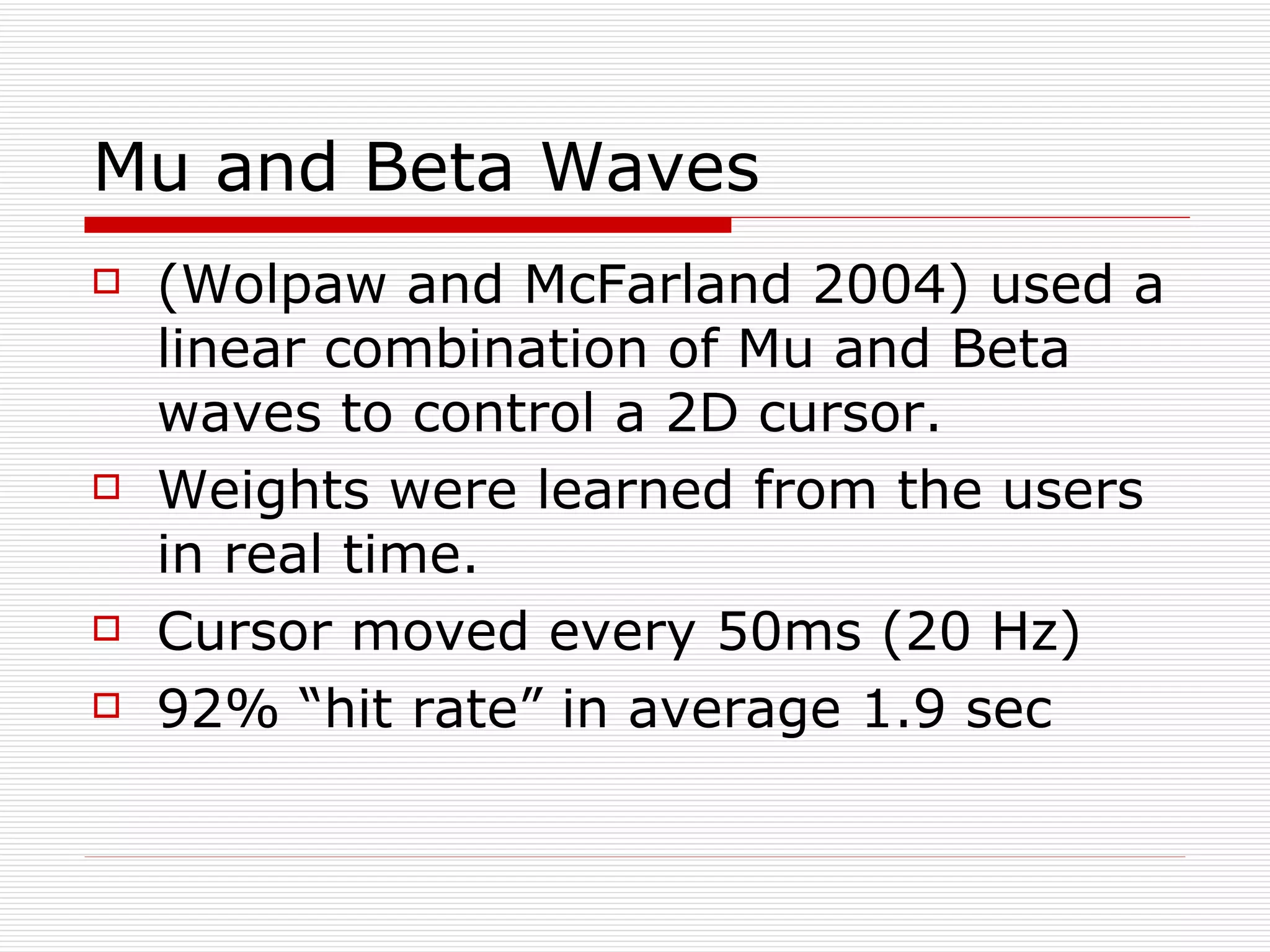








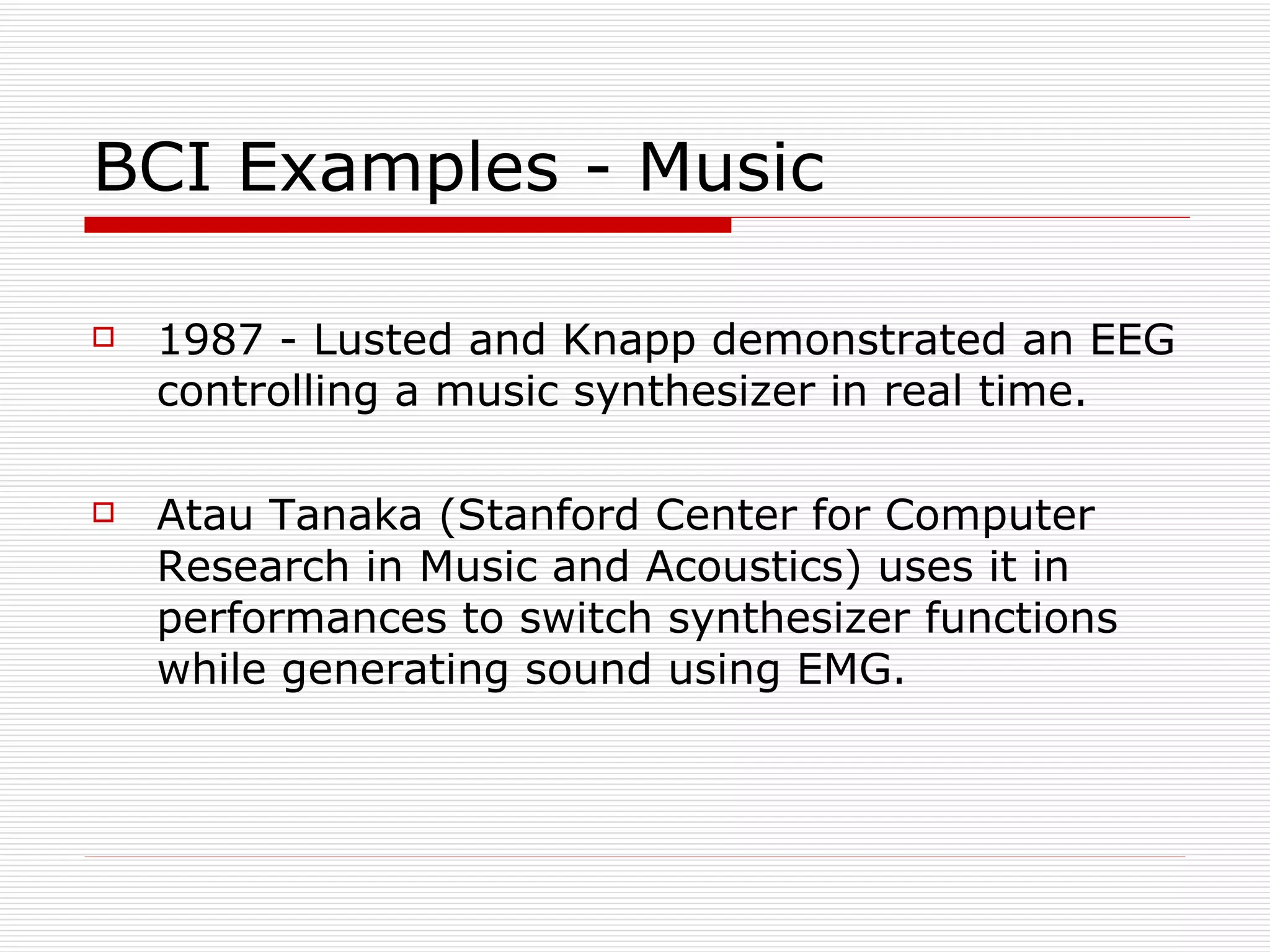
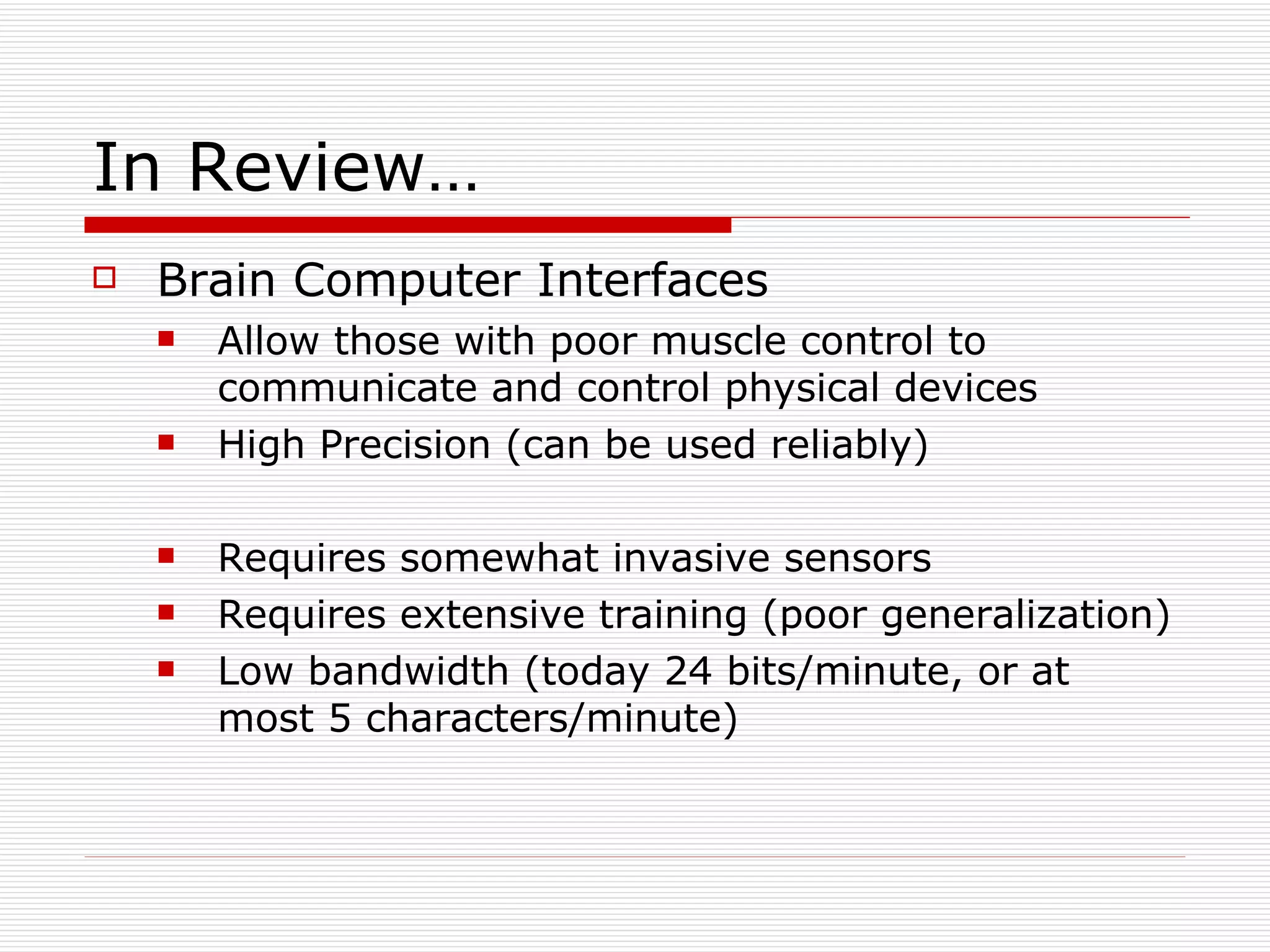



Brain-computer interfaces allow people with limited mobility to communicate and control devices through analysis of electroencephalography (EEG) readings from the brain. EEG measures electrical activity in the brain through electrodes placed on the scalp. Different types of brain waves like alpha, beta, and mu rhythms can be used to control devices or communicate through spelling programs. However, BCIs require extensive user training and have low bandwidth, currently allowing around 5 characters per minute. Researchers are working to improve methods for interpreting brain signals and adapting systems to individual users.


