BODY MECHANICS,PATIENT
POSITIONING AND
TRANSFER TECHNIQUES
JANHAVIATRE
MPT 1(NEUROSCIENCES)
GUIDE – DR.SUVARNA GANVIR
DEPARTMENT OF NEUROPHYSIOTHERAPY
DVVPF’S COLLEGE OF PHYSIOTHERAPY
AHMEDNAGAR
CONTENTS
 Body mechanics-Principles
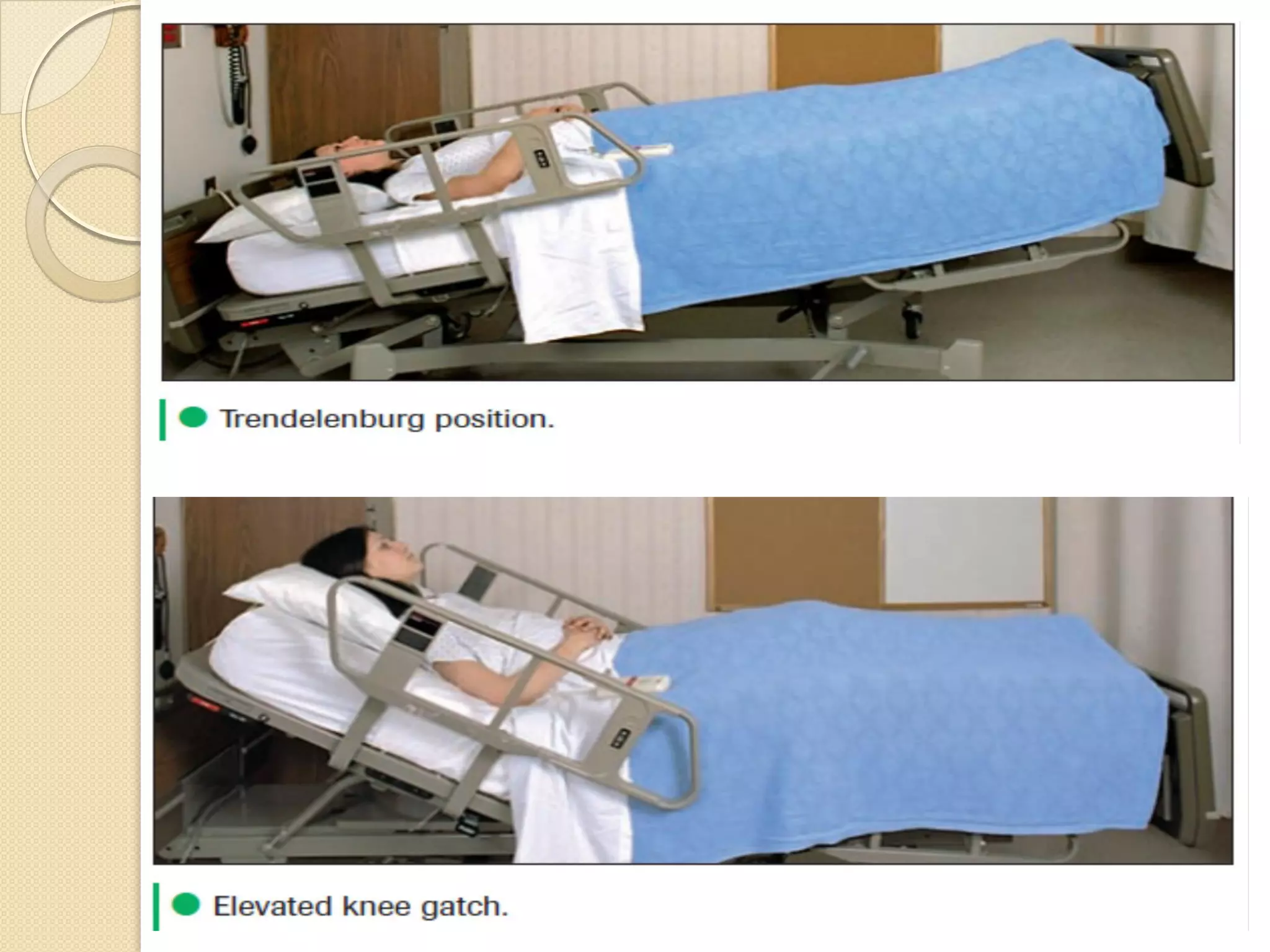
 Body positioning-
Bed positions for client care
log rolling
lateral position
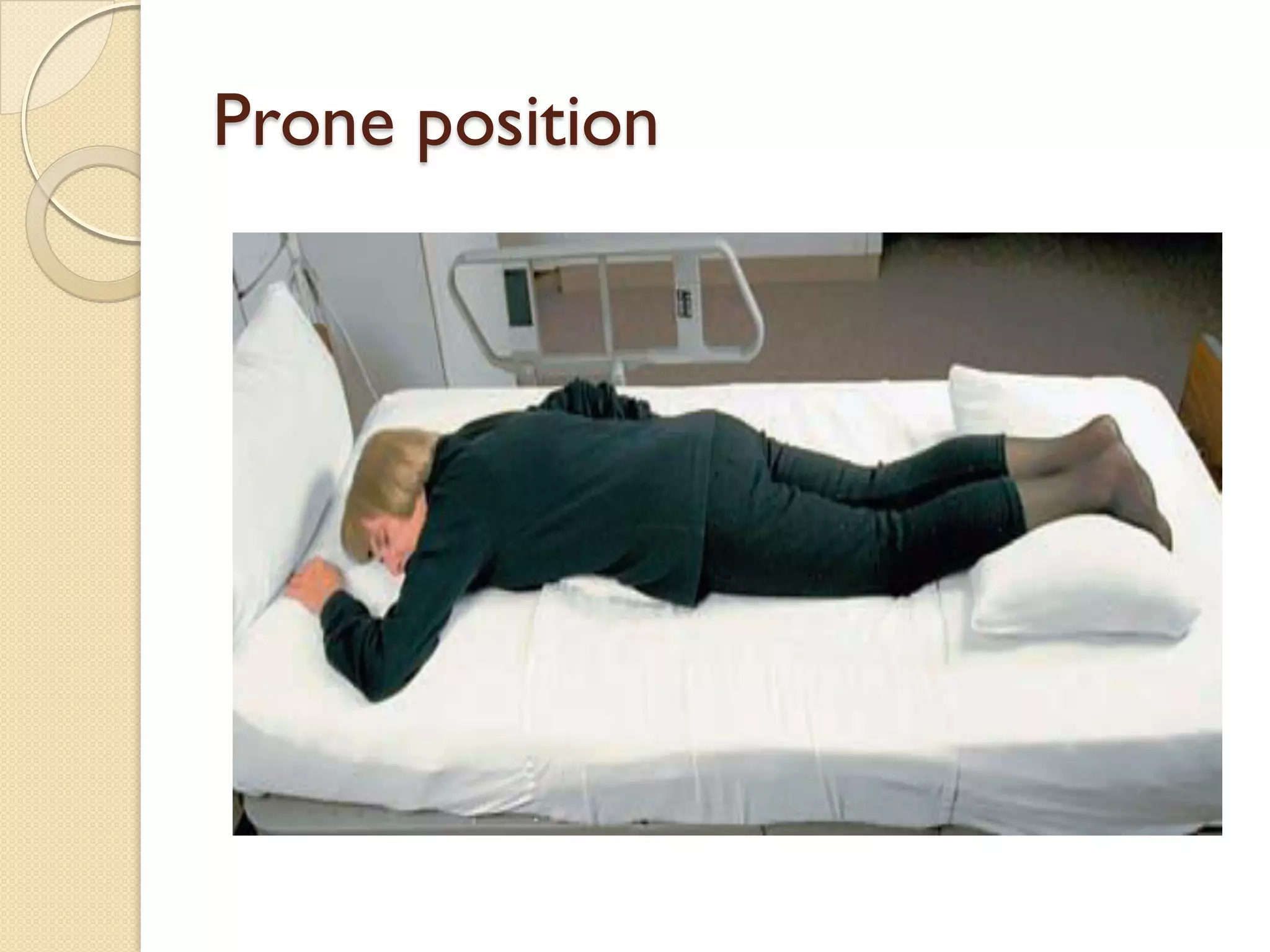
prone position
moving client up in bed
moving client with assistance
 Transfers-
bed to stretcher
taking patient to bed side
moving patient from bed to chair
 Safe client handling devices
BODY MECHANICS
 Definition
Body mechanics is the efficient use of the body
as a machine and as a means of locomotion.
ADVANTAGES:
• Maintains good body alignment.
• Maintains balance of the body.
• Prevents fatigue and deformities.
• Promotes physiological functions of the
body.
• Reduces expenditure of energy.
• Prevents and reduces the risk of
musculoskeletal injury.
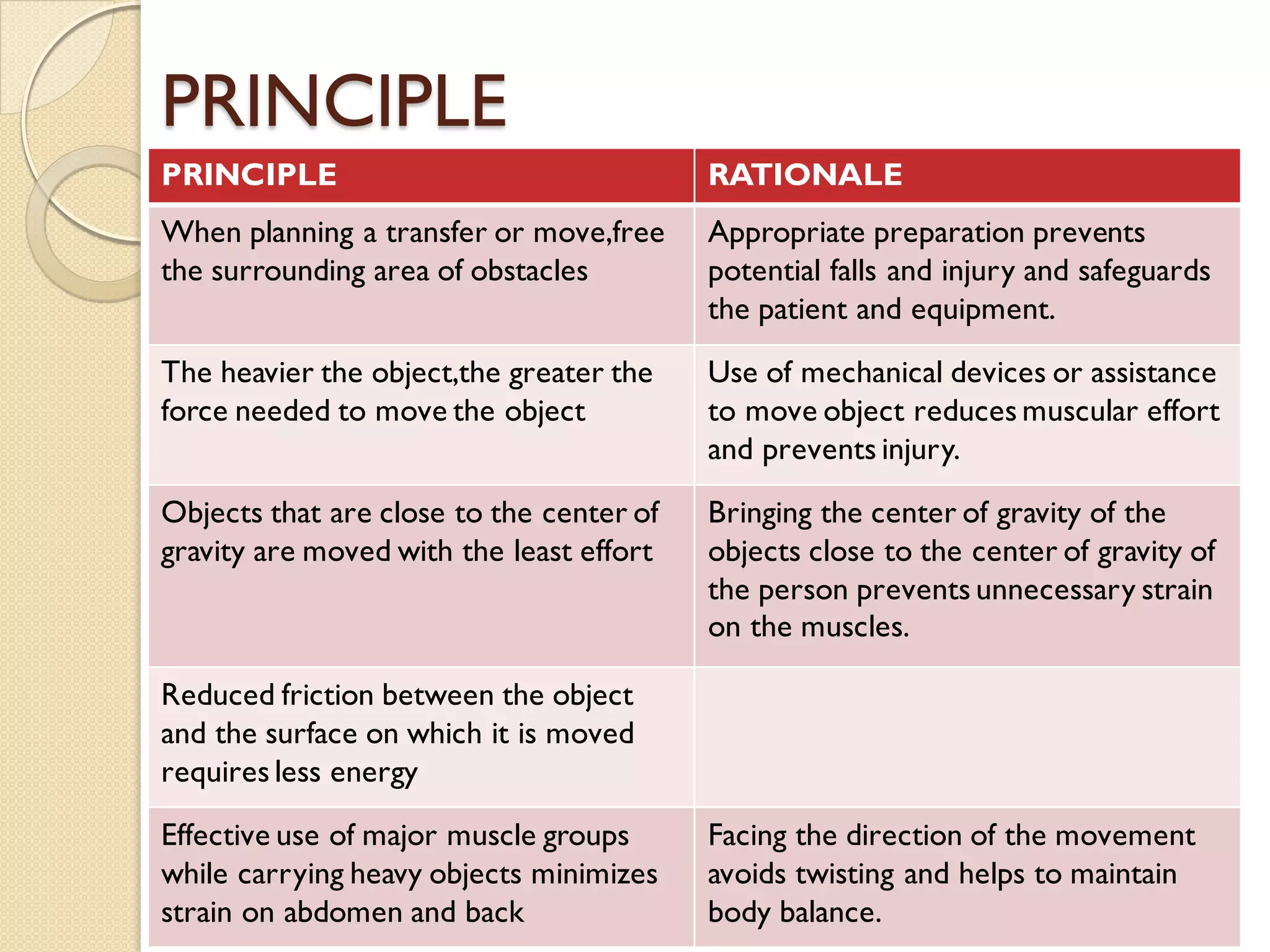
PRINCIPLE
PRINCIPLE RATIONALE
When planning a transfer or move,free
the surrounding area of obstacles
Appropriate preparation prevents
potential falls and injury and safeguards
the patient and equipment.
The heavier the object,the greater the
force needed to move the object
Use of mechanical devices or assistance
to move object reduces muscular effort
and prevents injury.
Objects that are close to the center of
gravity are moved with the least effort
Bringing the center of gravity of the
objects close to the center of gravity of
the person prevents unnecessary strain
on the muscles.
Reduced friction between the object
and the surface on which it is moved
requires less energy
Effective use of major muscle groups
while carrying heavy objects minimizes
strain on abdomen and back
Facing the direction of the movement
avoids twisting and helps to maintain
body balance.
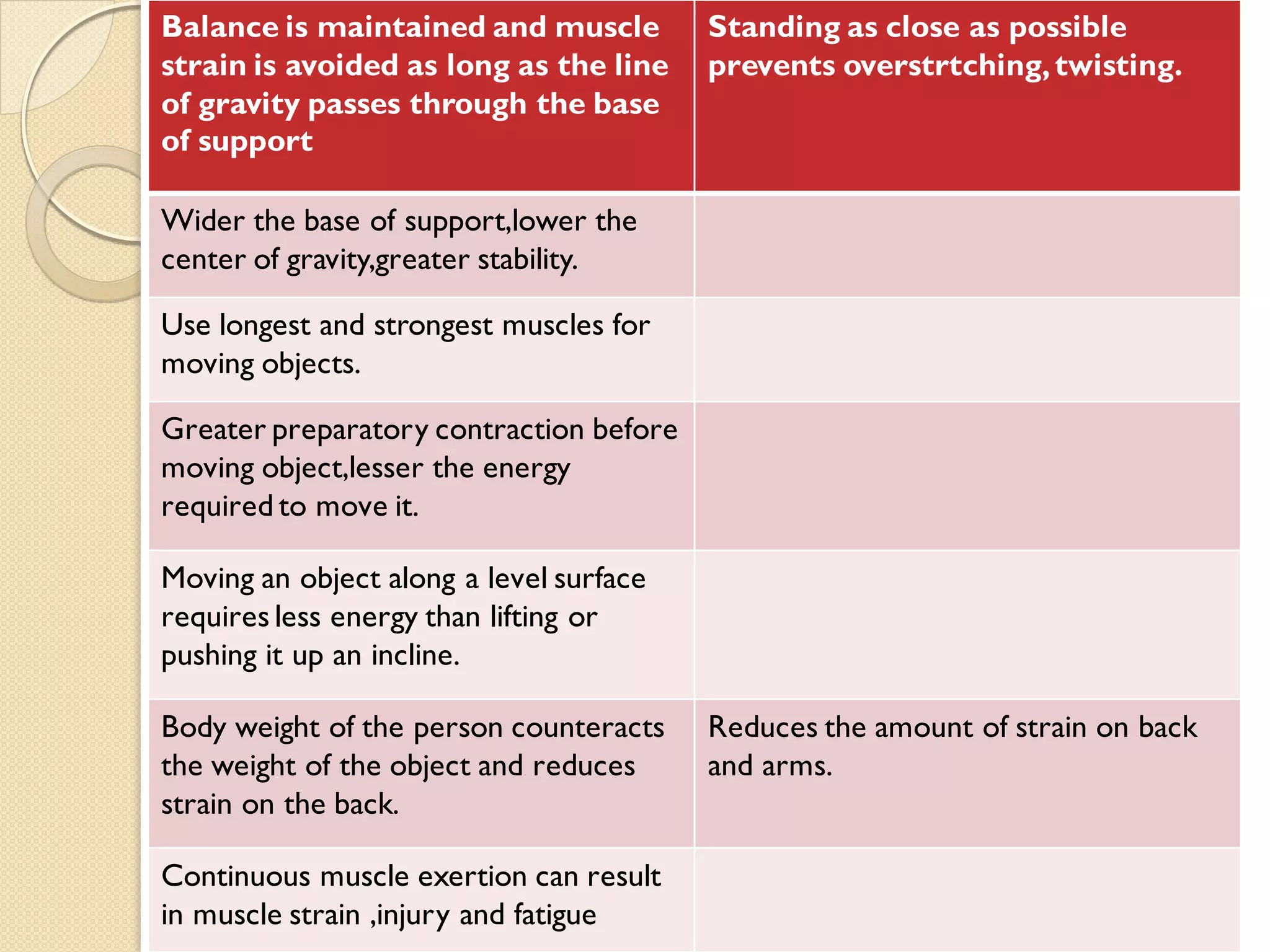
Balance is maintained and muscle
strain is avoided as long as the line
of gravity passes through the base
of support
Standing as close as possible
prevents overstrtching,twisting.
Wider the base of support,lower the
center of gravity,greater stability.
Use longest and strongest muscles for
moving objects.
Greater preparatory contraction before
moving object,lesser the energy
required to move it.
Moving an object along a level surface
requires less energy than lifting or
pushing it up an incline.
Body weight of the person counteracts
the weight of the object and reduces
strain on the back.
Reduces the amount of strain on back
and arms.
Continuous muscle exertion can result
in muscle strain ,injury and fatigue
Factors affecting body alignment and
activity
 Growth and development
 Physical health
 Mental health
 Nutrition
 Personal values and attitudes
 External factors
 Prescribed limitations
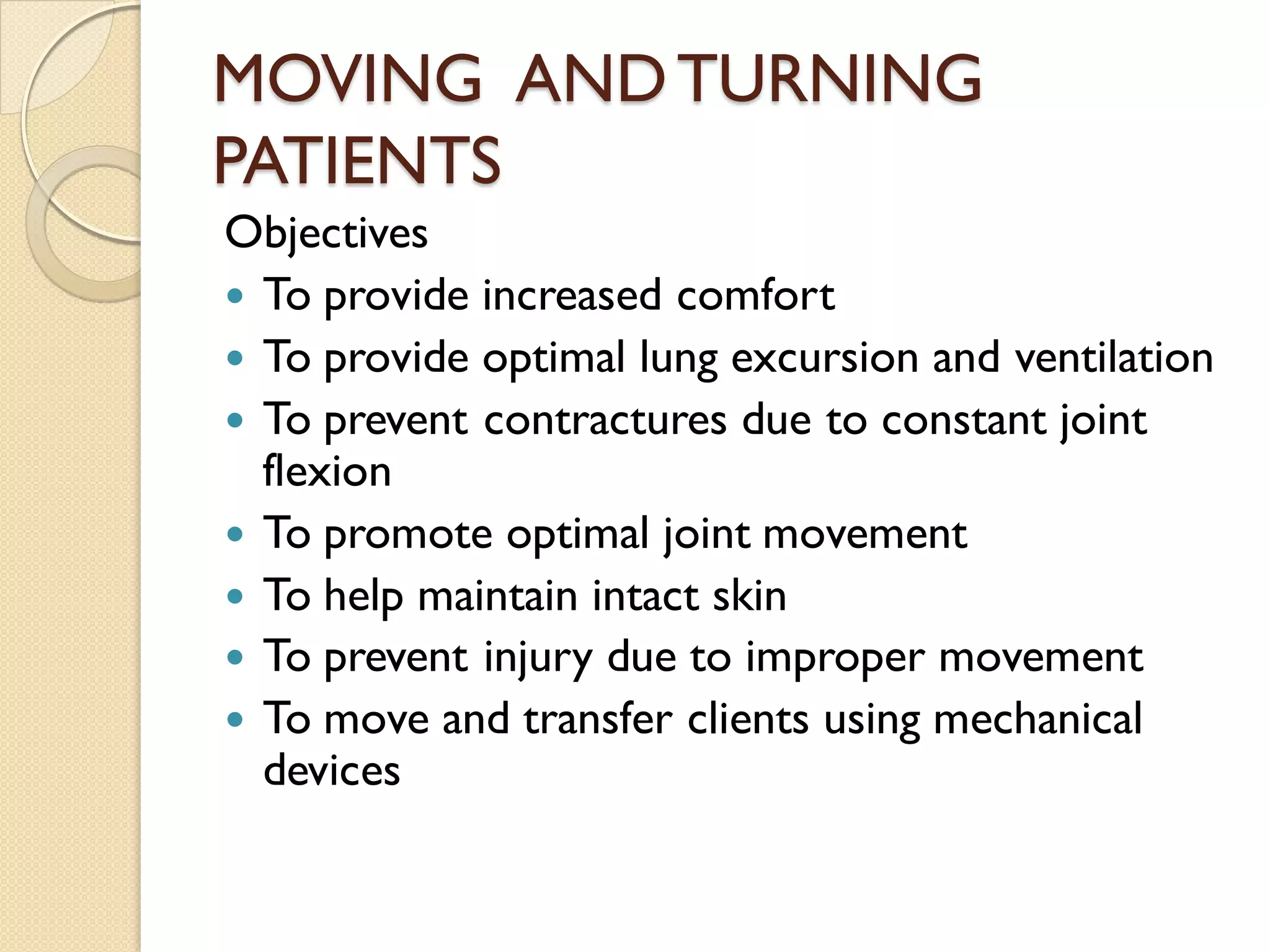
MOVING ANDTURNING
PATIENTS
Objectives
 To provide increased comfort
 To provide optimal lung excursion and ventilation
 To prevent contractures due to constant joint
flexion
 To promote optimal joint movement
 To help maintain intact skin
 To prevent injury due to improper movement
 To move and transfer clients using mechanical
devices
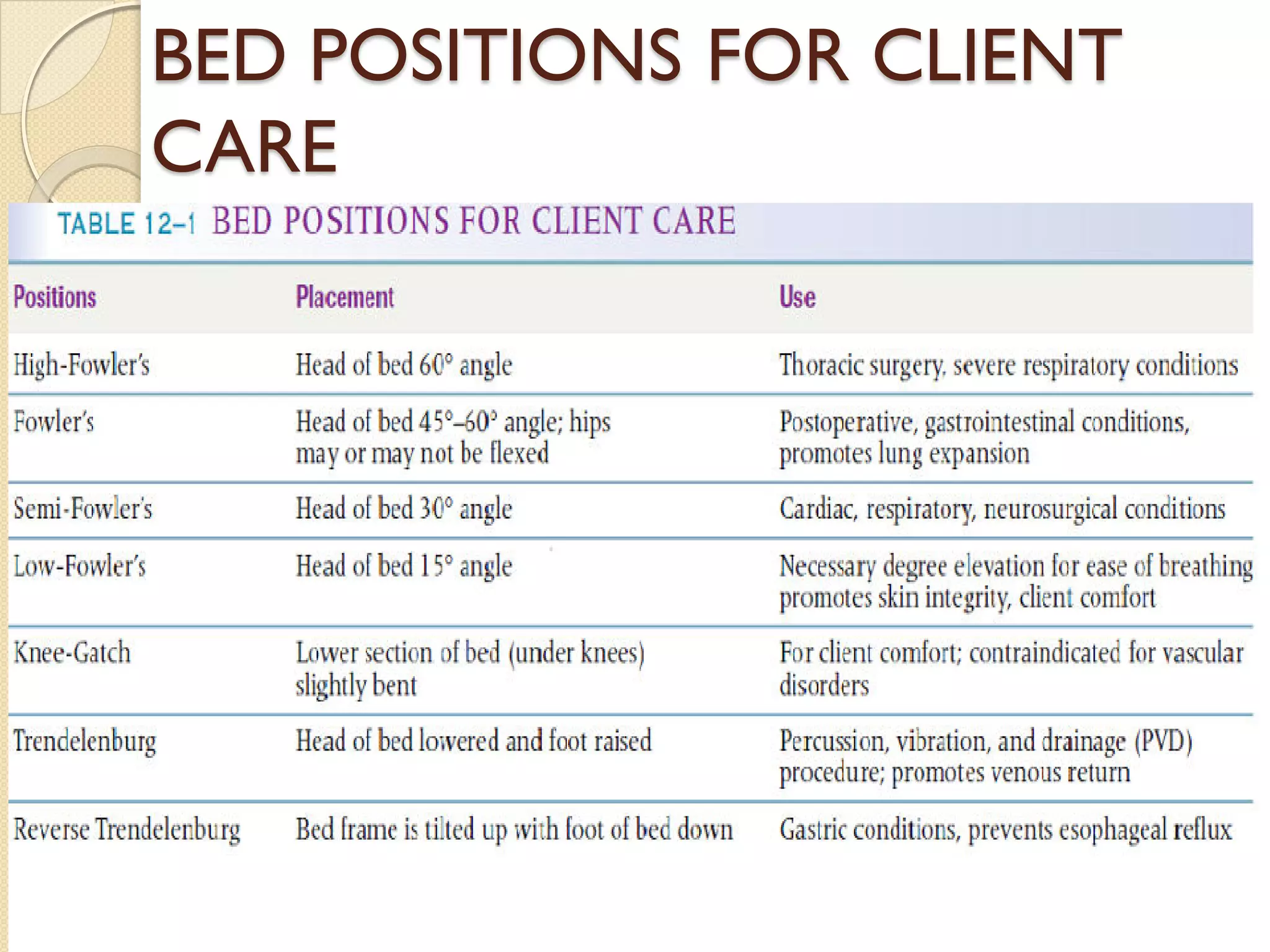
BED POSITIONS FOR CLIENT
CARE
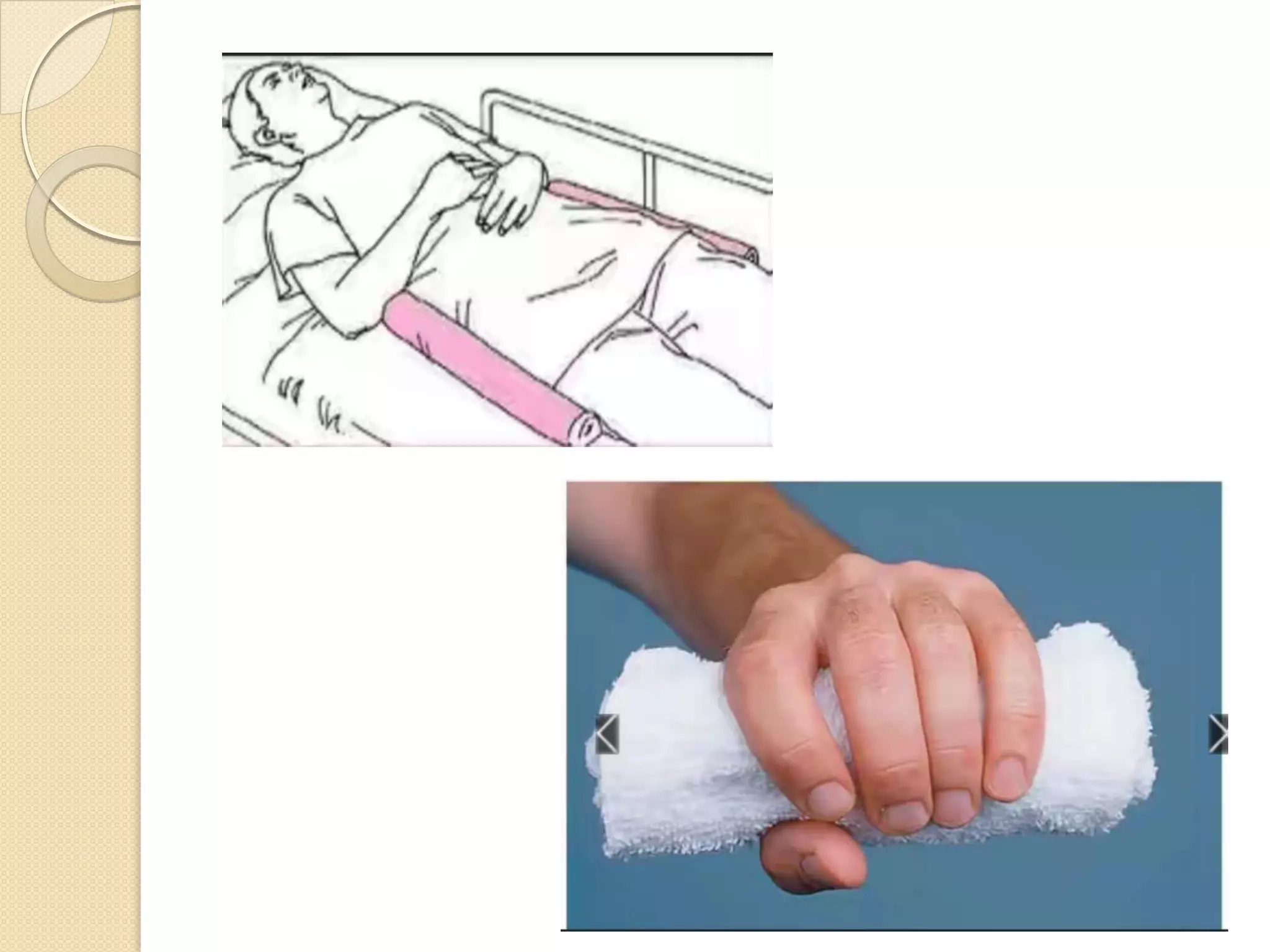
DEVICES USED FOR PROPER
POSITIONING
Pillows
Foot boots
hand splint
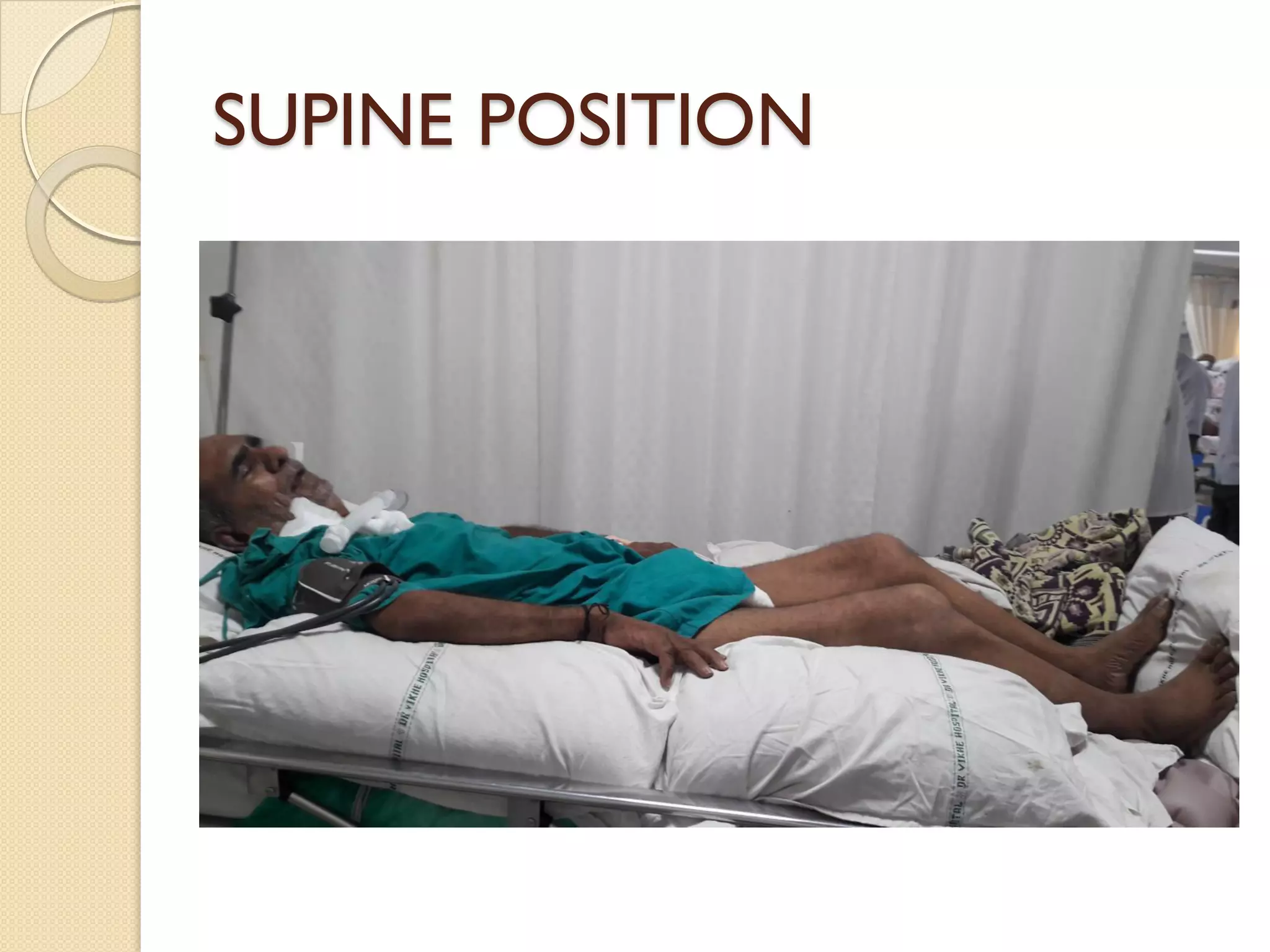
SUPINE POSITION
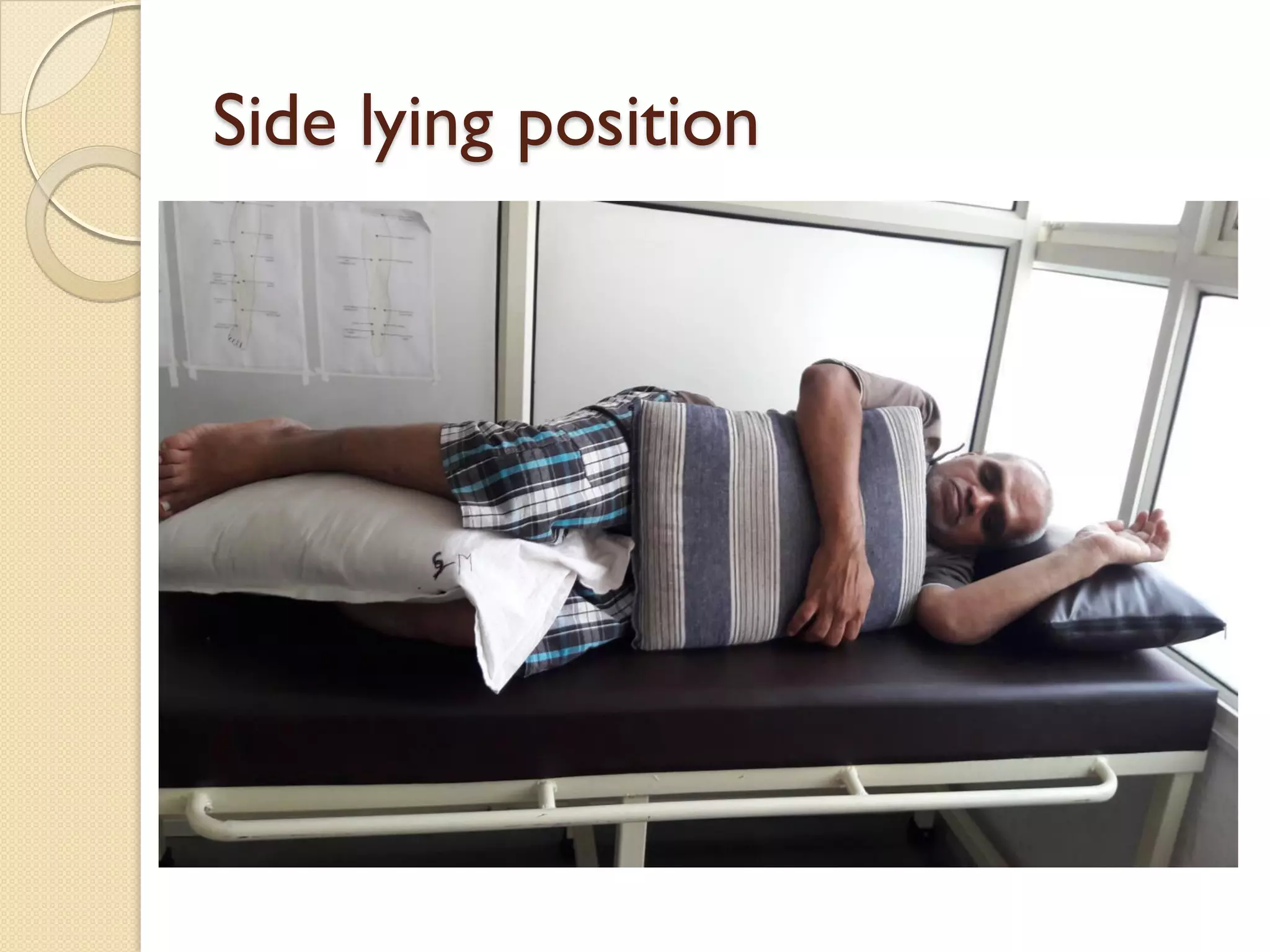
LATERAL OR PRONE POSITION
 PURPOSES
 Ensure comfort of the patient
 To perform procedures such as changing
linen and giving bed pan.
 To offer relief of pressure points in supine
position.
Side lying position
Prone position
LOGROLLING A PATIENT
 PURPOSE
 Clients with spinal cord injury for whom
care must be taken to prevent further
injury.
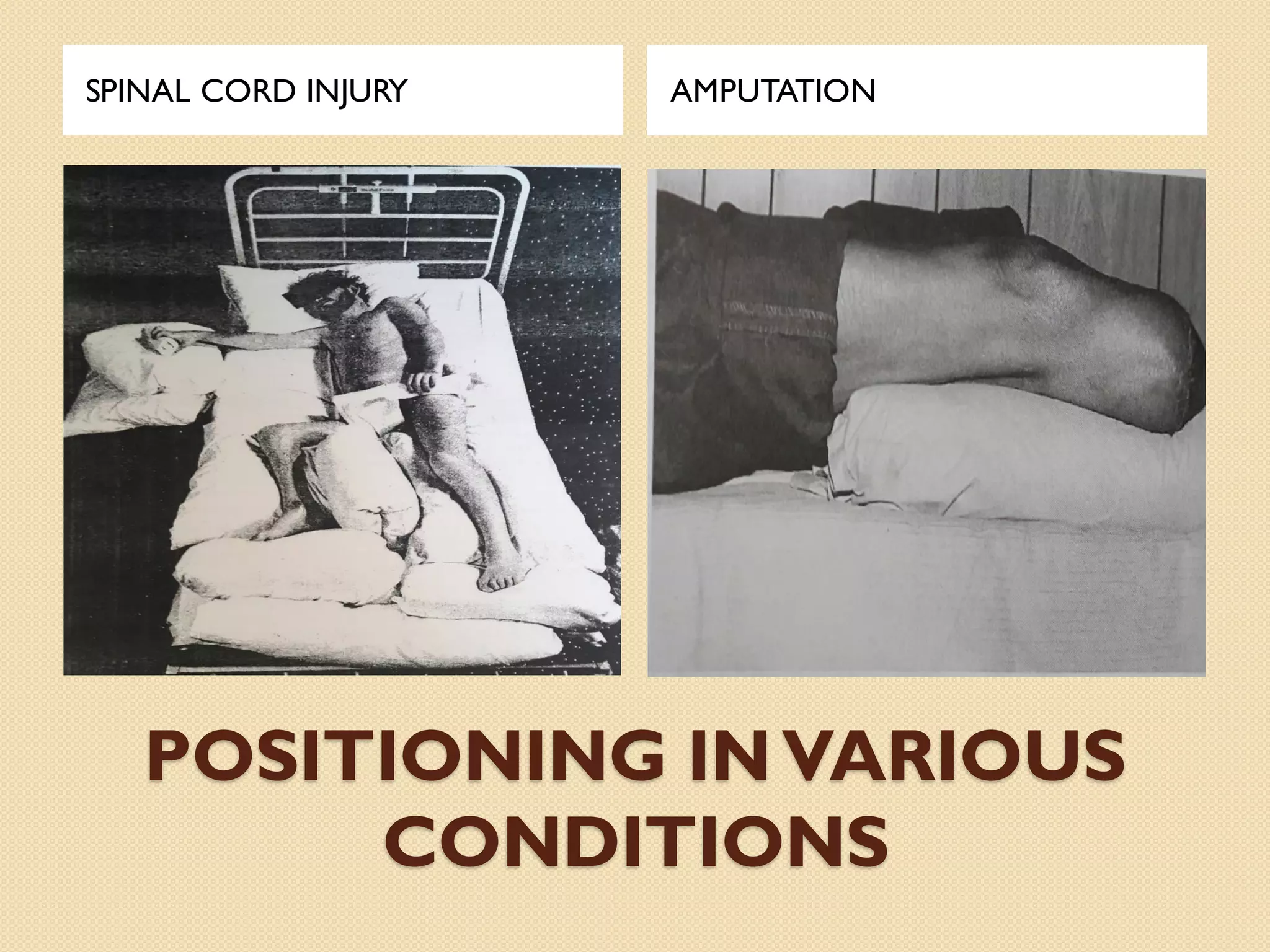
POSITIONING INVARIOUS
CONDITIONS
SPINAL CORD INJURY AMPUTATION
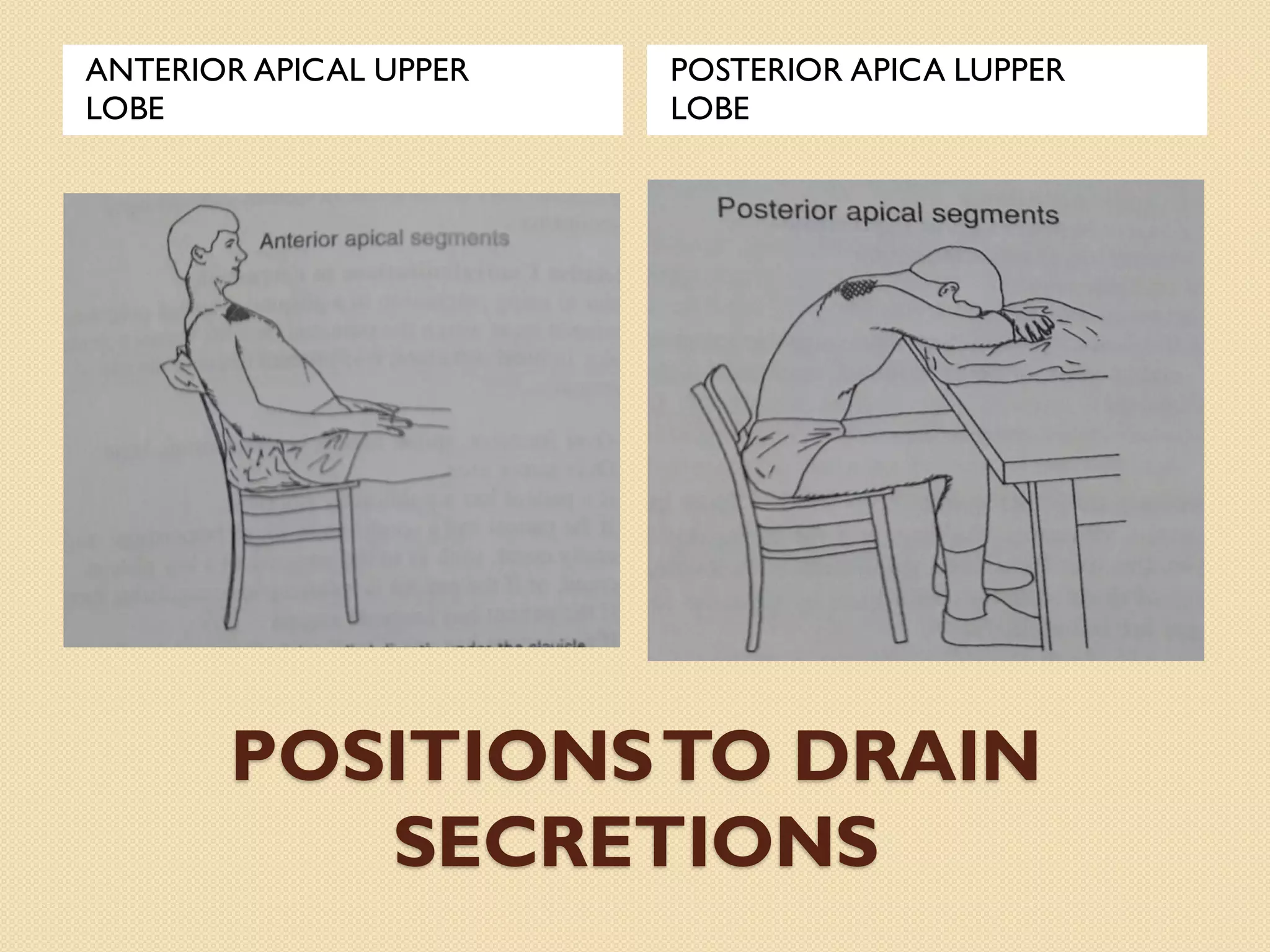
POSITIONSTO DRAIN
SECRETIONS
ANTERIOR APICAL UPPER
LOBE
POSTERIOR APICA LUPPER
LOBE
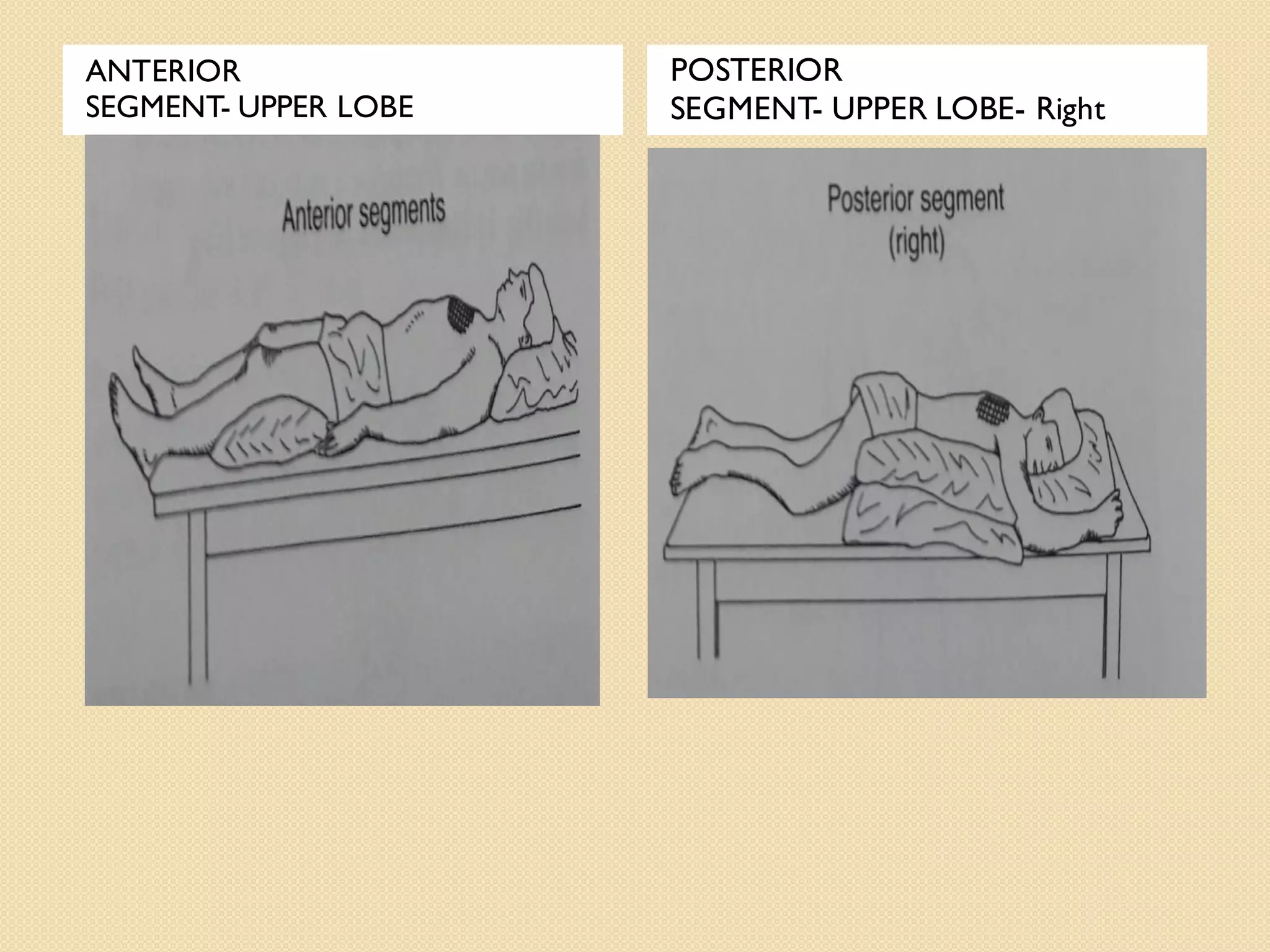
ANTERIOR
SEGMENT- UPPER LOBE
POSTERIOR
SEGMENT- UPPER LOBE- Right
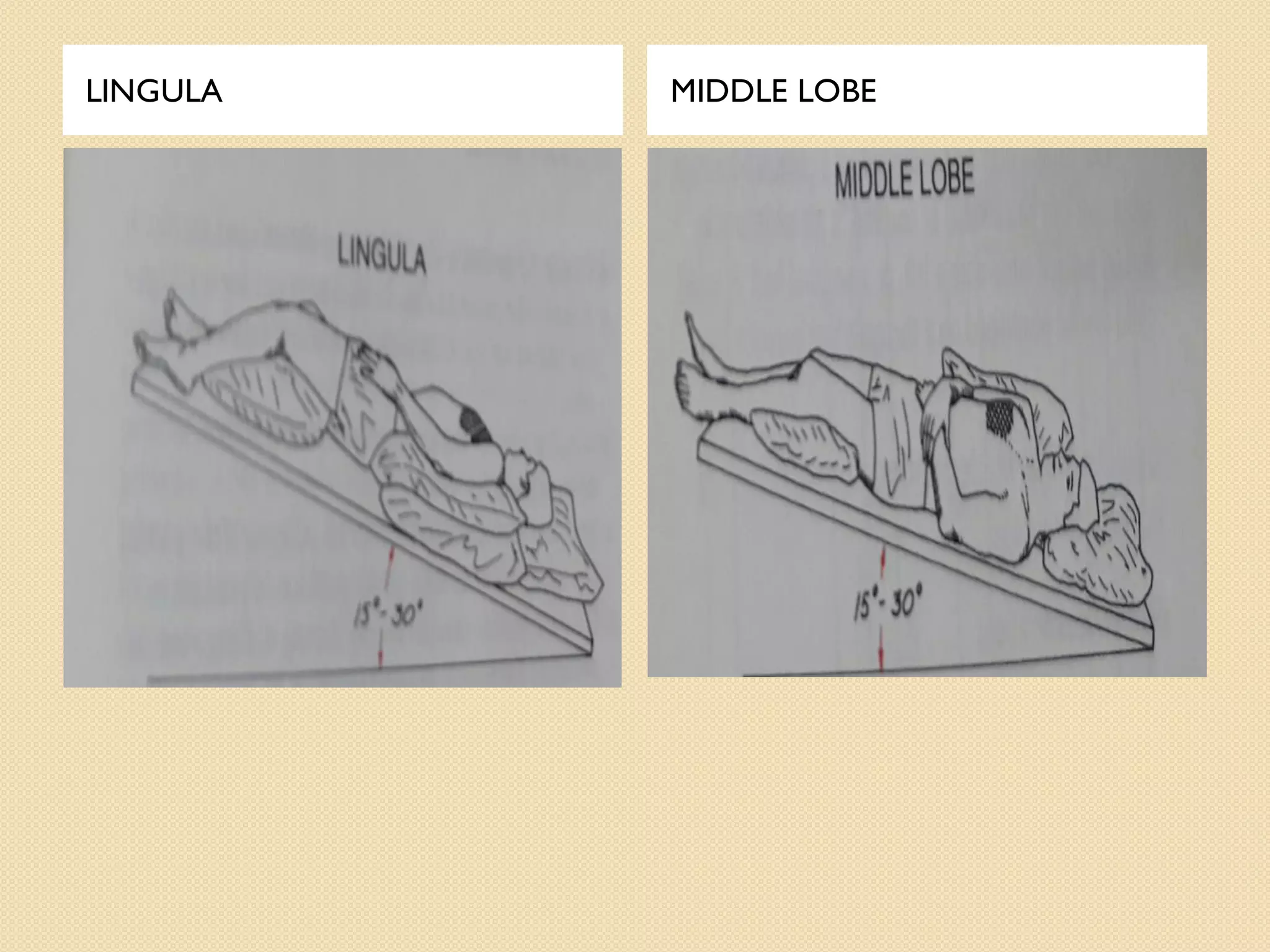
LINGULA MIDDLE LOBE
TRANSFERRING TECHNIQUES
ASSISTING A PATIENTTO
SITTING
 Purposes
 To enable change of position without
injury.
 Maintain good body mechanics.
BED TO CHAIR
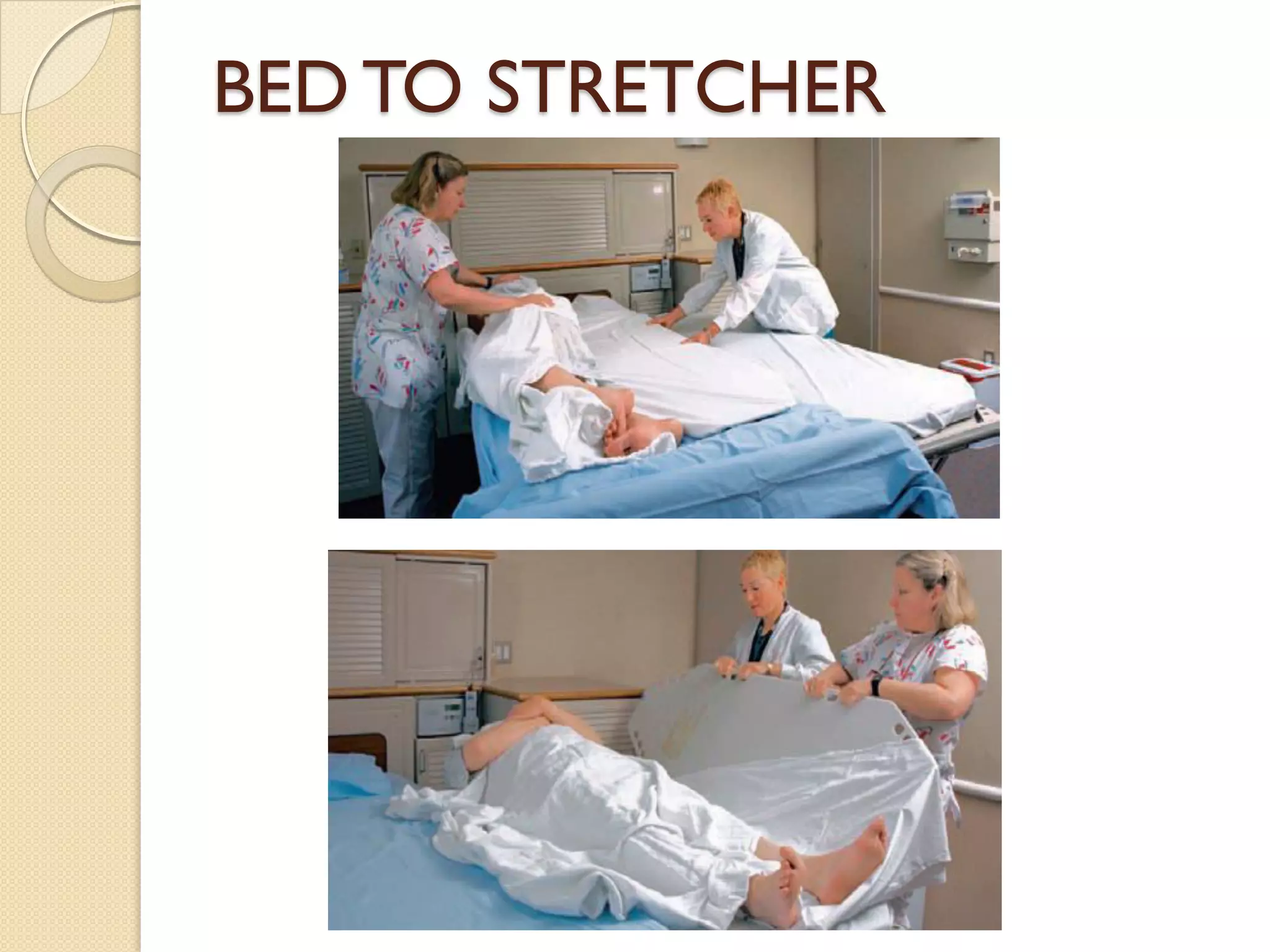
BED TO STRETCHER
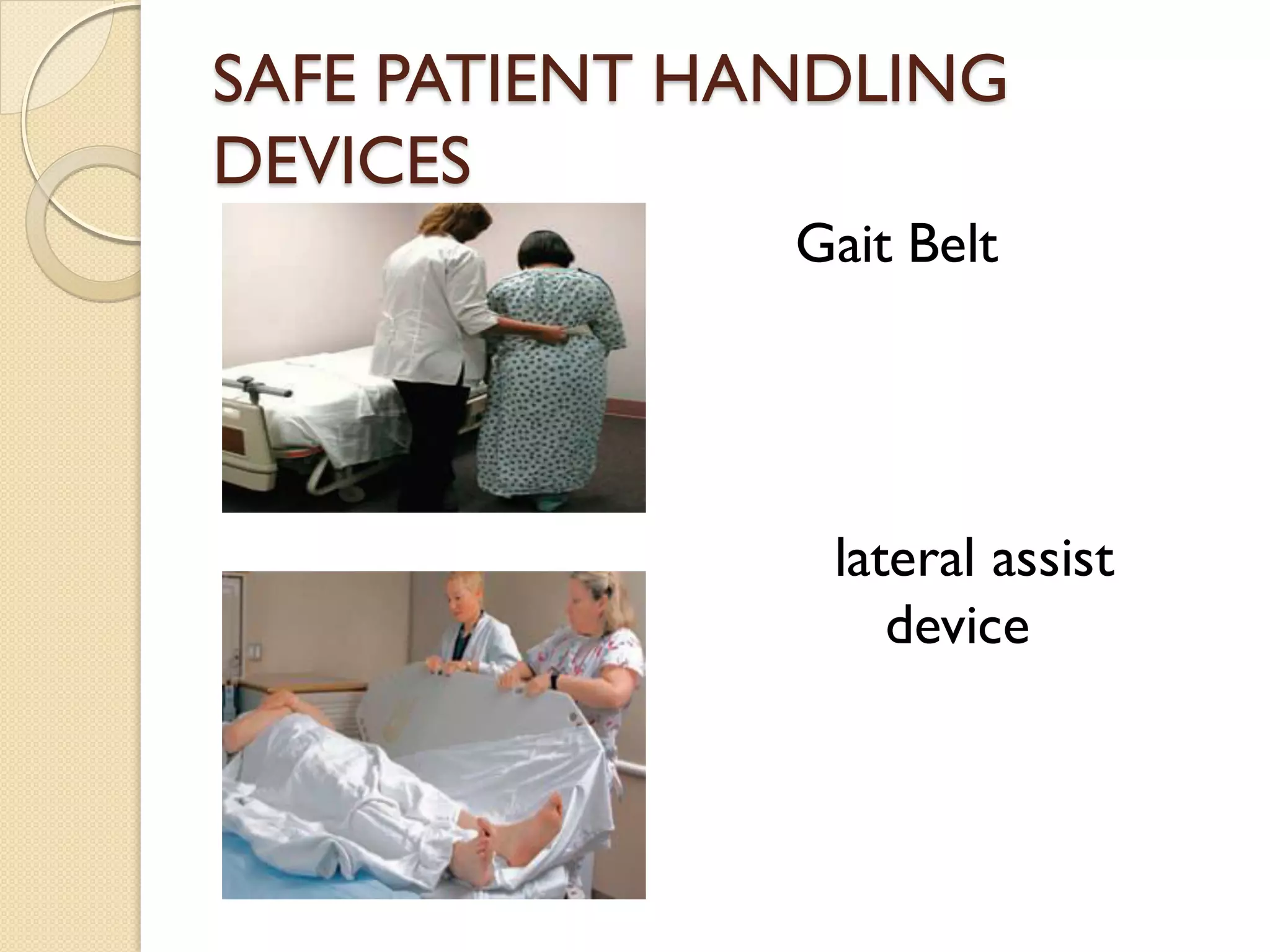
SAFE PATIENT HANDLING
DEVICES
 Gait Belt

lateral assist
device device
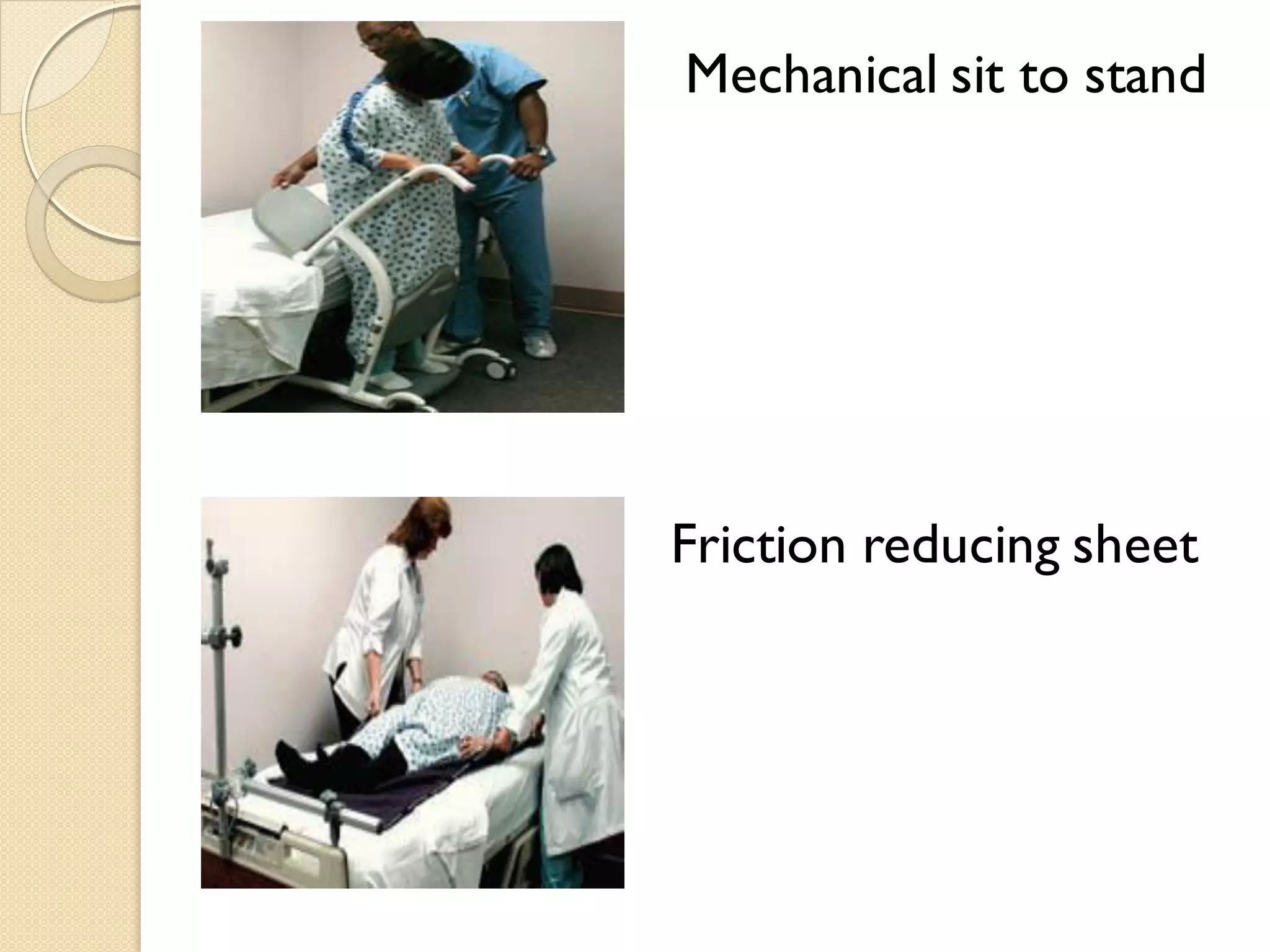
 Mechanical sit to stand
 Friction reducing sheet
 Powered full body lift
THANKYOU!

body mechanics and transfer techniques

  • 1.
    BODY MECHANICS,PATIENT POSITIONING AND TRANSFERTECHNIQUES JANHAVIATRE MPT 1(NEUROSCIENCES) GUIDE – DR.SUVARNA GANVIR DEPARTMENT OF NEUROPHYSIOTHERAPY DVVPF’S COLLEGE OF PHYSIOTHERAPY AHMEDNAGAR
  • 2.
    CONTENTS  Body mechanics-Principles Body positioning- Bed positions for client care log rolling lateral position prone position moving client up in bed moving client with assistance  Transfers- bed to stretcher taking patient to bed side moving patient from bed to chair  Safe client handling devices
  • 3.
    BODY MECHANICS  Definition Bodymechanics is the efficient use of the body as a machine and as a means of locomotion.
  • 4.
    ADVANTAGES: • Maintains goodbody alignment. • Maintains balance of the body. • Prevents fatigue and deformities. • Promotes physiological functions of the body. • Reduces expenditure of energy. • Prevents and reduces the risk of musculoskeletal injury.
  • 5.
    PRINCIPLE PRINCIPLE RATIONALE When planninga transfer or move,free the surrounding area of obstacles Appropriate preparation prevents potential falls and injury and safeguards the patient and equipment. The heavier the object,the greater the force needed to move the object Use of mechanical devices or assistance to move object reduces muscular effort and prevents injury. Objects that are close to the center of gravity are moved with the least effort Bringing the center of gravity of the objects close to the center of gravity of the person prevents unnecessary strain on the muscles. Reduced friction between the object and the surface on which it is moved requires less energy Effective use of major muscle groups while carrying heavy objects minimizes strain on abdomen and back Facing the direction of the movement avoids twisting and helps to maintain body balance.
  • 6.
    Balance is maintainedand muscle strain is avoided as long as the line of gravity passes through the base of support Standing as close as possible prevents overstrtching,twisting. Wider the base of support,lower the center of gravity,greater stability. Use longest and strongest muscles for moving objects. Greater preparatory contraction before moving object,lesser the energy required to move it. Moving an object along a level surface requires less energy than lifting or pushing it up an incline. Body weight of the person counteracts the weight of the object and reduces strain on the back. Reduces the amount of strain on back and arms. Continuous muscle exertion can result in muscle strain ,injury and fatigue
  • 7.
    Factors affecting bodyalignment and activity  Growth and development  Physical health  Mental health  Nutrition  Personal values and attitudes  External factors  Prescribed limitations
  • 9.
    MOVING ANDTURNING PATIENTS Objectives  Toprovide increased comfort  To provide optimal lung excursion and ventilation  To prevent contractures due to constant joint flexion  To promote optimal joint movement  To help maintain intact skin  To prevent injury due to improper movement  To move and transfer clients using mechanical devices
  • 10.
    BED POSITIONS FORCLIENT CARE
  • 15.
    DEVICES USED FORPROPER POSITIONING Pillows Foot boots
  • 17.
  • 18.
  • 19.
    LATERAL OR PRONEPOSITION  PURPOSES  Ensure comfort of the patient  To perform procedures such as changing linen and giving bed pan.  To offer relief of pressure points in supine position.
  • 20.
  • 21.
  • 22.
    LOGROLLING A PATIENT PURPOSE  Clients with spinal cord injury for whom care must be taken to prevent further injury.
  • 23.
  • 24.
    POSITIONSTO DRAIN SECRETIONS ANTERIOR APICALUPPER LOBE POSTERIOR APICA LUPPER LOBE
  • 25.
  • 26.
  • 27.
  • 28.
    ASSISTING A PATIENTTO SITTING Purposes  To enable change of position without injury.  Maintain good body mechanics.
  • 30.
  • 31.
  • 32.
    SAFE PATIENT HANDLING DEVICES Gait Belt  lateral assist device device
  • 33.
     Mechanical sitto stand  Friction reducing sheet
  • 34.
  • 35.