Blood transfusion : indications
and complications
CONTENTS
Introduction
Definition
Principles of clinical
blood transfusion
Indications
Complications
INTRODUCTION
 Blood transfusion is one of the most
important discoveries of modern medicine
which appeared after Harvey's scientific
explanation about blood circulation (1928)
 Its use in surgery has launched great success
after blood incompatibility between
different persons was challenged with the
knowledge of blood GROUPS(A,B,AB,AND
O) (Landsteiner ) & Rh FACTORS( C, D ,E ,c ,d
,e (Levine & Stetsen )
INTRODUC.CONT.
 Its aim is to restore blood volume and
oxygen carrying capacity.
 For the purpose of transfusion, blood is
collected in a bag with 50ml.Of cpd(citrate
phosphate and dextrose or in a bag with
cpd-a(adenine solution) and is stored at
temperature of 40c .
 Can be kept for 5 weeks in cpd bag and for
6 weeks in cpd-a bag.
 It is grouped using serum with potent
aglutinogens like anti-A anti-B and anti-Rh
and by cross matching.
DEFINITION OF BLOOD
TRANSFUSION
Is the process of transferring blood or
blood- based product from one
person into the circulatory system of
another through blood vessels ,long
bones’marrow,sternum,etc.
Types of blood transfusion according
to the source
1. Autologous (using patient’s own stored blood)
2. Allogeneic (using stored blood of others)
Components of blood
1. RBC
2. WBC
3. Plasma
4. Platelets
5. Albumin proteins
6. Clotting factors concentrate
7. Fibrinogen concentrate
8. Cryoprecipitate
9. Immunoglobulin (antibodies)
procedures
1. Donation
2. Testing for infections
3. Testing for A B O and Rh groups along with
presence any RBC antibodies
4. Pathogen reduction treatment using riboflavin and
Uv light / gamma irradiation
5. Compatibility testing (recipient’s ABO and Rh
6. Cross-matching
Principles(chek list) of blood
transfusion
1) Is one part of pt.’s Rx.
2) Is done when there is no alternative Rx.
3) Compare the benefits and risks
4) Know the aim(goal) of the planned transfusion
5) There should be informed consent of the pt.
6) Record the reason(indication) for transfusion on
the chart
7) Do not use Hgb. as the only criteria
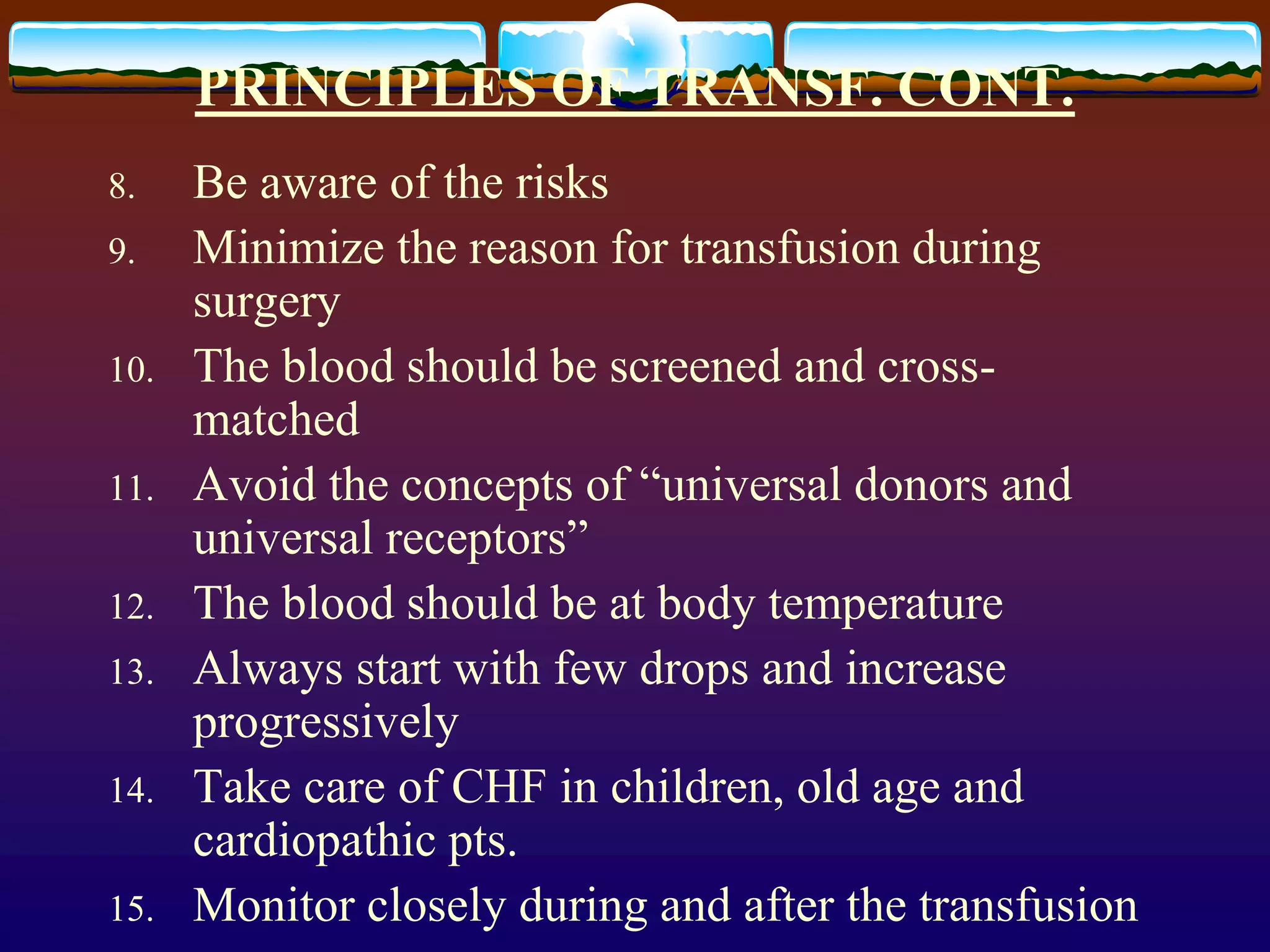
PRINCIPLES OF TRANSF. CONT.
8. Be aware of the risks
9. Minimize the reason for transfusion during
surgery
10. The blood should be screened and cross-
matched
11. Avoid the concepts of “universal donors and
universal receptors”
12. The blood should be at body temperature
13. Always start with few drops and increase
progressively
14. Take care of CHF in children, old age and
cardiopathic pts.
15. Monitor closely during and after the transfusion
INDICATIONS FOR BLOOD TRANSFUSION
 Blood transfusion can be done in:
1. Neonate
2. Children & infants
3. Pregnant
4. Adults
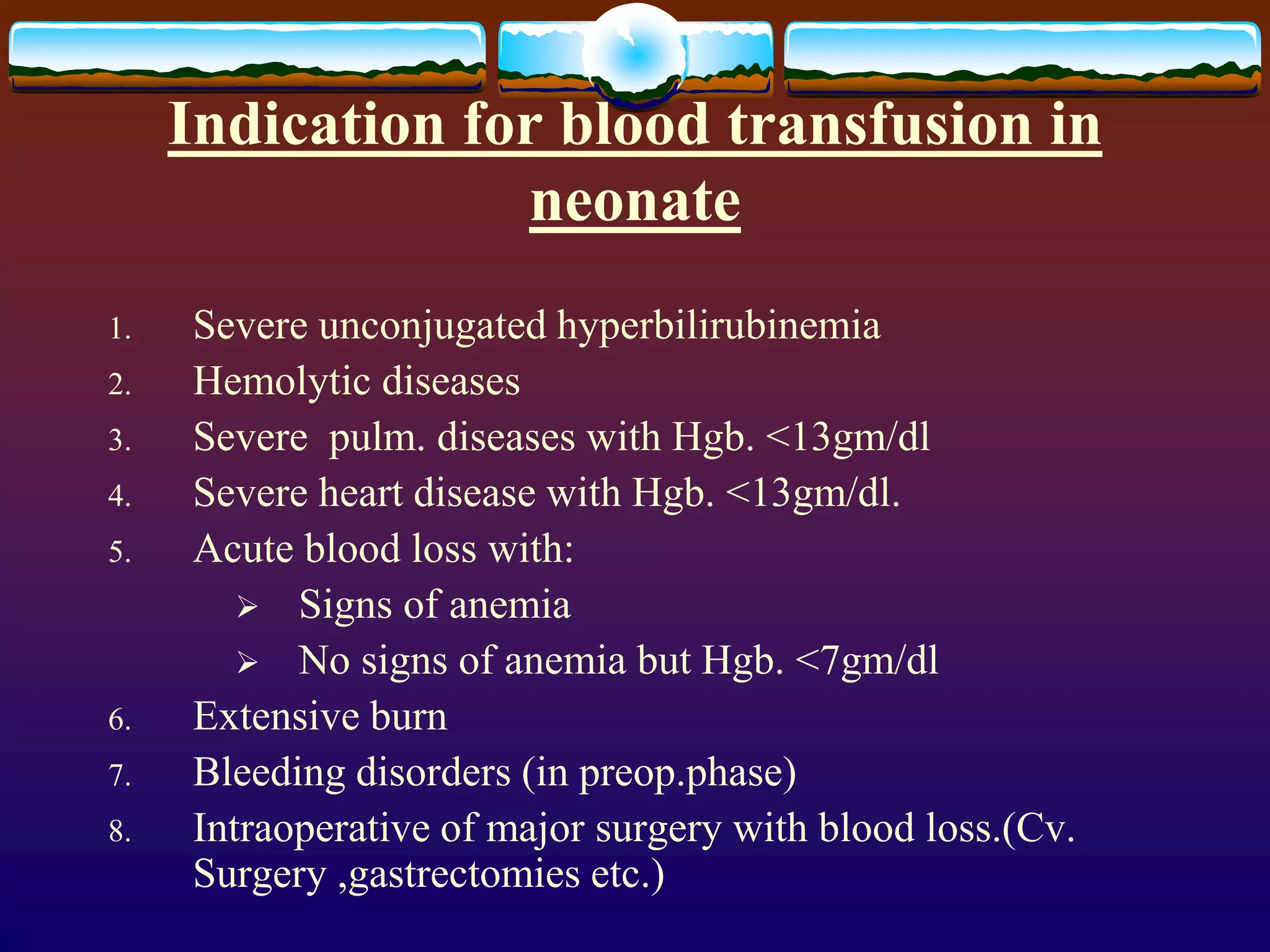
Indication for blood transfusion in
neonate
1. Severe unconjugated hyperbilirubinemia
2. Hemolytic diseases
3. Severe pulm. diseases with Hgb. <13gm/dl
4. Severe heart disease with Hgb. <13gm/dl.
5. Acute blood loss with:
 Signs of anemia
 No signs of anemia but Hgb. <7gm/dl
6. Extensive burn
7. Bleeding disorders (in preop.phase)
8. Intraoperative of major surgery with blood loss.(Cv.
Surgery ,gastrectomies etc.)
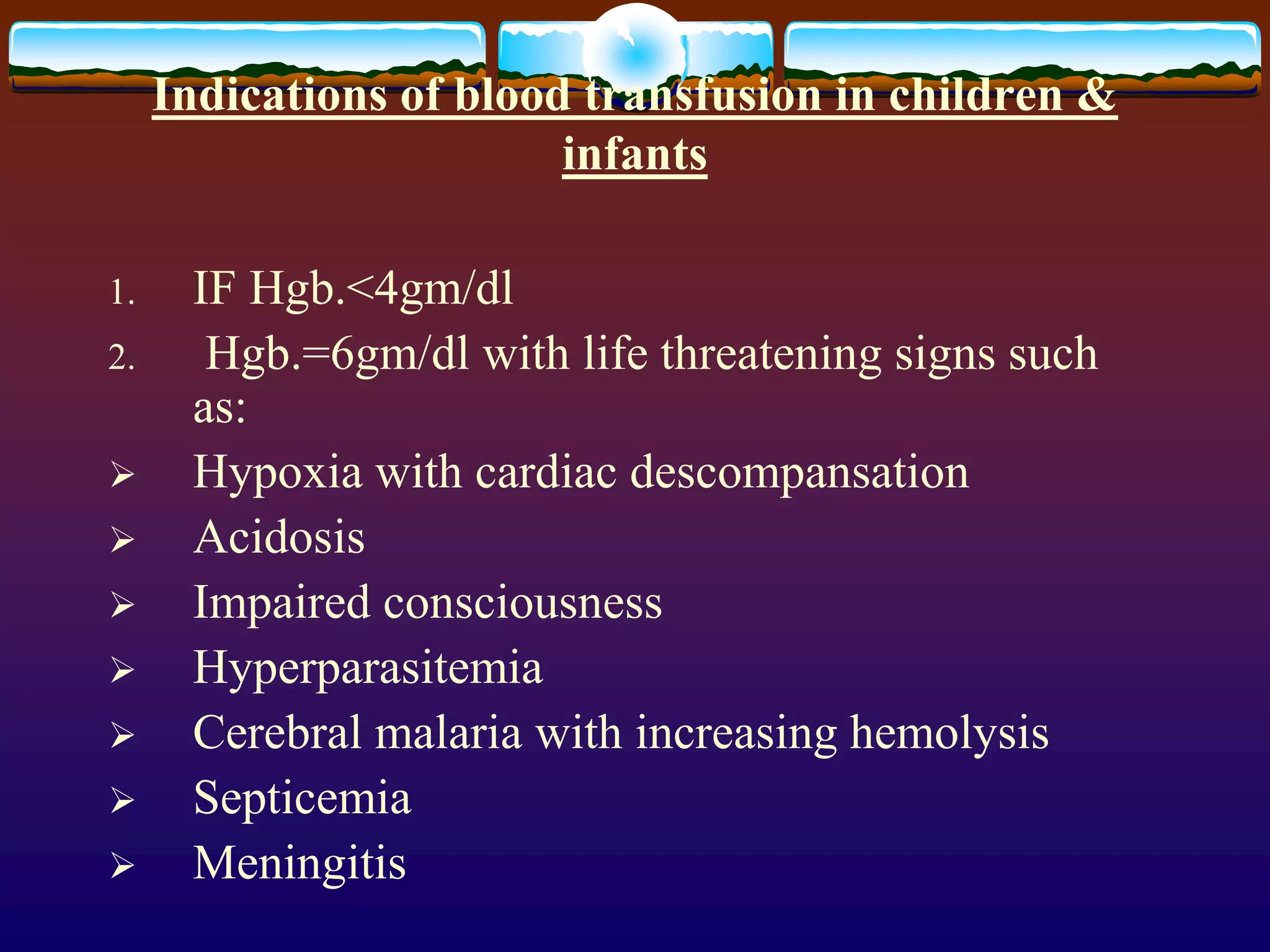
Indications of blood transfusion in children &
infants
1. IF Hgb.<4gm/dl
2. Hgb.=6gm/dl with life threatening signs such
as:
 Hypoxia with cardiac descompansation
 Acidosis
 Impaired consciousness
 Hyperparasitemia
 Cerebral malaria with increasing hemolysis
 Septicemia
 Meningitis
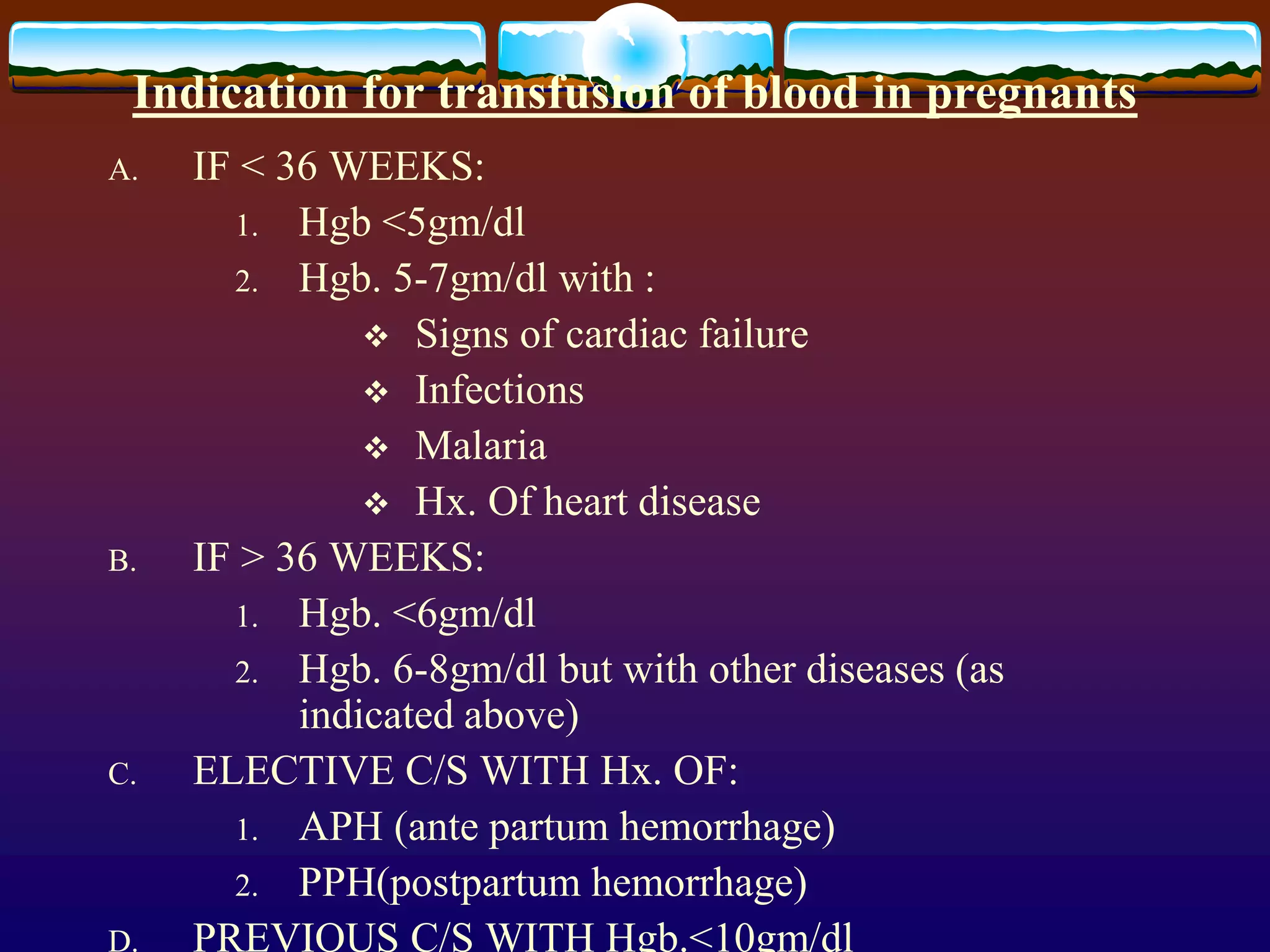
Indication for transfusion of blood in pregnants
A. IF < 36 WEEKS:
1. Hgb <5gm/dl
2. Hgb. 5-7gm/dl with :
 Signs of cardiac failure
 Infections
 Malaria
 Hx. Of heart disease
B. IF > 36 WEEKS:
1. Hgb. <6gm/dl
2. Hgb. 6-8gm/dl but with other diseases (as
indicated above)
C. ELECTIVE C/S WITH Hx. OF:
1. APH (ante partum hemorrhage)
2. PPH(postpartum hemorrhage)
D. PREVIOUS C/S WITH Hgb.<10gm/dl
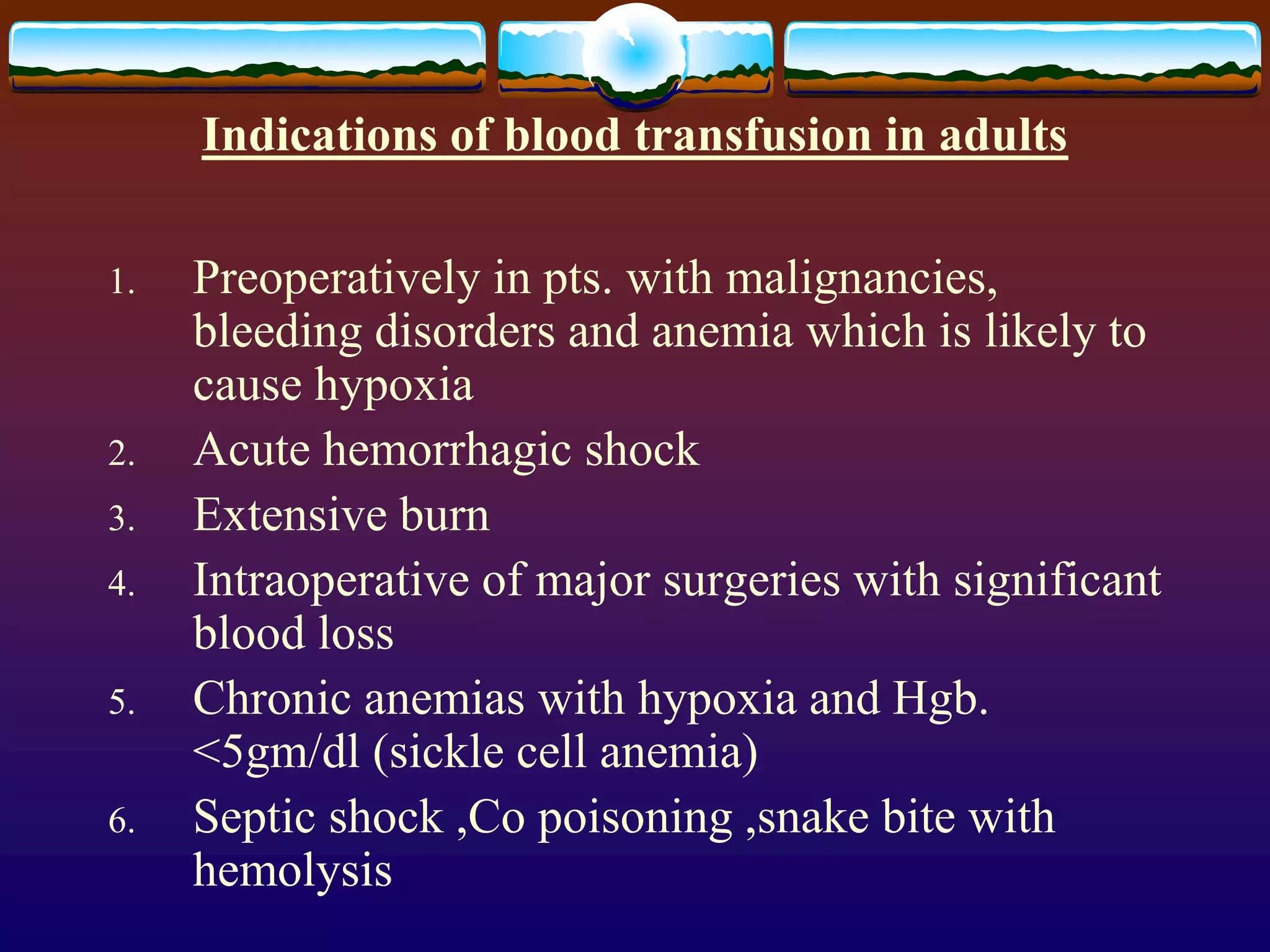
Indications of blood transfusion in adults
1. Preoperatively in pts. with malignancies,
bleeding disorders and anemia which is likely to
cause hypoxia
2. Acute hemorrhagic shock
3. Extensive burn
4. Intraoperative of major surgeries with significant
blood loss
5. Chronic anemias with hypoxia and Hgb.
<5gm/dl (sickle cell anemia)
6. Septic shock ,Co poisoning ,snake bite with
hemolysis
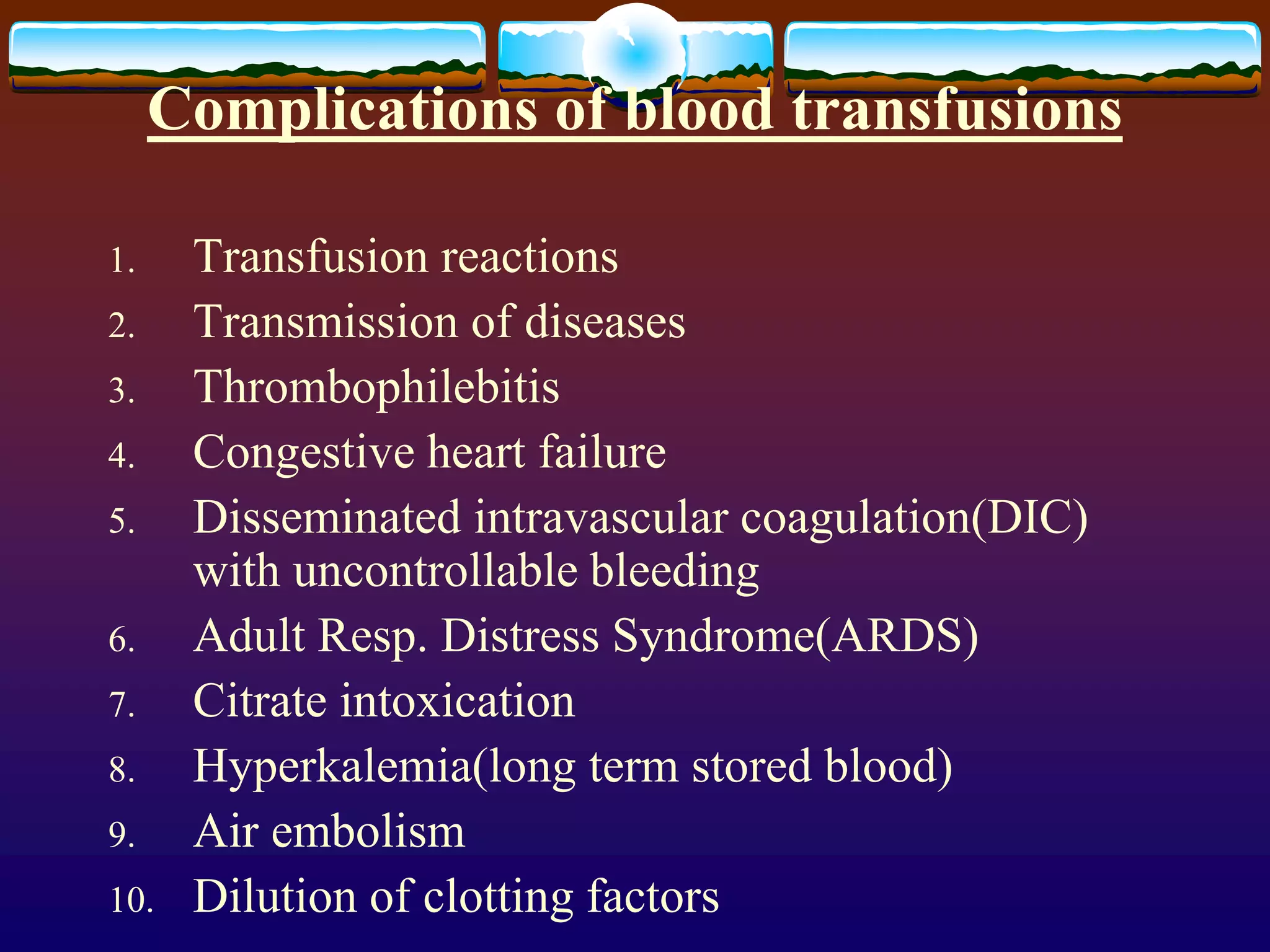
Complications of blood transfusions
1. Transfusion reactions
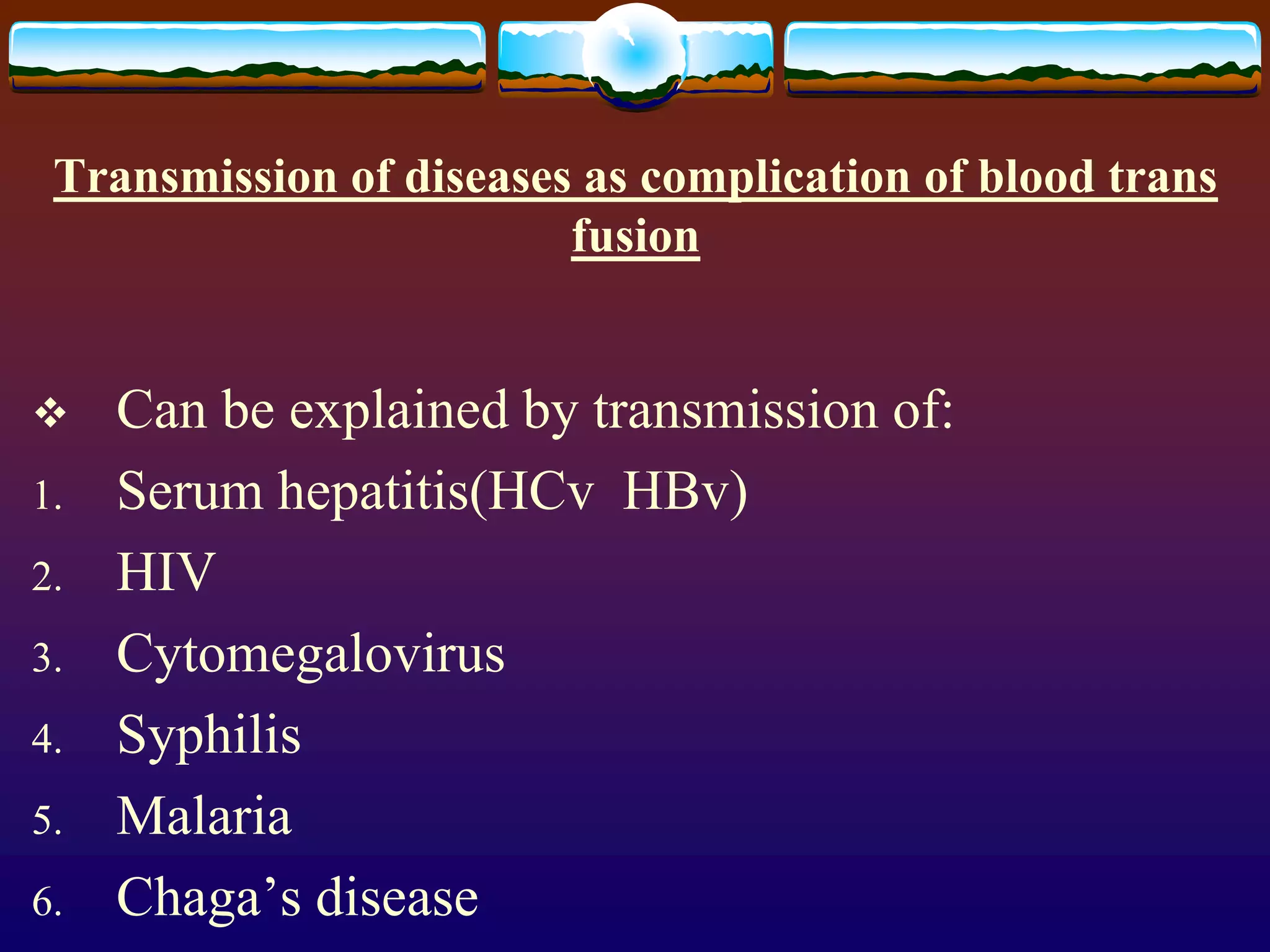
2. Transmission of diseases
3. Thrombophilebitis
4. Congestive heart failure
5. Disseminated intravascular coagulation(DIC)
with uncontrollable bleeding
6. Adult Resp. Distress Syndrome(ARDS)
7. Citrate intoxication
8. Hyperkalemia(long term stored blood)
9. Air embolism
10. Dilution of clotting factors
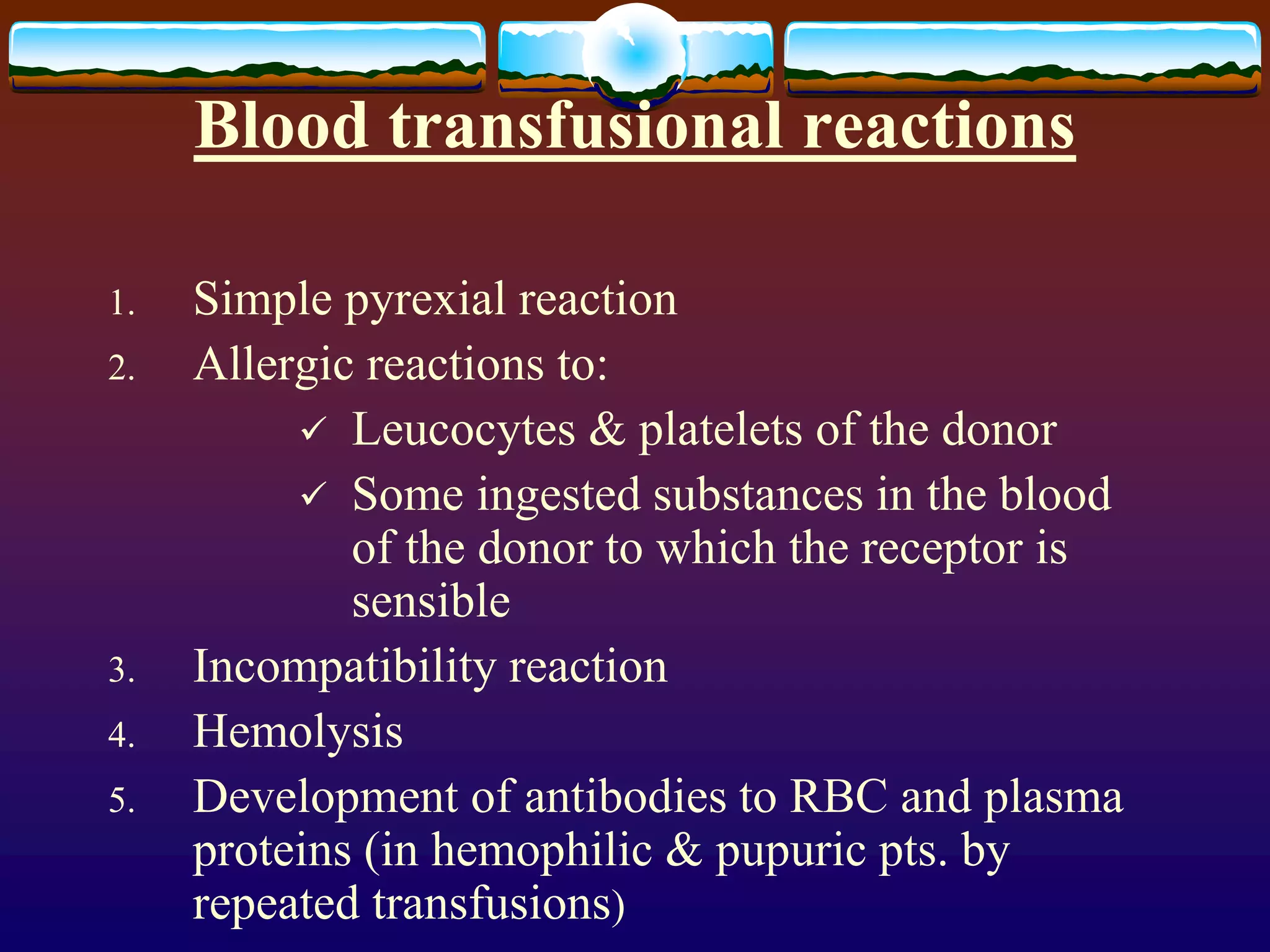
Blood transfusional reactions
1. Simple pyrexial reaction
2. Allergic reactions to:
 Leucocytes & platelets of the donor
 Some ingested substances in the blood
of the donor to which the receptor is
sensible
3. Incompatibility reaction
4. Hemolysis
5. Development of antibodies to RBC and plasma
proteins (in hemophilic & pupuric pts. by
repeated transfusions)
Transmission of diseases as complication of blood trans
fusion
 Can be explained by transmission of:
1. Serum hepatitis(HCv HBv)
2. HIV
3. Cytomegalovirus
4. Syphilis
5. Malaria
6. Chaga’s disease
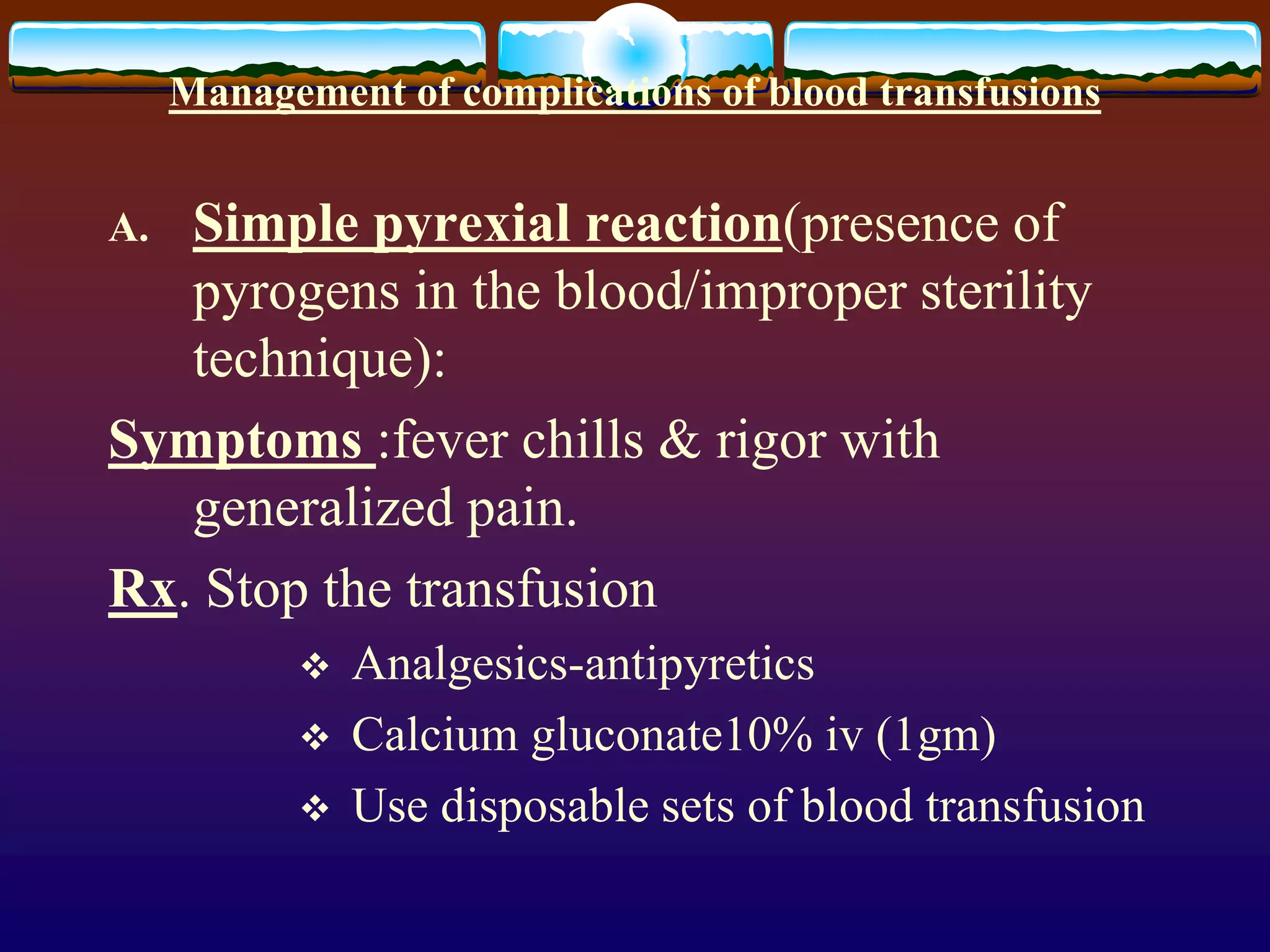
Management of complications of blood transfusions
A. Simple pyrexial reaction(presence of
pyrogens in the blood/improper sterility
technique):
Symptoms :fever chills & rigor with
generalized pain.
Rx. Stop the transfusion
 Analgesics-antipyretics
 Calcium gluconate10% iv (1gm)
 Use disposable sets of blood transfusion
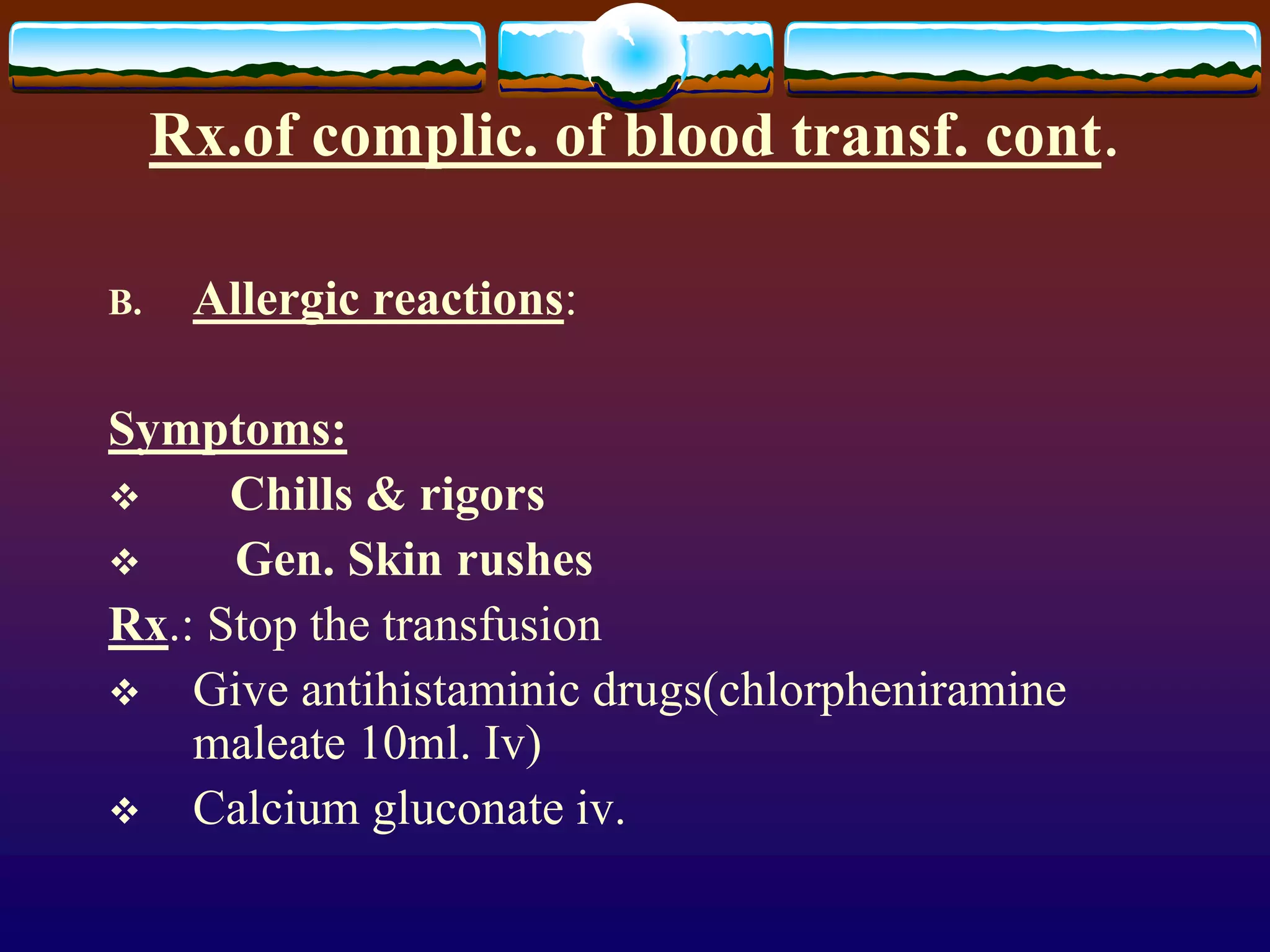
Rx.of complic. of blood transf. cont.
B. Allergic reactions:
Symptoms:
 Chills & rigors
 Gen. Skin rushes
Rx.: Stop the transfusion
 Give antihistaminic drugs(chlorpheniramine
maleate 10ml. Iv)
 Calcium gluconate iv.
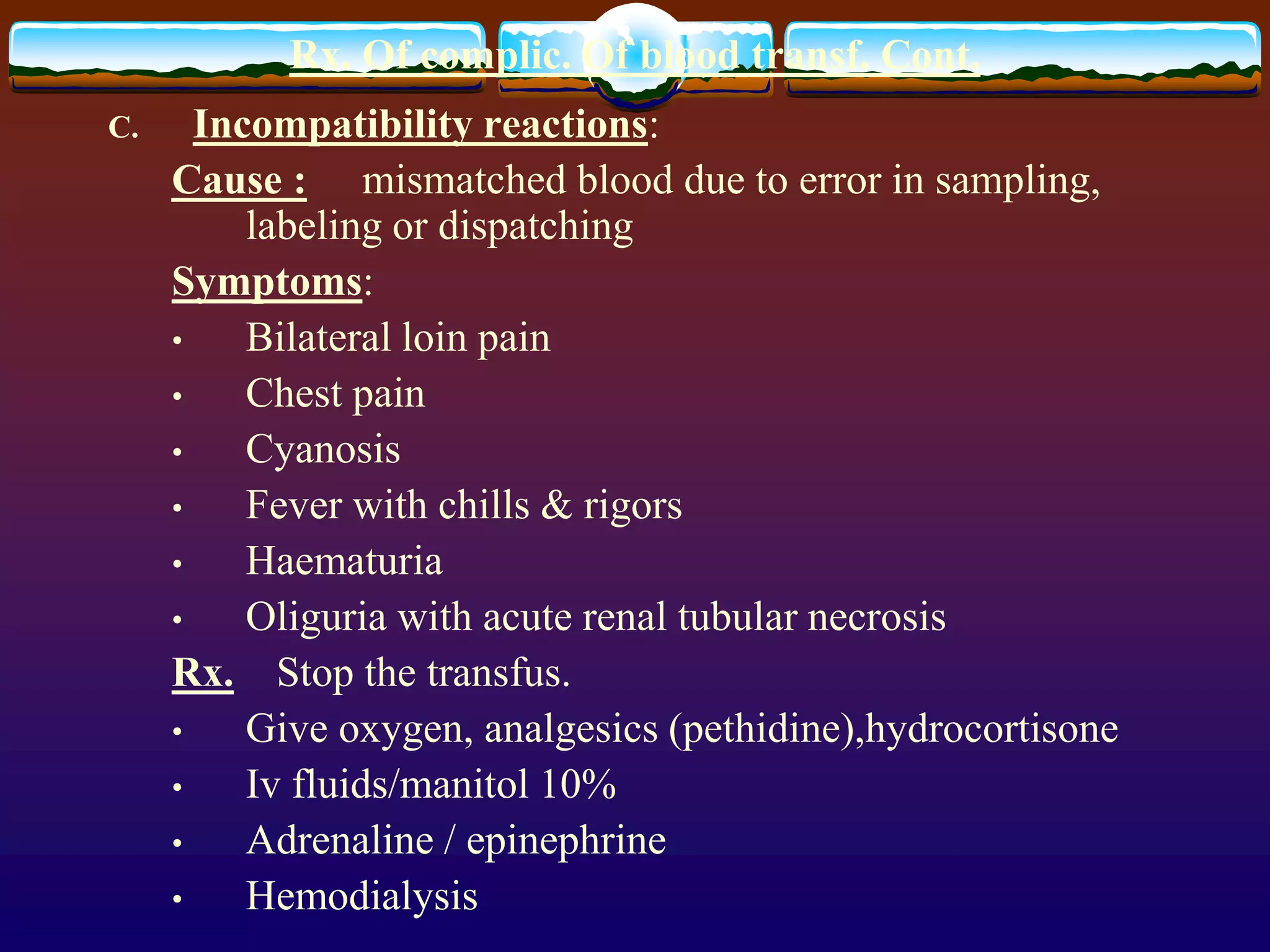
Rx. Of complic. Of blood transf. Cont.
C. Incompatibility reactions:
Cause : mismatched blood due to error in sampling,
labeling or dispatching
Symptoms:
• Bilateral loin pain
• Chest pain
• Cyanosis
• Fever with chills & rigors
• Haematuria
• Oliguria with acute renal tubular necrosis
Rx. Stop the transfus.
• Give oxygen, analgesics (pethidine),hydrocortisone
• Iv fluids/manitol 10%
• Adrenaline / epinephrine
• Hemodialysis
Rx. of complic. of blood transfus. cont.
D. Transmission of diseases:
Rx. :Strict screening of the blood before transfus.
“Prevention is better than cure”
E. Thrombophilebitis:
 Symptoms: tender hard and cord like vein,
fever
 Rx. Analgesics-antipyretics, moist &warm
compress
Rx. of complic. of blood transfus. cont.
E. Congestive heart failure:
Cause: rapid transfus. of whole blood in
chronically anemic pts.,oldage & children
 Excess transfusion of blood.
Symptoms: symptoms of lung edema and
cardiac failure
Rx.
 Slow transfusion
 Limit the amount of blood transfus.
 Give lasix iv
 Use packed cell transfusion in chronic anemia.
Rx.of complic. of blood transf. cont.
F. Disseminated intravascular
coagulation(DIC):
Cause :massive blood transfus.
resulting in severe afibrinogenemia
Symptoms :uncontrollable bleeding
(oozing)
Rx.:
• Give fresh blood
• Replace fibrinogen by giving
cryoprecipitate and blood clotting
factors.
Rx. of complic of blood transfus. cont.
G. Adult Resp. Distress syndrome(ARDS):
Cause : transfusion of old stored blood with
micro emboli
Symptoms:
Dyspnea
Cyanosis
Signs of blocked lung.
Rx.:
 Give fresh blood
 Use infusion sets with filters.
contraindications
1. Acute renal failure
2. Acute congestive heart disease
3. Severe MI
4. Uncontrolled hypertension
BIBLIOGRAPHY
1. MANIPAL : MANUAL OF SURGERY,1ST.
EDITION, 2000.
2. BAILEY & LOVE’S: SHORT PRACTICE OF
SURGERY, 22ND. EDITION,1997.& 25th.
edition
THANK U !!!
THE END

BLOOD TRANSFISION, INDICATIONS AND COMPLICATIONS.ppt

  • 1.
    Blood transfusion :indications and complications CONTENTS Introduction Definition Principles of clinical blood transfusion Indications Complications
  • 2.
    INTRODUCTION  Blood transfusionis one of the most important discoveries of modern medicine which appeared after Harvey's scientific explanation about blood circulation (1928)  Its use in surgery has launched great success after blood incompatibility between different persons was challenged with the knowledge of blood GROUPS(A,B,AB,AND O) (Landsteiner ) & Rh FACTORS( C, D ,E ,c ,d ,e (Levine & Stetsen )
  • 3.
    INTRODUC.CONT.  Its aimis to restore blood volume and oxygen carrying capacity.  For the purpose of transfusion, blood is collected in a bag with 50ml.Of cpd(citrate phosphate and dextrose or in a bag with cpd-a(adenine solution) and is stored at temperature of 40c .  Can be kept for 5 weeks in cpd bag and for 6 weeks in cpd-a bag.  It is grouped using serum with potent aglutinogens like anti-A anti-B and anti-Rh and by cross matching.
  • 4.
    DEFINITION OF BLOOD TRANSFUSION Isthe process of transferring blood or blood- based product from one person into the circulatory system of another through blood vessels ,long bones’marrow,sternum,etc.
  • 5.
    Types of bloodtransfusion according to the source 1. Autologous (using patient’s own stored blood) 2. Allogeneic (using stored blood of others)
  • 6.
    Components of blood 1.RBC 2. WBC 3. Plasma 4. Platelets 5. Albumin proteins 6. Clotting factors concentrate 7. Fibrinogen concentrate 8. Cryoprecipitate 9. Immunoglobulin (antibodies)
  • 7.
    procedures 1. Donation 2. Testingfor infections 3. Testing for A B O and Rh groups along with presence any RBC antibodies 4. Pathogen reduction treatment using riboflavin and Uv light / gamma irradiation 5. Compatibility testing (recipient’s ABO and Rh 6. Cross-matching
  • 8.
    Principles(chek list) ofblood transfusion 1) Is one part of pt.’s Rx. 2) Is done when there is no alternative Rx. 3) Compare the benefits and risks 4) Know the aim(goal) of the planned transfusion 5) There should be informed consent of the pt. 6) Record the reason(indication) for transfusion on the chart 7) Do not use Hgb. as the only criteria
  • 9.
    PRINCIPLES OF TRANSF.CONT. 8. Be aware of the risks 9. Minimize the reason for transfusion during surgery 10. The blood should be screened and cross- matched 11. Avoid the concepts of “universal donors and universal receptors” 12. The blood should be at body temperature 13. Always start with few drops and increase progressively 14. Take care of CHF in children, old age and cardiopathic pts. 15. Monitor closely during and after the transfusion
  • 10.
    INDICATIONS FOR BLOODTRANSFUSION  Blood transfusion can be done in: 1. Neonate 2. Children & infants 3. Pregnant 4. Adults
  • 11.
    Indication for bloodtransfusion in neonate 1. Severe unconjugated hyperbilirubinemia 2. Hemolytic diseases 3. Severe pulm. diseases with Hgb. <13gm/dl 4. Severe heart disease with Hgb. <13gm/dl. 5. Acute blood loss with:  Signs of anemia  No signs of anemia but Hgb. <7gm/dl 6. Extensive burn 7. Bleeding disorders (in preop.phase) 8. Intraoperative of major surgery with blood loss.(Cv. Surgery ,gastrectomies etc.)
  • 12.
    Indications of bloodtransfusion in children & infants 1. IF Hgb.<4gm/dl 2. Hgb.=6gm/dl with life threatening signs such as:  Hypoxia with cardiac descompansation  Acidosis  Impaired consciousness  Hyperparasitemia  Cerebral malaria with increasing hemolysis  Septicemia  Meningitis
  • 13.
    Indication for transfusionof blood in pregnants A. IF < 36 WEEKS: 1. Hgb <5gm/dl 2. Hgb. 5-7gm/dl with :  Signs of cardiac failure  Infections  Malaria  Hx. Of heart disease B. IF > 36 WEEKS: 1. Hgb. <6gm/dl 2. Hgb. 6-8gm/dl but with other diseases (as indicated above) C. ELECTIVE C/S WITH Hx. OF: 1. APH (ante partum hemorrhage) 2. PPH(postpartum hemorrhage) D. PREVIOUS C/S WITH Hgb.<10gm/dl
  • 14.
    Indications of bloodtransfusion in adults 1. Preoperatively in pts. with malignancies, bleeding disorders and anemia which is likely to cause hypoxia 2. Acute hemorrhagic shock 3. Extensive burn 4. Intraoperative of major surgeries with significant blood loss 5. Chronic anemias with hypoxia and Hgb. <5gm/dl (sickle cell anemia) 6. Septic shock ,Co poisoning ,snake bite with hemolysis
  • 15.
    Complications of bloodtransfusions 1. Transfusion reactions 2. Transmission of diseases 3. Thrombophilebitis 4. Congestive heart failure 5. Disseminated intravascular coagulation(DIC) with uncontrollable bleeding 6. Adult Resp. Distress Syndrome(ARDS) 7. Citrate intoxication 8. Hyperkalemia(long term stored blood) 9. Air embolism 10. Dilution of clotting factors
  • 16.
    Blood transfusional reactions 1.Simple pyrexial reaction 2. Allergic reactions to:  Leucocytes & platelets of the donor  Some ingested substances in the blood of the donor to which the receptor is sensible 3. Incompatibility reaction 4. Hemolysis 5. Development of antibodies to RBC and plasma proteins (in hemophilic & pupuric pts. by repeated transfusions)
  • 17.
    Transmission of diseasesas complication of blood trans fusion  Can be explained by transmission of: 1. Serum hepatitis(HCv HBv) 2. HIV 3. Cytomegalovirus 4. Syphilis 5. Malaria 6. Chaga’s disease
  • 18.
    Management of complicationsof blood transfusions A. Simple pyrexial reaction(presence of pyrogens in the blood/improper sterility technique): Symptoms :fever chills & rigor with generalized pain. Rx. Stop the transfusion  Analgesics-antipyretics  Calcium gluconate10% iv (1gm)  Use disposable sets of blood transfusion
  • 19.
    Rx.of complic. ofblood transf. cont. B. Allergic reactions: Symptoms:  Chills & rigors  Gen. Skin rushes Rx.: Stop the transfusion  Give antihistaminic drugs(chlorpheniramine maleate 10ml. Iv)  Calcium gluconate iv.
  • 20.
    Rx. Of complic.Of blood transf. Cont. C. Incompatibility reactions: Cause : mismatched blood due to error in sampling, labeling or dispatching Symptoms: • Bilateral loin pain • Chest pain • Cyanosis • Fever with chills & rigors • Haematuria • Oliguria with acute renal tubular necrosis Rx. Stop the transfus. • Give oxygen, analgesics (pethidine),hydrocortisone • Iv fluids/manitol 10% • Adrenaline / epinephrine • Hemodialysis
  • 21.
    Rx. of complic.of blood transfus. cont. D. Transmission of diseases: Rx. :Strict screening of the blood before transfus. “Prevention is better than cure” E. Thrombophilebitis:  Symptoms: tender hard and cord like vein, fever  Rx. Analgesics-antipyretics, moist &warm compress
  • 22.
    Rx. of complic.of blood transfus. cont. E. Congestive heart failure: Cause: rapid transfus. of whole blood in chronically anemic pts.,oldage & children  Excess transfusion of blood. Symptoms: symptoms of lung edema and cardiac failure Rx.  Slow transfusion  Limit the amount of blood transfus.  Give lasix iv  Use packed cell transfusion in chronic anemia.
  • 23.
    Rx.of complic. ofblood transf. cont. F. Disseminated intravascular coagulation(DIC): Cause :massive blood transfus. resulting in severe afibrinogenemia Symptoms :uncontrollable bleeding (oozing) Rx.: • Give fresh blood • Replace fibrinogen by giving cryoprecipitate and blood clotting factors.
  • 24.
    Rx. of complicof blood transfus. cont. G. Adult Resp. Distress syndrome(ARDS): Cause : transfusion of old stored blood with micro emboli Symptoms: Dyspnea Cyanosis Signs of blocked lung. Rx.:  Give fresh blood  Use infusion sets with filters.
  • 25.
    contraindications 1. Acute renalfailure 2. Acute congestive heart disease 3. Severe MI 4. Uncontrolled hypertension
  • 26.
    BIBLIOGRAPHY 1. MANIPAL :MANUAL OF SURGERY,1ST. EDITION, 2000. 2. BAILEY & LOVE’S: SHORT PRACTICE OF SURGERY, 22ND. EDITION,1997.& 25th. edition
  • 27.