Prepared by ;
Abdullah M.Muslih
Mohammed Najdat
Dunya Arsalan
Supervised by Dr.
Nadeem
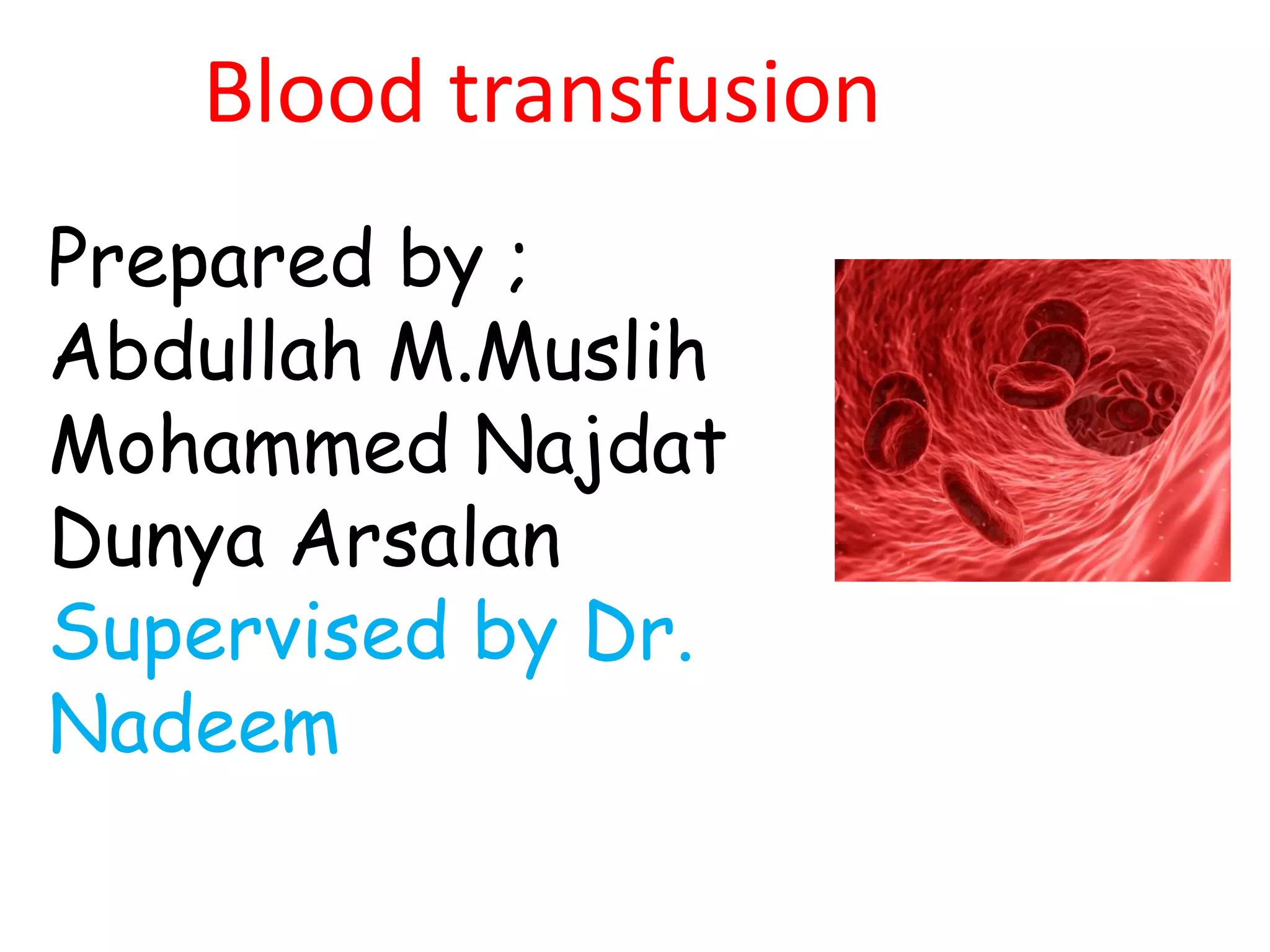
Blood transfusion
Contents
 Definition
 blood Grouping and cross matching
 Type of blood components
 Blood transfusion in different age groups
 Complications of blood transfusion
 Massive blood transfusions
Definition of Blood transfusion :
• is the transfusion of the whole blood or its
component such as blood cells or plasma from one
person to another.
• Blood transfusion involves two procedure that is –
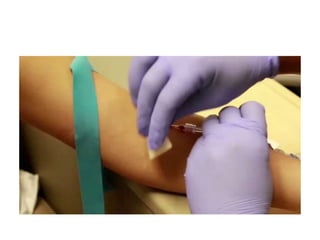
Collection of blood from donor
Administration of blood to the recipient.
Selection of donor
1. The age between of 18 to 65 years .
2. Normal Hb level: in male (13.5 – 17.5 mg/dl) , in female
(11.5 – 16.5 mg/dl)
3. Donor should be free from diseases such as TB, cancer,
jaundice or any other transmissible (infectious) disease.
4. Free from bleeding tendency
5. Must not have been pregnant within the last 6 months
6. Make sure that donor has not donated the blood within
previous 90 days (3 months).
7. Donor must have normal vital signs
8. Donor should be disqualified who have history of recent
dental surgery, major surgery, receipt of blood or blood
component, immunization etc.
Preparation of patient for blood
transfusion
1. Taking short history from the patient fit for conditions
mentioned above.
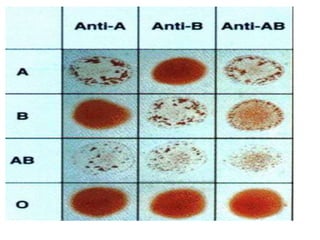
2. Collecting sample from the patient for blood grouping,
(cross matching, virology screening if not in critical
condition). Full cross-matching of blood takes 45 min .
3. In urgent situations, ‘type-specific’ blood is provided,
which is only ABO/Rhesus matched and can be issued
within 10–15 min.
4. If the patient is in the critical condition( emergency ) and
need transfusion immediately we give O+ for male and O-
for female.
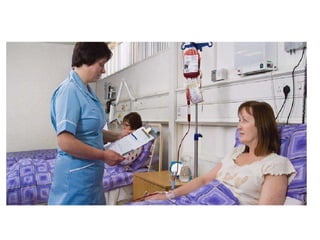
5. Prepare blood for the patient and start transfusing
appropriate amount of blood according to the age groups
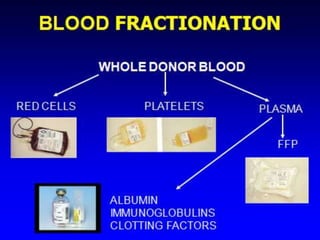
BLOOD COMPONENTS
A- Red cell components
B- Platelet concentrate
C- Plasma
A . cell components
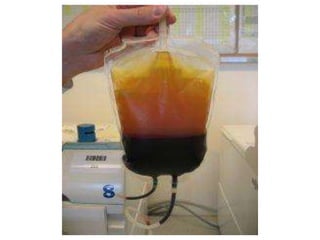
• 1- Whole blood:
• 450 ml donor blood collected into 75 ml
anticoagulant/preservative solution.
• Stored at 2-6°C.
• Shelf life up to 5 weeks (35 days).
• Indications of Whole blood transfusion
1- Acute blood loss following trauma
2- During major surgeries
3-As a prophylactic measure prior to surgery.
2. Packed red cells
• It can be stored for 35 days at 6°C.
•It is used in:
chronic anemias, in old age, in children.
B- Platelet concentrate :
• Stored at 20-24°C .
• Shelf life up to 5 days from collection.
• Indications :
1. bleeding due to thrombocytopenia and some
forms of platelet dysfunction .
2. Drug induced hemorrhage.
C- Plasma .
• It is indicated in burns, hypoalbuminemia, severe protein loss.
It can be fractionalized into different fragments:
1- Human albumin.
• The 5% solution is indicated for replacement in plasma
exchange.
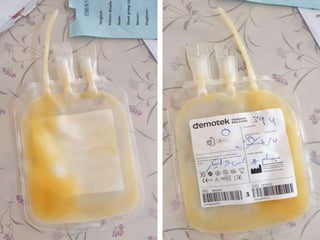
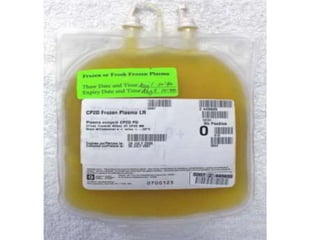
2- Fresh frozen plasma,(FFP):
• 150-300 ml plasma obtained from one donation of
whole blood.
• Dose of FFP is 15 ml/kg.
• Shelf life usually 2 year.
• It contains coagulation factors (1972).
• stored at –40°C to -50.
• 1 unit of FFP increases the clotting factors level by
3%.
Indications of FFP
1- Severe liver disease with abnormal
coagulation function.
2- Congenital clotting factor deficiency.
3- Deficiency following warfarin therapy, DIC,
and massive transfusion.
4- To maintain prothrombin time at normal
level.
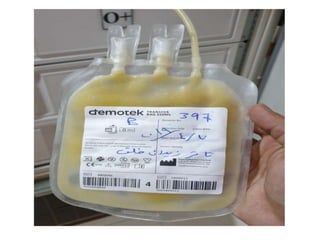
3- Cryoprecipitate:
•it is rich in Factor VIII and fibrinogen.
•It is stored at -40°C and can be kept for 2 year.
•Indicated in;
a) inherited deficiency of Factor VIII
b) fibrinogen
c) Factor XIII
d) von Willebrand’s disease
4. Fibrinogen: It is very useful in DIC and
afibrinogenemia.
5. Factor VIII and IX concentrate: They are used in
hemophilia and von Willebrand’s disease.
6. Prothrombin complex concentrate (PCC)
contains factors II, IX and X and Used in emergency
reversal of warfarin therapy in uncontrolled
hemorrhage
Blood transfusion in different age
groups
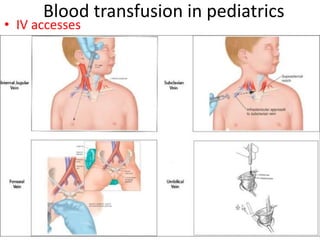
Blood transfusion in pediatrics
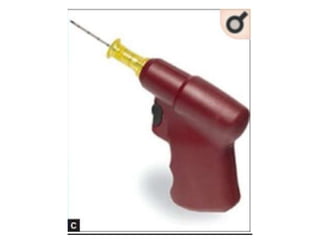
• IV accesses
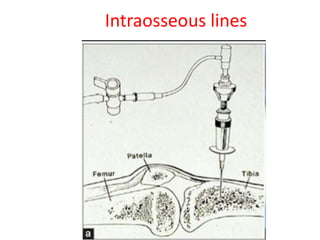
Intraosseous lines
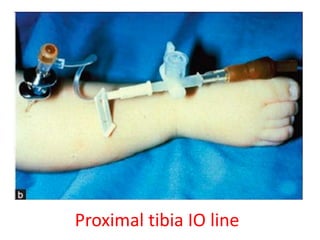
Proximal tibia IO line
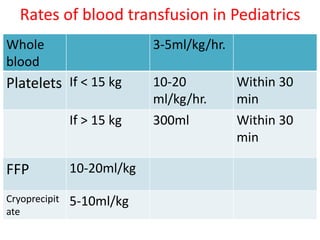
Rates of blood transfusion in Pediatrics
Whole
blood
3-5ml/kg/hr.
Platelets If < 15 kg 10-20
ml/kg/hr.
Within 30
min
If > 15 kg 300ml Within 30
min
FFP 10-20ml/kg
Cryoprecipit
ate
5-10ml/kg
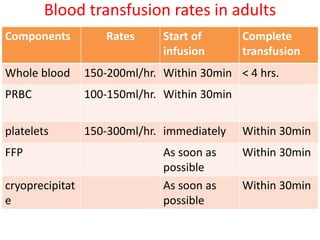
Blood transfusion rates in adults
Components Rates Start of
infusion
Complete
transfusion
Whole blood 150-200ml/hr. Within 30min < 4 hrs.
PRBC 100-150ml/hr. Within 30min
platelets 150-300ml/hr. immediately Within 30min
FFP As soon as
possible
Within 30min
cryoprecipitat
e
As soon as
possible
Within 30min
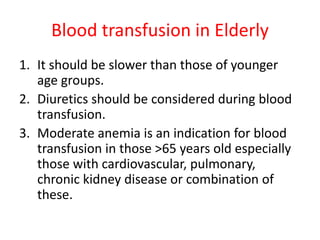
Blood transfusion in Elderly
1. It should be slower than those of younger
age groups.
2. Diuretics should be considered during blood
transfusion.
3. Moderate anemia is an indication for blood
transfusion in those >65 years old especially
those with cardiovascular, pulmonary,
chronic kidney disease or combination of
these.
Complications of blood transfusion
1-Acute incompatible hemolytic transfusion reaction.
2- febrile transfusion reaction.
3- allergic reaction.
4- infection: bacterial infection , hepatitis, HIV , and
malaria.
5- air embolism.
6- thrombophlebitis.
7- transfusion-related acute lung injury (usually from
FFP).
Massive transfusion
• Massive transfusion defined as a whole blood
volume changed within 24 hours, a
replacement greater than 10 units of RBC
packages within 24 hours, greater than 4 units
of RBC packages within 1 hour or a 50%
replacement of total blood volume within 3
hours.
Complications from massive
transfusion
1- coagulopathy .
2- hypocalcemia .
3- hyperkalemia .
4- hypokalemia.
5- hypothermia.
6-iron overload.
Thank you

Blood transfusions surgery

  • 1.
    Prepared by ; AbdullahM.Muslih Mohammed Najdat Dunya Arsalan Supervised by Dr. Nadeem Blood transfusion
  • 2.
    Contents  Definition  bloodGrouping and cross matching  Type of blood components  Blood transfusion in different age groups  Complications of blood transfusion  Massive blood transfusions
  • 3.
    Definition of Bloodtransfusion : • is the transfusion of the whole blood or its component such as blood cells or plasma from one person to another. • Blood transfusion involves two procedure that is – Collection of blood from donor Administration of blood to the recipient.
  • 4.
    Selection of donor 1.The age between of 18 to 65 years . 2. Normal Hb level: in male (13.5 – 17.5 mg/dl) , in female (11.5 – 16.5 mg/dl) 3. Donor should be free from diseases such as TB, cancer, jaundice or any other transmissible (infectious) disease. 4. Free from bleeding tendency 5. Must not have been pregnant within the last 6 months
  • 5.
    6. Make surethat donor has not donated the blood within previous 90 days (3 months). 7. Donor must have normal vital signs 8. Donor should be disqualified who have history of recent dental surgery, major surgery, receipt of blood or blood component, immunization etc.
  • 6.
    Preparation of patientfor blood transfusion 1. Taking short history from the patient fit for conditions mentioned above. 2. Collecting sample from the patient for blood grouping, (cross matching, virology screening if not in critical condition). Full cross-matching of blood takes 45 min . 3. In urgent situations, ‘type-specific’ blood is provided, which is only ABO/Rhesus matched and can be issued within 10–15 min. 4. If the patient is in the critical condition( emergency ) and need transfusion immediately we give O+ for male and O- for female. 5. Prepare blood for the patient and start transfusing appropriate amount of blood according to the age groups
  • 10.
    BLOOD COMPONENTS A- Redcell components B- Platelet concentrate C- Plasma
  • 12.
    A . cellcomponents • 1- Whole blood: • 450 ml donor blood collected into 75 ml anticoagulant/preservative solution. • Stored at 2-6°C. • Shelf life up to 5 weeks (35 days).
  • 13.
    • Indications ofWhole blood transfusion 1- Acute blood loss following trauma 2- During major surgeries 3-As a prophylactic measure prior to surgery.
  • 15.
    2. Packed redcells • It can be stored for 35 days at 6°C. •It is used in: chronic anemias, in old age, in children.
  • 16.
    B- Platelet concentrate: • Stored at 20-24°C . • Shelf life up to 5 days from collection. • Indications : 1. bleeding due to thrombocytopenia and some forms of platelet dysfunction . 2. Drug induced hemorrhage.
  • 18.
    C- Plasma . •It is indicated in burns, hypoalbuminemia, severe protein loss. It can be fractionalized into different fragments: 1- Human albumin. • The 5% solution is indicated for replacement in plasma exchange.
  • 19.
    2- Fresh frozenplasma,(FFP): • 150-300 ml plasma obtained from one donation of whole blood. • Dose of FFP is 15 ml/kg. • Shelf life usually 2 year. • It contains coagulation factors (1972). • stored at –40°C to -50. • 1 unit of FFP increases the clotting factors level by 3%.
  • 20.
    Indications of FFP 1-Severe liver disease with abnormal coagulation function. 2- Congenital clotting factor deficiency. 3- Deficiency following warfarin therapy, DIC, and massive transfusion. 4- To maintain prothrombin time at normal level.
  • 22.
    3- Cryoprecipitate: •it isrich in Factor VIII and fibrinogen. •It is stored at -40°C and can be kept for 2 year. •Indicated in; a) inherited deficiency of Factor VIII b) fibrinogen c) Factor XIII d) von Willebrand’s disease
  • 24.
    4. Fibrinogen: Itis very useful in DIC and afibrinogenemia. 5. Factor VIII and IX concentrate: They are used in hemophilia and von Willebrand’s disease. 6. Prothrombin complex concentrate (PCC) contains factors II, IX and X and Used in emergency reversal of warfarin therapy in uncontrolled hemorrhage
  • 25.
    Blood transfusion indifferent age groups
  • 26.
    Blood transfusion inpediatrics • IV accesses
  • 27.
  • 28.
  • 30.
    Rates of bloodtransfusion in Pediatrics Whole blood 3-5ml/kg/hr. Platelets If < 15 kg 10-20 ml/kg/hr. Within 30 min If > 15 kg 300ml Within 30 min FFP 10-20ml/kg Cryoprecipit ate 5-10ml/kg
  • 31.
    Blood transfusion ratesin adults Components Rates Start of infusion Complete transfusion Whole blood 150-200ml/hr. Within 30min < 4 hrs. PRBC 100-150ml/hr. Within 30min platelets 150-300ml/hr. immediately Within 30min FFP As soon as possible Within 30min cryoprecipitat e As soon as possible Within 30min
  • 32.
    Blood transfusion inElderly 1. It should be slower than those of younger age groups. 2. Diuretics should be considered during blood transfusion. 3. Moderate anemia is an indication for blood transfusion in those >65 years old especially those with cardiovascular, pulmonary, chronic kidney disease or combination of these.
  • 33.
    Complications of bloodtransfusion 1-Acute incompatible hemolytic transfusion reaction. 2- febrile transfusion reaction. 3- allergic reaction. 4- infection: bacterial infection , hepatitis, HIV , and malaria. 5- air embolism. 6- thrombophlebitis. 7- transfusion-related acute lung injury (usually from FFP).
  • 34.
    Massive transfusion • Massivetransfusion defined as a whole blood volume changed within 24 hours, a replacement greater than 10 units of RBC packages within 24 hours, greater than 4 units of RBC packages within 1 hour or a 50% replacement of total blood volume within 3 hours.
  • 35.
    Complications from massive transfusion 1-coagulopathy . 2- hypocalcemia . 3- hyperkalemia . 4- hypokalemia. 5- hypothermia. 6-iron overload.
  • 36.