BLOOD & 
BLOOD 
PRODUCTS 
Dr. Murali . U. M.S; M.B.A 
Prof. of Surgery
Objectives 
• Properties 
• Functions 
• Blood Products
Blood 
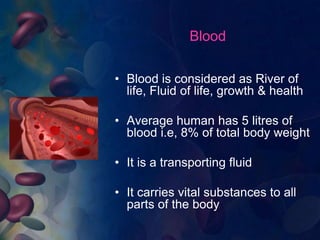
• Blood is considered as River of 
life, Fluid of life, growth & health 
• Average human has 5 litres of 
blood i.e, 8% of total body weight 
• It is a transporting fluid 
• It carries vital substances to all 
parts of the body
Properties Of Blood 
• Colour range 
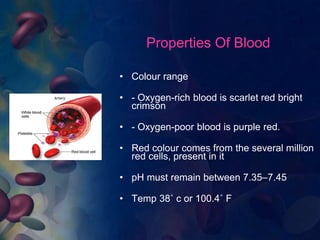
• - Oxygen-rich blood is scarlet red bright 
crimson 
• - Oxygen-poor blood is purple red. 
• Red colour comes from the several million 
red cells, present in it 
• pH must remain between 7.35–7.45 
• Temp 38˚ c or 100.4˚ F
Properties Of Blood 
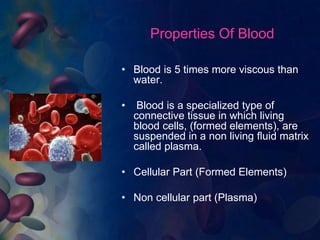
• Blood is 5 times more viscous than 
water. 
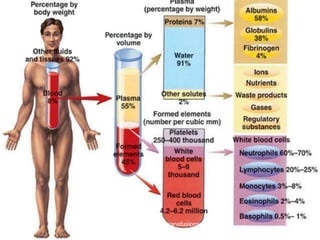
• Blood is a specialized type of 
connective tissue in which living 
blood cells, (formed elements), are 
suspended in a non living fluid matrix 
called plasma. 
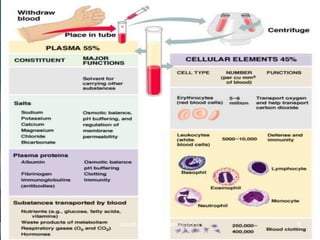
• Cellular Part (Formed Elements) 
• Non cellular part (Plasma)
blood and blood transfusions 6
Functions Of Blood 
Blood performs a number of functions 
• Distribution 
• Regulation 
• Protection
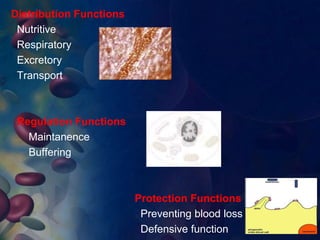
Distribution Functions 
Nutritive 
Respiratory 
Excretory 
Transport 
Regulation Functions 
Maintanence 
Buffering 
Protection Functions 
Preventing blood loss 
Defensive function 
8
blood and blood transfusions 9
Blood Products 
• Components of the blood 
which are collected from 
a donor for use in blood 
transfusion.
Blood Products 
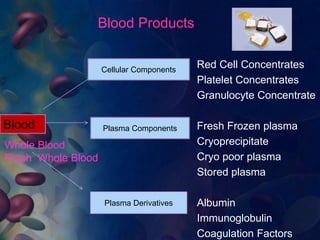
Red Cell Concentrates 
Platelet Concentrates 
Granulocyte Concentrate 
Fresh Frozen plasma 
Cryoprecipitate 
Cryo poor plasma 
Stored plasma 
Albumin 
Immunoglobulin 
Coagulation Factors 
Cellular Components 
Plasma Components 
Plasma Derivatives 
Blood 
Whole Blood 
Fresh Whole Blood
Whole Blood 
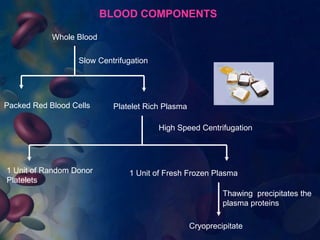
BLOOD COMPONENTS 
Slow Centrifugation 
Packed Red Blood Cells Platelet Rich Plasma 
High Speed Centrifugation 
1 Unit of Random Donor 
Platelets 
1 Unit of Fresh Frozen Plasma 
Thawing precipitates the 
plasma proteins 
Cryoprecipitate
Whole Blood 
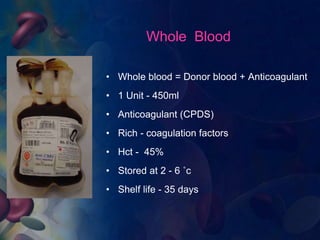
• Whole blood = Donor blood + Anticoagulant 
• 1 Unit - 450ml 
• Anticoagulant (CPDS) 
• Rich - coagulation factors 
• Hct - 45% 
• Stored at 2 - 6 ˚c 
• Shelf life - 35 days
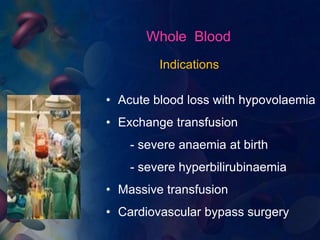
Whole Blood 
Indications 
• Acute blood loss with hypovolaemia 
• Exchange transfusion 
- severe anaemia at birth 
- severe hyperbilirubinaemia 
• Massive transfusion 
• Cardiovascular bypass surgery
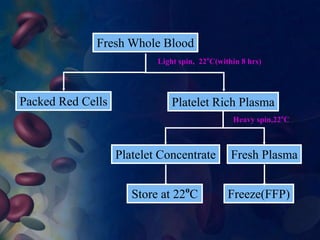
Fresh Whole Blood 
Packed Red Cells 
Light spin, 22oC(within 8 hrs) 
Platelet Rich Plasma 
Heavy spin,22oC 
Platelet Concentrate Fresh Plasma 
Store at 22oC Freeze(FFP)
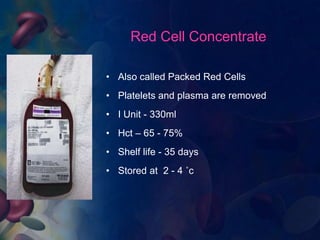
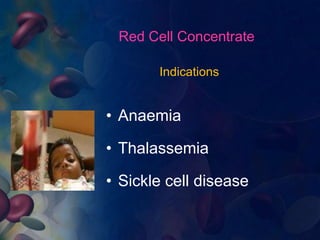
Red Cell Concentrate 
• Also called Packed Red Cells 
• Platelets and plasma are removed 
• I Unit - 330ml 
• Hct – 65 - 75% 
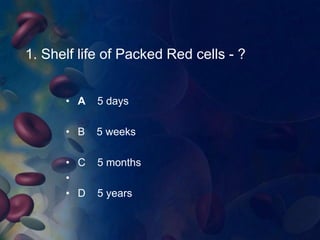
• Shelf life - 35 days 
• Stored at 2 - 4 ˚c
Red Cell Concentrate 
Indications 
• Anaemia 
• Thalassemia 
• Sickle cell disease
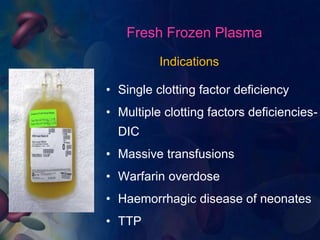
Fresh Frozen Plasma 
• Removed – Fresh blood & Rapidly Frozen 
• 1 Unit – 200 - 250ml 
• Contains all coagulant factors 
• Stored at - 40 to - 50˚c 
• Shelf life – 2 years
Fresh Frozen Plasma 
Indications 
• Single clotting factor deficiency 
• Multiple clotting factors deficiencies- 
DIC 
• Massive transfusions 
• Warfarin overdose 
• Haemorrhagic disease of neonates 
• TTP
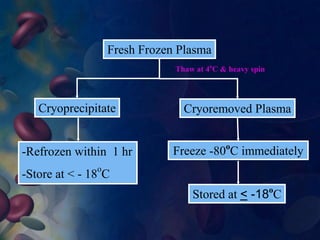
Fresh Frozen Plasma 
Thaw at 4oC & heavy spin 
Cryoprecipitate 
-Refrozen within 1 hr 
-Store at < - 18oC 
Cryoremoved Plasma 
Freeze -80oC immediately 
Stored at < -18oC
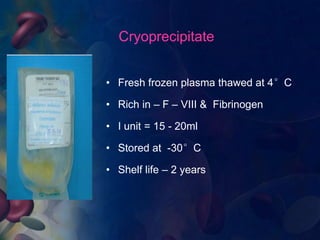
Cryoprecipitate 
• Fresh frozen plasma thawed at 4°C 
• Rich in – F – VIII & Fibrinogen 
• I unit = 15 - 20ml 
• Stored at -30°C 
• Shelf life – 2 years
Cryoprecipitate 
Indications 
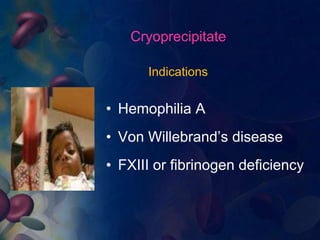
• Hemophilia A 
• Von Willebrand’s disease 
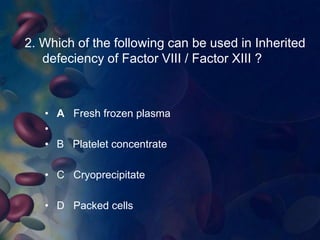
• FXIII or fibrinogen deficiency
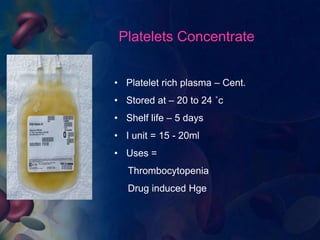
Platelets Concentrate 
• Platelet rich plasma – Cent. 
• Stored at – 20 to 24 ˚c 
• Shelf life – 5 days 
• I unit = 15 - 20ml 
• Uses = 
Thrombocytopenia 
Drug induced Hge
Prothrombin Complex Concentrate (PCC) 
• Derived from pooled plasma 
• Contains – F – II / IX / & X 
• Emergency reversal of warfarin therapy
Autologous Blood 
• Collection / infusion of client’s own blood 
• Can be collected weekly as long as client’s 
H & H are within safe range 
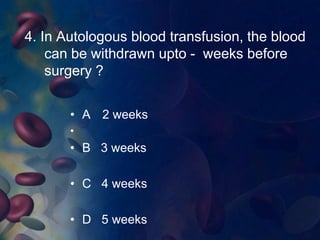
• Upto 3 weeks before surgery 
• Hct - 45% 
• Stored at 2 - 6 ˚c 
• Shelf life - 35 days
1. Shelf life of Packed Red cells - ? 
• A 5 days 
• B 5 weeks 
• C 5 months 
• 
• D 5 years
2. Which of the following can be used in Inherited 
defeciency of Factor VIII / Factor XIII ? 
• A Fresh frozen plasma 
• 
• B Platelet concentrate 
• C Cryoprecipitate 
• D Packed cells
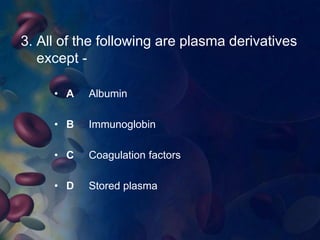
3. All of the following are plasma derivatives 
except - 
• A Albumin 
• B Immunoglobin 
• C Coagulation factors 
• D Stored plasma
4. In Autologous blood transfusion, the blood 
can be withdrawn upto - weeks before 
surgery ? 
• A 2 weeks 
• 
• B 3 weeks 
• C 4 weeks 
• D 5 weeks
5. Patients on Aspirin who are actively bleeding 
& undergoing major surgery may require - ? 
• A Prothrombin concentrate 
• B Packed red cells 
• C Plasma – Fresh 
• D Platelet concentrate
T 
H 
A 
N 
X 
THANX

Blood products

  • 1.
    BLOOD & BLOOD PRODUCTS Dr. Murali . U. M.S; M.B.A Prof. of Surgery
  • 2.
    Objectives • Properties • Functions • Blood Products
  • 3.
    Blood • Bloodis considered as River of life, Fluid of life, growth & health • Average human has 5 litres of blood i.e, 8% of total body weight • It is a transporting fluid • It carries vital substances to all parts of the body
  • 4.
    Properties Of Blood • Colour range • - Oxygen-rich blood is scarlet red bright crimson • - Oxygen-poor blood is purple red. • Red colour comes from the several million red cells, present in it • pH must remain between 7.35–7.45 • Temp 38˚ c or 100.4˚ F
  • 5.
    Properties Of Blood • Blood is 5 times more viscous than water. • Blood is a specialized type of connective tissue in which living blood cells, (formed elements), are suspended in a non living fluid matrix called plasma. • Cellular Part (Formed Elements) • Non cellular part (Plasma)

  • 6.
    blood and bloodtransfusions 6
  • 7.
    Functions Of Blood Blood performs a number of functions • Distribution • Regulation • Protection
  • 8.
    Distribution Functions Nutritive Respiratory Excretory Transport Regulation Functions Maintanence Buffering Protection Functions Preventing blood loss Defensive function 8
  • 9.
    blood and bloodtransfusions 9
  • 10.
    Blood Products •Components of the blood which are collected from a donor for use in blood transfusion.
  • 11.
    Blood Products RedCell Concentrates Platelet Concentrates Granulocyte Concentrate Fresh Frozen plasma Cryoprecipitate Cryo poor plasma Stored plasma Albumin Immunoglobulin Coagulation Factors Cellular Components Plasma Components Plasma Derivatives Blood Whole Blood Fresh Whole Blood
  • 12.
    Whole Blood BLOODCOMPONENTS Slow Centrifugation Packed Red Blood Cells Platelet Rich Plasma High Speed Centrifugation 1 Unit of Random Donor Platelets 1 Unit of Fresh Frozen Plasma Thawing precipitates the plasma proteins Cryoprecipitate
  • 13.
    Whole Blood •Whole blood = Donor blood + Anticoagulant • 1 Unit - 450ml • Anticoagulant (CPDS) • Rich - coagulation factors • Hct - 45% • Stored at 2 - 6 ˚c • Shelf life - 35 days
  • 14.
    Whole Blood Indications • Acute blood loss with hypovolaemia • Exchange transfusion - severe anaemia at birth - severe hyperbilirubinaemia • Massive transfusion • Cardiovascular bypass surgery
  • 15.
    Fresh Whole Blood Packed Red Cells Light spin, 22oC(within 8 hrs) Platelet Rich Plasma Heavy spin,22oC Platelet Concentrate Fresh Plasma Store at 22oC Freeze(FFP)
  • 16.
    Red Cell Concentrate • Also called Packed Red Cells • Platelets and plasma are removed • I Unit - 330ml • Hct – 65 - 75% • Shelf life - 35 days • Stored at 2 - 4 ˚c
  • 17.
    Red Cell Concentrate Indications • Anaemia • Thalassemia • Sickle cell disease
  • 18.
    Fresh Frozen Plasma • Removed – Fresh blood & Rapidly Frozen • 1 Unit – 200 - 250ml • Contains all coagulant factors • Stored at - 40 to - 50˚c • Shelf life – 2 years
  • 19.
    Fresh Frozen Plasma Indications • Single clotting factor deficiency • Multiple clotting factors deficiencies- DIC • Massive transfusions • Warfarin overdose • Haemorrhagic disease of neonates • TTP
  • 20.
    Fresh Frozen Plasma Thaw at 4oC & heavy spin Cryoprecipitate -Refrozen within 1 hr -Store at < - 18oC Cryoremoved Plasma Freeze -80oC immediately Stored at < -18oC
  • 21.
    Cryoprecipitate • Freshfrozen plasma thawed at 4°C • Rich in – F – VIII & Fibrinogen • I unit = 15 - 20ml • Stored at -30°C • Shelf life – 2 years
  • 22.
    Cryoprecipitate Indications •Hemophilia A • Von Willebrand’s disease • FXIII or fibrinogen deficiency
  • 23.
    Platelets Concentrate •Platelet rich plasma – Cent. • Stored at – 20 to 24 ˚c • Shelf life – 5 days • I unit = 15 - 20ml • Uses = Thrombocytopenia Drug induced Hge
  • 24.
    Prothrombin Complex Concentrate(PCC) • Derived from pooled plasma • Contains – F – II / IX / & X • Emergency reversal of warfarin therapy
  • 25.
    Autologous Blood •Collection / infusion of client’s own blood • Can be collected weekly as long as client’s H & H are within safe range • Upto 3 weeks before surgery • Hct - 45% • Stored at 2 - 6 ˚c • Shelf life - 35 days
  • 28.
    1. Shelf lifeof Packed Red cells - ? • A 5 days • B 5 weeks • C 5 months • • D 5 years
  • 29.
    2. Which ofthe following can be used in Inherited defeciency of Factor VIII / Factor XIII ? • A Fresh frozen plasma • • B Platelet concentrate • C Cryoprecipitate • D Packed cells
  • 30.
    3. All ofthe following are plasma derivatives except - • A Albumin • B Immunoglobin • C Coagulation factors • D Stored plasma
  • 31.
    4. In Autologousblood transfusion, the blood can be withdrawn upto - weeks before surgery ? • A 2 weeks • • B 3 weeks • C 4 weeks • D 5 weeks
  • 32.
    5. Patients onAspirin who are actively bleeding & undergoing major surgery may require - ? • A Prothrombin concentrate • B Packed red cells • C Plasma – Fresh • D Platelet concentrate
  • 33.
    T H A N X THANX