BLOOD SUBSTITUTES
IN THERAPY
Dr Shahid A Saache
Dept. of Pharmacology,
BJ GMC, Pune
Composition of blood
Major functions of blood
Respiration
Nutrition
Excretion
Coagulation
Maintenance of normal
acid base balance in the
body
Regulation of body
temperature by the
distribution of body heat
Regulation of water
balance through the
effects of blood on the
exchange of water
between the circulating
fluid and the tissue fluid
Defence against infection
Transport of hormones
and regulation of
metabolism
Transport of metabolites
A blood substitute is a substance used to mimic and fulfil
some functions of biological blood.
It aims to provide an alternative to blood transfusion,
which is transferring blood or blood-based products from
one person into another.
The Challenge!
The Challenge
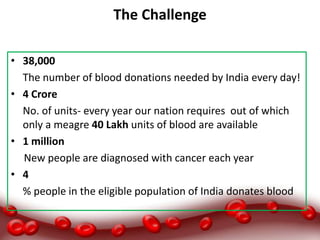
• 38,000
The number of blood donations needed by India every day!
• 4 Crore
No. of units- every year our nation requires out of which
only a meagre 40 Lakh units of blood are available
• 1 million
New people are diagnosed with cancer each year
• 4
% people in the eligible population of India donates blood
Need for blood substitute
Shortage: A very important limitation especially during
disasters, wars, emergencies, when it is needed most.
Short shelf life: This leads to a large amount of wastage of
blood.
Rare blood groups: This can be a problem, especially in under
populated areas or in a situation where there is a large
demand for blood.
Immunological incompatibility.
Disease transmission: HIV, HBV, HCV to name some of the
most common pathogens.
Historical aspects
1667 - Jean-Baptiste Denys performed the 1st documented
blood transfusion on a 15 yrs. anemic boy with sheep
blood.
pt. survived, but subsequent transfusions with sheep blood
failed
1900’s – WWII and Vietnam war ignited the search for
blood substitutes - hemoglobin solutions and synthetic O2
carriers
1980’s – the search for alternative blood substitutes further
fueled by the discovery of HIV and Hep C being transmitted
through transfusions
Ideal blood substitute
Oxygen carrying capacity, equalling or surpassing that of
biological blood
Volume expansion
Universal compatibility: elimination of cross matching
Pathogen free: elimination of blood contained infections
Minimal side effects
Survivability over a wider range of storage temperatures
Long shelf life
Cost efficient
Types of blood substitute:
Can serve as
– Plasma volume expanders or
– Replicate the oxygen carrying function of natural blood
1. Plasma Expanders: These are compounds, which are either
entirely synthetic or processed from natural proteins that serve
as infusion solutions which expand intravascular volume.
2. RBC Substitutes:
Modified Haemoglobins - these are essentially human
haemoglobins extracted from outdated blood.
Perflurocarbons - Synthetic organic compounds that can take
over perfusion
Plasma Expanders:
Crystalloids:
normal saline, dextrose and
ringer lactate.
Can serve as volume
substitutes and maintain
plasma osmolarity.
Colloid:
plasma expanders
encompass a wide range of
substances.
These compounds hold
water and actually expand
volume over the amount
infused.
Gelatin:
These are modified gelatin polymers, which were among the
earliest used colloid expanders, but are now being phased out
due to an inherent risk of anaphylaxis.
Dextran:
This is a newer generation of colloid expander which uniquely
not only expands plasma volume, but also serves to decrease
blood viscosity, thereby improving perfusion.
Hydroxyethyl Starch (HES):
This is a polymerized form of plant starch which is structurally
similar to glycogen and is therefore the safest of the plasma
expanders.
Albumins and Purified Protein Derivatives:
These are prepared by fractionating albumin and other proteins
from pooled human blood and then sterilizing and processing
the albumin so that it is iso-osmolar with plasma. These carry the
greatest risk of anaphylaxis.
Uses of plasma expanders
Both crystalloids and colloids have a specific role in overall
management of hypovolemia & are life saving products for
acute emergency situations requiring resuscitation.
They are usually used prior to blood transfusion, because
no processing or testing of the patient is required for
transfusion of expanders and hence can be infused
immediately.
Future directions:
Dextrans are currently enjoying a large share of research
focus due to potential applications, related to their ability
to coat blood cells and prevent thrombus formation.
This makes them particularly useful in vascular surgery,
such as intravascular stent placement or surgery for DVT.
Also, coating of erythrocytes causes mutual repulsion
between erythrocytes, and this improves
microcirculation.
This property has led to investigations of a potential role
for dextrans in plastic surgery to improve perfusion and
thereby hasten healing of skin grafts.
Problems
Anaplylaxis: This remains the chief drawback with plasma
expanders. It is particularly prevalent with gelatins and albumins
while HES and Dextrans have a very low reported incidence.
Disease transmission: The incidence of transmission of disease is
negligible when compared with blood, but cases have been
reported.
Nephrotoxicity: It is reported especially with dextrans.
Volume overload and electrolyte imbalance: Can be prevented by
careful titration of transfused amount and monitoring.
Chemicals……..
PFC based blood substitutesFC)
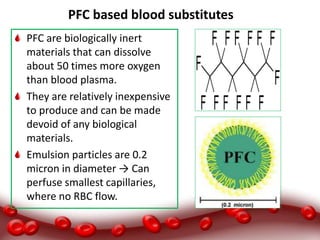
PFC are biologically inert
materials that can dissolve
about 50 times more oxygen
than blood plasma.
They are relatively inexpensive
to produce and can be made
devoid of any biological
materials.
Emulsion particles are 0.2
micron in diameter → Can
perfuse smallest capillaries,
where no RBC flow.
Not soluble in water, which means to get them to work
they must be combined with emulsions.
Now a day’s most of the PFBOCs are mixtures of
perfluorocarbons with emulsifying agent
They have the ability to carry much less oxygen than
haemoglobin based products.
This means that significantly more PFC must be used.
One product of this type has been approved for use by
FDA, but it has not been commercially successful because
the amount needed to provide a benefit is too high.
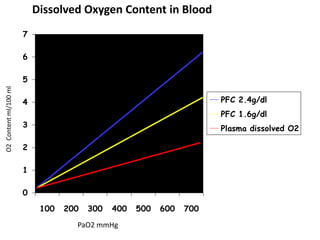
0
1
2
3
4
5
6
7
100 200 300 400 500 600 700
PFC 2.4g/dl
PFC 1.6g/dl
Plasma dissolved O2
PaO2 mmHg
O2Contentml/100ml Dissolved Oxygen Content in Blood
Advantages of PFC emulsions
Do not react with oxygen.
Inexpensive
Allow easy transportation of the oxygen to the body.
They allow increased solubility of oxygen in plasma.
minimize the effects of factors like pH and temperature in
blood circulation.
Disadvantages of perfluorocarbons (PFC)
emulsions
Often causes flu-like symptoms.
Unable to remain mixed as aqueous solutions – thus, they
must be prepared as emulsions for use in patients.
A decrease in blood platelet count.
PFC products cannot be used by the human body, and
must be discarded.
Hemoglobin-based products
PFCs absorb oxygen passively, patients must breathe at a
linear rate to ensure oxygenation of tissues.
The problem with Fluosal-DA was that they dissolve less
oxygen than pure liquids.
Examples of PFC based products
Oxygent Currently approved for Phase II Trials in US and Europe,
developed to ↓ need for donor blood during surgery.
Done well overall in most clinical trials, but recently, a
cardiac surgery study found participants to be slightly
more likely to suffer if treated with Oxygent rather than
by standard care.
Oxycyte Currently approved for Phase II-b Trials in the US.
Targeted as an oxygen therapeutic, with successful
small scale open label human trials treating traumatic
brain injury.
PHER-O2 In research
Perftoran Approved in Russian and Mexico. Distributed by KEM
Laboratory (Mexico).
Its infusion alleviates symptoms of ischemia at different
types of occlusion vessels disease, improves grafting in
plastic surgery, diminishes inflammation and prevents
rejection of transplants, inhibits retro-virus infection
development.
Local Perftoran applications are able to accelerate wounds
and ulcers healing.
Fluosol-
DA
withdrawn in 1994 due to usage complexity, limited
clinical benefit and complications
SMACC Gold 14
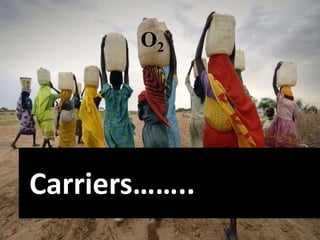
Carriers……..
O2
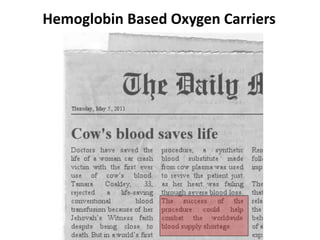
Hemoglobin Based Oxygen Carriers
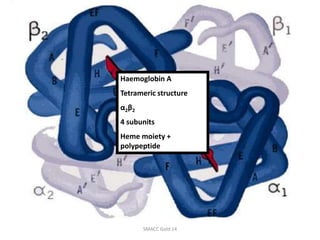
Haemoglobin A
Tetrameric structure
α2β2
4 subunits
Heme moiety +
polypeptide
SMACC Gold 14
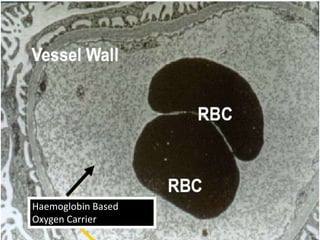
Haemoglobin Based
Oxygen Carrier
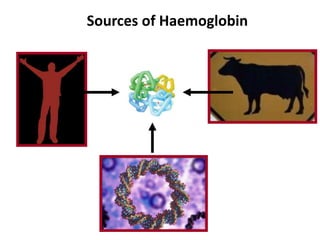
Sources of Haemoglobin
Oxygen Dissociation Curves
0
20
40
60
80
100
120
0 10 20 30 40 50 60 70 80 90 100 110 120 130 140 150
Partial Pressure of Oxygen PaO2 (mmHg)
OxygenSaturation(%)
RBC Hb
Stroma Free Hb0
HBOC
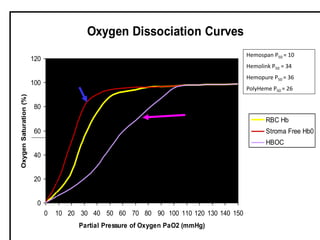
Hemospan P50 = 10
Hemolink P50 = 34
Hemopure P50 = 36
PolyHeme P50 = 26
Advantages of HBOCBOCS)-
Available in much larger quantities.
Can be stored for long durations.
Can be administered rapidly without typing or cross
matching blood types.
Can be sterilized via pasteurization.
Disadvantages of HBOCRS (HBOCS)
Short half-life
Disrupts certain physiological structures, especially the
gastrointestinal tract and normal red blood cell
haemoglobin.
They release free radicals into the body
Availability and cost
SMACC Gold 14
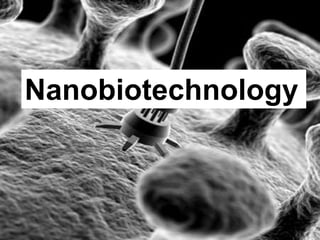
Nanobiotechnology
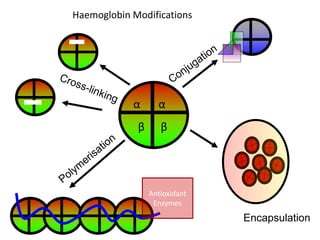
α α
β β
Haemoglobin Modifications
Antioxidant
Enzymes
Encapsulation
SMACC Gold 14
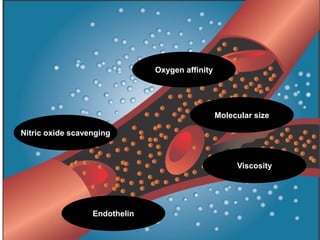
Vasoconstriction
Nitric oxide scavenging
Molecular size
Endothelin
Viscosity
Oxygen affinity
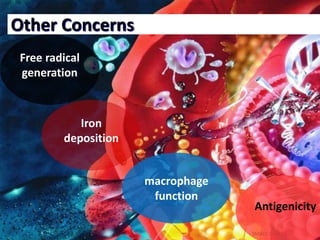
Other Concerns
SMACC Gold 14
Free radical
generation
Iron
deposition
macrophage
function
Antigenicity
Examples of HBOCs
Hemopure
Polymerised
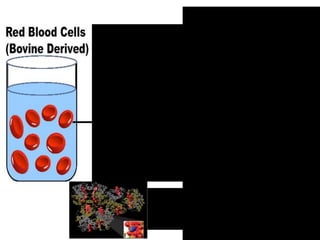
bovine Hb
Currently approved for Phase III trials in US and was more
widely approved in South Africa. Many safety measures
are taken to render free of pathogens, including herd
control and monitoring.
Oxyglobin Currently approved for veterinary use in US & Europe.
Oxyglobin solution is the first & only oxygen
therapeutic to be both US FDA and European Commission
approved for veterinary use. Oxyglobin has been used
primarily for blood transfusions and for treatment of
anaemia in dogs.
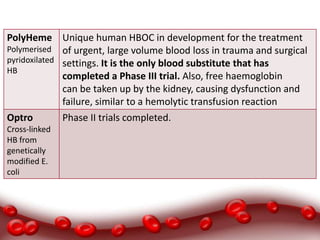
PolyHeme
Polymerised
pyridoxilated
HB
Unique human HBOC in development for the treatment
of urgent, large volume blood loss in trauma and surgical
settings. It is the only blood substitute that has
completed a Phase III trial. Also, free haemoglobin
can be taken up by the kidney, causing dysfunction and
failure, similar to a hemolytic transfusion reaction
Optro
Cross-linked
HB from
genetically
modified E.
coli
Phase II trials completed.
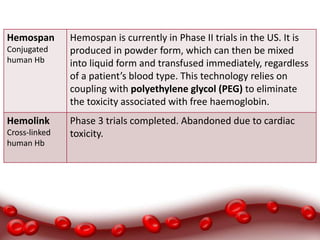
Hemospan
Conjugated
human Hb
Hemospan is currently in Phase II trials in the US. It is
produced in powder form, which can then be mixed
into liquid form and transfused immediately, regardless
of a patient’s blood type. This technology relies on
coupling with polyethylene glycol (PEG) to eliminate
the toxicity associated with free haemoglobin.
Hemolink
Cross-linked
human Hb
Phase 3 trials completed. Abandoned due to cardiac
toxicity.
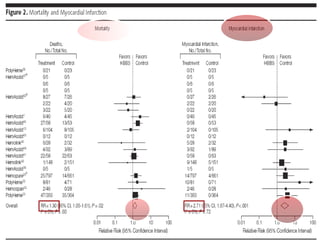
Safety of HBOCs
1980 – 2008
70 trials
16 trials
5 products
n =3711
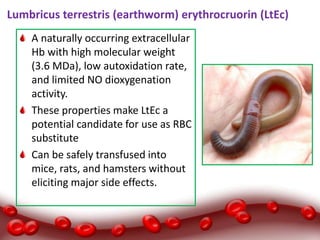
Lumbricus terrestris (earthworm) erythrocruorin (LtEc)
A naturally occurring extracellular
Hb with high molecular weight
(3.6 MDa), low autoxidation rate,
and limited NO dioxygenation
activity.
These properties make LtEc a
potential candidate for use as RBC
substitute
Can be safely transfused into
mice, rats, and hamsters without
eliciting major side effects.
Polyhemoglobin-Fibrinogen (polyHb-Fg)
A novel blood substitute that is an oxygen carrier with
platelet-like activity.
Formed by crosslinking fibrinogen to hemoglobin to form
polyhemoglobin-fibrinogen (polyHb-Fg).
In the in vitro experiments, PolyHb-Fg showed similar
clotting times as whole blood, whereas polyHb showed
significantly higher clotting times.
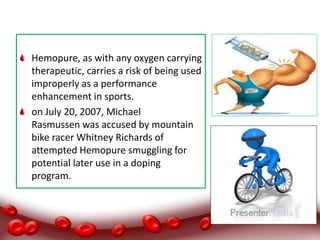
Hemopure, as with any oxygen carrying
therapeutic, carries a risk of being used
improperly as a performance
enhancement in sports.
on July 20, 2007, Michael
Rasmussen was accused by mountain
bike racer Whitney Richards of
attempted Hemopure smuggling for
potential later use in a doping
program.
Platelet substitutes
Infusible platelet membranes
Red cells with surface-bound fibrinogen
Liposome-based agents
Thrombosphere
Blood products grown from stem cells
RBCs may be grown either from embryonic stem cells or
hematopoietic progenitor cells.
in 2008, Lu et al reported success using embryonic stem
cells to grow mature erythrocytes on a large scale.
However, the cells produced show a phenotype more
consistent with fetal or embryonic erythrocytes than
adult blood cells.
Further research will be required to increase yields,
eliminate potentially tumorigenic nucleated cells, and
determine the half-life and immunogenicity of
erythrocytes grown from stem cells.
Other potential techniques
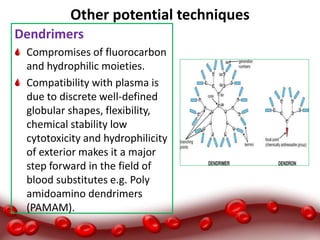
Dendrimers
Compromises of fluorocarbon
and hydrophilic moieties.
Compatibility with plasma is
due to discrete well‐defined
globular shapes, flexibility,
chemical stability low
cytotoxicity and hydrophilicity
of exterior makes it a major
step forward in the field of
blood substitutes e.g. Poly
amidoamino dendrimers
(PAMAM).
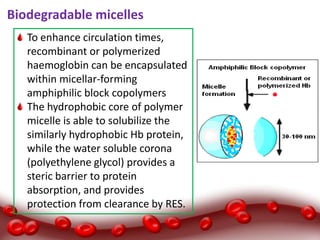
Biodegradable micelles
To enhance circulation times,
recombinant or polymerized
haemoglobin can be encapsulated
within micellar-forming
amphiphilic block copolymers
The hydrophobic core of polymer
micelle is able to solubilize the
similarly hydrophobic Hb protein,
while the water soluble corona
(polyethylene glycol) provides a
steric barrier to protein
absorption, and provides
protection from clearance by RES.
Placental umbilical cord blood
Cord blood collected aseptically from
the placenta after the birth of a healthy
baby can be used safely as a blood
substitute.
higher haemoglobin content and
growth factors than normal blood from
an adult, which has the potential to
benefit patients in varying diseases.
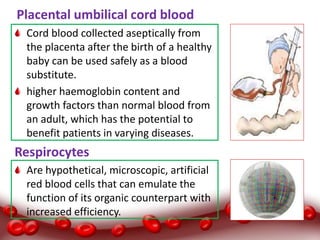
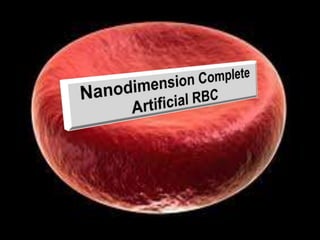
Respirocytes
Are hypothetical, microscopic, artificial
red blood cells that can emulate the
function of its organic counterpart with
increased efficiency.
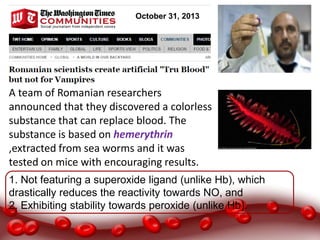
A team of Romanian researchers
announced that they discovered a colorless
substance that can replace blood. The
substance is based on hemerythrin
,extracted from sea worms and it was
tested on mice with encouraging results.
October 31, 2013
1. Not featuring a superoxide ligand (unlike Hb), which
drastically reduces the reactivity towards NO, and
2. Exhibiting stability towards peroxide (unlike Hb).
The more you sweat in peace, the
less you bleed in war.
--Norman Schwarzkopf

Blood substitutes in therapy

  • 1.
    BLOOD SUBSTITUTES IN THERAPY DrShahid A Saache Dept. of Pharmacology, BJ GMC, Pune
  • 2.
  • 3.
    Major functions ofblood Respiration Nutrition Excretion Coagulation Maintenance of normal acid base balance in the body Regulation of body temperature by the distribution of body heat Regulation of water balance through the effects of blood on the exchange of water between the circulating fluid and the tissue fluid Defence against infection Transport of hormones and regulation of metabolism Transport of metabolites
  • 4.
    A blood substituteis a substance used to mimic and fulfil some functions of biological blood. It aims to provide an alternative to blood transfusion, which is transferring blood or blood-based products from one person into another.
  • 6.
  • 7.
    The Challenge • 38,000 Thenumber of blood donations needed by India every day! • 4 Crore No. of units- every year our nation requires out of which only a meagre 40 Lakh units of blood are available • 1 million New people are diagnosed with cancer each year • 4 % people in the eligible population of India donates blood
  • 8.
    Need for bloodsubstitute Shortage: A very important limitation especially during disasters, wars, emergencies, when it is needed most. Short shelf life: This leads to a large amount of wastage of blood. Rare blood groups: This can be a problem, especially in under populated areas or in a situation where there is a large demand for blood. Immunological incompatibility. Disease transmission: HIV, HBV, HCV to name some of the most common pathogens.
  • 9.
  • 10.
    1667 - Jean-BaptisteDenys performed the 1st documented blood transfusion on a 15 yrs. anemic boy with sheep blood. pt. survived, but subsequent transfusions with sheep blood failed 1900’s – WWII and Vietnam war ignited the search for blood substitutes - hemoglobin solutions and synthetic O2 carriers 1980’s – the search for alternative blood substitutes further fueled by the discovery of HIV and Hep C being transmitted through transfusions
  • 11.
    Ideal blood substitute Oxygencarrying capacity, equalling or surpassing that of biological blood Volume expansion Universal compatibility: elimination of cross matching Pathogen free: elimination of blood contained infections Minimal side effects Survivability over a wider range of storage temperatures Long shelf life Cost efficient
  • 12.
    Types of bloodsubstitute: Can serve as – Plasma volume expanders or – Replicate the oxygen carrying function of natural blood 1. Plasma Expanders: These are compounds, which are either entirely synthetic or processed from natural proteins that serve as infusion solutions which expand intravascular volume. 2. RBC Substitutes: Modified Haemoglobins - these are essentially human haemoglobins extracted from outdated blood. Perflurocarbons - Synthetic organic compounds that can take over perfusion
  • 13.
    Plasma Expanders: Crystalloids: normal saline,dextrose and ringer lactate. Can serve as volume substitutes and maintain plasma osmolarity. Colloid: plasma expanders encompass a wide range of substances. These compounds hold water and actually expand volume over the amount infused.
  • 14.
    Gelatin: These are modifiedgelatin polymers, which were among the earliest used colloid expanders, but are now being phased out due to an inherent risk of anaphylaxis. Dextran: This is a newer generation of colloid expander which uniquely not only expands plasma volume, but also serves to decrease blood viscosity, thereby improving perfusion.
  • 15.
    Hydroxyethyl Starch (HES): Thisis a polymerized form of plant starch which is structurally similar to glycogen and is therefore the safest of the plasma expanders. Albumins and Purified Protein Derivatives: These are prepared by fractionating albumin and other proteins from pooled human blood and then sterilizing and processing the albumin so that it is iso-osmolar with plasma. These carry the greatest risk of anaphylaxis.
  • 16.
    Uses of plasmaexpanders Both crystalloids and colloids have a specific role in overall management of hypovolemia & are life saving products for acute emergency situations requiring resuscitation. They are usually used prior to blood transfusion, because no processing or testing of the patient is required for transfusion of expanders and hence can be infused immediately.
  • 17.
    Future directions: Dextrans arecurrently enjoying a large share of research focus due to potential applications, related to their ability to coat blood cells and prevent thrombus formation. This makes them particularly useful in vascular surgery, such as intravascular stent placement or surgery for DVT. Also, coating of erythrocytes causes mutual repulsion between erythrocytes, and this improves microcirculation. This property has led to investigations of a potential role for dextrans in plastic surgery to improve perfusion and thereby hasten healing of skin grafts.
  • 18.
    Problems Anaplylaxis: This remainsthe chief drawback with plasma expanders. It is particularly prevalent with gelatins and albumins while HES and Dextrans have a very low reported incidence. Disease transmission: The incidence of transmission of disease is negligible when compared with blood, but cases have been reported. Nephrotoxicity: It is reported especially with dextrans. Volume overload and electrolyte imbalance: Can be prevented by careful titration of transfused amount and monitoring.
  • 19.
  • 20.
    PFC based bloodsubstitutesFC) PFC are biologically inert materials that can dissolve about 50 times more oxygen than blood plasma. They are relatively inexpensive to produce and can be made devoid of any biological materials. Emulsion particles are 0.2 micron in diameter → Can perfuse smallest capillaries, where no RBC flow.
  • 21.
    Not soluble inwater, which means to get them to work they must be combined with emulsions. Now a day’s most of the PFBOCs are mixtures of perfluorocarbons with emulsifying agent They have the ability to carry much less oxygen than haemoglobin based products. This means that significantly more PFC must be used. One product of this type has been approved for use by FDA, but it has not been commercially successful because the amount needed to provide a benefit is too high.
  • 23.
    0 1 2 3 4 5 6 7 100 200 300400 500 600 700 PFC 2.4g/dl PFC 1.6g/dl Plasma dissolved O2 PaO2 mmHg O2Contentml/100ml Dissolved Oxygen Content in Blood
  • 24.
    Advantages of PFCemulsions Do not react with oxygen. Inexpensive Allow easy transportation of the oxygen to the body. They allow increased solubility of oxygen in plasma. minimize the effects of factors like pH and temperature in blood circulation.
  • 25.
    Disadvantages of perfluorocarbons(PFC) emulsions Often causes flu-like symptoms. Unable to remain mixed as aqueous solutions – thus, they must be prepared as emulsions for use in patients. A decrease in blood platelet count. PFC products cannot be used by the human body, and must be discarded.
  • 26.
    Hemoglobin-based products PFCs absorboxygen passively, patients must breathe at a linear rate to ensure oxygenation of tissues. The problem with Fluosal-DA was that they dissolve less oxygen than pure liquids.
  • 27.
    Examples of PFCbased products Oxygent Currently approved for Phase II Trials in US and Europe, developed to ↓ need for donor blood during surgery. Done well overall in most clinical trials, but recently, a cardiac surgery study found participants to be slightly more likely to suffer if treated with Oxygent rather than by standard care. Oxycyte Currently approved for Phase II-b Trials in the US. Targeted as an oxygen therapeutic, with successful small scale open label human trials treating traumatic brain injury. PHER-O2 In research
  • 28.
    Perftoran Approved inRussian and Mexico. Distributed by KEM Laboratory (Mexico). Its infusion alleviates symptoms of ischemia at different types of occlusion vessels disease, improves grafting in plastic surgery, diminishes inflammation and prevents rejection of transplants, inhibits retro-virus infection development. Local Perftoran applications are able to accelerate wounds and ulcers healing. Fluosol- DA withdrawn in 1994 due to usage complexity, limited clinical benefit and complications SMACC Gold 14
  • 29.
  • 30.
  • 31.
    Haemoglobin A Tetrameric structure α2β2 4subunits Heme moiety + polypeptide SMACC Gold 14
  • 32.
  • 33.
  • 34.
    Oxygen Dissociation Curves 0 20 40 60 80 100 120 010 20 30 40 50 60 70 80 90 100 110 120 130 140 150 Partial Pressure of Oxygen PaO2 (mmHg) OxygenSaturation(%) RBC Hb Stroma Free Hb0 HBOC Hemospan P50 = 10 Hemolink P50 = 34 Hemopure P50 = 36 PolyHeme P50 = 26
  • 35.
    Advantages of HBOCBOCS)- Availablein much larger quantities. Can be stored for long durations. Can be administered rapidly without typing or cross matching blood types. Can be sterilized via pasteurization.
  • 36.
    Disadvantages of HBOCRS(HBOCS) Short half-life Disrupts certain physiological structures, especially the gastrointestinal tract and normal red blood cell haemoglobin. They release free radicals into the body Availability and cost
  • 37.
  • 38.
    α α β β HaemoglobinModifications Antioxidant Enzymes Encapsulation
  • 39.
  • 41.
    Vasoconstriction Nitric oxide scavenging Molecularsize Endothelin Viscosity Oxygen affinity
  • 43.
    Other Concerns SMACC Gold14 Free radical generation Iron deposition macrophage function Antigenicity
  • 44.
    Examples of HBOCs Hemopure Polymerised bovineHb Currently approved for Phase III trials in US and was more widely approved in South Africa. Many safety measures are taken to render free of pathogens, including herd control and monitoring. Oxyglobin Currently approved for veterinary use in US & Europe. Oxyglobin solution is the first & only oxygen therapeutic to be both US FDA and European Commission approved for veterinary use. Oxyglobin has been used primarily for blood transfusions and for treatment of anaemia in dogs.
  • 45.
    PolyHeme Polymerised pyridoxilated HB Unique human HBOCin development for the treatment of urgent, large volume blood loss in trauma and surgical settings. It is the only blood substitute that has completed a Phase III trial. Also, free haemoglobin can be taken up by the kidney, causing dysfunction and failure, similar to a hemolytic transfusion reaction Optro Cross-linked HB from genetically modified E. coli Phase II trials completed.
  • 46.
    Hemospan Conjugated human Hb Hemospan iscurrently in Phase II trials in the US. It is produced in powder form, which can then be mixed into liquid form and transfused immediately, regardless of a patient’s blood type. This technology relies on coupling with polyethylene glycol (PEG) to eliminate the toxicity associated with free haemoglobin. Hemolink Cross-linked human Hb Phase 3 trials completed. Abandoned due to cardiac toxicity.
  • 47.
    Safety of HBOCs 1980– 2008 70 trials 16 trials 5 products n =3711
  • 50.
    Lumbricus terrestris (earthworm)erythrocruorin (LtEc) A naturally occurring extracellular Hb with high molecular weight (3.6 MDa), low autoxidation rate, and limited NO dioxygenation activity. These properties make LtEc a potential candidate for use as RBC substitute Can be safely transfused into mice, rats, and hamsters without eliciting major side effects.
  • 51.
    Polyhemoglobin-Fibrinogen (polyHb-Fg) A novelblood substitute that is an oxygen carrier with platelet-like activity. Formed by crosslinking fibrinogen to hemoglobin to form polyhemoglobin-fibrinogen (polyHb-Fg). In the in vitro experiments, PolyHb-Fg showed similar clotting times as whole blood, whereas polyHb showed significantly higher clotting times.
  • 52.
    Hemopure, as withany oxygen carrying therapeutic, carries a risk of being used improperly as a performance enhancement in sports. on July 20, 2007, Michael Rasmussen was accused by mountain bike racer Whitney Richards of attempted Hemopure smuggling for potential later use in a doping program.
  • 53.
    Platelet substitutes Infusible plateletmembranes Red cells with surface-bound fibrinogen Liposome-based agents Thrombosphere
  • 54.
    Blood products grownfrom stem cells RBCs may be grown either from embryonic stem cells or hematopoietic progenitor cells. in 2008, Lu et al reported success using embryonic stem cells to grow mature erythrocytes on a large scale. However, the cells produced show a phenotype more consistent with fetal or embryonic erythrocytes than adult blood cells. Further research will be required to increase yields, eliminate potentially tumorigenic nucleated cells, and determine the half-life and immunogenicity of erythrocytes grown from stem cells.
  • 55.
    Other potential techniques Dendrimers Compromisesof fluorocarbon and hydrophilic moieties. Compatibility with plasma is due to discrete well‐defined globular shapes, flexibility, chemical stability low cytotoxicity and hydrophilicity of exterior makes it a major step forward in the field of blood substitutes e.g. Poly amidoamino dendrimers (PAMAM).
  • 56.
    Biodegradable micelles To enhancecirculation times, recombinant or polymerized haemoglobin can be encapsulated within micellar-forming amphiphilic block copolymers The hydrophobic core of polymer micelle is able to solubilize the similarly hydrophobic Hb protein, while the water soluble corona (polyethylene glycol) provides a steric barrier to protein absorption, and provides protection from clearance by RES.
  • 57.
    Placental umbilical cordblood Cord blood collected aseptically from the placenta after the birth of a healthy baby can be used safely as a blood substitute. higher haemoglobin content and growth factors than normal blood from an adult, which has the potential to benefit patients in varying diseases. Respirocytes Are hypothetical, microscopic, artificial red blood cells that can emulate the function of its organic counterpart with increased efficiency.
  • 58.
    A team ofRomanian researchers announced that they discovered a colorless substance that can replace blood. The substance is based on hemerythrin ,extracted from sea worms and it was tested on mice with encouraging results. October 31, 2013 1. Not featuring a superoxide ligand (unlike Hb), which drastically reduces the reactivity towards NO, and 2. Exhibiting stability towards peroxide (unlike Hb).
  • 60.
    The more yousweat in peace, the less you bleed in war. --Norman Schwarzkopf