SYMPTOMS OF INFECTION
         BY
 OTHER BLOOD BORNE
     PATHOGENS.


 Rebecca Lomas & Alishia
          Smith

Mrs. Covington’s: 7 a.m.-12
Blood Borne Pathogens

    Is a disease- causing
      microorganisms
     carried in the host
           blood.
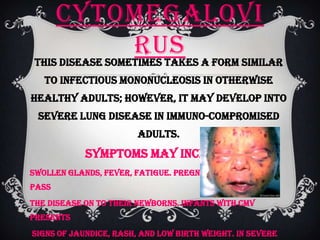
CYTOMEGALOVI
                  RUS a form similar
 This disease sometimes takes
   to infectious mononucleosis in otherwise
healthy adults; however, it may develop into
 severe lung disease in immuno-compromised
                        adults.
            Symptoms may include:
Swollen glands, fever, fatigue. Pregnant women can
pass
the disease on to their newborns. Infants with CMV
presents
signs of jaundice, rash, and low birth weight. In severe
ERY THEMA INFECTIOSUM
     (PARVOVIRUS B19)

Moderately contagious disease seen
  mainly in children and caused by
human parvovirus B19. This disease is
characterized by the abrupt onset of
a rash. The virus may be transmitted
from mother to fetus, and although it
does not cause birth defects, there is
   some risk of fetal death from
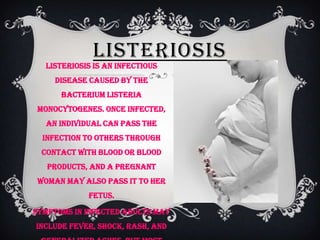
LISTERIOSIS
  Listeriosis is an infectious
     disease caused by the
      bacterium Listeria
 monocytogenes. Once infected,
  an individual can pass the
  infection to others through
 contact with blood or blood
   products, and a pregnant
 woman may also pass it to her
            fetus.

Symptoms in infected adults may
include fever, shock, rash, and
MALARIA
 Malaria infection is spread from person to
person primarily through the bite of infected
 mosquitoes. There also have been cases of
transmission from mother to fetus as well as
  from an infected to an uninfected person
    through an accidental needle stick.

                 Symptoms:

             High fever i.e. 104-
     106°F, headache, gastrointestinal
   difficulties, enlarged spleen and liver
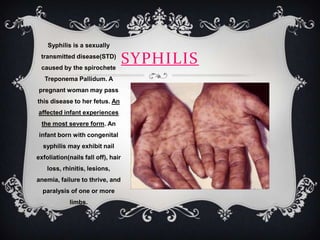
Syphilis is a sexually
 transmitted disease(STD)
 caused by the spirochete
                                    SYPHILIS
   Treponema Pallidum. A
pregnant woman may pass
this disease to her fetus. An
affected infant experiences
  the most severe form. An
infant born with congenital
  syphilis may exhibit nail
exfoliation(nails fall off), hair
    loss, rhinitis, lesions,
anemia, failure to thrive, and
  paralysis of one or more
            limbs.

Blood borne infections

  • 1.
    SYMPTOMS OF INFECTION BY OTHER BLOOD BORNE PATHOGENS. Rebecca Lomas & Alishia Smith Mrs. Covington’s: 7 a.m.-12
  • 2.
    Blood Borne Pathogens Is a disease- causing microorganisms carried in the host blood.
  • 3.
    CYTOMEGALOVI RUS a form similar This disease sometimes takes to infectious mononucleosis in otherwise healthy adults; however, it may develop into severe lung disease in immuno-compromised adults. Symptoms may include: Swollen glands, fever, fatigue. Pregnant women can pass the disease on to their newborns. Infants with CMV presents signs of jaundice, rash, and low birth weight. In severe
  • 4.
    ERY THEMA INFECTIOSUM (PARVOVIRUS B19) Moderately contagious disease seen mainly in children and caused by human parvovirus B19. This disease is characterized by the abrupt onset of a rash. The virus may be transmitted from mother to fetus, and although it does not cause birth defects, there is some risk of fetal death from
  • 5.
    LISTERIOSIS Listeriosisis an infectious disease caused by the bacterium Listeria monocytogenes. Once infected, an individual can pass the infection to others through contact with blood or blood products, and a pregnant woman may also pass it to her fetus. Symptoms in infected adults may include fever, shock, rash, and
  • 6.
    MALARIA Malaria infectionis spread from person to person primarily through the bite of infected mosquitoes. There also have been cases of transmission from mother to fetus as well as from an infected to an uninfected person through an accidental needle stick. Symptoms: High fever i.e. 104- 106°F, headache, gastrointestinal difficulties, enlarged spleen and liver
  • 7.
    Syphilis is asexually transmitted disease(STD) caused by the spirochete SYPHILIS Treponema Pallidum. A pregnant woman may pass this disease to her fetus. An affected infant experiences the most severe form. An infant born with congenital syphilis may exhibit nail exfoliation(nails fall off), hair loss, rhinitis, lesions, anemia, failure to thrive, and paralysis of one or more limbs.