BLOOD
PRESENTED BY
PAREEKSIT BAGCHI
I MDS
DEPT OF ORAL AND MAXILLOFACIAL SURGERY
CONTENTS
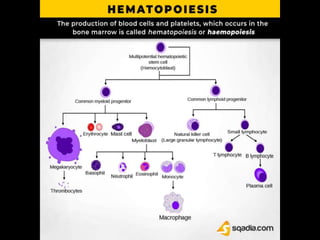
• Introduction
• Composition
• Functions of blood
• Individual components
• Complete blood count
• Blood products
• Hemostasis
• Hemostatic agents
• Conclusion
• Reference
Introduction
• As oral and maxillofacial surgeons, we are faced with
medically compromised patients with systemic diseases,
which alter hemostasis, and those who are
therapeutically taking coagulation-altering therapy on a
daily basis.
• Careful management of the patient with risk for altered
hemostasis or taking anticoagulant drugs in the
perioperative period is essential in treating our surgical
patients.
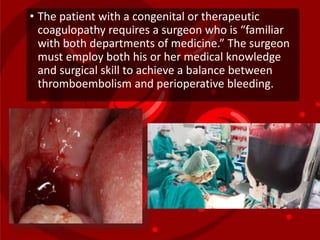
• The patient with a congenital or therapeutic
coagulopathy requires a surgeon who is “familiar
with both departments of medicine.” The surgeon
must employ both his or her medical knowledge
and surgical skill to achieve a balance between
thromboembolism and perioperative bleeding.
BLOOD COMPOSITION
• Blood is the main circulating fluid in the
human body.
• Study of blood is called HAEMATOLOGY.
• It is a fluid connective tissue derived from
mesoderm.
• Bright red in colour, slightly alkaline(pH 7.4),
salty, and heavier than water.
• The adult has 5lit of blood which constitute
about 8% of the total body weight.
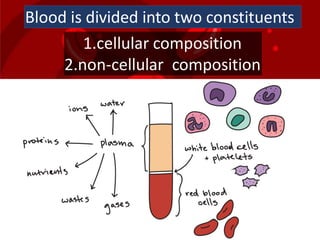
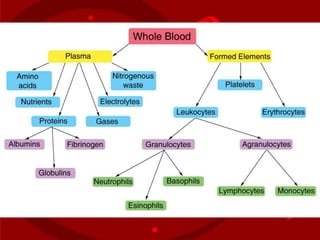
Blood is divided into two constituents
1.cellular composition
2.non-cellular composition
Functions of blood
• TRANSPORTATION :
Respiration
Nutrient carrier from
• GIT
Transportation of hormones from
endocrine glands
Transportation of metabolic waste.
REGULATION :
Regulates pH
Adjusts and maintain
body temperature
Maintains water
contents of cells
PROTECTION :
WBCs protects against disease
by phagocytosis
Reservoir for substances like
water,electrolytes.
Performs haemostasis.
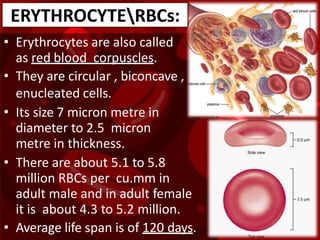
• Erythrocytes are also called
as red blood corpuscles.
• They are circular , biconcave ,
enucleated cells.
• Its size 7 micron metre in
diameter to 2.5 micron
metre in thickness.
• There are about 5.1 to 5.8
million RBCs per cu.mm in
adult male and in adult female
it is about 4.3 to 5.2 million.
• Average life span is of 120 days.
ERYTHROCYTERBCs:
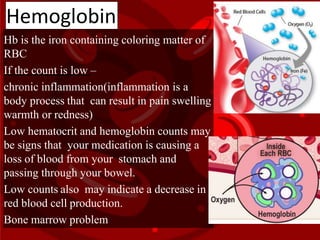
Hemoglobin
Hb is the iron containing coloring matter of
RBC
If the count is low –
chronic inflammation(inflammation is a
body process that can result in pain swelling
warmth or redness)
Low hematocrit and hemoglobin counts may
be signs that your medication is causing a
loss of blood from your stomach and
passing through your bowel.
Low counts also may indicate a decrease in
red blood cell production.
Bone marrow problem
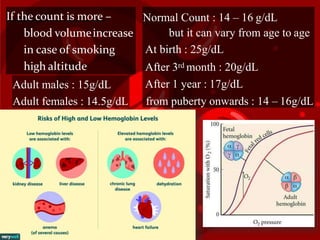
If the count is more –
blood volumeincrease
in case of smoking
high altitude
Normal Count : 14 – 16 g/dL
but it can vary from age to age
At birth : 25g/dL
After 3rd month : 20g/dL
After 1 year : 17g/dL
from puberty onwards : 14 – 16g/dL
Adult males : 15g/dL
Adult females : 14.5g/dL
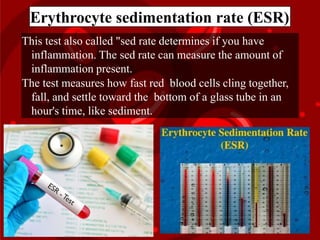
Erythrocyte sedimentation rate (ESR)
This test also called "sed rate determines if you have
inflammation. The sed rate can measure the amount of
inflammation present.
The test measures how fast red blood cells cling together,
fall, and settle toward the bottom of a glass tube in an
hour's time, like sediment.
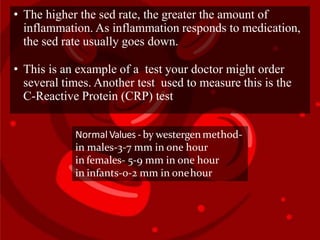
• The higher the sed rate, the greater the amount of
inflammation. As inflammation responds to medication,
the sed rate usually goes down.
• This is an example of a test your doctor might order
several times. Another test used to measure this is the
C-Reactive Protein (CRP) test.
Normal Values - by westergenmethod-
in males-3-7 mm in one hour
in females- 5-9 mm in one hour
in infants-0-2 mm in onehour
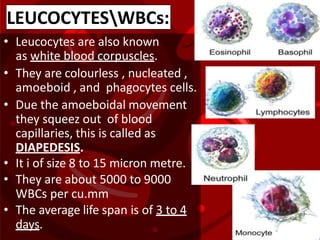
• Leucocytes are also known
as white blood corpuscles.
• They are colourless , nucleated ,
amoeboid , and phagocytes cells.
• Due the amoeboidal movement
they squeez out of blood
capillaries, this is called as
DIAPEDESIS.
• It i of size 8 to 15 micron metre.
• They are about 5000 to 9000
WBCs per cu.mm
• The average life span is of 3 to 4
days.
LEUCOCYTESWBCs:
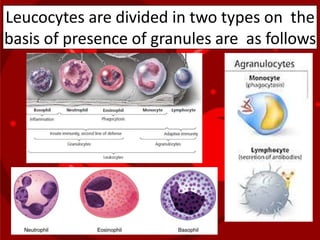
Leucocytes are divided in two types on the
basis of presence of granules are as follows
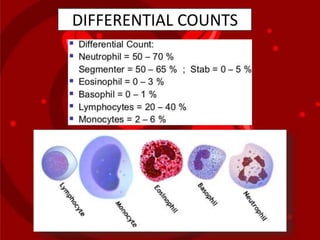
DIFFERENTIAL COUNTS
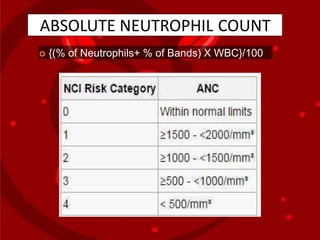
ABSOLUTE NEUTROPHIL COUNT
 {(% of Neutrophils+ % of Bands) X WBC}/100
NEUTROPENIA Decreased production in
the bone marrow due to:
aplastic anemia
arsenic poisoning
cancer, particularly
blood cancers
certain medications
hereditary
disorders (e.g. congenital
neutropenia, cyclic
neutropenia)
radiation
Vitamin B12, folateor copper
deficiency
 Increased destruction:
autoimmune neutropenia
chemotherapy treatments,
such as for cancer and
autoimmune diseases
 Marginalisation
and
sequestration:
Hemodialysis
Medications
Flecainide (a class 1C cardiac
antiarrhythmic drug) Phenytoin
Indomethacin
Propylthiouracil
Carbimazole
Chlorpromazine
Trimethoprim/
sulfamethoxazole
(cotmoxazole)
Clozapine
Ticlodipine
r
i
Often, a mild neutropenia is seen in
viral infections. Additionally, a
condition called morning
pseudoneutropenia might be a side
effect of certain antipsychotic
medications.
NEUTROPHILIA
 Post splenectomy
 Cigarette smoking
 Hypoxia
 Epinephrine
 Exercise
• Acute or Chronic
Infection
• Myeloprofilerative
disorders
• Acute stress
• Lukemoid reactions
• Drugs (steroids)
• Chronic Inflammation
• Tumors
• Myelophthisis
• Hyperactive marrow
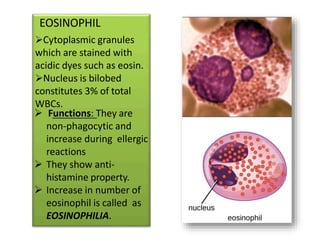
EOSINOPHIL
Cytoplasmic granules
which are stained with
acidic dyes such as eosin.
Nucleus is bilobed
constitutes 3% of total
WBCs.
 Functions: They are
non-phagocytic and
increase during ellergic
reactions
 They show anti-
histamine property.
 Increase in number of
eosinophil is called as
EOSINOPHILIA.
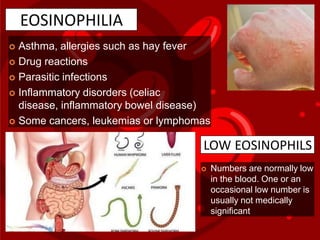
EOSINOPHILIA
 Asthma, allergies such as hay fever
 Drug reactions
 Parasitic infections
 Inflammatory disorders (celiac
disease, inflammatory bowel disease)
 Some cancers, leukemias or lymphomas
LOW EOSINOPHILS
 Numbers are normally low
in the blood. One or an
occasional low number is
usually not medically
significant
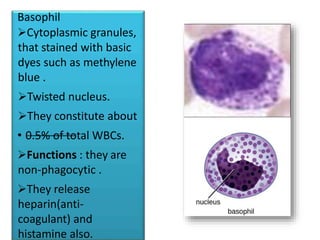
Basophil
Cytoplasmic granules,
that stained with basic
dyes such as methylene
blue .
Twisted nucleus.
They constitute about
• 0.5% of total WBCs.
Functions : they are
non-phagocytic .
They release
heparin(anti-
coagulant) and
histamine also.
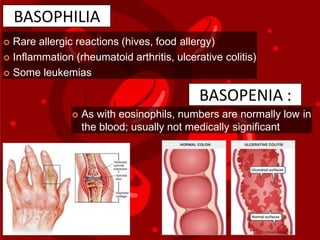
BASOPHILIA
 Rare allergic reactions (hives, food allergy)
 Inflammation (rheumatoid arthritis, ulcerative colitis)
 Some leukemias
BASOPENIA :
 As with eosinophils, numbers are normally low in
the blood; usually not medically significant
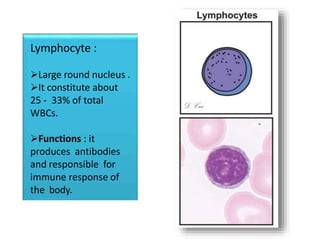
Lymphocyte :
Large round nucleus .
It constitute about
25 - 33% of total
WBCs.
Functions : it
produces antibodies
and responsible for
immune response of
the body.
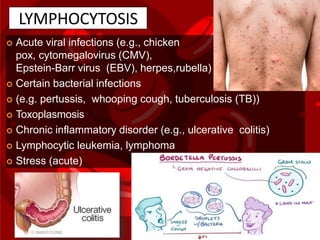
LYMPHOCYTOSIS
 Acute viral infections (e.g., chicken
pox, cytomegalovirus (CMV),
Epstein-Barr virus (EBV), herpes,rubella)
 Certain bacterial infections
 (e.g. pertussis, whooping cough, tuberculosis (TB))
 Toxoplasmosis
 Chronic inflammatory disorder (e.g., ulcerative colitis)
 Lymphocytic leukemia, lymphoma
 Stress (acute)
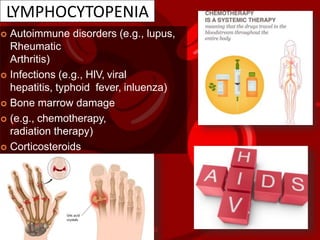
LYMPHOCYTOPENIA
 Autoimmune disorders (e.g., lupus,
Rheumatic
Arthritis)
 Infections (e.g., HIV, viral
hepatitis, typhoid fever, inluenza)
 Bone marrow damage
 (e.g., chemotherapy,
radiation therapy)
 Corticosteroids
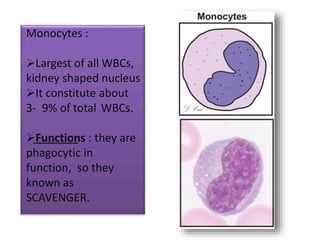
Monocytes :
Largest of all WBCs,
kidney shaped nucleus
It constitute about
3- 9% of total WBCs.
Functions : they are
phagocytic in
function, so they
known as
SCAVENGER.
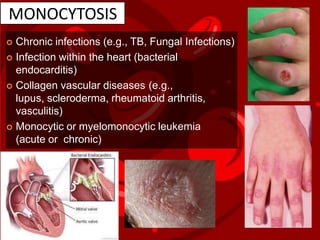
MONOCYTOSIS
 Chronic infections (e.g., TB, Fungal Infections)
 Infection within the heart (bacterial
endocarditis)
 Collagen vascular diseases (e.g.,
lupus, scleroderma, rheumatoid arthritis,
vasculitis)
 Monocytic or myelomonocytic leukemia
(acute or chronic)
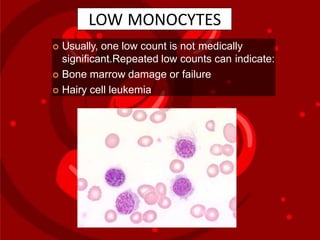
LOW MONOCYTES
 Usually, one low count is not medically
significant.Repeated low counts can indicate:
 Bone marrow damage or failure
 Hairy cell leukemia
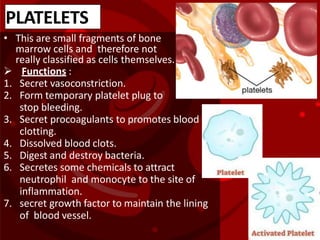
• This are small fragments of bone
marrow cells and therefore not
really classified as cells themselves.
 Functions :
1. Secret vasoconstriction.
2. Form temporary platelet plug to
stop bleeding.
3. Secret procoagulants to promotes blood
clotting.
4. Dissolved blood clots.
5. Digest and destroy bacteria.
6. Secretes some chemicals to attract
neutrophil and monocyte to the site of
inflammation.
7. secret growth factor to maintain the lining
of blood vessel.
PLATELETS
 Reactive
Chronic infection
Chronic inflammation
Malignancy
Hyposplenism (post-splenectomy)
Iron deficiency
Acute blood loss
 Myeloprofirative disorders –
platelets are
both elevated and activated
Essential Thrombocytosis
Polycythemia Vera
 Associated with other myeloid
neoplasms
 Congenital
 Cancer (lung,
gastrointestinal,
breast,ovarian, lymphoma)
• Kawasaki disease
Soft tissue sarcoma
Osteosarcoma
Dermatitis (rarely)
Inflammatory bowel
disease
Rheumatoid arthritis
Nephritis
Nephrotic syndrome
Bacterial diseases,
including pneumonia,
sepsis, meningitis,
urinary tract infections,
and septic arthritis
THROMBOCYTOSIS
 Immune Thrombocytopenias (ITP) – formerly known as immune
thrombocytopenia purpura and idiopathic thrombocytopenic
purpura
 Cirrhosis
 Splenomegaly
Gaucher’s disease
 Familial thrombocytopenia
 Chemotherapy, radiotherapy
 Babesiosis, Dengue, Onyalai, Rocky mountain spotted fever
 Thrombotic Thrombocytopenic Purpura
 HELLP Syndrome
 Hemolytic Uremic Syndrome
 Drug Induced Thrombocytopenia (Heparin Induced
Thrombocytopenia, acetaminophen, quinidine, sulfa drugs)
 Pregnancy associated
 Neonatal alloimmune associated
 Aplastic Anemia, leukemia, lymphoma
 Transfusion associated
THROMBOCYTOPENIA
MEAN PLATELET VOLUME
 Typical range of platelet volumes is 9.7–12.8 fL
 Low value indicates average size of platelets is
small; older platelets are generally smaller than
younger ones and a low MPV may mean that a
condition is affecting the production of platelets by
the bone marrow.
 High volume indicates a high number of larger,
younger platelets in the blood; this may be due to
the bone marrow producing and releasing platelets
rapidly into circulation.
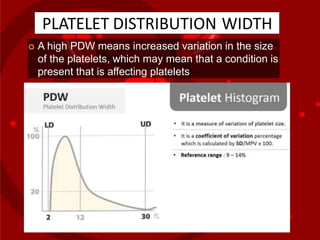
PLATELET DISTRIBUTION WIDTH
 A high PDW means increased variation in the size
of the platelets, which may mean that a condition is
present that is affecting platelets
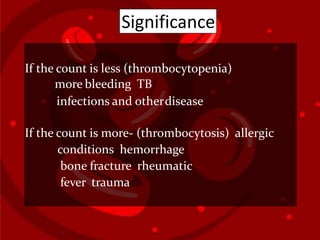
Significance
If the count is less (thrombocytopenia)
more bleeding TB
infections and otherdisease
If the count is more- (thrombocytosis) allergic
conditions hemorrhage
bone fracture rheumatic
fever trauma
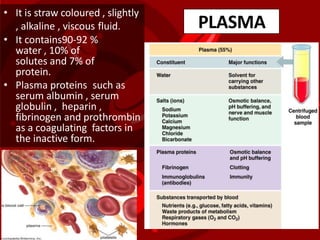
• It is straw coloured , slightly
, alkaline , viscous fluid.
• It contains90-92 %
water , 10% of
solutes and 7% of
protein.
• Plasma proteins such as
serum albumin , serum
globulin , heparin ,
fibrinogen and prothrombin
as a coagulating factors in
the inactive form.
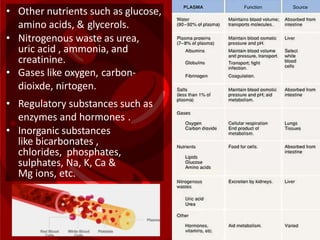
PLASMA
• Other nutrients such as glucose,
amino acids, & glycerols.
• Nitrogenous waste as urea,
uric acid , ammonia, and
creatinine.
• Gases like oxygen, carbon-
dioixde, nirtogen.
• Regulatory substances such as
enzymes and hormones .
• Inorganic substances
like bicarbonates ,
chlorides, phosphates,
sulphates, Na, K, Ca &
Mg ions, etc.
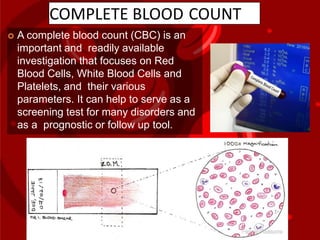
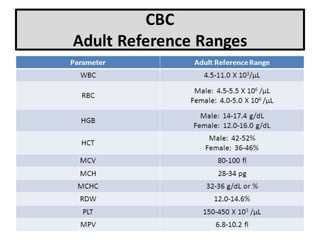
COMPLETE BLOOD COUNT
 A complete blood count (CBC) is an
important and readily available
investigation that focuses on Red
Blood Cells, White Blood Cells and
Platelets, and their various
parameters. It can help to serve as a
screening test for many disorders and
as a prognostic or follow up tool.
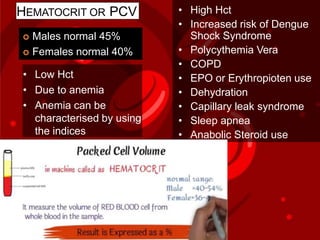
HEMATOCRIT OR PCV • High Hct
• Increased risk of Dengue
Shock Syndrome
• Polycythemia Vera
• COPD
• EPO or Erythropioten use
• Dehydration
• Capillary leak syndrome
• Sleep apnea
• Anabolic Steroid use
• Low Hct
• Due to anemia
• Anemia can be
characterised by using
the indices
 Males normal 45%
 Females normal 40%
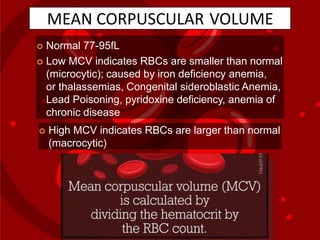
MEAN CORPUSCULAR VOLUME
 Normal 77-95fL
 Low MCV indicates RBCs are smaller than normal
(microcytic); caused by iron deficiency anemia,
or thalassemias, Congenital sideroblastic Anemia,
Lead Poisoning, pyridoxine deficiency, anemia of
chronic disease
 High MCV indicates RBCs are larger than normal
(macrocytic)
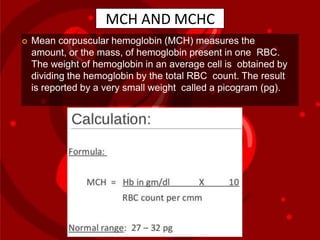
MCH AND MCHC
 Mean corpuscular hemoglobin (MCH) measures the
amount, or the mass, of hemoglobin present in one RBC.
The weight of hemoglobin in an average cell is obtained by
dividing the hemoglobin by the total RBC count. The result
is reported by a very small weight called a picogram (pg).
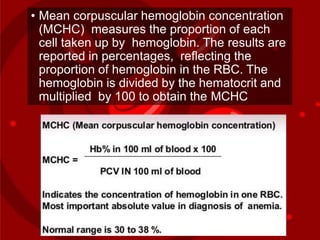
• Mean corpuscular hemoglobin concentration
(MCHC) measures the proportion of each
cell taken up by hemoglobin. The results are
reported in percentages, reflecting the
proportion of hemoglobin in the RBC. The
hemoglobin is divided by the hematocrit and
multiplied by 100 to obtain the MCHC
Blood Products
• Blood products are used in the management of
multiple coagulation disorders. However, there is a
debate in the medical literature concerning the
appropriate use of blood and blood products.
Clinical trials investigating their use suggest that
waiting to transfuse at lower hemoglobin levels is
recommended.
• A proper knowledge and understanding of the
different blood products allows clinicians to
optimize their patients’ clinical outcomes.
RBC
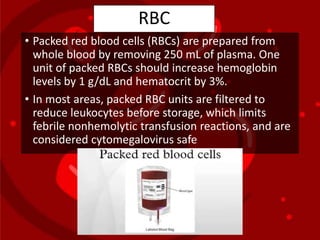
• Packed red blood cells (RBCs) are prepared from
whole blood by removing 250 mL of plasma. One
unit of packed RBCs should increase hemoglobin
levels by 1 g/dL and hematocrit by 3%.
• In most areas, packed RBC units are filtered to
reduce leukocytes before storage, which limits
febrile nonhemolytic transfusion reactions, and are
considered cytomegalovirus safe
RBC transfusions are used to treat hemorrhage as well
as improve oxygen delivery to tissues.
Indications for RBC transfusion include:
• Restoration of oxygen-carrying capacity in case of
acute hemorrhage: acute blood loss (>1500 mL or 30%
of blood volume)
• Treatment of symptomatic anemia
• Prophylaxis in life-threatening anemia
• Exchange transfusion in different diseases, including:
Acute sickle cell crisis
Severe parasitic infection (malaria,babesiosis)
Severe methemoglobinemia
Severe hyperbilirubinemia of newborn
• Recommended dosage and administration include:
• One unit of RBC increases the hemoglobin level of an
average-sized adult by w1 g/Dl (or increases hematocrit
w3%)
• The ABO group of RBC products must be compatible
with the ABO group of the recipient
• Ideally, the RBC product must be serologically
compatible with the recipient
• Rate of transfusion
• Transfuse slowly for the first 15 minutes
• Complete transfusion within 4 hours (per US Food and
Drug Administration [FDA])
PLASMA
Plasma is acellular and composed primarily of water
(90%) and proteins (7%). The remaining 2% to
3% is made up of nutrients, crystalloids, hormones,
and vitamins. The protein component contains
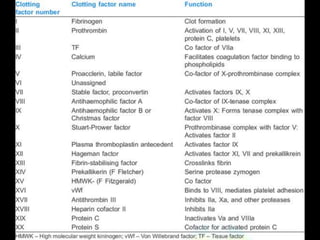
the clotting factors von Willebrand factor
(vWF); factor VIII (mostly bound to vWF); factor
XIII; fibrinogen; and the vitamin K–dependent factors
II, VII, IX, and X.
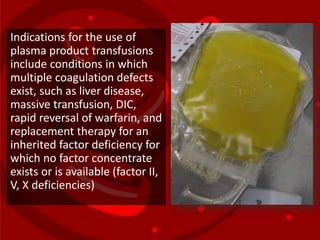
Indications for the use of
plasma product transfusions
include conditions in which
multiple coagulation defects
exist, such as liver disease,
massive transfusion, DIC,
rapid reversal of warfarin, and
replacement therapy for an
inherited factor deficiency for
which no factor concentrate
exists or is available (factor II,
V, X deficiencies)
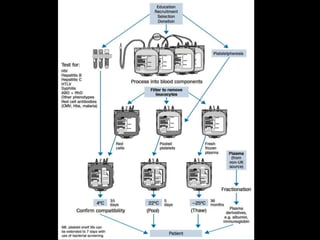
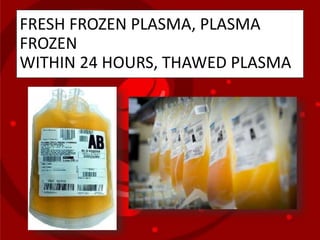
FRESH FROZEN PLASMA, PLASMA
FROZEN
WITHIN 24 HOURS, THAWED PLASMA
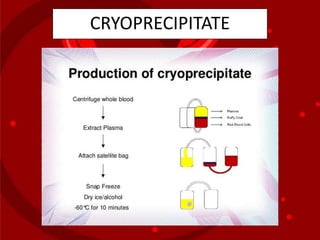
CRYOPRECIPITATE
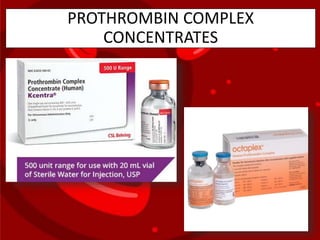
PROTHROMBIN COMPLEX
CONCENTRATES
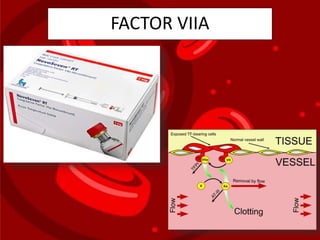
FACTOR VIIA
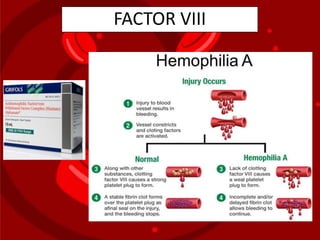
FACTOR VIII
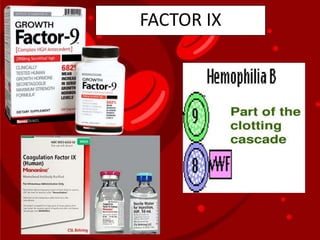
FACTOR IX
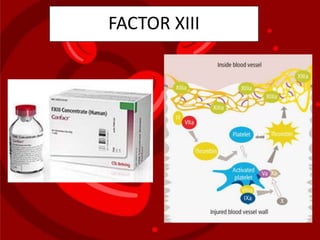
FACTOR XIII
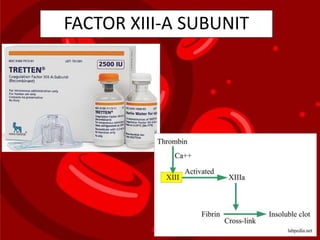
FACTOR XIII-A SUBUNIT
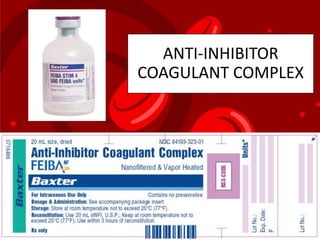
ANTI-INHIBITOR
COAGULANT COMPLEX
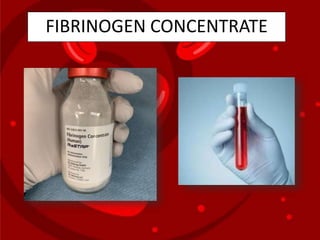
FIBRINOGEN CONCENTRATE
TRANSFUSION COMPLICATIONS
Acute transfusion reactions are rare. They usually
occur at 0.24% of transfusions
Acute transfusion reactions are typically classified
into the following entities56:
• Volume overload
• Bacterial contamination and endotoxemia
• Acute hemolytic reactions
• Nonhemolytic febrile reactions
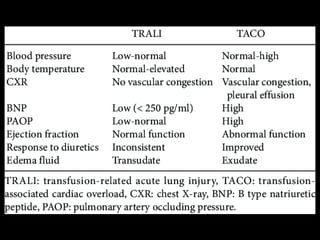
• TRALI
• Allergic reactions
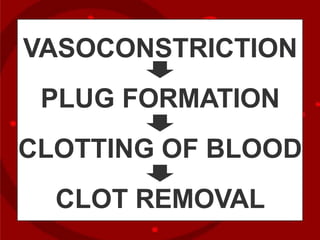
HEMOSTASIS
VASOCONSTRICTION
PLUG FORMATION
CLOTTING OF BLOOD
CLOT REMOVAL
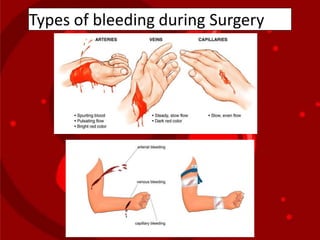
Types of bleeding during Surgery
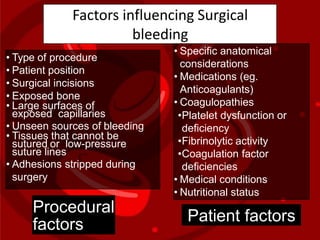
Factors influencing Surgical
bleeding
• Type of procedure
• Patient position
• Surgical incisions
• Exposed bone
• Large surfaces of
exposed capillaries
• Unseen sources of bleeding
• Tissues that cannot be
sutured or low-pressure
suture lines
• Adhesions stripped during
surgery
Procedural
factors
• Specific anatomical
considerations
• Medications (eg.
Anticoagulants)
• Coagulopathies
•Platelet dysfunction or
deficiency
•Fibrinolytic activity
•Coagulation factor
deficiencies
• Medical conditions
• Nutritional status
Patient factors
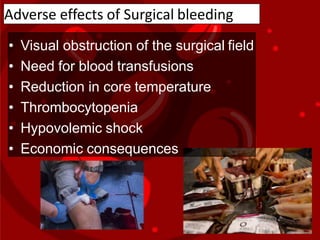
Adverse effects of Surgical bleeding
• Visual obstruction of the surgical field
• Need for blood transfusions
• Reduction in core temperature
• Thrombocytopenia
• Hypovolemic shock
• Economic consequences
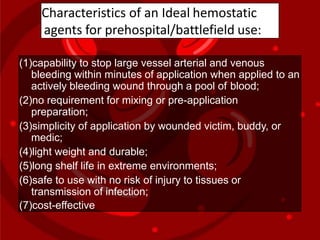
Characteristics of an Ideal hemostatic
agents for prehospital/battlefield use:
(1)capability to stop large vessel arterial and venous
bleeding within minutes of application when applied to an
actively bleeding wound through a pool of blood;
(2)no requirement for mixing or pre-application
preparation;
(3)simplicity of application by wounded victim, buddy, or
medic;
(4)light weight and durable;
(5)long shelf life in extreme environments;
(6)safe to use with no risk of injury to tissues or
transmission of infection;
(7)cost-effective
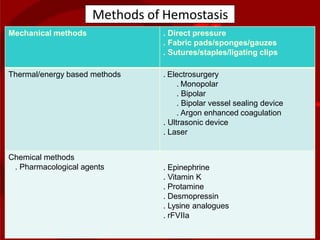
Methods of Hemostasis
Mechanical methods . Direct pressure
. Fabric pads/sponges/gauzes
. Sutures/staples/ligating clips
Thermal/energy based methods . Electrosurgery
. Monopolar
. Bipolar
. Bipolar vessel sealing device
. Argon enhanced coagulation
. Ultrasonic device
. Laser
Chemical methods
. Pharmacological agents . Epinephrine
. Vitamin K
. Protamine
. Desmopressin
. Lysine analogues
. rFVIIa
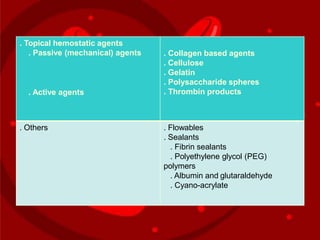
. Topical hemostatic agents
. Passive (mechanical) agents
. Active agents
. Collagen based agents
. Cellulose
. Gelatin
. Polysaccharide spheres
. Thrombin products
. Others . Flowables
. Sealants
. Fibrin sealants
. Polyethylene glycol (PEG)
polymers
. Albumin and glutaraldehyde
. Cyano-acrylate
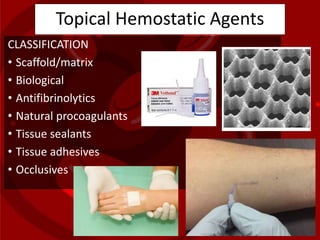
Topical Hemostatic Agents
CLASSIFICATION
• Scaffold/matrix
• Biological
• Antifibrinolytics
• Natural procoagulants
• Tissue sealants
• Tissue adhesives
• Occlusives
A basic tenet of surgery is understanding haemostasis.
The surgeon must be knowledgeable with disease
processes associated with abnormal haemostasis, be able
to recognize signs and symptoms identifying potential
abnormal haemostasis, be familiar with the growing list
of coagulation altering therapy, and be up-to-date with
management protocols to optimize patient care.
Conclusion
References
• Textbook of Oral and Maxillofacial Surgery by Neelima Anil
Malik (3rd edition).
• Textbook of Oral and Maxillofacial Surgery by S.M. Balaji (2nd
edition).
• Textbook of Surgery for Dental Students by Sanjay Marwah (1st
edition).
• Essentials of Pathology for Dental Students by Harsh Mohan (4th
edition).
• Landesberg R L, Ferneini E M. Blood Products What Oral and
Maxillofacial Surgeons Need to Know. 1042-3699/16/ 2016
Elsevier Inc. All rights reserved.
• Hee´bert PC, Wells G, Blajchman MA, et al. A multicenter,
randomized, controlled clinical trial of transfusion requirements
in critical care. Transfusion Requirements in Critical Care
Investigators, Canadian Critical Care Trials Group. N Engl J Med
1999;340(6):409–17.
• Vezeau P J. Topical Hemostatic Agents What the
Oral and Maxillofacial Surgeon Needs to Know.
1042-3699/16/2016 Elsevier Inc.
• Bennett J D, Ferneini E M. Coagulopathy
Management: The Balance Between
Thromboembolism and Hemorrhage. 1042-
3699/16/2016 Published by Elsevier Inc
• Halaszynski T M. Administration of Coagulation-
Altering Therapy in the Patient Presenting for Oral
Health and Maxillofacial Surgery. 1042-3699/16/
2016 Elsevier Inc
THANK YOU

Blood

  • 1.
    BLOOD PRESENTED BY PAREEKSIT BAGCHI IMDS DEPT OF ORAL AND MAXILLOFACIAL SURGERY
  • 2.
    CONTENTS • Introduction • Composition •Functions of blood • Individual components • Complete blood count • Blood products • Hemostasis • Hemostatic agents • Conclusion • Reference
  • 3.
    Introduction • As oraland maxillofacial surgeons, we are faced with medically compromised patients with systemic diseases, which alter hemostasis, and those who are therapeutically taking coagulation-altering therapy on a daily basis. • Careful management of the patient with risk for altered hemostasis or taking anticoagulant drugs in the perioperative period is essential in treating our surgical patients.
  • 4.
    • The patientwith a congenital or therapeutic coagulopathy requires a surgeon who is “familiar with both departments of medicine.” The surgeon must employ both his or her medical knowledge and surgical skill to achieve a balance between thromboembolism and perioperative bleeding.
  • 5.
    BLOOD COMPOSITION • Bloodis the main circulating fluid in the human body. • Study of blood is called HAEMATOLOGY. • It is a fluid connective tissue derived from mesoderm. • Bright red in colour, slightly alkaline(pH 7.4), salty, and heavier than water. • The adult has 5lit of blood which constitute about 8% of the total body weight.
  • 6.
    Blood is dividedinto two constituents 1.cellular composition 2.non-cellular composition
  • 8.
    Functions of blood •TRANSPORTATION : Respiration Nutrient carrier from • GIT Transportation of hormones from endocrine glands Transportation of metabolic waste. REGULATION : Regulates pH Adjusts and maintain body temperature Maintains water contents of cells PROTECTION : WBCs protects against disease by phagocytosis Reservoir for substances like water,electrolytes. Performs haemostasis.
  • 10.
    • Erythrocytes arealso called as red blood corpuscles. • They are circular , biconcave , enucleated cells. • Its size 7 micron metre in diameter to 2.5 micron metre in thickness. • There are about 5.1 to 5.8 million RBCs per cu.mm in adult male and in adult female it is about 4.3 to 5.2 million. • Average life span is of 120 days. ERYTHROCYTERBCs:
  • 11.
    Hemoglobin Hb is theiron containing coloring matter of RBC If the count is low – chronic inflammation(inflammation is a body process that can result in pain swelling warmth or redness) Low hematocrit and hemoglobin counts may be signs that your medication is causing a loss of blood from your stomach and passing through your bowel. Low counts also may indicate a decrease in red blood cell production. Bone marrow problem
  • 12.
    If the countis more – blood volumeincrease in case of smoking high altitude Normal Count : 14 – 16 g/dL but it can vary from age to age At birth : 25g/dL After 3rd month : 20g/dL After 1 year : 17g/dL from puberty onwards : 14 – 16g/dL Adult males : 15g/dL Adult females : 14.5g/dL
  • 13.
    Erythrocyte sedimentation rate(ESR) This test also called "sed rate determines if you have inflammation. The sed rate can measure the amount of inflammation present. The test measures how fast red blood cells cling together, fall, and settle toward the bottom of a glass tube in an hour's time, like sediment.
  • 14.
    • The higherthe sed rate, the greater the amount of inflammation. As inflammation responds to medication, the sed rate usually goes down. • This is an example of a test your doctor might order several times. Another test used to measure this is the C-Reactive Protein (CRP) test. Normal Values - by westergenmethod- in males-3-7 mm in one hour in females- 5-9 mm in one hour in infants-0-2 mm in onehour
  • 16.
    • Leucocytes arealso known as white blood corpuscles. • They are colourless , nucleated , amoeboid , and phagocytes cells. • Due the amoeboidal movement they squeez out of blood capillaries, this is called as DIAPEDESIS. • It i of size 8 to 15 micron metre. • They are about 5000 to 9000 WBCs per cu.mm • The average life span is of 3 to 4 days. LEUCOCYTESWBCs:
  • 17.
    Leucocytes are dividedin two types on the basis of presence of granules are as follows
  • 18.
  • 20.
    ABSOLUTE NEUTROPHIL COUNT {(% of Neutrophils+ % of Bands) X WBC}/100
  • 21.
    NEUTROPENIA Decreased productionin the bone marrow due to: aplastic anemia arsenic poisoning cancer, particularly blood cancers certain medications hereditary disorders (e.g. congenital neutropenia, cyclic neutropenia) radiation Vitamin B12, folateor copper deficiency  Increased destruction: autoimmune neutropenia chemotherapy treatments, such as for cancer and autoimmune diseases  Marginalisation and sequestration: Hemodialysis Medications Flecainide (a class 1C cardiac antiarrhythmic drug) Phenytoin Indomethacin Propylthiouracil Carbimazole Chlorpromazine Trimethoprim/ sulfamethoxazole (cotmoxazole) Clozapine Ticlodipine r i Often, a mild neutropenia is seen in viral infections. Additionally, a condition called morning pseudoneutropenia might be a side effect of certain antipsychotic medications.
  • 22.
    NEUTROPHILIA  Post splenectomy Cigarette smoking  Hypoxia  Epinephrine  Exercise • Acute or Chronic Infection • Myeloprofilerative disorders • Acute stress • Lukemoid reactions • Drugs (steroids) • Chronic Inflammation • Tumors • Myelophthisis • Hyperactive marrow
  • 23.
    EOSINOPHIL Cytoplasmic granules which arestained with acidic dyes such as eosin. Nucleus is bilobed constitutes 3% of total WBCs.  Functions: They are non-phagocytic and increase during ellergic reactions  They show anti- histamine property.  Increase in number of eosinophil is called as EOSINOPHILIA.
  • 24.
    EOSINOPHILIA  Asthma, allergiessuch as hay fever  Drug reactions  Parasitic infections  Inflammatory disorders (celiac disease, inflammatory bowel disease)  Some cancers, leukemias or lymphomas LOW EOSINOPHILS  Numbers are normally low in the blood. One or an occasional low number is usually not medically significant
  • 25.
    Basophil Cytoplasmic granules, that stainedwith basic dyes such as methylene blue . Twisted nucleus. They constitute about • 0.5% of total WBCs. Functions : they are non-phagocytic . They release heparin(anti- coagulant) and histamine also.
  • 26.
    BASOPHILIA  Rare allergicreactions (hives, food allergy)  Inflammation (rheumatoid arthritis, ulcerative colitis)  Some leukemias BASOPENIA :  As with eosinophils, numbers are normally low in the blood; usually not medically significant
  • 27.
    Lymphocyte : Large roundnucleus . It constitute about 25 - 33% of total WBCs. Functions : it produces antibodies and responsible for immune response of the body.
  • 28.
    LYMPHOCYTOSIS  Acute viralinfections (e.g., chicken pox, cytomegalovirus (CMV), Epstein-Barr virus (EBV), herpes,rubella)  Certain bacterial infections  (e.g. pertussis, whooping cough, tuberculosis (TB))  Toxoplasmosis  Chronic inflammatory disorder (e.g., ulcerative colitis)  Lymphocytic leukemia, lymphoma  Stress (acute)
  • 29.
    LYMPHOCYTOPENIA  Autoimmune disorders(e.g., lupus, Rheumatic Arthritis)  Infections (e.g., HIV, viral hepatitis, typhoid fever, inluenza)  Bone marrow damage  (e.g., chemotherapy, radiation therapy)  Corticosteroids
  • 30.
    Monocytes : Largest ofall WBCs, kidney shaped nucleus It constitute about 3- 9% of total WBCs. Functions : they are phagocytic in function, so they known as SCAVENGER.
  • 31.
    MONOCYTOSIS  Chronic infections(e.g., TB, Fungal Infections)  Infection within the heart (bacterial endocarditis)  Collagen vascular diseases (e.g., lupus, scleroderma, rheumatoid arthritis, vasculitis)  Monocytic or myelomonocytic leukemia (acute or chronic)
  • 32.
    LOW MONOCYTES  Usually,one low count is not medically significant.Repeated low counts can indicate:  Bone marrow damage or failure  Hairy cell leukemia
  • 33.
    • This aresmall fragments of bone marrow cells and therefore not really classified as cells themselves.  Functions : 1. Secret vasoconstriction. 2. Form temporary platelet plug to stop bleeding. 3. Secret procoagulants to promotes blood clotting. 4. Dissolved blood clots. 5. Digest and destroy bacteria. 6. Secretes some chemicals to attract neutrophil and monocyte to the site of inflammation. 7. secret growth factor to maintain the lining of blood vessel. PLATELETS
  • 34.
     Reactive Chronic infection Chronicinflammation Malignancy Hyposplenism (post-splenectomy) Iron deficiency Acute blood loss  Myeloprofirative disorders – platelets are both elevated and activated Essential Thrombocytosis Polycythemia Vera  Associated with other myeloid neoplasms  Congenital  Cancer (lung, gastrointestinal, breast,ovarian, lymphoma) • Kawasaki disease Soft tissue sarcoma Osteosarcoma Dermatitis (rarely) Inflammatory bowel disease Rheumatoid arthritis Nephritis Nephrotic syndrome Bacterial diseases, including pneumonia, sepsis, meningitis, urinary tract infections, and septic arthritis THROMBOCYTOSIS
  • 35.
     Immune Thrombocytopenias(ITP) – formerly known as immune thrombocytopenia purpura and idiopathic thrombocytopenic purpura  Cirrhosis  Splenomegaly Gaucher’s disease  Familial thrombocytopenia  Chemotherapy, radiotherapy  Babesiosis, Dengue, Onyalai, Rocky mountain spotted fever  Thrombotic Thrombocytopenic Purpura  HELLP Syndrome  Hemolytic Uremic Syndrome  Drug Induced Thrombocytopenia (Heparin Induced Thrombocytopenia, acetaminophen, quinidine, sulfa drugs)  Pregnancy associated  Neonatal alloimmune associated  Aplastic Anemia, leukemia, lymphoma  Transfusion associated THROMBOCYTOPENIA
  • 36.
    MEAN PLATELET VOLUME Typical range of platelet volumes is 9.7–12.8 fL  Low value indicates average size of platelets is small; older platelets are generally smaller than younger ones and a low MPV may mean that a condition is affecting the production of platelets by the bone marrow.  High volume indicates a high number of larger, younger platelets in the blood; this may be due to the bone marrow producing and releasing platelets rapidly into circulation.
  • 37.
    PLATELET DISTRIBUTION WIDTH A high PDW means increased variation in the size of the platelets, which may mean that a condition is present that is affecting platelets
  • 38.
    Significance If the countis less (thrombocytopenia) more bleeding TB infections and otherdisease If the count is more- (thrombocytosis) allergic conditions hemorrhage bone fracture rheumatic fever trauma
  • 39.
    • It isstraw coloured , slightly , alkaline , viscous fluid. • It contains90-92 % water , 10% of solutes and 7% of protein. • Plasma proteins such as serum albumin , serum globulin , heparin , fibrinogen and prothrombin as a coagulating factors in the inactive form. PLASMA
  • 40.
    • Other nutrientssuch as glucose, amino acids, & glycerols. • Nitrogenous waste as urea, uric acid , ammonia, and creatinine. • Gases like oxygen, carbon- dioixde, nirtogen. • Regulatory substances such as enzymes and hormones . • Inorganic substances like bicarbonates , chlorides, phosphates, sulphates, Na, K, Ca & Mg ions, etc.
  • 42.
    COMPLETE BLOOD COUNT A complete blood count (CBC) is an important and readily available investigation that focuses on Red Blood Cells, White Blood Cells and Platelets, and their various parameters. It can help to serve as a screening test for many disorders and as a prognostic or follow up tool.
  • 44.
    HEMATOCRIT OR PCV• High Hct • Increased risk of Dengue Shock Syndrome • Polycythemia Vera • COPD • EPO or Erythropioten use • Dehydration • Capillary leak syndrome • Sleep apnea • Anabolic Steroid use • Low Hct • Due to anemia • Anemia can be characterised by using the indices  Males normal 45%  Females normal 40%
  • 45.
    MEAN CORPUSCULAR VOLUME Normal 77-95fL  Low MCV indicates RBCs are smaller than normal (microcytic); caused by iron deficiency anemia, or thalassemias, Congenital sideroblastic Anemia, Lead Poisoning, pyridoxine deficiency, anemia of chronic disease  High MCV indicates RBCs are larger than normal (macrocytic)
  • 46.
    MCH AND MCHC Mean corpuscular hemoglobin (MCH) measures the amount, or the mass, of hemoglobin present in one RBC. The weight of hemoglobin in an average cell is obtained by dividing the hemoglobin by the total RBC count. The result is reported by a very small weight called a picogram (pg).
  • 47.
    • Mean corpuscularhemoglobin concentration (MCHC) measures the proportion of each cell taken up by hemoglobin. The results are reported in percentages, reflecting the proportion of hemoglobin in the RBC. The hemoglobin is divided by the hematocrit and multiplied by 100 to obtain the MCHC
  • 48.
    Blood Products • Bloodproducts are used in the management of multiple coagulation disorders. However, there is a debate in the medical literature concerning the appropriate use of blood and blood products. Clinical trials investigating their use suggest that waiting to transfuse at lower hemoglobin levels is recommended. • A proper knowledge and understanding of the different blood products allows clinicians to optimize their patients’ clinical outcomes.
  • 50.
    RBC • Packed redblood cells (RBCs) are prepared from whole blood by removing 250 mL of plasma. One unit of packed RBCs should increase hemoglobin levels by 1 g/dL and hematocrit by 3%. • In most areas, packed RBC units are filtered to reduce leukocytes before storage, which limits febrile nonhemolytic transfusion reactions, and are considered cytomegalovirus safe
  • 51.
    RBC transfusions areused to treat hemorrhage as well as improve oxygen delivery to tissues. Indications for RBC transfusion include: • Restoration of oxygen-carrying capacity in case of acute hemorrhage: acute blood loss (>1500 mL or 30% of blood volume) • Treatment of symptomatic anemia • Prophylaxis in life-threatening anemia • Exchange transfusion in different diseases, including: Acute sickle cell crisis Severe parasitic infection (malaria,babesiosis) Severe methemoglobinemia Severe hyperbilirubinemia of newborn
  • 52.
    • Recommended dosageand administration include: • One unit of RBC increases the hemoglobin level of an average-sized adult by w1 g/Dl (or increases hematocrit w3%) • The ABO group of RBC products must be compatible with the ABO group of the recipient • Ideally, the RBC product must be serologically compatible with the recipient • Rate of transfusion • Transfuse slowly for the first 15 minutes • Complete transfusion within 4 hours (per US Food and Drug Administration [FDA])
  • 53.
    PLASMA Plasma is acellularand composed primarily of water (90%) and proteins (7%). The remaining 2% to 3% is made up of nutrients, crystalloids, hormones, and vitamins. The protein component contains the clotting factors von Willebrand factor (vWF); factor VIII (mostly bound to vWF); factor XIII; fibrinogen; and the vitamin K–dependent factors II, VII, IX, and X.
  • 54.
    Indications for theuse of plasma product transfusions include conditions in which multiple coagulation defects exist, such as liver disease, massive transfusion, DIC, rapid reversal of warfarin, and replacement therapy for an inherited factor deficiency for which no factor concentrate exists or is available (factor II, V, X deficiencies)
  • 55.
    FRESH FROZEN PLASMA,PLASMA FROZEN WITHIN 24 HOURS, THAWED PLASMA
  • 56.
  • 57.
  • 58.
  • 59.
  • 60.
  • 61.
  • 62.
  • 63.
  • 64.
  • 65.
    TRANSFUSION COMPLICATIONS Acute transfusionreactions are rare. They usually occur at 0.24% of transfusions Acute transfusion reactions are typically classified into the following entities56: • Volume overload • Bacterial contamination and endotoxemia • Acute hemolytic reactions • Nonhemolytic febrile reactions • TRALI • Allergic reactions
  • 67.
  • 68.
  • 70.
    Types of bleedingduring Surgery
  • 71.
    Factors influencing Surgical bleeding •Type of procedure • Patient position • Surgical incisions • Exposed bone • Large surfaces of exposed capillaries • Unseen sources of bleeding • Tissues that cannot be sutured or low-pressure suture lines • Adhesions stripped during surgery Procedural factors • Specific anatomical considerations • Medications (eg. Anticoagulants) • Coagulopathies •Platelet dysfunction or deficiency •Fibrinolytic activity •Coagulation factor deficiencies • Medical conditions • Nutritional status Patient factors
  • 72.
    Adverse effects ofSurgical bleeding • Visual obstruction of the surgical field • Need for blood transfusions • Reduction in core temperature • Thrombocytopenia • Hypovolemic shock • Economic consequences
  • 73.
    Characteristics of anIdeal hemostatic agents for prehospital/battlefield use: (1)capability to stop large vessel arterial and venous bleeding within minutes of application when applied to an actively bleeding wound through a pool of blood; (2)no requirement for mixing or pre-application preparation; (3)simplicity of application by wounded victim, buddy, or medic; (4)light weight and durable; (5)long shelf life in extreme environments; (6)safe to use with no risk of injury to tissues or transmission of infection; (7)cost-effective
  • 74.
    Methods of Hemostasis Mechanicalmethods . Direct pressure . Fabric pads/sponges/gauzes . Sutures/staples/ligating clips Thermal/energy based methods . Electrosurgery . Monopolar . Bipolar . Bipolar vessel sealing device . Argon enhanced coagulation . Ultrasonic device . Laser Chemical methods . Pharmacological agents . Epinephrine . Vitamin K . Protamine . Desmopressin . Lysine analogues . rFVIIa
  • 75.
    . Topical hemostaticagents . Passive (mechanical) agents . Active agents . Collagen based agents . Cellulose . Gelatin . Polysaccharide spheres . Thrombin products . Others . Flowables . Sealants . Fibrin sealants . Polyethylene glycol (PEG) polymers . Albumin and glutaraldehyde . Cyano-acrylate
  • 76.
    Topical Hemostatic Agents CLASSIFICATION •Scaffold/matrix • Biological • Antifibrinolytics • Natural procoagulants • Tissue sealants • Tissue adhesives • Occlusives
  • 77.
    A basic tenetof surgery is understanding haemostasis. The surgeon must be knowledgeable with disease processes associated with abnormal haemostasis, be able to recognize signs and symptoms identifying potential abnormal haemostasis, be familiar with the growing list of coagulation altering therapy, and be up-to-date with management protocols to optimize patient care. Conclusion
  • 78.
    References • Textbook ofOral and Maxillofacial Surgery by Neelima Anil Malik (3rd edition). • Textbook of Oral and Maxillofacial Surgery by S.M. Balaji (2nd edition). • Textbook of Surgery for Dental Students by Sanjay Marwah (1st edition). • Essentials of Pathology for Dental Students by Harsh Mohan (4th edition). • Landesberg R L, Ferneini E M. Blood Products What Oral and Maxillofacial Surgeons Need to Know. 1042-3699/16/ 2016 Elsevier Inc. All rights reserved. • Hee´bert PC, Wells G, Blajchman MA, et al. A multicenter, randomized, controlled clinical trial of transfusion requirements in critical care. Transfusion Requirements in Critical Care Investigators, Canadian Critical Care Trials Group. N Engl J Med 1999;340(6):409–17.
  • 79.
    • Vezeau PJ. Topical Hemostatic Agents What the Oral and Maxillofacial Surgeon Needs to Know. 1042-3699/16/2016 Elsevier Inc. • Bennett J D, Ferneini E M. Coagulopathy Management: The Balance Between Thromboembolism and Hemorrhage. 1042- 3699/16/2016 Published by Elsevier Inc • Halaszynski T M. Administration of Coagulation- Altering Therapy in the Patient Presenting for Oral Health and Maxillofacial Surgery. 1042-3699/16/ 2016 Elsevier Inc
  • 80.