Bleeding
disorders in
children
How is bleeding
controlled?
- by hemostasis
The physiology of hemostasis
 Hemostasis is the active process that
clots blood in areas of blood vessel
injury yet simultaneously limits the clot
size only to the areas of injury.
 Over time, the clot is lysed by the
fibrinolytic system, and normal blood
flow is restored.
 If clotting is impaired, hemorrhage
occurs.
 If clotting is excessive, thrombotic
complications ensue.
The physiology of hemostasis
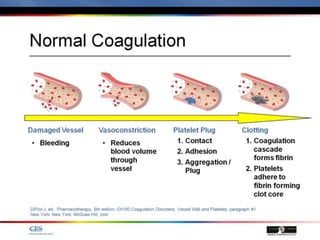
 The vascular endothelium is the first
barrier against hemorrhage.
 Primary hemostasis mechanism:
Vascular response (constriction)
and platelet plug formation.
 Secondary hemostasis
mechanism: Formation of a stable
fibrin clot. It includes the soluble
clotting factors (coagulation).
The physiology of hemostasis
Small blood vessel injury:
Active vasoconstriction and local
tissue pressure control the areas of
bleeding without mobilization of the
coagulation process.
Platelets are essential for the control
of such small blood vessel injury.
The physiolgy of
hemostasis
 After vascular injury, blood is exposed
to sub endothelial matrix, von
Willebrand Factor (VWF) provides the
“glue” to which platelets bind.
 The platelets release stored proteins
(e.g. thromboxane); this leads to
recruitment of other platelets to form a
plug.
 During the process of platelet
activation, platelet phospholipids are
released and interact with the clotting
The physiology of hemostasis
Larger blood vessel injury:
The participation of the coagulation system is
required to provide a firm, stable fibrin clot.
 Vascular injury and release of tissue factor
initiates the clotting process.
 Coagulation proceeds in 3 phases;
◦ Phase I involves the formation of prothrombin
activator (thrombinase) from either the
extrinsic or intrinsic pathway
◦ Phase II involves Prothrombin → Thrombin
◦ Phase III involves Fibrinogen →Fibrin
Larger blood vessels injury:
 The fibrinolytic system ensures that
excessive clot formation is prevented
and that the clot is retracted
The physiology of hemostasis
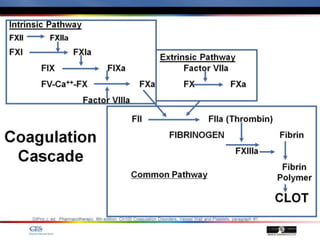
Clotting (coagulation) cascade:
 Activated clotting factors activate the
next sequential clotting factor in a
systematic manner.
 Feedback mechanisms enhance
clotting at the site where it is needed.
 The dual mechanisms of activating
clotting have been termed the intrinsic
(surface activation) and extrinsic (tissue
factor–mediated) pathways.
Laboratory
investigations of
hemostasis
Laboratory Investigations of
hemostasis
Commonly used tests
◦ Platelet count
◦ Bleeding time
◦ Prothrombin time (PT)
◦ Partial thromboplastin time (PTT/aPTT)
Bleeding time (Normal is 1-6 minutes)
◦ Assesses the vascular and platelet
phase of haemostasis (primary
mechanism).
◦ Using a scalpel blade, drops of
blood are blotted from the margin of
the incision at 30 sec interval until
blood flow stops usually up to 6
mins.
◦ It is very sensitive to platelet
Laboratory Investigations of
hemostasis
Laboratory Investigations of
hemostasis
 Bleeding time assesses the function of
platelets and their interaction with the
vascular wall.
 Disposable standardized devices have
been developed that control the length
and depth of the skin incision.
Platelet count (Normal is 150-
400/nL)
◦ Thrombocytopenia is the most
common cause of defective primary
hemostatic mechanisms in children.
◦ If the bleeding time is
disproportionate to the platelet count,
a qualitative platelet defect should be
suspected.
◦ Patients with platelet count above 50
x 10 9/L rarely have significant
bleeding. Those with count below 20
Laboratory Investigations of
hemostasis
Platelet count
 Platelet count is essential in the evaluation of
the child with a positive bleeding history
because thrombocytopenia is the most
common acquired cause of a bleeding
diathesis in children.
 Patients with a platelet count of
>50,000/mm3 rarely have significant clinical
bleeding.
 Thrombocytosis in children is usually
reactive and is not associated with bleeding
or thrombotic complications.
Laboratory Investigations of
hemostasis
Activated partial thromboplastin time
(activated PTT) (Normal is 30-40
seconds)
◦ Evaluates phase I of coagulation
◦ It is the time required for plasma to clot
when it has been activated by incubation
with an inert activator (e.g. Ground glass,
kaolin, celite & ellagic acid).
◦ It assesses the adequacy of factors XII
(plus prekallikrein, HMW kinogen), XI, IX,
VIII and common pathway.
Laboratory Investigations of
hemostasis
Activated PTT
◦ If Phase II & III tests (PT & TT) are intact,
a prolonged PTT represent deficiency or
inhibition in intrinsic pathway.
◦ Prolonged PTT can therefore be due to
intrinsic pathway factors (XII, XI, IX, VIII)
or common pathway factors (X,V, II, I)
Laboratory Investigations of
hemostasis
Prothrombin Time (PT) (Normal is 11-13
seconds)
◦ Assesses Phase II of coagulation
◦ It is the time taken for plasma to clot after
the addition of exogenous thromboplastin
(tissue factor) & Ca2+
◦ If Phase III (TT) is intact, prolonged PT
indicates deficiency of factor VII (extrinsic
pathway) or V, X, II (common pathway)
Laboratory Investigations of
hemostasis
 PT measures the activation of clotting
by tissue factor (thromboplastin) in the
presence of calcium.
Laboratory Investigations of
hemostasis
Thrombin time TT (Normal 12-20
seconds)
◦ assesses phase III of coagulation
(fibrinogen → fibrin)
◦ it is the time required for plasma to clot
after the addition of factor IIa (thrombin)
◦ prolongation of TT limits the defect to
fibrinogen only or the presence
anticoagulant like heparin
Fibrinogen assay (quantitative) is
possible.
Laboratory Investigations of
hemostasis
Laboratory Investigations of
hemostasis
 Thrombin time measures the final step
in the clotting cascade, in which
fibrinogen is converted to fibrin.
 Prolongation of thrombin time occurs
with reduced fibrinogen levels
(hypofibrinogenemia or
afibrinogenemia), with dysfunctional
fibrinogen (dysfibrinogenemia), or in
the presence of substances that
interfere with fibrin polymerization tion,
such as heparin and fibrin split
Clotting Factor Assays
 Each of the clotting factors can be
measured in the clinical laboratory using
individual factor–deficient plasmas.
 For most clotting factors, activity is
measured against pooled normal plasma or
against a standard, by which 100% activity
is expressed as 100 IU/dL.
Laboratory Investigations of
hemostasis
The disorders of
hemostasis
Disorders of the Primary
Haemostasis Mechanism
 Vascular disorders
Eg. Ehlers Danlos Syndrome or
Scurvy
 Von Willebrand Disease
 Platelet Disorders
Disorders of the primary hemostasis
mechanism
Bleeding Pattern:
 Muco-cutaneous pattern
 Immediate bleeding and bruising after
trauma
Manifests as:
 Petechiae
 Ecchymoses
 Epistaxis
 Gum bleeding
 Menorrhagia
Disorders of Secondary Hemostasis
Mechanism
 Clotting factor deficiency
Hemophilia A (deficiency of FVIII),
Hemophilia B (deficiency of FIX) or
Deficiency of FVII
Disorders of Secondary
Hemostasis Mechanism
Bleeding Pattern:
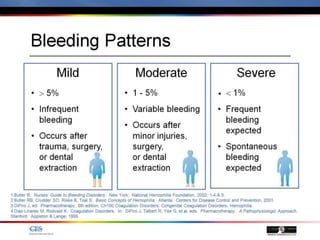
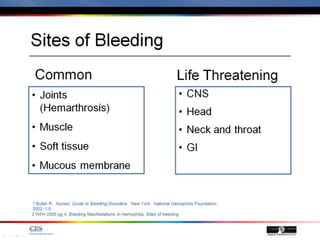
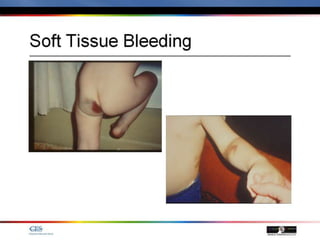
 Delayed deep tissue bleeding:
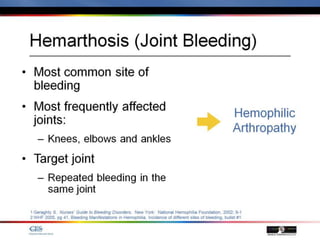
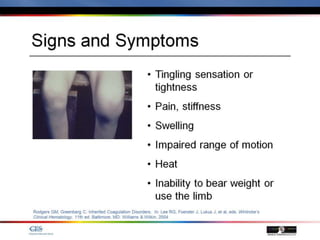
- joints (hemarthrosis)
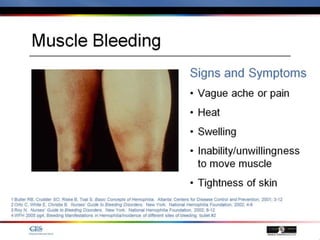
- muscles
- soft tissue
- CNS (intracranial hemorrhage)
Disorders of
platelets
Thrombocytopenia
 The normal platelet count is 150-450 ×
10^9/L.
 Thrombocytopenia refers to a reduction in
platelet count to <150 × 10^9/L.
 Causes of thrombocytopenia include
 decreased production on either a congenital
or an acquired basis,
 sequestration of the platelets within an
enlarged spleen or other organ, and
 increased destruction of normally
synthesized platelets on either an immune
or a nonimmune basis
Causes of
Thrombocytopenia in
Children
DESTRUCTIVE THROMBOCYTOPENIAS
Immune thrombocytopenias
 Acute and chronic ITP
 Systemic lupus erythematosus
 Evans syndrome
 Neoplasia-associated immune thrombocytopenia
 Thrombocytopenia associated with HIV
 Neonatal immune thrombocytopenia
Alloimmune
Autoimmune
 Drug-induced immune thrombocytopenia
 Posttransfusion purpura
 Allergy and anaphylaxis
Thrombocytopenia of infection
 Bacteremia or fungemia
 Viral infection
 Protozoan
 Hemolytic-uremic syndrome
Others:
Nonimmune thrombocytopenias
Primary Platelet Consumption
Syndromes
Causes of Thrombocytopenia
in Children
Causes of Thrombocytopenia
in Children
IMPAIRED PLATELET PRODUCTION
Acquired disorders
 Aplastic anemia
 Myelodysplastic syndrome
 Marrow infiltrative process—neoplasia
 Nutritional deficiency states (iron, folate, vitamin B12,
anorexia nervosa)
 Drug- or radiation-induced thrombocytopenia
 Neonatal hypoxia or placental insufficiency
Others:
Hereditary disorders
Causes of Thrombocytopenia
in Children
SEQUESTRATION
 Hypersplenism
 Hypothermia
 Burns
 HELLP syndrome (hemolysis,
elevated liver enzymes, and low
platelets)
Idiopathic
(Autoimmune)
Thrombocytopenic
Purpura
Idiopathic (Autoimmune)
Thrombocytopenic Purpura
 The most common cause of acute
onset of thrombocytopenia in an
otherwise well child is (autoimmune)
idiopathic thrombocytopenic purpura
(ITP).
EPIDEMIOLOGY
 Occurs in 1 in 20,000
 1-4 weeks after exposure to a common viral
infection, an autoantibody directed against
the platelet surface develops with resultant
sudden onset of thrombocytopenia.
 A recent history of viral illness is described
in most of cases of childhood ITP.
 The peak age is 1-4 years
Idiopathic (Autoimmune)
Thrombocytopenic Purpura
EPIDEMIOLOGY
 There is usually a preceding history of
viral illness in about 70-80% of cases
 Ebstein Barr and HIV are recognized
viral associations
 Equal sex distribution
Idiopathic (Autoimmune)
Thrombocytopenic Purpura
CLINICAL MANIFESTATIONS
 The classic presentation of ITP is a previously healthy
1-4 years old child who has sudden onset of
generalized petechiae and purpura.
 The parents often state that the child was fine yesterday
and now is covered with bruises and purple dots.
 There may be bleeding from the gums and mucous
membranes, particularly with profound
thrombocytopenia (platelet count <10 × 10^9/L).
 There is a history of a preceding viral infection 1-4
weeks before the onset of thrombocytopenia.
 Findings on physical examination are normal, other
than the finding of petechiae and purpura.
 Splenomegaly, lymphadenopathy, bone pain, and pallor
are rare.
Idiopathic (Autoimmune)
Thrombocytopenic Purpura
Classification of the severity of ITP
1. No symptoms
2. Mild symptoms: bruising and petechiae, occasional
minor
epistaxis, very little interference with daily living
3. Moderate: more severe skin and mucosal lesions,
more
troublesome epistaxis and menorrhagia
4. Severe: bleeding episodes—menorrhagia,
epistaxis, melena— requiring transfusion or
hospitalization, symptoms interfering seriously with
the quality of life
 The presence of abnormal findings such as
hepatosplenomegaly, bone or joint pain,
Idiopathic (Autoimmune)
Thrombocytopenic Purpura
CLINICAL MANIFESTATIONS
Suspect thrombocytopenia in any child with a
history of easy bruising, petechiae,
ecchymosis and mucosal bleeding.
 May present as an incidental finding in an
asymptomatic individual.
 The following organs may be affected by
bleeding-
 CNS-headaches, dizziness;
 Eye: retinal haemorrhage
 Middle ear
 Generally sudden onset in an otherwise
healthy child.
Idiopathic (Autoimmune)
Thrombocytopenic Purpura
 Physical examination is usually normal
except for the signs of petechiae
 Splenomegaly and lymphadenopathy
are usually rare
 Less than 1% develop intracranial
hemorrhage but only when platelet
count < 10 x 10^9/L
 About 80% of children will have the
ITP resolving within 6 months
Idiopathic (Autoimmune)
Thrombocytopenic Purpura
Idiopathic (Autoimmune)
Thrombocytopenic Purpura
LABORATORY FINDINGS
 Severe thrombocytopenia (platelet count <20 × 10^
9/L) is common, and platelet size is normal or
increased, reflective of increased platelet turnover.
 In acute ITP, the hemoglobin value, white blood cell
(WBC) count, and differential count should be
normal.
 Hemoglobin may be decreased if there have been
profuse nosebleeds or menorrhagia.
 Bone marrow examination shows normal
granulocytic and erythrocytic series, with
characteristically normal or increased numbers of
megakaryocytes.
 HIV test
LABORATORY INVESTIGATIONS
 FBC shows normal WBC, but
thrombocytopenia
 Hb may be low if there have been
prolonged episodes of bleeding
 Bone marrow examination would
reveal high numbers of
megakaryocytes- more of them
immature (large) on account of high
turnover
 Coagulation profile is normal
Idiopathic (Autoimmune)
Thrombocytopenic Purpura
DIFFERENTIAL DIAGNOSIS
 exposure to medication that induces drug-dependent
antibodies
 splenic sequestration because of portal hypertension
 Congenital thrombocytopenia syndromes such as
thrombocytopenia absent radius (TAR) syndrome.
 hemolytic-uremic syndrome (HUS)
 disseminated intravascular coagulation (DIC)
 Autoimmune thrombocytopenia may be an initial
manifestation of SLE, HIV infection, common variable
immunodeficiency, and, rarely, lymphoma
 Wiskott- Aldrich syndrome (WAS) must be considered in
young males found to have thrombocytopenia with small
platelets, particularly if there is a history of eczema and
recurrent infection.
Idiopathic (Autoimmune)
Thrombocytopenic Purpura
Idiopathic (Autoimmune)
Thrombocytopenic Purpura
TREATMENT
 Education and counseling of the family
 IVIG (intravenous immunoglobulin) (0.8-1.0 g/kg) or
a short course of corticosteroids should be used as
first-line treatment.
 Prednisone. Doses of prednisone of 1-4 mg/kg/24
hr appear to induce a more rapid rise in platelet
count than in untreated patients with ITP.
 Intravenous anti-D therapy for Rh-positive patients.
IV anti-D is ineffective in Rh-negative patients.
TREATMENT
 Splenectomy: Splenectomy in ITP should be
reserved for 1 of 2 circumstances. The older child
(≥4 yr) with severe ITP that has lasted >1 yr
(chronic ITP) and whose symptoms are not easily
controlled with therapy is a candidate for
splenectomy.
 Splenectomy must also be considered when life-
threatening hemorrhage (intracranial hemorrhage)
complicates acute ITP, if the platelet count cannot
be corrected rapidly with transfusion of platelets
and administration of IVIG and corticosteroids.
Idiopathic (Autoimmune)
Thrombocytopenic Purpura
TREATMENT
 Management of thrombocytopenia
should be guided by an understanding
of its cause and clinical course
 The principal goal in management is to
maintain a safe platelet count to
prevent significant bleeding.
 ITP in children usually is short-lived,
with at least two thirds of patients
making a full and sustained recovery
within 6 months of presentation, with or
without treatment.
Idiopathic (Autoimmune)
Thrombocytopenic Purpura
TREATMENT
Pharmacologic interventions include
 Corticosteroids- inhibits phagocytosis of Ab-
coated Platelets in spleen and so prolongs
survival
 Prednisolone: 1-4mg/kg (max 60mg/day) in
divided doses; taper at 5-7 day intervals and
stop at 28days.
 IGIV- Blocks reticuloendothelial Fc-receptor
activation and decreases autoantibody
synthesis
Idiopathic (Autoimmune)
Thrombocytopenic Purpura
TREATMENT
 Splenectomy usually reserved for
 Chronic ITP
 Recurrent life threatening hemorrhage,
especially in intracranial hemorrhage,
not responding to medical treatment
 Platelet transfusions can be used in urgent
situations. Platelet transfusion nearly
always provides prompt, satisfactory
hemostasis, even if only for a short
duration.
Idiopathic (Autoimmune)
Thrombocytopenic Purpura
ACTIVITY RESTRICTIONS
 When moderate-to-severe thrombocytopenia
is recognized, reasonable precautions to
minimize bleeding risk is recommended.
trauma precautions (eg, avoidance of
contact sports and use of a helmet while
cycling)
 and avoidance of medications that have anti
platelet or anticoagulant activity (including
aspirin-containing preparations, ibuprofen,
and other nonsteroidal anti-inflammatory
drugs).
Idiopathic (Autoimmune)
Thrombocytopenic Purpura
Hereditary Clotting
Factor Deficiencies
(Bleeding
Disorders)
Hemophilia
Epidemiology
 Occurs in all races and ethnic groups
 1 in 5,000 live male births
 Deficiencies of factors VIII and IX are
the most common severe inherited
bleeding disorders.
When to suspect hemophilia
 Is there any suggestive family history?
◦ brothers, maternal uncles or maternal
grandfather with bleeding?
 25% of haemophilia cases are new
mutations
◦ so a positive family history is not necessary to
suspect haemophilia
When to suspect hemophilia
 Male with abnormal bleeding
◦ Bleeding with circumcision
◦ Extensive soft-tissue bleeding- prolonged
mouth bleeding, large palpable bruises
◦ Joint bleeds- swollen, warm, painful joints
 Arthropathy in older children from chronic joint
bleeds
◦ Unexplained intracranial hemorrhage
◦ Excessive post-procedure bleeding
Investigations in hemophilia
• Normal platelet count
• With or without anaemia
• Normal PT
• Prolonged APTT
How to make the diagnosis:
hemophilia
 History: Male, bleeding history, isolated
prolonged APTT, family history of bleeding
in male relatives
 Investigations:
Need specific factor assays to make the
final diagnosis and guide therapy
Start with Factor VIII Activity
80% of patients with hemophilia have
Factor
VIII deficiency
How to make the diagnosis:
hemophilia
 Factor activity will establish the diagnosis
of hemophilia and will help determine the
severity of the disease
Types of Hemophilia
 Factor VIII deficiency: Hemophilia A also
called Classic Hemophilia.
 Factor IX deficiency: Hemophilia B also
called Christmas disease.
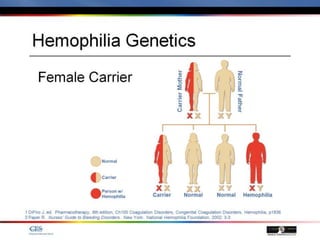
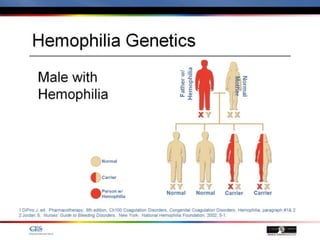
Genetics of hemophilia A or B
 Mode of inheritance is X linked recessive
CLINICAL MANIFESTATIONS
 Neither factor VIII nor factor IX crosses the
placenta; hence bleeding symptoms may be
present from birth or may occur in the fetus.
 30% of male infants with hemophilia bleed with
circumcision.
 Obvious symptoms such as easy bruising,
intramuscular hematomas, and hemarthroses
begin when the child begins to cruise.
 Bleeding from minor traumatic lacerations of the
mouth (a torn frenulum) may persist for hours or
days and may cause the parents to seek medical
evaluation..
Factor VIII or Factor IX Deficiency
(Hemophilia A or B)
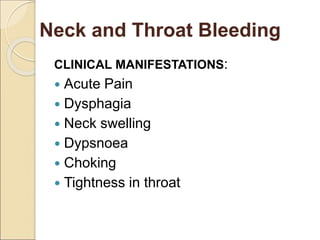
CLINICAL MANIFESTATIONS:
 Acute Pain
 Dysphagia
 Neck swelling
 Dypsnoea
 Choking
 Tightness in throat
Neck and Throat Bleeding
Treatment of Hemophilia
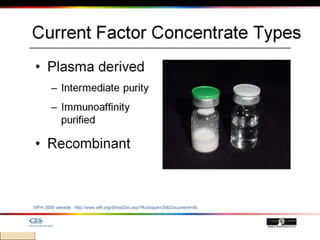
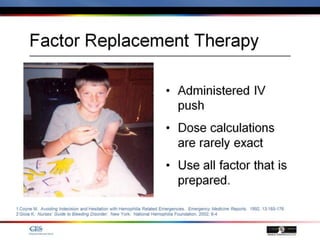
 Factor VIII or IX Concentrates
◦ Recombinant or plasma derived
◦ Preferred therapy when available
◦ Ability to correct factor levels to normal easily
with very little volume
Treatment of Hemophilia
 Cryoprecipitate
◦ Frozen blood product prepared from plasma
◦ Contains FVIII, VWF, fibrinogen, FXIII
◦ 1 unit = ~15cc = ~ 100 units FVIII
◦ Not useful for factor IX deficiency
 Fresh frozen plasma
◦ Contains all factors
◦ 1 unit = 250 cc = 250 units FVIII
◦ Volume limits ability to correct Factor levels to
normal
 50 ml/kg FFP = 100% correction
Treatment of Hemophilia
 Supportive care
◦ Rest
◦ Ice
◦ Compression
◦ Elevation
◦ Avoid acetylasalicylic acid and non-steroidal
anti-inflammatory- drugs that interfere with
platelet function
Treatment of Hemophilia
Complications of the treatment
of hemophilia
 Transmission of infectious agents (HIV,
Hepatitis B or C)
◦ No risk with recombinant factor
◦ Plasma derived concentrates are
very safe
◦ Risk is highest with FFP,
cryoprecipitate and red blood cells
Other causes of
bleeding
Vitamin K deficiency: example
Hemorrhagic Disease of Newborns
◦ Cause: deficient Vitamin K stores in the
newborn
◦ Manifests in 1st week of life (days 2-4 of life):
subgaleal bleeding, cord bleeding,
haematemesis, haeamaturia
◦ Late manifestation in breastfed infants may
occur after 3 months
◦ Laboratory results: ↑PT and ↑PTT . Normal
bleeding time and Normal platelet count
◦ Management: IV Vitamin K
◦ Prevention: Prophylaxis vitamin K given to all
Disseminated Intravascular
Coagulation (DIC) /Consumptive
Coagulopathy
 Occurs as a complication of other
disease processes like septic shock
(esp. Gram negative septicaemia),
ricketsial infection, snake bite,
malignancy (promyelocytic
leucaemia), hypoxia, acidosis,
tissue necrosis, shock and
endothelial damage or burns.
Disseminated Intravascular
Coagulation(DIC) /Consumptive
Coagulopathy
 Pathogenesis: intravascular
activation of coagulation → fibrin
deposit in small vessel →tissue
ischemia →release of tissue
thromboplastin →consumption of
labile factors (platelets, factor II, V &
VIII) and activation of fibrinolytic
system.
 Investigations: Platelets↓ PTT↑ PT↑
fibrinogen↓ fibrinogen split products↑
• Clinical Features: bleeding is diffuse, with
oozing from venipuncture sites or surgical
incisions, around indwelling catheters. Also
petechiae and ecchymosis, Gastrointestinal
& pulmonary bleeding, hematuria.
 Tissue thrombosis may involve many organs
and large areas of the skin, subcutaneous
tissue.
 Kidney & brain may be infarcted.
Disseminated Intravascular
Coagulation / Consumptive
Coagulopathy
Liver disease
 Almost all the clotting factors are made in the
liver.
 In severe liver damage coagulopathy is
common.
 Hepatic clearance of activated clotting factors
may also be impaired in severe liver damage
leading to thrombosis and DIC side by side.
 Laboratory investigations: ↑PTT & ↑ PT
 Treatment: FFP, cryoprecipitate, Vitamin K.
Avoid PT complex concentrate because
activated factors may not be cleared by
damage liver leading to thrombosis and DIC.
 Reye syndrome, Wilson syndrome and viral
hepatitis can present with purpura.

Bleeding disorders in children.ppt

  • 1.
  • 2.
  • 3.
    The physiology ofhemostasis  Hemostasis is the active process that clots blood in areas of blood vessel injury yet simultaneously limits the clot size only to the areas of injury.  Over time, the clot is lysed by the fibrinolytic system, and normal blood flow is restored.  If clotting is impaired, hemorrhage occurs.  If clotting is excessive, thrombotic complications ensue.
  • 4.
    The physiology ofhemostasis  The vascular endothelium is the first barrier against hemorrhage.  Primary hemostasis mechanism: Vascular response (constriction) and platelet plug formation.  Secondary hemostasis mechanism: Formation of a stable fibrin clot. It includes the soluble clotting factors (coagulation).
  • 5.
    The physiology ofhemostasis Small blood vessel injury: Active vasoconstriction and local tissue pressure control the areas of bleeding without mobilization of the coagulation process. Platelets are essential for the control of such small blood vessel injury.
  • 6.
    The physiolgy of hemostasis After vascular injury, blood is exposed to sub endothelial matrix, von Willebrand Factor (VWF) provides the “glue” to which platelets bind.  The platelets release stored proteins (e.g. thromboxane); this leads to recruitment of other platelets to form a plug.  During the process of platelet activation, platelet phospholipids are released and interact with the clotting
  • 7.
    The physiology ofhemostasis Larger blood vessel injury: The participation of the coagulation system is required to provide a firm, stable fibrin clot.  Vascular injury and release of tissue factor initiates the clotting process.  Coagulation proceeds in 3 phases; ◦ Phase I involves the formation of prothrombin activator (thrombinase) from either the extrinsic or intrinsic pathway ◦ Phase II involves Prothrombin → Thrombin ◦ Phase III involves Fibrinogen →Fibrin
  • 8.
    Larger blood vesselsinjury:  The fibrinolytic system ensures that excessive clot formation is prevented and that the clot is retracted The physiology of hemostasis
  • 10.
    The physiology ofhemostasis Clotting (coagulation) cascade:  Activated clotting factors activate the next sequential clotting factor in a systematic manner.  Feedback mechanisms enhance clotting at the site where it is needed.  The dual mechanisms of activating clotting have been termed the intrinsic (surface activation) and extrinsic (tissue factor–mediated) pathways.
  • 12.
  • 13.
    Laboratory Investigations of hemostasis Commonlyused tests ◦ Platelet count ◦ Bleeding time ◦ Prothrombin time (PT) ◦ Partial thromboplastin time (PTT/aPTT)
  • 14.
    Bleeding time (Normalis 1-6 minutes) ◦ Assesses the vascular and platelet phase of haemostasis (primary mechanism). ◦ Using a scalpel blade, drops of blood are blotted from the margin of the incision at 30 sec interval until blood flow stops usually up to 6 mins. ◦ It is very sensitive to platelet Laboratory Investigations of hemostasis
  • 15.
    Laboratory Investigations of hemostasis Bleeding time assesses the function of platelets and their interaction with the vascular wall.  Disposable standardized devices have been developed that control the length and depth of the skin incision.
  • 16.
    Platelet count (Normalis 150- 400/nL) ◦ Thrombocytopenia is the most common cause of defective primary hemostatic mechanisms in children. ◦ If the bleeding time is disproportionate to the platelet count, a qualitative platelet defect should be suspected. ◦ Patients with platelet count above 50 x 10 9/L rarely have significant bleeding. Those with count below 20 Laboratory Investigations of hemostasis
  • 17.
    Platelet count  Plateletcount is essential in the evaluation of the child with a positive bleeding history because thrombocytopenia is the most common acquired cause of a bleeding diathesis in children.  Patients with a platelet count of >50,000/mm3 rarely have significant clinical bleeding.  Thrombocytosis in children is usually reactive and is not associated with bleeding or thrombotic complications. Laboratory Investigations of hemostasis
  • 18.
    Activated partial thromboplastintime (activated PTT) (Normal is 30-40 seconds) ◦ Evaluates phase I of coagulation ◦ It is the time required for plasma to clot when it has been activated by incubation with an inert activator (e.g. Ground glass, kaolin, celite & ellagic acid). ◦ It assesses the adequacy of factors XII (plus prekallikrein, HMW kinogen), XI, IX, VIII and common pathway. Laboratory Investigations of hemostasis
  • 19.
    Activated PTT ◦ IfPhase II & III tests (PT & TT) are intact, a prolonged PTT represent deficiency or inhibition in intrinsic pathway. ◦ Prolonged PTT can therefore be due to intrinsic pathway factors (XII, XI, IX, VIII) or common pathway factors (X,V, II, I) Laboratory Investigations of hemostasis
  • 20.
    Prothrombin Time (PT)(Normal is 11-13 seconds) ◦ Assesses Phase II of coagulation ◦ It is the time taken for plasma to clot after the addition of exogenous thromboplastin (tissue factor) & Ca2+ ◦ If Phase III (TT) is intact, prolonged PT indicates deficiency of factor VII (extrinsic pathway) or V, X, II (common pathway) Laboratory Investigations of hemostasis
  • 21.
     PT measuresthe activation of clotting by tissue factor (thromboplastin) in the presence of calcium. Laboratory Investigations of hemostasis
  • 22.
    Thrombin time TT(Normal 12-20 seconds) ◦ assesses phase III of coagulation (fibrinogen → fibrin) ◦ it is the time required for plasma to clot after the addition of factor IIa (thrombin) ◦ prolongation of TT limits the defect to fibrinogen only or the presence anticoagulant like heparin Fibrinogen assay (quantitative) is possible. Laboratory Investigations of hemostasis
  • 23.
    Laboratory Investigations of hemostasis Thrombin time measures the final step in the clotting cascade, in which fibrinogen is converted to fibrin.  Prolongation of thrombin time occurs with reduced fibrinogen levels (hypofibrinogenemia or afibrinogenemia), with dysfunctional fibrinogen (dysfibrinogenemia), or in the presence of substances that interfere with fibrin polymerization tion, such as heparin and fibrin split
  • 24.
    Clotting Factor Assays Each of the clotting factors can be measured in the clinical laboratory using individual factor–deficient plasmas.  For most clotting factors, activity is measured against pooled normal plasma or against a standard, by which 100% activity is expressed as 100 IU/dL. Laboratory Investigations of hemostasis
  • 25.
  • 26.
    Disorders of thePrimary Haemostasis Mechanism  Vascular disorders Eg. Ehlers Danlos Syndrome or Scurvy  Von Willebrand Disease  Platelet Disorders
  • 27.
    Disorders of theprimary hemostasis mechanism Bleeding Pattern:  Muco-cutaneous pattern  Immediate bleeding and bruising after trauma Manifests as:  Petechiae  Ecchymoses  Epistaxis  Gum bleeding  Menorrhagia
  • 28.
    Disorders of SecondaryHemostasis Mechanism  Clotting factor deficiency Hemophilia A (deficiency of FVIII), Hemophilia B (deficiency of FIX) or Deficiency of FVII
  • 29.
    Disorders of Secondary HemostasisMechanism Bleeding Pattern:  Delayed deep tissue bleeding: - joints (hemarthrosis) - muscles - soft tissue - CNS (intracranial hemorrhage)
  • 30.
  • 31.
    Thrombocytopenia  The normalplatelet count is 150-450 × 10^9/L.  Thrombocytopenia refers to a reduction in platelet count to <150 × 10^9/L.  Causes of thrombocytopenia include  decreased production on either a congenital or an acquired basis,  sequestration of the platelets within an enlarged spleen or other organ, and  increased destruction of normally synthesized platelets on either an immune or a nonimmune basis
  • 32.
    Causes of Thrombocytopenia in Children DESTRUCTIVETHROMBOCYTOPENIAS Immune thrombocytopenias  Acute and chronic ITP  Systemic lupus erythematosus  Evans syndrome  Neoplasia-associated immune thrombocytopenia  Thrombocytopenia associated with HIV  Neonatal immune thrombocytopenia Alloimmune Autoimmune  Drug-induced immune thrombocytopenia  Posttransfusion purpura  Allergy and anaphylaxis
  • 33.
    Thrombocytopenia of infection Bacteremia or fungemia  Viral infection  Protozoan  Hemolytic-uremic syndrome Others: Nonimmune thrombocytopenias Primary Platelet Consumption Syndromes Causes of Thrombocytopenia in Children
  • 34.
    Causes of Thrombocytopenia inChildren IMPAIRED PLATELET PRODUCTION Acquired disorders  Aplastic anemia  Myelodysplastic syndrome  Marrow infiltrative process—neoplasia  Nutritional deficiency states (iron, folate, vitamin B12, anorexia nervosa)  Drug- or radiation-induced thrombocytopenia  Neonatal hypoxia or placental insufficiency Others: Hereditary disorders
  • 35.
    Causes of Thrombocytopenia inChildren SEQUESTRATION  Hypersplenism  Hypothermia  Burns  HELLP syndrome (hemolysis, elevated liver enzymes, and low platelets)
  • 36.
  • 37.
    Idiopathic (Autoimmune) Thrombocytopenic Purpura The most common cause of acute onset of thrombocytopenia in an otherwise well child is (autoimmune) idiopathic thrombocytopenic purpura (ITP).
  • 38.
    EPIDEMIOLOGY  Occurs in1 in 20,000  1-4 weeks after exposure to a common viral infection, an autoantibody directed against the platelet surface develops with resultant sudden onset of thrombocytopenia.  A recent history of viral illness is described in most of cases of childhood ITP.  The peak age is 1-4 years Idiopathic (Autoimmune) Thrombocytopenic Purpura
  • 39.
    EPIDEMIOLOGY  There isusually a preceding history of viral illness in about 70-80% of cases  Ebstein Barr and HIV are recognized viral associations  Equal sex distribution Idiopathic (Autoimmune) Thrombocytopenic Purpura
  • 40.
    CLINICAL MANIFESTATIONS  Theclassic presentation of ITP is a previously healthy 1-4 years old child who has sudden onset of generalized petechiae and purpura.  The parents often state that the child was fine yesterday and now is covered with bruises and purple dots.  There may be bleeding from the gums and mucous membranes, particularly with profound thrombocytopenia (platelet count <10 × 10^9/L).  There is a history of a preceding viral infection 1-4 weeks before the onset of thrombocytopenia.  Findings on physical examination are normal, other than the finding of petechiae and purpura.  Splenomegaly, lymphadenopathy, bone pain, and pallor are rare. Idiopathic (Autoimmune) Thrombocytopenic Purpura
  • 41.
    Classification of theseverity of ITP 1. No symptoms 2. Mild symptoms: bruising and petechiae, occasional minor epistaxis, very little interference with daily living 3. Moderate: more severe skin and mucosal lesions, more troublesome epistaxis and menorrhagia 4. Severe: bleeding episodes—menorrhagia, epistaxis, melena— requiring transfusion or hospitalization, symptoms interfering seriously with the quality of life  The presence of abnormal findings such as hepatosplenomegaly, bone or joint pain, Idiopathic (Autoimmune) Thrombocytopenic Purpura
  • 42.
    CLINICAL MANIFESTATIONS Suspect thrombocytopeniain any child with a history of easy bruising, petechiae, ecchymosis and mucosal bleeding.  May present as an incidental finding in an asymptomatic individual.  The following organs may be affected by bleeding-  CNS-headaches, dizziness;  Eye: retinal haemorrhage  Middle ear  Generally sudden onset in an otherwise healthy child. Idiopathic (Autoimmune) Thrombocytopenic Purpura
  • 43.
     Physical examinationis usually normal except for the signs of petechiae  Splenomegaly and lymphadenopathy are usually rare  Less than 1% develop intracranial hemorrhage but only when platelet count < 10 x 10^9/L  About 80% of children will have the ITP resolving within 6 months Idiopathic (Autoimmune) Thrombocytopenic Purpura
  • 44.
    Idiopathic (Autoimmune) Thrombocytopenic Purpura LABORATORYFINDINGS  Severe thrombocytopenia (platelet count <20 × 10^ 9/L) is common, and platelet size is normal or increased, reflective of increased platelet turnover.  In acute ITP, the hemoglobin value, white blood cell (WBC) count, and differential count should be normal.  Hemoglobin may be decreased if there have been profuse nosebleeds or menorrhagia.  Bone marrow examination shows normal granulocytic and erythrocytic series, with characteristically normal or increased numbers of megakaryocytes.  HIV test
  • 45.
    LABORATORY INVESTIGATIONS  FBCshows normal WBC, but thrombocytopenia  Hb may be low if there have been prolonged episodes of bleeding  Bone marrow examination would reveal high numbers of megakaryocytes- more of them immature (large) on account of high turnover  Coagulation profile is normal Idiopathic (Autoimmune) Thrombocytopenic Purpura
  • 46.
    DIFFERENTIAL DIAGNOSIS  exposureto medication that induces drug-dependent antibodies  splenic sequestration because of portal hypertension  Congenital thrombocytopenia syndromes such as thrombocytopenia absent radius (TAR) syndrome.  hemolytic-uremic syndrome (HUS)  disseminated intravascular coagulation (DIC)  Autoimmune thrombocytopenia may be an initial manifestation of SLE, HIV infection, common variable immunodeficiency, and, rarely, lymphoma  Wiskott- Aldrich syndrome (WAS) must be considered in young males found to have thrombocytopenia with small platelets, particularly if there is a history of eczema and recurrent infection. Idiopathic (Autoimmune) Thrombocytopenic Purpura
  • 47.
    Idiopathic (Autoimmune) Thrombocytopenic Purpura TREATMENT Education and counseling of the family  IVIG (intravenous immunoglobulin) (0.8-1.0 g/kg) or a short course of corticosteroids should be used as first-line treatment.  Prednisone. Doses of prednisone of 1-4 mg/kg/24 hr appear to induce a more rapid rise in platelet count than in untreated patients with ITP.  Intravenous anti-D therapy for Rh-positive patients. IV anti-D is ineffective in Rh-negative patients.
  • 48.
    TREATMENT  Splenectomy: Splenectomyin ITP should be reserved for 1 of 2 circumstances. The older child (≥4 yr) with severe ITP that has lasted >1 yr (chronic ITP) and whose symptoms are not easily controlled with therapy is a candidate for splenectomy.  Splenectomy must also be considered when life- threatening hemorrhage (intracranial hemorrhage) complicates acute ITP, if the platelet count cannot be corrected rapidly with transfusion of platelets and administration of IVIG and corticosteroids. Idiopathic (Autoimmune) Thrombocytopenic Purpura
  • 49.
    TREATMENT  Management ofthrombocytopenia should be guided by an understanding of its cause and clinical course  The principal goal in management is to maintain a safe platelet count to prevent significant bleeding.  ITP in children usually is short-lived, with at least two thirds of patients making a full and sustained recovery within 6 months of presentation, with or without treatment. Idiopathic (Autoimmune) Thrombocytopenic Purpura
  • 50.
    TREATMENT Pharmacologic interventions include Corticosteroids- inhibits phagocytosis of Ab- coated Platelets in spleen and so prolongs survival  Prednisolone: 1-4mg/kg (max 60mg/day) in divided doses; taper at 5-7 day intervals and stop at 28days.  IGIV- Blocks reticuloendothelial Fc-receptor activation and decreases autoantibody synthesis Idiopathic (Autoimmune) Thrombocytopenic Purpura
  • 51.
    TREATMENT  Splenectomy usuallyreserved for  Chronic ITP  Recurrent life threatening hemorrhage, especially in intracranial hemorrhage, not responding to medical treatment  Platelet transfusions can be used in urgent situations. Platelet transfusion nearly always provides prompt, satisfactory hemostasis, even if only for a short duration. Idiopathic (Autoimmune) Thrombocytopenic Purpura
  • 52.
    ACTIVITY RESTRICTIONS  Whenmoderate-to-severe thrombocytopenia is recognized, reasonable precautions to minimize bleeding risk is recommended. trauma precautions (eg, avoidance of contact sports and use of a helmet while cycling)  and avoidance of medications that have anti platelet or anticoagulant activity (including aspirin-containing preparations, ibuprofen, and other nonsteroidal anti-inflammatory drugs). Idiopathic (Autoimmune) Thrombocytopenic Purpura
  • 53.
  • 54.
    Hemophilia Epidemiology  Occurs inall races and ethnic groups  1 in 5,000 live male births  Deficiencies of factors VIII and IX are the most common severe inherited bleeding disorders.
  • 56.
    When to suspecthemophilia  Is there any suggestive family history? ◦ brothers, maternal uncles or maternal grandfather with bleeding?  25% of haemophilia cases are new mutations ◦ so a positive family history is not necessary to suspect haemophilia
  • 57.
    When to suspecthemophilia  Male with abnormal bleeding ◦ Bleeding with circumcision ◦ Extensive soft-tissue bleeding- prolonged mouth bleeding, large palpable bruises ◦ Joint bleeds- swollen, warm, painful joints  Arthropathy in older children from chronic joint bleeds ◦ Unexplained intracranial hemorrhage ◦ Excessive post-procedure bleeding
  • 58.
    Investigations in hemophilia •Normal platelet count • With or without anaemia • Normal PT • Prolonged APTT
  • 59.
    How to makethe diagnosis: hemophilia  History: Male, bleeding history, isolated prolonged APTT, family history of bleeding in male relatives  Investigations: Need specific factor assays to make the final diagnosis and guide therapy Start with Factor VIII Activity 80% of patients with hemophilia have Factor VIII deficiency
  • 60.
    How to makethe diagnosis: hemophilia  Factor activity will establish the diagnosis of hemophilia and will help determine the severity of the disease
  • 61.
    Types of Hemophilia Factor VIII deficiency: Hemophilia A also called Classic Hemophilia.  Factor IX deficiency: Hemophilia B also called Christmas disease.
  • 62.
    Genetics of hemophiliaA or B  Mode of inheritance is X linked recessive
  • 65.
    CLINICAL MANIFESTATIONS  Neitherfactor VIII nor factor IX crosses the placenta; hence bleeding symptoms may be present from birth or may occur in the fetus.  30% of male infants with hemophilia bleed with circumcision.  Obvious symptoms such as easy bruising, intramuscular hematomas, and hemarthroses begin when the child begins to cruise.  Bleeding from minor traumatic lacerations of the mouth (a torn frenulum) may persist for hours or days and may cause the parents to seek medical evaluation.. Factor VIII or Factor IX Deficiency (Hemophilia A or B)
  • 74.
    CLINICAL MANIFESTATIONS:  AcutePain  Dysphagia  Neck swelling  Dypsnoea  Choking  Tightness in throat Neck and Throat Bleeding
  • 77.
    Treatment of Hemophilia Factor VIII or IX Concentrates ◦ Recombinant or plasma derived ◦ Preferred therapy when available ◦ Ability to correct factor levels to normal easily with very little volume
  • 80.
    Treatment of Hemophilia Cryoprecipitate ◦ Frozen blood product prepared from plasma ◦ Contains FVIII, VWF, fibrinogen, FXIII ◦ 1 unit = ~15cc = ~ 100 units FVIII ◦ Not useful for factor IX deficiency
  • 81.
     Fresh frozenplasma ◦ Contains all factors ◦ 1 unit = 250 cc = 250 units FVIII ◦ Volume limits ability to correct Factor levels to normal  50 ml/kg FFP = 100% correction Treatment of Hemophilia
  • 82.
     Supportive care ◦Rest ◦ Ice ◦ Compression ◦ Elevation ◦ Avoid acetylasalicylic acid and non-steroidal anti-inflammatory- drugs that interfere with platelet function Treatment of Hemophilia
  • 83.
    Complications of thetreatment of hemophilia  Transmission of infectious agents (HIV, Hepatitis B or C) ◦ No risk with recombinant factor ◦ Plasma derived concentrates are very safe ◦ Risk is highest with FFP, cryoprecipitate and red blood cells
  • 84.
  • 85.
    Vitamin K deficiency:example Hemorrhagic Disease of Newborns ◦ Cause: deficient Vitamin K stores in the newborn ◦ Manifests in 1st week of life (days 2-4 of life): subgaleal bleeding, cord bleeding, haematemesis, haeamaturia ◦ Late manifestation in breastfed infants may occur after 3 months ◦ Laboratory results: ↑PT and ↑PTT . Normal bleeding time and Normal platelet count ◦ Management: IV Vitamin K ◦ Prevention: Prophylaxis vitamin K given to all
  • 86.
    Disseminated Intravascular Coagulation (DIC)/Consumptive Coagulopathy  Occurs as a complication of other disease processes like septic shock (esp. Gram negative septicaemia), ricketsial infection, snake bite, malignancy (promyelocytic leucaemia), hypoxia, acidosis, tissue necrosis, shock and endothelial damage or burns.
  • 87.
    Disseminated Intravascular Coagulation(DIC) /Consumptive Coagulopathy Pathogenesis: intravascular activation of coagulation → fibrin deposit in small vessel →tissue ischemia →release of tissue thromboplastin →consumption of labile factors (platelets, factor II, V & VIII) and activation of fibrinolytic system.  Investigations: Platelets↓ PTT↑ PT↑ fibrinogen↓ fibrinogen split products↑
  • 88.
    • Clinical Features:bleeding is diffuse, with oozing from venipuncture sites or surgical incisions, around indwelling catheters. Also petechiae and ecchymosis, Gastrointestinal & pulmonary bleeding, hematuria.  Tissue thrombosis may involve many organs and large areas of the skin, subcutaneous tissue.  Kidney & brain may be infarcted. Disseminated Intravascular Coagulation / Consumptive Coagulopathy
  • 89.
    Liver disease  Almostall the clotting factors are made in the liver.  In severe liver damage coagulopathy is common.  Hepatic clearance of activated clotting factors may also be impaired in severe liver damage leading to thrombosis and DIC side by side.  Laboratory investigations: ↑PTT & ↑ PT  Treatment: FFP, cryoprecipitate, Vitamin K. Avoid PT complex concentrate because activated factors may not be cleared by damage liver leading to thrombosis and DIC.  Reye syndrome, Wilson syndrome and viral hepatitis can present with purpura.