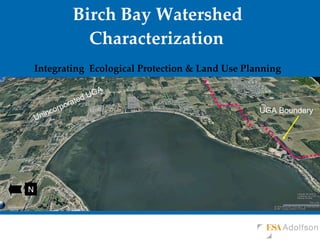



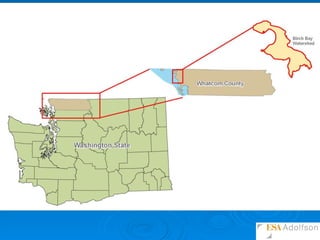
Birch Bay Watershed Characterization   Integrating  Ecological Protection & Land Use Planning N UGA Boundary Unincorporated UGA
Decision Making Tools NPDES ESA CWA HPA SMA CAO GMA SEPA
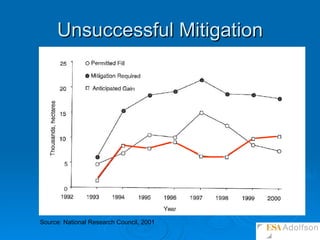
Unsuccessful Mitigation Source: National Research Council, 2001
Economic  Development Ecological  Protection   Property Rights
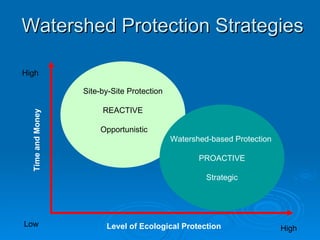
Watershed Protection Strategies Time and Money Low High High Level of Ecological Protection Site-by-Site Protection REACTIVE Opportunistic Watershed-based Protection  PROACTIVE Strategic
1.7 Million More People by 2040
 
 
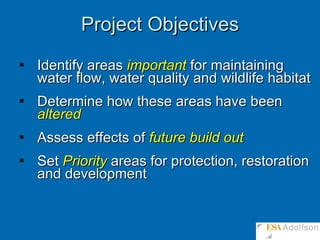
Project Objectives Identify areas  important  for maintaining water flow, water quality and wildlife habitat Determine how these areas have been  altered Assess effects of  future   build out Set  Priority  areas for protection, restoration and development
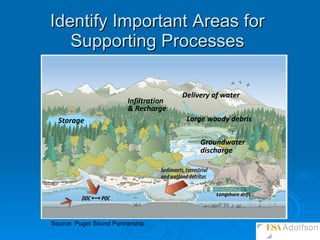
Identify Important Areas for Supporting Processes Infiltration & Recharge Storage Groundwater discharge Delivery of water Longshore drift Large woody debris Source: Puget Sound Partnership
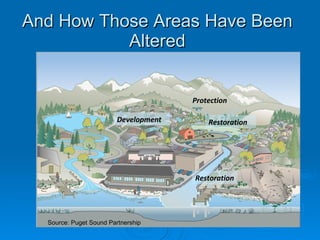
And How Those Areas Have Been Altered Protection Restoration   Development Restoration Source: Puget Sound Partnership
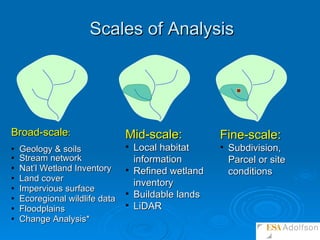
Scales of Analysis Broad-scale :  Geology & soils  Stream network Nat’l Wetland Inventory Land cover Impervious surface Ecoregional wildlife data Floodplains  Change Analysis* Mid-scale:  Local habitat information  Refined wetland inventory Buildable lands LiDAR Fine-scale:  Subdivision, Parcel or site conditions
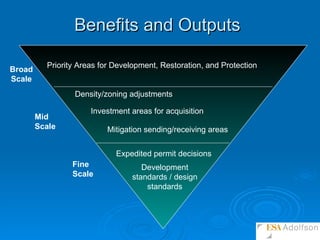
Benefits and Outputs Priority Areas for Development, Restoration, and Protection   Density/zoning adjustments Expedited permit decisions Fine  Scale Mid  Scale Broad Scale Investment areas for acquisition Mitigation sending/receiving areas Development standards / design standards
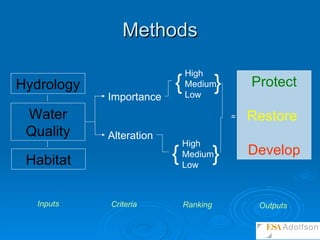
Methods Water Quality Importance Alteration High Medium Low High Medium Low { { Protect Restore  Develop = } } Hydrology Habitat Inputs   Criteria Ranking Outputs
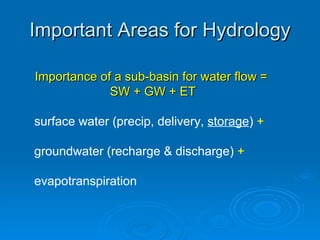
Important Areas for Hydrology Importance of a sub-basin for water flow =  SW + GW + ET surface water (precip, delivery,  storage )  +   groundwater (recharge & discharge)  +   evapotranspiration
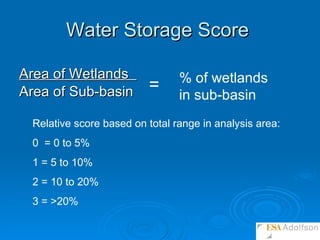
Area of Wetlands  Area of Sub-basin Water Storage Score   = % of wetlands in sub-basin Relative score based on total range in analysis area: 0  = 0 to 5% 1 = 5 to 10%  2 = 10 to 20%  3 = >20%
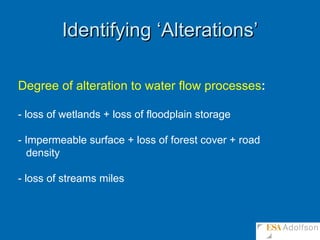
Identifying ‘Alterations’ Degree of alteration to water flow processes : - loss of wetlands + loss of floodplain storage - Impermeable surface + loss of forest cover + road density  - loss of streams miles
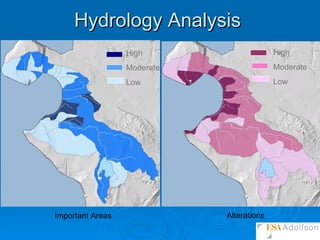
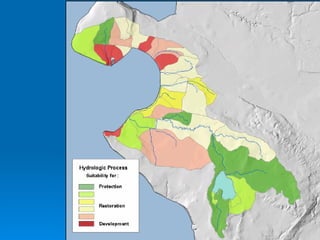
Hydrology Analysis   High Moderate Low High Moderate Low Important Areas Alterations
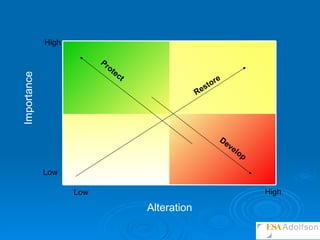
Low High High Low Alteration Importance Restore Develop Protect
 
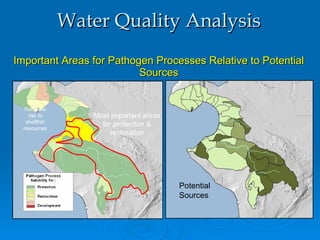
Water Quality Analysis Important Areas for Pathogen Processes Relative to Potential Sources Potential Sources Reduces risk to shellfish resources Most important areas for protection & restoration
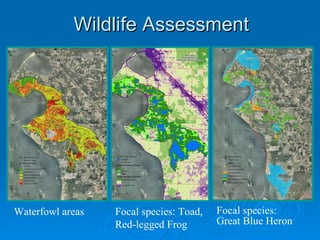
Wildlife Assessment Waterfowl areas Focal species:  Great Blue Heron Focal species: Toad, Red-legged Frog
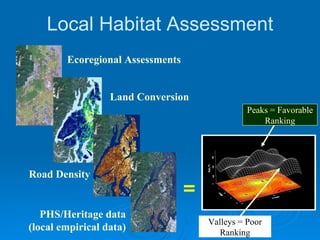
= Ecoregional Assessments Land Conversion Road Density Local Habitat Assessment Valleys = Poor Ranking Peaks = Favorable Ranking PHS/Heritage data (local empirical data)
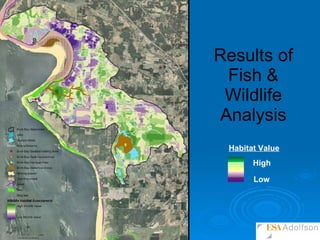
Results of Fish & Wildlife Analysis High Low Habitat Value
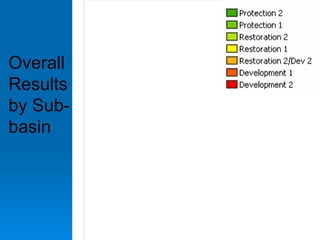
Overall Results by Sub-basin
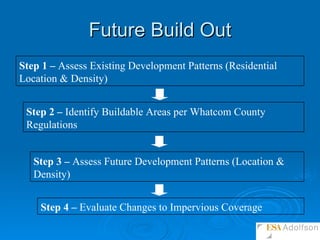
Future Build Out Step 4 –  Evaluate Changes to Impervious Coverage Step 3 –  Assess Future Development Patterns (Location & Density) Step 2 –  Identify Buildable Areas per Whatcom County Regulations Step 1 –  Assess   Existing Development Patterns (Residential Location & Density)
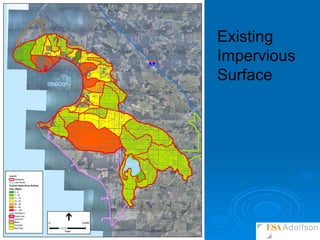
Existing Impervious Surface
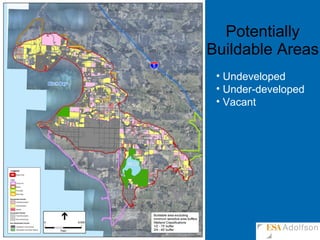
Potentially Buildable Areas Undeveloped Under-developed Vacant
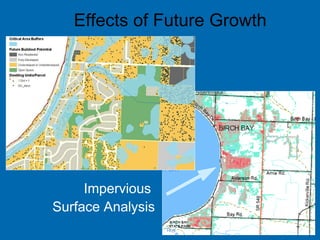
Effects of Future Growth Impervious  Surface Analysis
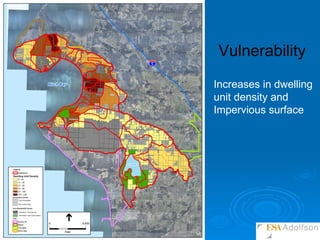
Vulnerability Increases in dwelling unit density and Impervious surface
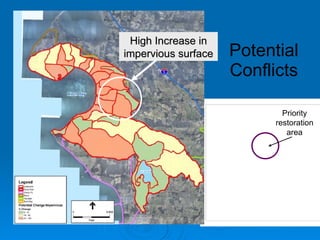
Potential Conflicts High Increase in impervious surface Priority restoration area
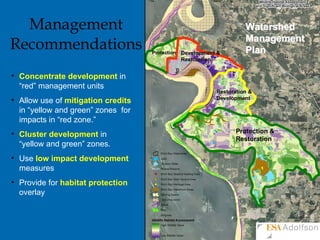
Management Recommendations  Concentrate development  in “red” management units Allow use of  mitigation credits  in “yellow and green” zones  for impacts in “red zone.” Cluster development  in “yellow and green” zones. Use  low impact development  measures Provide for  habitat protection  overlay
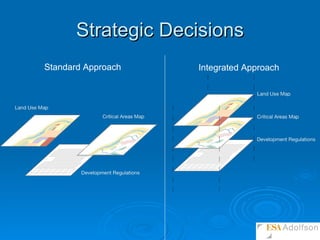
Strategic Decisions Standard Approach   Integrated Approach
Implementation   Should … Accelerate restoration Increase mitigation effectiveness Promote more sustainable development Expedite permitting Increase community participation in stewardship goals
Acknowledgments: Whatcom County Planning & Development Services WA Dept of Ecology WDFW EPA PSP WSDOT More on Birch Bay Action Plan: http://www.co.whatcom.wa.us/pds/naturalresources/specialprojects/birchbaywatershed-actionplan.jsp Questions and Information: Margaret Clancy – ESA Adolfson [email_address]

Birch Bay Watershed Characterization

  • 1.
    Birch Bay WatershedCharacterization Integrating Ecological Protection & Land Use Planning N UGA Boundary Unincorporated UGA
  • 2.
    Decision Making ToolsNPDES ESA CWA HPA SMA CAO GMA SEPA
  • 3.
    Unsuccessful Mitigation Source:National Research Council, 2001
  • 4.
    Economic DevelopmentEcological Protection Property Rights
  • 5.
    Watershed Protection StrategiesTime and Money Low High High Level of Ecological Protection Site-by-Site Protection REACTIVE Opportunistic Watershed-based Protection PROACTIVE Strategic
  • 6.
    1.7 Million MorePeople by 2040
  • 7.
  • 8.
  • 9.
    Project Objectives Identifyareas important for maintaining water flow, water quality and wildlife habitat Determine how these areas have been altered Assess effects of future build out Set Priority areas for protection, restoration and development
  • 10.
    Identify Important Areasfor Supporting Processes Infiltration & Recharge Storage Groundwater discharge Delivery of water Longshore drift Large woody debris Source: Puget Sound Partnership
  • 11.
    And How ThoseAreas Have Been Altered Protection Restoration Development Restoration Source: Puget Sound Partnership
  • 12.
    Scales of AnalysisBroad-scale : Geology & soils Stream network Nat’l Wetland Inventory Land cover Impervious surface Ecoregional wildlife data Floodplains Change Analysis* Mid-scale: Local habitat information Refined wetland inventory Buildable lands LiDAR Fine-scale: Subdivision, Parcel or site conditions
  • 13.
    Benefits and OutputsPriority Areas for Development, Restoration, and Protection Density/zoning adjustments Expedited permit decisions Fine Scale Mid Scale Broad Scale Investment areas for acquisition Mitigation sending/receiving areas Development standards / design standards
  • 14.
    Methods Water QualityImportance Alteration High Medium Low High Medium Low { { Protect Restore Develop = } } Hydrology Habitat Inputs Criteria Ranking Outputs
  • 15.
    Important Areas forHydrology Importance of a sub-basin for water flow = SW + GW + ET surface water (precip, delivery, storage ) + groundwater (recharge & discharge) + evapotranspiration
  • 16.
    Area of Wetlands Area of Sub-basin Water Storage Score = % of wetlands in sub-basin Relative score based on total range in analysis area: 0 = 0 to 5% 1 = 5 to 10% 2 = 10 to 20% 3 = >20%
  • 17.
    Identifying ‘Alterations’ Degreeof alteration to water flow processes : - loss of wetlands + loss of floodplain storage - Impermeable surface + loss of forest cover + road density - loss of streams miles
  • 18.
    Hydrology Analysis High Moderate Low High Moderate Low Important Areas Alterations
  • 19.
    Low High HighLow Alteration Importance Restore Develop Protect
  • 20.
  • 21.
    Water Quality AnalysisImportant Areas for Pathogen Processes Relative to Potential Sources Potential Sources Reduces risk to shellfish resources Most important areas for protection & restoration
  • 22.
    Wildlife Assessment Waterfowlareas Focal species: Great Blue Heron Focal species: Toad, Red-legged Frog
  • 23.
    = Ecoregional AssessmentsLand Conversion Road Density Local Habitat Assessment Valleys = Poor Ranking Peaks = Favorable Ranking PHS/Heritage data (local empirical data)
  • 24.
    Results of Fish& Wildlife Analysis High Low Habitat Value
  • 25.
  • 26.
    Future Build OutStep 4 – Evaluate Changes to Impervious Coverage Step 3 – Assess Future Development Patterns (Location & Density) Step 2 – Identify Buildable Areas per Whatcom County Regulations Step 1 – Assess Existing Development Patterns (Residential Location & Density)
  • 27.
  • 28.
    Potentially Buildable AreasUndeveloped Under-developed Vacant
  • 29.
    Effects of FutureGrowth Impervious Surface Analysis
  • 30.
    Vulnerability Increases indwelling unit density and Impervious surface
  • 31.
    Potential Conflicts HighIncrease in impervious surface Priority restoration area
  • 32.
    Management Recommendations Concentrate development in “red” management units Allow use of mitigation credits in “yellow and green” zones for impacts in “red zone.” Cluster development in “yellow and green” zones. Use low impact development measures Provide for habitat protection overlay
  • 33.
    Strategic Decisions StandardApproach Integrated Approach
  • 34.
    Implementation Should … Accelerate restoration Increase mitigation effectiveness Promote more sustainable development Expedite permitting Increase community participation in stewardship goals
  • 35.
    Acknowledgments: Whatcom CountyPlanning & Development Services WA Dept of Ecology WDFW EPA PSP WSDOT More on Birch Bay Action Plan: http://www.co.whatcom.wa.us/pds/naturalresources/specialprojects/birchbaywatershed-actionplan.jsp Questions and Information: Margaret Clancy – ESA Adolfson [email_address]

Editor's Notes

  • #6 Getting out in front of the planning and permitting process
  • #10 Our analysis had 3 parts which allowed us to ultimately identify the priority areas for restoration, protection and development.
  • #13 Characterization uses available information to help planners make decisions about land use and resource protection at different scales of resolution: Broad scale Mid scale Fine scale Here are some examples of the types of data you need at each scale
  • #14 Different levels of analysis can inform different types of decisions. A planner is able to make different decisions depending on the scale of the analysis. Here are some examples of what each scale can yield in terms of information.
  • #16 precipitation, the timing of the delivery of that precipitation, and the relative amount of surface storage. The groundwater component is modeled by water volume (as precipitation), recharge, and discharge (see Table B-1). Evap is always the same assumed to be forested. Storage factor is weighted highest and considers depressional wetland presence and soils. For groundwater, permeability determines recharge. Discharge is a function of stream miles within unconfined floodplains
  • #17 We made a simple calculation to rank subbasins based on the amount of wetlands
  • #18 We then estimated the extent of degree of alteration in each sub basin looking at specific attributes such as loss of wetlands…
  • #19 We can then map the results to see where the important areas and altered areas occur
  • #23 These are a few of the background maps we used. The soil drainage map for instance indicates in orange and red locations likely to hold water for waterfowl. The map for the Focal species: Western Toad, Northern Red-legged Frog : is a cost-distance map that shows wetlands blue, and connected terrestrial areas in light to dark green. Red lines indicate roads expected to be barrier roads that disconnect habitat through high levels of road mortality. The third map, for the focal species Great Blue Heron shows the heronry, staging & feeding areas, alternative nest sites, and flyways.
  • #29 Next we assess how build out might affect the sub basins. This is one of the aspects of the pilot study that distinguished it from a typical critical areas inventory because now we are looking at the juxtaposition of important areas, past alterations and future build out to see what areas at most risk of development.
  • #30 One of the key metrics we used I impervious surface because we can correlate it to changes in DU density under different zoning scenarios. We can start to see where we might have conflicts between planned growth and resource protection or restoration.
  • #33 You can then begin to develop specific mgmt recommendations for each area