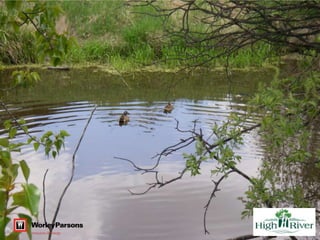
1. Upper Little Bow Restoration
   Plan Purpose & Objectives
2. Study Area and Reach
   Descriptions
3. Restoration Plan Scope of
   Work
4. Work Completed to Date
5. Reach Descriptions, Concerns
   and Restoration Options
   Reach 1
   Reach 2
   Reach 3
   Reach 4
6. Future Work
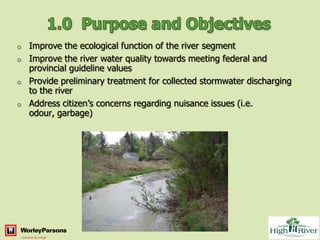
o   Improve the ecological function of the river segment
o   Improve the river water quality towards meeting federal and
    provincial guideline values
o   Provide preliminary treatment for collected stormwater discharging
    to the river
o   Address citizen’s concerns regarding nuisance issues (i.e.
    odour, garbage)
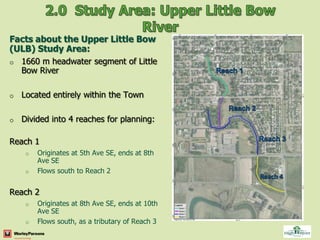
Facts about the Upper Little Bow
(ULB) Study Area:
o   1660 m headwater segment of Little
    Bow River

o   Located entirely within the Town

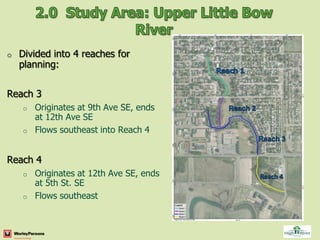
o   Divided into 4 reaches for planning:

Reach 1
     o   Originates at 5th Ave SE, ends at 8th
         Ave SE
     o   Flows south to Reach 2


Reach 2
     o   Originates at 8th Ave SE, ends at 10th
         Ave SE
     o   Flows south, as a tributary of Reach 3
o   Divided into 4 reaches for
    planning:


Reach 3
    o   Originates at 9th Ave SE, ends
        at 12th Ave SE
    o   Flows southeast into Reach 4


Reach 4
    o   Originates at 12th Ave SE, ends
        at 5th St. SE
    o   Flows southeast
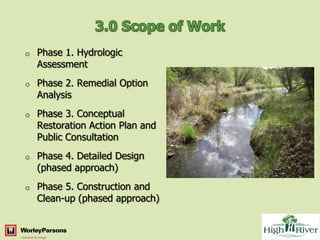
o   Phase 1. Hydrologic
    Assessment
o   Phase 2. Remedial Option
    Analysis
o   Phase 3. Conceptual
    Restoration Action Plan and
    Public Consultation
o   Phase 4. Detailed Design
    (phased approach)
o   Phase 5. Construction and
    Clean-up (phased approach)
o   Phase 1. Hydrologic Assessment – Initial Reports Complete
    • Assessed hydrologic (groundwater and surface) influences, potential
      impacts and water quality
    • Work is ongoing to answer questions related to hydrology and related
      impacts
    • REPORT: June 2010 – Upper Little Bow River Hydrologic Assessment
    • REPORT: December 2010 – Little Bow River Water Quality Monitoring
o   Phase 2 – Remedial Option Analysis – Complete
    • Developed high-level restoration options and assessed potential
      impacts for regulatory review
    • Met with Alberta Environment and Water (AEW) to review options &
      determine next actions
    • Reviewed options with Fisheries and Oceans Canada (DFO)

    • REPORT: September, 2010 – Upper Little Bow River Restoration
      Options and Impact Assessment (Draft for Discussion)
    • REPORT: February, 2011 – Conceptual Remedial Action Plan for Upper
      Little Bow River (Draft)
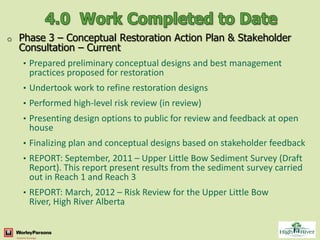
o   Phase 3 – Conceptual Restoration Action Plan & Stakeholder
    Consultation – Current
     • Prepared preliminary conceptual designs and best management
       practices proposed for restoration
     • Undertook work to refine restoration designs
     • Performed high-level risk review (in review)
     • Presenting design options to public for review and feedback at open
       house
     • Finalizing plan and conceptual designs based on stakeholder feedback
     • REPORT: September, 2011 – Upper Little Bow Sediment Survey (Draft
       Report). This report present results from the sediment survey carried
       out in Reach 1 and Reach 3
     • REPORT: March, 2012 – Risk Review for the Upper Little Bow
       River, High River Alberta
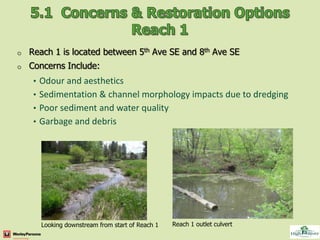
o   Reach 1 is located between 5th Ave SE and 8th Ave SE
o   Concerns Include:
     • Odour and aesthetics
     • Sedimentation & channel morphology impacts due to dredging
     • Poor sediment and water quality
     • Garbage and debris


       Looking downstream from start of Reach 1   Reach 1 outlet culvert
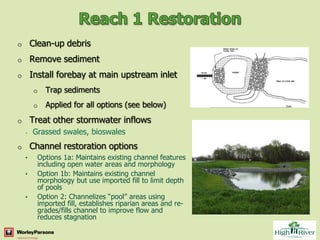
o       Clean-up debris
o       Remove sediment
o       Install forebay at main upstream inlet
         o     Trap sediments
         o     Applied for all options (see below)
o       Treat other stormwater inflows
    •   Grassed swales, bioswales
o       Channel restoration options
    •        Options 1a: Maintains existing channel features
             including open water areas and morphology
    •        Option 1b: Maintains existing channel
             morphology but use imported fill to limit depth
             of pools
    •        Option 2: Channelizes “pool” areas using
             imported fill, establishes riparian areas and re-
             grades/fills channel to improve flow and
             reduces stagnation
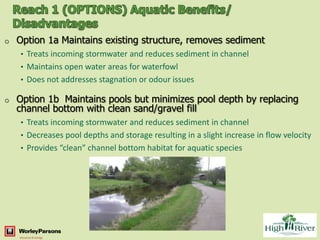
o   Option 1a Maintains existing structure, removes sediment
    • Treats incoming stormwater and reduces sediment in channel
    • Maintains open water areas for waterfowl
    • Does not addresses stagnation or odour issues

o   Option 1b Maintains pools but minimizes pool depth by replacing
    channel bottom with clean sand/gravel fill
    • Treats incoming stormwater and reduces sediment in channel
    • Decreases pool depths and storage resulting in a slight increase in flow velocity
    • Provides “clean” channel bottom habitat for aquatic species
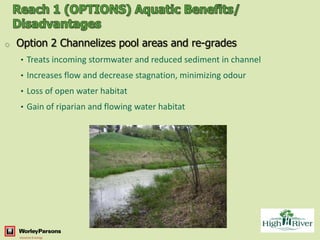
o   Option 2 Channelizes pool areas and re-grades
    • Treats incoming stormwater and reduced sediment in channel
    • Increases flow and decrease stagnation, minimizing odour
    • Loss of open water habitat
    • Gain of riparian and flowing water habitat
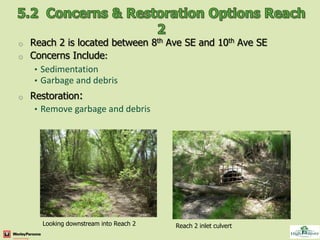
o Reach 2 is located between 8th Ave SE and 10th Ave SE
o Concerns Include:
   • Sedimentation
   • Garbage and debris
o   Restoration:
     • Remove garbage and debris


      Looking downstream into Reach 2   Reach 2 inlet culvert
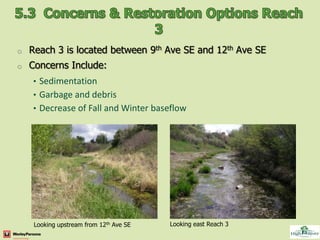
o   Reach 3 is located between 9th Ave SE and 12th Ave SE
o   Concerns Include:
    • Sedimentation
    • Garbage and debris
    • Decrease of Fall and Winter baseflow


     Looking upstream from 12th Ave SE   Looking east Reach 3
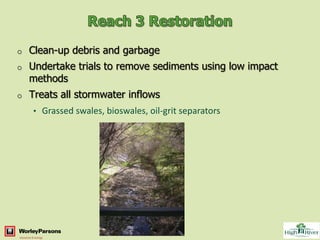
o   Clean-up debris and garbage
o   Undertake trials to remove sediments using low impact
    methods
o   Treats all stormwater inflows
    • Grassed swales, bioswales, oil-grit separators
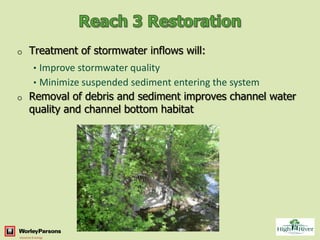
o   Treatment of stormwater inflows will:
    • Improve stormwater quality
    • Minimize suspended sediment entering the system
o   Removal of debris and sediment improves channel water
    quality and channel bottom habitat
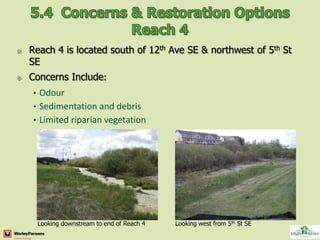
o   Reach 4 is located south of 12th Ave SE & northwest of 5th St
    SE
o   Concerns Include:
    • Odour
    • Sedimentation and debris
    • Limited riparian vegetation


     Looking downstream to end of Reach 4   Looking west from 5th St SE
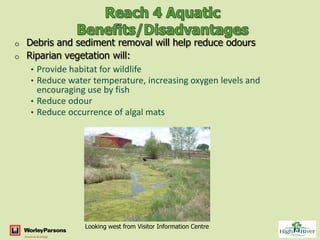
o Debris and sediment removal will help reduce odours
o Riparian vegetation will:
   • Provide habitat for wildlife
   • Reduce water temperature, increasing oxygen levels and
     encouraging use by fish
   • Reduce odour
   • Reduce occurrence of algal mats


                Looking west from Visitor Information Centre
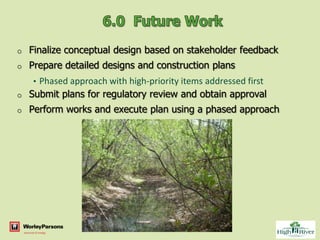
o   Finalize conceptual design based on stakeholder feedback
o   Prepare detailed designs and construction plans
    • Phased approach with high-priority items addressed first
o   Submit plans for regulatory review and obtain approval
o   Perform works and execute plan using a phased approach
Upper little bow river presentation

Upper little bow river presentation

  • 2.
    1. Upper LittleBow Restoration Plan Purpose & Objectives 2. Study Area and Reach Descriptions 3. Restoration Plan Scope of Work 4. Work Completed to Date 5. Reach Descriptions, Concerns and Restoration Options Reach 1 Reach 2 Reach 3 Reach 4 6. Future Work
  • 3.
    o Improve the ecological function of the river segment o Improve the river water quality towards meeting federal and provincial guideline values o Provide preliminary treatment for collected stormwater discharging to the river o Address citizen’s concerns regarding nuisance issues (i.e. odour, garbage)
  • 4.
    Facts about theUpper Little Bow (ULB) Study Area: o 1660 m headwater segment of Little Bow River o Located entirely within the Town o Divided into 4 reaches for planning: Reach 1 o Originates at 5th Ave SE, ends at 8th Ave SE o Flows south to Reach 2 Reach 2 o Originates at 8th Ave SE, ends at 10th Ave SE o Flows south, as a tributary of Reach 3
  • 5.
    o Divided into 4 reaches for planning: Reach 3 o Originates at 9th Ave SE, ends at 12th Ave SE o Flows southeast into Reach 4 Reach 4 o Originates at 12th Ave SE, ends at 5th St. SE o Flows southeast
  • 6.
    o Phase 1. Hydrologic Assessment o Phase 2. Remedial Option Analysis o Phase 3. Conceptual Restoration Action Plan and Public Consultation o Phase 4. Detailed Design (phased approach) o Phase 5. Construction and Clean-up (phased approach)
  • 7.
    o Phase 1. Hydrologic Assessment – Initial Reports Complete • Assessed hydrologic (groundwater and surface) influences, potential impacts and water quality • Work is ongoing to answer questions related to hydrology and related impacts • REPORT: June 2010 – Upper Little Bow River Hydrologic Assessment • REPORT: December 2010 – Little Bow River Water Quality Monitoring
  • 8.
    o Phase 2 – Remedial Option Analysis – Complete • Developed high-level restoration options and assessed potential impacts for regulatory review • Met with Alberta Environment and Water (AEW) to review options & determine next actions • Reviewed options with Fisheries and Oceans Canada (DFO) • REPORT: September, 2010 – Upper Little Bow River Restoration Options and Impact Assessment (Draft for Discussion) • REPORT: February, 2011 – Conceptual Remedial Action Plan for Upper Little Bow River (Draft)
  • 9.
    o Phase 3 – Conceptual Restoration Action Plan & Stakeholder Consultation – Current • Prepared preliminary conceptual designs and best management practices proposed for restoration • Undertook work to refine restoration designs • Performed high-level risk review (in review) • Presenting design options to public for review and feedback at open house • Finalizing plan and conceptual designs based on stakeholder feedback • REPORT: September, 2011 – Upper Little Bow Sediment Survey (Draft Report). This report present results from the sediment survey carried out in Reach 1 and Reach 3 • REPORT: March, 2012 – Risk Review for the Upper Little Bow River, High River Alberta
  • 10.
    o Reach 1 is located between 5th Ave SE and 8th Ave SE o Concerns Include: • Odour and aesthetics • Sedimentation & channel morphology impacts due to dredging • Poor sediment and water quality • Garbage and debris Looking downstream from start of Reach 1 Reach 1 outlet culvert
  • 11.
    o Clean-up debris o Remove sediment o Install forebay at main upstream inlet o Trap sediments o Applied for all options (see below) o Treat other stormwater inflows • Grassed swales, bioswales o Channel restoration options • Options 1a: Maintains existing channel features including open water areas and morphology • Option 1b: Maintains existing channel morphology but use imported fill to limit depth of pools • Option 2: Channelizes “pool” areas using imported fill, establishes riparian areas and re- grades/fills channel to improve flow and reduces stagnation
  • 12.
    o Option 1a Maintains existing structure, removes sediment • Treats incoming stormwater and reduces sediment in channel • Maintains open water areas for waterfowl • Does not addresses stagnation or odour issues o Option 1b Maintains pools but minimizes pool depth by replacing channel bottom with clean sand/gravel fill • Treats incoming stormwater and reduces sediment in channel • Decreases pool depths and storage resulting in a slight increase in flow velocity • Provides “clean” channel bottom habitat for aquatic species
  • 13.
    o Option 2 Channelizes pool areas and re-grades • Treats incoming stormwater and reduced sediment in channel • Increases flow and decrease stagnation, minimizing odour • Loss of open water habitat • Gain of riparian and flowing water habitat
  • 14.
    o Reach 2is located between 8th Ave SE and 10th Ave SE o Concerns Include: • Sedimentation • Garbage and debris o Restoration: • Remove garbage and debris Looking downstream into Reach 2 Reach 2 inlet culvert
  • 15.
    o Reach 3 is located between 9th Ave SE and 12th Ave SE o Concerns Include: • Sedimentation • Garbage and debris • Decrease of Fall and Winter baseflow Looking upstream from 12th Ave SE Looking east Reach 3
  • 16.
    o Clean-up debris and garbage o Undertake trials to remove sediments using low impact methods o Treats all stormwater inflows • Grassed swales, bioswales, oil-grit separators
  • 17.
    o Treatment of stormwater inflows will: • Improve stormwater quality • Minimize suspended sediment entering the system o Removal of debris and sediment improves channel water quality and channel bottom habitat
  • 18.
    o Reach 4 is located south of 12th Ave SE & northwest of 5th St SE o Concerns Include: • Odour • Sedimentation and debris • Limited riparian vegetation Looking downstream to end of Reach 4 Looking west from 5th St SE
  • 19.
    o Debris andsediment removal will help reduce odours o Riparian vegetation will: • Provide habitat for wildlife • Reduce water temperature, increasing oxygen levels and encouraging use by fish • Reduce odour • Reduce occurrence of algal mats Looking west from Visitor Information Centre
  • 20.
    o Finalize conceptual design based on stakeholder feedback o Prepare detailed designs and construction plans • Phased approach with high-priority items addressed first o Submit plans for regulatory review and obtain approval o Perform works and execute plan using a phased approach