BIPOLAR DISORDERS AND
OTHER RELATED DISORDERS
PRESENTED BY:
GROUP 15
Overview
This presentation will
cover the,
1. Definition of bipolar
and related disorders
2. Causes and types
3. Symptoms
4. Impacts on life
Definition of Bipolar Disorder
•Bipolar disorder also known as manic-depressive
illness is the mental disorder that causes unusual
shifts in mood, energy, activity levels and the
ability to carry out day-to-day tasks
•Patients with bipolar disorder presents with
unusual intense emotional states that occurs in
distinct periods called mood episodes.
Definition of Bipolar Disorder
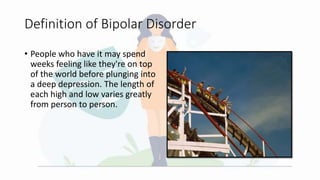
• People who have it may spend
weeks feeling like they're on top
of the world before plunging into
a deep depression. The length of
each high and low varies greatly
from person to person.
Causes of Bipolar Disorder
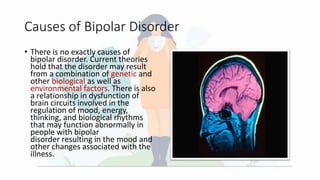
• There is no exactly causes of
bipolar disorder. Current theories
hold that the disorder may result
from a combination of genetic and
other biological as well as
environmental factors. There is also
a relationship in dysfunction of
brain circuits involved in the
regulation of mood, energy,
thinking, and biological rhythms
that may function abnormally in
people with bipolar
disorder resulting in the mood and
other changes associated with the
illness.
Describing the Depression Phase of Bipolar Disorder
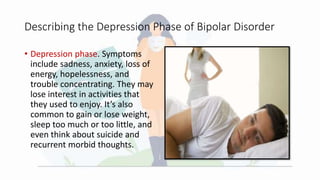
• Depression phase. Symptoms
include sadness, anxiety, loss of
energy, hopelessness, and
trouble concentrating. They may
lose interest in activities that
they used to enjoy. It’s also
common to gain or lose weight,
sleep too much or too little, and
even think about suicide and
recurrent morbid thoughts.
Describing Manic Phase
• During this phase, people feel
super-charged and think they can
do anything. Their self-esteem
soars out of control and it’s hard
for them to sit still. They talk more,
are easily distracted, their thoughts
race, and they don’t sleep enough.
It often leads to reckless behavior,
such as spending sprees, cheating,
fast driving, and substance abuse.
Three or more of these symptoms
nearly every day for a week
accompanied by feelings of intense
excitement may signal a manic
episode.
Hypomanic Episode
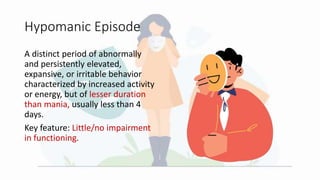
A distinct period of abnormally
and persistently elevated,
expansive, or irritable behavior
characterized by increased activity
or energy, but of lesser duration
than mania, usually less than 4
days.
Key feature: Little/no impairment
in functioning.
Types of bipolar disorder
1. Bipolar I disorder
2. Bipolar II disorder
3. Cyclothymic disorder
4. Bipolar Disorder Not Otherwise Specified (BP-NOS)
Bipolar I vs. Bipolar II
• Bipolar I characterized by the
occurrence of manic episodes
with or without a major
depressive episode that is
Manic episode +/- depression +/-
hypomania
Manic episodes = bipolar I and,
• Bipolar II characterized by at
least one depressive episode
with or without a hypomanic
episode no mania episodes
Symptoms of “Mixed” Episodes
• When people with bipolar disorder
have depression and mania
symptoms at the same time, or
very close together, this is called a
manic or depressive episode with
mixed features. This can lead to
unpredictable behavior, such as
taking dangerous risks when
feeling hopeless and suicidal but
energized and agitated. Mood
episodes involving mixed features
may be somewhat more common
in women and in people who
develop bipolar disorder at a young
age.
CYCLOTHYMIC DISORDERS
This is a chronic, fluctuating mood disturbance
involving numerous periods of hypomanic symptoms and periods of
depressive symptoms that do not meet criteria for hypomania or MDD
• Mild mania and depressive symptoms
• But more chronic fluctuations compared to Bipolar I and II
Usually 2-year period or (1 year for children or adolescents), the
symptoms must be persistent (present more days than not), and any
symptom-free intervals last no longer than 2 months.
• The symptoms are not attributable to the physiological effects of a
substance (e.g., a drug of abuse, a medication) or another medical
condition (e.g.,hyperthyroidism)
SUBSTANCE/MEDICATION-INDUCED BIPOLAR
DISORDER
• A prominent and persistent disturbance in mood that predominates
in the clinical picture and is characterized by abnormally elevated,
expansive, or irritable mood and abnormally increased activity or
energy that is induced by drugs and other chemical substances
Drugs and substances that can cause Bipolar
1) Alcohol
2) Phencyclidine and other hallucinogens
3) Sedative, hypnotic and anxiolytics
4) Cocaine
5) Amphetamine-type-substance (or other stimulant)
6) Other or (unknown substance)
BIPOLAR DUE TO ANOTHER MEDICAL
CONDITIONS
• It is characterized by the presence of a prominent and persistent
period of abnormally elevated, expansive, or irritable mood and
abnormally increased activity or energy predominating in the clinical
picture that is attributable to another medical condition.
• Among the best known of the medical conditions that can cause a
bipolar manic or hypomanic condition are
1. Cushing’s disease
2. Multiple sclerosis,
3. Parkinson’s disease as well as,
4. Stroke and traumatic brain injuries
5. Antibodies to the N-methyl-D-aspartate (NMDA) receptor have
been associated with manic or mixed mood and psychotic
symptoms.
How Bipolar Disorder Impacts Daily Life
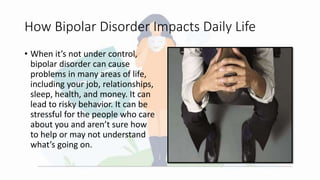
• When it’s not under control,
bipolar disorder can cause
problems in many areas of life,
including your job, relationships,
sleep, health, and money. It can
lead to risky behavior. It can be
stressful for the people who care
about you and aren’t sure how
to help or may not understand
what’s going on.
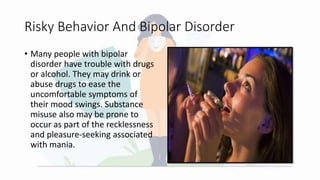
Risky Behavior And Bipolar Disorder
• Many people with bipolar
disorder have trouble with drugs
or alcohol. They may drink or
abuse drugs to ease the
uncomfortable symptoms of
their mood swings. Substance
misuse also may be prone to
occur as part of the recklessness
and pleasure-seeking associated
with mania.
Suicidal Thinking
• People with bipolar disorder are
10-20 times more likely to
commit suicide than others.
Warning signs include talking
about suicide, putting their
affairs in order, and doing very
risky things.
• Women show more prevalence
in committing suicide while men
suicidal cases are less prevalent
but more fatal.
Medical Diagnosis of Bipolar Disorder
• A key step is to rule out other
possible causes of extreme
mood swings, including other
conditions or side effects of
some medicines. Psychiatrist
may also talk to people who
know you well to find out if your
mood and behavior have had
major changes.
BIPOLAR PRESENTATION hakagshsybbshwhw.pptx

BIPOLAR PRESENTATION hakagshsybbshwhw.pptx

  • 1.
    BIPOLAR DISORDERS AND OTHERRELATED DISORDERS PRESENTED BY: GROUP 15
  • 2.
    Overview This presentation will coverthe, 1. Definition of bipolar and related disorders 2. Causes and types 3. Symptoms 4. Impacts on life
  • 3.
    Definition of BipolarDisorder •Bipolar disorder also known as manic-depressive illness is the mental disorder that causes unusual shifts in mood, energy, activity levels and the ability to carry out day-to-day tasks •Patients with bipolar disorder presents with unusual intense emotional states that occurs in distinct periods called mood episodes.
  • 4.
    Definition of BipolarDisorder • People who have it may spend weeks feeling like they're on top of the world before plunging into a deep depression. The length of each high and low varies greatly from person to person.
  • 5.
    Causes of BipolarDisorder • There is no exactly causes of bipolar disorder. Current theories hold that the disorder may result from a combination of genetic and other biological as well as environmental factors. There is also a relationship in dysfunction of brain circuits involved in the regulation of mood, energy, thinking, and biological rhythms that may function abnormally in people with bipolar disorder resulting in the mood and other changes associated with the illness.
  • 6.
    Describing the DepressionPhase of Bipolar Disorder • Depression phase. Symptoms include sadness, anxiety, loss of energy, hopelessness, and trouble concentrating. They may lose interest in activities that they used to enjoy. It’s also common to gain or lose weight, sleep too much or too little, and even think about suicide and recurrent morbid thoughts.
  • 7.
    Describing Manic Phase •During this phase, people feel super-charged and think they can do anything. Their self-esteem soars out of control and it’s hard for them to sit still. They talk more, are easily distracted, their thoughts race, and they don’t sleep enough. It often leads to reckless behavior, such as spending sprees, cheating, fast driving, and substance abuse. Three or more of these symptoms nearly every day for a week accompanied by feelings of intense excitement may signal a manic episode.
  • 8.
    Hypomanic Episode A distinctperiod of abnormally and persistently elevated, expansive, or irritable behavior characterized by increased activity or energy, but of lesser duration than mania, usually less than 4 days. Key feature: Little/no impairment in functioning.
  • 9.
    Types of bipolardisorder 1. Bipolar I disorder 2. Bipolar II disorder 3. Cyclothymic disorder 4. Bipolar Disorder Not Otherwise Specified (BP-NOS)
  • 10.
    Bipolar I vs.Bipolar II • Bipolar I characterized by the occurrence of manic episodes with or without a major depressive episode that is Manic episode +/- depression +/- hypomania Manic episodes = bipolar I and, • Bipolar II characterized by at least one depressive episode with or without a hypomanic episode no mania episodes
  • 11.
    Symptoms of “Mixed”Episodes • When people with bipolar disorder have depression and mania symptoms at the same time, or very close together, this is called a manic or depressive episode with mixed features. This can lead to unpredictable behavior, such as taking dangerous risks when feeling hopeless and suicidal but energized and agitated. Mood episodes involving mixed features may be somewhat more common in women and in people who develop bipolar disorder at a young age.
  • 12.
    CYCLOTHYMIC DISORDERS This isa chronic, fluctuating mood disturbance involving numerous periods of hypomanic symptoms and periods of depressive symptoms that do not meet criteria for hypomania or MDD • Mild mania and depressive symptoms • But more chronic fluctuations compared to Bipolar I and II Usually 2-year period or (1 year for children or adolescents), the symptoms must be persistent (present more days than not), and any symptom-free intervals last no longer than 2 months.
  • 13.
    • The symptomsare not attributable to the physiological effects of a substance (e.g., a drug of abuse, a medication) or another medical condition (e.g.,hyperthyroidism)
  • 14.
    SUBSTANCE/MEDICATION-INDUCED BIPOLAR DISORDER • Aprominent and persistent disturbance in mood that predominates in the clinical picture and is characterized by abnormally elevated, expansive, or irritable mood and abnormally increased activity or energy that is induced by drugs and other chemical substances
  • 15.
    Drugs and substancesthat can cause Bipolar 1) Alcohol 2) Phencyclidine and other hallucinogens 3) Sedative, hypnotic and anxiolytics 4) Cocaine 5) Amphetamine-type-substance (or other stimulant) 6) Other or (unknown substance)
  • 16.
    BIPOLAR DUE TOANOTHER MEDICAL CONDITIONS • It is characterized by the presence of a prominent and persistent period of abnormally elevated, expansive, or irritable mood and abnormally increased activity or energy predominating in the clinical picture that is attributable to another medical condition.
  • 17.
    • Among thebest known of the medical conditions that can cause a bipolar manic or hypomanic condition are 1. Cushing’s disease 2. Multiple sclerosis, 3. Parkinson’s disease as well as, 4. Stroke and traumatic brain injuries 5. Antibodies to the N-methyl-D-aspartate (NMDA) receptor have been associated with manic or mixed mood and psychotic symptoms.
  • 18.
    How Bipolar DisorderImpacts Daily Life • When it’s not under control, bipolar disorder can cause problems in many areas of life, including your job, relationships, sleep, health, and money. It can lead to risky behavior. It can be stressful for the people who care about you and aren’t sure how to help or may not understand what’s going on.
  • 19.
    Risky Behavior AndBipolar Disorder • Many people with bipolar disorder have trouble with drugs or alcohol. They may drink or abuse drugs to ease the uncomfortable symptoms of their mood swings. Substance misuse also may be prone to occur as part of the recklessness and pleasure-seeking associated with mania.
  • 20.
    Suicidal Thinking • Peoplewith bipolar disorder are 10-20 times more likely to commit suicide than others. Warning signs include talking about suicide, putting their affairs in order, and doing very risky things. • Women show more prevalence in committing suicide while men suicidal cases are less prevalent but more fatal.
  • 21.
    Medical Diagnosis ofBipolar Disorder • A key step is to rule out other possible causes of extreme mood swings, including other conditions or side effects of some medicines. Psychiatrist may also talk to people who know you well to find out if your mood and behavior have had major changes.

Editor's Notes

  • #4 Which may either be manic or depressive episode or sometimes a mood episode may includes symptoms of both mania and depression which may be called a mixed state.