H. Biology October 1 Bell Ringer: What are some major differences between the plant and animal cell? Bell Ringer Hand out test grades.  Last day for late or make-up work is next Thursday! Lab: Animal Cell Homework: Read article Class fees need to be paid by the end of the 1st 9 weeks! Either cash, check or fee waiver!
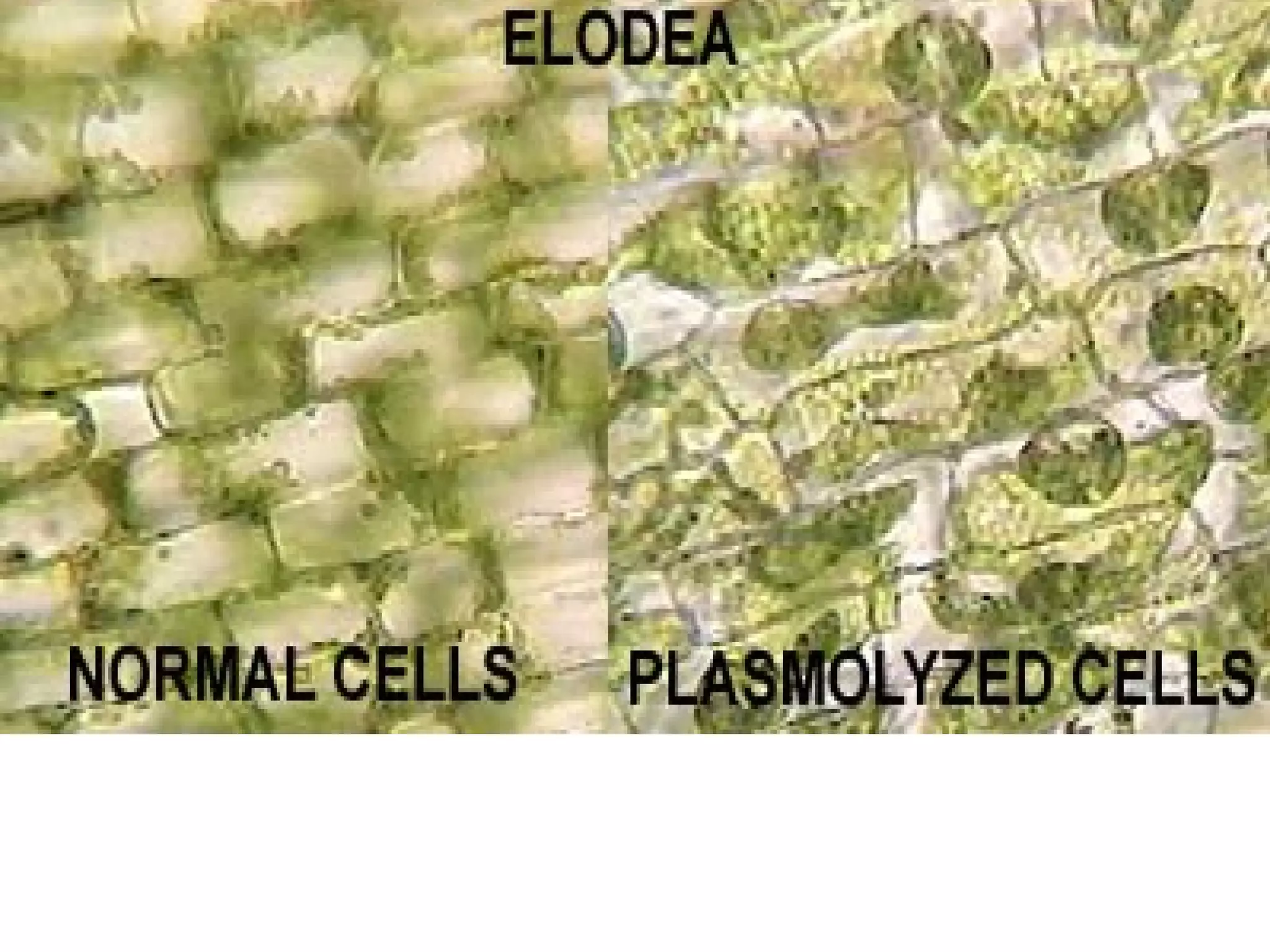
H. Biology October 2 Bell Ringer: Cells undergo plasmolysis after drinking sea water.  What is plasmolysis? Bell Ringer Lab: Finish animal cell and begin plant cell lab Unit 5-1 Notes if time Homework: Research a disease that is caused by a malfunction by a cellular organelle; create a power point (more info to follow); disease due tomorrow. Class fees need to be paid by the end of the 1st 9 weeks! Either cash, check or fee waiver!
 
 
H. Biology October 3 Bell Ringer:What is the difference between a prokaryote and eukaryote cell? Bell Ringer/Check hmwk Competition Activity Unit 5-1 Notes Observing a cell membrane Handout Progress Report (unofficial)
www.freewebs.com/nehskelley
H. Biology 10.6.08 Bell Ringer: The cell membrane is said to be a “phospholipid bi-layer”.  What does this mean? Bell Ringer/check progress reports Cell Structure Unit 5-2 Notes (quiz on Thursday) Computer Activity: Cell Sweet 16 Reminder: Cell organelle disease due Wednesday, Cells Alive due tomorrow All late, make-up and retakes must be in by Thursday, Oct.9! I will be here after school on Tuesday from 2:30-3:30
H. Biology 10.7.08 Bell Ringer: What do the terms hydrophilic and hydrophobic mean? Bell Ringer/Collect Hmwk “Cells Alive” Competition Activity Unit 5-3 Notes (Quiz on Thursday) Cell Membrane Activity Due FRIDAY!!: Website PPT All late, make-up and retakes must be in by Thursday, Oct.9! I will be here after school on Tuesday from 2:30-3:30
http://www.wisc-online.com/objects/index_tj.asp?objID=AP11403
H. Biology 10.8.08 Bell Ringer: if “cyt” means “cell”, what do you think the following mean? Cytology, exocytosis, endocytosis and cytopathogen Bell Ringer Competition Activity Unit 5-4 Notes (Quiz Tomorrow!) Observing a Cell Membrane Activity Power Point due Friday! All late, make-up and retakes must be in by Thursday, Oct.9!
H. Biology 10.8.08 Bell Ringer: The cell membrane is “selectively permeable” what does this mean? Bell Ringer Unit 5 Quiz Begin Lab on Selectively Permeable Membrane All late, make-up and retakes must be in today!
H. Biology 10.10.08 Bell Ringer: what is the difference between osmosis and diffusion? Bell Ringer/Collect Competition Activity Computer Webquest (due today) Friday Drawing
Topic: Cell Structure Unit 5-1 Read over Ch.7 in text Scientists contributing to the cell theory: -Hooke: first to use light microscope, looked at cork, called chambers “cells” (1665) -van Leeuwenhoek: first to observe organisms in pond water (1674) -Schleiden: concluded all plants made of cells (1838)  -Schwann: concludes all animals are made of cells (1839) -Virchow: proposed that all cells come from existing cells (1855)
 
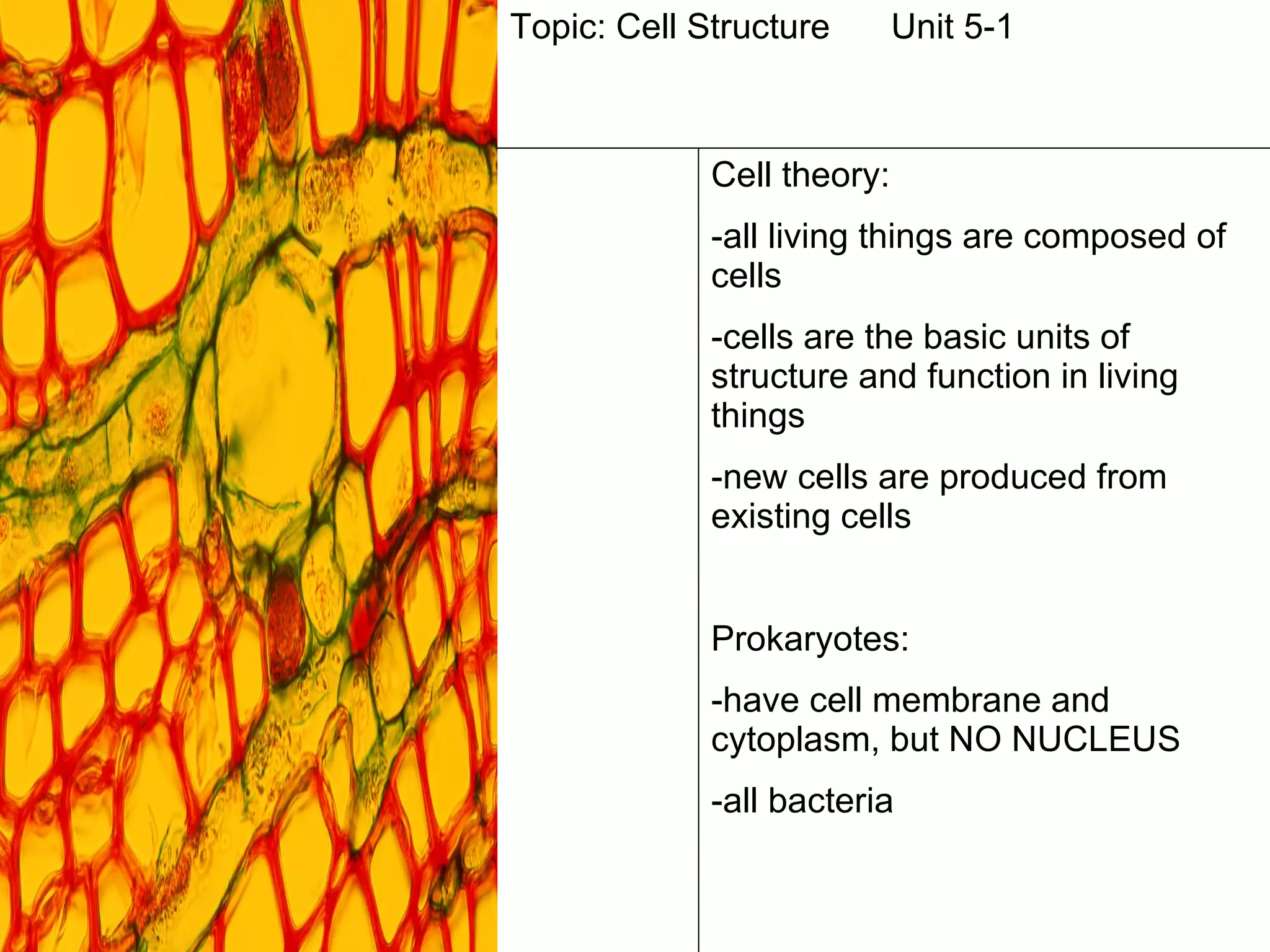
Topic: Cell Structure Unit 5-1 Cell theory: -all living things are composed of cells -cells are the basic units of structure and function in living things -new cells are produced from existing cells Prokaryotes:  -have cell membrane and cytoplasm, but NO NUCLEUS -all bacteria
Topic: Cell Structure Unit 5-1 -Eukaryotes: -have a nucleus, cell membrane and cytoplasm -have specialized organelles -include all plant, animal, fungi and many microbes
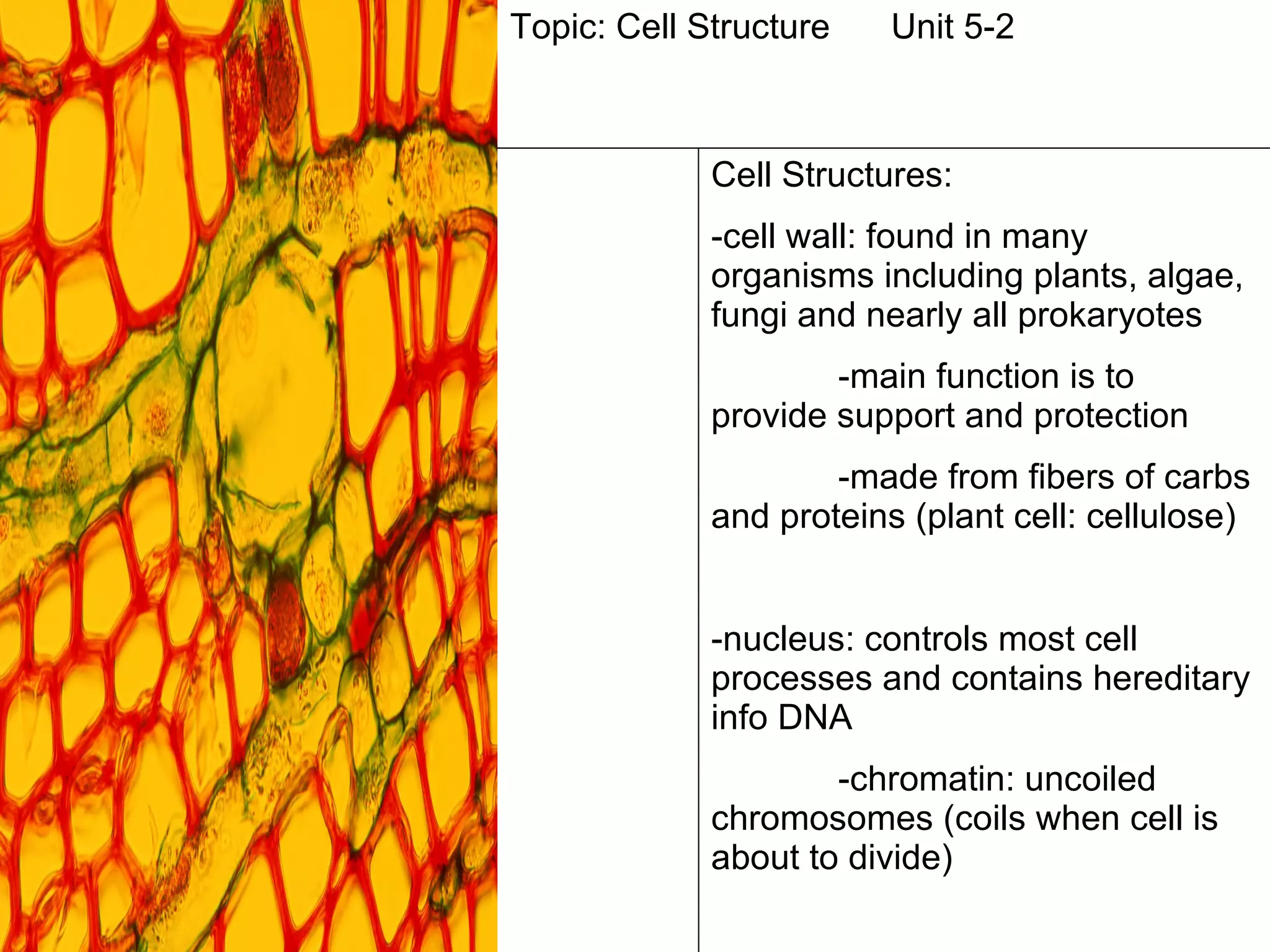
Topic: Cell Structure Unit 5-2 Cell Structures: -cell wall: found in many organisms including plants, algae, fungi and nearly all prokaryotes -main function is to provide support and protection -made from fibers of carbs and proteins (plant cell: cellulose) -nucleus: controls most cell processes and contains hereditary info DNA -chromatin: uncoiled chromosomes (coils when cell is about to divide)
Topic: Cell Structure Unit 5-2 Nucleolus: dense part of nucleus, makes ribosomes Cytoskeleton: network of protein filaments that helps cell maintain its shape; also involved in cell movement -microtubules: hollow tubes that can be “tracks” to move things -microfilaments: long thin fibers that function in movement and support
Topic: Cell Structure Unit 5-4 Ribosomes: makes proteins (found on rough ER) gets directions from RNA during protein synthesis Endoplasmic Reticulum: components of the cell membrane are assembled and some proteins are modified Golgi Apparatus: (complex) enzymes found here attach carbs and lipids to proteins Lysosomes: filled with enzymes, break down compounds to be used as food particles
Topic: Cell Structure Unit 5-4 Vacuoles: used for storage (if small, sometimes called vesicles) Chloroplasts: use energy from sunlight to assemble water and carbon dioxide into glucose or energy rich compounds Mitochondria: use oxygen and water to produce ATP, the energy molecule of cells -do plants need mitochondria? Yes! Until a plant develops chloroplasts, it needs ATP to grow

Biology Unit 5

  • 1.
    H. Biology October1 Bell Ringer: What are some major differences between the plant and animal cell? Bell Ringer Hand out test grades. Last day for late or make-up work is next Thursday! Lab: Animal Cell Homework: Read article Class fees need to be paid by the end of the 1st 9 weeks! Either cash, check or fee waiver!
  • 2.
    H. Biology October2 Bell Ringer: Cells undergo plasmolysis after drinking sea water. What is plasmolysis? Bell Ringer Lab: Finish animal cell and begin plant cell lab Unit 5-1 Notes if time Homework: Research a disease that is caused by a malfunction by a cellular organelle; create a power point (more info to follow); disease due tomorrow. Class fees need to be paid by the end of the 1st 9 weeks! Either cash, check or fee waiver!
  • 3.
  • 4.
  • 5.
    H. Biology October3 Bell Ringer:What is the difference between a prokaryote and eukaryote cell? Bell Ringer/Check hmwk Competition Activity Unit 5-1 Notes Observing a cell membrane Handout Progress Report (unofficial)
  • 6.
  • 7.
    H. Biology 10.6.08Bell Ringer: The cell membrane is said to be a “phospholipid bi-layer”. What does this mean? Bell Ringer/check progress reports Cell Structure Unit 5-2 Notes (quiz on Thursday) Computer Activity: Cell Sweet 16 Reminder: Cell organelle disease due Wednesday, Cells Alive due tomorrow All late, make-up and retakes must be in by Thursday, Oct.9! I will be here after school on Tuesday from 2:30-3:30
  • 8.
    H. Biology 10.7.08Bell Ringer: What do the terms hydrophilic and hydrophobic mean? Bell Ringer/Collect Hmwk “Cells Alive” Competition Activity Unit 5-3 Notes (Quiz on Thursday) Cell Membrane Activity Due FRIDAY!!: Website PPT All late, make-up and retakes must be in by Thursday, Oct.9! I will be here after school on Tuesday from 2:30-3:30
  • 9.
  • 10.
    H. Biology 10.8.08Bell Ringer: if “cyt” means “cell”, what do you think the following mean? Cytology, exocytosis, endocytosis and cytopathogen Bell Ringer Competition Activity Unit 5-4 Notes (Quiz Tomorrow!) Observing a Cell Membrane Activity Power Point due Friday! All late, make-up and retakes must be in by Thursday, Oct.9!
  • 11.
    H. Biology 10.8.08Bell Ringer: The cell membrane is “selectively permeable” what does this mean? Bell Ringer Unit 5 Quiz Begin Lab on Selectively Permeable Membrane All late, make-up and retakes must be in today!
  • 12.
    H. Biology 10.10.08Bell Ringer: what is the difference between osmosis and diffusion? Bell Ringer/Collect Competition Activity Computer Webquest (due today) Friday Drawing
  • 13.
    Topic: Cell StructureUnit 5-1 Read over Ch.7 in text Scientists contributing to the cell theory: -Hooke: first to use light microscope, looked at cork, called chambers “cells” (1665) -van Leeuwenhoek: first to observe organisms in pond water (1674) -Schleiden: concluded all plants made of cells (1838) -Schwann: concludes all animals are made of cells (1839) -Virchow: proposed that all cells come from existing cells (1855)
  • 14.
  • 15.
    Topic: Cell StructureUnit 5-1 Cell theory: -all living things are composed of cells -cells are the basic units of structure and function in living things -new cells are produced from existing cells Prokaryotes: -have cell membrane and cytoplasm, but NO NUCLEUS -all bacteria
  • 16.
    Topic: Cell StructureUnit 5-1 -Eukaryotes: -have a nucleus, cell membrane and cytoplasm -have specialized organelles -include all plant, animal, fungi and many microbes
  • 17.
    Topic: Cell StructureUnit 5-2 Cell Structures: -cell wall: found in many organisms including plants, algae, fungi and nearly all prokaryotes -main function is to provide support and protection -made from fibers of carbs and proteins (plant cell: cellulose) -nucleus: controls most cell processes and contains hereditary info DNA -chromatin: uncoiled chromosomes (coils when cell is about to divide)
  • 18.
    Topic: Cell StructureUnit 5-2 Nucleolus: dense part of nucleus, makes ribosomes Cytoskeleton: network of protein filaments that helps cell maintain its shape; also involved in cell movement -microtubules: hollow tubes that can be “tracks” to move things -microfilaments: long thin fibers that function in movement and support
  • 19.
    Topic: Cell StructureUnit 5-4 Ribosomes: makes proteins (found on rough ER) gets directions from RNA during protein synthesis Endoplasmic Reticulum: components of the cell membrane are assembled and some proteins are modified Golgi Apparatus: (complex) enzymes found here attach carbs and lipids to proteins Lysosomes: filled with enzymes, break down compounds to be used as food particles
  • 20.
    Topic: Cell StructureUnit 5-4 Vacuoles: used for storage (if small, sometimes called vesicles) Chloroplasts: use energy from sunlight to assemble water and carbon dioxide into glucose or energy rich compounds Mitochondria: use oxygen and water to produce ATP, the energy molecule of cells -do plants need mitochondria? Yes! Until a plant develops chloroplasts, it needs ATP to grow