PHEROMONES
Pheromones are the chemicals which are emitted
by an individual and received by a second
individual of same species, in which they cause a
specific reaction.
These have no effect on non target organisms.
Animals release it through their
-Urine
-Skin
-Feaces
It is detected using smell
Pheromones can be released for a variety
of reasons-
 Readiness to mate
 An alert to danger
 Showing the territory
 During ovulation
TYPES OF PHEROMONES
RELEASER PHEROMONES induce a rapid
behavioural response in the recepients
mediated through central nervous system.
Example- alarming pheromones, mother-young
interaction
PRIMER PHEROMONES induce a delayed
response to the stimulation mediated through
central nervous system and endocrine system
Example-sex pheromones
• In rats and mice, the secretion of
preputial glands is reported to act as sex
attractant.
• Vaginal secretions are also the source of
pheromones responsible for sexual
attractions.
1.Pheromones acting as sex attractants have the
potential to trap the rodents and to suppress
the neophobia and bait shyness.
2. Sex specific volatile compounds have been
identified from scent gland of R. rattus and B.
bengalensis and used to trap them in the
fields.
3. 10%- 20% of male and 30-40% female rats
were trapped with the use of Preputial gland
extract.
4. Compound 1- nitropentane (female urine
compound) when added to poison is found
more effective in increasing the mortality rate
of rats.
5. Mixing of synthetic pheromones with poison
bait increases the mortality rate in R. rattus
It is the tendency for female rodents to
terminate their pregnancies following
exposure to the scent of an unfamiliar
male.
Hilda M. Bruce( 1959)
The chemical signal which are specific to each
male are learned by females during mating.
Hormone Oxytocin is important in this social
memory process.
Female treated with oxytocin antagonist, unable
to recognize the urinary scent of their mate and will
terminate the pregnancy when exposed to any
male; known or Unknown
The Bruce effect is most common in polygynous
rodents.
The onset of puberty and estrous cycle can be
regulated by social stimuli.
If a female mouse is reared only with females,
the puberty and estrous cycle may be delayed.
But the presence of males accelerates the
puberty onset and estrous cyclicity
Pheromones in male mouse urine is
responsible for these effects.
Vandenbergh et al (1972)
Pheromones in the urine of rats and mice are
bound with a protein called Major Urinary
Proteins.
DHT -Dihydrothiazole
• The time of dissociation of pheromone protein
complex is very long and the protein can store
and slowly release the odourants into the air.
• These proteins play a crucial role in protecting
the pheromones from being rapidly lost by
evaporation and degradation
• Identification and isolation of specific protein
can surely help in using pheromones for
rodent pest management.
ADVANTAGES OF PHEROMONES
• Minute quantities of pheromones are enough
to attract and kill large number of rodents
hence they are economical
• They are non pollutant and ecologically
acceptable
• These are labour saving
• These are species specific
• Easy handling
DISADVANTAGES
• Pheromones have to be identified in many
wild species
• Sex pheromones can attract only one sex
• Farmers should have the knowledge about the
pheromones
• Quick results cannot be obtained
PREDATORY CUES
• These are the smell/ odour or vocal sound of
the predators which can create fear in rodents
and can be helpful to repel them from a
particular place.
Predatory cues are of two types
• DIRECT CUES
• INDIRECT CUES
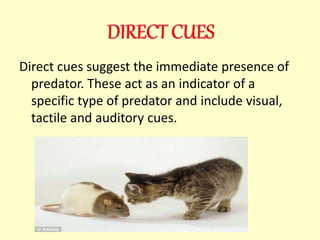
Direct cues suggest the immediate presence of
predator. These act as an indicator of a
specific type of predator and include visual,
tactile and auditory cues.
1. SOCIAL OLFACTORY CUES
Alarm pheromones from disturbed, non lithally
injured or dead conspecifics send signal to rest
of the rats about the danger. By getting the
alarm signal, they leave the area.
2. ILLUMINATION
Moonlight influences the nocturnal rodents
foraging behaviour. Potentially, increased light
intensity suppresses rodent activity because
illumination enables better visual activity by
predators and prey movements become more
noticeable.
Farnworth (2015)
It has been experimentally demonstrated that
non-commensal wild house mice exhibit
avoidance behaviour in response to artificial
illumination.
We can control the rodents in small scale area
by using artificial light.
3. ODOUR OF PREDATORS
Sulfurous odours present in the urine of
carnivores are identified by the rodents. They
use them to assess the presence of predators.
Perception of predator odours elicit a ‘’fear- of-
predation’’ response in prey animals, which
causes the animal to seek out less threatening
area. This results the repulsion of target
animal from the treatment area.
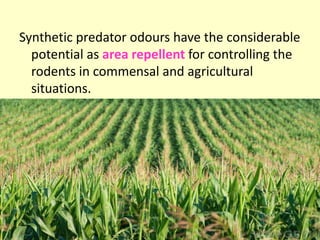
Synthetic predator odours have the considerable
potential as area repellent for controlling the
rodents in commensal and agricultural
situations.
Thank you

Pheromones

  • 2.
    PHEROMONES Pheromones are thechemicals which are emitted by an individual and received by a second individual of same species, in which they cause a specific reaction. These have no effect on non target organisms. Animals release it through their -Urine -Skin -Feaces It is detected using smell
  • 3.
    Pheromones can bereleased for a variety of reasons-  Readiness to mate  An alert to danger  Showing the territory  During ovulation
  • 4.
    TYPES OF PHEROMONES RELEASERPHEROMONES induce a rapid behavioural response in the recepients mediated through central nervous system. Example- alarming pheromones, mother-young interaction PRIMER PHEROMONES induce a delayed response to the stimulation mediated through central nervous system and endocrine system Example-sex pheromones
  • 5.
    • In ratsand mice, the secretion of preputial glands is reported to act as sex attractant. • Vaginal secretions are also the source of pheromones responsible for sexual attractions.
  • 6.
    1.Pheromones acting assex attractants have the potential to trap the rodents and to suppress the neophobia and bait shyness. 2. Sex specific volatile compounds have been identified from scent gland of R. rattus and B. bengalensis and used to trap them in the fields.
  • 7.
    3. 10%- 20%of male and 30-40% female rats were trapped with the use of Preputial gland extract. 4. Compound 1- nitropentane (female urine compound) when added to poison is found more effective in increasing the mortality rate of rats. 5. Mixing of synthetic pheromones with poison bait increases the mortality rate in R. rattus
  • 8.
    It is thetendency for female rodents to terminate their pregnancies following exposure to the scent of an unfamiliar male. Hilda M. Bruce( 1959)
  • 9.
    The chemical signalwhich are specific to each male are learned by females during mating. Hormone Oxytocin is important in this social memory process. Female treated with oxytocin antagonist, unable to recognize the urinary scent of their mate and will terminate the pregnancy when exposed to any male; known or Unknown The Bruce effect is most common in polygynous rodents.
  • 10.
    The onset ofpuberty and estrous cycle can be regulated by social stimuli. If a female mouse is reared only with females, the puberty and estrous cycle may be delayed. But the presence of males accelerates the puberty onset and estrous cyclicity Pheromones in male mouse urine is responsible for these effects. Vandenbergh et al (1972)
  • 11.
    Pheromones in theurine of rats and mice are bound with a protein called Major Urinary Proteins. DHT -Dihydrothiazole
  • 12.
    • The timeof dissociation of pheromone protein complex is very long and the protein can store and slowly release the odourants into the air. • These proteins play a crucial role in protecting the pheromones from being rapidly lost by evaporation and degradation • Identification and isolation of specific protein can surely help in using pheromones for rodent pest management.
  • 13.
    ADVANTAGES OF PHEROMONES •Minute quantities of pheromones are enough to attract and kill large number of rodents hence they are economical • They are non pollutant and ecologically acceptable • These are labour saving • These are species specific • Easy handling
  • 14.
    DISADVANTAGES • Pheromones haveto be identified in many wild species • Sex pheromones can attract only one sex • Farmers should have the knowledge about the pheromones • Quick results cannot be obtained
  • 15.
  • 16.
    • These arethe smell/ odour or vocal sound of the predators which can create fear in rodents and can be helpful to repel them from a particular place. Predatory cues are of two types • DIRECT CUES • INDIRECT CUES
  • 17.
    Direct cues suggestthe immediate presence of predator. These act as an indicator of a specific type of predator and include visual, tactile and auditory cues.
  • 18.
    1. SOCIAL OLFACTORYCUES Alarm pheromones from disturbed, non lithally injured or dead conspecifics send signal to rest of the rats about the danger. By getting the alarm signal, they leave the area.
  • 19.
    2. ILLUMINATION Moonlight influencesthe nocturnal rodents foraging behaviour. Potentially, increased light intensity suppresses rodent activity because illumination enables better visual activity by predators and prey movements become more noticeable. Farnworth (2015)
  • 20.
    It has beenexperimentally demonstrated that non-commensal wild house mice exhibit avoidance behaviour in response to artificial illumination. We can control the rodents in small scale area by using artificial light.
  • 21.
    3. ODOUR OFPREDATORS Sulfurous odours present in the urine of carnivores are identified by the rodents. They use them to assess the presence of predators. Perception of predator odours elicit a ‘’fear- of- predation’’ response in prey animals, which causes the animal to seek out less threatening area. This results the repulsion of target animal from the treatment area.
  • 22.
    Synthetic predator odourshave the considerable potential as area repellent for controlling the rodents in commensal and agricultural situations.
  • 23.