BIODIVERSITY
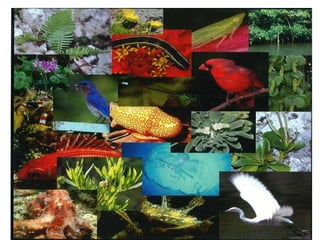
Biodiversity is the variety and the
number of living organisms within a
given ecosystem, or on Earth.
BIODIVERSITY
• Biodiversity means the variety and variability of
all living organisms.
• Biodiversity constitutes the biological wealth.
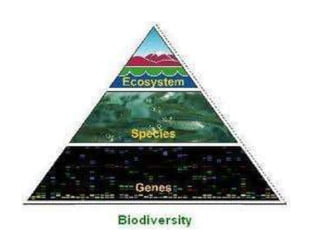
• Biological diversity is at three levels :
• GENETIC BIODIVERSITY
• SPECIES BIODIVERSITY
• ECOSYSTEM BIODIVERSITY
GENETIC BIODIVERSITY
• Genetic diversity refers to the diversity
(or genetic variability) within species.
• Each individual species possesses genes which
are the source of its own unique features
• The term genetic diversity also covers distinct
populations of a single species, such as the
thousands of breeds of different dogs or the
numerous variety of roses.
Each species consists of many organisms and
virtually no two members of the same species
are genetically identical.
Genetic diversity is usually mentioned with
reference to agriculture and maintaining food
security.
This is because genetic erosion of several
crops has already occurred leading to the
world's dependence for food on just a few
species.
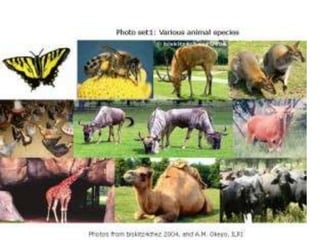
SPECIES BIODIVERSITY
The variety of species within a region and
measured on region wise . More species
biodiversity means more biologic wealth.
ECOSYSTEM BIODIVERSITY
• Refers to variety of ecosystems in a particular
region
or zone as for example various ecosystem
include forests, wetlands, zones, deserts, etc.
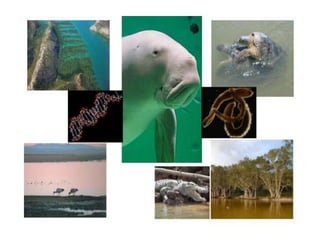
• Diversity decreases due to stress
• Both natural and man made
• The greater the bio diversity the better is the
eco system
• There are about 2,89,100 species of plants
and fungi and 10,53,800 species of animals
presently known to scientists
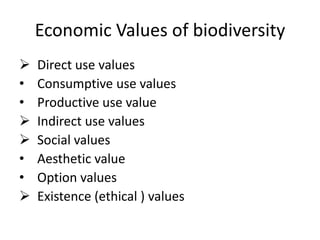
Economic Values of biodiversity
 Direct use values
• Consumptive use values
• Productive use value
 Indirect use values
 Social values
• Aesthetic value
• Option values
 Existence (ethical ) values
Biodiversity in India
One of the 12 mega diversity nations
of the world
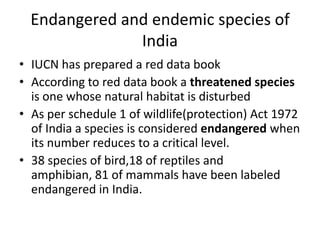
Endangered and endemic species of
India
• IUCN has prepared a red data book
• According to red data book a threatened species
is one whose natural habitat is disturbed
• As per schedule 1 of wildlife(protection) Act 1972
of India a species is considered endangered when
its number reduces to a critical level.
• 38 species of bird,18 of reptiles and
amphibian, 81 of mammals have been labeled
endangered in India.
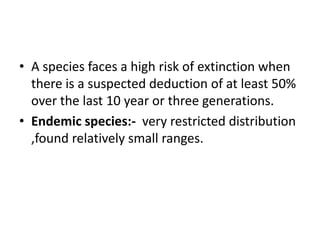
• A species faces a high risk of extinction when
there is a suspected deduction of at least 50%
over the last 10 year or three generations.
• Endemic species:- very restricted distribution
,found relatively small ranges.
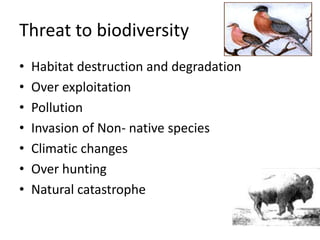
Threat to biodiversity
• Habitat destruction and degradation
• Over exploitation
• Pollution
• Invasion of Non- native species
• Climatic changes
• Over hunting
• Natural catastrophe

6 bio divercity- . s

  • 1.
    BIODIVERSITY Biodiversity is thevariety and the number of living organisms within a given ecosystem, or on Earth.
  • 2.
    BIODIVERSITY • Biodiversity meansthe variety and variability of all living organisms. • Biodiversity constitutes the biological wealth. • Biological diversity is at three levels : • GENETIC BIODIVERSITY • SPECIES BIODIVERSITY • ECOSYSTEM BIODIVERSITY
  • 4.
    GENETIC BIODIVERSITY • Geneticdiversity refers to the diversity (or genetic variability) within species. • Each individual species possesses genes which are the source of its own unique features • The term genetic diversity also covers distinct populations of a single species, such as the thousands of breeds of different dogs or the numerous variety of roses.
  • 5.
    Each species consistsof many organisms and virtually no two members of the same species are genetically identical. Genetic diversity is usually mentioned with reference to agriculture and maintaining food security. This is because genetic erosion of several crops has already occurred leading to the world's dependence for food on just a few species.
  • 6.
    SPECIES BIODIVERSITY The varietyof species within a region and measured on region wise . More species biodiversity means more biologic wealth.
  • 9.
    ECOSYSTEM BIODIVERSITY • Refersto variety of ecosystems in a particular region or zone as for example various ecosystem include forests, wetlands, zones, deserts, etc.
  • 11.
    • Diversity decreasesdue to stress • Both natural and man made • The greater the bio diversity the better is the eco system • There are about 2,89,100 species of plants and fungi and 10,53,800 species of animals presently known to scientists
  • 12.
    Economic Values ofbiodiversity  Direct use values • Consumptive use values • Productive use value  Indirect use values  Social values • Aesthetic value • Option values  Existence (ethical ) values
  • 13.
    Biodiversity in India Oneof the 12 mega diversity nations of the world
  • 14.
    Endangered and endemicspecies of India • IUCN has prepared a red data book • According to red data book a threatened species is one whose natural habitat is disturbed • As per schedule 1 of wildlife(protection) Act 1972 of India a species is considered endangered when its number reduces to a critical level. • 38 species of bird,18 of reptiles and amphibian, 81 of mammals have been labeled endangered in India.
  • 15.
    • A speciesfaces a high risk of extinction when there is a suspected deduction of at least 50% over the last 10 year or three generations. • Endemic species:- very restricted distribution ,found relatively small ranges.
  • 16.
    Threat to biodiversity •Habitat destruction and degradation • Over exploitation • Pollution • Invasion of Non- native species • Climatic changes • Over hunting • Natural catastrophe