Tools of E-Learning and  WEB 2.0 Prof J U Weerasinghe [email_address]
E-learning electronic supported learning and teaching used to acquire data, information, skills or knowledge Web-based learning,  computer-based learning,  virtual classrooms digital collaboration. http://en.wikipedia.org
E-Learning  E-learning methods: web-based learning,  computer aided learning (CAL),  virtual classrooms digital collaboration.
E-learning self paced or instructor led media in the form of  text,  image,  animation,  streaming video and audio.  http://www.openlearningcenter.com
E-learning Computer Based Learning (CBL)  use of computers as a key component of the educational environment Computer Based Training (CBT) self-paced learning activities accessible via a computer or Web Computer-supported collaborative learning (CSCL)  designed to encourage or require students to work together on learning tasks Learning management system (LMS) software for delivering, tracking and managing training/education http://en.wikipedia.org
Benefits of e-learning fosters interaction among students and instructors.  self-paced learning instructors to develop materials using the resources of WWW accommodates assessment
WEB 2.0 Web 1.0 -web pages that provided information. “ Read Web” a medium, in which information was transmitted and consumed Web 2.0 -interacts with the reader to find or modify the information  "Read-Write Web” a platform, in which content was created, shared, remixed, repurposed, and passed along http://www.elearnmag.org
WEB 2.0 social revolution Examples: Citizen Journalism Podcasts RSS Wikis Blogs Social Networking
Web 2.0 Save time Work collaboratively Learn collaboratively Do research Interact with the world Get the world to interact with us Have fun
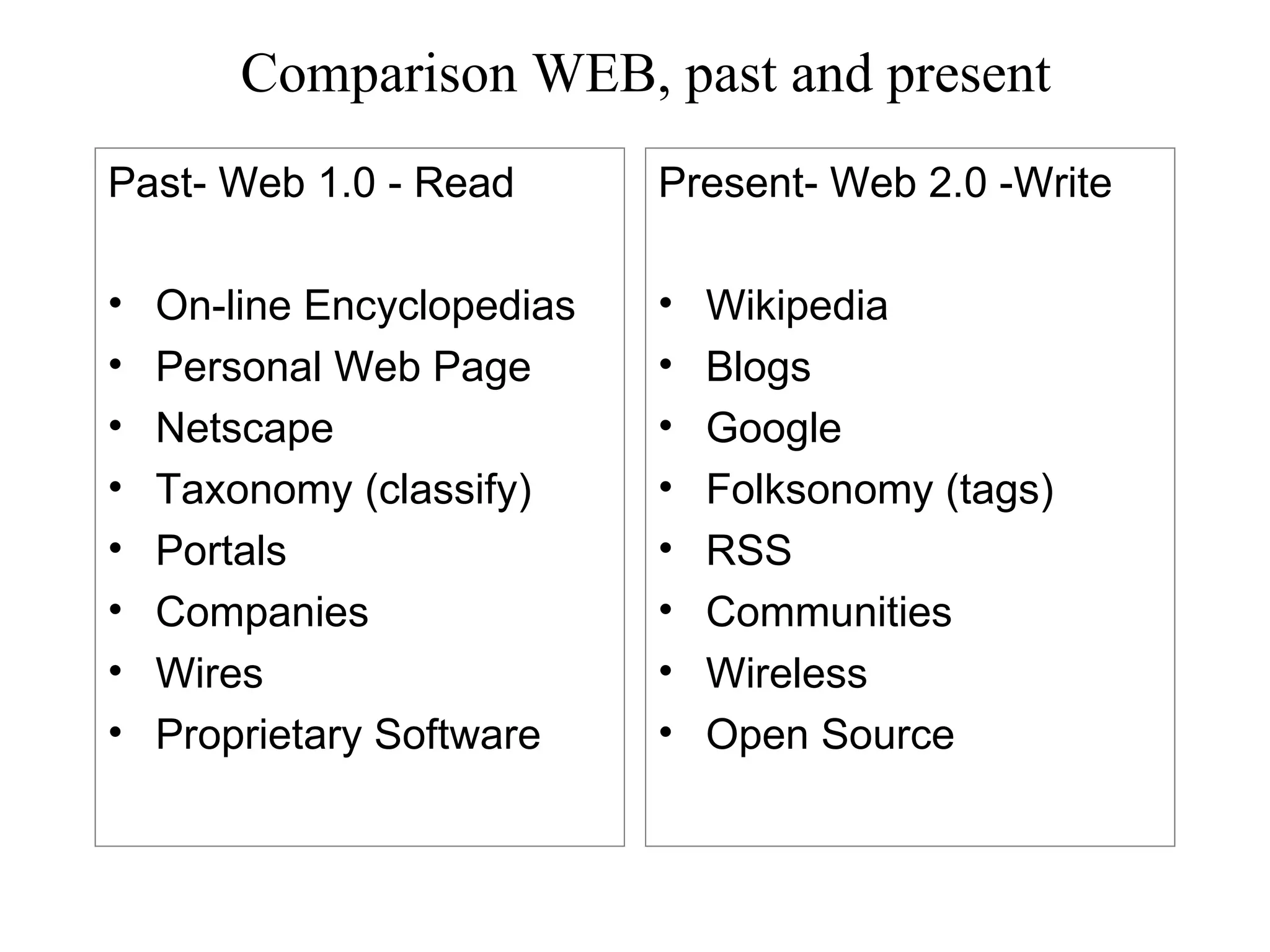
Comparison WEB, past and present Past- Web 1.0 - Read On-line Encyclopedias Personal Web Page Netscape Taxonomy (classify) Portals Companies Wires Proprietary Software Present- Web 2.0 -Write Wikipedia Blogs Google Folksonomy (tags) RSS Communities Wireless Open Source
Demonstrations and Interactive Session
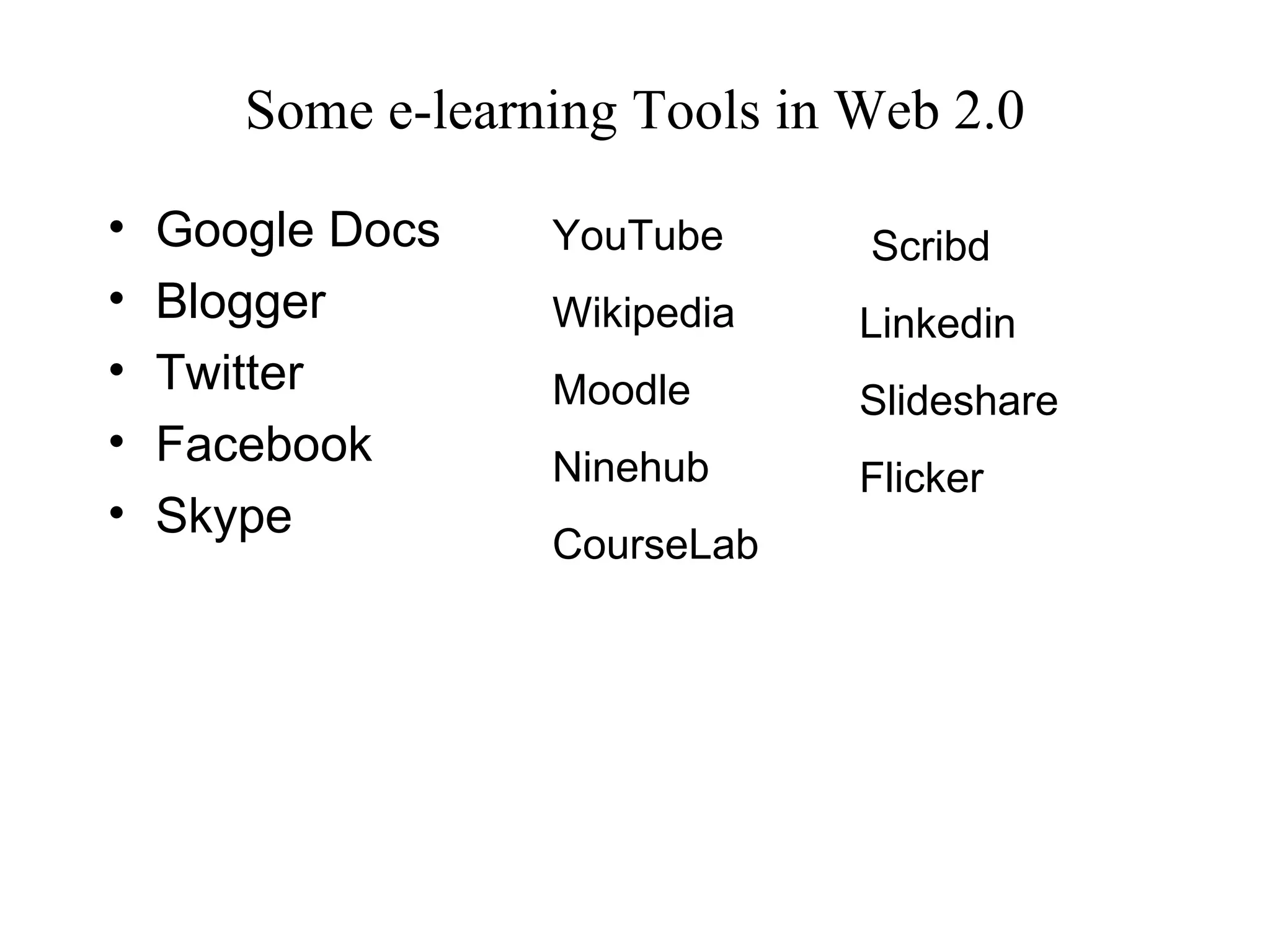
Some e-learning Tools in Web 2.0 Google Docs  Blogger Twitter Facebook Skype YouTube Wikipedia Moodle Ninehub CourseLab Scribd Linkedin Slideshare Flicker
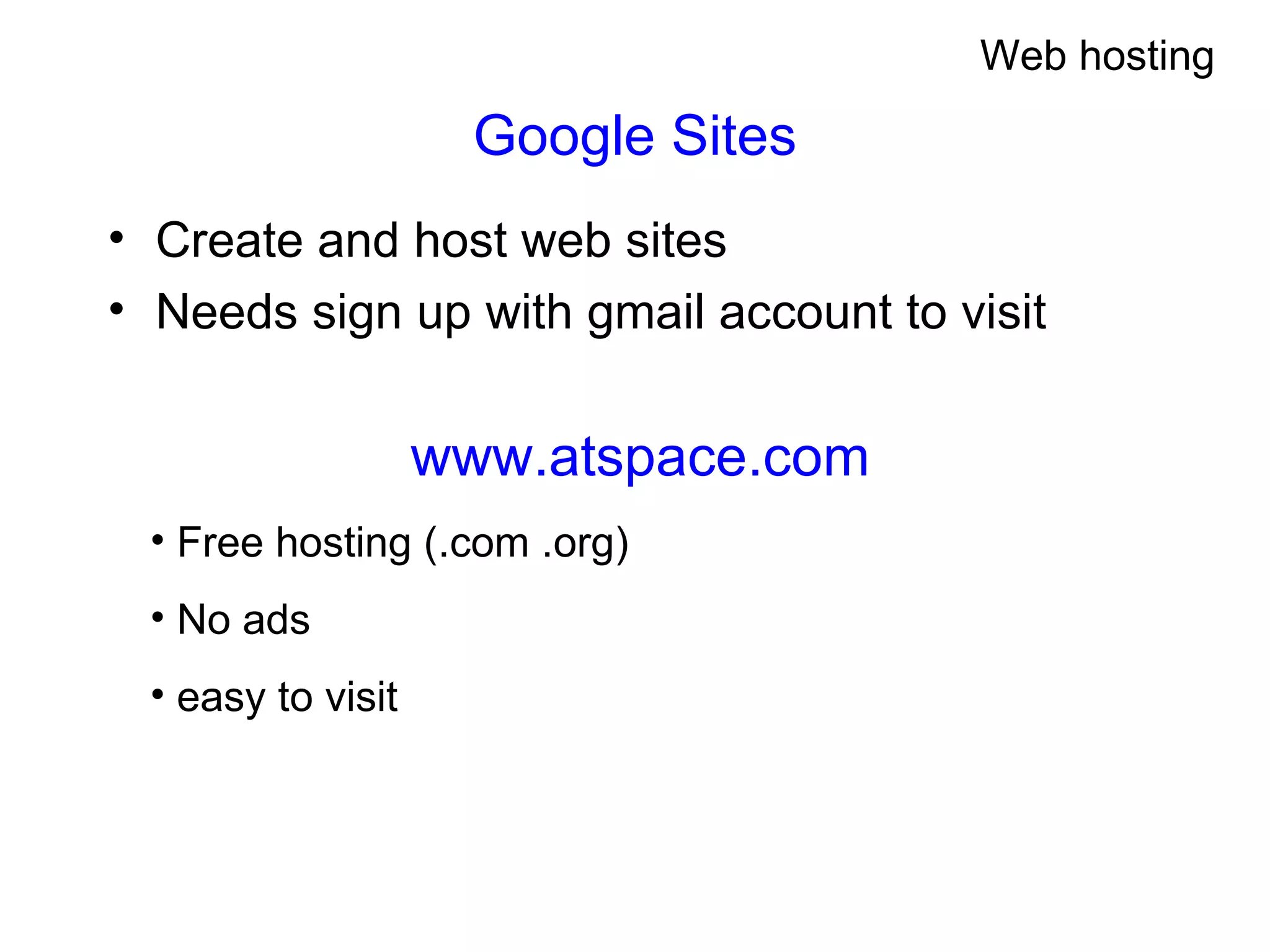
Google Sites Create and host web sites Needs sign up with gmail account to visit www.atspace.com Free hosting (.com .org) No ads easy to visit Web hosting
Blogger  twitter A shortened form of the term  Web Log , a  blog  is an online journal that contains content and writing the author wishes to share with others. Blogs as educational tools - Content Creation no need to handle HTML no need to know graphic design (templates) comments and trackback references and permanent links Blogging
facebook Social networking  Skype Video conferencing Desktop sharing Social
YouTube  TeacherTube Host, tag and share instructional videos Video
Wikipedia and Wikis Collaborative Writing a software that allows users to easily create, edit, and link pages together. Wikis are often used to create collaborative websites. Wiki is the Hawaiian word for "fast“. A type of website that allows users to add, delete, or edit content information
MOODLE Course Management System with social functionality Needs a dedicated local server running throughout the day  NineHub Free hosting MOODLE lessons No need for a local server  Course Management
CourseLab e‐Learning authoring tool  for Windows
Scribd A place to store documents as “e-papers”  E-papers
Linked in Public / social network for professional professional
Slideshare A place where you can store, tag and share  powerpoint presentations  powerpoint
flicker Store, tag and share photos images
use of elearning tools Web page -free hosting  Blog - free hosting page with links Storage and embedding to HTML Page Images- flicker Videos- YouTube Documents (doc,pdf) - Scribd Powerpoint presentations- Slideshare Moodle course developed and hosted at Ninehub

Bio Informatics Course E Learning Lecture Discussion June10

  • 1.
    Tools of E-Learningand WEB 2.0 Prof J U Weerasinghe [email_address]
  • 2.
    E-learning electronic supportedlearning and teaching used to acquire data, information, skills or knowledge Web-based learning, computer-based learning, virtual classrooms digital collaboration. http://en.wikipedia.org
  • 3.
    E-Learning E-learningmethods: web-based learning, computer aided learning (CAL), virtual classrooms digital collaboration.
  • 4.
    E-learning self pacedor instructor led media in the form of text, image, animation, streaming video and audio. http://www.openlearningcenter.com
  • 5.
    E-learning Computer BasedLearning (CBL) use of computers as a key component of the educational environment Computer Based Training (CBT) self-paced learning activities accessible via a computer or Web Computer-supported collaborative learning (CSCL) designed to encourage or require students to work together on learning tasks Learning management system (LMS) software for delivering, tracking and managing training/education http://en.wikipedia.org
  • 6.
    Benefits of e-learningfosters interaction among students and instructors. self-paced learning instructors to develop materials using the resources of WWW accommodates assessment
  • 7.
    WEB 2.0 Web1.0 -web pages that provided information. “ Read Web” a medium, in which information was transmitted and consumed Web 2.0 -interacts with the reader to find or modify the information "Read-Write Web” a platform, in which content was created, shared, remixed, repurposed, and passed along http://www.elearnmag.org
  • 8.
    WEB 2.0 socialrevolution Examples: Citizen Journalism Podcasts RSS Wikis Blogs Social Networking
  • 9.
    Web 2.0 Savetime Work collaboratively Learn collaboratively Do research Interact with the world Get the world to interact with us Have fun
  • 10.
    Comparison WEB, pastand present Past- Web 1.0 - Read On-line Encyclopedias Personal Web Page Netscape Taxonomy (classify) Portals Companies Wires Proprietary Software Present- Web 2.0 -Write Wikipedia Blogs Google Folksonomy (tags) RSS Communities Wireless Open Source
  • 11.
  • 12.
    Some e-learning Toolsin Web 2.0 Google Docs Blogger Twitter Facebook Skype YouTube Wikipedia Moodle Ninehub CourseLab Scribd Linkedin Slideshare Flicker
  • 13.
    Google Sites Createand host web sites Needs sign up with gmail account to visit www.atspace.com Free hosting (.com .org) No ads easy to visit Web hosting
  • 14.
    Blogger twitterA shortened form of the term Web Log , a blog is an online journal that contains content and writing the author wishes to share with others. Blogs as educational tools - Content Creation no need to handle HTML no need to know graphic design (templates) comments and trackback references and permanent links Blogging
  • 15.
    facebook Social networking Skype Video conferencing Desktop sharing Social
  • 16.
    YouTube TeacherTubeHost, tag and share instructional videos Video
  • 17.
    Wikipedia and WikisCollaborative Writing a software that allows users to easily create, edit, and link pages together. Wikis are often used to create collaborative websites. Wiki is the Hawaiian word for "fast“. A type of website that allows users to add, delete, or edit content information
  • 18.
    MOODLE Course ManagementSystem with social functionality Needs a dedicated local server running throughout the day NineHub Free hosting MOODLE lessons No need for a local server Course Management
  • 19.
  • 20.
    Scribd A placeto store documents as “e-papers” E-papers
  • 21.
    Linked in Public/ social network for professional professional
  • 22.
    Slideshare A placewhere you can store, tag and share powerpoint presentations powerpoint
  • 23.
    flicker Store, tagand share photos images
  • 24.
    use of elearningtools Web page -free hosting Blog - free hosting page with links Storage and embedding to HTML Page Images- flicker Videos- YouTube Documents (doc,pdf) - Scribd Powerpoint presentations- Slideshare Moodle course developed and hosted at Ninehub