Downloaded 33 times

![Random Auto-Partitions(cont.)
E[number of cuts u makes]
= E[num cuts on right] + E[num cuts on left]
= E[Cv1+Cv2+∙∙∙] + E[Ct1+Ct2+∙∙∙]
= E[Cv1]+ E[Cv2]+∙∙∙ + E[Ct1]+ E[Ct2]+∙∙∙
≤ 1/2+1/3+1/4+∙∙∙+1/n + 1/2+1/3+1/4+∙∙∙+1/n
= O(log n)
E[total number of fragments] = n + E[total number of cuts]
= n + SuE[num cuts u makes] = n+nO(log n) = O(n log n)](https://image.slidesharecdn.com/binaryspacepartition-170301172804/75/Binary-space-partition-14-2048.jpg)


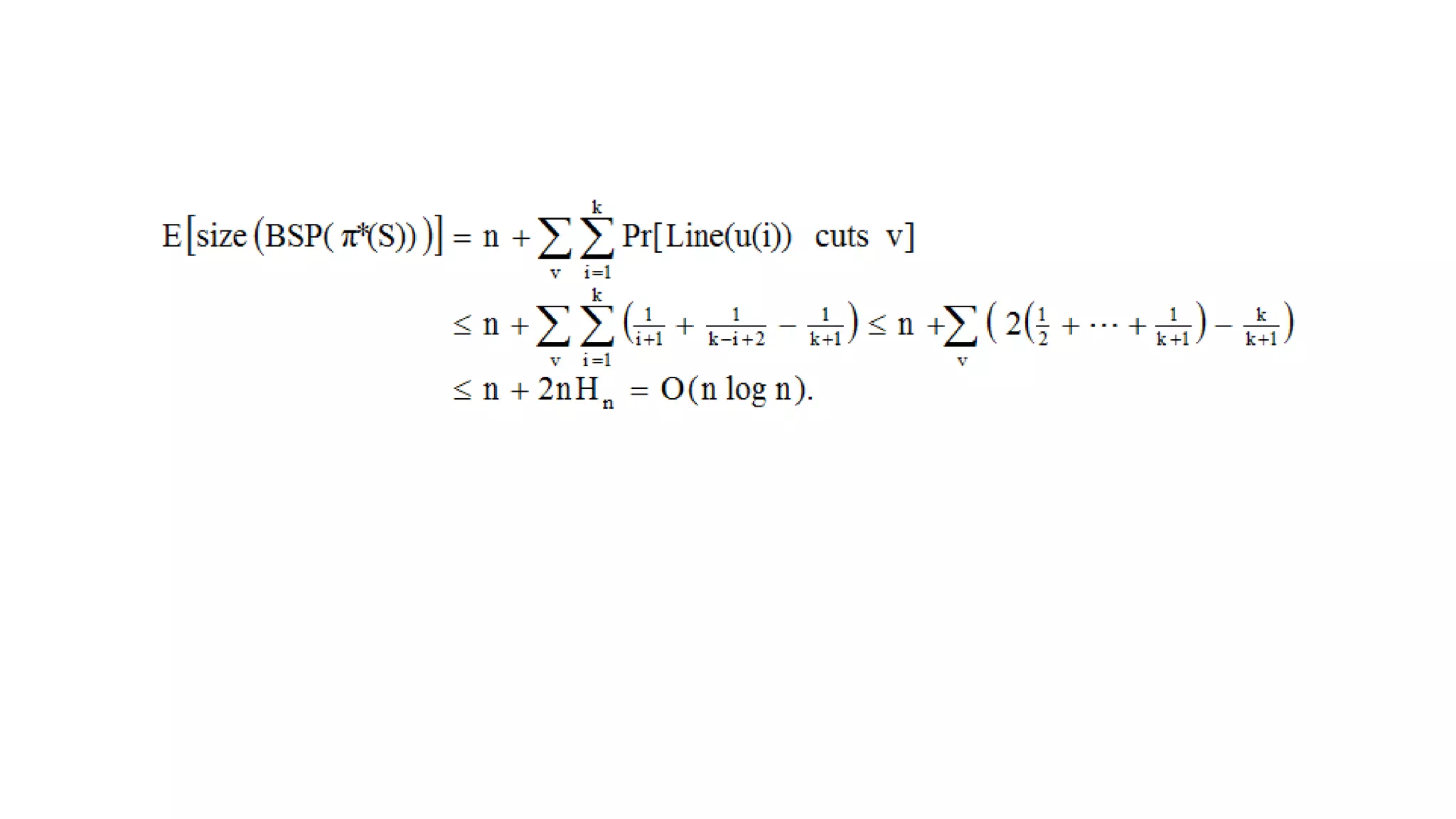
![𝜋*: Line(u(i)) makes a non-free cut of segment v only if:
either u(i) precedes all of {v, u(1), u(2), … , u(i-1) },
or u(i) precedes all of {v, u(i+1), u(i+2), … , u(k) }.
[Note: both conditions hold if u(i) precedes all of { v, u(1), … , u(k) }.]](https://image.slidesharecdn.com/binaryspacepartition-170301172804/75/Binary-space-partition-17-2048.jpg)
![Y(k) be the total number of additional cuts created by uπt(k). Yku be the number of these on
input triangle u E {u1, u2 , ... ,un }{uπ(k)}. Total "fragmentation" - the number of cuts - is
ΣkYk =ΣkΣuYku.
The goal is to show that E[Yku] is O(1)
To calculate Yku we consider the sub-facets of u that are cut by h(uπ(k)).
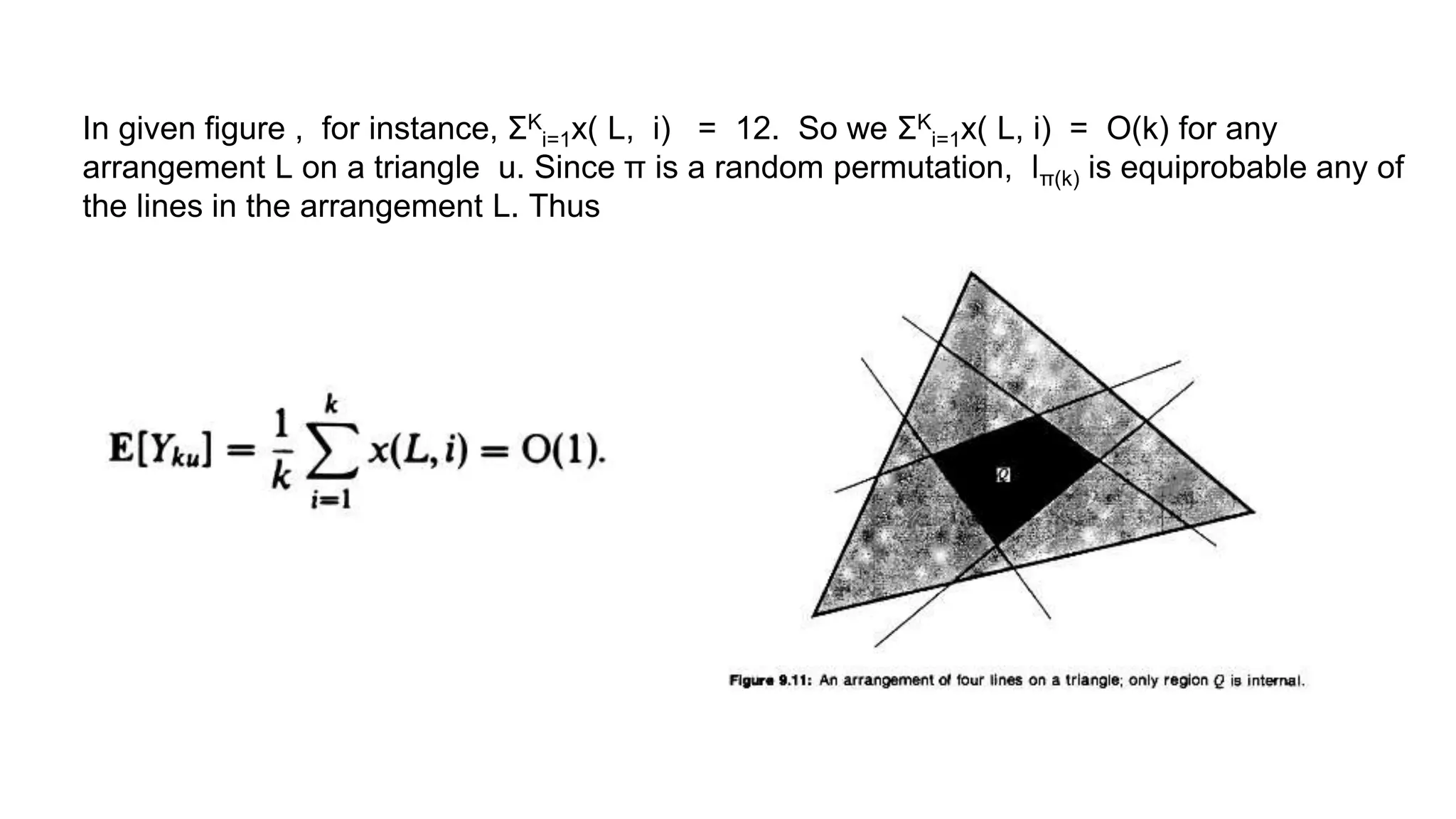
Consider the arrangement Lπ,k of line segments { lπ(1), lπ(2), …...lπ(k)} on the triangle u,
where the line segment lπ(i) is the intersection of h(uπ(i)) with triangle u, for 1 < i < k.For
an arrangement L of k lines l1 , l2 ,.... ,lk on triangle u and for 1 < i < k, let x(L,i) denote the
number of external regions in the arrangement L-{li} that are cut by li.Observe that ΣK
i=1x( L,
i) equals the total number of edges bounding the external sub-facets of L.](https://image.slidesharecdn.com/binaryspacepartition-170301172804/75/Binary-space-partition-20-2048.jpg)


Binary Space Partition (BSP) is a technique used in 3D computer graphics to render 3D scenes into 2D for display. It involves removing hidden surfaces using methods like painter's algorithm and backface culling. A BSP tree recursively subdivides n-dimensional space into convex subspaces. Random auto-partitioning of 3D space can be done by choosing a random permutation of line segments and partitioning space using free cuts that require no additional cuts. The expected number of fragments using this approach is O(n log n), an efficient partitioning of 3D space.
Gopal Kumar presents an introduction to Binary Space Partition (BSP).
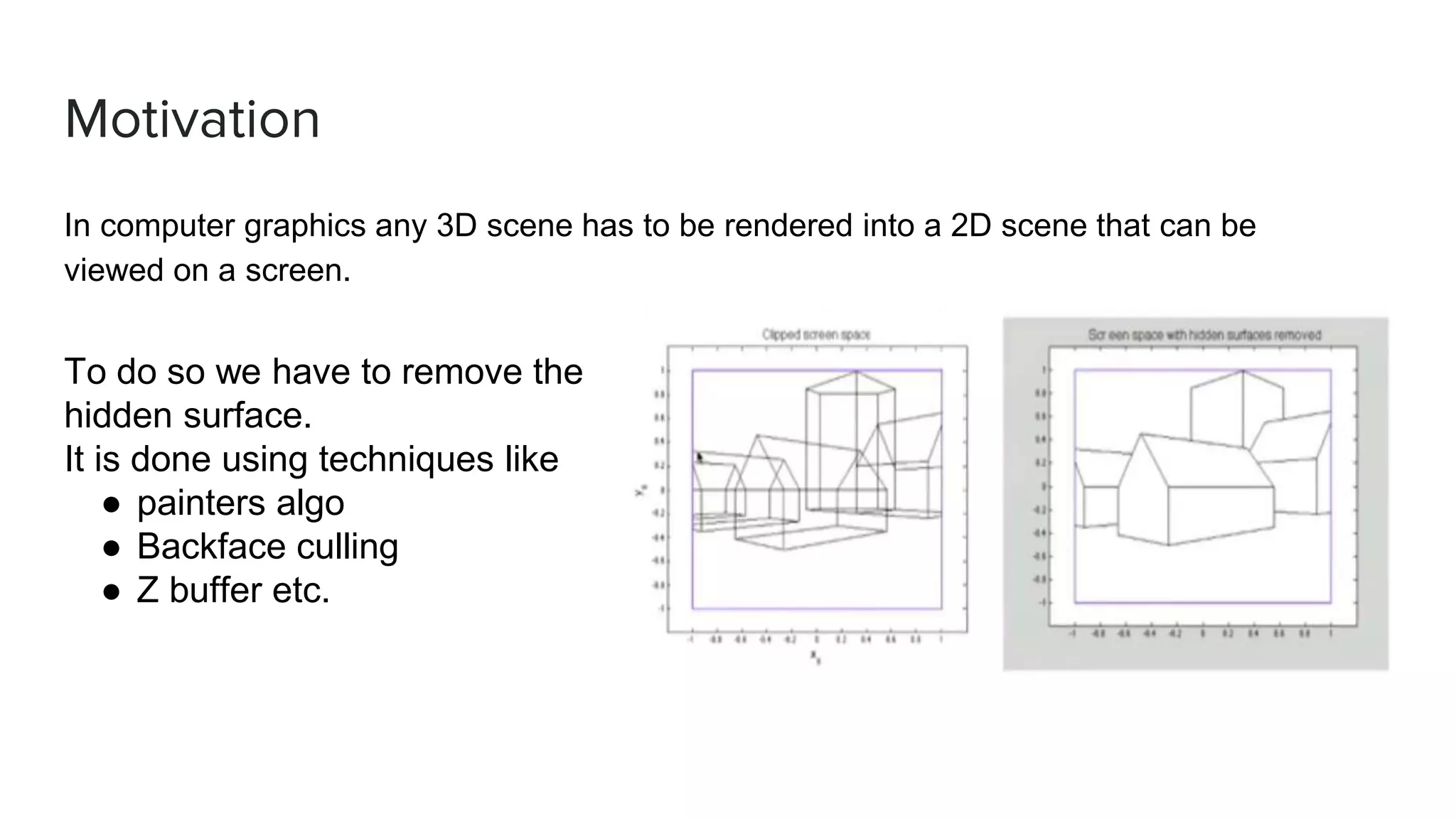
Motivation for removing hidden surfaces using techniques: painters algorithm, Backface culling, and Z buffer to render 3D scenes as 2D.
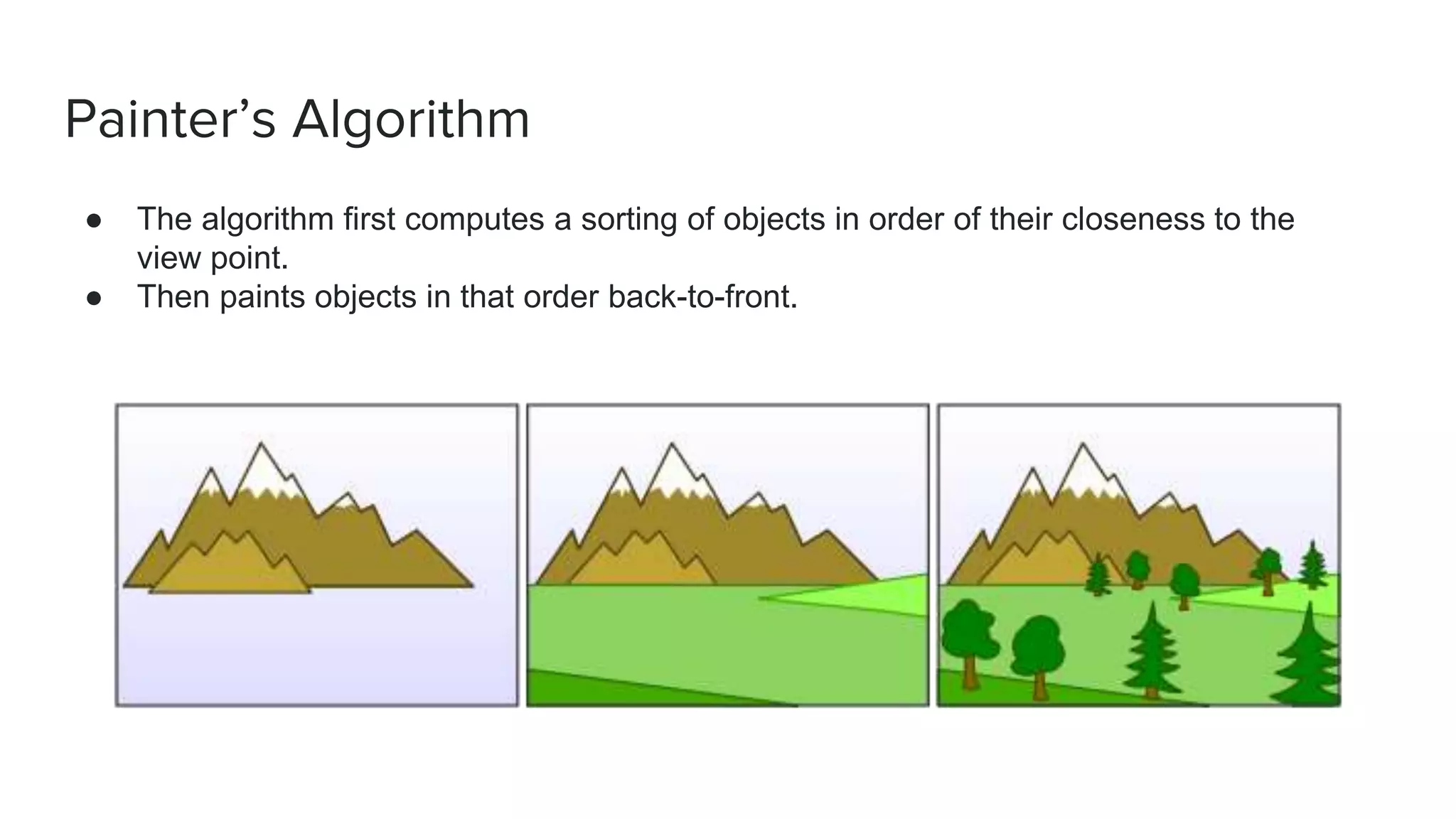
The Painter’s Algorithm sorts objects based on their distance from the viewpoint and paints them back-to-front.
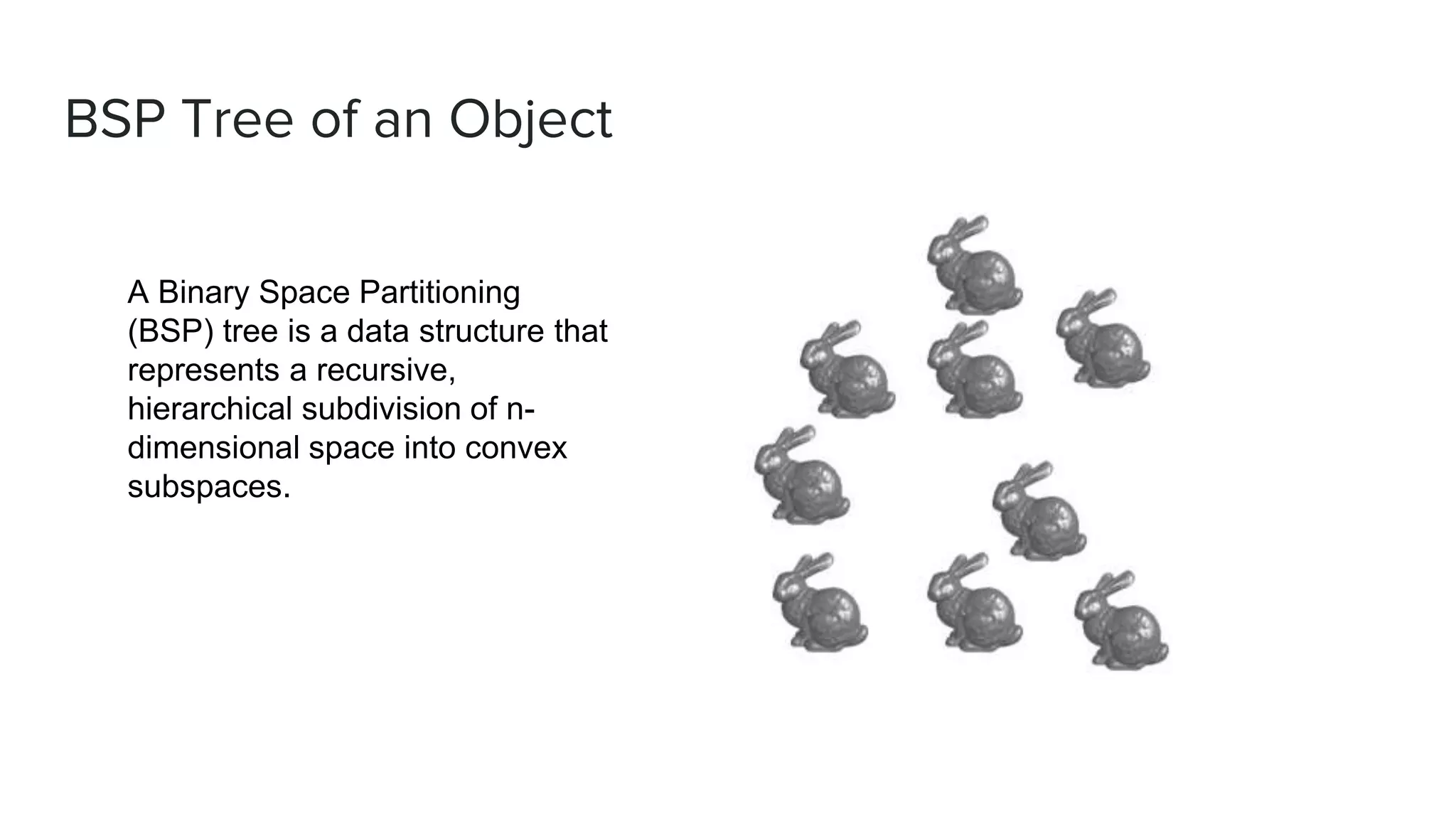
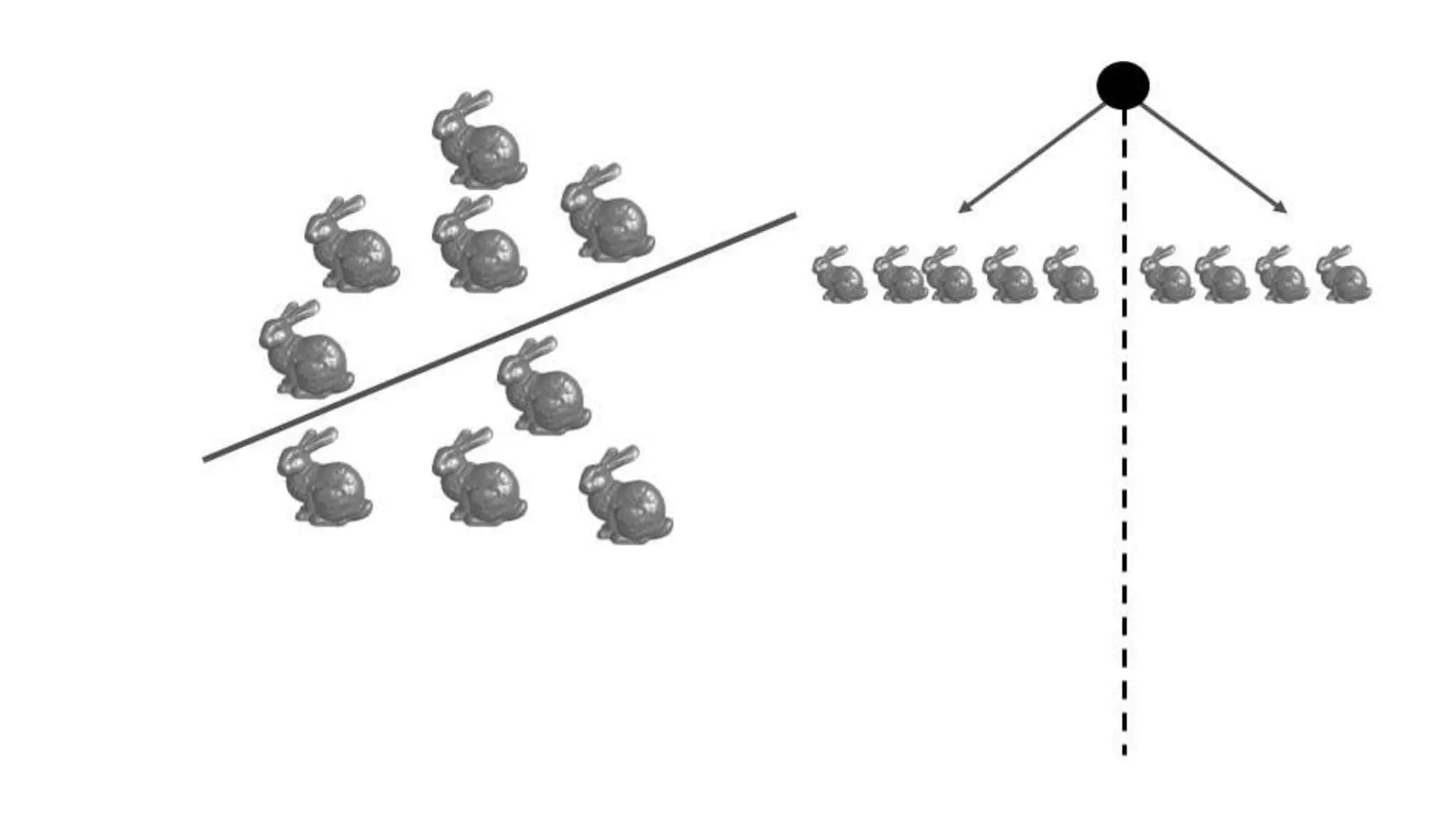
A BSP tree represents a recursive subdivision of space into convex subspaces, useful in graphics and spatial representation.
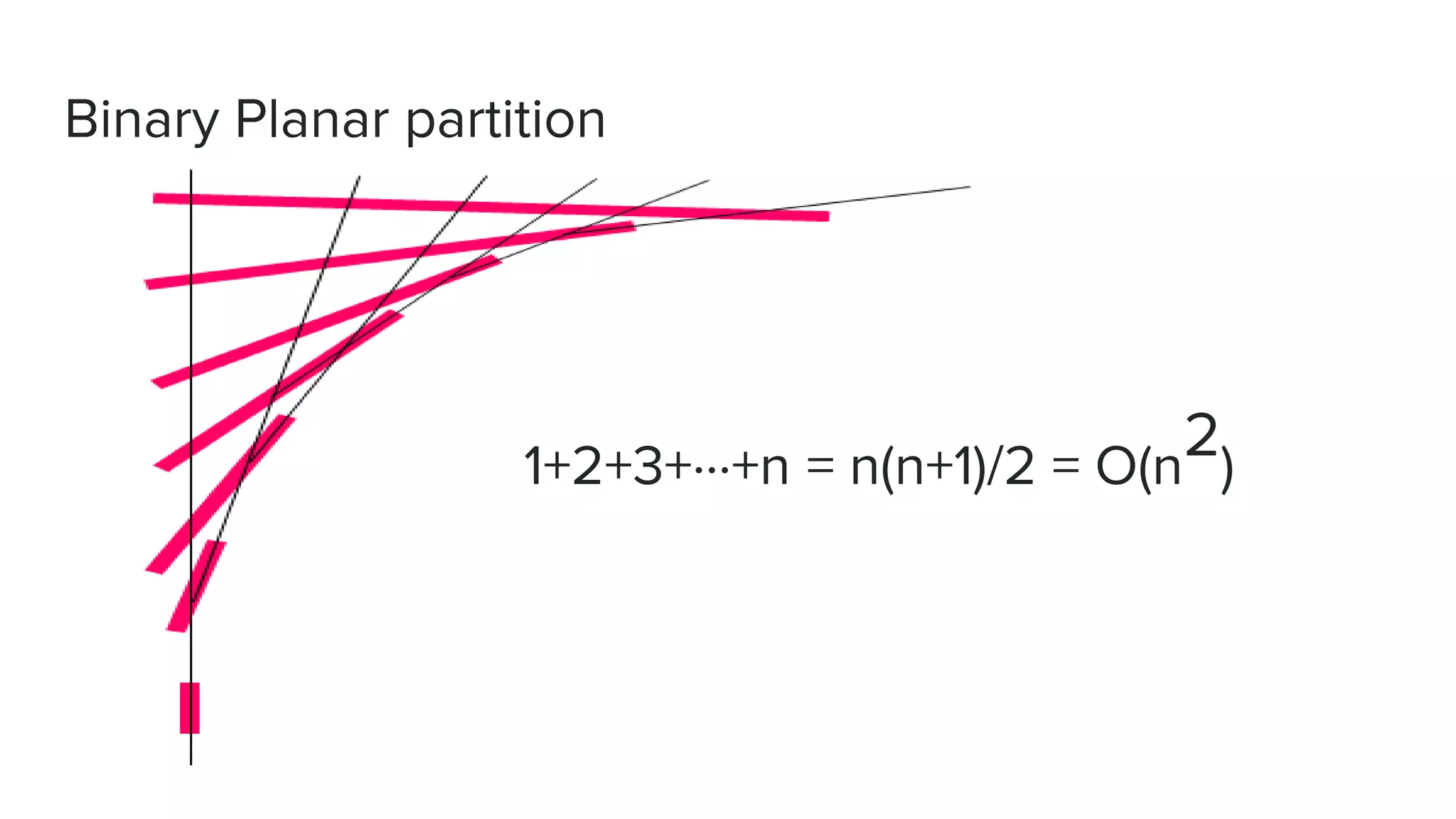
The formula for binary planar partitioning is n(n+1)/2, indicating a complexity of O(n^2).
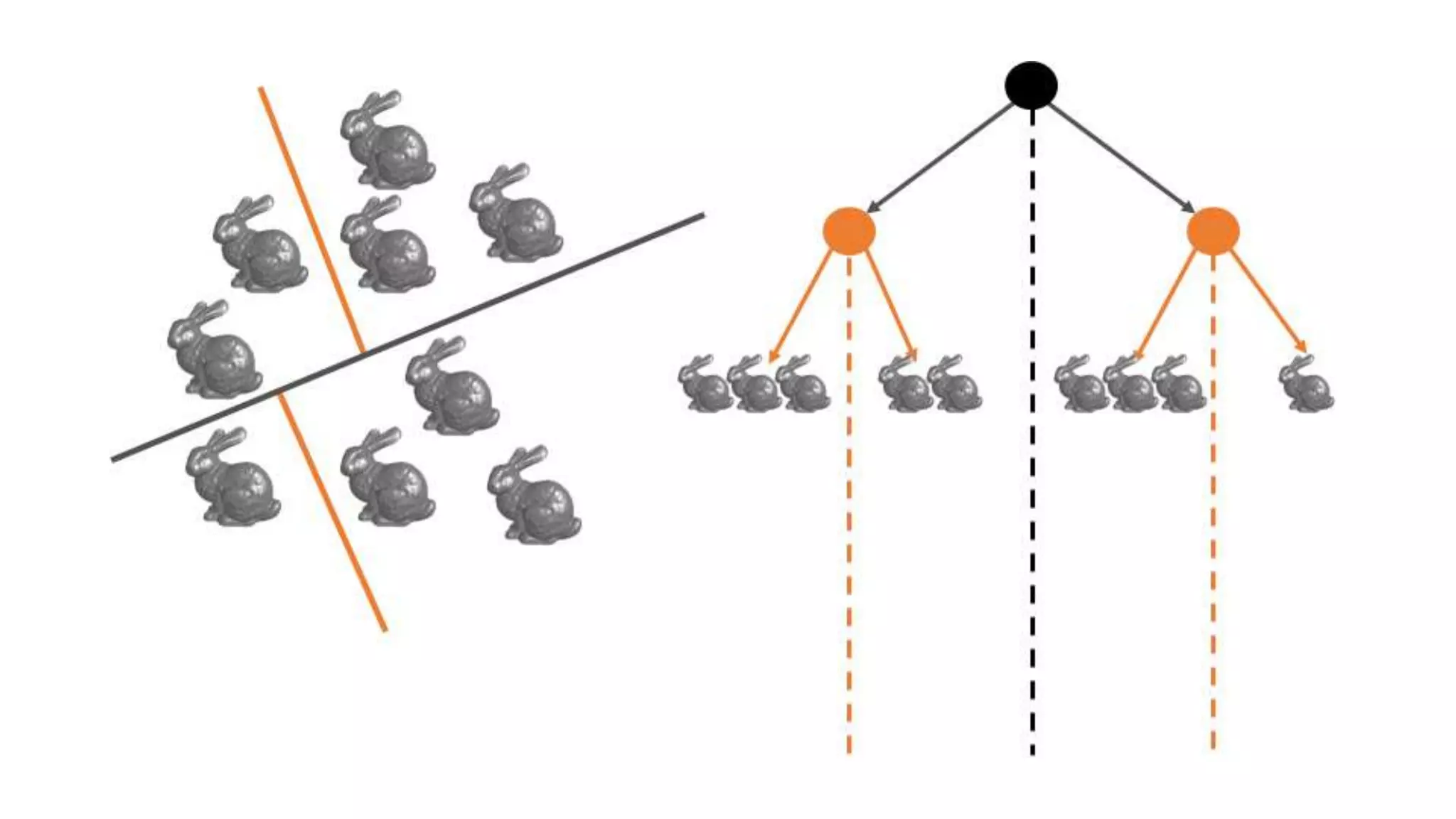
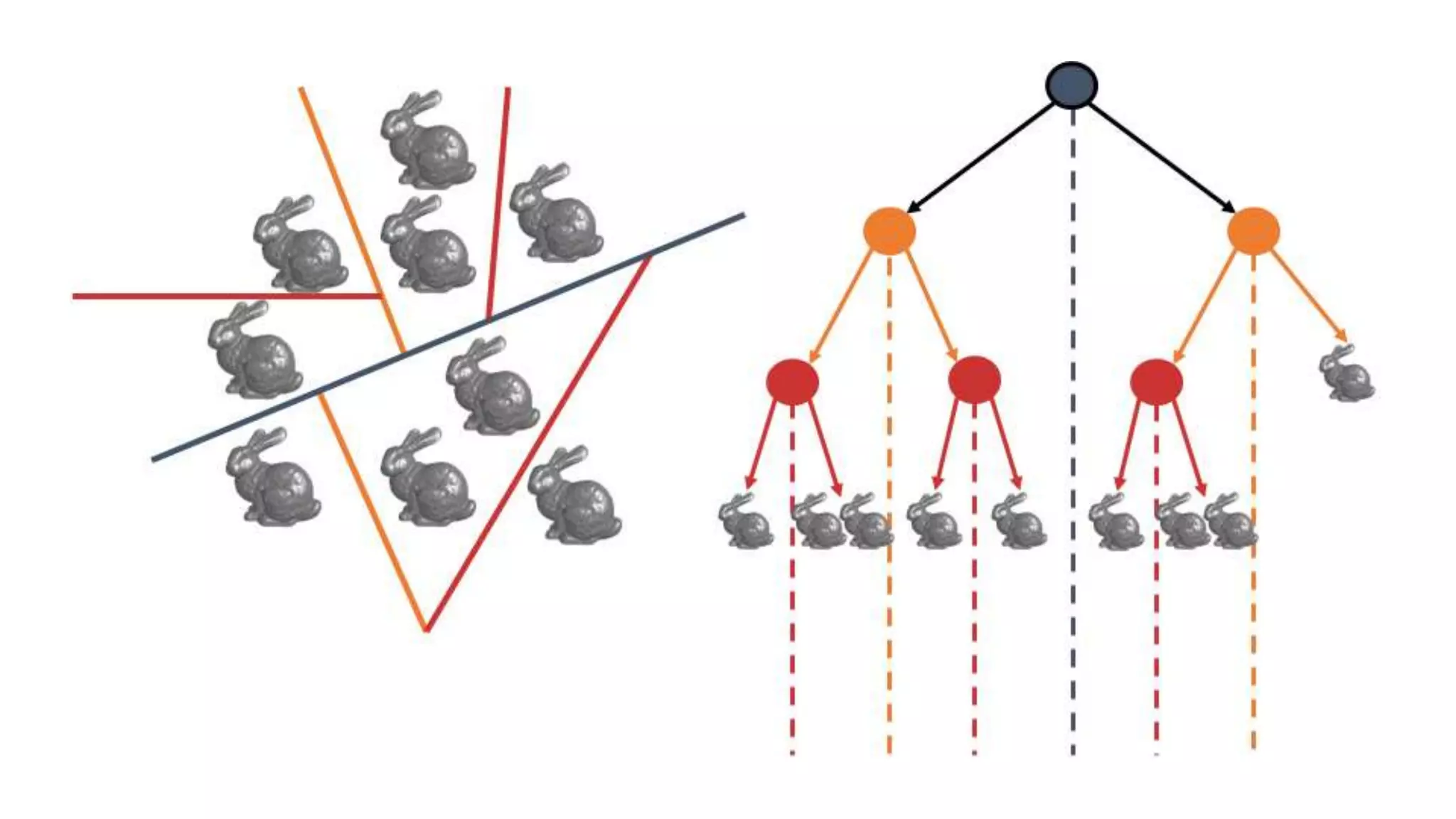
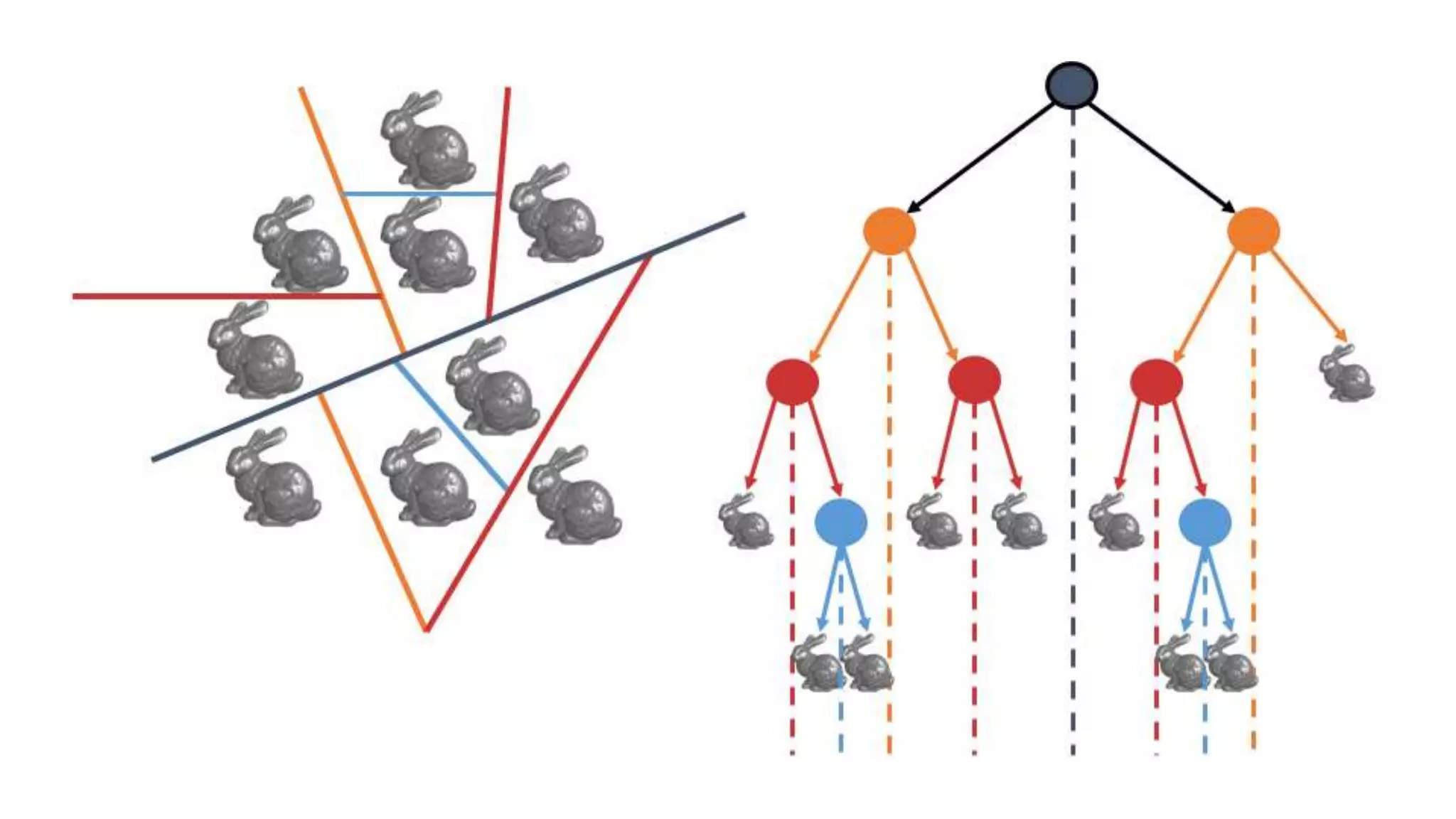
Goals for finding a binary planar partition that minimizes the number of fragmentations in spatial subdivisions.
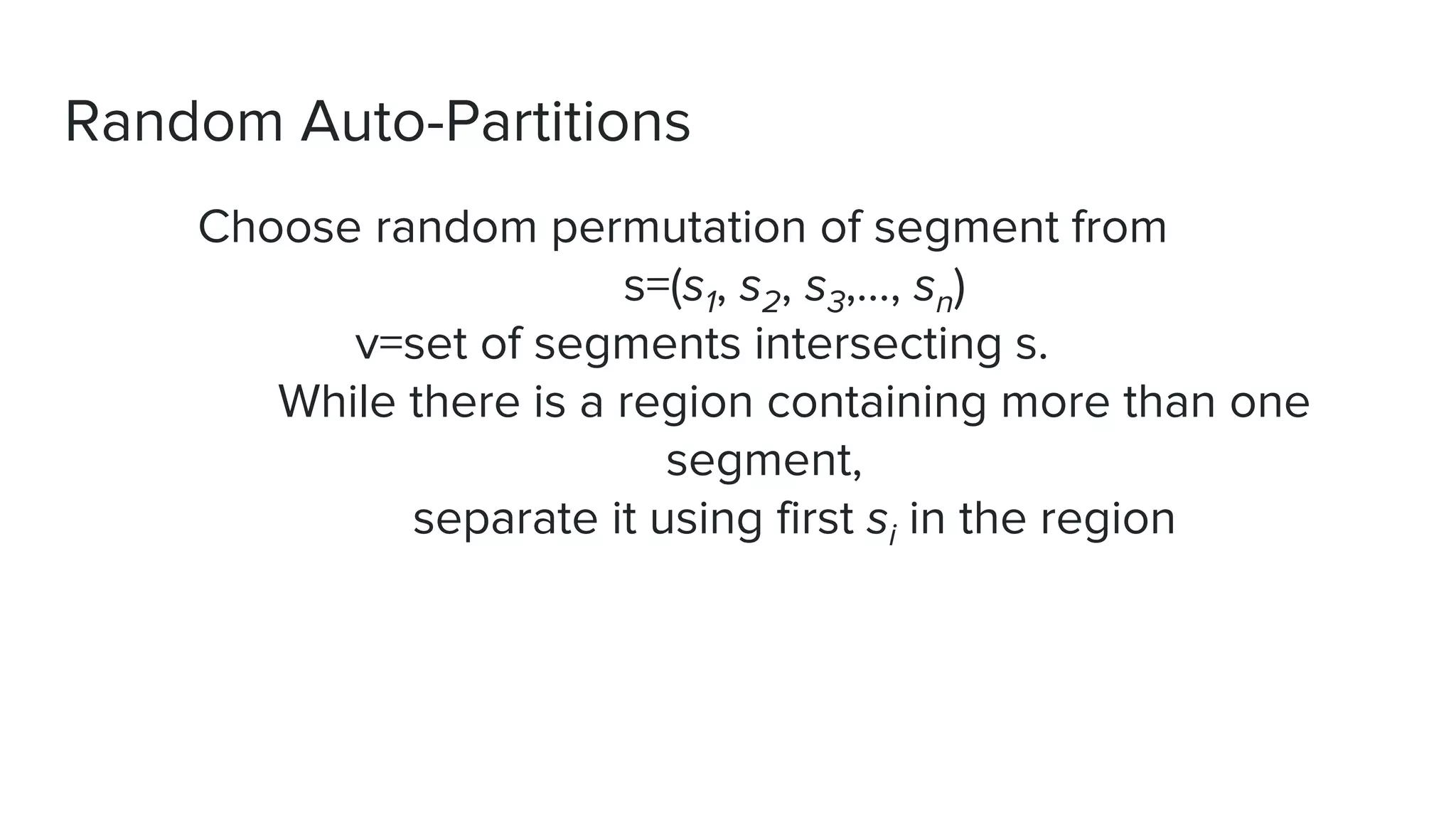
Randomly permute segments to create partitions, separating overlapping segments iteratively until no overlaps remain.
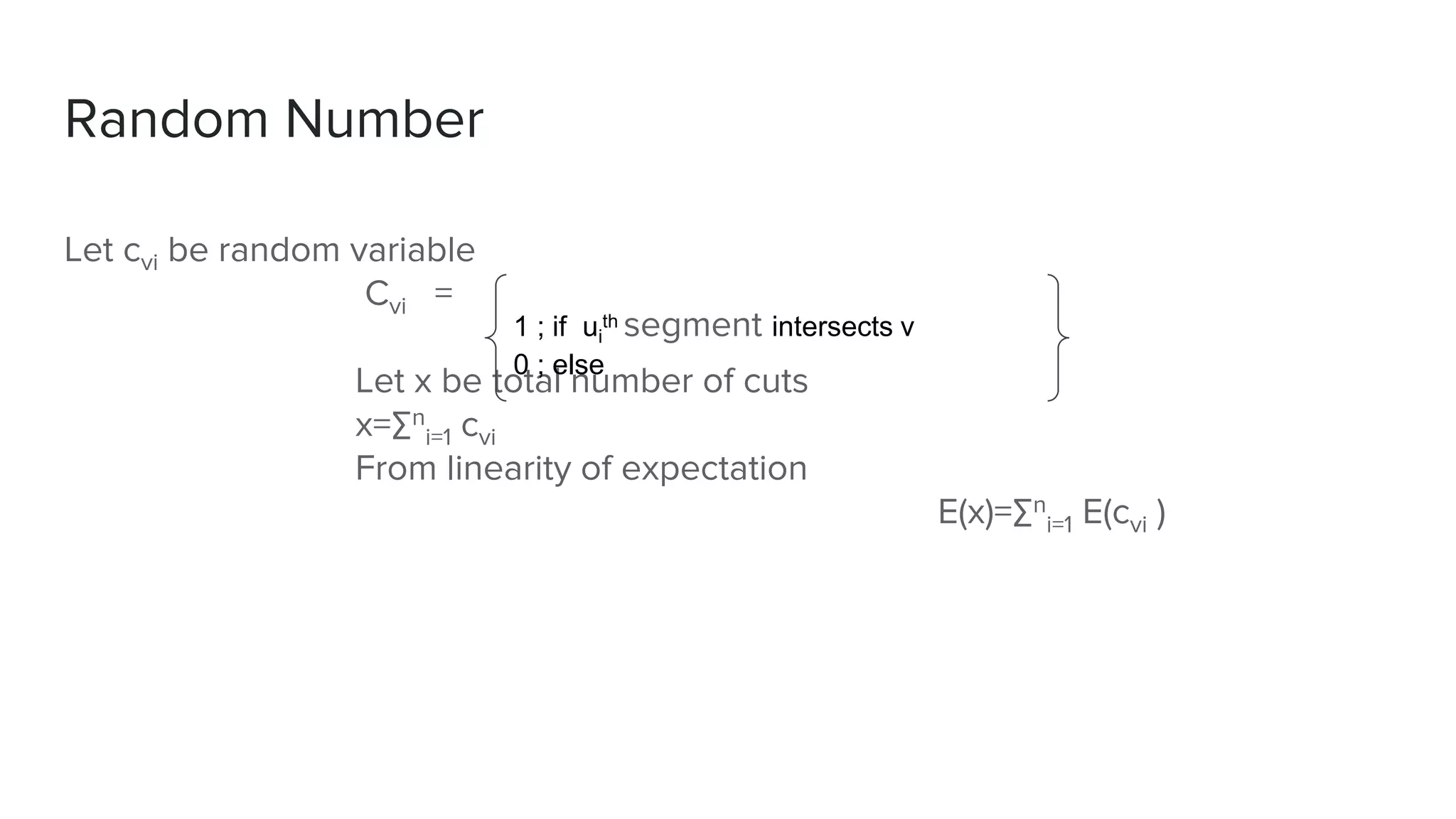
Total number of cuts calculated using expectation, where E(x) is based on segments intersecting regions.
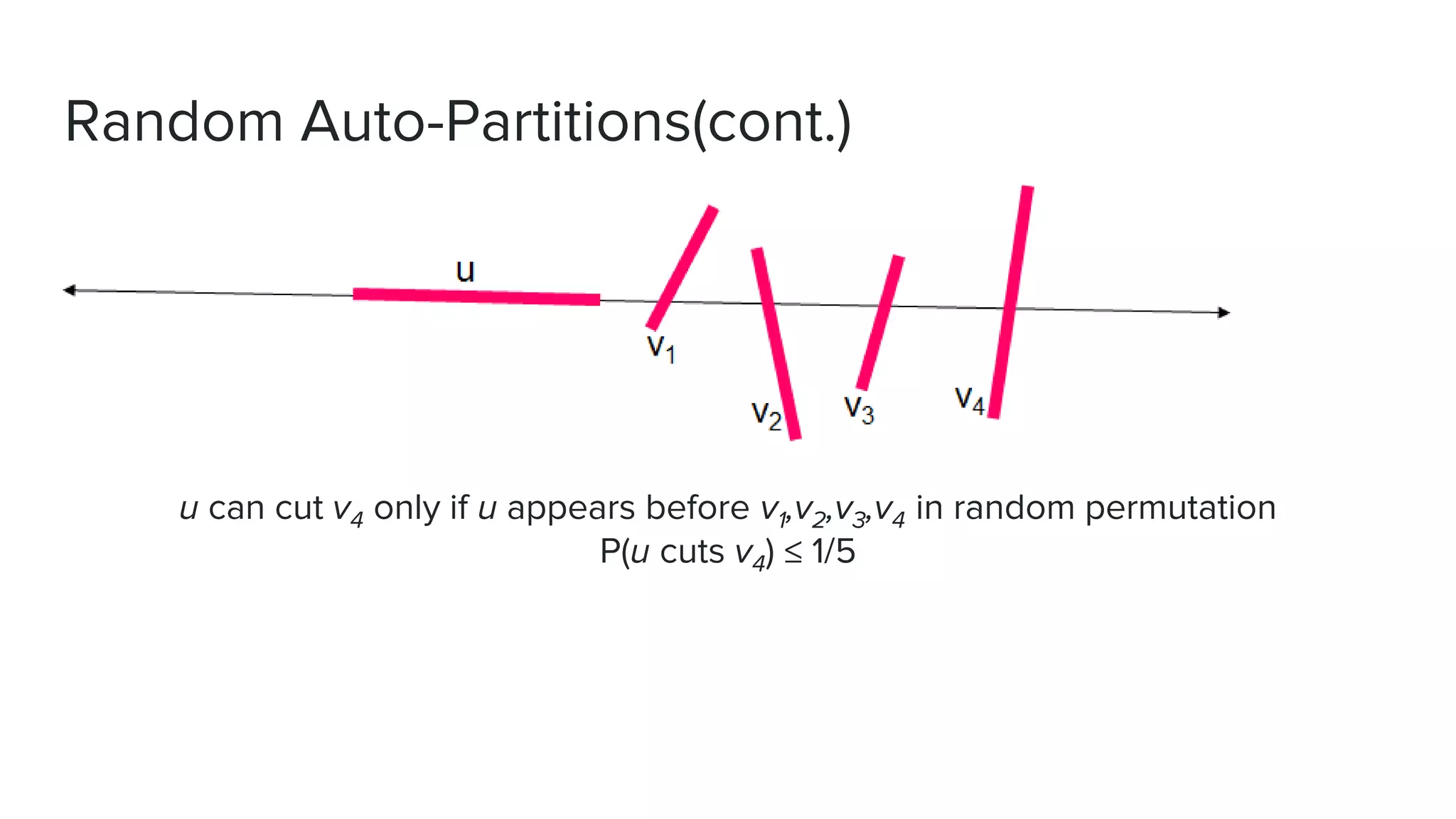
The probability of a segmentation cut depends on the ordering of segments in random permutations.
The expected number of cuts made by a segment is calculated, with an upper bound showing O(n log n) segments.
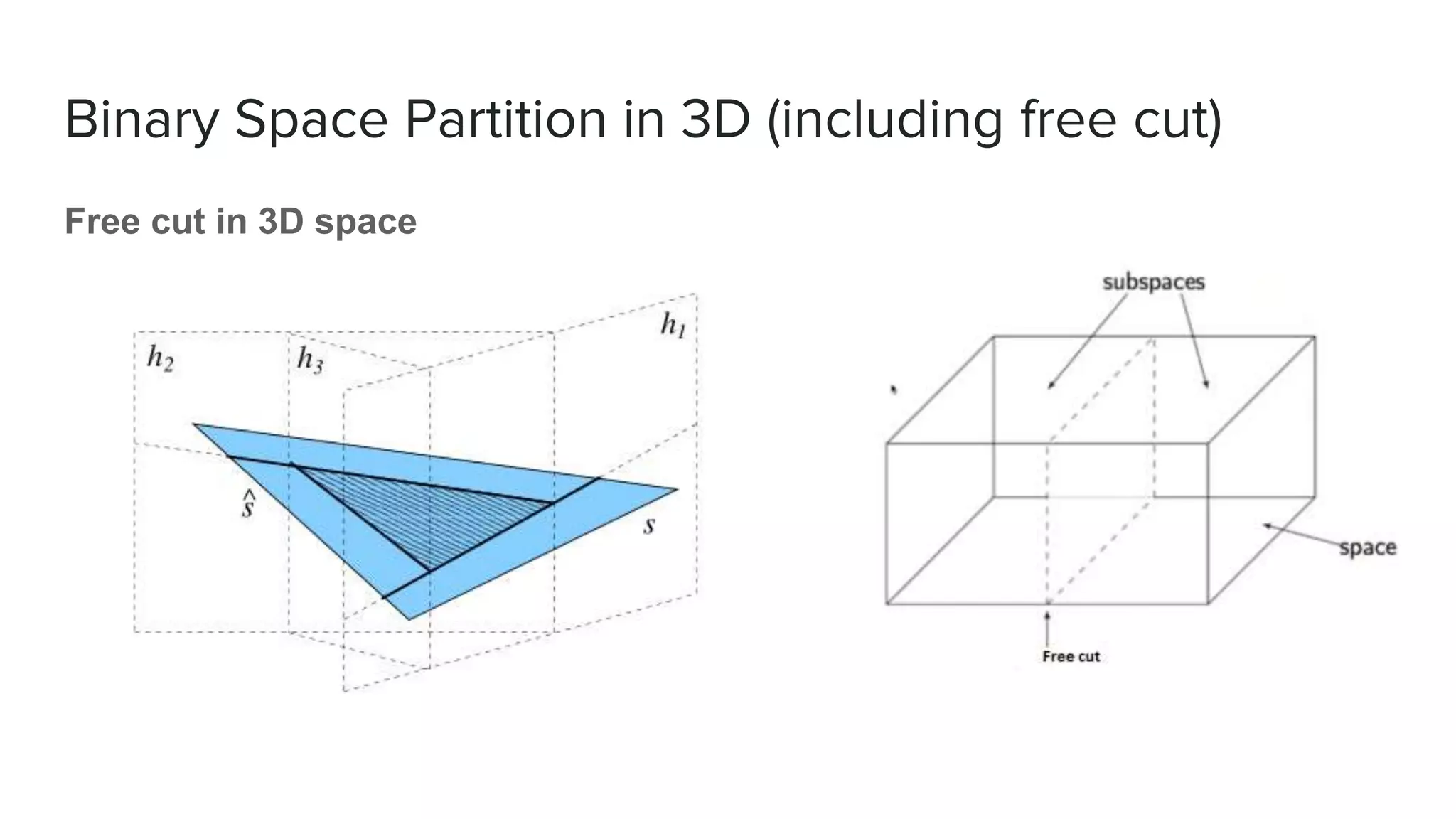
A free cut extends a segment to partition a region without increasing the number of cuts, providing efficiency.
Random permutations of segments with free cuts are utilized in generating partitions efficiently.
Outlines conditions for a segment to make a non-free cut relative to its relative positioning in permutations.
Application of free cuts principles in 3D environments for spatial partitioning.
Calculates total cuts and fragmentation caused in triangular regions by segment intersections, focusing on expected values.
Examines boundaries of external sub-facets from line arrangements within triangles to understand fragmentation levels.
Presentation concludes with acknowledgments and thanks.


