BIG DATA
BY,
PRASHANT NAVATRE
20130737
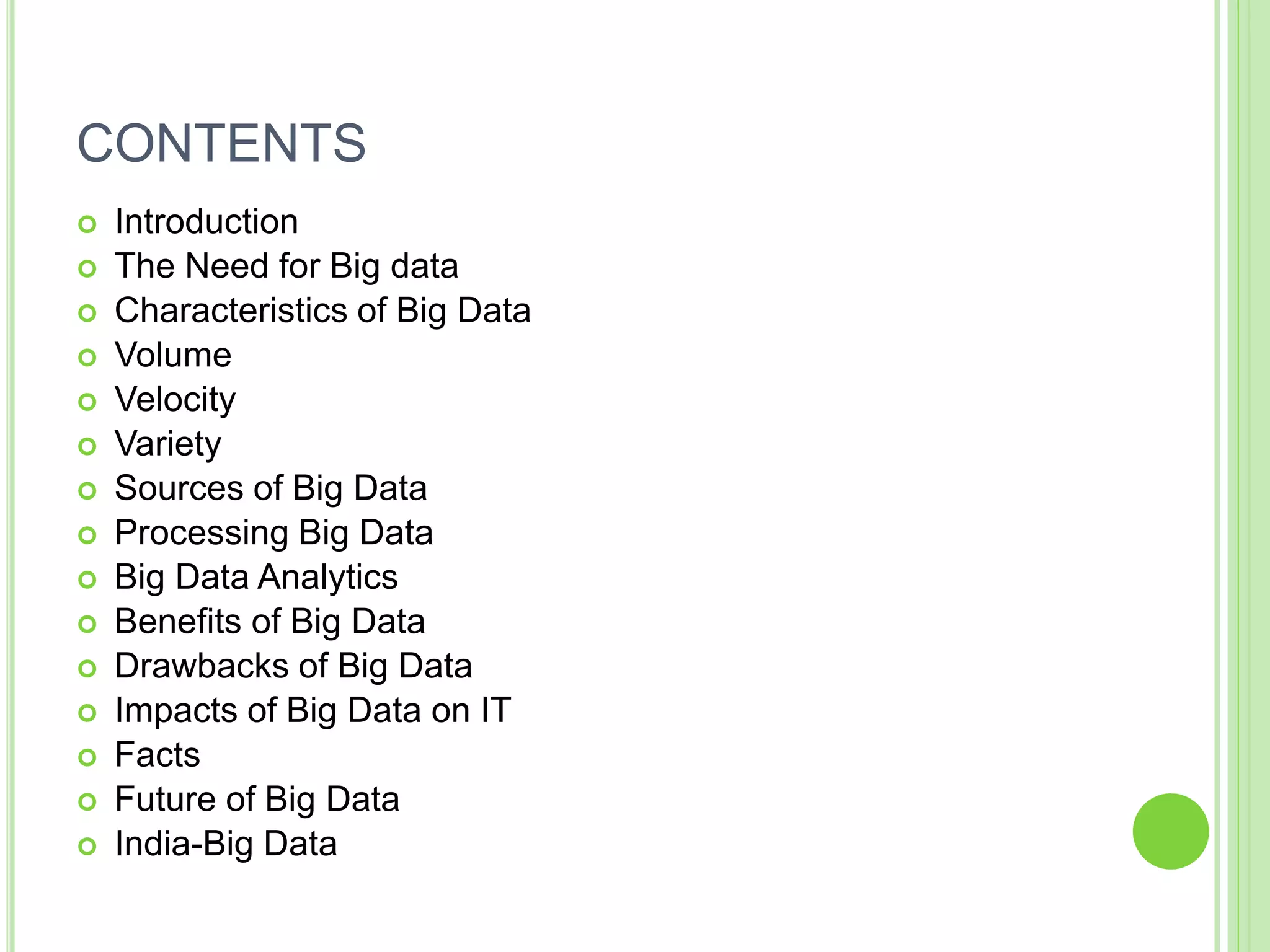
CONTENTS
 Introduction
 The Need for Big data
 Characteristics of Big Data
 Volume
 Velocity
 Variety
 Sources of Big Data
 Processing Big Data
 Big Data Analytics
 Benefits of Big Data
 Drawbacks of Big Data
 Impacts of Big Data on IT
 Facts
 Future of Big Data
 India-Big Data
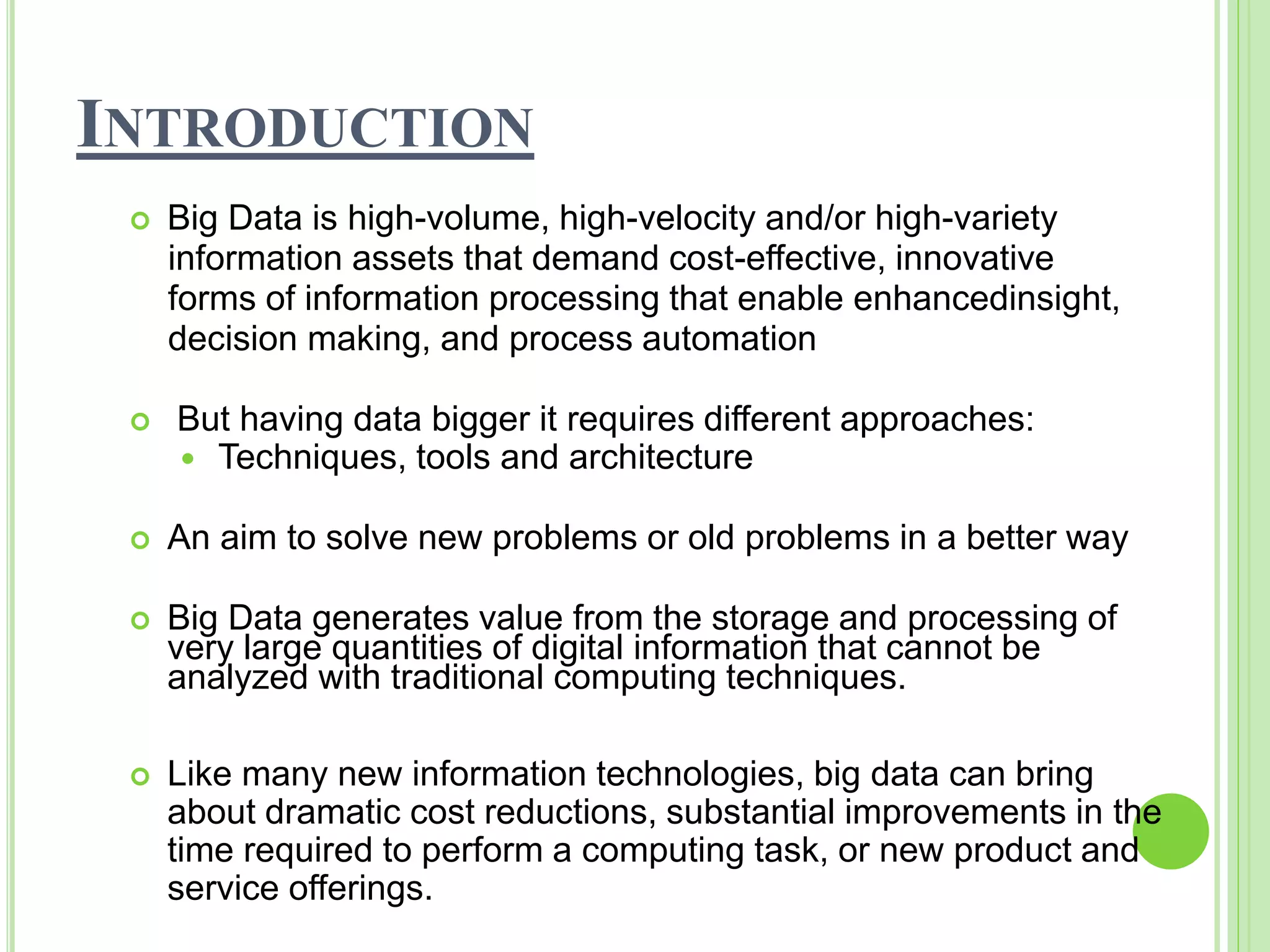
INTRODUCTION
 Big Data is high-volume, high-velocity and/or high-variety
information assets that demand cost-effective, innovative
forms of information processing that enable enhancedinsight,
decision making, and process automation
 But having data bigger it requires different approaches:
 Techniques, tools and architecture
 An aim to solve new problems or old problems in a better way
 Big Data generates value from the storage and processing of
very large quantities of digital information that cannot be
analyzed with traditional computing techniques.
 Like many new information technologies, big data can bring
about dramatic cost reductions, substantial improvements in the
time required to perform a computing task, or new product and
service offerings.
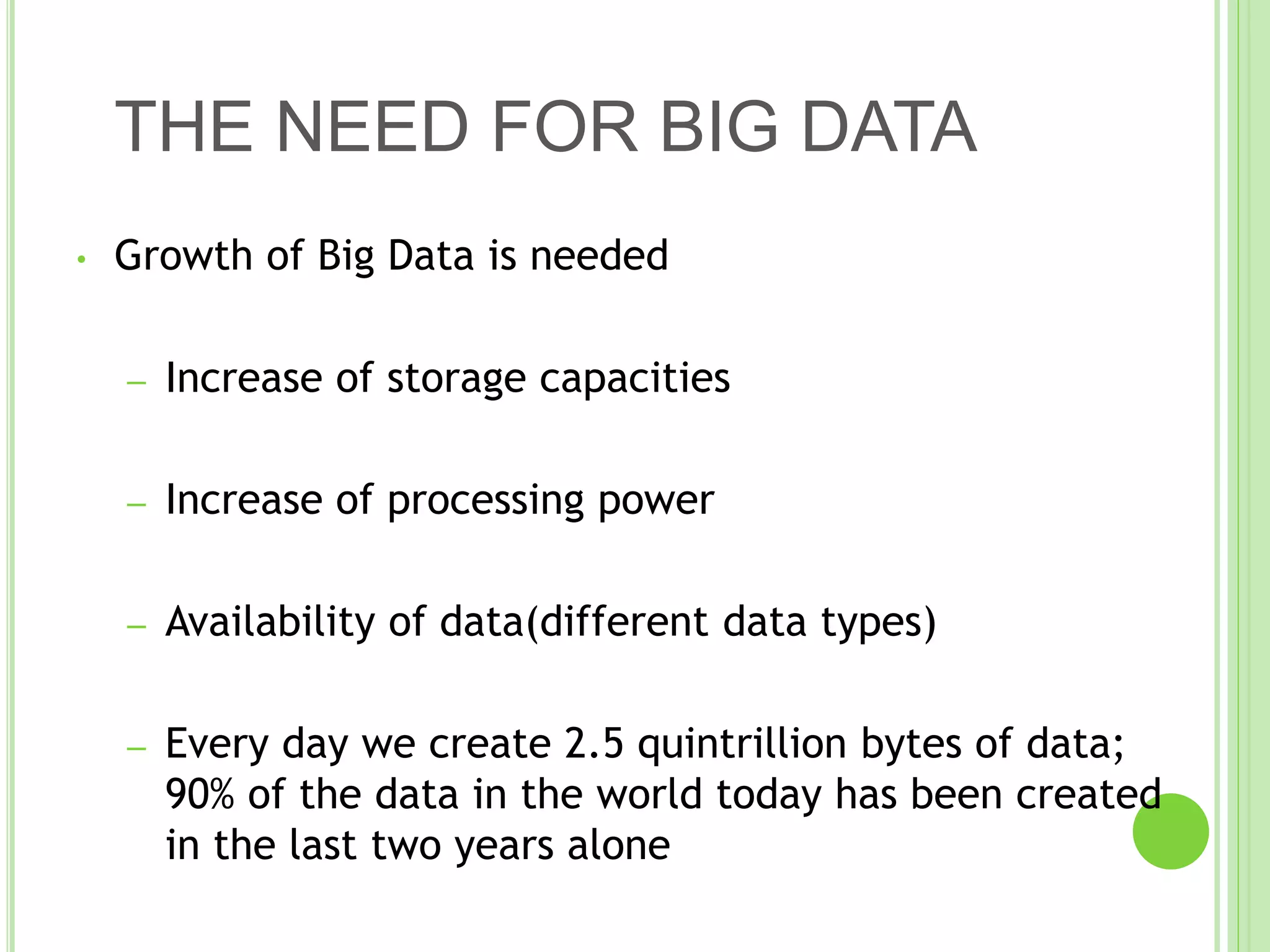
THE NEED FOR BIG DATA
• Growth of Big Data is needed
– Increase of storage capacities
– Increase of processing power
– Availability of data(different data types)
– Every day we create 2.5 quintrillion bytes of data;
90% of the data in the world today has been created
in the last two years alone
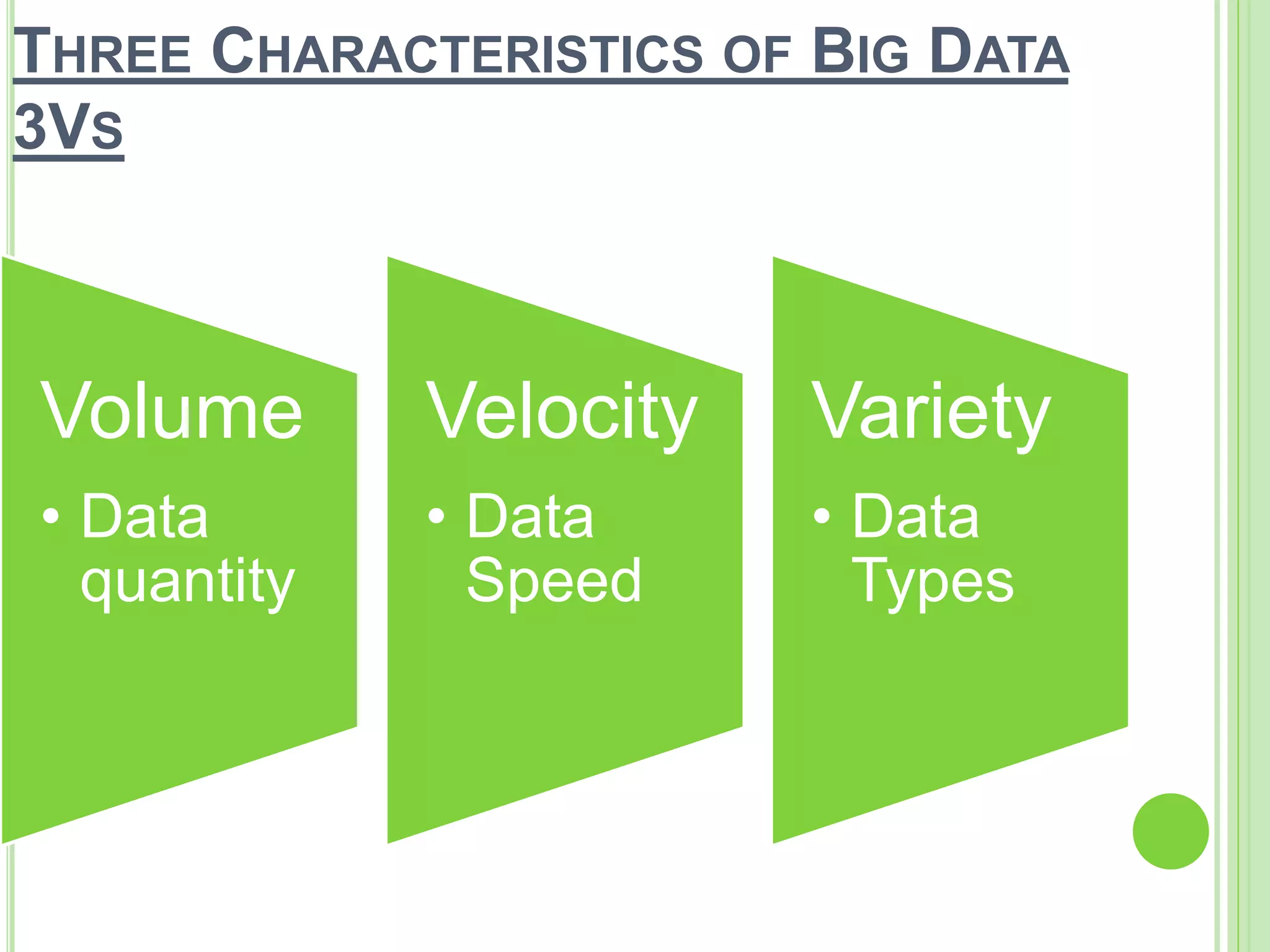
THREE CHARACTERISTICS OF BIG DATA
3VS
Volume
• Data
quantity
Velocity
• Data
Speed
Variety
• Data
Types
1ST CHARACTER OF BIG DATA
VOLUME
•A typical PC might have had 10 gigabytes of storage in 2000.
•Today, Facebook ingests 500 terabytes of new data every
day.
•Boeing 737 will generate 240 terabytes of flight data during a
single flight across the US.
• The smart phones, the data they create and consume;
sensors embedded into everyday objects will soon result in
billions of new, constantly-updated data feeds containing
environmental, location, and other information, including video.
2ND CHARACTER OF BIG DATA
VELOCITY
 Clickstreams and ad impressions capture user behavior
at millions of events per second
 High-frequency stock trading algorithms reflect market
changes within microseconds
 Machine to machine processes exchange data between
billions of devices
 On-line gaming systems support millions of concurrent
users, each producing multiple inputs per second.
3RD CHARACTER OF BIG DATA
VARIETY
 Big Data isn't just numbers, dates, and strings.
Big Data is also geospatial data, 3D data, audio
and video, and unstructured text, including log
files and social media.
 Big Data analysis includes different types of data
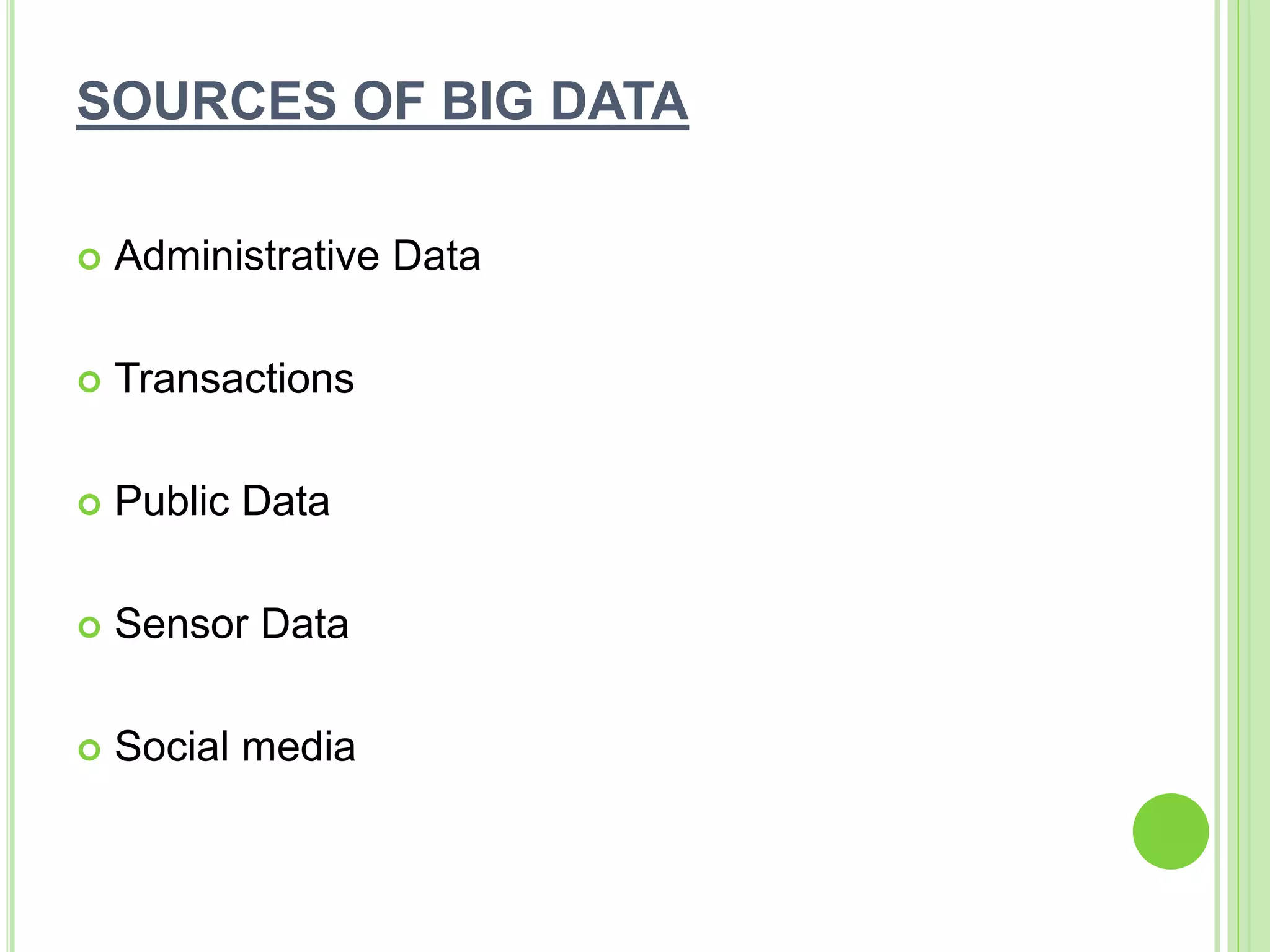
SOURCES OF BIG DATA
 Administrative Data
 Transactions
 Public Data
 Sensor Data
 Social media
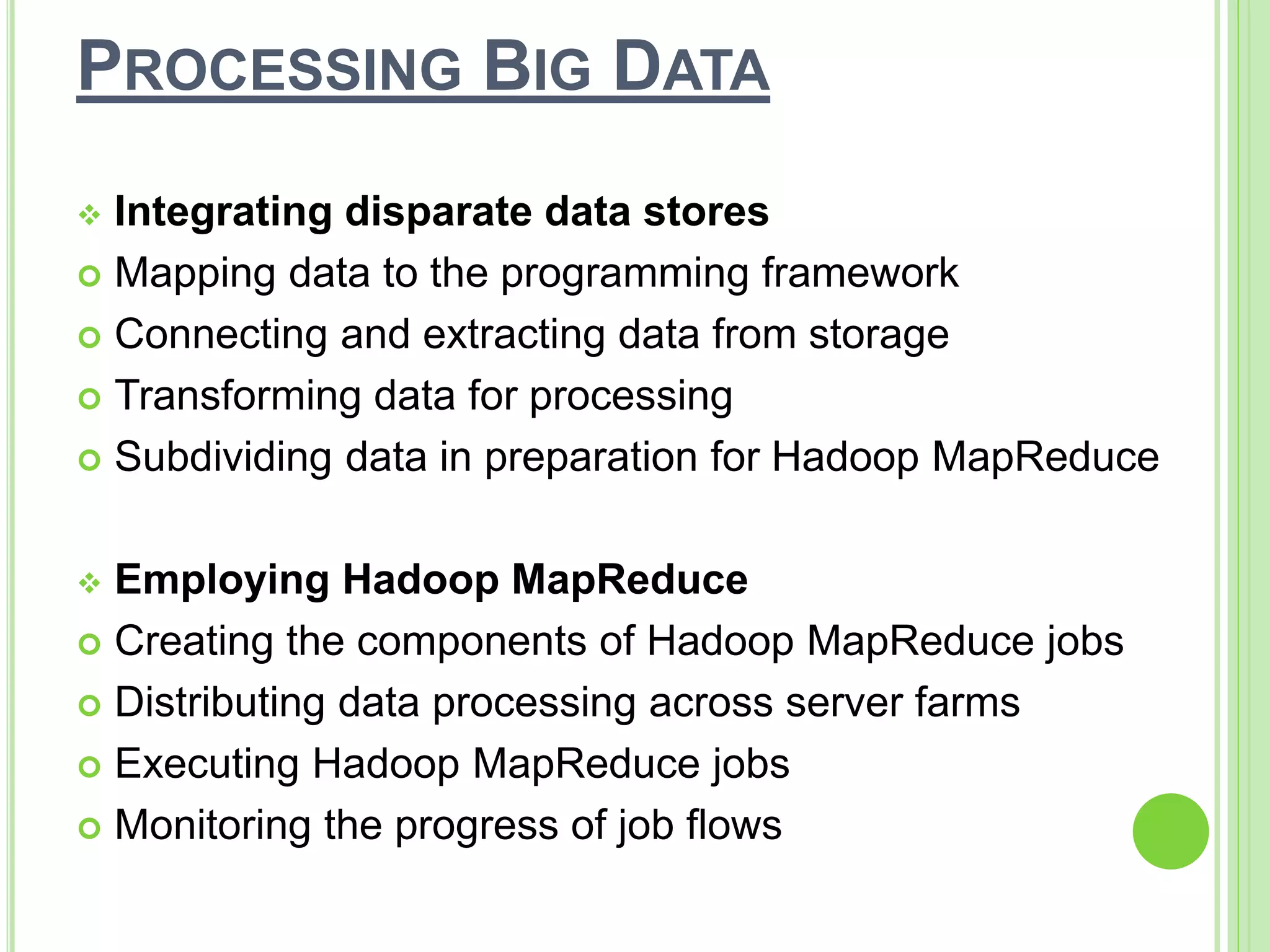
PROCESSING BIG DATA
 Integrating disparate data stores
 Mapping data to the programming framework
 Connecting and extracting data from storage
 Transforming data for processing
 Subdividing data in preparation for Hadoop MapReduce
 Employing Hadoop MapReduce
 Creating the components of Hadoop MapReduce jobs
 Distributing data processing across server farms
 Executing Hadoop MapReduce jobs
 Monitoring the progress of job flows
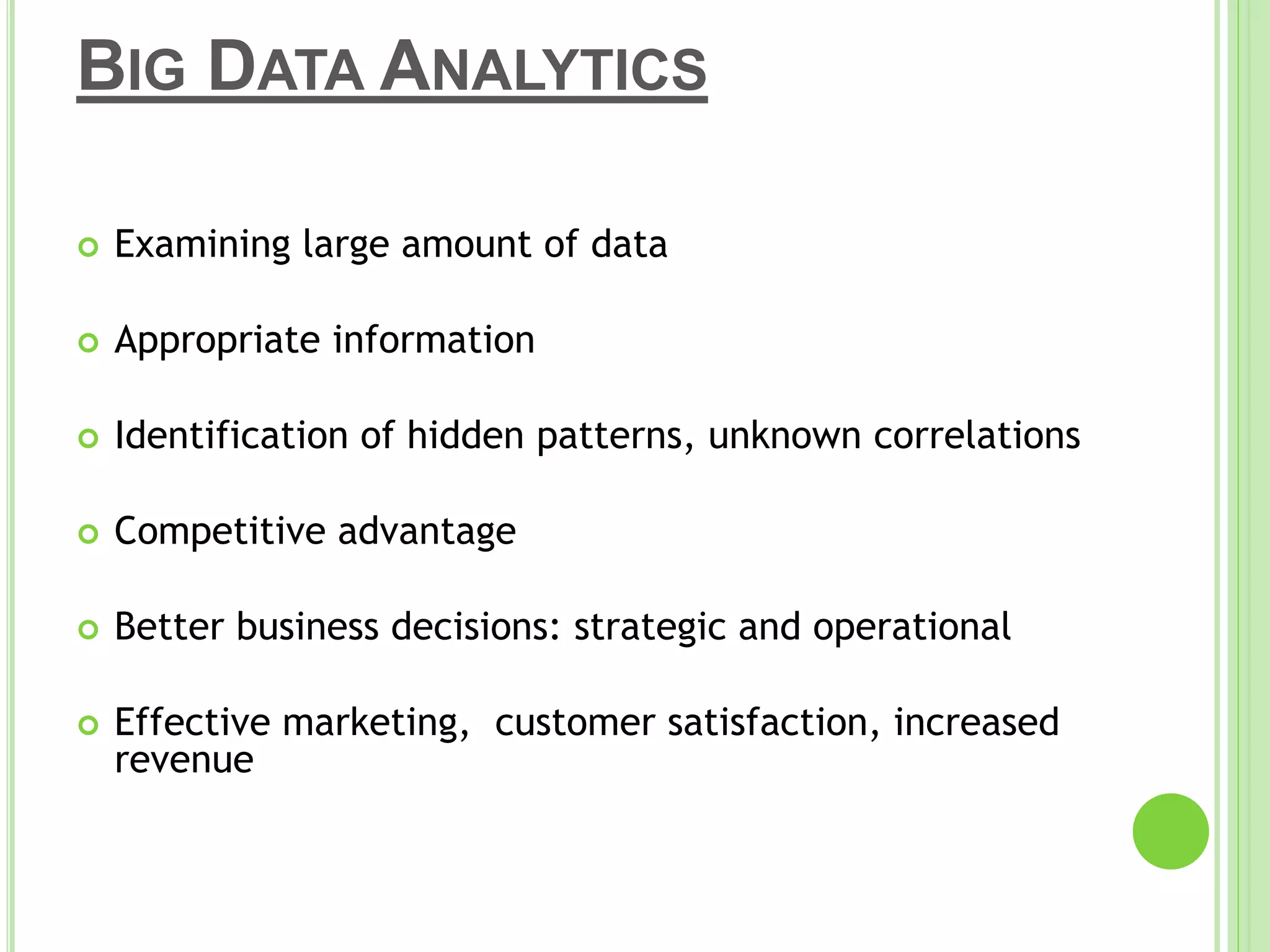
BIG DATA ANALYTICS
 Examining large amount of data
 Appropriate information
 Identification of hidden patterns, unknown correlations
 Competitive advantage
 Better business decisions: strategic and operational
 Effective marketing, customer satisfaction, increased
revenue
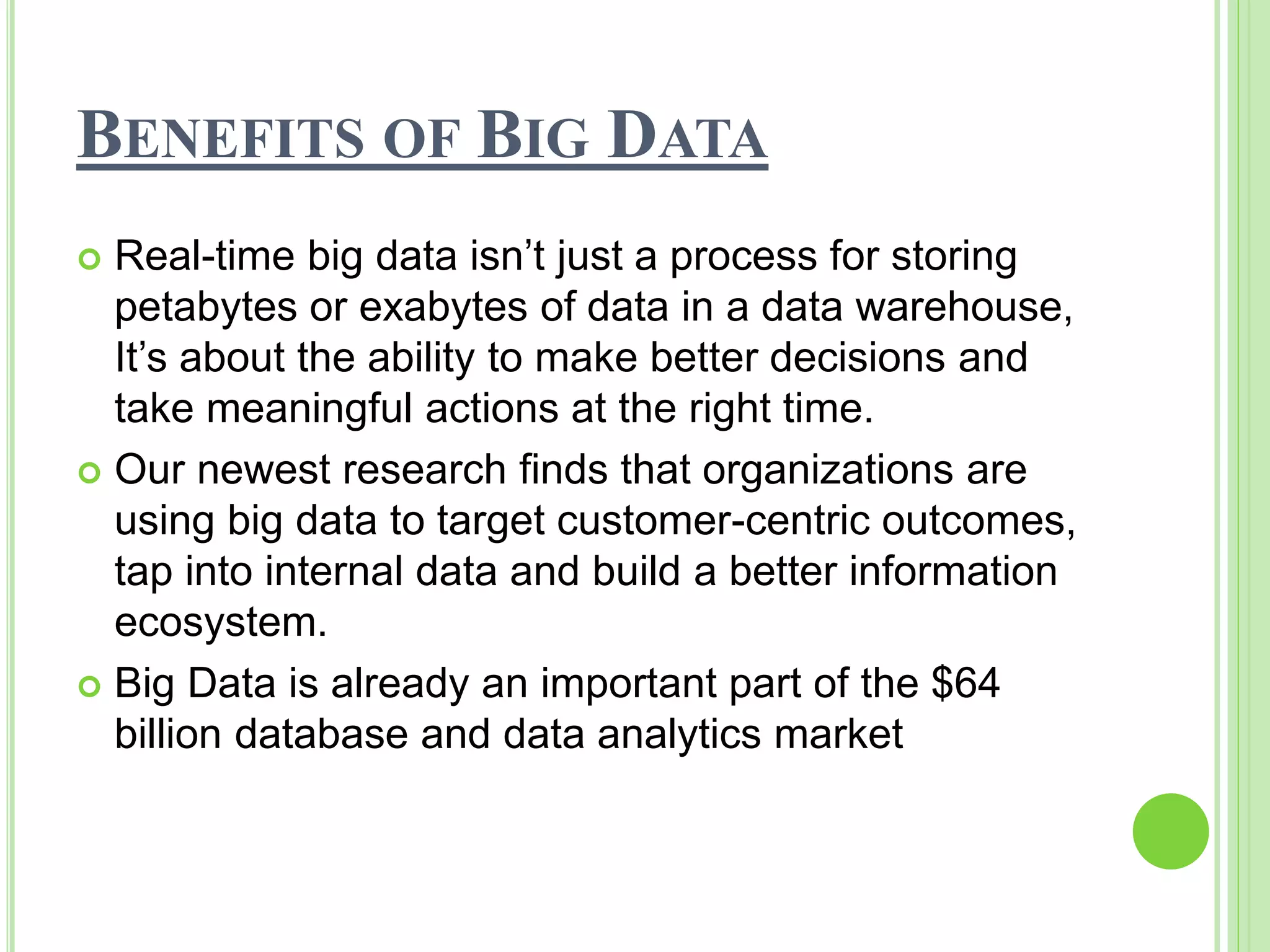
BENEFITS OF BIG DATA
 Real-time big data isn’t just a process for storing
petabytes or exabytes of data in a data warehouse,
It’s about the ability to make better decisions and
take meaningful actions at the right time.
 Our newest research finds that organizations are
using big data to target customer-centric outcomes,
tap into internal data and build a better information
ecosystem.
 Big Data is already an important part of the $64
billion database and data analytics market
DRAWBACKS OF BIG DATA
 Security and Privacy issues
 Performance
 Data Representation
13
IMPACTS OF BIG DATA ON IT
 Big data is a troublesome force presenting
opportunities with challenges to IT organizations.
 By 2015 4.4 million IT jobs in Big Data ; 1.9 million
is in US itself
 India will require a minimum of 1 lakh data
scientists in the next couple of years in addition to
data analysts and data managers to support the Big
Data space.
FACTS
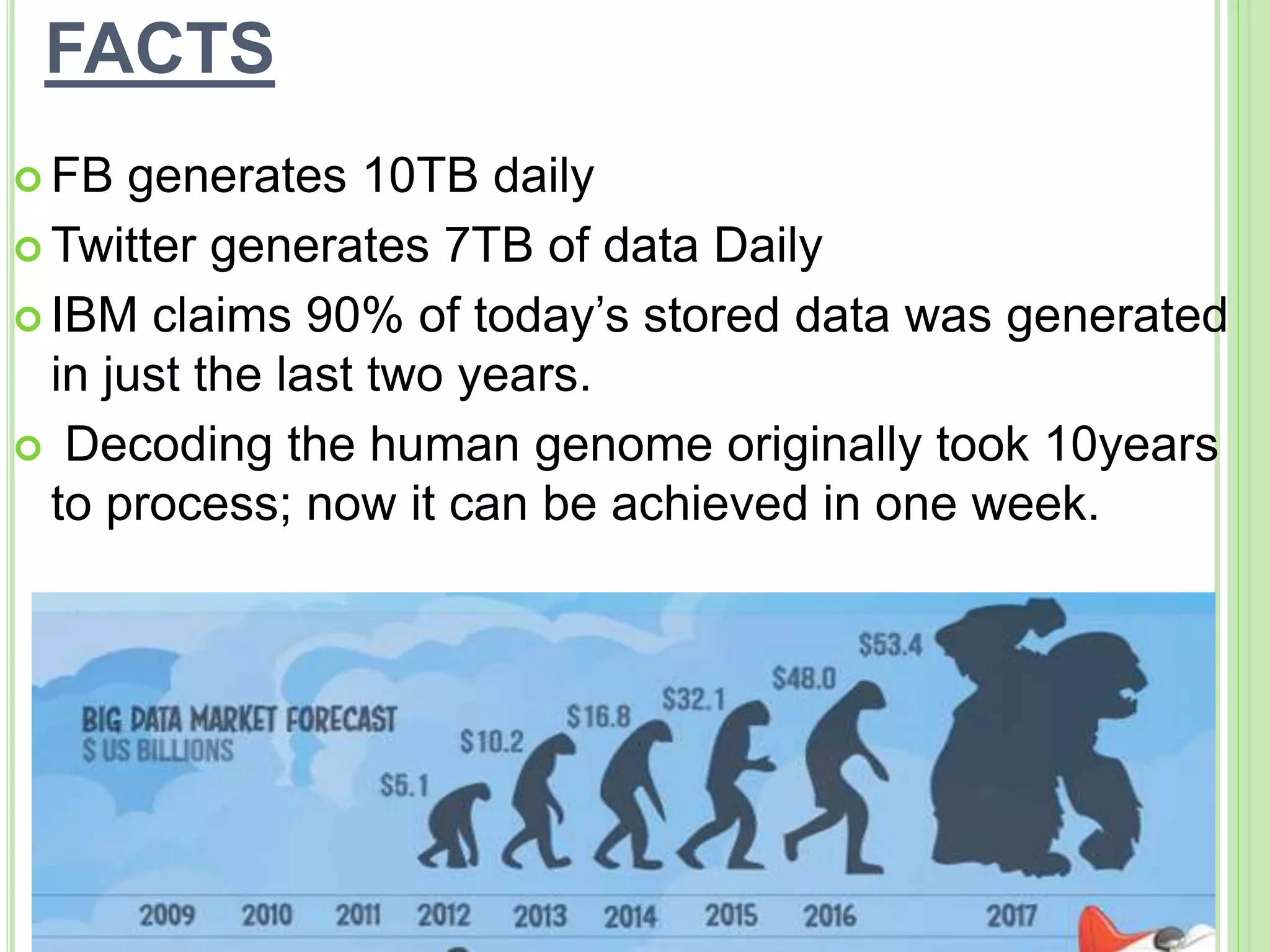
 FB generates 10TB daily
 Twitter generates 7TB of data Daily
 IBM claims 90% of today’s stored data was generated
in just the last two years.
 Decoding the human genome originally took 10years
to process; now it can be achieved in one week.
FUTURE OF BIG DATA
 $15 billion on software firms only specializing in
data management and analytics.
 This industry on its own is worth more than
$100 billion and growing at almost 10% a year
which is roughly twice as fast as the software
business as a whole.
INDIA – BIG DATA
 Big data analysis helped in parts, responsible for
the BJP and its allies to win Indian General Election
2014.
 The Indian Government utilises numerous
techniques to ascertain how the Indian electorate is
responding to government action, as well as ideas
for policy augmentation
THANK YOU.

Big data Ppt

  • 1.
  • 2.
    CONTENTS  Introduction  TheNeed for Big data  Characteristics of Big Data  Volume  Velocity  Variety  Sources of Big Data  Processing Big Data  Big Data Analytics  Benefits of Big Data  Drawbacks of Big Data  Impacts of Big Data on IT  Facts  Future of Big Data  India-Big Data
  • 3.
    INTRODUCTION  Big Datais high-volume, high-velocity and/or high-variety information assets that demand cost-effective, innovative forms of information processing that enable enhancedinsight, decision making, and process automation  But having data bigger it requires different approaches:  Techniques, tools and architecture  An aim to solve new problems or old problems in a better way  Big Data generates value from the storage and processing of very large quantities of digital information that cannot be analyzed with traditional computing techniques.  Like many new information technologies, big data can bring about dramatic cost reductions, substantial improvements in the time required to perform a computing task, or new product and service offerings.
  • 4.
    THE NEED FORBIG DATA • Growth of Big Data is needed – Increase of storage capacities – Increase of processing power – Availability of data(different data types) – Every day we create 2.5 quintrillion bytes of data; 90% of the data in the world today has been created in the last two years alone
  • 5.
    THREE CHARACTERISTICS OFBIG DATA 3VS Volume • Data quantity Velocity • Data Speed Variety • Data Types
  • 6.
    1ST CHARACTER OFBIG DATA VOLUME •A typical PC might have had 10 gigabytes of storage in 2000. •Today, Facebook ingests 500 terabytes of new data every day. •Boeing 737 will generate 240 terabytes of flight data during a single flight across the US. • The smart phones, the data they create and consume; sensors embedded into everyday objects will soon result in billions of new, constantly-updated data feeds containing environmental, location, and other information, including video.
  • 7.
    2ND CHARACTER OFBIG DATA VELOCITY  Clickstreams and ad impressions capture user behavior at millions of events per second  High-frequency stock trading algorithms reflect market changes within microseconds  Machine to machine processes exchange data between billions of devices  On-line gaming systems support millions of concurrent users, each producing multiple inputs per second.
  • 8.
    3RD CHARACTER OFBIG DATA VARIETY  Big Data isn't just numbers, dates, and strings. Big Data is also geospatial data, 3D data, audio and video, and unstructured text, including log files and social media.  Big Data analysis includes different types of data
  • 9.
    SOURCES OF BIGDATA  Administrative Data  Transactions  Public Data  Sensor Data  Social media
  • 10.
    PROCESSING BIG DATA Integrating disparate data stores  Mapping data to the programming framework  Connecting and extracting data from storage  Transforming data for processing  Subdividing data in preparation for Hadoop MapReduce  Employing Hadoop MapReduce  Creating the components of Hadoop MapReduce jobs  Distributing data processing across server farms  Executing Hadoop MapReduce jobs  Monitoring the progress of job flows
  • 11.
    BIG DATA ANALYTICS Examining large amount of data  Appropriate information  Identification of hidden patterns, unknown correlations  Competitive advantage  Better business decisions: strategic and operational  Effective marketing, customer satisfaction, increased revenue
  • 12.
    BENEFITS OF BIGDATA  Real-time big data isn’t just a process for storing petabytes or exabytes of data in a data warehouse, It’s about the ability to make better decisions and take meaningful actions at the right time.  Our newest research finds that organizations are using big data to target customer-centric outcomes, tap into internal data and build a better information ecosystem.  Big Data is already an important part of the $64 billion database and data analytics market
  • 13.
    DRAWBACKS OF BIGDATA  Security and Privacy issues  Performance  Data Representation 13
  • 14.
    IMPACTS OF BIGDATA ON IT  Big data is a troublesome force presenting opportunities with challenges to IT organizations.  By 2015 4.4 million IT jobs in Big Data ; 1.9 million is in US itself  India will require a minimum of 1 lakh data scientists in the next couple of years in addition to data analysts and data managers to support the Big Data space.
  • 15.
    FACTS  FB generates10TB daily  Twitter generates 7TB of data Daily  IBM claims 90% of today’s stored data was generated in just the last two years.  Decoding the human genome originally took 10years to process; now it can be achieved in one week.
  • 16.
    FUTURE OF BIGDATA  $15 billion on software firms only specializing in data management and analytics.  This industry on its own is worth more than $100 billion and growing at almost 10% a year which is roughly twice as fast as the software business as a whole.
  • 17.
    INDIA – BIGDATA  Big data analysis helped in parts, responsible for the BJP and its allies to win Indian General Election 2014.  The Indian Government utilises numerous techniques to ascertain how the Indian electorate is responding to government action, as well as ideas for policy augmentation
  • 18.

Editor's Notes