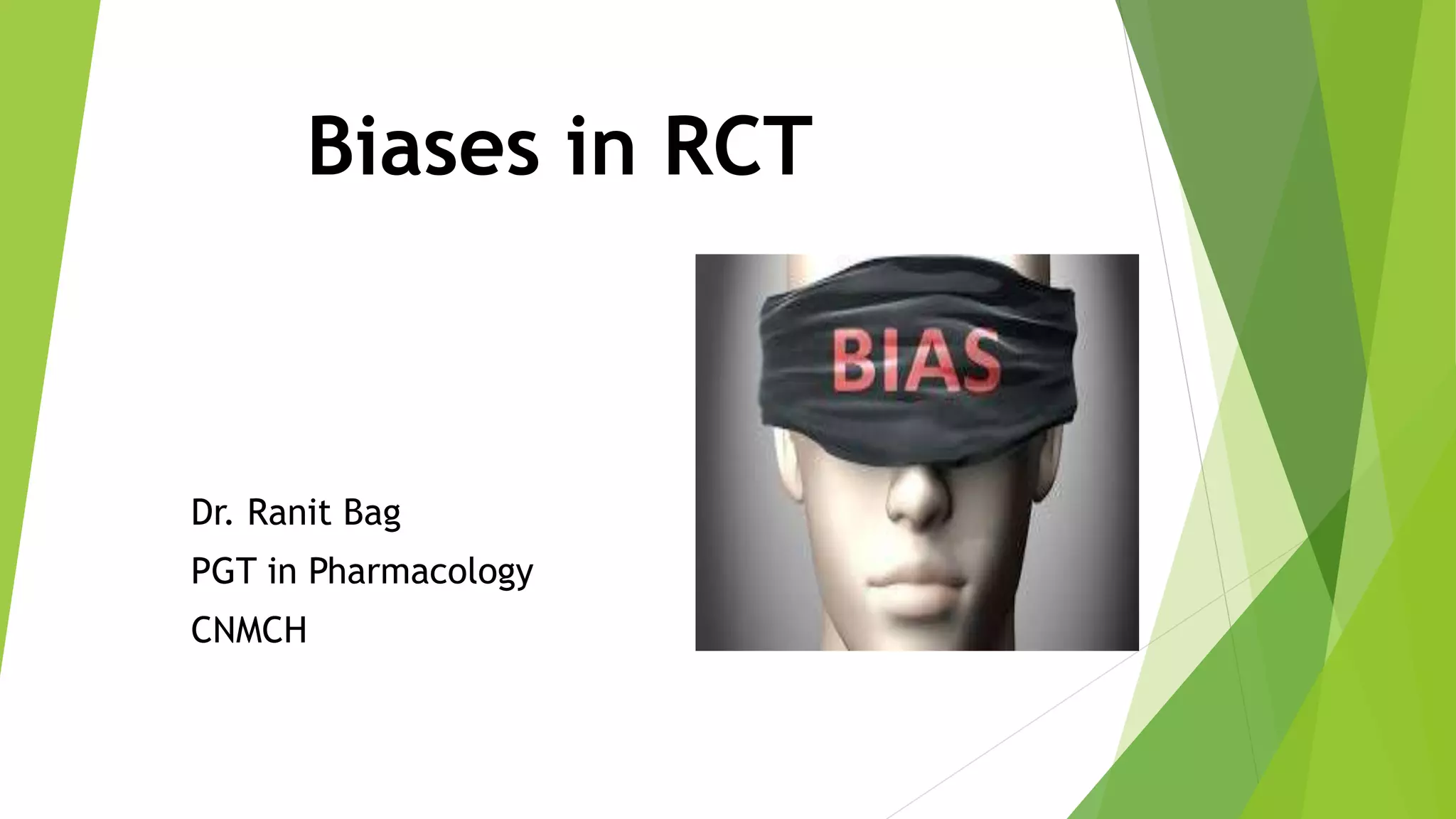
Biases in RCT
Dr. Ranit Bag
PGT in Pharmacology
CNMCH
Contents
Introduction
Reasons of bias
Randomized control trial
Types of bias in RCT
Ways to minimize bias
Summary
Introduction
Bias is defined as
Any factor or process ( intentional or
unintentional) tends to deviate the results or
Conclusions of a trial systematically away
from the truth
It can be postulated that the deviation from
the true outcome of the study.
Where biases can happen
 Study design
 Data collection
 Process of data analysis
 Publication of study
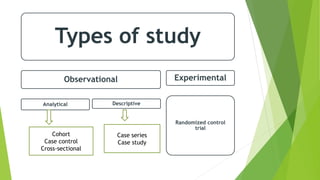
Types of study
Observational
Analytical Descriptive
Experimental
Randomized control
trial
Cohort
Case control
Cross-sectional
Case series
Case study
Reasons of biases
Improper and deficient knowledge of the
researcher
Lack of resource, commitment and proper
encouragement
Less adherence towards research guidelines
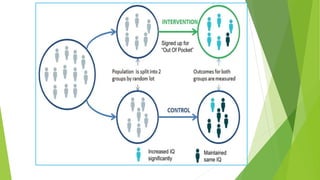
Randomized control trial
Compares two or more treatment or
intervention by estimating the outcome of the
study
Participants are randomized in different groups
Best way to study the safety and efficacy of
new treatment
Types of biases in RCT
1. Selection bias
2. Ascertainment bias
3. Hawthorne effect
4. Others
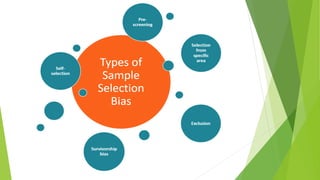
Selection bias
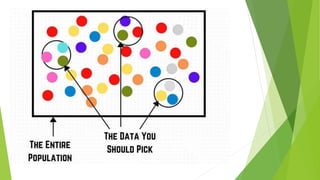
It occurs during identification of study
population
Study population not included in target
population
Randomized trial less prone to it
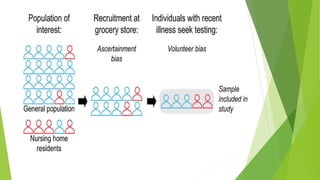
Ascertainment bias
One or more people involved in trial, know
about treatment
Drop out cases in case of placebo
Analyser may be biased in assessment of
outcome(observer bias)
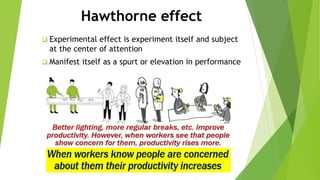
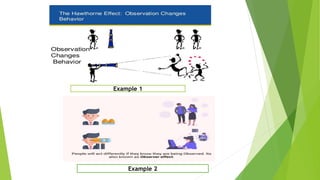
Hawthorne effect
 Experimental effect is experiment itself and subject
at the center of attention
 Manifest itself as a spurt or elevation in performance
Example 1
Example 2
Others
 Choice of question bias
 Population choice bias
 Intervention choice bias
 Control group bias
 Outcome choice bias
 Withdrawal and attrition bias
 Selective reporting bias
 Publication bias
 Miscellaneous types(technology, resource allocation,
trial design bias etc.)
Ways to minimize bias
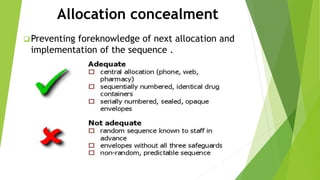
Allocation concealment
Preventing foreknowledge of next allocation and
implementation of the sequence .
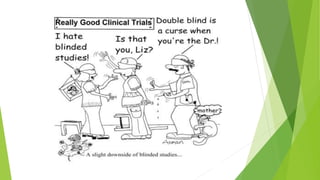
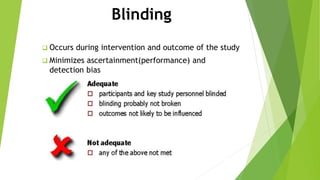
Blinding
 Occurs during intervention and outcome of the study
 Minimizes ascertainment(performance) and
detection bias
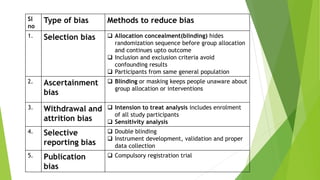
Sl
no
Type of bias Methods to reduce bias
1. Selection bias  Allocation concealment(blinding) hides
randomization sequence before group allocation
and continues upto outcome
 Inclusion and exclusion criteria avoid
confounding results
 Participants from same general population
2. Ascertainment
bias
 Blinding or masking keeps people unaware about
group allocation or interventions
3. Withdrawal and
attrition bias
 Intension to treat analysis includes enrolment
of all study participants
 Sensitivity analysis
4. Selective
reporting bias
 Double blinding
 Instrument development, validation and proper
data collection
5. Publication
bias
 Compulsory registration trial
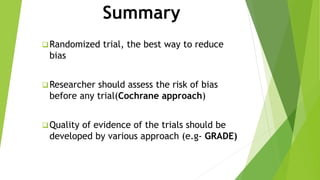
Summary
Randomized trial, the best way to reduce
bias
Researcher should assess the risk of bias
before any trial(Cochrane approach)
Quality of evidence of the trials should be
developed by various approach (e.g- GRADE)
References
www.cebm.net
Hernán MA, Robins JM. Causal Inference.
London: Chapman & Hall/ CRC; 2017
Heitjan DF. Ignorability and bias in clinical
trials. Stat Med. 1999;18:2421–2434
file:///D:/pharmacology/statistics/appf-
fm1.pdf

Biases in RCT.pptx

  • 1.
    Biases in RCT Dr.Ranit Bag PGT in Pharmacology CNMCH
  • 2.
    Contents Introduction Reasons of bias Randomizedcontrol trial Types of bias in RCT Ways to minimize bias Summary
  • 3.
    Introduction Bias is definedas Any factor or process ( intentional or unintentional) tends to deviate the results or Conclusions of a trial systematically away from the truth It can be postulated that the deviation from the true outcome of the study.
  • 4.
    Where biases canhappen  Study design  Data collection  Process of data analysis  Publication of study
  • 5.
    Types of study Observational AnalyticalDescriptive Experimental Randomized control trial Cohort Case control Cross-sectional Case series Case study
  • 6.
    Reasons of biases Improperand deficient knowledge of the researcher Lack of resource, commitment and proper encouragement Less adherence towards research guidelines
  • 7.
    Randomized control trial Comparestwo or more treatment or intervention by estimating the outcome of the study Participants are randomized in different groups Best way to study the safety and efficacy of new treatment
  • 9.
    Types of biasesin RCT 1. Selection bias 2. Ascertainment bias 3. Hawthorne effect 4. Others
  • 10.
    Selection bias It occursduring identification of study population Study population not included in target population Randomized trial less prone to it
  • 13.
    Ascertainment bias One ormore people involved in trial, know about treatment Drop out cases in case of placebo Analyser may be biased in assessment of outcome(observer bias)
  • 15.
    Hawthorne effect  Experimentaleffect is experiment itself and subject at the center of attention  Manifest itself as a spurt or elevation in performance
  • 16.
  • 17.
    Others  Choice ofquestion bias  Population choice bias  Intervention choice bias  Control group bias  Outcome choice bias  Withdrawal and attrition bias  Selective reporting bias  Publication bias  Miscellaneous types(technology, resource allocation, trial design bias etc.)
  • 18.
  • 20.
    Allocation concealment Preventing foreknowledgeof next allocation and implementation of the sequence .
  • 21.
    Blinding  Occurs duringintervention and outcome of the study  Minimizes ascertainment(performance) and detection bias
  • 22.
    Sl no Type of biasMethods to reduce bias 1. Selection bias  Allocation concealment(blinding) hides randomization sequence before group allocation and continues upto outcome  Inclusion and exclusion criteria avoid confounding results  Participants from same general population 2. Ascertainment bias  Blinding or masking keeps people unaware about group allocation or interventions 3. Withdrawal and attrition bias  Intension to treat analysis includes enrolment of all study participants  Sensitivity analysis 4. Selective reporting bias  Double blinding  Instrument development, validation and proper data collection 5. Publication bias  Compulsory registration trial
  • 23.
    Summary Randomized trial, thebest way to reduce bias Researcher should assess the risk of bias before any trial(Cochrane approach) Quality of evidence of the trials should be developed by various approach (e.g- GRADE)
  • 25.
    References www.cebm.net Hernán MA, RobinsJM. Causal Inference. London: Chapman & Hall/ CRC; 2017 Heitjan DF. Ignorability and bias in clinical trials. Stat Med. 1999;18:2421–2434 file:///D:/pharmacology/statistics/appf- fm1.pdf