BEYOND TEXT NEW PRACTICES PROJECT (2005) http://www.flexiblelearning.net.au/projects/beyond_text.html Michael Coghlan WA Training Forum May 2007
THE UNIQUE NATURE OF THE HUMAN VOICE
TARGET GROUPS English as Second or Other Language Learners (ESOL) Low level literacy Those with little recent formal learning experience Those with poor keyboard skills Those who prefer an auditory style of learning
TOOLS TRIALLED: Horizon Wimba Voice boards Voice email Voice chat Audioblogging (Podcasting explored in 2006 Media on the Move project)
Global Conclusions It works (with IT help!) Relatively easy to train people in the use of voice tools  – PC skills in the general population higher than you might think For types of learners targeted in this project it definitely results in greater participation
Global Conclusions Saves times for students, but NOT for teachers Level of IT skills in participants higher than expected Allows for individual monitoring/feedback/encouragement in ways not hitherto possible
Global Conclusions Good practice: support with written text  (but note cognitive overload theory) Allows teachers and students to know each other differently (changes the dynamic between teachers and learners)  Structured exercises alleviate the problem of ‘lack of visible audience’ (some students find it hard to talk to a void)
ISSUES: Public v Private Space Students feel strange posting in public spaces Many students  do not have private access  to computers Yet, learners report greater sense of confidence contributing this way Reduces anxiety of talking in front of an audience Tip: use a collaborative approach if students are posting in a public space
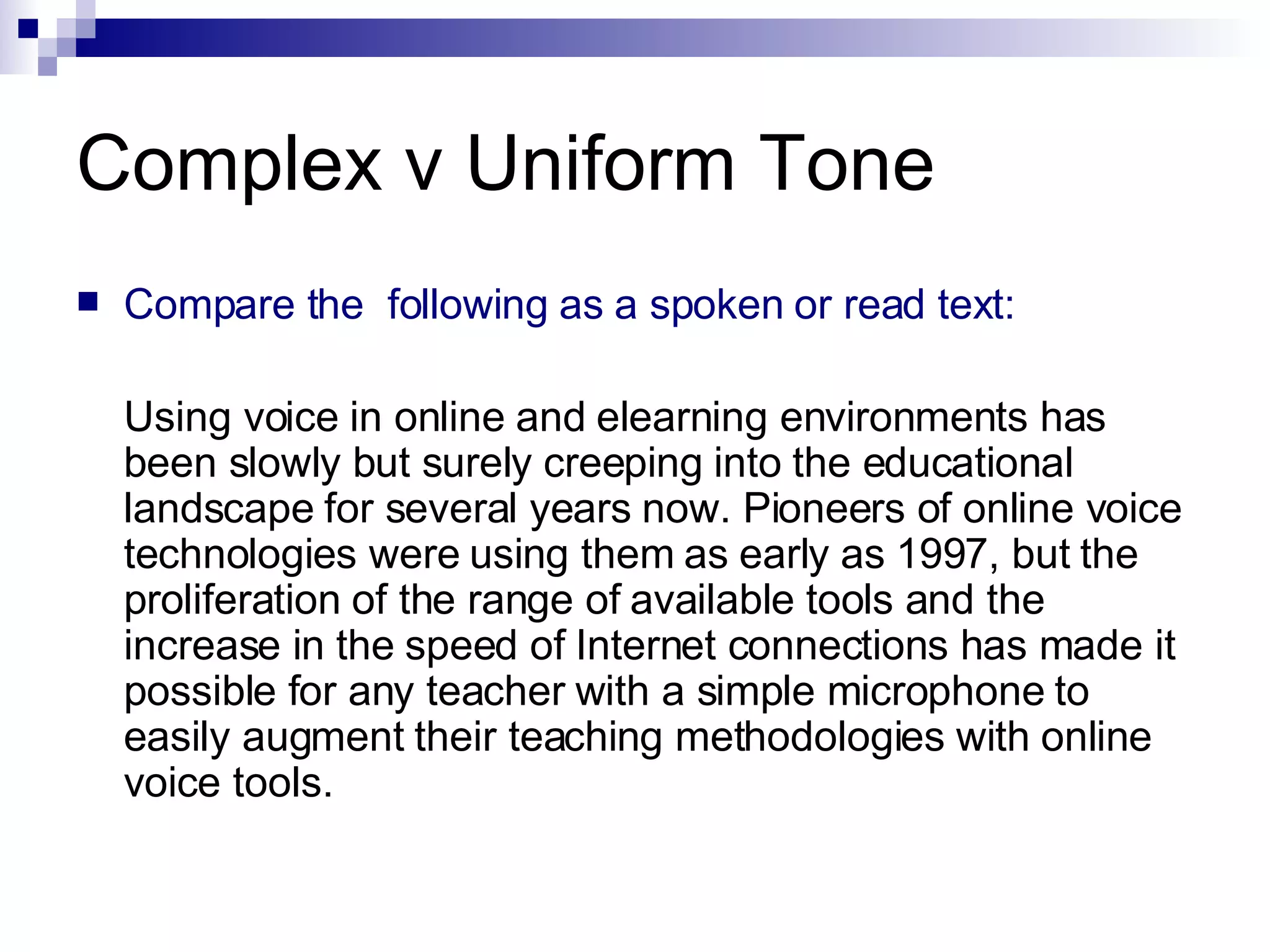
ISSUES: Voice allows for  complex tone  (compared to  uniform tone  of written text)
Complex v Uniform Tone Compare the  following as a spoken or read text: Using voice in online and elearning environments has been slowly but surely creeping into the educational landscape for several years now. Pioneers of online voice technologies were using them as early as 1997, but the proliferation of the range of available tools and the increase in the speed of Internet connections has made it possible for any teacher with a simple microphone to easily augment their teaching methodologies with online voice tools.
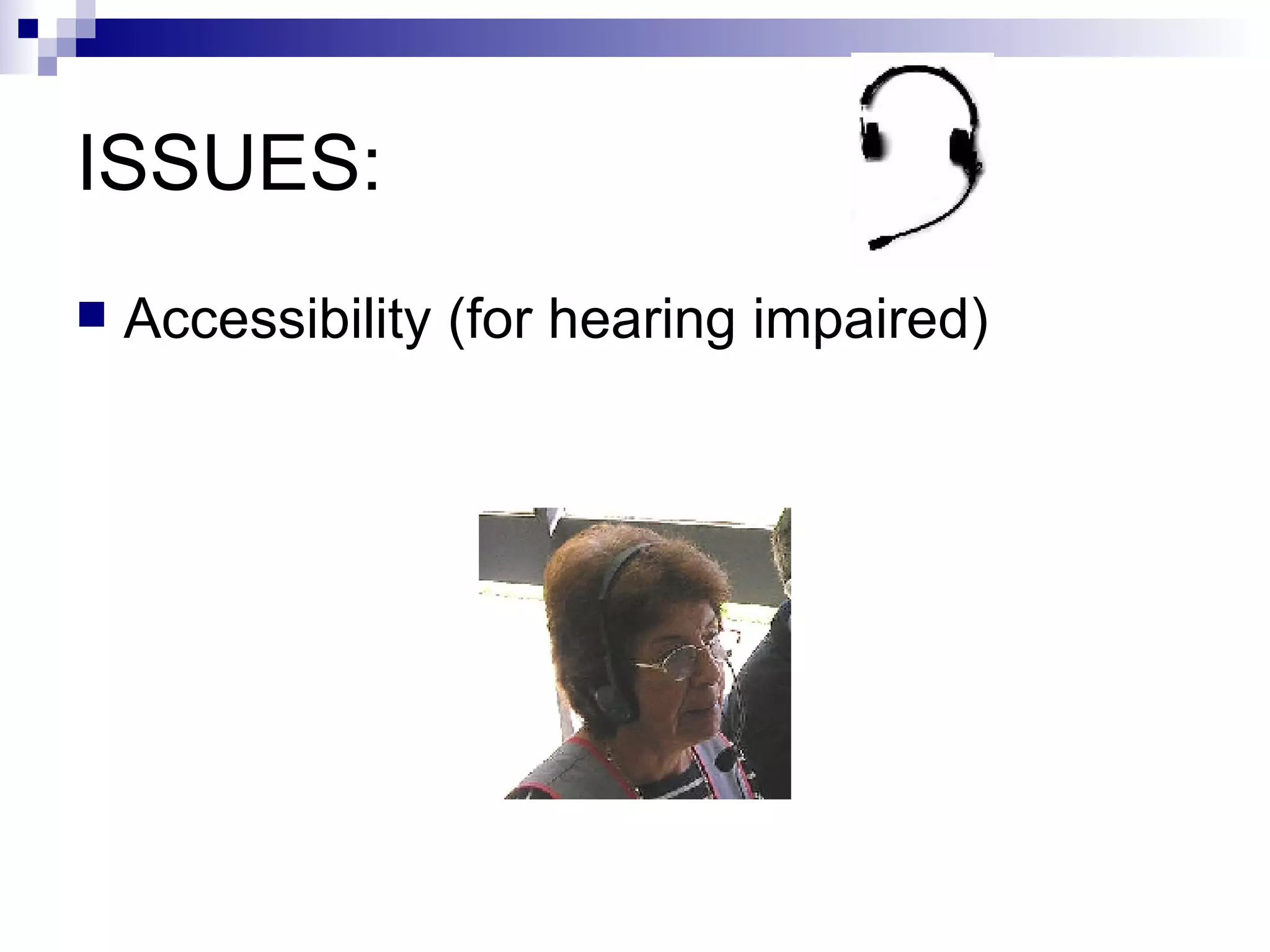
ISSUES: Accessibility (for hearing impaired)
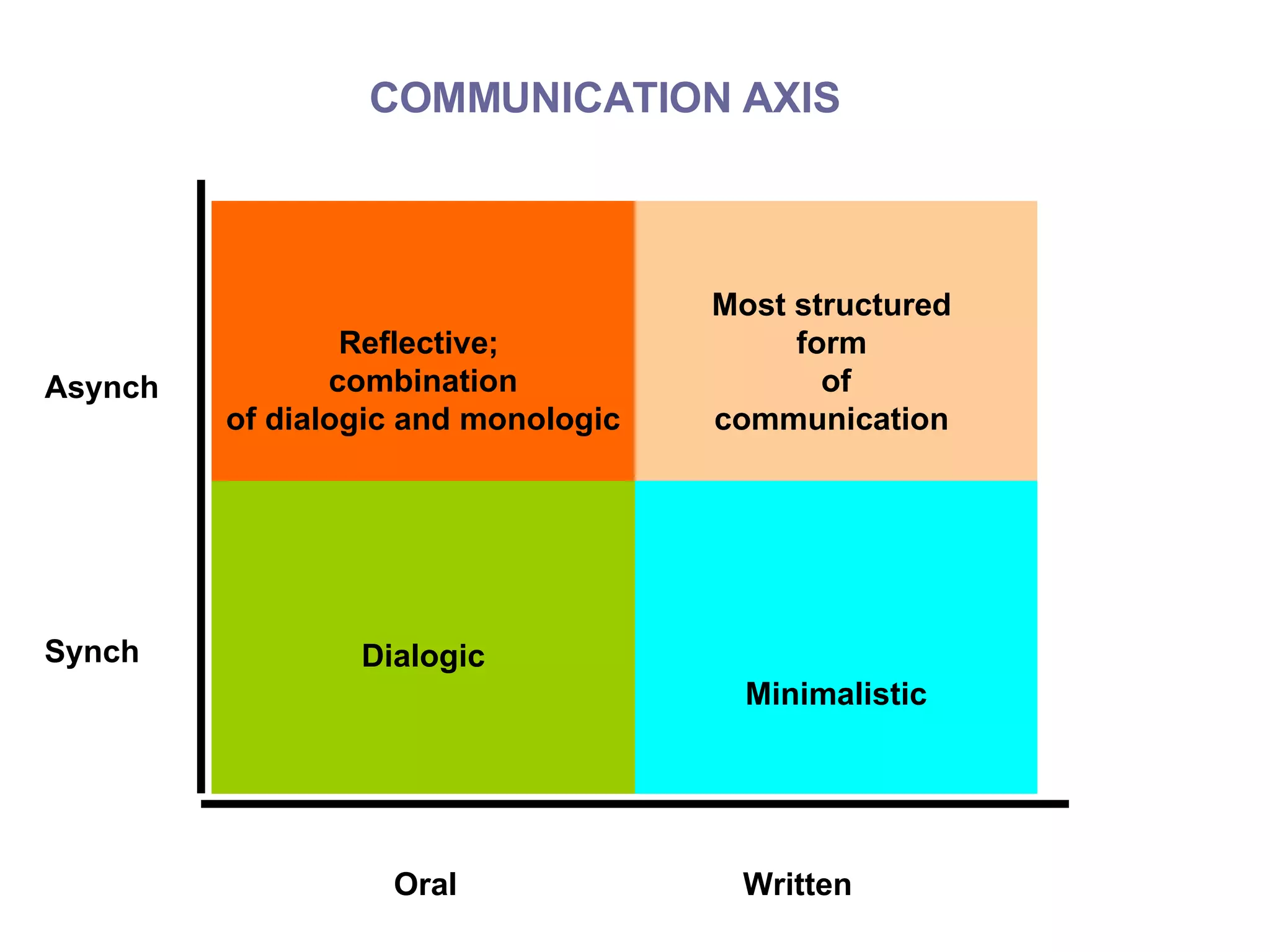
Asynch Synch Oral Written Dialogic Minimalistic Reflective;  combination of dialogic and monologic Most structured  form  of communication   COMMUNICATION   AXIS
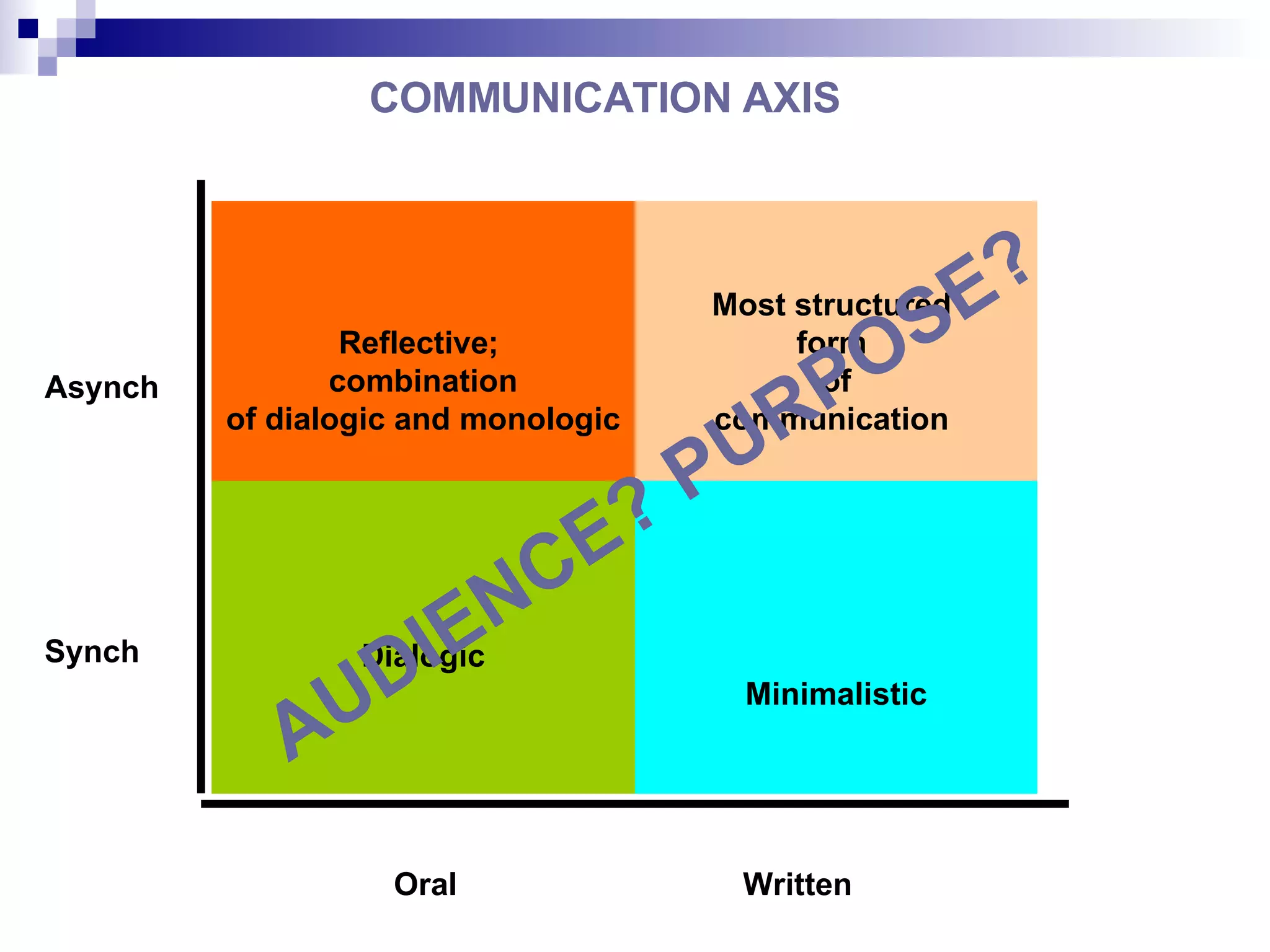
Asynch Synch Oral Written Dialogic Minimalistic Reflective;  combination of dialogic and monologic Most structured  form  of communication   COMMUNICATION   AXIS AUDIENCE? PURPOSE?
AUDIOBLOGGING Phone blogging (mobile or moblogging) See  http://npaudio.blogspot.com/   (now defunct) Recent examples in blog at  http://mikecogh.blogspot.com/ 2007: Hipcast ( http://www.hipcast.com/ ) now available @ US$5/month
ANY QUESTIONS? COMMENTS?

Beyond Text (2)

  • 1.
    BEYOND TEXT NEWPRACTICES PROJECT (2005) http://www.flexiblelearning.net.au/projects/beyond_text.html Michael Coghlan WA Training Forum May 2007
  • 2.
    THE UNIQUE NATUREOF THE HUMAN VOICE
  • 3.
    TARGET GROUPS Englishas Second or Other Language Learners (ESOL) Low level literacy Those with little recent formal learning experience Those with poor keyboard skills Those who prefer an auditory style of learning
  • 4.
    TOOLS TRIALLED: HorizonWimba Voice boards Voice email Voice chat Audioblogging (Podcasting explored in 2006 Media on the Move project)
  • 5.
    Global Conclusions Itworks (with IT help!) Relatively easy to train people in the use of voice tools – PC skills in the general population higher than you might think For types of learners targeted in this project it definitely results in greater participation
  • 6.
    Global Conclusions Savestimes for students, but NOT for teachers Level of IT skills in participants higher than expected Allows for individual monitoring/feedback/encouragement in ways not hitherto possible
  • 7.
    Global Conclusions Goodpractice: support with written text (but note cognitive overload theory) Allows teachers and students to know each other differently (changes the dynamic between teachers and learners) Structured exercises alleviate the problem of ‘lack of visible audience’ (some students find it hard to talk to a void)
  • 8.
    ISSUES: Public vPrivate Space Students feel strange posting in public spaces Many students do not have private access to computers Yet, learners report greater sense of confidence contributing this way Reduces anxiety of talking in front of an audience Tip: use a collaborative approach if students are posting in a public space
  • 9.
    ISSUES: Voice allowsfor complex tone (compared to uniform tone of written text)
  • 10.
    Complex v UniformTone Compare the following as a spoken or read text: Using voice in online and elearning environments has been slowly but surely creeping into the educational landscape for several years now. Pioneers of online voice technologies were using them as early as 1997, but the proliferation of the range of available tools and the increase in the speed of Internet connections has made it possible for any teacher with a simple microphone to easily augment their teaching methodologies with online voice tools.
  • 11.
    ISSUES: Accessibility (forhearing impaired)
  • 12.
    Asynch Synch OralWritten Dialogic Minimalistic Reflective; combination of dialogic and monologic Most structured form of communication COMMUNICATION AXIS
  • 13.
    Asynch Synch OralWritten Dialogic Minimalistic Reflective; combination of dialogic and monologic Most structured form of communication COMMUNICATION AXIS AUDIENCE? PURPOSE?
  • 14.
    AUDIOBLOGGING Phone blogging(mobile or moblogging) See http://npaudio.blogspot.com/ (now defunct) Recent examples in blog at http://mikecogh.blogspot.com/ 2007: Hipcast ( http://www.hipcast.com/ ) now available @ US$5/month
  • 15.