RECENT ADVANCES IN
PHARMACOTHERAPY OF
DERMATOLOGICAL DISEASES
Dr Mohit Kher
Pharmacology,
LHMC
Overview
• Common dermatological diseases
• Treatment of common skin disease
• Phototherapy
• Retinoids
• Antifungal therapy
• Treatment of parasitic infestations
• Miscellaneous agents
• Conclusion
Common dermatological disease
• Vitiligo
• Acne vulgaris
• Psoriasis
• Androgenetic alopecia and areata
• Dermatitis
• Scabies
• Fungal infections
VITILIGO
Repigmentation
• Topical steroids
• Calcineurin inhibitors
• Vitamin D analogue
• Phototherapy
• Prostaglandins
• Growth factors
Topical Ruxolitinib – Janus kinase inhibitor
Latanoprost/Bimatoprost 0.03%
ophthalmic solution use in vitiligo
• Easy self applied therapy
• Efficacy in periocular vitiligo with no observed side effects
• Combination with phototherapy is not mandatory but will give a better
response.
• UV light → Increase tissue levels of PGE2 → Increased cAMP →
increase melanosomal pH → Increase melanogenesis
Afamelanotide
• It is a potent and longer-lasting synthetic analogue of
naturally occurring alpha-MSH.
• Available as implant – Monthly therapy
• In combination with NB-UVB
PHOTOCHEMOTHERAPY
• PUVA
• Photopheresis
• Photodynamic therapy
PUVA: Psoralens and UVA
• Photosensitizing agent: Methoxsalen (8-methoxypsoralen), oral & topical
• FDA-approved indications: Psoriasis & Vitiligo
• MOA: Psoralens intercalate into the DNA strand, and two distinct photoreactions (type 1 &2) take
place on UVA exposure which stimulate melanocytes and induce antiproliferative,
immunosuppressive and anti-inflammatory effects.
• Approximately 70%–100% of psoriatic patients have clearing skin disease within about 24
treatments with PUVA.
• Vitiligo typically requires between 150 and 300 treatments.
• S/E: Erythema, edema, blistering, pruritus & ocular toxicity.
Photodynamic therapy
• Combines the use of photosensitizing drugs and visible light.
• Two drugs are approved for topical PDT: Aminolevulinic acid and methyl
aminolevulinate.
• Both are prodrugs that are converted into protoporphyrin IX within living
cells which produces ROS in the presence of light and O2.
• FDA-approved indications: Actinic keratosis
PHOTOPHERESIS
• Extracorporeal photopheresis (ECP) is a process in which extracorporeal peripheral
blood mononuclear cells are separated using a leukapheresis- based method then
exposed to UVA radiation in the presence of methoxsalen.
• Methoxsalen is injected directly into the extracorporeal plasma before radiation and
reinfusion.
• The treated lymphocytes are returned to the patient, undergoing apoptosis over 48–72
h.
• FDA-approved indications: CTCL
ANDROGENETIC ALOPECIA
(AGA)
Best topical medications for AGA
• Any topical medication which has following mechanism of
action:
Suppress dihydrotestosterone (DHT), prevent perifollicular fibrosis,
provide antioxidant effects, prolong anagen (growth) phase of hair
follicles, increase expression of VEGF and blocks chronic
inflammation.
• Minoxidil to certain extent fulfils the above criteria.
Do we follow the same treatment protocol
in both men and women?
• Separate line of treatment for the two genders
• Minoxidil and finasteride – Only approved medications in male
patient.
• Minoxidil alone in females
• Rarely spironolactone – not FDA approved
• In males, patients aged 18-45 years respond better with 5% and females
respond better to 2% minoxidil.
• Alcohol free formulations have the advantage when compared to alcohol
based formulations.
• Nanoxidil, a powerful new alternative to minoxidil, a compound with high
efficacy, low molecular weight and with no side effects.
Will combination of minoxidil with other
agents have an edge over minoxidil alone?
• Examples:
Minoxidil + Retinoic acid
Minoxidil + Amenexil
Minoxidil + Retinoic acid + Azelaic acid
Minoxidil + Tretinoin
• Studies have shown that the combination of topical minoxidil and oral
finasteride 1 mg is superior to individual monotherapies.
• Combination of topical minoxidil and finasteride can be considered as a
beneficial treatment strategy to maintain hair density after achieving
initial improvement with oral finasteride, thereby obviating the use of
oral finasteride indefinitely.
Finasteride in females
• In a recent study, both premenopausal and postmenopausal women
with hair loss who had been treated for more than 3 months with 2.5
mg per day of finasteride showed improvement. In fact, almost 30%
showed slight improvement and 65% showed significant
improvement.
• It has teratogenic effects like hypospadias in male foetus.
DUTASTERIDE
• Combined type 1 and 2, 5 alpha-reductase inhibitor.
• Dose dependent reduction in serum and scalp DHT levels to greater
degree than finasteride.
• Currently marketed at a dose of 0.5 mg for BPH and FDA approved for
treatment of MPB.
• Sexual side effects are more
Role of peptides in AGA
• Peptides, when applied, causes changes in cell behavior, stimulate follicle
growth and promote natural hair production.
• Blocking DHT production, improve microcirculation, promote collagen
and repair skin.
• Examples: Copper peptides, Thymic peptides and biomimetic peptides.
• No controlled clinical trials have proven their efficacy. Only anecdotal
reports are claiming success rates.
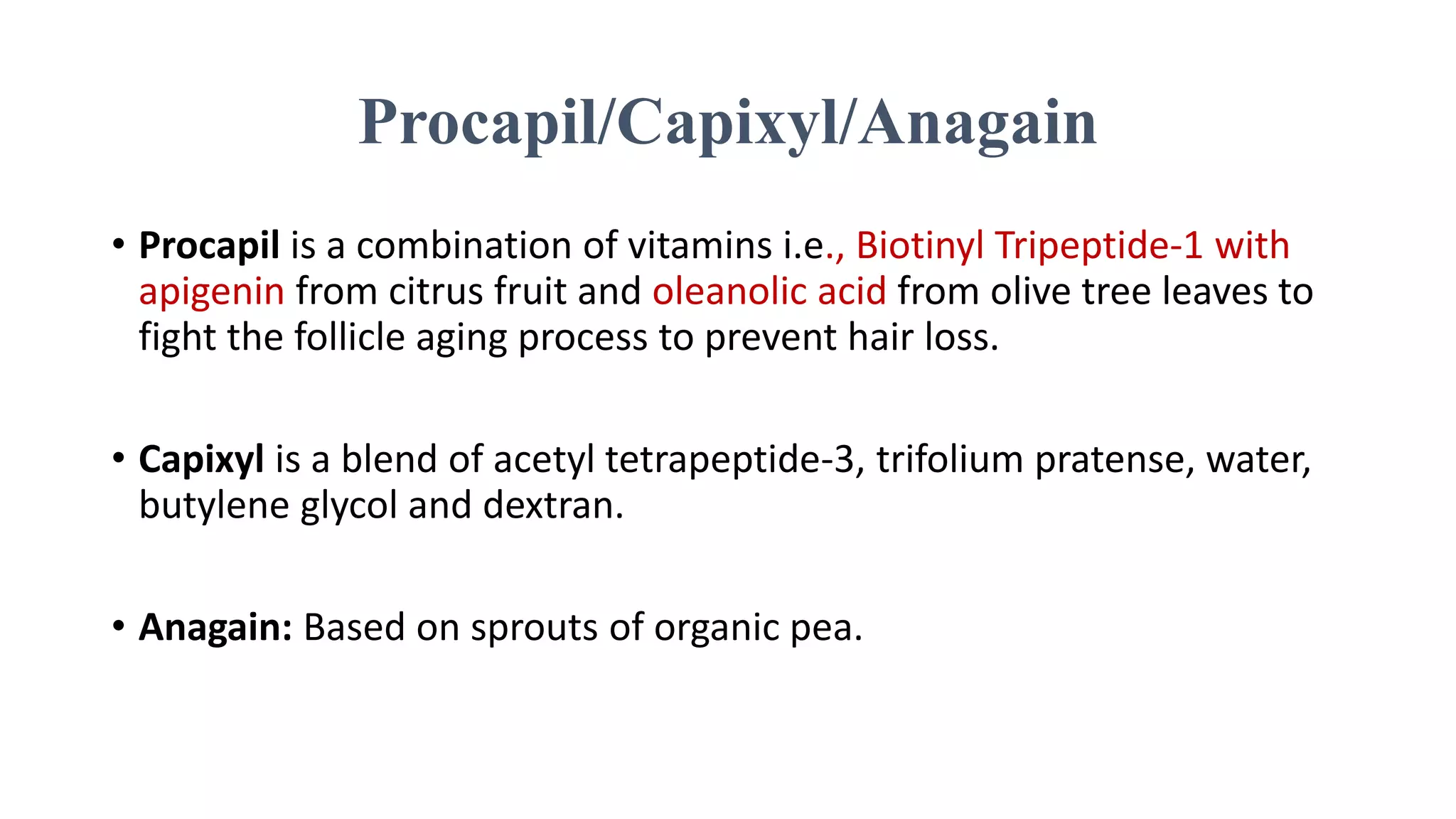
Procapil/Capixyl/Anagain
• Procapil is a combination of vitamins i.e., Biotinyl Tripeptide-1 with
apigenin from citrus fruit and oleanolic acid from olive tree leaves to
fight the follicle aging process to prevent hair loss.
• Capixyl is a blend of acetyl tetrapeptide-3, trifolium pratense, water,
butylene glycol and dextran.
• Anagain: Based on sprouts of organic pea.
Growth factors in AGA
• A phase I, double-blind clinical trial designed to evaluate the safety of a bioengineered,
non-recombinant, human cell–derived formulation containing follistatin, keratinocyte
growth factor (KGF), and vascular endothelial growth factor (VEGF) was performed to
assess the efficacy in stimulating hair growth.
• After one year, a statistically significant increase in total hair count continued to be
seen.
• Platelet rich plasma (PRP) isolated from whole blood can be used for its growth factors
and stimulatory mediators.
Miscellaneous topical therapies for FPHL
• Studies for FPHL have also revealed that more than 50% of patients
respond to 0.1% topical melatonin.
• 17-alpha estradiol and estradiol valerate is a new strategy that has been
tried in FPHL with some favorable consequences.
Medical treatment to be prescribed after
transplantation
Minoxidil 5% and finasteride for 2-3 months after transplantation along
with nutritional supplements are to be prescribed for the patients.
Minoxidil has to be continued for long term with patient after
transplantation.
Spironolactone:
• Aldosterone antagonist and K+-sparing diuretic, it also has antiandrogen
activity.
• It is used off label for female pattern alopecia at dosages of 50–200 mg/d.
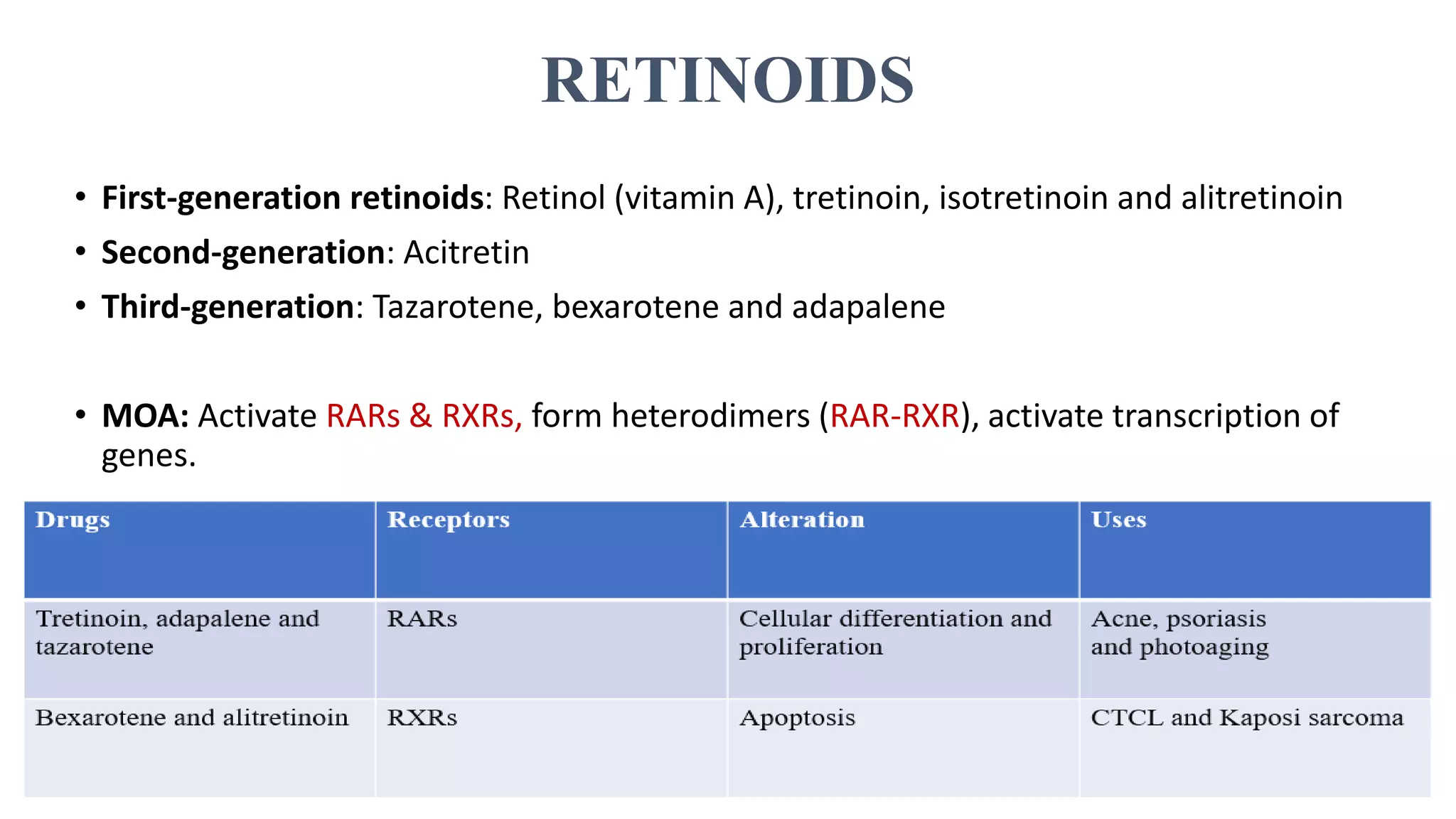
RETINOIDS
• First-generation retinoids: Retinol (vitamin A), tretinoin, isotretinoin and alitretinoin
• Second-generation: Acitretin
• Third-generation: Tazarotene, bexarotene and adapalene
• MOA: Activate RARs & RXRs, form heterodimers (RAR-RXR), activate transcription of
genes.
ACNE VULGARIS
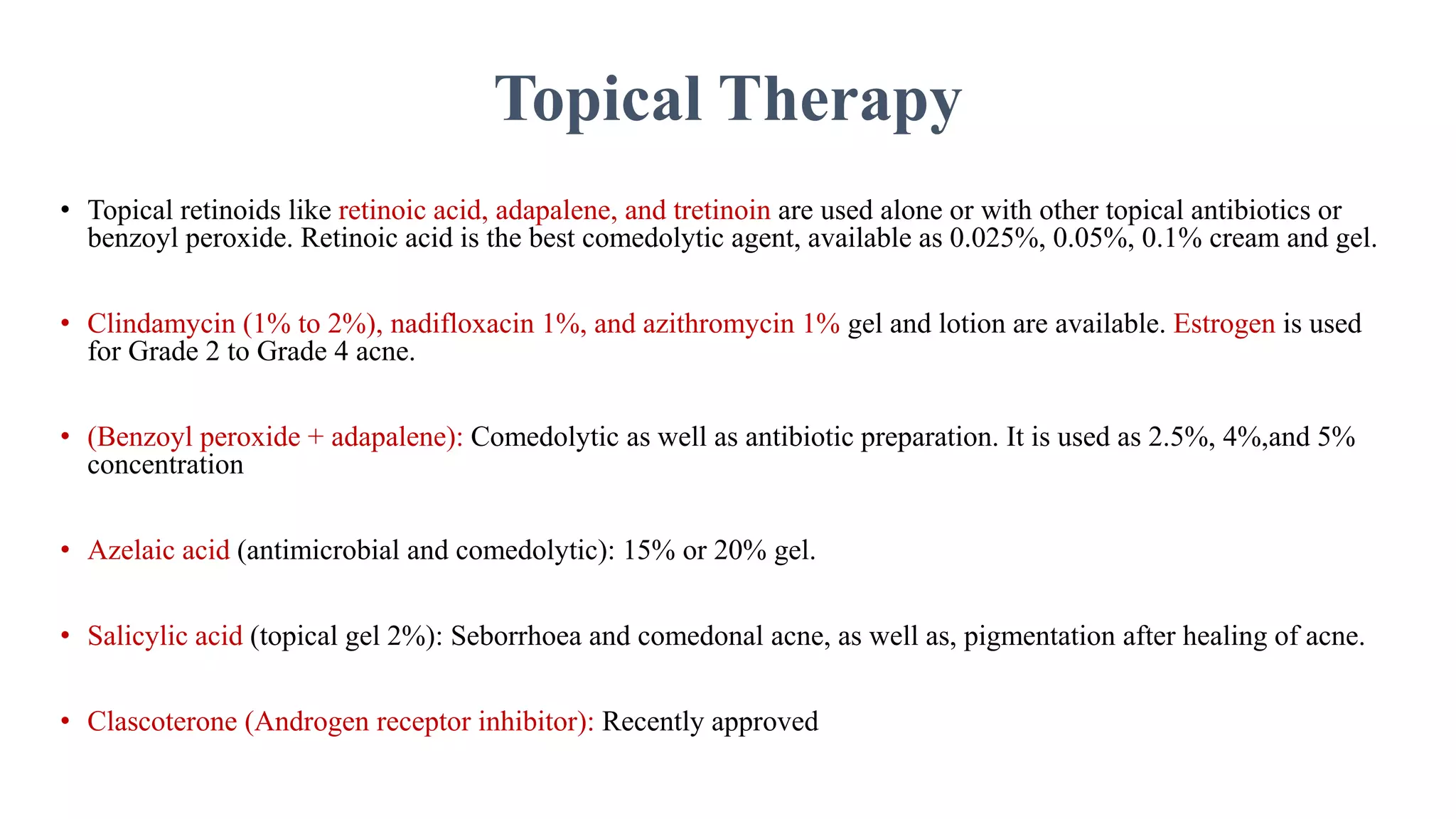
Topical Therapy
• Topical retinoids like retinoic acid, adapalene, and tretinoin are used alone or with other topical antibiotics or
benzoyl peroxide. Retinoic acid is the best comedolytic agent, available as 0.025%, 0.05%, 0.1% cream and gel.
• Clindamycin (1% to 2%), nadifloxacin 1%, and azithromycin 1% gel and lotion are available. Estrogen is used
for Grade 2 to Grade 4 acne.
• (Benzoyl peroxide + adapalene): Comedolytic as well as antibiotic preparation. It is used as 2.5%, 4%,and 5%
concentration
• Azelaic acid (antimicrobial and comedolytic): 15% or 20% gel.
• Salicylic acid (topical gel 2%): Seborrhoea and comedonal acne, as well as, pigmentation after healing of acne.
• Clascoterone (Androgen receptor inhibitor): Recently approved
Systemic Therapy
• Doxycycline, 100 mg, BD, antibiotic and anti-inflammatory drug as it affects free fatty acids secretion
and thus controls inflammation.
• Minocycline, 50 mg and 100 mg capsules, OD
• Isotretinoin, 0.5 mg/kg to 1 mg/kg body weight, daily or weekly pulse regimen. It controls sebum
production, regulates pilosebaceous epidermal hyperproliferation and reduces inflammation.
• Low dose estrogen, 20 mcg along with cyproterone acetate: Severe recurrent acne.
• Spironolactone (25 mg per day) can also be used in males. It decreases the production of androgens and
blocks the actions of testosterone.
Antifungal therapy
CONDITION TOPICAL THERAPY ORAL THERAPY
Tinea corporis, localized Azoles, allylamines, Benzylamines -
Tinea corporis, widespread - Griseofulvin, terbinafine, itraconazole,
fluconazole
Tinea capitis - Griseofulvin, terbinafine, itraconazole,
fluconazole
Tinea pedis Azoles, allylamines, Benzylamines Griseofulvin, terbinafine, itraconazole,
fluconazole
Onychomycosis - Terbinafine, itraconazole, fluconazole
Candidiasis, localized Azoles, nystatin -
Candidiasis, widespread and
Mucocutaneous
- Itraconazole, fluconazole
Tinea versicolor, localized Azoles, Allylamines -
Tinea versicolor, widespread - Itraconazole, fluconazole
PSORIASIS
Systemic therapy
Methotrexate, 2.5 mg Tab, once weekly
Acitretin
• Highly teratogenic
• Poorly tolerated
Cyclosporine
• Short term option only
• Younger patients
• Useful in pregnancy
PDE4 Inhibitors
• Apremilast is an oral PDE4 inhibitor that increases intracellular cyclic AMP levels, thereby decreasing
expression of inflammatory cytokines.
• Approved
Jak Inhibitors
• Janus kinases are tyrosine kinases involved in cytokine receptor signaling and Jak inhibition leads to
decreased downstream activity of STAT.
• Tofacitinib, approved for psoriatic arthritis but not for plaque psoriasis
Tapinarof: Approved
• A topical aryl hydrocarbon receptor-modulating agent, activate AhR lead to downregulation of cytokines
and interleukins.
Spesolimab (generalized pustular psoriasis): Phase 2
Cytotoxic, Immunosuppressant, and
Immunomodulatory Agents
Drugs Indications MOA
Azathioprine,
Mycophenolate mofetil and
mycophenolic acid
• Off label for inflammatory and
autoimmune blistering disorders
• MOA: inhibition of de novo purine
synthesis to decrease T-cell and B-cell
activation and proliferation
Cyclosporine • Psoriasis
• Off label for multiple inflammatory
dermatoses
• MOA: calcineurin inhibition
• Potential side effects: hypertension,
renal dysfunction, hypertrichosis.
Imiquimod • Genital warts
• Actinic keratoses
• Superficial basal cell carcinoma
• MOA: Activates TLR-7, inducing
cytokines and upregulating immune
response
Podophyllum resin and
podofilox
• Genital warts • MOA: Microtubule inhibition to
cause mitotic arrest in metaphase
ALOPECIA AREATA
• Triamcinolone acetonide 5-10 mg/ml given every 2 – 6 weeks, stimulates localized re-growth in 60 –
67% of cases.
• Potent topical glucocorticoids find frequent utilization in the treatment of alopecia areata.
• Second-line therapies include minoxidil, anthralin and PUVA.
• Other systemic therapies include methotrexate, cyclosporine, azathioprine, and etanercept, all of which
have shown variable clinical responses.
• Baricitinib (JAK inhibitor): Recently approved
• Current investigational treatments include platelet-rich plasma, recombinant IL-2,
hydroxychloroquine, JAK inhibitors (tofacitinib), simvastatin with ezetimibe.
SUNSCREEN
• The regular use of sunscreen is efficacious in reducing photo carcinogenesis and
photoaging.
• SPF is primarily a measure of UVB protection and does not provide information
regarding UVA coverage.
• In 2011, the FDA published new guidelines for labeling and effectiveness testing of
sunscreens.
• Sunscreens providing broad-spectrum coverage with an SPF 15 or greater may include
a claim on their labeling that use “decreases risk of skin cancer and early aging caused
by the sunrays.”
• Major active ingredients of available sunscreens include:
• Organic agents (“chemical blockers”) that absorb UV radiation in the UVB or UVA
ranges, then convert it to heat energy.
• FDA approved UVA filters : Benzophenones; dibenzoylmethanes; anthralates; and
camphors.
• Inorganic agents (“physical blockers”) that contain particulate materials that act by
scattering or reflecting visible, UV and infrared radiation to reduce its transmission to
the skin.
• FDA approved UVB filters: Aminobenzoates; cinnamates; salicylates; octocrylene; and
ensulizole.
Agents for Infestations
Drugs Indications MOA
Permethrin • Scabies
• Lice
• MOA: interferes with Na+ transport, causing
neurotoxicity and paralysis
• Approved for infants ≥ 2 months
• May cross-react with sunflower family plants to
cause allergic contact dermatitis
Ivermectin • Head lice
• Scabies (oral)
• MOA: binds glutamate-gated chloride
channels, causing hyperpolarization of nerve or
muscle cells of parasite
Benzyl alcohol • Head lice • MOA: inhibits closure of respiratory spiracles,
subsequent obstruction by mineral oil vehicle
causes asphyxiation of lice
Spinosad • Head lice • MOA: causes CNS excitation and involuntary
muscle contractions leading to parasite
paralysis
Drugs Indications MOA
Vismodegib and sonidegib Basal Cell Carcinoma Block activation of the hedgehog
pathway
Talimogene laherparepvec (T-Vec) Melanoma Replicate within tumors and produce
GM-CSF to enhance systemic
antitumor immune responses.
Vorinostat and Romidepsin Cutaneous T-Cell
Lymphoma
Inhibition of HDAC
Denileukin difitox Cutaneous T-Cell
Lymphoma
Fusion protein composed of diphtheria
toxin fragments A and B linked to the
receptor-binding portion of IL-2.
Alemtuzumab Cutaneous T-Cell
Lymphoma
Binding to CD52 causes neutrophil-
mediated, antibody dependent cellular
toxicity.
CONCLUSION
REFERENCES
• Narla S, Lyons AB, Hamzavi IH. The most recent advances in understanding and
managing hidradenitis suppurativa. F1000Res. 2020;9:F1000 Faculty Rev-1049.
Published 2020 Aug 26. doi:10.12688/f1000research.26083.1
• Aslam A, Griffiths CE. Drug therapies in dermatology. Clin Med (Lond). 2014;14(1):47-
53. doi:10.7861/clinmedicine.14-1-47
• Patrizi A, Neri I, Ricci G, Cipriani F, Ravaioli GM. Advances in pharmacotherapeutic
management of common skin diseases in neonates and infants. Expert Opin
Pharmacother. 2017 May;18(7):717-725. doi: 10.1080/14656566.2017.1316371. Epub
2017 Apr 21. PMID: 28429969.
• Seth D, Cheldize K, Brown D, Freeman EF. Global Burden of Skin Disease: Inequities
and Innovations. Curr Dermatol Rep. 2017;6(3):204-210. doi:10.1007/s13671-017-
0192-7
Hyperpigmentation (Hormonally or light
induced)
• Hydroquinone
• Azelaic acid
• Mequinol (4-hydroxyanisole)
• Monobenzone (monobenzyl ether of hydroquinone)
• Glycolic acid
Topical Agents for Hyperkeratotic Disorders
DRUGS CLINICAL PHARMACOLOGY
Alpha-hydroxy acids
Glycolic acid
Lactic acid
• MOA: reduced keratinocyte adhesion by promoting degradation of
corneodesmosomes
• Potential skin irritation
Salicylic acid • MOA: reduced keratinocyte adhesion by affecting desmosomal adhesion
proteins
• Potential skin irritation
• Potential salicylate toxicity with heavy use
Urea • MOA: increased hydration of stratum corneum, enhancing desquamation
• Potential skin irritation
Intravenous Immunoglobulin
• MOA: downregulation of inflammatory cytokines, inhibition of
autoreactive T lymphocytes, inhibition of immune cell
trafficking.
• Used off label as an adjuvant or rescue therapy for autoimmune
bullous diseases, toxic epidermal necrolysis, connective tissue
diseases, vasculitis, urticaria.
DRUGS CLINICAL PHARMACOLOGY
Sulfur • MOA: possibly through interaction with cysteine, causing reduction to hydrogen
sulfide, which may break down keratin
• Pungent odor
Propylene glycol • MOA: increased hydration of stratum corneum, enhancing desquamation
Retinoids • MOA: stimulation of keratinocyte turnover
• Potential skin irritation
AGENTS USED FOR THE TREATMENT OF
PRURITUS
Type of pruritis Physiology Drugs
Pruritoceptive pruritus Itch originating in the skin due to
inflammation or other cutaneous
disease
• Antihistamines—Inhibit histamine-
induced pruritus
• Topical steroids—Direct antipruritic
and anti-inflammatory effects
• Phototherapy—Reduced mast cell
reactivity and anti-inflammatory
Effects
Neuropathic pruritus Itch due to disease of afferent nerves • Carbamazepine—Blockade of
synaptic transmission and use
dependent Na+- channels
• Gabapentin, pregabalin - decrease
transmission of nociceptive sensations
by binding to the α-2-δ
subunit of voltage-dependent Ca2+
channels
Type of pruritis Physiology Drugs
Neurogenic pruritus Itch that arises from the nervous
system without evidence of neural
pathology
• Opioid receptor antagonists
(naloxone, naltrexone)—Decrease
opioidergic tone
• Tricyclic antidepressants—
Decrease pruritus signaling through
alteration in neurotransmitter
concentrations
• SSRIs—Decrease pruritus signaling
Psychogenic pruritus Itch due to psychological illness • Anxiolytics (benzodiazepines)—
Relieve stress-reactive pruritus
• Antipsychotic agents
(chlorpromazine, thioridazine,
thiothixene)—Relieve pruritus with
impulsive qualities
• Tricyclic antidepressants—Relieve
depression and insomnia related
to pruritus
DRUGs RECEPTOR
SPECIFICITY
PREGNANCY
CATEGORY
INDICATIONS
Tretinoin RAR-α, RAR-β, RAR-γ C Acne and photoaging
Tazarotene RAR-α, RAR-β, RAR-γ X Psoriasis, photoaging,
facial wrinkles and acne
vulgaris.
Adapalene RAR-β, RAR-γ C Acne
Alitretinoin RAR-α, RAR-β, RAR-γ D Kaposi sarcoma
Bexarotene RXR-α, RXR-β, RXR-γ X Early-stage (IA and IB)
CTCL
Topical Retinoids
SYSTEMIC STEROIDS
DRUGs RECEPTOR SPECIFICITY INDICATIONS
Isotretinoin No clear receptor affinity Recalcitrant and nodular acne
Vulgaris
Etretinate RAR-α, RAR-β, RAR-γ Psoriasis
Acitretin RAR-α, RAR-β, RAR-γ Psoriasis
Bexarotene RXR-α, RXR-β, RXR-γ CTCL
Miscellaneous Agents
AGENTS Therapeutic uses
Bentoquatam Approved for OTC use as a topical barrier to prevent allergic contact
dermatitis.
Coal tar Psoriasis, seborrheic dermatitis, and atopic dermatitis or other forms of
eczematous dermatitis.
Anthralin (dithranol) Psoriasis and alopecia areata
Brimonidine Persistent erythema of rosacea
Propranolol and timolol Infantile hemangiomas
Drugs Indications MOA
Sinecatechins • Genital warts • MOA: uncertain
• Potential local skin reactions,
including erythema, pruritus.
mTOR inhibitors (Sirolimus) • Off-label use in tuberous sclerosis,
complex vascular malformations
• Topical use may decrease
potential for side effects seen with
systemic use
Ingenol mebutate • Actinic keratoses • MOA: mitochondrial swelling and
apoptosis of dysplastic
keratinocytes
Tirbanibulin • Actinic keratoses MOA: Microtubule inhibitor

Recent advances in the treatment of dermatological disease

  • 1.
    RECENT ADVANCES IN PHARMACOTHERAPYOF DERMATOLOGICAL DISEASES Dr Mohit Kher Pharmacology, LHMC
  • 2.
    Overview • Common dermatologicaldiseases • Treatment of common skin disease • Phototherapy • Retinoids • Antifungal therapy • Treatment of parasitic infestations • Miscellaneous agents • Conclusion
  • 3.
    Common dermatological disease •Vitiligo • Acne vulgaris • Psoriasis • Androgenetic alopecia and areata • Dermatitis • Scabies • Fungal infections
  • 4.
  • 5.
    Repigmentation • Topical steroids •Calcineurin inhibitors • Vitamin D analogue • Phototherapy • Prostaglandins • Growth factors
  • 9.
    Topical Ruxolitinib –Janus kinase inhibitor
  • 11.
    Latanoprost/Bimatoprost 0.03% ophthalmic solutionuse in vitiligo • Easy self applied therapy • Efficacy in periocular vitiligo with no observed side effects • Combination with phototherapy is not mandatory but will give a better response. • UV light → Increase tissue levels of PGE2 → Increased cAMP → increase melanosomal pH → Increase melanogenesis
  • 13.
    Afamelanotide • It isa potent and longer-lasting synthetic analogue of naturally occurring alpha-MSH. • Available as implant – Monthly therapy • In combination with NB-UVB
  • 15.
  • 16.
    PUVA: Psoralens andUVA • Photosensitizing agent: Methoxsalen (8-methoxypsoralen), oral & topical • FDA-approved indications: Psoriasis & Vitiligo • MOA: Psoralens intercalate into the DNA strand, and two distinct photoreactions (type 1 &2) take place on UVA exposure which stimulate melanocytes and induce antiproliferative, immunosuppressive and anti-inflammatory effects. • Approximately 70%–100% of psoriatic patients have clearing skin disease within about 24 treatments with PUVA. • Vitiligo typically requires between 150 and 300 treatments. • S/E: Erythema, edema, blistering, pruritus & ocular toxicity.
  • 17.
    Photodynamic therapy • Combinesthe use of photosensitizing drugs and visible light. • Two drugs are approved for topical PDT: Aminolevulinic acid and methyl aminolevulinate. • Both are prodrugs that are converted into protoporphyrin IX within living cells which produces ROS in the presence of light and O2. • FDA-approved indications: Actinic keratosis
  • 18.
    PHOTOPHERESIS • Extracorporeal photopheresis(ECP) is a process in which extracorporeal peripheral blood mononuclear cells are separated using a leukapheresis- based method then exposed to UVA radiation in the presence of methoxsalen. • Methoxsalen is injected directly into the extracorporeal plasma before radiation and reinfusion. • The treated lymphocytes are returned to the patient, undergoing apoptosis over 48–72 h. • FDA-approved indications: CTCL
  • 19.
  • 20.
    Best topical medicationsfor AGA • Any topical medication which has following mechanism of action: Suppress dihydrotestosterone (DHT), prevent perifollicular fibrosis, provide antioxidant effects, prolong anagen (growth) phase of hair follicles, increase expression of VEGF and blocks chronic inflammation. • Minoxidil to certain extent fulfils the above criteria.
  • 21.
    Do we followthe same treatment protocol in both men and women? • Separate line of treatment for the two genders • Minoxidil and finasteride – Only approved medications in male patient. • Minoxidil alone in females • Rarely spironolactone – not FDA approved
  • 22.
    • In males,patients aged 18-45 years respond better with 5% and females respond better to 2% minoxidil. • Alcohol free formulations have the advantage when compared to alcohol based formulations. • Nanoxidil, a powerful new alternative to minoxidil, a compound with high efficacy, low molecular weight and with no side effects.
  • 23.
    Will combination ofminoxidil with other agents have an edge over minoxidil alone? • Examples: Minoxidil + Retinoic acid Minoxidil + Amenexil Minoxidil + Retinoic acid + Azelaic acid Minoxidil + Tretinoin
  • 25.
    • Studies haveshown that the combination of topical minoxidil and oral finasteride 1 mg is superior to individual monotherapies. • Combination of topical minoxidil and finasteride can be considered as a beneficial treatment strategy to maintain hair density after achieving initial improvement with oral finasteride, thereby obviating the use of oral finasteride indefinitely.
  • 26.
    Finasteride in females •In a recent study, both premenopausal and postmenopausal women with hair loss who had been treated for more than 3 months with 2.5 mg per day of finasteride showed improvement. In fact, almost 30% showed slight improvement and 65% showed significant improvement. • It has teratogenic effects like hypospadias in male foetus.
  • 27.
    DUTASTERIDE • Combined type1 and 2, 5 alpha-reductase inhibitor. • Dose dependent reduction in serum and scalp DHT levels to greater degree than finasteride. • Currently marketed at a dose of 0.5 mg for BPH and FDA approved for treatment of MPB. • Sexual side effects are more
  • 28.
    Role of peptidesin AGA • Peptides, when applied, causes changes in cell behavior, stimulate follicle growth and promote natural hair production. • Blocking DHT production, improve microcirculation, promote collagen and repair skin. • Examples: Copper peptides, Thymic peptides and biomimetic peptides. • No controlled clinical trials have proven their efficacy. Only anecdotal reports are claiming success rates.
  • 29.
    Procapil/Capixyl/Anagain • Procapil isa combination of vitamins i.e., Biotinyl Tripeptide-1 with apigenin from citrus fruit and oleanolic acid from olive tree leaves to fight the follicle aging process to prevent hair loss. • Capixyl is a blend of acetyl tetrapeptide-3, trifolium pratense, water, butylene glycol and dextran. • Anagain: Based on sprouts of organic pea.
  • 31.
    Growth factors inAGA • A phase I, double-blind clinical trial designed to evaluate the safety of a bioengineered, non-recombinant, human cell–derived formulation containing follistatin, keratinocyte growth factor (KGF), and vascular endothelial growth factor (VEGF) was performed to assess the efficacy in stimulating hair growth. • After one year, a statistically significant increase in total hair count continued to be seen. • Platelet rich plasma (PRP) isolated from whole blood can be used for its growth factors and stimulatory mediators.
  • 32.
    Miscellaneous topical therapiesfor FPHL • Studies for FPHL have also revealed that more than 50% of patients respond to 0.1% topical melatonin. • 17-alpha estradiol and estradiol valerate is a new strategy that has been tried in FPHL with some favorable consequences.
  • 33.
    Medical treatment tobe prescribed after transplantation Minoxidil 5% and finasteride for 2-3 months after transplantation along with nutritional supplements are to be prescribed for the patients. Minoxidil has to be continued for long term with patient after transplantation.
  • 34.
    Spironolactone: • Aldosterone antagonistand K+-sparing diuretic, it also has antiandrogen activity. • It is used off label for female pattern alopecia at dosages of 50–200 mg/d.
  • 35.
    RETINOIDS • First-generation retinoids:Retinol (vitamin A), tretinoin, isotretinoin and alitretinoin • Second-generation: Acitretin • Third-generation: Tazarotene, bexarotene and adapalene • MOA: Activate RARs & RXRs, form heterodimers (RAR-RXR), activate transcription of genes.
  • 36.
  • 37.
    Topical Therapy • Topicalretinoids like retinoic acid, adapalene, and tretinoin are used alone or with other topical antibiotics or benzoyl peroxide. Retinoic acid is the best comedolytic agent, available as 0.025%, 0.05%, 0.1% cream and gel. • Clindamycin (1% to 2%), nadifloxacin 1%, and azithromycin 1% gel and lotion are available. Estrogen is used for Grade 2 to Grade 4 acne. • (Benzoyl peroxide + adapalene): Comedolytic as well as antibiotic preparation. It is used as 2.5%, 4%,and 5% concentration • Azelaic acid (antimicrobial and comedolytic): 15% or 20% gel. • Salicylic acid (topical gel 2%): Seborrhoea and comedonal acne, as well as, pigmentation after healing of acne. • Clascoterone (Androgen receptor inhibitor): Recently approved
  • 38.
    Systemic Therapy • Doxycycline,100 mg, BD, antibiotic and anti-inflammatory drug as it affects free fatty acids secretion and thus controls inflammation. • Minocycline, 50 mg and 100 mg capsules, OD • Isotretinoin, 0.5 mg/kg to 1 mg/kg body weight, daily or weekly pulse regimen. It controls sebum production, regulates pilosebaceous epidermal hyperproliferation and reduces inflammation. • Low dose estrogen, 20 mcg along with cyproterone acetate: Severe recurrent acne. • Spironolactone (25 mg per day) can also be used in males. It decreases the production of androgens and blocks the actions of testosterone.
  • 39.
    Antifungal therapy CONDITION TOPICALTHERAPY ORAL THERAPY Tinea corporis, localized Azoles, allylamines, Benzylamines - Tinea corporis, widespread - Griseofulvin, terbinafine, itraconazole, fluconazole Tinea capitis - Griseofulvin, terbinafine, itraconazole, fluconazole Tinea pedis Azoles, allylamines, Benzylamines Griseofulvin, terbinafine, itraconazole, fluconazole Onychomycosis - Terbinafine, itraconazole, fluconazole Candidiasis, localized Azoles, nystatin - Candidiasis, widespread and Mucocutaneous - Itraconazole, fluconazole Tinea versicolor, localized Azoles, Allylamines - Tinea versicolor, widespread - Itraconazole, fluconazole
  • 40.
  • 46.
    Systemic therapy Methotrexate, 2.5mg Tab, once weekly Acitretin • Highly teratogenic • Poorly tolerated Cyclosporine • Short term option only • Younger patients • Useful in pregnancy
  • 49.
    PDE4 Inhibitors • Apremilastis an oral PDE4 inhibitor that increases intracellular cyclic AMP levels, thereby decreasing expression of inflammatory cytokines. • Approved Jak Inhibitors • Janus kinases are tyrosine kinases involved in cytokine receptor signaling and Jak inhibition leads to decreased downstream activity of STAT. • Tofacitinib, approved for psoriatic arthritis but not for plaque psoriasis Tapinarof: Approved • A topical aryl hydrocarbon receptor-modulating agent, activate AhR lead to downregulation of cytokines and interleukins. Spesolimab (generalized pustular psoriasis): Phase 2
  • 50.
    Cytotoxic, Immunosuppressant, and ImmunomodulatoryAgents Drugs Indications MOA Azathioprine, Mycophenolate mofetil and mycophenolic acid • Off label for inflammatory and autoimmune blistering disorders • MOA: inhibition of de novo purine synthesis to decrease T-cell and B-cell activation and proliferation Cyclosporine • Psoriasis • Off label for multiple inflammatory dermatoses • MOA: calcineurin inhibition • Potential side effects: hypertension, renal dysfunction, hypertrichosis. Imiquimod • Genital warts • Actinic keratoses • Superficial basal cell carcinoma • MOA: Activates TLR-7, inducing cytokines and upregulating immune response Podophyllum resin and podofilox • Genital warts • MOA: Microtubule inhibition to cause mitotic arrest in metaphase
  • 51.
    ALOPECIA AREATA • Triamcinoloneacetonide 5-10 mg/ml given every 2 – 6 weeks, stimulates localized re-growth in 60 – 67% of cases. • Potent topical glucocorticoids find frequent utilization in the treatment of alopecia areata. • Second-line therapies include minoxidil, anthralin and PUVA. • Other systemic therapies include methotrexate, cyclosporine, azathioprine, and etanercept, all of which have shown variable clinical responses. • Baricitinib (JAK inhibitor): Recently approved • Current investigational treatments include platelet-rich plasma, recombinant IL-2, hydroxychloroquine, JAK inhibitors (tofacitinib), simvastatin with ezetimibe.
  • 52.
    SUNSCREEN • The regularuse of sunscreen is efficacious in reducing photo carcinogenesis and photoaging. • SPF is primarily a measure of UVB protection and does not provide information regarding UVA coverage. • In 2011, the FDA published new guidelines for labeling and effectiveness testing of sunscreens. • Sunscreens providing broad-spectrum coverage with an SPF 15 or greater may include a claim on their labeling that use “decreases risk of skin cancer and early aging caused by the sunrays.”
  • 53.
    • Major activeingredients of available sunscreens include: • Organic agents (“chemical blockers”) that absorb UV radiation in the UVB or UVA ranges, then convert it to heat energy. • FDA approved UVA filters : Benzophenones; dibenzoylmethanes; anthralates; and camphors. • Inorganic agents (“physical blockers”) that contain particulate materials that act by scattering or reflecting visible, UV and infrared radiation to reduce its transmission to the skin. • FDA approved UVB filters: Aminobenzoates; cinnamates; salicylates; octocrylene; and ensulizole.
  • 54.
    Agents for Infestations DrugsIndications MOA Permethrin • Scabies • Lice • MOA: interferes with Na+ transport, causing neurotoxicity and paralysis • Approved for infants ≥ 2 months • May cross-react with sunflower family plants to cause allergic contact dermatitis Ivermectin • Head lice • Scabies (oral) • MOA: binds glutamate-gated chloride channels, causing hyperpolarization of nerve or muscle cells of parasite Benzyl alcohol • Head lice • MOA: inhibits closure of respiratory spiracles, subsequent obstruction by mineral oil vehicle causes asphyxiation of lice Spinosad • Head lice • MOA: causes CNS excitation and involuntary muscle contractions leading to parasite paralysis
  • 55.
    Drugs Indications MOA Vismodegiband sonidegib Basal Cell Carcinoma Block activation of the hedgehog pathway Talimogene laherparepvec (T-Vec) Melanoma Replicate within tumors and produce GM-CSF to enhance systemic antitumor immune responses. Vorinostat and Romidepsin Cutaneous T-Cell Lymphoma Inhibition of HDAC Denileukin difitox Cutaneous T-Cell Lymphoma Fusion protein composed of diphtheria toxin fragments A and B linked to the receptor-binding portion of IL-2. Alemtuzumab Cutaneous T-Cell Lymphoma Binding to CD52 causes neutrophil- mediated, antibody dependent cellular toxicity.
  • 56.
  • 57.
    REFERENCES • Narla S,Lyons AB, Hamzavi IH. The most recent advances in understanding and managing hidradenitis suppurativa. F1000Res. 2020;9:F1000 Faculty Rev-1049. Published 2020 Aug 26. doi:10.12688/f1000research.26083.1 • Aslam A, Griffiths CE. Drug therapies in dermatology. Clin Med (Lond). 2014;14(1):47- 53. doi:10.7861/clinmedicine.14-1-47 • Patrizi A, Neri I, Ricci G, Cipriani F, Ravaioli GM. Advances in pharmacotherapeutic management of common skin diseases in neonates and infants. Expert Opin Pharmacother. 2017 May;18(7):717-725. doi: 10.1080/14656566.2017.1316371. Epub 2017 Apr 21. PMID: 28429969. • Seth D, Cheldize K, Brown D, Freeman EF. Global Burden of Skin Disease: Inequities and Innovations. Curr Dermatol Rep. 2017;6(3):204-210. doi:10.1007/s13671-017- 0192-7
  • 60.
    Hyperpigmentation (Hormonally orlight induced) • Hydroquinone • Azelaic acid • Mequinol (4-hydroxyanisole) • Monobenzone (monobenzyl ether of hydroquinone) • Glycolic acid
  • 61.
    Topical Agents forHyperkeratotic Disorders DRUGS CLINICAL PHARMACOLOGY Alpha-hydroxy acids Glycolic acid Lactic acid • MOA: reduced keratinocyte adhesion by promoting degradation of corneodesmosomes • Potential skin irritation Salicylic acid • MOA: reduced keratinocyte adhesion by affecting desmosomal adhesion proteins • Potential skin irritation • Potential salicylate toxicity with heavy use Urea • MOA: increased hydration of stratum corneum, enhancing desquamation • Potential skin irritation
  • 62.
    Intravenous Immunoglobulin • MOA:downregulation of inflammatory cytokines, inhibition of autoreactive T lymphocytes, inhibition of immune cell trafficking. • Used off label as an adjuvant or rescue therapy for autoimmune bullous diseases, toxic epidermal necrolysis, connective tissue diseases, vasculitis, urticaria.
  • 63.
    DRUGS CLINICAL PHARMACOLOGY Sulfur• MOA: possibly through interaction with cysteine, causing reduction to hydrogen sulfide, which may break down keratin • Pungent odor Propylene glycol • MOA: increased hydration of stratum corneum, enhancing desquamation Retinoids • MOA: stimulation of keratinocyte turnover • Potential skin irritation
  • 64.
    AGENTS USED FORTHE TREATMENT OF PRURITUS Type of pruritis Physiology Drugs Pruritoceptive pruritus Itch originating in the skin due to inflammation or other cutaneous disease • Antihistamines—Inhibit histamine- induced pruritus • Topical steroids—Direct antipruritic and anti-inflammatory effects • Phototherapy—Reduced mast cell reactivity and anti-inflammatory Effects Neuropathic pruritus Itch due to disease of afferent nerves • Carbamazepine—Blockade of synaptic transmission and use dependent Na+- channels • Gabapentin, pregabalin - decrease transmission of nociceptive sensations by binding to the α-2-δ subunit of voltage-dependent Ca2+ channels
  • 65.
    Type of pruritisPhysiology Drugs Neurogenic pruritus Itch that arises from the nervous system without evidence of neural pathology • Opioid receptor antagonists (naloxone, naltrexone)—Decrease opioidergic tone • Tricyclic antidepressants— Decrease pruritus signaling through alteration in neurotransmitter concentrations • SSRIs—Decrease pruritus signaling Psychogenic pruritus Itch due to psychological illness • Anxiolytics (benzodiazepines)— Relieve stress-reactive pruritus • Antipsychotic agents (chlorpromazine, thioridazine, thiothixene)—Relieve pruritus with impulsive qualities • Tricyclic antidepressants—Relieve depression and insomnia related to pruritus
  • 66.
    DRUGs RECEPTOR SPECIFICITY PREGNANCY CATEGORY INDICATIONS Tretinoin RAR-α,RAR-β, RAR-γ C Acne and photoaging Tazarotene RAR-α, RAR-β, RAR-γ X Psoriasis, photoaging, facial wrinkles and acne vulgaris. Adapalene RAR-β, RAR-γ C Acne Alitretinoin RAR-α, RAR-β, RAR-γ D Kaposi sarcoma Bexarotene RXR-α, RXR-β, RXR-γ X Early-stage (IA and IB) CTCL Topical Retinoids
  • 67.
    SYSTEMIC STEROIDS DRUGs RECEPTORSPECIFICITY INDICATIONS Isotretinoin No clear receptor affinity Recalcitrant and nodular acne Vulgaris Etretinate RAR-α, RAR-β, RAR-γ Psoriasis Acitretin RAR-α, RAR-β, RAR-γ Psoriasis Bexarotene RXR-α, RXR-β, RXR-γ CTCL
  • 68.
    Miscellaneous Agents AGENTS Therapeuticuses Bentoquatam Approved for OTC use as a topical barrier to prevent allergic contact dermatitis. Coal tar Psoriasis, seborrheic dermatitis, and atopic dermatitis or other forms of eczematous dermatitis. Anthralin (dithranol) Psoriasis and alopecia areata Brimonidine Persistent erythema of rosacea Propranolol and timolol Infantile hemangiomas
  • 69.
    Drugs Indications MOA Sinecatechins• Genital warts • MOA: uncertain • Potential local skin reactions, including erythema, pruritus. mTOR inhibitors (Sirolimus) • Off-label use in tuberous sclerosis, complex vascular malformations • Topical use may decrease potential for side effects seen with systemic use Ingenol mebutate • Actinic keratoses • MOA: mitochondrial swelling and apoptosis of dysplastic keratinocytes Tirbanibulin • Actinic keratoses MOA: Microtubule inhibitor