General Consideration of
Antimicrobial agents
Dr. Shubha Singhal
Overview
 Germ Theory of Disease
 Timeline of Antibiotic Drug Discovery
 Antibiotics Vs Antimicrobial Agents
 Classification of AMAs
 Type of Antimicrobial therapy
 Principles of Antibiotic dosing
 Factors affecting the choice of AMAs
 Problems with the use of AMAs
 Schedule HX
 Conclusion
Germ Theory of Disease
Microorganisms known as pathogens or "germs" can lead to disease.
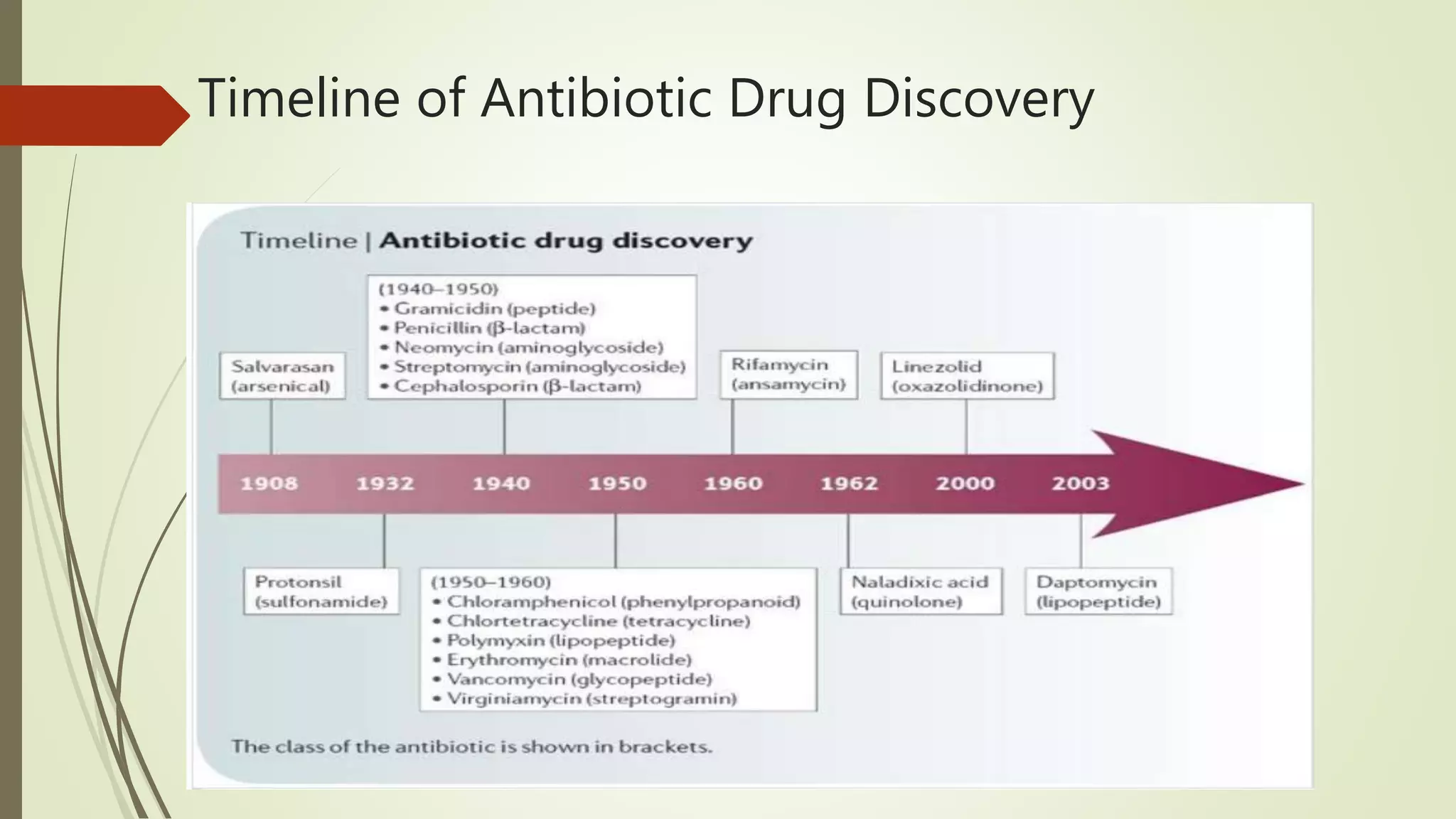
Timeline of Antibiotic Drug Discovery
New AMAs approved by FDA from 1983-2005
Antibiotics Vs Antimicrobial agents
 Antibiotics
- Antibiotics are the substances which are obtained from one microorganism and
prove fatal for other microorganism in low concentration
 Antimicrobials
- Broad term
- Includes all the natural, semisynthetic and synthetic agents which inhibit or kill
the micro-organism.
Antibiotics Vs Antimicrobial agents
All the antibiotics are antimicrobial agents but all anti microbial agents
are not the antibiotics.
Classification of AMAs
 On the basis of type of organism against which they are active
- Antibacterial
- Antiviral
- Antifungal
- Antiprotozoal
 On the basis of chemical structure
- Sulfonamide, Tc, FQs, Polyene
Classification of AMAs
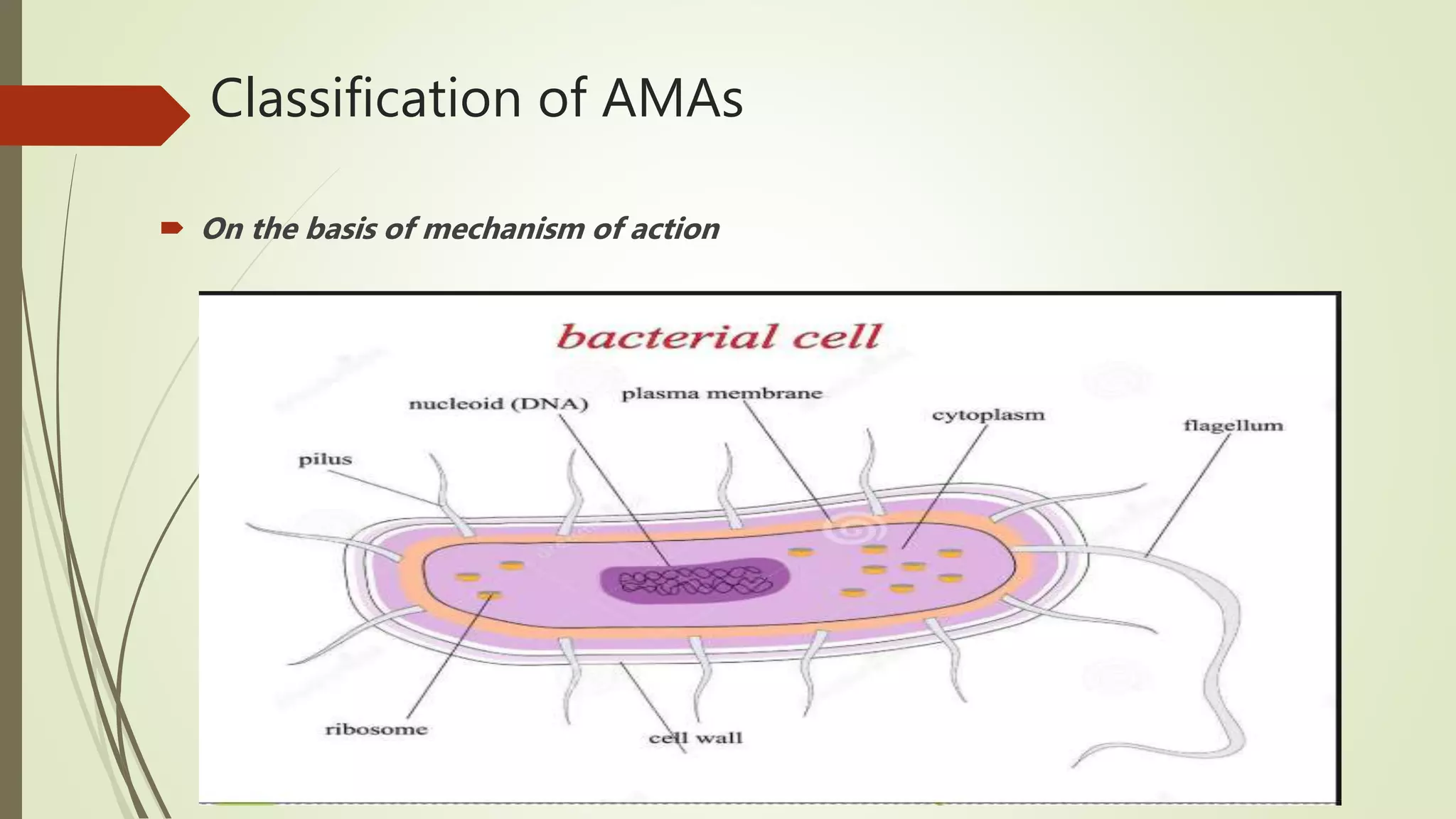
 On the basis of mechanism of action
Classification of AMAs
 On the basis of mechanism of action
Classification of AMAs
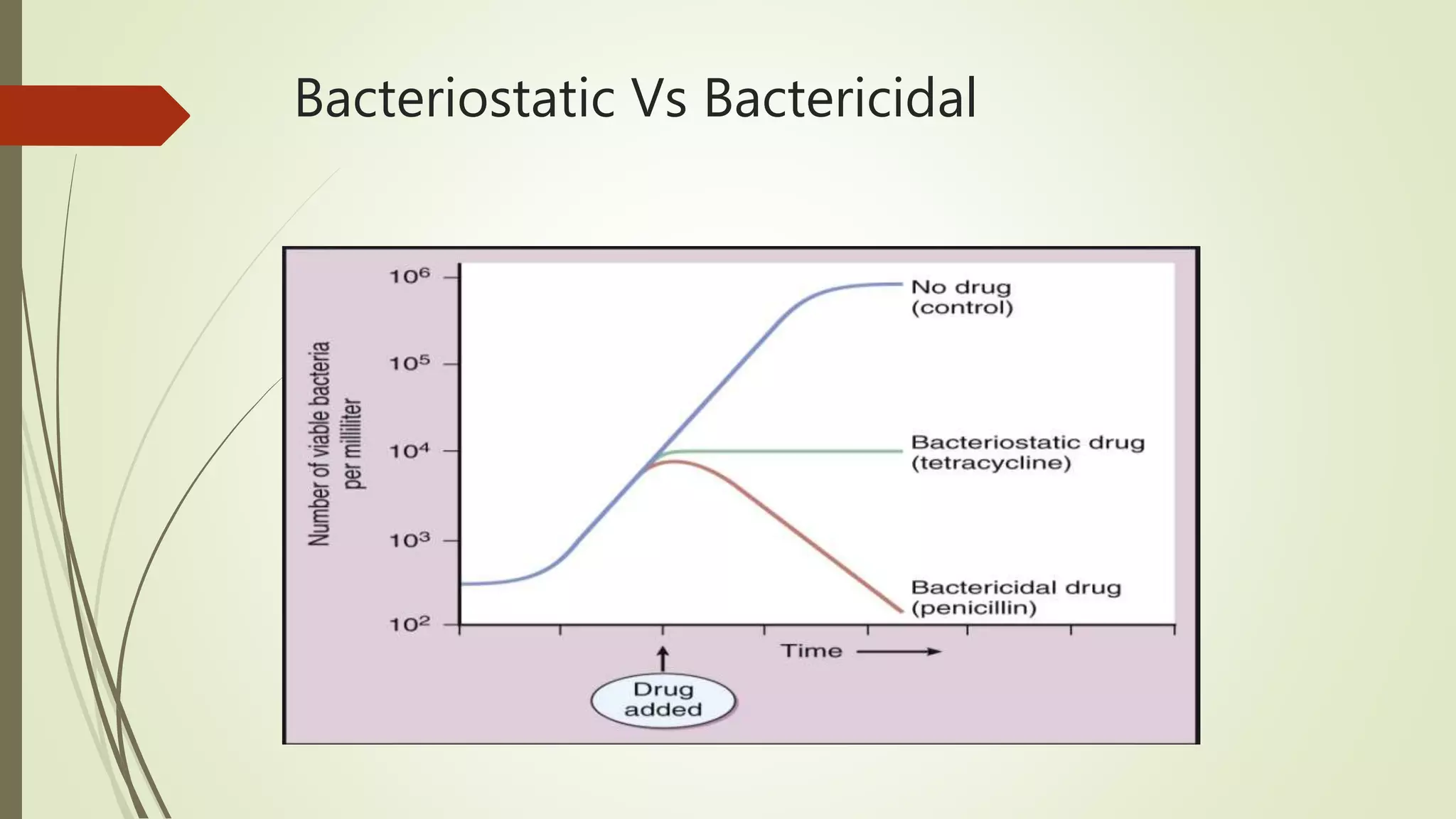
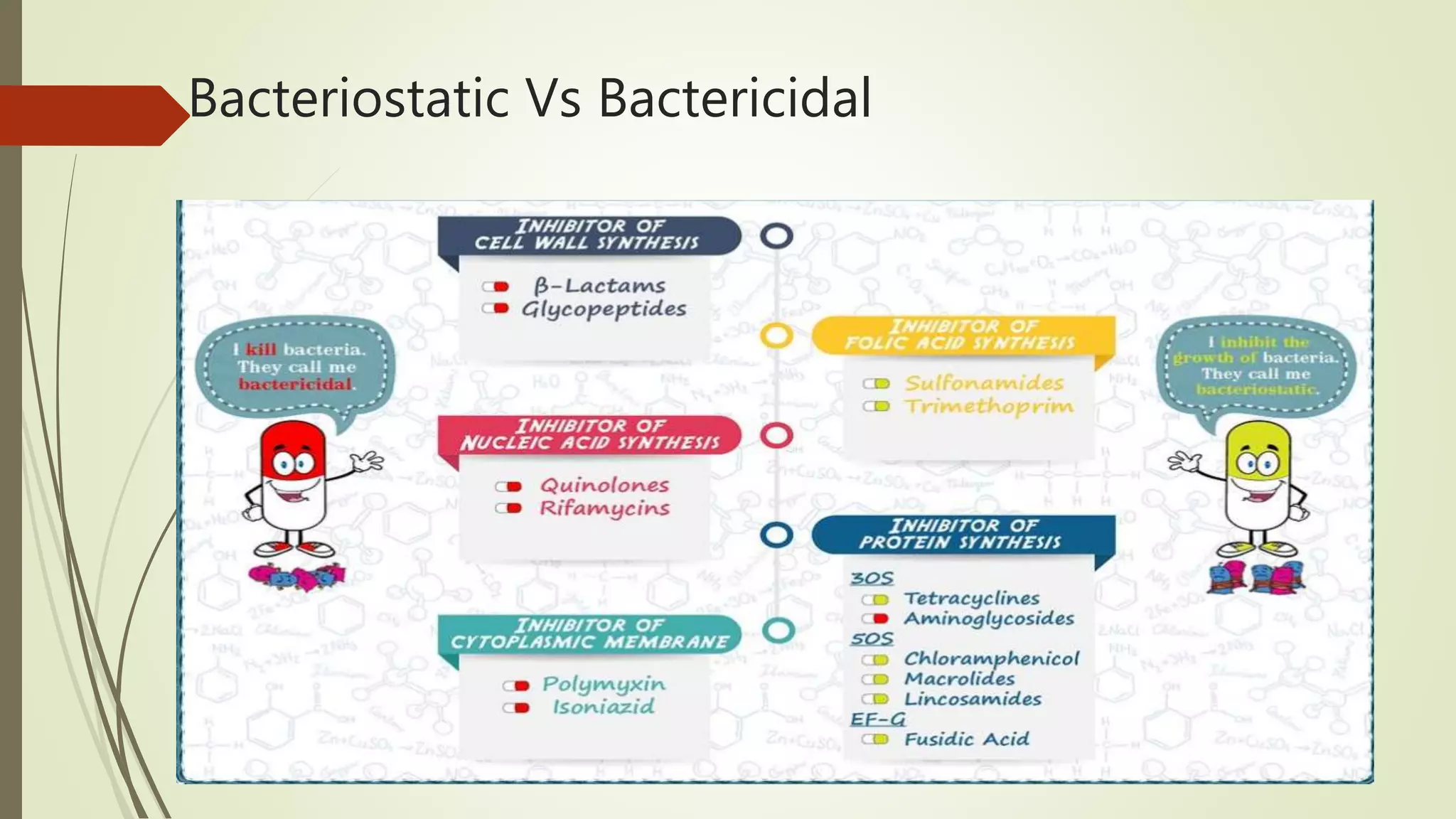
Bacteriostatic Vs Bactericidal
Minimum Inhibitory Concentration(MIC) and
Minimum Bactericidal Concentration (MBC)
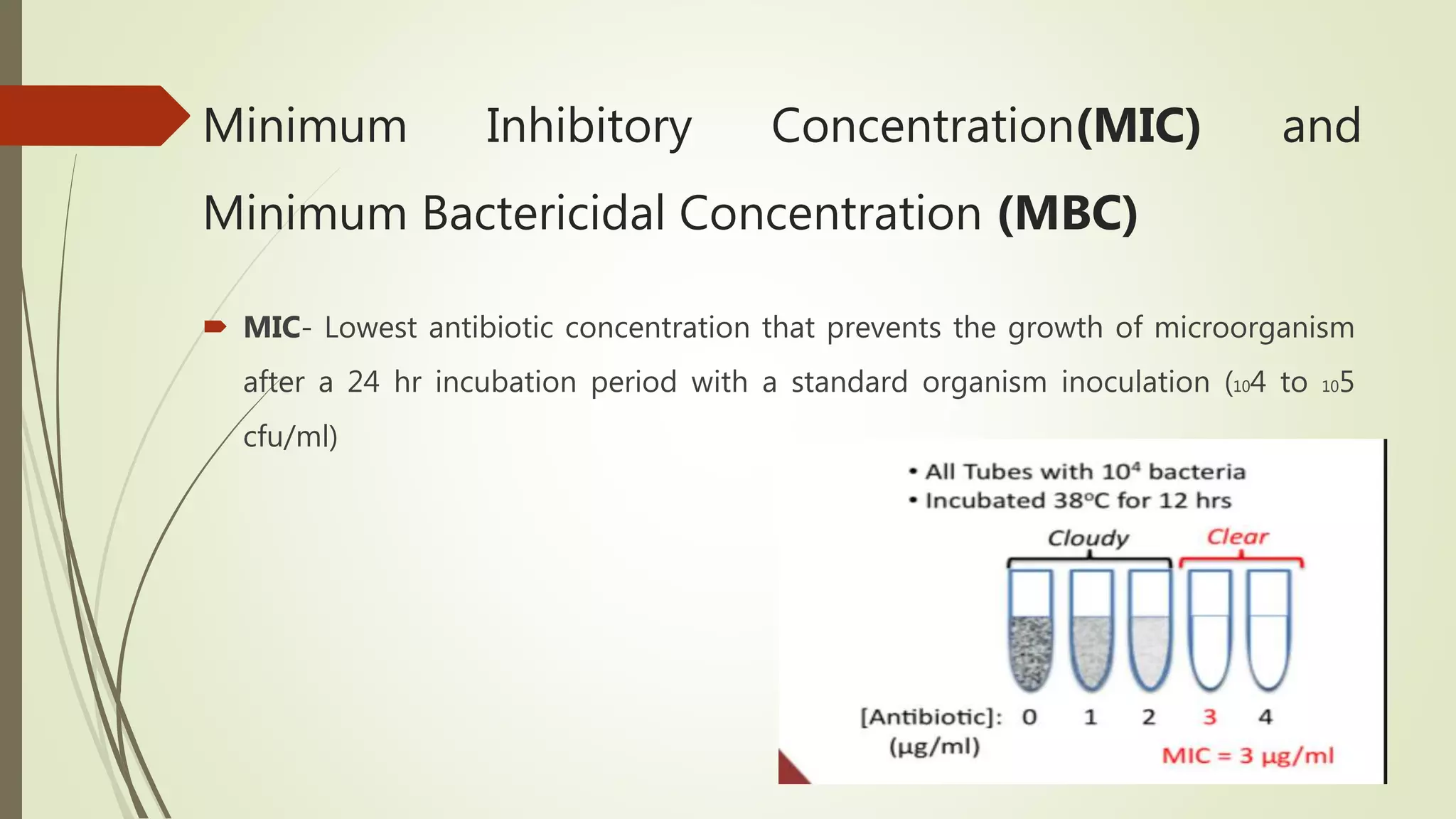
 MIC- Lowest antibiotic concentration that prevents the growth of microorganism
after a 24 hr incubation period with a standard organism inoculation (104 to 105
cfu/ml)
Minimum Bactericidal Concentration (MBC)
 MBC- Lowest concentration of antibiotic that kills about 99.9% of organism
*
Minimum Inhibitory Concentration(MIC) and
Minimum Bactericidal Concentration (MBC)
 Bactericidal drug- Difference between MBC and MIC is minimal
 Bacteriostatic drug- Difference between MBC and MIC is large
Classification of AMAs
 On the basis of spectrum of action
Types of Antimicrobial therapy
 Prophylaxis therapy
• A single, effective, non toxic drug* is successful in preventing infection by specific
organism.
• The main principle behind prophylaxis is targeted therapy
Types of Antimicrobial therapy- Prophylactic
Therapy
1) Prophylaxis given in HIV-AIDS patients or in post transplantation
2) Chemoprophylaxis to prevent wound infection after surgery
3) Post exposure prophylaxis- people who are in close contact to cases
4) Nevirapine is used in pregnancy to prevent vertical transmission
Types of Antimicrobial therapy- Pre Emptive Therapy
Pre- emptive therapy- Goal of pre-emptive therapy is to abort the impending disease.
Types of Antimicrobial therapy
 Empirical therapy
Types of Antimicrobial therapy- Empirical
Therapy
1) Is there need of antibiotic therapy or the disease is self limiting
2) When to start the antibiotic therapy
• Starting therapy immediately after appearance of symptoms, without taking
appropriate culture can misdiagnosed the disease.
• Cost of waiting
• Broad spectrum drugs
Types of Antimicrobial therapy- Definitive
Therapy
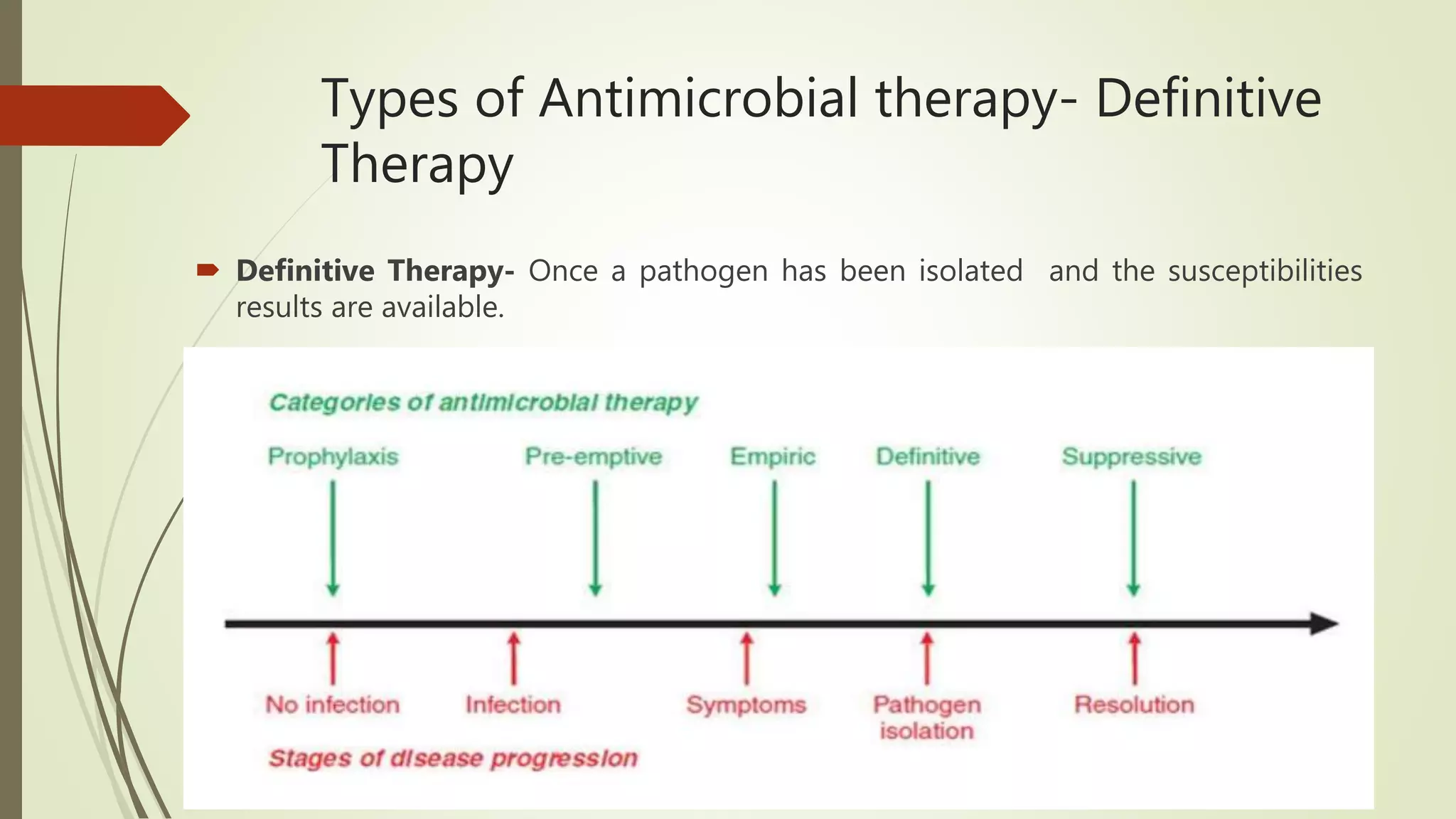
 Definitive Therapy- Once a pathogen has been isolated and the susceptibilities
results are available.
Types of Antimicrobial therapy- Definitive
therapy
 Monotherapy is preferred to decrease the risk of antimicrobial toxicity and
selection of antimicrobial resistant pathogens.
 Proper antimicrobial doses and dose schedules are crucial to maximize efficacy
and minimizing toxicity.
Combination therapy
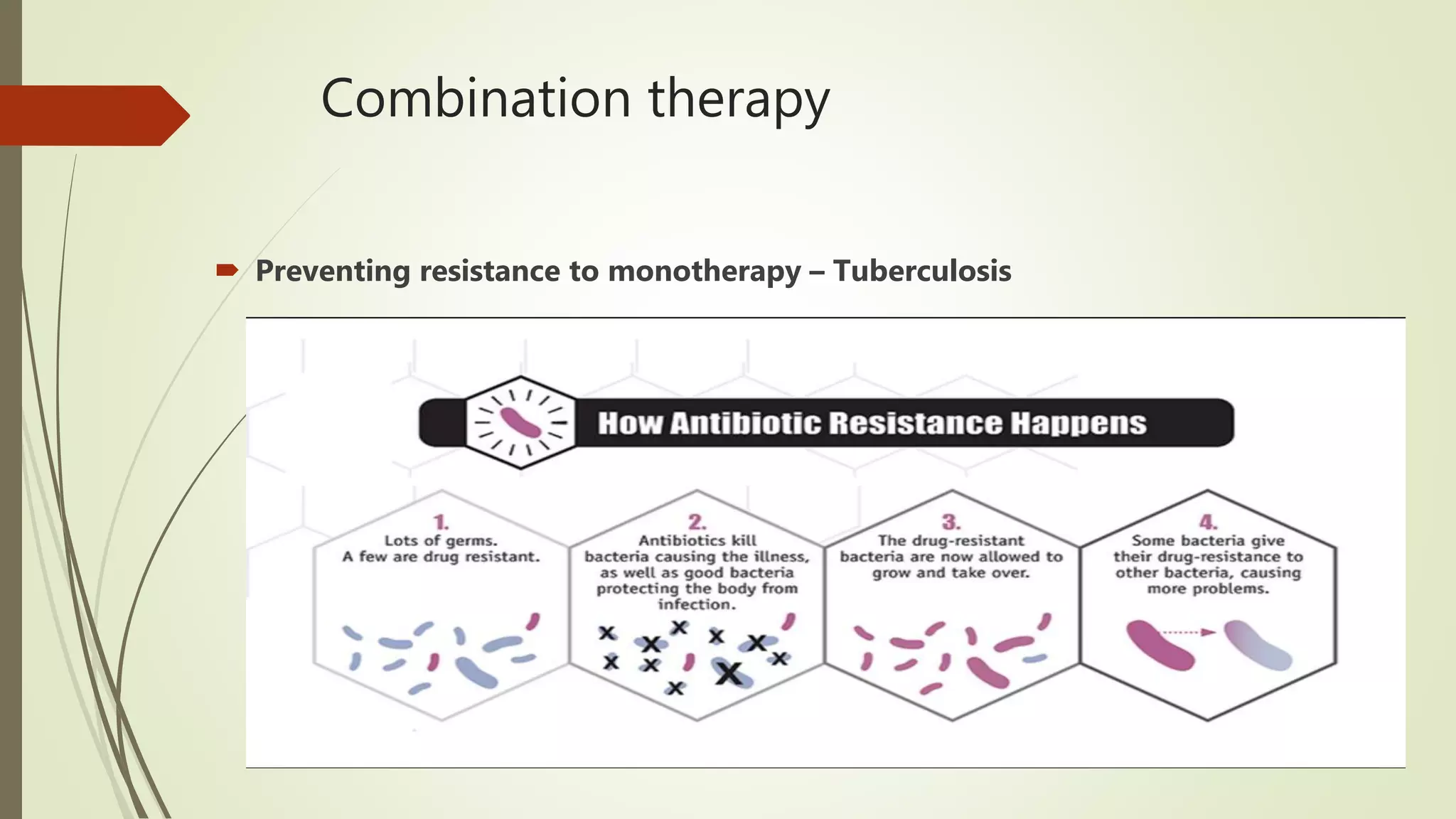
 Preventing resistance to monotherapy – Tuberculosis
Combination Therapy
 To enhance the therapeutic efficacy by synergistic interaction.
Cotrimoxazole- FDC of trimethoprim 80 mg + sulphamethoxazole 400 mg
(1:5)
1) Reduces the MIC of both the agents
2) Widens the spectrum
3) Reduces the chances of development of resistance
Combination Therapy
 Combination of two bacteriostatic or bactericidal drug is synergistic
 Combination of bactericidal and bacteriostatic drug is Irrational if
organism has high sensitivity to cidal drugs.
Combination Therapy
 Reduce toxicity
In cryptococcal meningitis- Combination of amphotericin B and Flucytosine
shortens the duration of treatment.
Irrational FDCs available in Indian Market
 Amoxycillin + Cloxacillin
 Norfloxacin + Tinidazole
 Ofloxacin + Ornidazole
 Fluconazole+ Tinidazole
 Roxithromycin + Ambroxol
 Gatifloxacin + Ambroxol
Type of Antimicrobial Therapy
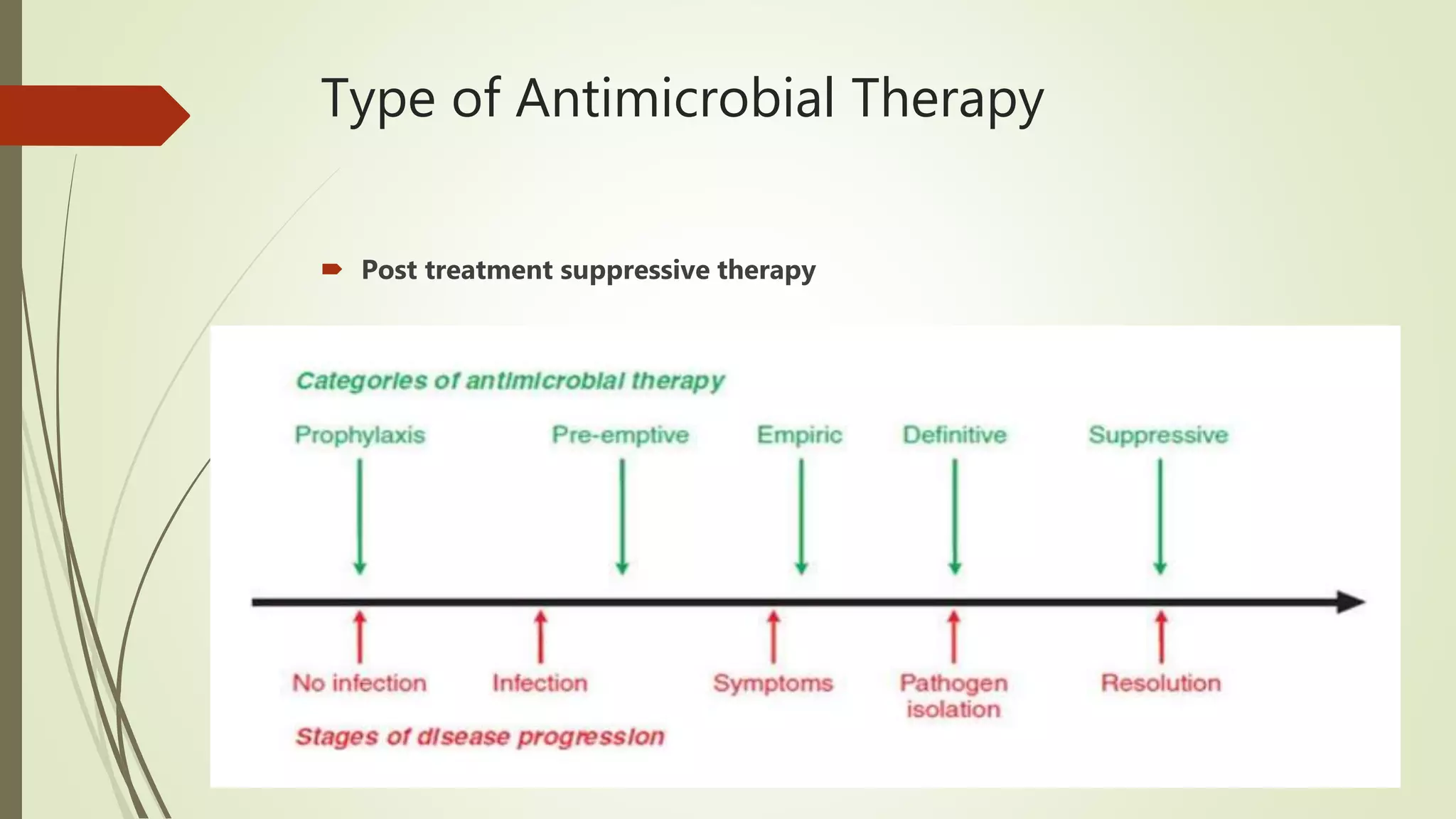
 Post treatment suppressive therapy
Type of Antimicrobial Therapy
 Post treatment suppressive therapy
Given after the disease is controlled by antimicrobial agents, at lower dose.
Reason
Because infection is not completely eradicated and the immunological or anatomical
defect that led to the original infection is still present.
Example- AIDS and Post transplant patients
Principles of Antibiotic Dosing
 Two important characteristics that have a significant influence on the
frequency of dosing are-
1) Concentration Dependent killing (CDK)
2) Time Dependent killing (TDK)
Principles of Antibiotic Dosing- CDK
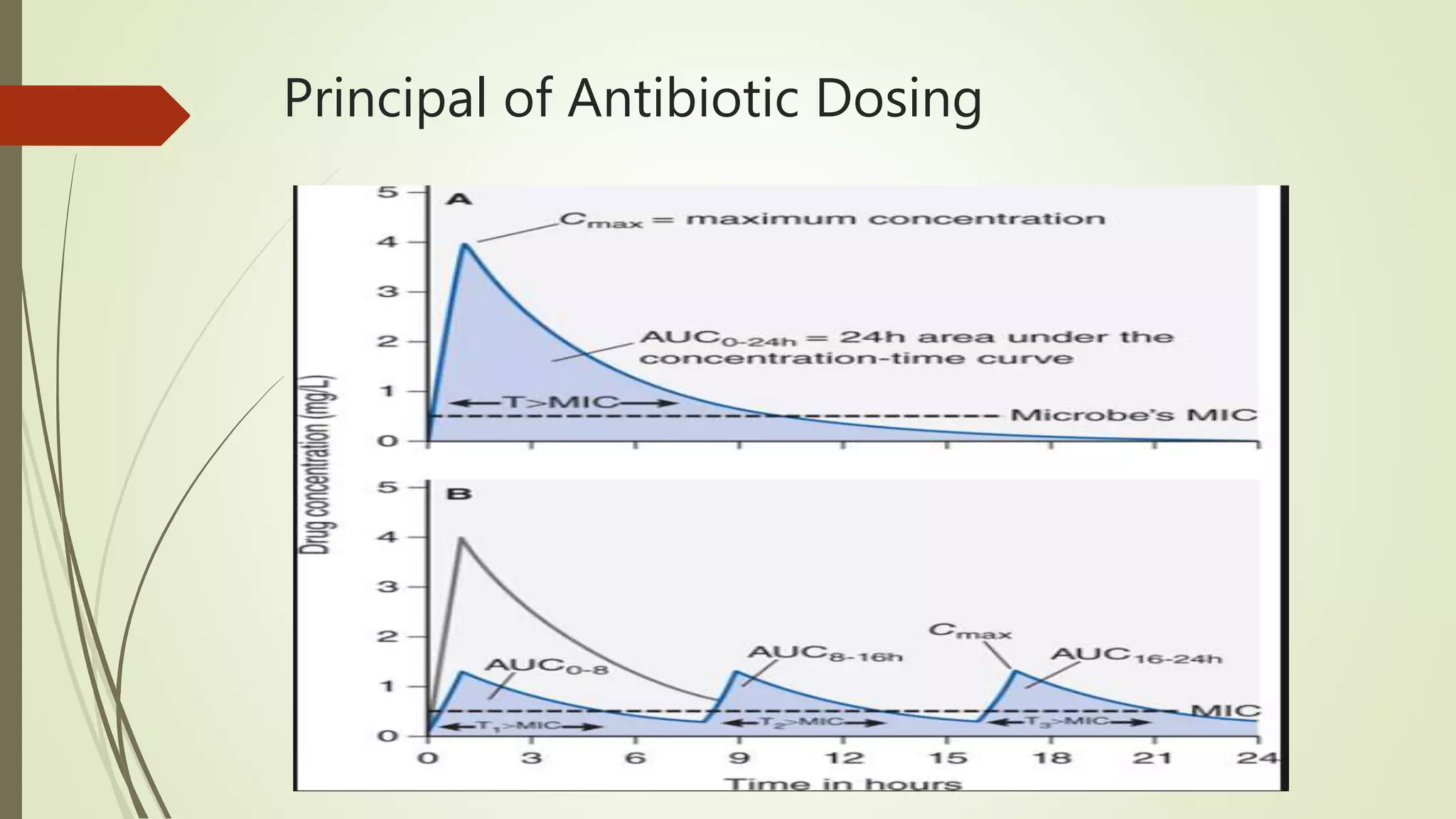
 In concentration dependent killing, the outcome of treatment depends on
the peak antimicrobial concentration at the site of infection in relation to
MIC.
 Higher peak concentration/MIC ratio – more bacterial killing.
 Single large dose of such drugs produce better effect in comparison to same
amount in divided dose.
 Ex- Aminoglycosides, FQs
Principles of Antibiotic Dosing- PAE
 The effect of antibiotic persist even if the antibiotic concentration falls below the MIC
OR
 Bacterial growth occurs only after a lag period when kept in antibiotic free medium
 The PAE is usually a result of disruption in bacterial ribosomal or DNA gyrase
functions whose resumptions requires time.
Principles of Antibiotic Dosing- TDK
 The reduction in number of multiplying bacteria depends on the duration of length
of time the concentration remains more than MIC and not affected if
concentration of drug is increased many times in relation to MIC.
 Examples: Beta lactams, Vancomycin
Principal of Antibiotic Dosing
Factors affecting the choice of an AMAs
 Age
Chloramphenicol in new born may cause Grey Baby Syndrome
Sulfonamides in new born may cause Kernicterus
Tetracycline are C/I in children <6 years
 Pregnancy
All antibiotics pose risk to the fetus when used in pregnancy except Pn,
Cephalosporins and Macrolides
Factors affecting the choice of an AMAs
Impaired Host Defense
Bactericidal drugs are must in immunocompromised individual
Genetic Factors
Hemolysis in G-6PD deficiency
Chloroquine, Primaquine, Quinine, FQs etc
Factors affecting the choice of an AMAs
C/I In Renal failure C/I in liver failure
Nitrofurantoin Erythromycin estolate
Nalidixic acid Tetracycline
Tc Pyrazinamide
Pefloxacin*
Problems with the use of AMAs
 Local Irritation
- Gastric irritation on oral administration- Ampicillin
- Pain on i.m injection- Streptomycin, Tc
 Hypersensitivity/ Allergic Reaction
Pn, Sulfonamides, Chloramphenicol
 Direct Systemic Toxicity
Aminoglycoside causes Nephrotoxicity
Streptomycin causes Ototoxicity
Chloramphenicol causes Bone marrow depression
Problems with the use of AMAs
 Opportunistic Infection
- Pseudomembranous Colitis
 Nutritional Deficiency
- Vitamin B complex and Vitamin K deficiency
 Bacterial Resistance
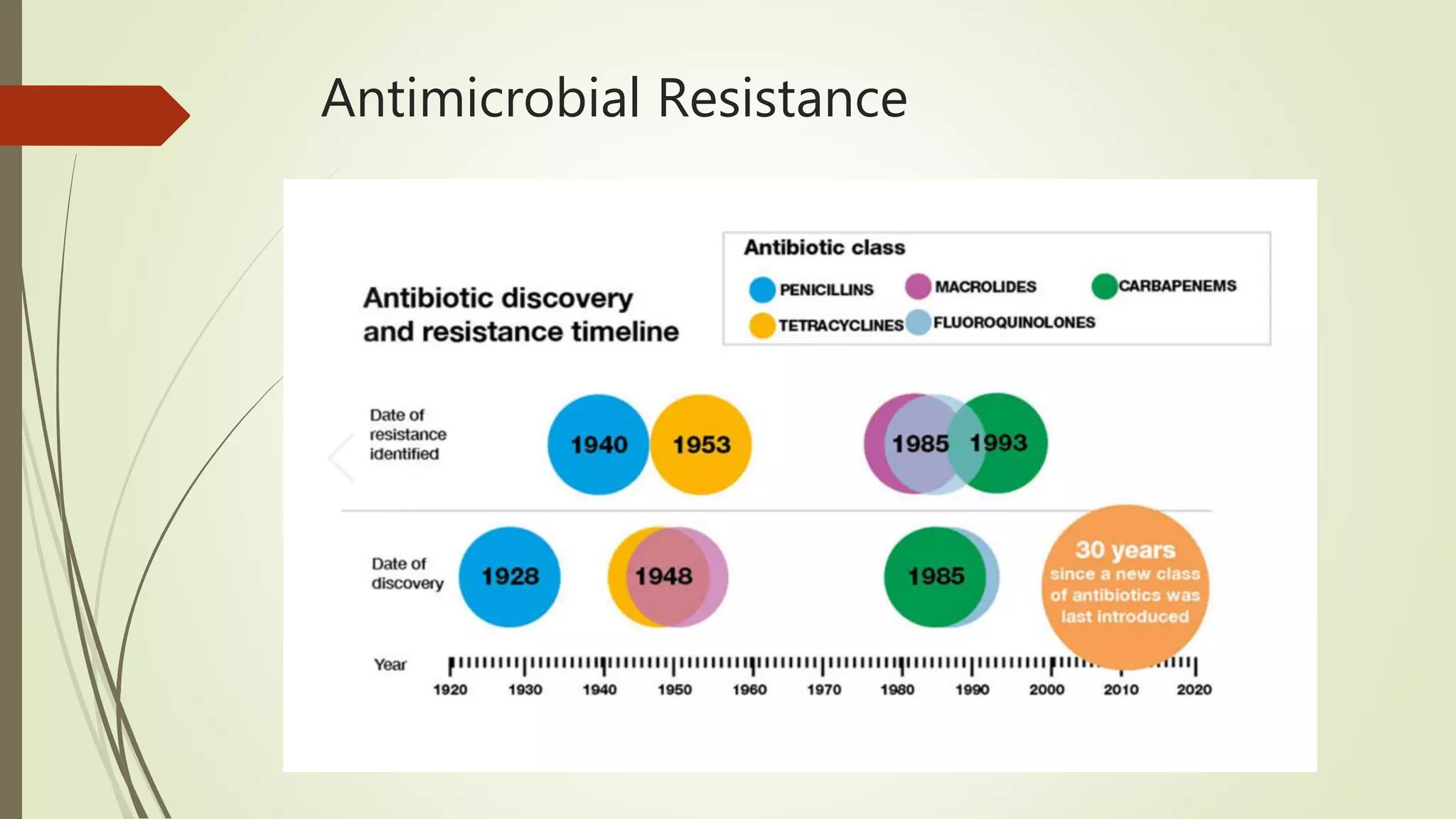
Antimicrobial Resistance
 It can be defined as insensitiveness of micro organism to a particular anti
microbial drug
 Bacterial resistance is of great concern because if resistant strains are
developed then a very useful antibiotic becomes useless
Antimicrobial Resistance
Mechanism of AMR
 Antimicrobial resistance can develop at any one or more of steps in the
process by which a drug reaches and combines with its target. Thus
resistance may develop due to
Mechanism of Resistance Drugs
Decrease permeability Aminoglycosides, Tetracyclines
Efflux pumps Tetracyclines, Erythromycin, FQs
Inactivating enzymes Aminoglycosides, Beta lactams
Chloramphenicol
Alternative metabolic pathway Sulfonamide
Decrease affinity for target MRSA, Vancomycin
Mechanism of AMR
Mutation
 Is the alteration in the structure of chromosomal DNA that lead to development of
resistant genes.
 Single mutation- Resistance develops rapidly
- Enterococci to streptomycin
- Staphylococci to Rifampicin
 Multiple mutation- Resistance develops slowly over a period of time
- Erthromycin, Tc , Chloramphenicol
Horizontal Gene Transfer
 Conjugation
• Responsible for MDR
• Imp for development of resistance chloramphenicol, streptomycin,
vancomycin
 Transduction
• Staph aureus transfer plasmid of penicillinase production
• Imp for development of resistance chloramphenicol, Pn, Erythromycin
 Transformation
• Pneumococci develop resistance to PnG
Misuse of Antimicrobial Agents
 If use of AMAs is without justification and not following the principles of
chemotherapy then all such use is considered as misuse of drugs
Examples of Misuse of Antimicrobial Agents
 Use of AMAs for non bacteriological infection
 Pyrexia of unknown origin
 Inadequate dose and duration of treatment
 Relying only on chemotherapy
Failure of Antimicrobial Therapy
 Clinician Factor
- R- Right Diagnosis
- R- Right Drug
- R- Right Dose
- R- Right Dosage
- R- Right duration
Failure of Antimicrobial Therapy
 Drug Factor
- Drug Resistance
- Use of bacteriostatic drug in immunocompromised states
- Drug interactions with food
 Patient Factor
- Poor Compliance
- Uncontrolled Diabetes, Immunocompromised states
Schedule HX
 To prevent large scale misuse of antibiotics in the country.
 While prescribing antibiotics, doctors have to issue two prescriptions to every
patient and one copy should be kept by the chemists for a period of two years.
 The officials from the DCGI office or state regulatory authorities can, thus,
audit these prescriptions at any time.
 Violations under the new Schedule may be punished with a fine of Rs. 20000
or up to two years of imprisonment.
Conclusion
 Strongest weapon against many disease
 Emergence of Resistance*
 Control of Resistance
 Think twice before prescribe
Thank You

General consideration of antimicrobial agents

  • 1.
    General Consideration of Antimicrobialagents Dr. Shubha Singhal
  • 2.
    Overview  Germ Theoryof Disease  Timeline of Antibiotic Drug Discovery  Antibiotics Vs Antimicrobial Agents  Classification of AMAs  Type of Antimicrobial therapy  Principles of Antibiotic dosing  Factors affecting the choice of AMAs  Problems with the use of AMAs  Schedule HX  Conclusion
  • 3.
    Germ Theory ofDisease Microorganisms known as pathogens or "germs" can lead to disease.
  • 4.
    Timeline of AntibioticDrug Discovery
  • 5.
    New AMAs approvedby FDA from 1983-2005
  • 6.
    Antibiotics Vs Antimicrobialagents  Antibiotics - Antibiotics are the substances which are obtained from one microorganism and prove fatal for other microorganism in low concentration  Antimicrobials - Broad term - Includes all the natural, semisynthetic and synthetic agents which inhibit or kill the micro-organism.
  • 7.
    Antibiotics Vs Antimicrobialagents All the antibiotics are antimicrobial agents but all anti microbial agents are not the antibiotics.
  • 8.
    Classification of AMAs On the basis of type of organism against which they are active - Antibacterial - Antiviral - Antifungal - Antiprotozoal  On the basis of chemical structure - Sulfonamide, Tc, FQs, Polyene
  • 9.
    Classification of AMAs On the basis of mechanism of action
  • 10.
    Classification of AMAs On the basis of mechanism of action
  • 11.
  • 12.
  • 13.
  • 14.
    Minimum Inhibitory Concentration(MIC)and Minimum Bactericidal Concentration (MBC)  MIC- Lowest antibiotic concentration that prevents the growth of microorganism after a 24 hr incubation period with a standard organism inoculation (104 to 105 cfu/ml)
  • 15.
    Minimum Bactericidal Concentration(MBC)  MBC- Lowest concentration of antibiotic that kills about 99.9% of organism *
  • 16.
    Minimum Inhibitory Concentration(MIC)and Minimum Bactericidal Concentration (MBC)  Bactericidal drug- Difference between MBC and MIC is minimal  Bacteriostatic drug- Difference between MBC and MIC is large
  • 17.
    Classification of AMAs On the basis of spectrum of action
  • 18.
  • 19.
    Types of Antimicrobialtherapy  Prophylaxis therapy • A single, effective, non toxic drug* is successful in preventing infection by specific organism. • The main principle behind prophylaxis is targeted therapy
  • 20.
    Types of Antimicrobialtherapy- Prophylactic Therapy 1) Prophylaxis given in HIV-AIDS patients or in post transplantation 2) Chemoprophylaxis to prevent wound infection after surgery 3) Post exposure prophylaxis- people who are in close contact to cases 4) Nevirapine is used in pregnancy to prevent vertical transmission
  • 21.
    Types of Antimicrobialtherapy- Pre Emptive Therapy Pre- emptive therapy- Goal of pre-emptive therapy is to abort the impending disease.
  • 22.
    Types of Antimicrobialtherapy  Empirical therapy
  • 23.
    Types of Antimicrobialtherapy- Empirical Therapy 1) Is there need of antibiotic therapy or the disease is self limiting 2) When to start the antibiotic therapy • Starting therapy immediately after appearance of symptoms, without taking appropriate culture can misdiagnosed the disease. • Cost of waiting • Broad spectrum drugs
  • 24.
    Types of Antimicrobialtherapy- Definitive Therapy  Definitive Therapy- Once a pathogen has been isolated and the susceptibilities results are available.
  • 25.
    Types of Antimicrobialtherapy- Definitive therapy  Monotherapy is preferred to decrease the risk of antimicrobial toxicity and selection of antimicrobial resistant pathogens.  Proper antimicrobial doses and dose schedules are crucial to maximize efficacy and minimizing toxicity.
  • 26.
    Combination therapy  Preventingresistance to monotherapy – Tuberculosis
  • 27.
    Combination Therapy  Toenhance the therapeutic efficacy by synergistic interaction. Cotrimoxazole- FDC of trimethoprim 80 mg + sulphamethoxazole 400 mg (1:5) 1) Reduces the MIC of both the agents 2) Widens the spectrum 3) Reduces the chances of development of resistance
  • 28.
    Combination Therapy  Combinationof two bacteriostatic or bactericidal drug is synergistic  Combination of bactericidal and bacteriostatic drug is Irrational if organism has high sensitivity to cidal drugs.
  • 29.
    Combination Therapy  Reducetoxicity In cryptococcal meningitis- Combination of amphotericin B and Flucytosine shortens the duration of treatment.
  • 30.
    Irrational FDCs availablein Indian Market  Amoxycillin + Cloxacillin  Norfloxacin + Tinidazole  Ofloxacin + Ornidazole  Fluconazole+ Tinidazole  Roxithromycin + Ambroxol  Gatifloxacin + Ambroxol
  • 31.
    Type of AntimicrobialTherapy  Post treatment suppressive therapy
  • 32.
    Type of AntimicrobialTherapy  Post treatment suppressive therapy Given after the disease is controlled by antimicrobial agents, at lower dose. Reason Because infection is not completely eradicated and the immunological or anatomical defect that led to the original infection is still present. Example- AIDS and Post transplant patients
  • 33.
    Principles of AntibioticDosing  Two important characteristics that have a significant influence on the frequency of dosing are- 1) Concentration Dependent killing (CDK) 2) Time Dependent killing (TDK)
  • 34.
    Principles of AntibioticDosing- CDK  In concentration dependent killing, the outcome of treatment depends on the peak antimicrobial concentration at the site of infection in relation to MIC.  Higher peak concentration/MIC ratio – more bacterial killing.  Single large dose of such drugs produce better effect in comparison to same amount in divided dose.  Ex- Aminoglycosides, FQs
  • 35.
    Principles of AntibioticDosing- PAE  The effect of antibiotic persist even if the antibiotic concentration falls below the MIC OR  Bacterial growth occurs only after a lag period when kept in antibiotic free medium  The PAE is usually a result of disruption in bacterial ribosomal or DNA gyrase functions whose resumptions requires time.
  • 36.
    Principles of AntibioticDosing- TDK  The reduction in number of multiplying bacteria depends on the duration of length of time the concentration remains more than MIC and not affected if concentration of drug is increased many times in relation to MIC.  Examples: Beta lactams, Vancomycin
  • 37.
  • 38.
    Factors affecting thechoice of an AMAs  Age Chloramphenicol in new born may cause Grey Baby Syndrome Sulfonamides in new born may cause Kernicterus Tetracycline are C/I in children <6 years  Pregnancy All antibiotics pose risk to the fetus when used in pregnancy except Pn, Cephalosporins and Macrolides
  • 39.
    Factors affecting thechoice of an AMAs Impaired Host Defense Bactericidal drugs are must in immunocompromised individual Genetic Factors Hemolysis in G-6PD deficiency Chloroquine, Primaquine, Quinine, FQs etc
  • 40.
    Factors affecting thechoice of an AMAs C/I In Renal failure C/I in liver failure Nitrofurantoin Erythromycin estolate Nalidixic acid Tetracycline Tc Pyrazinamide Pefloxacin*
  • 41.
    Problems with theuse of AMAs  Local Irritation - Gastric irritation on oral administration- Ampicillin - Pain on i.m injection- Streptomycin, Tc  Hypersensitivity/ Allergic Reaction Pn, Sulfonamides, Chloramphenicol  Direct Systemic Toxicity Aminoglycoside causes Nephrotoxicity Streptomycin causes Ototoxicity Chloramphenicol causes Bone marrow depression
  • 42.
    Problems with theuse of AMAs  Opportunistic Infection - Pseudomembranous Colitis  Nutritional Deficiency - Vitamin B complex and Vitamin K deficiency  Bacterial Resistance
  • 43.
    Antimicrobial Resistance  Itcan be defined as insensitiveness of micro organism to a particular anti microbial drug  Bacterial resistance is of great concern because if resistant strains are developed then a very useful antibiotic becomes useless
  • 44.
  • 45.
  • 46.
    Mechanism of AMR Antimicrobial resistance can develop at any one or more of steps in the process by which a drug reaches and combines with its target. Thus resistance may develop due to Mechanism of Resistance Drugs Decrease permeability Aminoglycosides, Tetracyclines Efflux pumps Tetracyclines, Erythromycin, FQs Inactivating enzymes Aminoglycosides, Beta lactams Chloramphenicol Alternative metabolic pathway Sulfonamide Decrease affinity for target MRSA, Vancomycin
  • 47.
  • 49.
    Mutation  Is thealteration in the structure of chromosomal DNA that lead to development of resistant genes.  Single mutation- Resistance develops rapidly - Enterococci to streptomycin - Staphylococci to Rifampicin  Multiple mutation- Resistance develops slowly over a period of time - Erthromycin, Tc , Chloramphenicol
  • 51.
  • 52.
    Horizontal Gene Transfer Conjugation • Responsible for MDR • Imp for development of resistance chloramphenicol, streptomycin, vancomycin  Transduction • Staph aureus transfer plasmid of penicillinase production • Imp for development of resistance chloramphenicol, Pn, Erythromycin  Transformation • Pneumococci develop resistance to PnG
  • 53.
    Misuse of AntimicrobialAgents  If use of AMAs is without justification and not following the principles of chemotherapy then all such use is considered as misuse of drugs
  • 54.
    Examples of Misuseof Antimicrobial Agents  Use of AMAs for non bacteriological infection  Pyrexia of unknown origin  Inadequate dose and duration of treatment  Relying only on chemotherapy
  • 55.
    Failure of AntimicrobialTherapy  Clinician Factor - R- Right Diagnosis - R- Right Drug - R- Right Dose - R- Right Dosage - R- Right duration
  • 56.
    Failure of AntimicrobialTherapy  Drug Factor - Drug Resistance - Use of bacteriostatic drug in immunocompromised states - Drug interactions with food  Patient Factor - Poor Compliance - Uncontrolled Diabetes, Immunocompromised states
  • 57.
    Schedule HX  Toprevent large scale misuse of antibiotics in the country.  While prescribing antibiotics, doctors have to issue two prescriptions to every patient and one copy should be kept by the chemists for a period of two years.  The officials from the DCGI office or state regulatory authorities can, thus, audit these prescriptions at any time.  Violations under the new Schedule may be punished with a fine of Rs. 20000 or up to two years of imprisonment.
  • 58.
    Conclusion  Strongest weaponagainst many disease  Emergence of Resistance*  Control of Resistance  Think twice before prescribe
  • 59.

Editor's Notes