FRONTLINE PRACTICE WITHIN 
HOUSING FIRST PROGRAMS 
National Alliance to End Homelessness Annual Conference 
July 30, 2014 
Presented by: 
Benjamin Henwood, PhD, MSW 
USC School of Social Work, Los Angeles
1. Why would frontline practice in Housing 
First differ from other types of programs? 
2. Do HF providers have a different 
approach services? 
3. What does it mean to deliver recovery 
oriented services within HF? 
4. How do HF providers implement a 
harm reduction framework?
1. Why would frontline practice in Housing 
First differ from other types of programs?
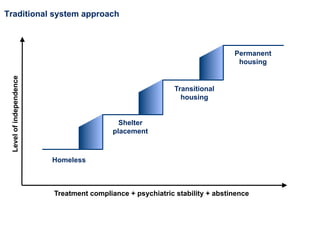
Traditional system approach 
Homeless 
Shelter 
placement 
Transitional 
housing 
Permanent 
housing 
Level of independence 
Treatment compliance + psychiatric stability + abstinence
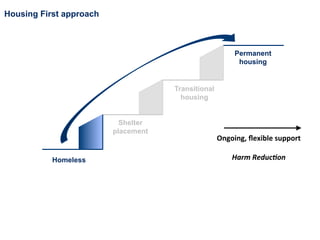
Housing First approach 
Homeless 
Shelter 
placement 
Transitional 
housing 
Permanent 
housing 
Ongoing, 
flexible 
support 
Harm 
Reduc+on
2. Do HF providers have a different 
approach services?
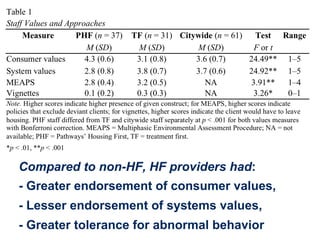
Compared to non-HF, HF providers had: 
- Greater endorsement of consumer values, 
- Lesser endorsement of systems values, 
- Greater tolerance for abnormal behavior
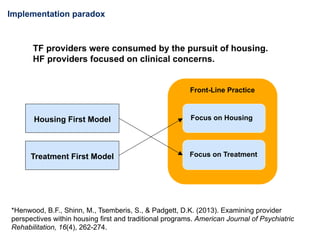
Implementation paradox 
TF providers were consumed by the pursuit of housing. 
HF providers focused on clinical concerns. 
Front-Line Practice 
Housing First Model 
Treatment First Model 
Focus on Housing 
Focus on Treatment 
*Henwood, B.F., Shinn, M., Tsemberis, S., & Padgett, D.K. (2013). Examining provider 
perspectives within housing first and traditional programs. American Journal of Psychiatric 
Rehabilitation, 16(4), 262-274.
3. What does it mean to deliver recovery 
oriented services within HF?
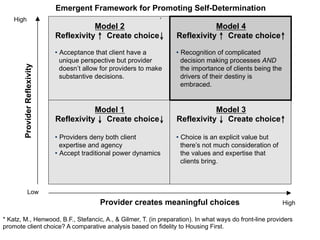
Provider creates meaningful choices 
Provider Reflexivity 
Model 1 
Reflexivity ↓ Create choice↓ 
• Providers deny both client 
expertise and agency 
• Accept traditional power dynamics 
Model 3 
Reflexivity ↓ Create choice↑ 
• Choice is an explicit value but 
there’s not much consideration of 
the values and expertise that 
clients bring. 
Model 2 
Reflexivity ↑ Create choice↓ 
• Acceptance that client have a 
unique perspective but provider 
doesn’t allow for providers to make 
substantive decisions. 
Model 4 
Reflexivity ↑ Create choice↑ 
• Recognition of complicated 
decision making processes AND 
the importance of clients being the 
drivers of their destiny is 
embraced. 
Low 
High 
High 
Emergent Framework for Promoting Self-Determination 
, 
* Katz, M., Henwood, B.F., Stefancic, A., & Gilmer, T. (in preparation). In what ways do front-line providers 
promote client choice? A comparative analysis based on fidelity to Housing First. 
,
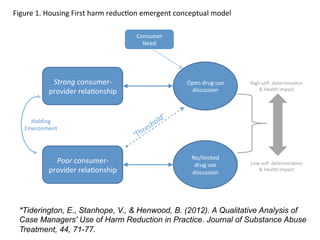
4. How do HF providers implement a harm 
reduction framework?
Figure 
1. 
Housing 
First 
harm 
reduc1on 
emergent 
conceptual 
model 
Strong 
consumer-­‐ 
provider 
rela1onship 
Poor 
consumer-­‐ 
provider 
rela1onship 
Open 
drug 
use 
discussion 
No/limited 
drug 
use 
discussion 
High 
self-­‐ 
determina1on 
& 
Health 
impact 
Low 
self-­‐ 
determina1on 
& 
Health 
impact 
Holding 
Environment 
Consumer 
Need 
*Tiderington, E., Stanhope, V., & Henwood, B. (2012). A Qualitative Analysis of 
Case Managers' Use of Harm Reduction in Practice. Journal of Substance Abuse 
Treatment, 44, 71-77.
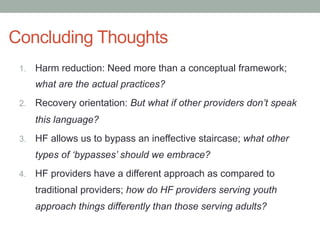
Concluding Thoughts 
1. Harm reduction: Need more than a conceptual framework; 
what are the actual practices? 
2. Recovery orientation: But what if other providers don’t speak 
this language? 
3. HF allows us to bypass an ineffective staircase; what other 
types of ‘bypasses’ should we embrace? 
4. HF providers have a different approach as compared to 
traditional providers; how do HF providers serving youth 
approach things differently than those serving adults?

Frontline Practice within Housing First Programs

  • 1.
    FRONTLINE PRACTICE WITHIN HOUSING FIRST PROGRAMS National Alliance to End Homelessness Annual Conference July 30, 2014 Presented by: Benjamin Henwood, PhD, MSW USC School of Social Work, Los Angeles
  • 2.
    1. Why wouldfrontline practice in Housing First differ from other types of programs? 2. Do HF providers have a different approach services? 3. What does it mean to deliver recovery oriented services within HF? 4. How do HF providers implement a harm reduction framework?
  • 3.
    1. Why wouldfrontline practice in Housing First differ from other types of programs?
  • 4.
    Traditional system approach Homeless Shelter placement Transitional housing Permanent housing Level of independence Treatment compliance + psychiatric stability + abstinence
  • 5.
    Housing First approach Homeless Shelter placement Transitional housing Permanent housing Ongoing, flexible support Harm Reduc+on
  • 6.
    2. Do HFproviders have a different approach services?
  • 7.
    Compared to non-HF,HF providers had: - Greater endorsement of consumer values, - Lesser endorsement of systems values, - Greater tolerance for abnormal behavior
  • 8.
    Implementation paradox TFproviders were consumed by the pursuit of housing. HF providers focused on clinical concerns. Front-Line Practice Housing First Model Treatment First Model Focus on Housing Focus on Treatment *Henwood, B.F., Shinn, M., Tsemberis, S., & Padgett, D.K. (2013). Examining provider perspectives within housing first and traditional programs. American Journal of Psychiatric Rehabilitation, 16(4), 262-274.
  • 9.
    3. What doesit mean to deliver recovery oriented services within HF?
  • 10.
    Provider creates meaningfulchoices Provider Reflexivity Model 1 Reflexivity ↓ Create choice↓ • Providers deny both client expertise and agency • Accept traditional power dynamics Model 3 Reflexivity ↓ Create choice↑ • Choice is an explicit value but there’s not much consideration of the values and expertise that clients bring. Model 2 Reflexivity ↑ Create choice↓ • Acceptance that client have a unique perspective but provider doesn’t allow for providers to make substantive decisions. Model 4 Reflexivity ↑ Create choice↑ • Recognition of complicated decision making processes AND the importance of clients being the drivers of their destiny is embraced. Low High High Emergent Framework for Promoting Self-Determination , * Katz, M., Henwood, B.F., Stefancic, A., & Gilmer, T. (in preparation). In what ways do front-line providers promote client choice? A comparative analysis based on fidelity to Housing First. ,
  • 11.
    4. How doHF providers implement a harm reduction framework?
  • 12.
    Figure 1. Housing First harm reduc1on emergent conceptual model Strong consumer-­‐ provider rela1onship Poor consumer-­‐ provider rela1onship Open drug use discussion No/limited drug use discussion High self-­‐ determina1on & Health impact Low self-­‐ determina1on & Health impact Holding Environment Consumer Need *Tiderington, E., Stanhope, V., & Henwood, B. (2012). A Qualitative Analysis of Case Managers' Use of Harm Reduction in Practice. Journal of Substance Abuse Treatment, 44, 71-77.
  • 13.
    Concluding Thoughts 1.Harm reduction: Need more than a conceptual framework; what are the actual practices? 2. Recovery orientation: But what if other providers don’t speak this language? 3. HF allows us to bypass an ineffective staircase; what other types of ‘bypasses’ should we embrace? 4. HF providers have a different approach as compared to traditional providers; how do HF providers serving youth approach things differently than those serving adults?