1.3 Beyond a 17 Percent
Decrease: Next Steps for
Ending Veteran
Homelessness:
Political Will and
Emerging Policy Issues
Ian B.
Lisman
Policy Analyst on
Veterans
Homelessness
Political Will
• Budget
• Moving towards Zero
• SSVF
• HUD-VASH
• GPD
Political Will
Veterans homelessness is a bi-
partisan issue. Both sides of the
aisle agree that we need to take
care of our heroes.
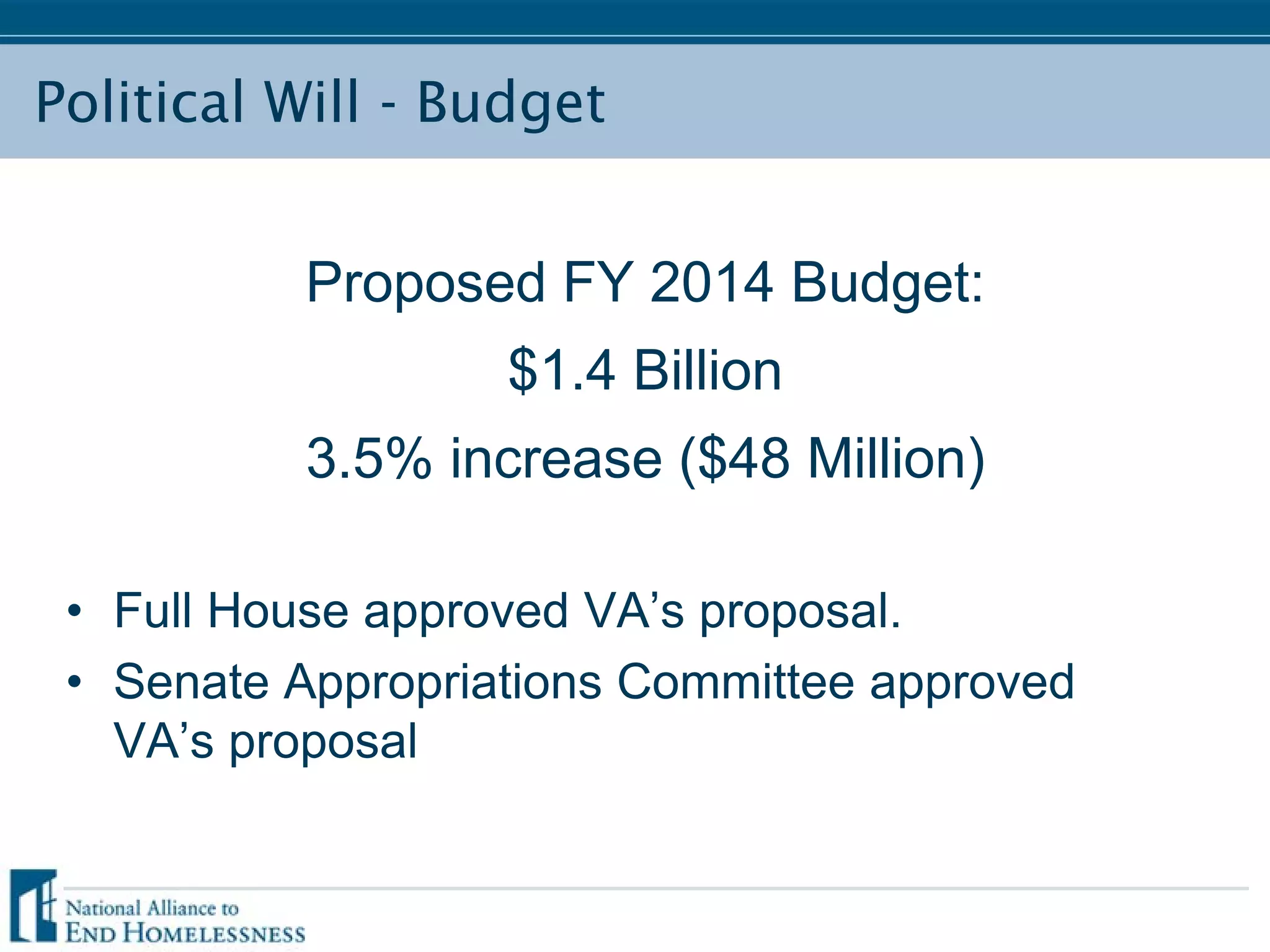
Political Will - Budget
Proposed FY 2014 Budget:
$1.4 Billion
3.5% increase ($48 Million)
• Full House approved VA’s proposal.
• Senate Appropriations Committee approved
VA’s proposal
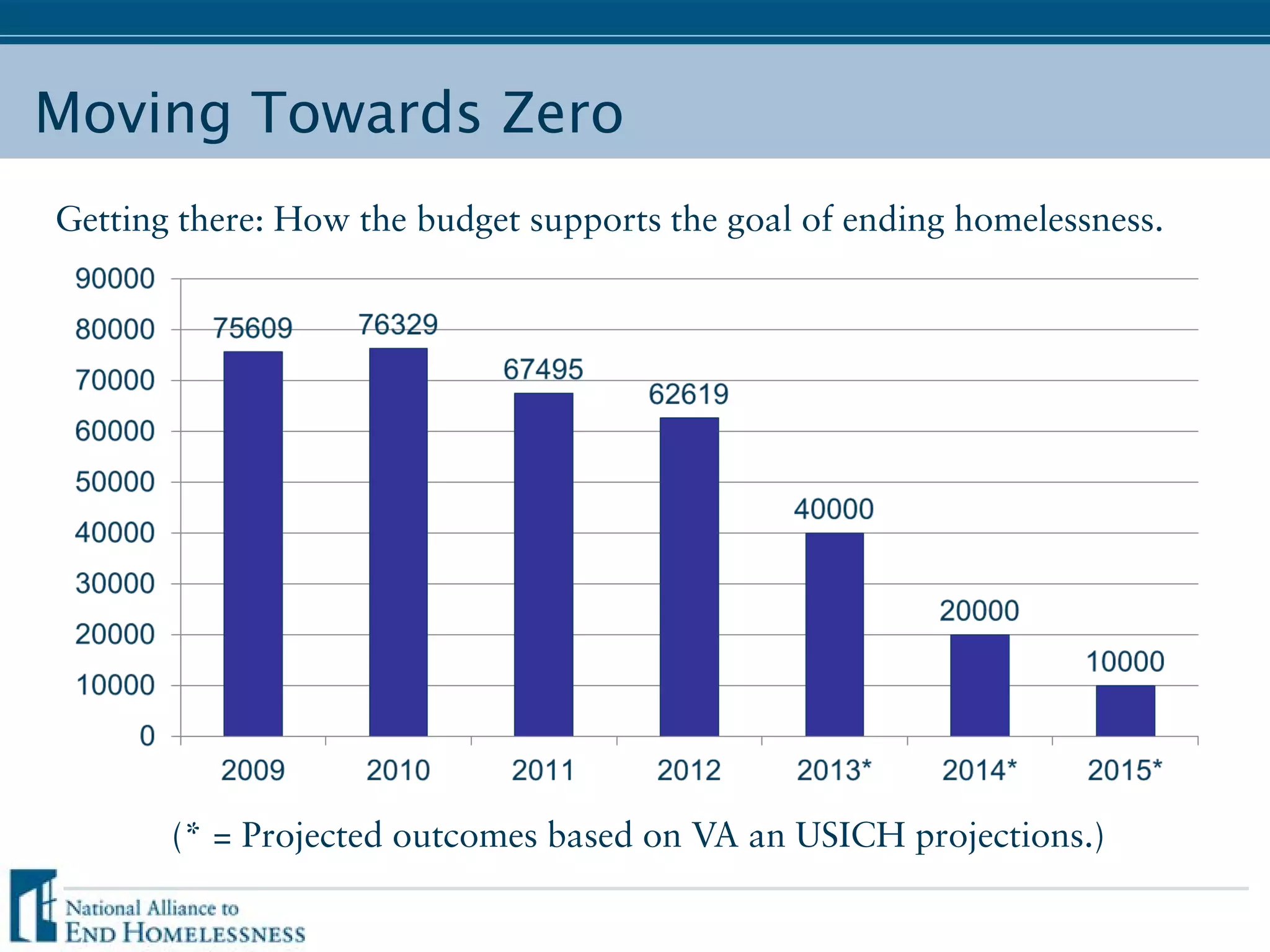
Moving Towards Zero
Getting there: How the budget supports the goal of ending homelessness.
(* = Projected outcomes based on VA an USICH projections.)
Veterans Administration
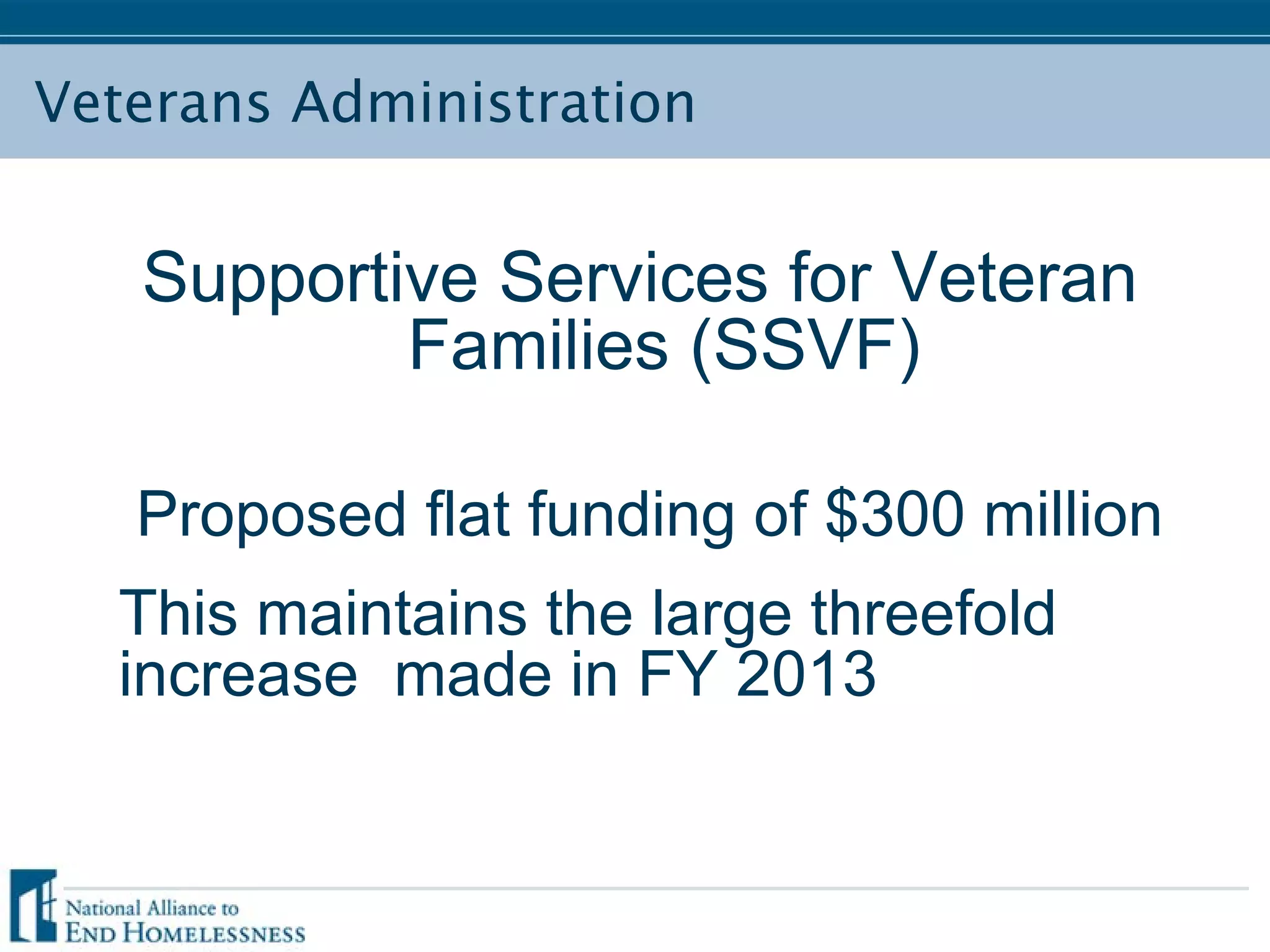
Supportive Services for Veteran
Families (SSVF)
Proposed flat funding of $300 million
This maintains the large threefold
increase made in FY 2013
Veterans Administration & HUD
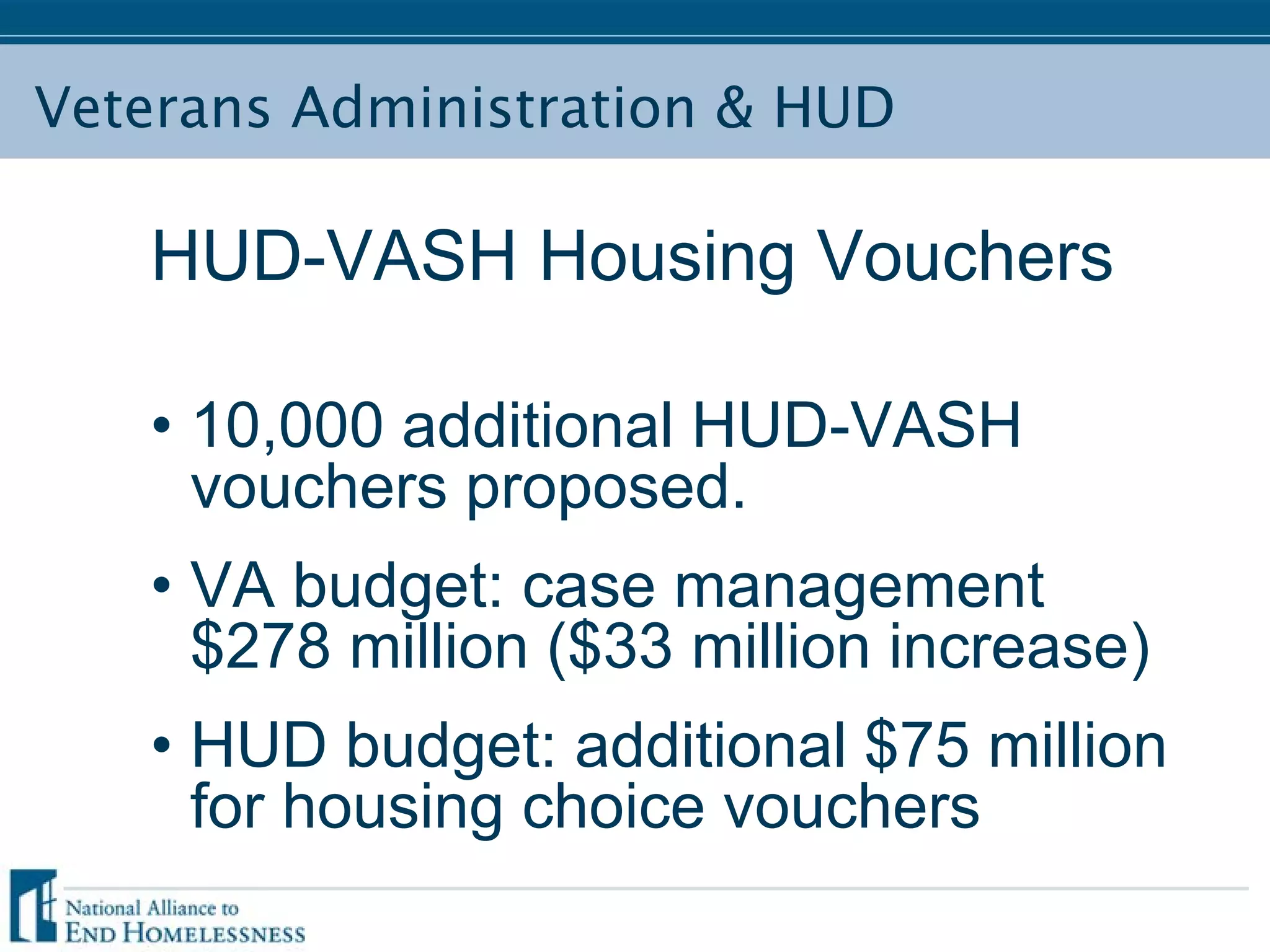
HUD-VASH Housing Vouchers
• 10,000 additional HUD-VASH
vouchers proposed.
• VA budget: case management
$278 million ($33 million increase)
• HUD budget: additional $75 million
for housing choice vouchers
Veterans Administration
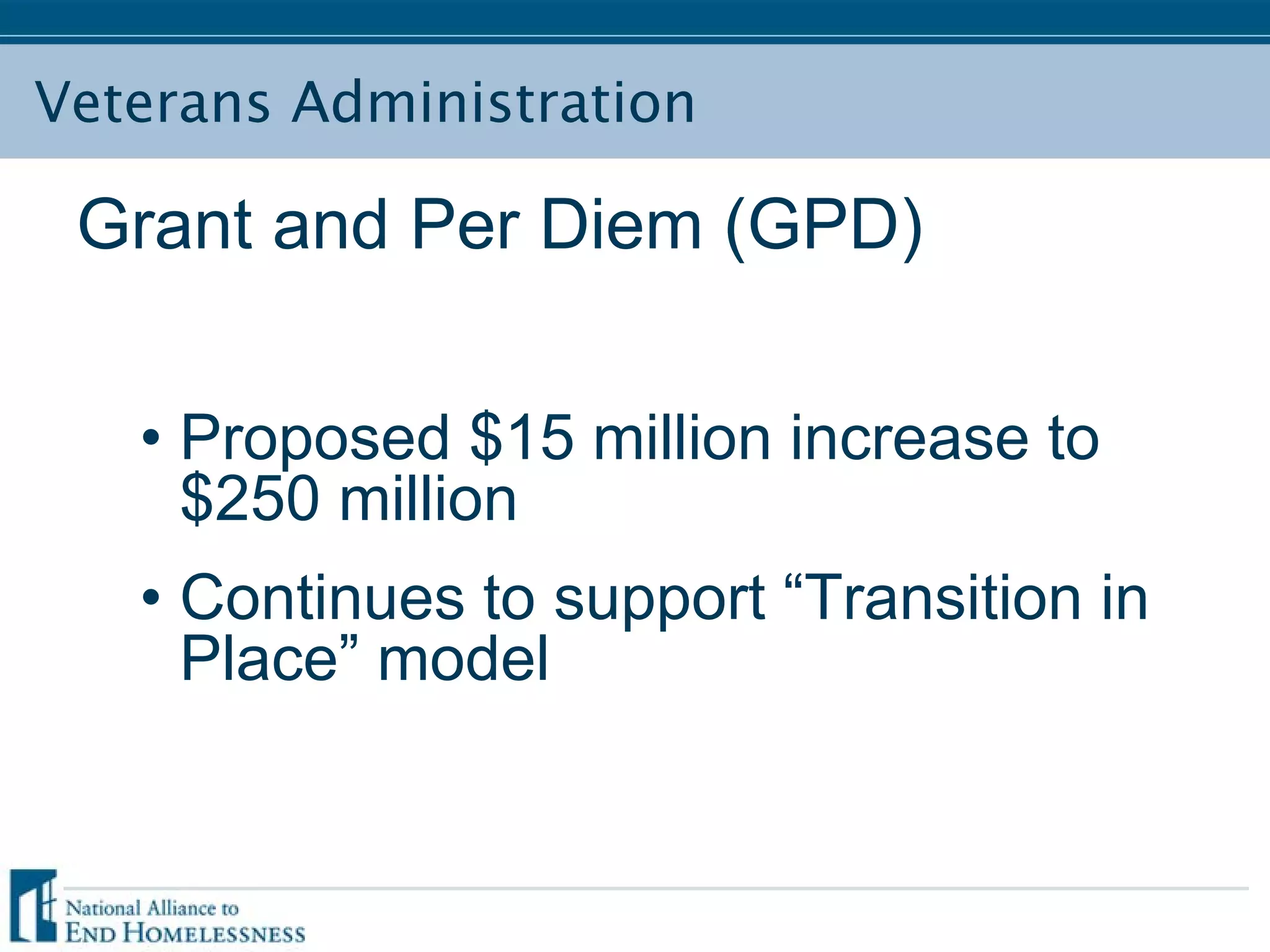
Grant and Per Diem (GPD)
• Proposed $15 million increase to
$250 million
• Continues to support “Transition in
Place” model
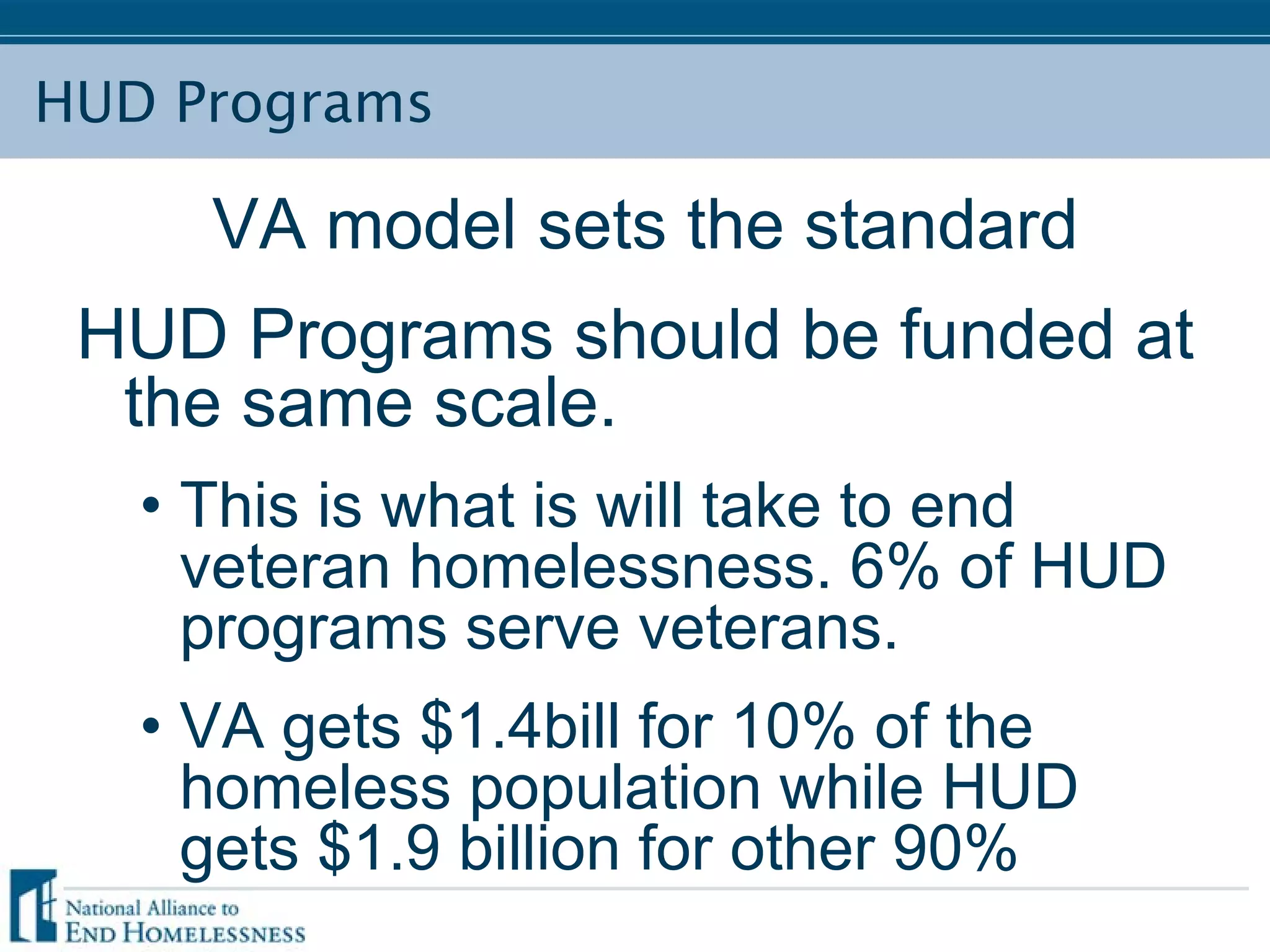
HUD Programs
VA model sets the standard
HUD Programs should be funded at
the same scale.
• This is what is will take to end
veteran homelessness. 6% of HUD
programs serve veterans.
• VA gets $1.4bill for 10% of the
homeless population while HUD
gets $1.9 billion for other 90%
Emerging Policy Issues
• Grant and Per Diem (GPD)
• SSVF Funding Cap
• Post Homeless Models
GPD – problems
• As we move closer to zero, older transitional housing
programs are not serving as many veterans
• This is due to the fact that there is a wider array of
programs (SSVF, VASH) and fewer homeless veterans
• This is a good problem to have
• GPD providers are only reimbursed if the beds their
program provides are occupied
GPD – solutions
• VA is considering proposing changes in the payment
model
• Future changes could include allowing some providers to
become permanent housing, some to become rapid re-
housing, while some remain transitional
• New populations could be served, aging homeless and
at risk, alcohol and substance abuse treatment, prison
re-entry
• This is an ongoing process with many players involved
SSVF - funding
• SSVF currently has a statutory funding cap of
$300 million
• VA may have to ask for more in FY15
• Congress may have to change the way VA
homeless programs are funded
• Tenuous budget times: sequestration, spending
caps, austerity
• Again, political will helps move these programs
forward
Post Homeless Models
• Prevention
• Emergency System
• What does no homeless veterans mean
• Functional zero
Post Homeless Models - Prevention
• There will be less homeless veterans to
house
• SSVF and other programs will serve more
at risk veterans – preventing
homelessness
• Preventing a new generation from
becoming homeless will be the new goal
Post Homeless Models – Emergency System
• There will always be some who fall
through the cracks
• A robust emergency shelter and service
system will help individuals and families
get the assistance they need
• Short term only – the goal of the
emergency system will be to move
veterans into permanent housing quickly
Post Homeless Models –what does it mean
• No homeless veterans mean different
things to different entities
• The reality is, there will be a small
population of veterans transitioning out of
the military with nowhere to call home
• There will be those who need long term
assistance as well
Post Homeless Models – Functional Zero
• Functional zero is the idea that we have
robust systems and programs in place so
no veteran should be without a place to
call home
• Those who are not housed are
transitioning into housing
• Less than 10,000 nationwide
Together we can prevent and end
homelessness among our nations heroes.
We have made significant progress, but
there is still work to be done.
Thank you for your hard work and
dedication.
Questions?

1.3 Beyond a 17 Percent Decrease: Next Steps for Ending Veteran Homelessness

  • 1.
    1.3 Beyond a17 Percent Decrease: Next Steps for Ending Veteran Homelessness: Political Will and Emerging Policy Issues Ian B. Lisman Policy Analyst on Veterans Homelessness
  • 2.
    Political Will • Budget •Moving towards Zero • SSVF • HUD-VASH • GPD
  • 3.
    Political Will Veterans homelessnessis a bi- partisan issue. Both sides of the aisle agree that we need to take care of our heroes.
  • 4.
    Political Will -Budget Proposed FY 2014 Budget: $1.4 Billion 3.5% increase ($48 Million) • Full House approved VA’s proposal. • Senate Appropriations Committee approved VA’s proposal
  • 5.
    Moving Towards Zero Gettingthere: How the budget supports the goal of ending homelessness. (* = Projected outcomes based on VA an USICH projections.)
  • 6.
    Veterans Administration Supportive Servicesfor Veteran Families (SSVF) Proposed flat funding of $300 million This maintains the large threefold increase made in FY 2013
  • 7.
    Veterans Administration &HUD HUD-VASH Housing Vouchers • 10,000 additional HUD-VASH vouchers proposed. • VA budget: case management $278 million ($33 million increase) • HUD budget: additional $75 million for housing choice vouchers
  • 8.
    Veterans Administration Grant andPer Diem (GPD) • Proposed $15 million increase to $250 million • Continues to support “Transition in Place” model
  • 9.
    HUD Programs VA modelsets the standard HUD Programs should be funded at the same scale. • This is what is will take to end veteran homelessness. 6% of HUD programs serve veterans. • VA gets $1.4bill for 10% of the homeless population while HUD gets $1.9 billion for other 90%
  • 10.
    Emerging Policy Issues •Grant and Per Diem (GPD) • SSVF Funding Cap • Post Homeless Models
  • 11.
    GPD – problems •As we move closer to zero, older transitional housing programs are not serving as many veterans • This is due to the fact that there is a wider array of programs (SSVF, VASH) and fewer homeless veterans • This is a good problem to have • GPD providers are only reimbursed if the beds their program provides are occupied
  • 12.
    GPD – solutions •VA is considering proposing changes in the payment model • Future changes could include allowing some providers to become permanent housing, some to become rapid re- housing, while some remain transitional • New populations could be served, aging homeless and at risk, alcohol and substance abuse treatment, prison re-entry • This is an ongoing process with many players involved
  • 13.
    SSVF - funding •SSVF currently has a statutory funding cap of $300 million • VA may have to ask for more in FY15 • Congress may have to change the way VA homeless programs are funded • Tenuous budget times: sequestration, spending caps, austerity • Again, political will helps move these programs forward
  • 14.
    Post Homeless Models •Prevention • Emergency System • What does no homeless veterans mean • Functional zero
  • 15.
    Post Homeless Models- Prevention • There will be less homeless veterans to house • SSVF and other programs will serve more at risk veterans – preventing homelessness • Preventing a new generation from becoming homeless will be the new goal
  • 16.
    Post Homeless Models– Emergency System • There will always be some who fall through the cracks • A robust emergency shelter and service system will help individuals and families get the assistance they need • Short term only – the goal of the emergency system will be to move veterans into permanent housing quickly
  • 17.
    Post Homeless Models–what does it mean • No homeless veterans mean different things to different entities • The reality is, there will be a small population of veterans transitioning out of the military with nowhere to call home • There will be those who need long term assistance as well
  • 18.
    Post Homeless Models– Functional Zero • Functional zero is the idea that we have robust systems and programs in place so no veteran should be without a place to call home • Those who are not housed are transitioning into housing • Less than 10,000 nationwide
  • 19.
    Together we canprevent and end homelessness among our nations heroes. We have made significant progress, but there is still work to be done. Thank you for your hard work and dedication.
  • 20.