Bed making
Fundamental of Nursing
Lecturer : Khalid . M. Abdullah
MPH ,BMS,
Bed making
Bed making is an essential procedure in nursing in which nurses prepare
and arrange different types of beds for the client's comfort in the
hospital or other health care institutions. Bed making
procedure ensures the patient's comfort according to the situation. It
may vary on the client's conditions, purposes and procedures such
as open bed, closed bed, occupied bed, cardiac bed, fracture bed,
blanket bed etc.
Cont.….
•
Nurses have a major role in bed making procedure in
hospital. So, a nurse should learn and follow the proper and
standard techniques of bed making procedure.
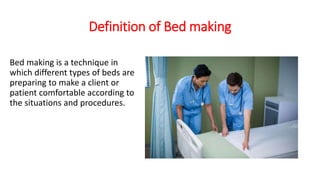
Definition of Bed making
Bed making is a technique in
which different types of beds are
preparing to make a client or
patient comfortable according to
the situations and procedures.
Purposes Of Bed Making -
1. To provide a safe and comfortable bed to the clients or patients.
2. To organize a specific ward.
3. To be prepared for any critical or emergency condition.
4. To prevent bedsores.
5. To promote neat appearance and cleanliness.
6. To teach the relatives to take care of the sick at home.
Principles Of Bed Making At Nursing
• Micro-organisms are present everywhere on the used articles,
skin, clothing and environment. Prevent the spreading of micro-
organisms from the contaminated source to the new host by
taking precautions and preventing the multiplication of the
micro-organisms.
Bed Making Procedure
Preparation of the articles for bed making procedure
1.Cot
2. Mattress and pillow
3. Chair or stool
4. Bedside table
5. Mackintosh
6. Blanket
7. Mattress cover
8. Top sheet and bottom sheet
9. Draw sheet
10. Pillowcase
11. Counterpane
12. Laundry bag
13. Dusters
Bed Making Procedure
Steps of bed making procedure
1. Wash hands.
2. Remove the pillow and place it on the chair.
3. Remove the top linen.
4. Fold the draw sheet. Bring the opposite end to the middle of the bed and fold them into
three. Place it over the chair.
5. Roll the mackintosh and place it on the chair.
6. Remove the bottom sheet and soiled mattress cover.
7. Dust the mattress with a dry duster.
8. Place the bottom sheet on the mattress and tuck it securely at the top on the near side.
9. Make a mitred corner and tuck at the foot end. Tuck the sheet along the sides.
10. Place the mackintosh nearly 37 cm from the head and tuck it along the sides.
11. Place the top sheet.
12. Place the blanket over the top sheet 15 to 20 cm below from the top of the mattress.
13. Put the pillowcase on the pillow and place the pillow at the head end.
Types Of Bed Making
• 1. Closed bed
2. Open bed
3. Admission bed
4. Occupied bed
5. Operation bed or post-anaesthetic bed or recovery bed
6. Cardiac bed
7. Fracture bed
8. Amputation bed or stump bed or divided bed
9. Blanket bed
Closed Bed
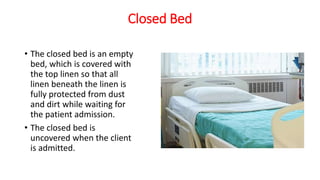
• The closed bed is an empty
bed, which is covered with
the top linen so that all
linen beneath the linen is
fully protected from dust
and dirt while waiting for
the patient admission.
• The closed bed is
uncovered when the client
is admitted.
Open Bed
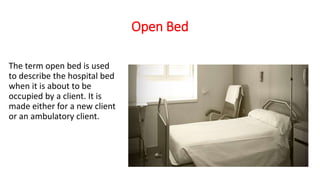
The term open bed is used
to describe the hospital bed
when it is about to be
occupied by a client. It is
made either for a new client
or an ambulatory client.
Admission Bed
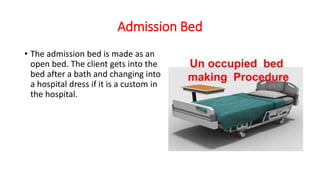
• The admission bed is made as an
open bed. The client gets into the
bed after a bath and changing into
a hospital dress if it is a custom in
the hospital.
Occupied Bed
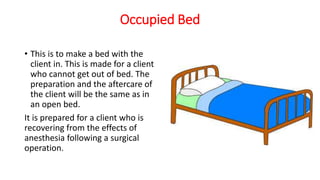
• This is to make a bed with the
client in. This is made for a client
who cannot get out of bed. The
preparation and the aftercare of
the client will be the same as in
an open bed.
It is prepared for a client who is
recovering from the effects of
anesthesia following a surgical
operation.
Cardiac Bed
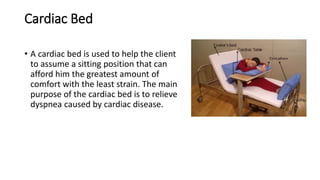
• A cardiac bed is used to help the client
to assume a sitting position that can
afford him the greatest amount of
comfort with the least strain. The main
purpose of the cardiac bed is to relieve
dyspnea caused by cardiac disease.
Fracture Bed -
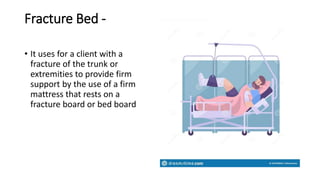
• It uses for a client with a
fracture of the trunk or
extremities to provide firm
support by the use of a firm
mattress that rests on a
fracture board or bed board
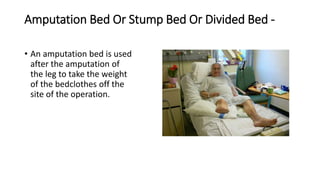
Amputation Bed Or Stump Bed Or Divided Bed -
• An amputation bed is used
after the amputation of
the leg to take the weight
of the bedclothes off the
site of the operation.
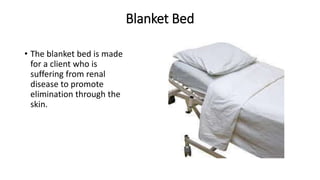
Blanket Bed
• The blanket bed is made
for a client who is
suffering from renal
disease to promote
elimination through the
skin.

beed Making.

  • 1.
    Bed making Fundamental ofNursing Lecturer : Khalid . M. Abdullah MPH ,BMS,
  • 2.
    Bed making Bed makingis an essential procedure in nursing in which nurses prepare and arrange different types of beds for the client's comfort in the hospital or other health care institutions. Bed making procedure ensures the patient's comfort according to the situation. It may vary on the client's conditions, purposes and procedures such as open bed, closed bed, occupied bed, cardiac bed, fracture bed, blanket bed etc.
  • 3.
    Cont.…. • Nurses have amajor role in bed making procedure in hospital. So, a nurse should learn and follow the proper and standard techniques of bed making procedure.
  • 4.
    Definition of Bedmaking Bed making is a technique in which different types of beds are preparing to make a client or patient comfortable according to the situations and procedures.
  • 5.
    Purposes Of BedMaking - 1. To provide a safe and comfortable bed to the clients or patients. 2. To organize a specific ward. 3. To be prepared for any critical or emergency condition. 4. To prevent bedsores. 5. To promote neat appearance and cleanliness. 6. To teach the relatives to take care of the sick at home.
  • 6.
    Principles Of BedMaking At Nursing • Micro-organisms are present everywhere on the used articles, skin, clothing and environment. Prevent the spreading of micro- organisms from the contaminated source to the new host by taking precautions and preventing the multiplication of the micro-organisms.
  • 7.
    Bed Making Procedure Preparationof the articles for bed making procedure 1.Cot 2. Mattress and pillow 3. Chair or stool 4. Bedside table 5. Mackintosh 6. Blanket 7. Mattress cover 8. Top sheet and bottom sheet 9. Draw sheet 10. Pillowcase 11. Counterpane 12. Laundry bag 13. Dusters
  • 8.
    Bed Making Procedure Stepsof bed making procedure 1. Wash hands. 2. Remove the pillow and place it on the chair. 3. Remove the top linen. 4. Fold the draw sheet. Bring the opposite end to the middle of the bed and fold them into three. Place it over the chair. 5. Roll the mackintosh and place it on the chair. 6. Remove the bottom sheet and soiled mattress cover. 7. Dust the mattress with a dry duster. 8. Place the bottom sheet on the mattress and tuck it securely at the top on the near side. 9. Make a mitred corner and tuck at the foot end. Tuck the sheet along the sides. 10. Place the mackintosh nearly 37 cm from the head and tuck it along the sides. 11. Place the top sheet. 12. Place the blanket over the top sheet 15 to 20 cm below from the top of the mattress. 13. Put the pillowcase on the pillow and place the pillow at the head end.
  • 9.
    Types Of BedMaking • 1. Closed bed 2. Open bed 3. Admission bed 4. Occupied bed 5. Operation bed or post-anaesthetic bed or recovery bed 6. Cardiac bed 7. Fracture bed 8. Amputation bed or stump bed or divided bed 9. Blanket bed
  • 10.
    Closed Bed • Theclosed bed is an empty bed, which is covered with the top linen so that all linen beneath the linen is fully protected from dust and dirt while waiting for the patient admission. • The closed bed is uncovered when the client is admitted.
  • 11.
    Open Bed The termopen bed is used to describe the hospital bed when it is about to be occupied by a client. It is made either for a new client or an ambulatory client.
  • 12.
    Admission Bed • Theadmission bed is made as an open bed. The client gets into the bed after a bath and changing into a hospital dress if it is a custom in the hospital.
  • 13.
    Occupied Bed • Thisis to make a bed with the client in. This is made for a client who cannot get out of bed. The preparation and the aftercare of the client will be the same as in an open bed. It is prepared for a client who is recovering from the effects of anesthesia following a surgical operation.
  • 14.
    Cardiac Bed • Acardiac bed is used to help the client to assume a sitting position that can afford him the greatest amount of comfort with the least strain. The main purpose of the cardiac bed is to relieve dyspnea caused by cardiac disease.
  • 15.
    Fracture Bed - •It uses for a client with a fracture of the trunk or extremities to provide firm support by the use of a firm mattress that rests on a fracture board or bed board
  • 16.
    Amputation Bed OrStump Bed Or Divided Bed - • An amputation bed is used after the amputation of the leg to take the weight of the bedclothes off the site of the operation.
  • 17.
    Blanket Bed • Theblanket bed is made for a client who is suffering from renal disease to promote elimination through the skin.