The term “infographic” is a short term
for information graphics, which refers to
an image that combines information,
storytelling, and perceptions that help
the cause of an individul or an
institution to communicate a message to
viewers.
By creating a catchy and atrractive
infographic, one can effectively
communicate a message to viewers.
The most basic of all the element
Can define the characteristics of an infographic
Can form shapes that can catch the attention of a viewer
They can be sharp, be made upon of broken lines, and fine
or thick lines, and create different impression to viewers.
Group of lines can also create patterns or shapes.
Shapes are universal symbols that do not require
language, but they can give a specific meaning regardless
of the background and ethnically of the viewer.
One of the powerful and influential elements in an
infographic.
Using the right combination colors can catch the
attention of a passerby or even glancing viewers.
Combinig colors and having a good command on
color mixtures and combinations can catch the
attention of viewers
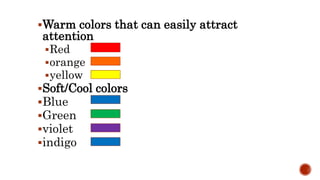
Warm colors that can easily attract
attention
Red
orange
yellow
Soft/Cool colors
Blue
Green
violet
indigo
Enclosure created by a combination of
multiple lines
Shapes express different psychological
influence on the audience especially
when combined with different colors
Describe the placements of elements,
shapes, or lines throughout the image.
Humans are always looking for balance
A proper balance in your creations will
produce an effective relationship with
your work and the viewer
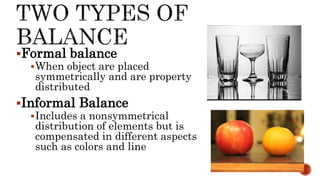
Formal balance
When object are placed
symmetrically and are property
distributed
Informal Balance
Includes a nonsymmetrical
distribution of elements but is
compensated in different aspects
such as colors and line
Arrangement of elements in an image may be
done by combining elements with different
properties and characteristics.
When all of the elements seem to be a
singular element in unison
This makes the design pleasing to the
viewers
This is the correlation of all the elements
with one another
The practice of having proportion among the
elements ensure balance and unity
Describes the product of having the
elements placed in harmony with one
another.
Rhythm can be done by using patterns
and by repeating various element
JPEG
JOINT PHOTOGRAPHIC EXPERTS
GROUP
TIFF
TAGGED IMAGE FILE FORMAT
GIF
GRAPHICS INTERCHANGE FORMAT
PNG
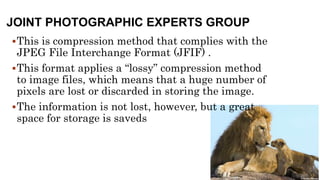
JOINT PHOTOGRAPHIC EXPERTS GROUP
This is compression method that complies with the
JPEG File Interchange Format (JFIF) .
This format applies a “lossy” compression method
to image files, which means that a huge number of
pixels are lost or discarded in storing the image.
The information is not lost, however, but a great
space for storage is saveds
TAGGED IMAGE FILE FORMAT
This is a less common file format supported by web
browsers.
This file format can use either the lossless or the
lossy compression method
GRAPHICS INTERCHANGE FORMAT
This is a popular file format for storing graphical
image with fewer colors.
This file format suppports 256 colors only
GIF compression method uses lossless compression
techniques
PORTABLE NETWORK GRAPHICS
Intention for the creation of this file format is to be
a free and open source substitute for GIF
This file format is expected to be fully compatible
with online applications.
This is a loseless compression method; thus, it is
also used in editing applications

Basic principles of graphic and layout.pptx

  • 2.
    The term “infographic”is a short term for information graphics, which refers to an image that combines information, storytelling, and perceptions that help the cause of an individul or an institution to communicate a message to viewers. By creating a catchy and atrractive infographic, one can effectively communicate a message to viewers.
  • 3.
    The most basicof all the element Can define the characteristics of an infographic Can form shapes that can catch the attention of a viewer They can be sharp, be made upon of broken lines, and fine or thick lines, and create different impression to viewers. Group of lines can also create patterns or shapes. Shapes are universal symbols that do not require language, but they can give a specific meaning regardless of the background and ethnically of the viewer.
  • 4.
    One of thepowerful and influential elements in an infographic. Using the right combination colors can catch the attention of a passerby or even glancing viewers. Combinig colors and having a good command on color mixtures and combinations can catch the attention of viewers
  • 5.
    Warm colors thatcan easily attract attention Red orange yellow Soft/Cool colors Blue Green violet indigo
  • 6.
    Enclosure created bya combination of multiple lines Shapes express different psychological influence on the audience especially when combined with different colors
  • 8.
    Describe the placementsof elements, shapes, or lines throughout the image. Humans are always looking for balance A proper balance in your creations will produce an effective relationship with your work and the viewer
  • 9.
    Formal balance When objectare placed symmetrically and are property distributed Informal Balance Includes a nonsymmetrical distribution of elements but is compensated in different aspects such as colors and line
  • 10.
    Arrangement of elementsin an image may be done by combining elements with different properties and characteristics.
  • 11.
    When all ofthe elements seem to be a singular element in unison This makes the design pleasing to the viewers
  • 12.
    This is thecorrelation of all the elements with one another The practice of having proportion among the elements ensure balance and unity
  • 13.
    Describes the productof having the elements placed in harmony with one another. Rhythm can be done by using patterns and by repeating various element
  • 15.
    JPEG JOINT PHOTOGRAPHIC EXPERTS GROUP TIFF TAGGEDIMAGE FILE FORMAT GIF GRAPHICS INTERCHANGE FORMAT PNG
  • 16.
    JOINT PHOTOGRAPHIC EXPERTSGROUP This is compression method that complies with the JPEG File Interchange Format (JFIF) . This format applies a “lossy” compression method to image files, which means that a huge number of pixels are lost or discarded in storing the image. The information is not lost, however, but a great space for storage is saveds
  • 17.
    TAGGED IMAGE FILEFORMAT This is a less common file format supported by web browsers. This file format can use either the lossless or the lossy compression method
  • 18.
    GRAPHICS INTERCHANGE FORMAT Thisis a popular file format for storing graphical image with fewer colors. This file format suppports 256 colors only GIF compression method uses lossless compression techniques
  • 19.
    PORTABLE NETWORK GRAPHICS Intentionfor the creation of this file format is to be a free and open source substitute for GIF This file format is expected to be fully compatible with online applications. This is a loseless compression method; thus, it is also used in editing applications