VISUAL
INFORMATION
AND MEDIA
S_ _ _ _N_ _ _T
1st Qtr 2nd Qtr 3rd Qtr 4th Qtr
C_ _R_
P_ _ _O_R _ _H _
PURPOSE OF VISUAL INFORMATION
Gain attention
Facilitate retention
Create meaning
COMMON
VISUAL MEDIA
TYPES
GIF (GRAPHICS INTERCHANGE
FORMAT)
•was developed by an American computer
scientist Steve Wilhite.
•It is widely used on the world wide web
because it is portable and can support
many applications and operating
programs.
PNG (PORTABLE NETWORK GRAPHICS)
•is a graphic file format that supports
data compression.
•Developed to replace the GIF
•It is used in logos ang line art
JPEG( JOINT PHOTOGRAPHIC EXPERT
GROUP)
•Most common format for uploading or
storing images in the web.
•It is the images that is usually produced
by digital photography
•most web friendly image
TIFF(TAGGED IMAGE FILE FORMAT)
•is a file format for storing graphic images,it
is popular among graphic artist,publishing
industry and photographers.
•Has a high pixel intensity
•Widely supported by scanning, faxing,
word processing and image manipulation.
BMP (ABBREVIATION FOR BITMAP)
•Also known as DIB Device Independent
Bitmap
•Capable for storing two-dimensional digital
images
•Richa and high quality images and
supported by all Windows OS.
ELEMENTS
OF VISUAL
DESIGN
LINE
•describes a shape or outline
•create texture and can be thick or
thin
•may be actual, implied,
vertical,horizontal, diagonal, or
SHAPE
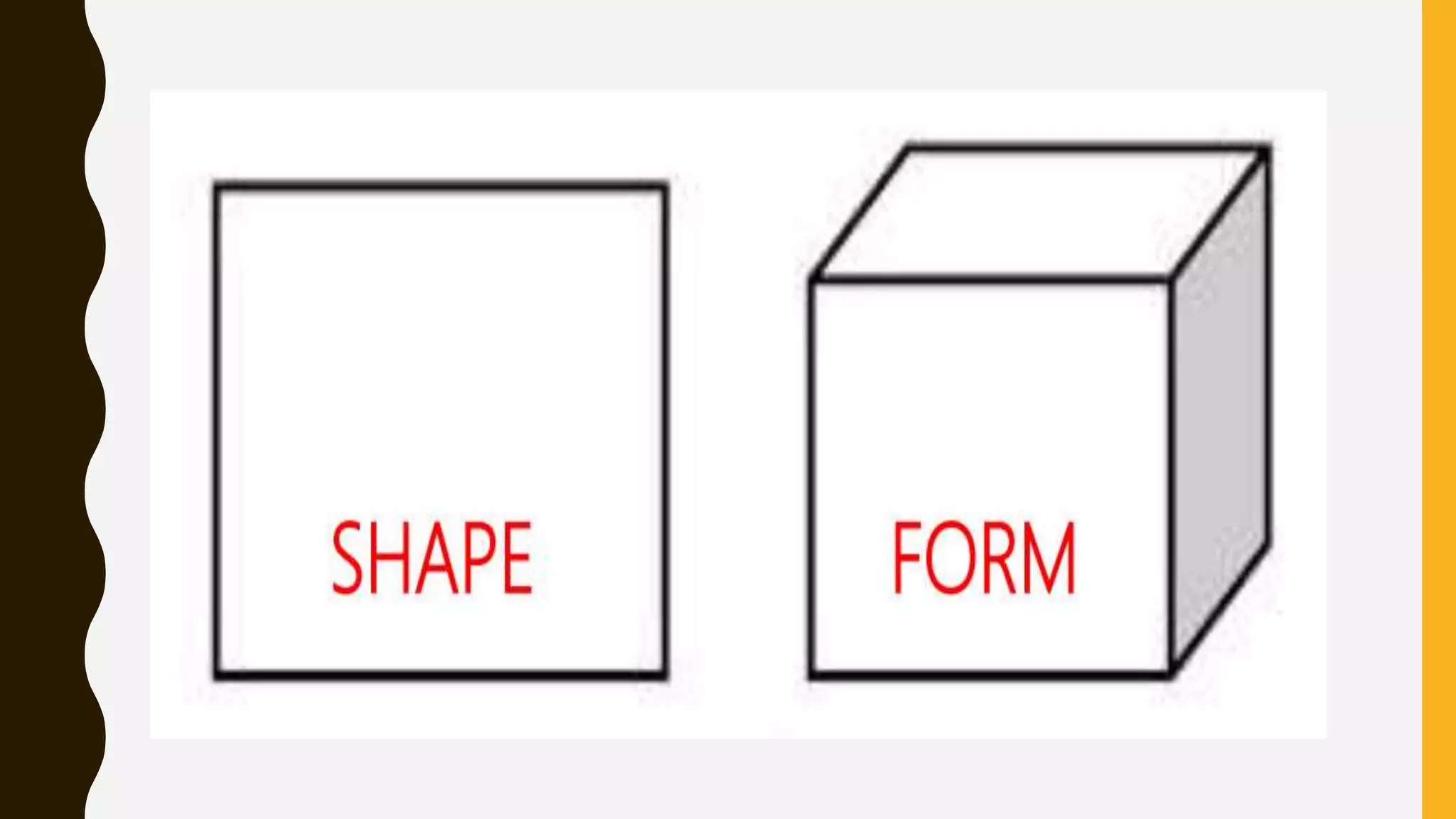
•a geometric or organic area that
stands out from the space next to
or around it, or because of
differences in value, color, or
texture.
VALUE
•the degree of light and dark in
a design
•contrast between black and
white and all the tones in
between.
TEXTURE
•way a surface feels or is perceived
to feel
•illusion of the surfaces peaks and
valleys, resulting in a feeling of
smoothness or roughness in objects
COLOR
•determined by its hue (name of
color), intensity (purity of the hue),
and value (lightness or darkness of
hue)
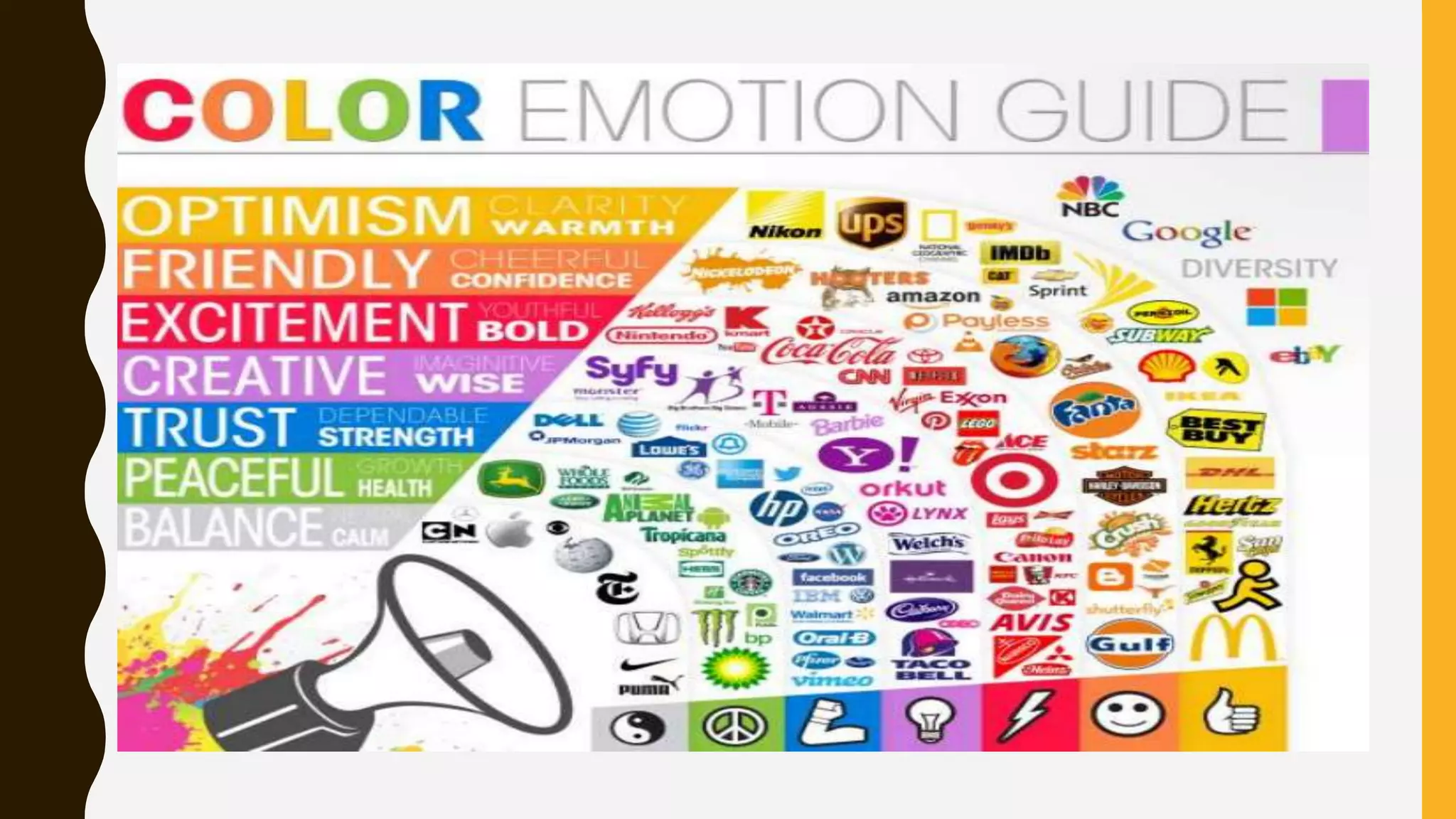
•used for emphasis, or may elicit
FORM
• a figure having volume and
thickness
•an illusion of a 3-dimensional object
can be implied with the use of light
and shading
THE END
THANK YOUFOR LISTENING

Visual information and Media

  • 1.
  • 2.
    S_ _ __N_ _ _T
  • 3.
    1st Qtr 2ndQtr 3rd Qtr 4th Qtr C_ _R_
  • 4.
    P_ _ _O_R_ _H _
  • 5.
    PURPOSE OF VISUALINFORMATION Gain attention Facilitate retention Create meaning
  • 6.
  • 7.
    GIF (GRAPHICS INTERCHANGE FORMAT) •wasdeveloped by an American computer scientist Steve Wilhite. •It is widely used on the world wide web because it is portable and can support many applications and operating programs.
  • 8.
    PNG (PORTABLE NETWORKGRAPHICS) •is a graphic file format that supports data compression. •Developed to replace the GIF •It is used in logos ang line art
  • 9.
    JPEG( JOINT PHOTOGRAPHICEXPERT GROUP) •Most common format for uploading or storing images in the web. •It is the images that is usually produced by digital photography •most web friendly image
  • 10.
    TIFF(TAGGED IMAGE FILEFORMAT) •is a file format for storing graphic images,it is popular among graphic artist,publishing industry and photographers. •Has a high pixel intensity •Widely supported by scanning, faxing, word processing and image manipulation.
  • 11.
    BMP (ABBREVIATION FORBITMAP) •Also known as DIB Device Independent Bitmap •Capable for storing two-dimensional digital images •Richa and high quality images and supported by all Windows OS.
  • 12.
  • 13.
    LINE •describes a shapeor outline •create texture and can be thick or thin •may be actual, implied, vertical,horizontal, diagonal, or
  • 15.
    SHAPE •a geometric ororganic area that stands out from the space next to or around it, or because of differences in value, color, or texture.
  • 18.
    VALUE •the degree oflight and dark in a design •contrast between black and white and all the tones in between.
  • 20.
    TEXTURE •way a surfacefeels or is perceived to feel •illusion of the surfaces peaks and valleys, resulting in a feeling of smoothness or roughness in objects
  • 23.
    COLOR •determined by itshue (name of color), intensity (purity of the hue), and value (lightness or darkness of hue) •used for emphasis, or may elicit
  • 26.
    FORM • a figurehaving volume and thickness •an illusion of a 3-dimensional object can be implied with the use of light and shading
  • 29.