The Hydrosphere, Freshwater
Distribution, and the Water Cycle
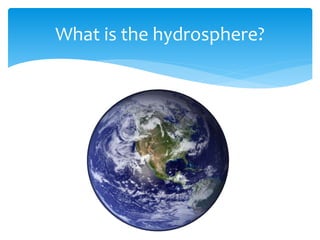
What is the hydrosphere?
 The hydrosphere includes all water
on or near the Earth’s surface
 This includes water in the oceans,
lakes, rivers, wetlands, polar ice caps,
soil, rock layers beneath Earth’s
surface, and clouds
 70% of the Earth’s surface is covered
in water
The Hydrosphere
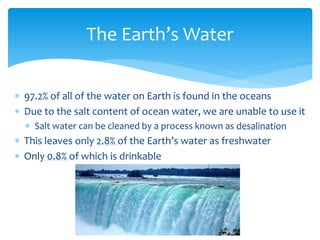
 97.2% of all of the water on Earth is found in the oceans
 Due to the salt content of ocean water, we are unable to use it
 Salt water can be cleaned by a process known as desalination
 This leaves only 2.8% of the Earth’s water as freshwater
 Only 0.8% of which is drinkable
The Earth’s Water
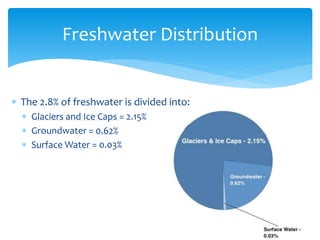
 The 2.8% of freshwater is divided into:
 Glaciers and Ice Caps = 2.15%
 Groundwater = 0.62%
 Surface Water = 0.03%
Freshwater Distribution
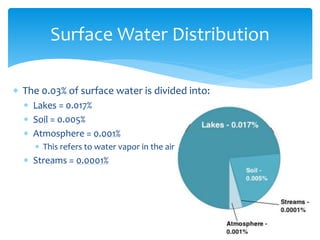
 The 0.03% of surface water is divided into:
 Lakes = 0.017%
 Soil = 0.005%
 Atmosphere = 0.001%
 This refers to water vapor in the air
 Streams = 0.0001%
Surface Water Distribution
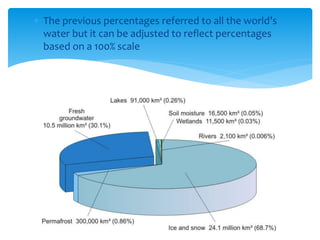
 The previous percentages referred to all the world’s
water but it can be adjusted to reflect percentages
based on a 100% scale
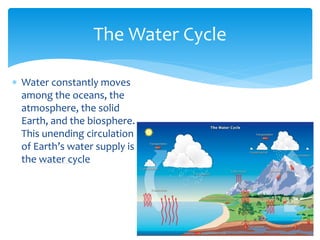
 Water constantly moves
among the oceans, the
atmosphere, the solid
Earth, and the biosphere.
This unending circulation
of Earth’s water supply is
the water cycle
The Water Cycle
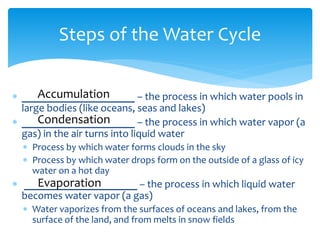
 _____________________ – the process in which water pools in
large bodies (like oceans, seas and lakes)
 _____________________ – the process in which water vapor (a
gas) in the air turns into liquid water
 Process by which water forms clouds in the sky
 Process by which water drops form on the outside of a glass of icy
water on a hot day
 _____________________ – the process in which liquid water
becomes water vapor (a gas)
 Water vaporizes from the surfaces of oceans and lakes, from the
surface of the land, and from melts in snow fields
Steps of the Water Cycle
Accumulation
Condensation
Evaporation
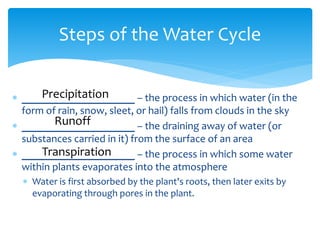
 _____________________ – the process in which water (in the
form of rain, snow, sleet, or hail) falls from clouds in the sky
 _____________________ – the draining away of water (or
substances carried in it) from the surface of an area
 _____________________ – the process in which some water
within plants evaporates into the atmosphere
 Water is first absorbed by the plant's roots, then later exits by
evaporating through pores in the plant.
Steps of the Water Cycle
Precipitation
Runoff
Transpiration
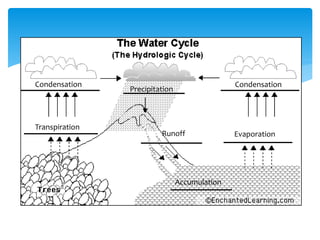
Condensation
Transpiration
Runoff
Precipitation
Accumulation
Evaporation
Condensation

Basic Hydrosphere (Hidrosfer Dasar) Day 2

  • 1.
  • 2.
    What is thehydrosphere?
  • 3.
     The hydrosphereincludes all water on or near the Earth’s surface  This includes water in the oceans, lakes, rivers, wetlands, polar ice caps, soil, rock layers beneath Earth’s surface, and clouds  70% of the Earth’s surface is covered in water The Hydrosphere
  • 4.
     97.2% ofall of the water on Earth is found in the oceans  Due to the salt content of ocean water, we are unable to use it  Salt water can be cleaned by a process known as desalination  This leaves only 2.8% of the Earth’s water as freshwater  Only 0.8% of which is drinkable The Earth’s Water
  • 5.
     The 2.8%of freshwater is divided into:  Glaciers and Ice Caps = 2.15%  Groundwater = 0.62%  Surface Water = 0.03% Freshwater Distribution
  • 6.
     The 0.03%of surface water is divided into:  Lakes = 0.017%  Soil = 0.005%  Atmosphere = 0.001%  This refers to water vapor in the air  Streams = 0.0001% Surface Water Distribution
  • 7.
     The previouspercentages referred to all the world’s water but it can be adjusted to reflect percentages based on a 100% scale
  • 8.
     Water constantlymoves among the oceans, the atmosphere, the solid Earth, and the biosphere. This unending circulation of Earth’s water supply is the water cycle The Water Cycle
  • 9.
     _____________________ –the process in which water pools in large bodies (like oceans, seas and lakes)  _____________________ – the process in which water vapor (a gas) in the air turns into liquid water  Process by which water forms clouds in the sky  Process by which water drops form on the outside of a glass of icy water on a hot day  _____________________ – the process in which liquid water becomes water vapor (a gas)  Water vaporizes from the surfaces of oceans and lakes, from the surface of the land, and from melts in snow fields Steps of the Water Cycle Accumulation Condensation Evaporation
  • 10.
     _____________________ –the process in which water (in the form of rain, snow, sleet, or hail) falls from clouds in the sky  _____________________ – the draining away of water (or substances carried in it) from the surface of an area  _____________________ – the process in which some water within plants evaporates into the atmosphere  Water is first absorbed by the plant's roots, then later exits by evaporating through pores in the plant. Steps of the Water Cycle Precipitation Runoff Transpiration
  • 11.