INTRODUCTION
TO FIRST AID
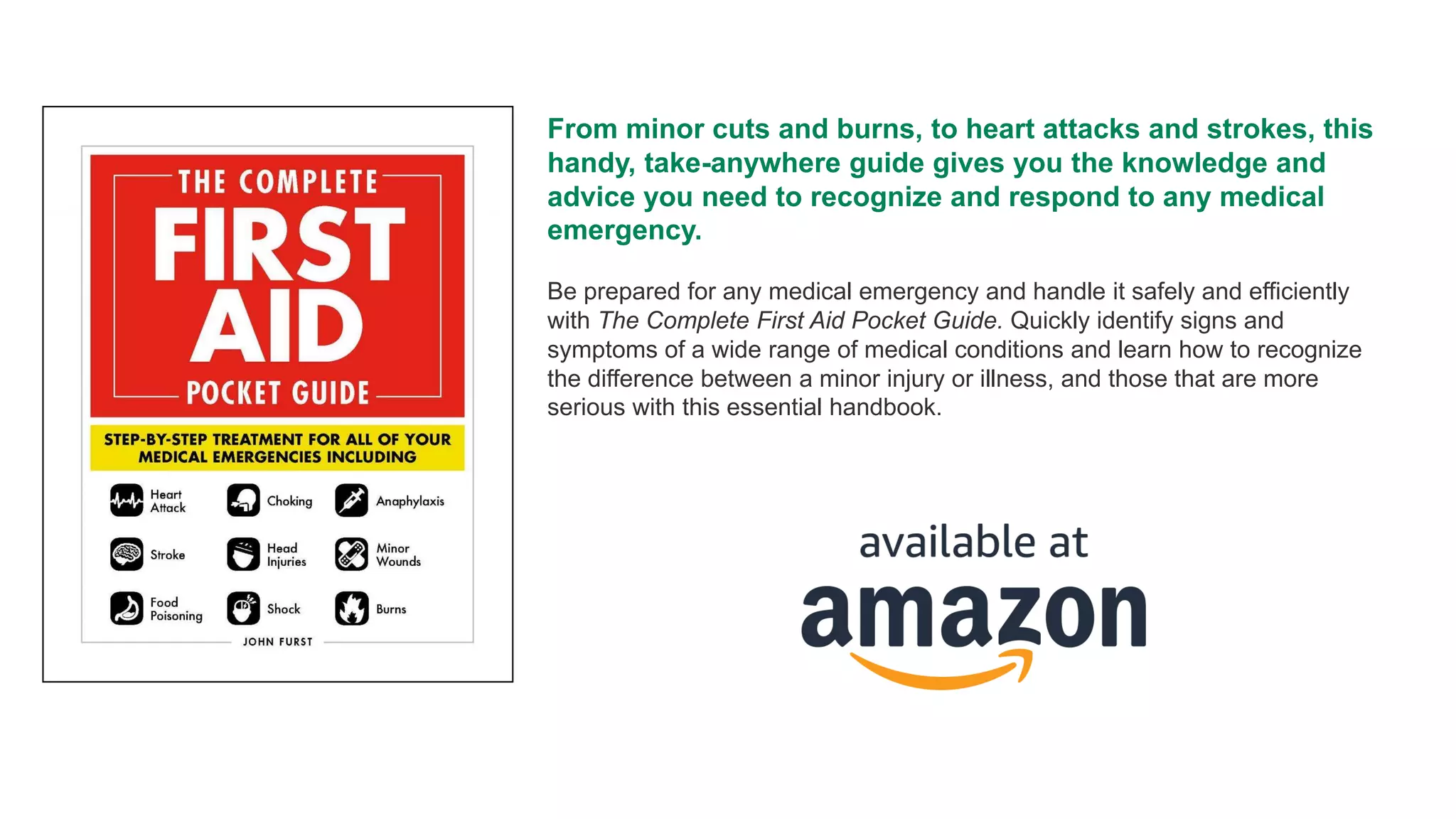
From minor cuts and burns, to heart attacks and strokes, this
handy, take-anywhere guide gives you the knowledge and
advice you need to recognize and respond to any medical
emergency.
Be prepared for any medical emergency and handle it safely and efficiently
with The Complete First Aid Pocket Guide. Quickly identify signs and
symptoms of a wide range of medical conditions and learn how to recognize
the difference between a minor injury or illness, and those that are more
serious with this essential handbook.
FIRSTAIDPOWERPOINT.ORG
The Definition of First Aid
“Help given to a sick or injured
person until full medical treatment
is available”
“…provision of initial care for an
illness or injury”
FIRSTAIDPOWERPOINT.ORG
The Aims of First Aid
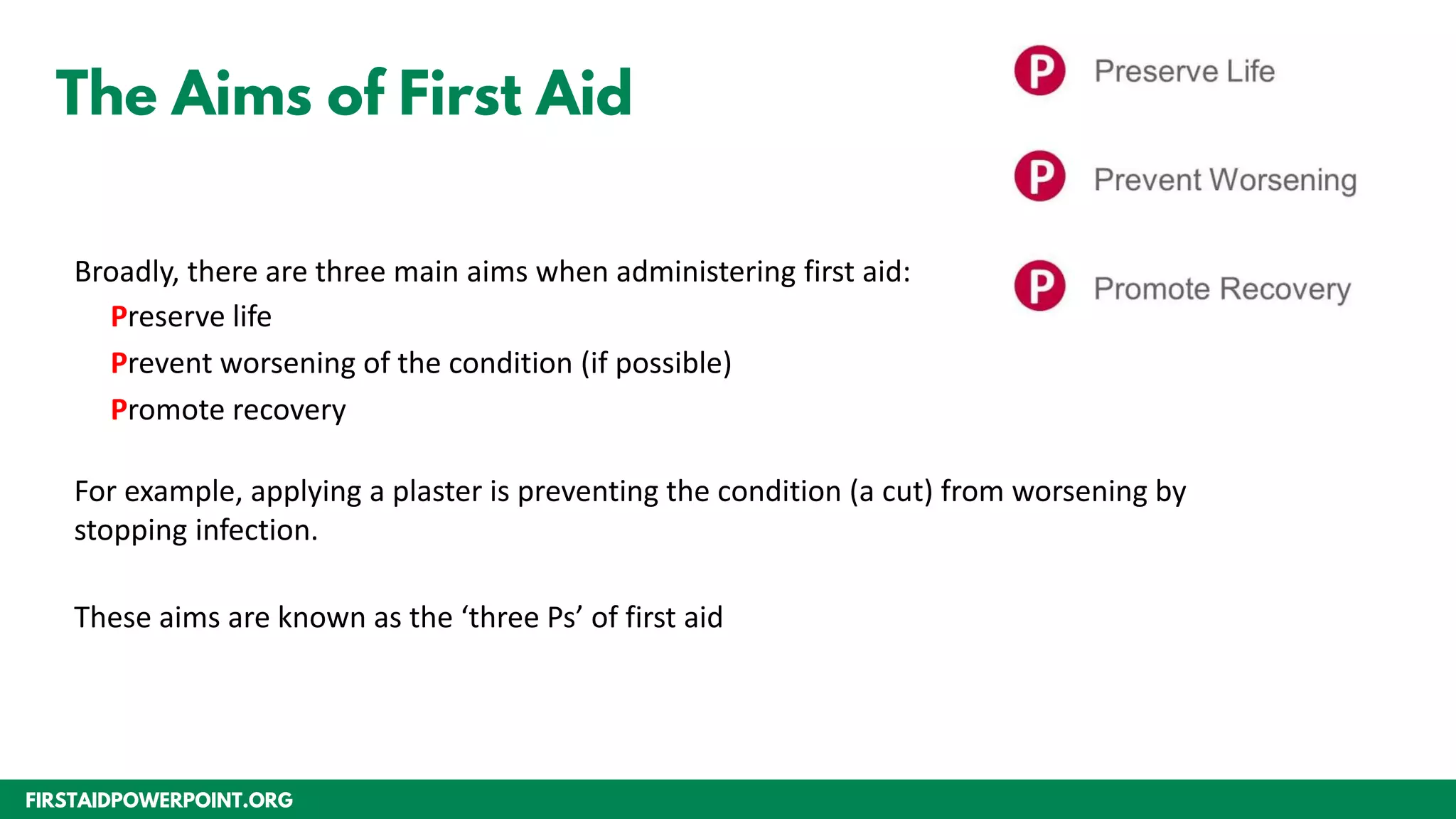
Broadly, there are three main aims when administering first aid:
Preserve life
Prevent worsening of the condition (if possible)
Promote recovery
For example, applying a plaster is preventing the condition (a cut) from worsening by
stopping infection.
These aims are known as the ‘three Ps’ of first aid
FIRSTAIDPOWERPOINT.ORG
Roles and Responsibilities of a First Aider
A first aider has various roles and responsibilities. They should:
• Manage the incident and ensure the continuing safety of themselves, bystanders and the patient
• Assess victims and find out the nature & cause of their injuries
• Arrange for further medical help or other emergency services to attend
• If trained, prioritise casualties based upon medical need
• Provide appropriate first aid treatment as trained
• If able, make notes/observations of casualties
• Fill out any paperwork as required
• Provide a handover when further medical help arrives
FIRSTAIDPOWERPOINT.ORG
Calling for Emergency Help
In many first aid situations, help from the emergency services will be required.
Ensure you know the best emergency service number to use.
– United Kingdom: 999
– United States: 911
– European Union: 112
– Other countries:
https://en.wikipedia.org/wiki/List_of_emergency_telephone_numbers
FIRSTAIDPOWERPOINT.ORG
Calling for Emergency Help
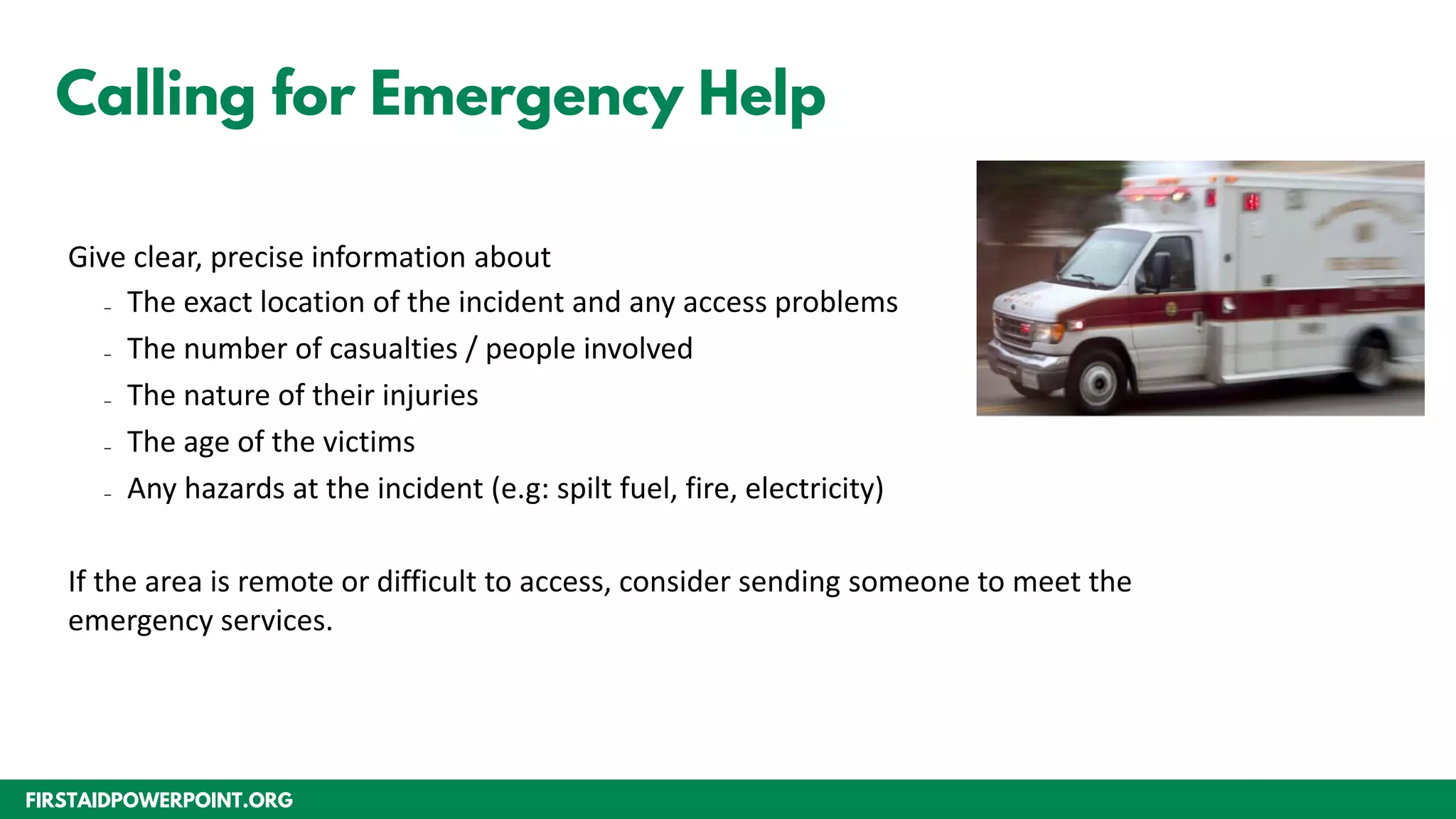
Give clear, precise information about
– The exact location of the incident and any access problems
– The number of casualties / people involved
– The nature of their injuries
– The age of the victims
– Any hazards at the incident (e.g: spilt fuel, fire, electricity)
If the area is remote or difficult to access, consider sending someone to meet the
emergency services.
FIRSTAIDPOWERPOINT.ORG
Incident Management
Always conduct a risk assessment before rushing into any situation. Look for any potential
hazards to yourself, bystanders or the patient (e.g: moving traffic, fire & smoke, electricity).
Never put yourself or other bystanders in danger.
Remember, YOU are the most important person
If the incident is too dangerous to approach, stay back and await the arrival of the
emergency services.
FIRSTAIDPOWERPOINT.ORG
Incident Management
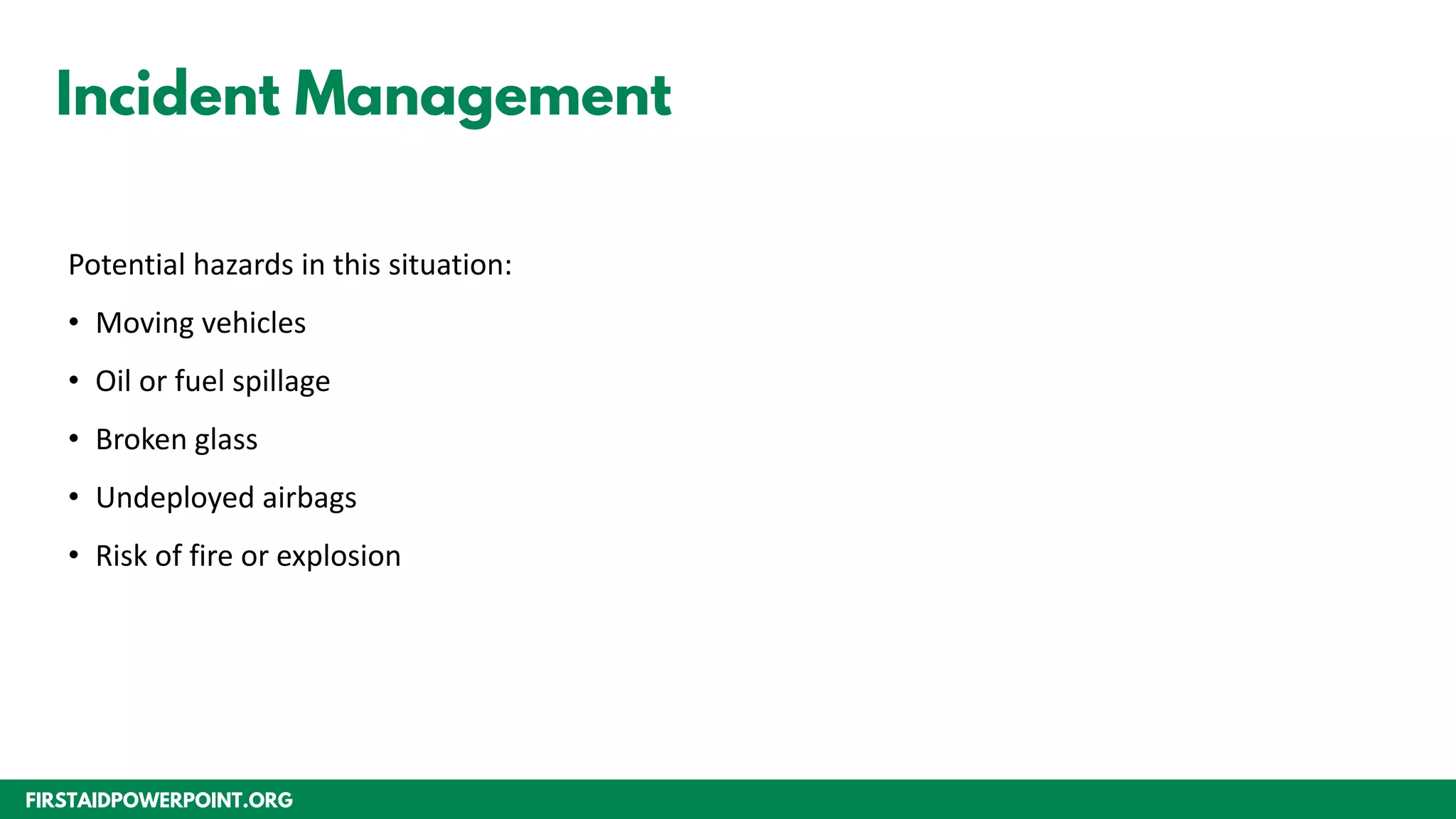
Think about the photo on the next slide (either individually or in groups)
Take a few minutes to discuss:
1) How would you manage this incident?
2) What dangers are present or could be present?
3) What should your first action be?
FIRSTAIDPOWERPOINT.ORG
Incident Management
FIRSTAIDPOWERPOINT.ORG
Incident Management
Potential hazards in this situation:
• Moving vehicles
• Oil or fuel spillage
• Broken glass
• Undeployed airbags
• Risk of fire or explosion
FIRSTAIDPOWERPOINT.ORG
Infection Control
Various diseases can be transmitted via blood and body fluids (for example
HIV and Hepatitis B & C)
If possible, always wear disposable gloves when dealing with bodily fluids
HOWEVER: This is not always practical! In an emergency situation you can
improvise and use anything to create a barrier. e.g: a plastic carrier bag
Ensure any cuts/open injuries to your hands are covered with waterproof
plasters or dressings.
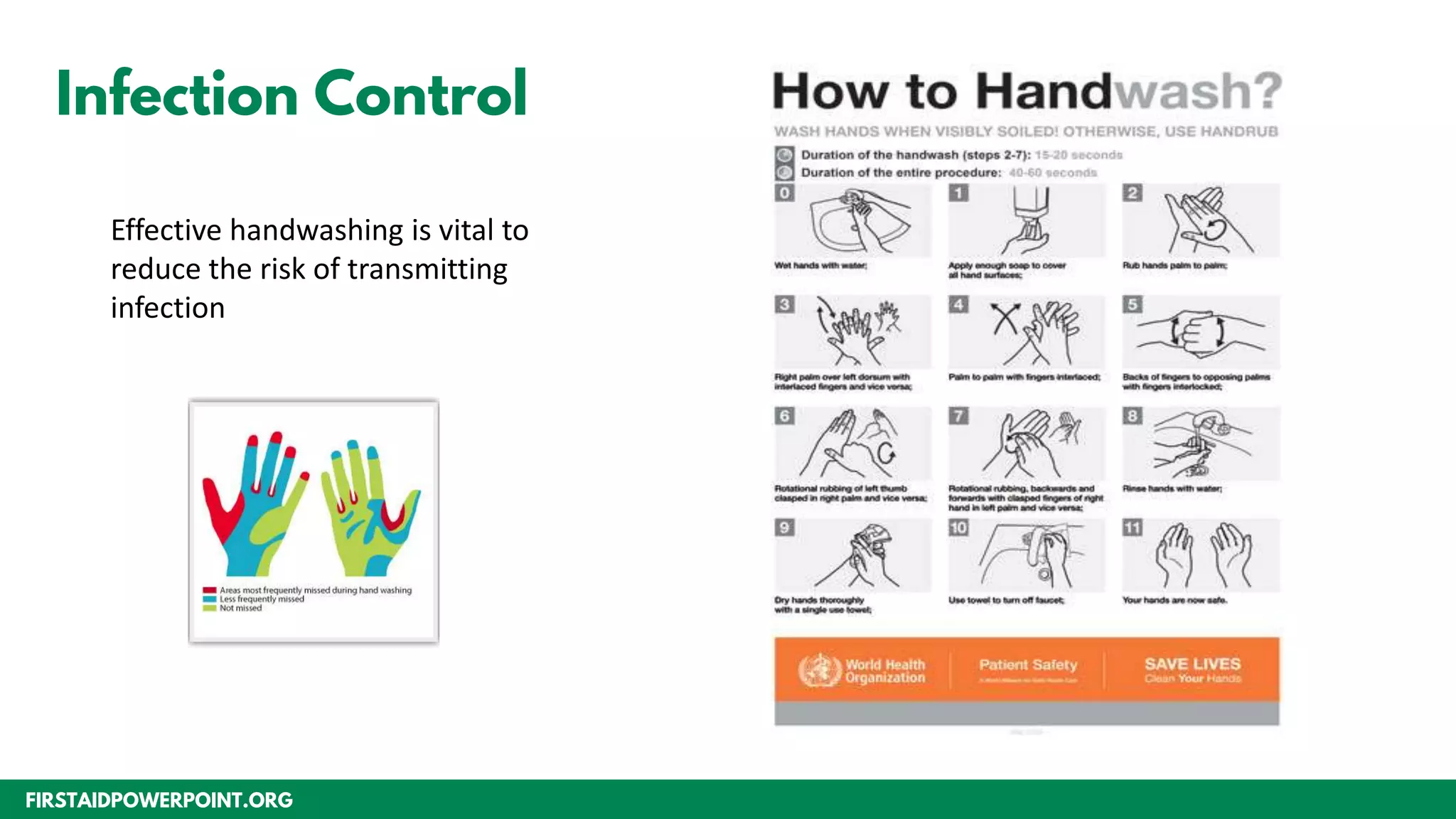
Wash your hands with soap and running warm water whenever possible
FIRSTAIDPOWERPOINT.ORG
Infection Control
Effective handwashing is vital to
reduce the risk of transmitting
infection
FIRSTAIDPOWERPOINT.ORG
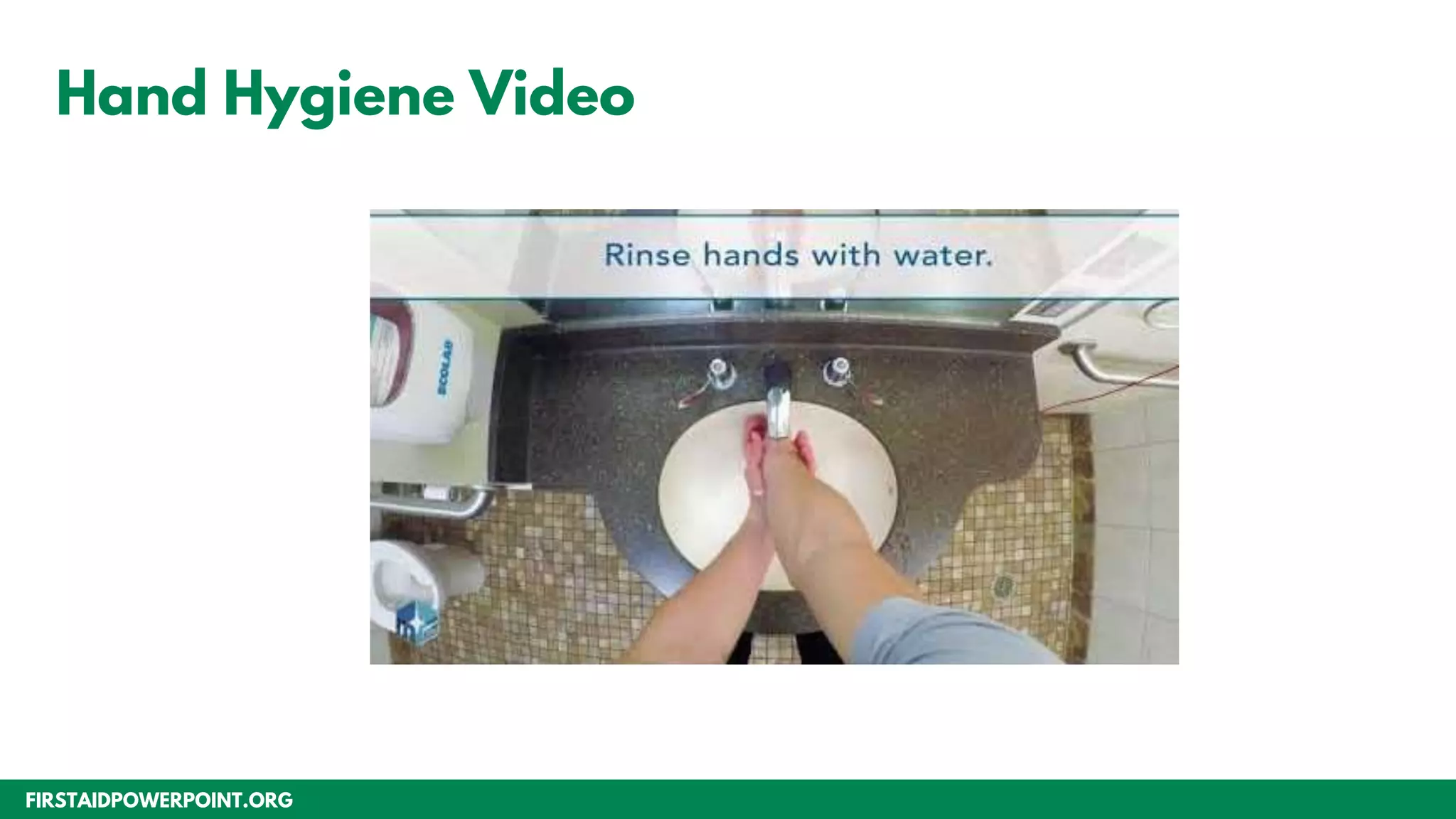
Hand Hygiene Video

Basic First Aid - Introduction to First Aid

  • 1.
  • 2.
    From minor cutsand burns, to heart attacks and strokes, this handy, take-anywhere guide gives you the knowledge and advice you need to recognize and respond to any medical emergency. Be prepared for any medical emergency and handle it safely and efficiently with The Complete First Aid Pocket Guide. Quickly identify signs and symptoms of a wide range of medical conditions and learn how to recognize the difference between a minor injury or illness, and those that are more serious with this essential handbook.
  • 3.
    FIRSTAIDPOWERPOINT.ORG The Definition ofFirst Aid “Help given to a sick or injured person until full medical treatment is available” “…provision of initial care for an illness or injury”
  • 4.
    FIRSTAIDPOWERPOINT.ORG The Aims ofFirst Aid Broadly, there are three main aims when administering first aid: Preserve life Prevent worsening of the condition (if possible) Promote recovery For example, applying a plaster is preventing the condition (a cut) from worsening by stopping infection. These aims are known as the ‘three Ps’ of first aid
  • 5.
    FIRSTAIDPOWERPOINT.ORG Roles and Responsibilitiesof a First Aider A first aider has various roles and responsibilities. They should: • Manage the incident and ensure the continuing safety of themselves, bystanders and the patient • Assess victims and find out the nature & cause of their injuries • Arrange for further medical help or other emergency services to attend • If trained, prioritise casualties based upon medical need • Provide appropriate first aid treatment as trained • If able, make notes/observations of casualties • Fill out any paperwork as required • Provide a handover when further medical help arrives
  • 6.
    FIRSTAIDPOWERPOINT.ORG Calling for EmergencyHelp In many first aid situations, help from the emergency services will be required. Ensure you know the best emergency service number to use. – United Kingdom: 999 – United States: 911 – European Union: 112 – Other countries: https://en.wikipedia.org/wiki/List_of_emergency_telephone_numbers
  • 7.
    FIRSTAIDPOWERPOINT.ORG Calling for EmergencyHelp Give clear, precise information about – The exact location of the incident and any access problems – The number of casualties / people involved – The nature of their injuries – The age of the victims – Any hazards at the incident (e.g: spilt fuel, fire, electricity) If the area is remote or difficult to access, consider sending someone to meet the emergency services.
  • 8.
    FIRSTAIDPOWERPOINT.ORG Incident Management Always conducta risk assessment before rushing into any situation. Look for any potential hazards to yourself, bystanders or the patient (e.g: moving traffic, fire & smoke, electricity). Never put yourself or other bystanders in danger. Remember, YOU are the most important person If the incident is too dangerous to approach, stay back and await the arrival of the emergency services.
  • 9.
    FIRSTAIDPOWERPOINT.ORG Incident Management Think aboutthe photo on the next slide (either individually or in groups) Take a few minutes to discuss: 1) How would you manage this incident? 2) What dangers are present or could be present? 3) What should your first action be?
  • 10.
  • 11.
    FIRSTAIDPOWERPOINT.ORG Incident Management Potential hazardsin this situation: • Moving vehicles • Oil or fuel spillage • Broken glass • Undeployed airbags • Risk of fire or explosion
  • 12.
    FIRSTAIDPOWERPOINT.ORG Infection Control Various diseasescan be transmitted via blood and body fluids (for example HIV and Hepatitis B & C) If possible, always wear disposable gloves when dealing with bodily fluids HOWEVER: This is not always practical! In an emergency situation you can improvise and use anything to create a barrier. e.g: a plastic carrier bag Ensure any cuts/open injuries to your hands are covered with waterproof plasters or dressings. Wash your hands with soap and running warm water whenever possible
  • 13.
    FIRSTAIDPOWERPOINT.ORG Infection Control Effective handwashingis vital to reduce the risk of transmitting infection
  • 14.

Editor's Notes

  • #15 https://www.youtube.com/watch?v=17NgFQODrvQ