
BY
Prof .Samanath S Karaddy
Doddappa Appa Institute of MBA
Kalaburagi-585103
Email-karaddy@gmail.com
Definitions of OB
 OB is concerned with the study of human behavior at
work. In other words OB is the study & application of
knowledge about how people as individuals & as a group
behave or act in organizations.
 OB is the study of what people do in an
organizations & how their behavior affects the
organizations performance. Because OB is concerned
specifically with employment related situations like
work, absenteeism, employment turnover, productivity,
human performance & management.
 OB is a field of study, meaning that it is a distinct area of
expertise with a common body of knowledge. It studies
three determinants of behavior in organizations,
individuals, groups & structure.
 In addition OB applies the knowledge gained about
individuals, groups & the effect of structure on behavior
in order to make organizations work more effectively.
Key Elements of OB :
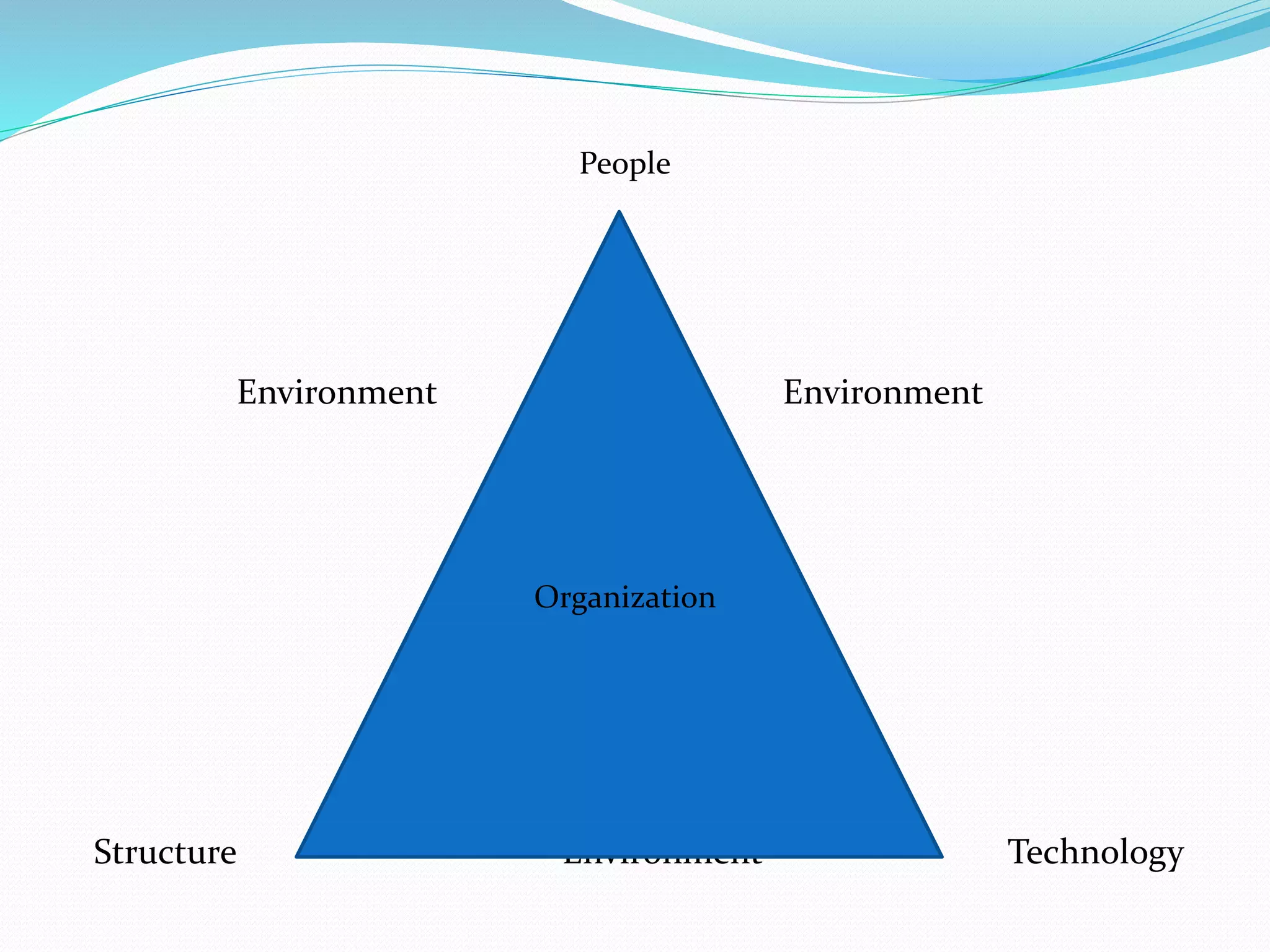
 Like other disciplines, OB is also based on certain key
elements also called fundamental concepts. These are
four key elements in OB.
 OB is directly concerned with the understanding,
prediction & control of human behavior in
organizations.
Environment Environment
Structure Environment Technology
Organization
People
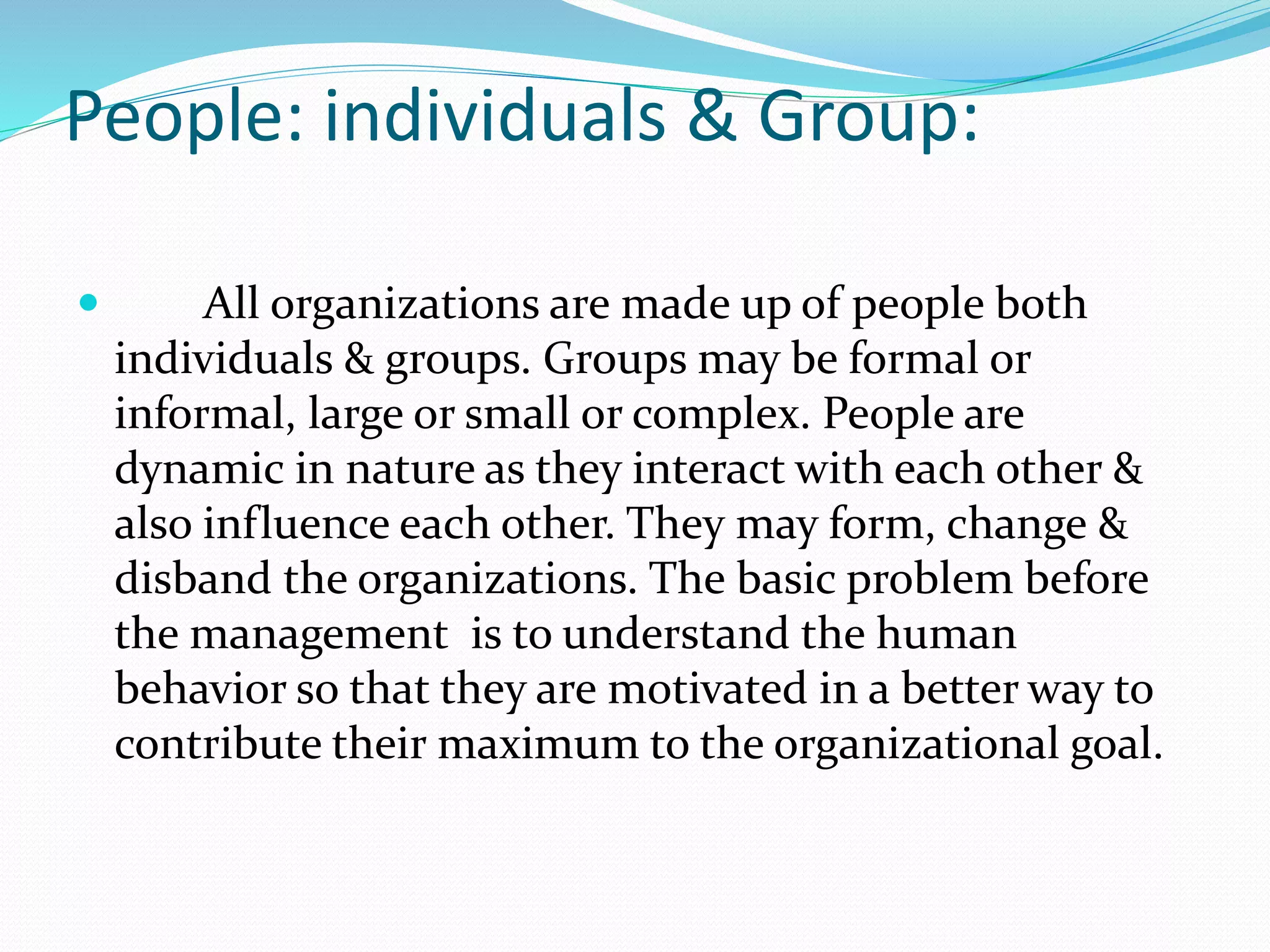
People: individuals & Group:
 All organizations are made up of people both
individuals & groups. Groups may be formal or
informal, large or small or complex. People are
dynamic in nature as they interact with each other &
also influence each other. They may form, change &
disband the organizations. The basic problem before
the management is to understand the human
behavior so that they are motivated in a better way to
contribute their maximum to the organizational goal.
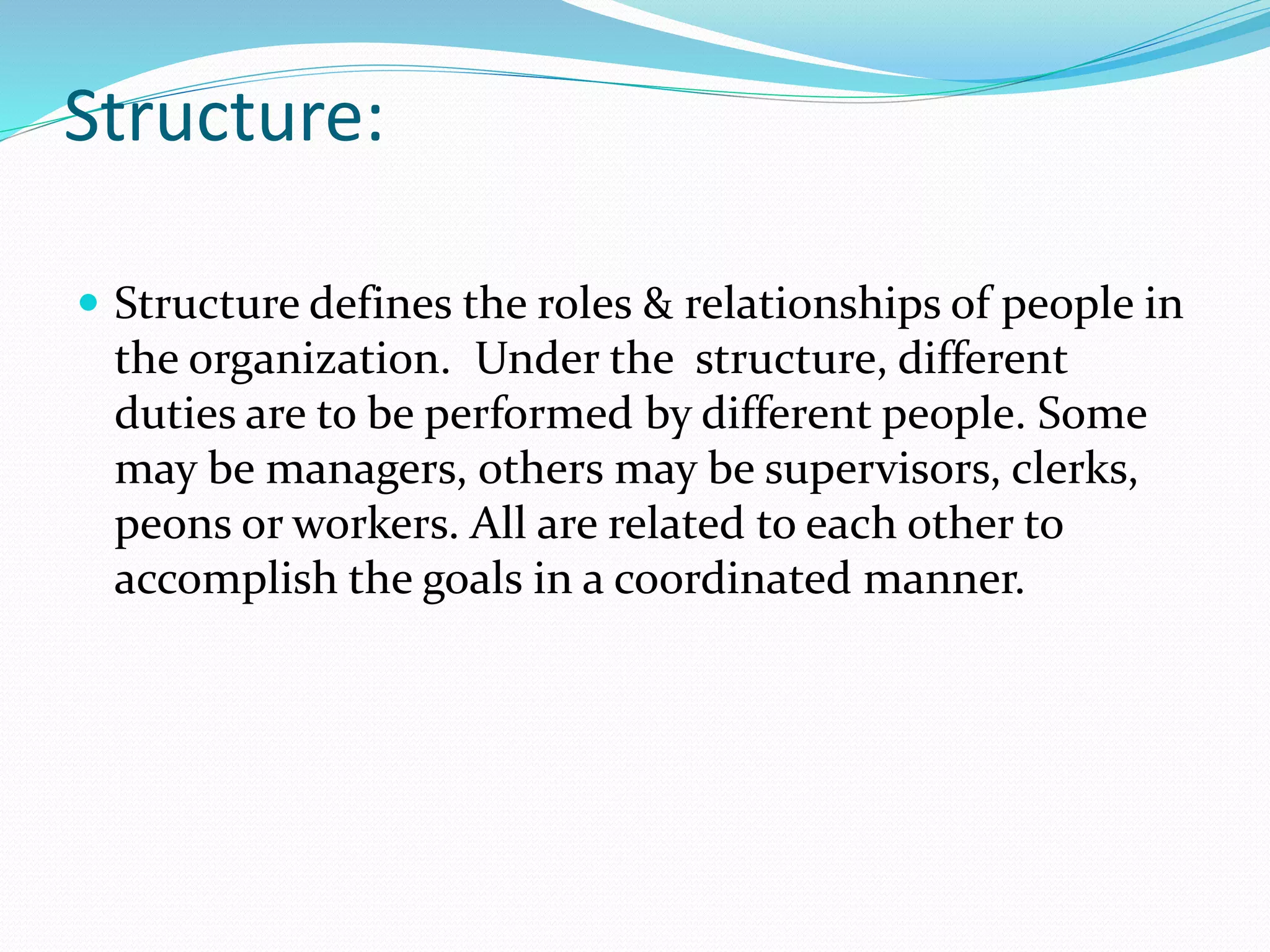
Structure:
 Structure defines the roles & relationships of people in
the organization. Under the structure, different
duties are to be performed by different people. Some
may be managers, others may be supervisors, clerks,
peons or workers. All are related to each other to
accomplish the goals in a coordinated manner.
Technology:
 The nature of technology depends very much on the
nature of the organizational activities. The technology
is an important determinant of organizations in the
organizations. It also puts restrictions on the freedom
of individuals.
Environment:
 Organizations are influenced by external environment
which include socio-cultural, economic, political-legal
& geographical forces,. These influence attitudes,
motives & perceptions of people in the organizations.
Disciplines that contribute to the
OB field:
1) Psychology:
It is the study of human mental response in
different situations.
2) Sociology:
It is the study of social system in which
individuals are part. OB has received valuable inputs
in the field of group dynamics, team work
organizational culture formal & informal
organizations etc.
3) Socio Psychology:
It is the study of influence of one person to another.
To OB it has contributed satisfaction, needs & group
decision making.
4) Anthropology:
It is the study of societies to learn about human beings
& their activities. Much of our current understanding of
organizational culture, environment & difference among
national culture is a result of the work of anthropologist or
those using their methods.
5) Political Science:
It is the study of human beings in a political
environment. Its contributions to OB are power,
politics, conflicts etc.
Scope of OB:
Scope of OB includes the study of individuals,
groups & organization structure.
1) Individuals:
Organizations are the associations of individuals.
Individuals differ in many respects. The study of
individuals therefore includes aspects such as
personality, perception, attitudes, values, job
satisfaction, learning & motivation.
2) Groups:
Groups include aspects such as group dynamics, group
conflicts, communication, leadership, power & politics.
3) Organization Structure:
The study of organization structure includes aspects
such as formation of organizational structure, culture &
change & development.
In nutshell, OB studies hoe organizations influence
people or how people influence organizations.
Objectives of OB
1) It explains why & how a person behaves.
2) It helps to predict how an individual might
behave or react at a particular situation.
3) It helps a manager to have control over his
employees.
4) It also allows an individual to even have
control over his feelings & emotions.
Models of OB:
1) Autocratic Models:
Autocratic describes a way of ruling, but not in a nice
way. An autocratic leader is one who rules with an iron fist
in other words someone with the behavior of a dictator.
The managers exercise their command over employees.
The managers give orders to employees & they need to
obey it.
2) Custodial Model:
Employees usually think bad about Autocratic
system. Thus managers develop custodial Model which
helps to develop better employee satisfaction & security.
3) Supportive Model:
It is a style that provides an atmosphere to help
employees grow & accomplish their tasks successfully. Here
the workers become ready to share responsibility & they
improve themselves.
4) Collegial Model:
It is an extension of supportive model. It means a
group of people having common purpose. Its basic
function lies on the management building a feeling of
partnership with employees.
Basic Concepts of Organizational Bahavior

Basic Concepts of Organizational Bahavior

  • 1.
    BY Prof .Samanath SKaraddy Doddappa Appa Institute of MBA Kalaburagi-585103 Email-karaddy@gmail.com
  • 2.
    Definitions of OB OB is concerned with the study of human behavior at work. In other words OB is the study & application of knowledge about how people as individuals & as a group behave or act in organizations.  OB is the study of what people do in an organizations & how their behavior affects the organizations performance. Because OB is concerned specifically with employment related situations like work, absenteeism, employment turnover, productivity, human performance & management.
  • 3.
     OB isa field of study, meaning that it is a distinct area of expertise with a common body of knowledge. It studies three determinants of behavior in organizations, individuals, groups & structure.  In addition OB applies the knowledge gained about individuals, groups & the effect of structure on behavior in order to make organizations work more effectively.
  • 4.
    Key Elements ofOB :  Like other disciplines, OB is also based on certain key elements also called fundamental concepts. These are four key elements in OB.  OB is directly concerned with the understanding, prediction & control of human behavior in organizations.
  • 5.
    Environment Environment Structure EnvironmentTechnology Organization People
  • 6.
    People: individuals &Group:  All organizations are made up of people both individuals & groups. Groups may be formal or informal, large or small or complex. People are dynamic in nature as they interact with each other & also influence each other. They may form, change & disband the organizations. The basic problem before the management is to understand the human behavior so that they are motivated in a better way to contribute their maximum to the organizational goal.
  • 7.
    Structure:  Structure definesthe roles & relationships of people in the organization. Under the structure, different duties are to be performed by different people. Some may be managers, others may be supervisors, clerks, peons or workers. All are related to each other to accomplish the goals in a coordinated manner.
  • 8.
    Technology:  The natureof technology depends very much on the nature of the organizational activities. The technology is an important determinant of organizations in the organizations. It also puts restrictions on the freedom of individuals.
  • 9.
    Environment:  Organizations areinfluenced by external environment which include socio-cultural, economic, political-legal & geographical forces,. These influence attitudes, motives & perceptions of people in the organizations.
  • 10.
    Disciplines that contributeto the OB field: 1) Psychology: It is the study of human mental response in different situations. 2) Sociology: It is the study of social system in which individuals are part. OB has received valuable inputs in the field of group dynamics, team work organizational culture formal & informal organizations etc.
  • 11.
    3) Socio Psychology: Itis the study of influence of one person to another. To OB it has contributed satisfaction, needs & group decision making. 4) Anthropology: It is the study of societies to learn about human beings & their activities. Much of our current understanding of organizational culture, environment & difference among national culture is a result of the work of anthropologist or those using their methods.
  • 12.
    5) Political Science: Itis the study of human beings in a political environment. Its contributions to OB are power, politics, conflicts etc.
  • 13.
    Scope of OB: Scopeof OB includes the study of individuals, groups & organization structure. 1) Individuals: Organizations are the associations of individuals. Individuals differ in many respects. The study of individuals therefore includes aspects such as personality, perception, attitudes, values, job satisfaction, learning & motivation.
  • 14.
    2) Groups: Groups includeaspects such as group dynamics, group conflicts, communication, leadership, power & politics. 3) Organization Structure: The study of organization structure includes aspects such as formation of organizational structure, culture & change & development. In nutshell, OB studies hoe organizations influence people or how people influence organizations.
  • 15.
    Objectives of OB 1)It explains why & how a person behaves. 2) It helps to predict how an individual might behave or react at a particular situation. 3) It helps a manager to have control over his employees. 4) It also allows an individual to even have control over his feelings & emotions.
  • 16.
    Models of OB: 1)Autocratic Models: Autocratic describes a way of ruling, but not in a nice way. An autocratic leader is one who rules with an iron fist in other words someone with the behavior of a dictator. The managers exercise their command over employees. The managers give orders to employees & they need to obey it. 2) Custodial Model: Employees usually think bad about Autocratic system. Thus managers develop custodial Model which helps to develop better employee satisfaction & security.
  • 17.
    3) Supportive Model: Itis a style that provides an atmosphere to help employees grow & accomplish their tasks successfully. Here the workers become ready to share responsibility & they improve themselves. 4) Collegial Model: It is an extension of supportive model. It means a group of people having common purpose. Its basic function lies on the management building a feeling of partnership with employees.