BASIC CONCEPTS
Society:
• Complex pattern of interactions
• Society – a process rather than a thing
• System of relationships
• Derived from Latin word “socious”
• Means companionship or friendship
• Companionship - sociability
George Simmel
• Gregarious instinct of man
• Compels to live in company of others
Aristotel
• Man is a social animal
• Man needs society for his existence
• Human life and society go together
Definition of Society
1. Mociver and Page
• Society – system of usages
• Authority, Mutual aid
• Many grouping, divisions
• Controls of human behavior
• And of liberties
2. G.D.M. Cole
• Complex of organized associations
• Institutions within community
3. Ginsberg
• Collection of individuals united by relations,
mode of behavior
• Which make them off from others.
4. Maciver
• Web of social relationships
5. Giddings
• it is the union itself
• The organization
• The sum of formal relations
6. Lapiere
• Complex pattern of norms of interaction
7. Green
• It is the larger group
• Any individual belongs
Society
• Structural and functional organization
• Mutual interactions
• Structure formed by relations
• It is a pattern
• A system, not the people
• Total heritage of folkways, mores, institutions
• Habits, sentiments and ideas
• Complex of groups in reciprocal relationships
• To help human organisms
• To carry on life activities
• Helping to fulfill his desire
Characteristics
• Web of social relationships
• Awareness of presence of one another
• Reciprocal awareness
• Conscious of kind
• We feeling
1. Society means likeness and
difference
Maciver
• Society means likeness
• Blood relationships, nationality, one world
• Society also implies difference
• Similarities, differences, both needed
• If men are alike, social intercourse limited
• Biological differences, natural differences of
aptitude, interest, capacity
• Conflict, agreement, dissent
• Division of labor
2. Interdependence
• Family based on biological interdependence of
man and women
• They are mutually interdependent
• Interdependence of nations
• Global village, SAARC
• UNESCO, WHO, etc
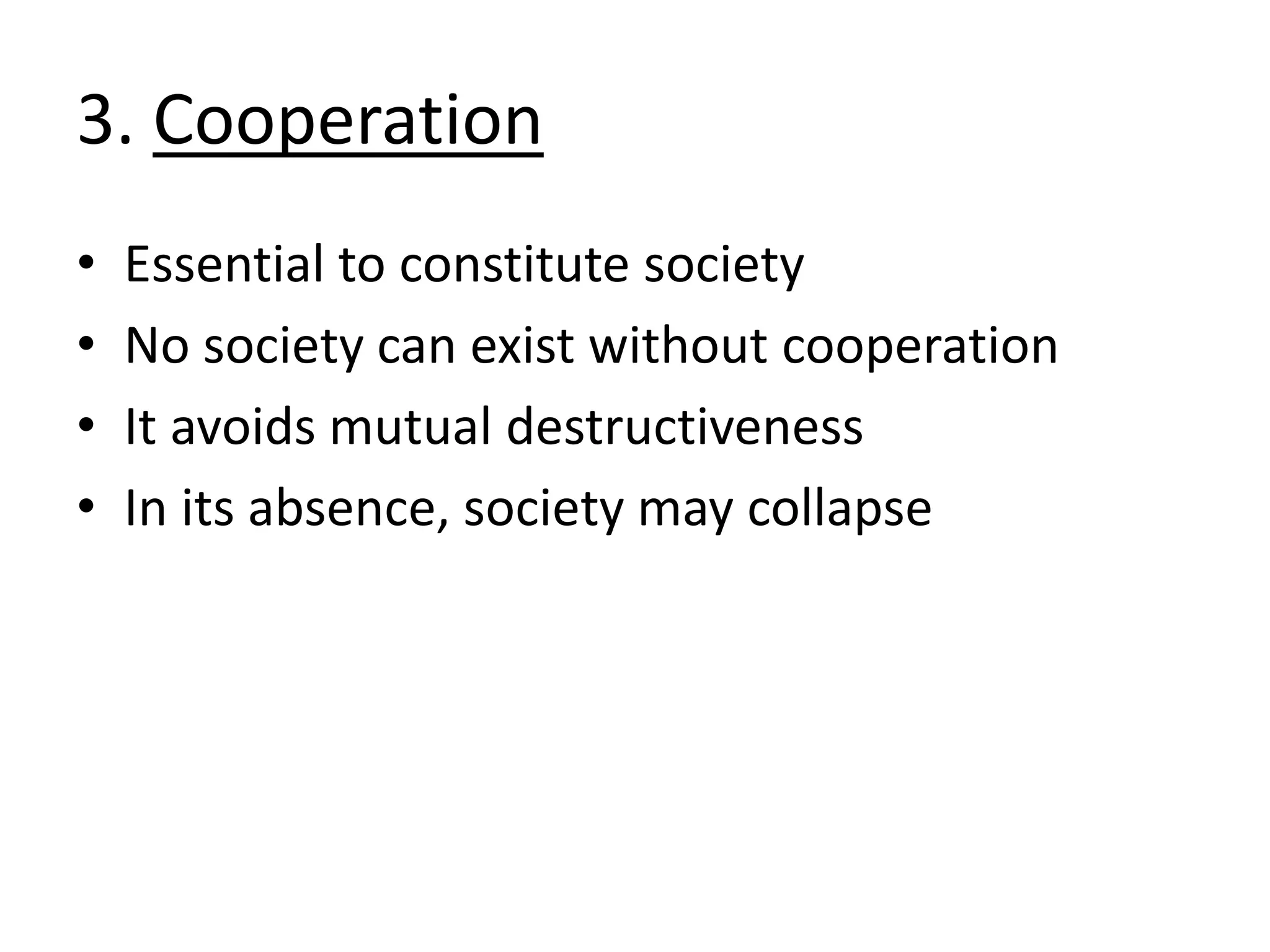
3. Cooperation
• Essential to constitute society
• No society can exist without cooperation
• It avoids mutual destructiveness
• In its absence, society may collapse
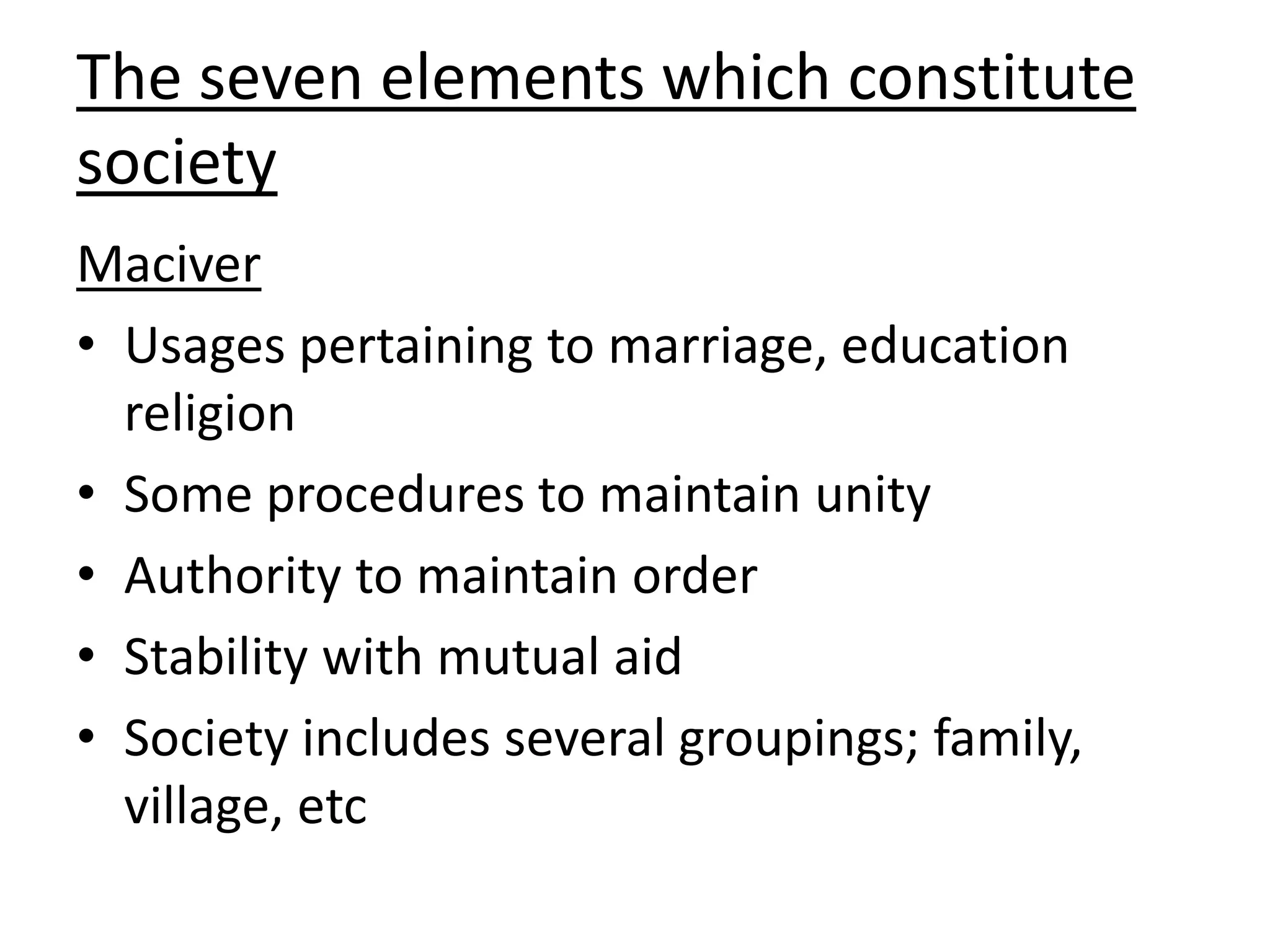
The seven elements which constitute
society
Maciver
• Usages pertaining to marriage, education
religion
• Some procedures to maintain unity
• Authority to maintain order
• Stability with mutual aid
• Society includes several groupings; family,
village, etc
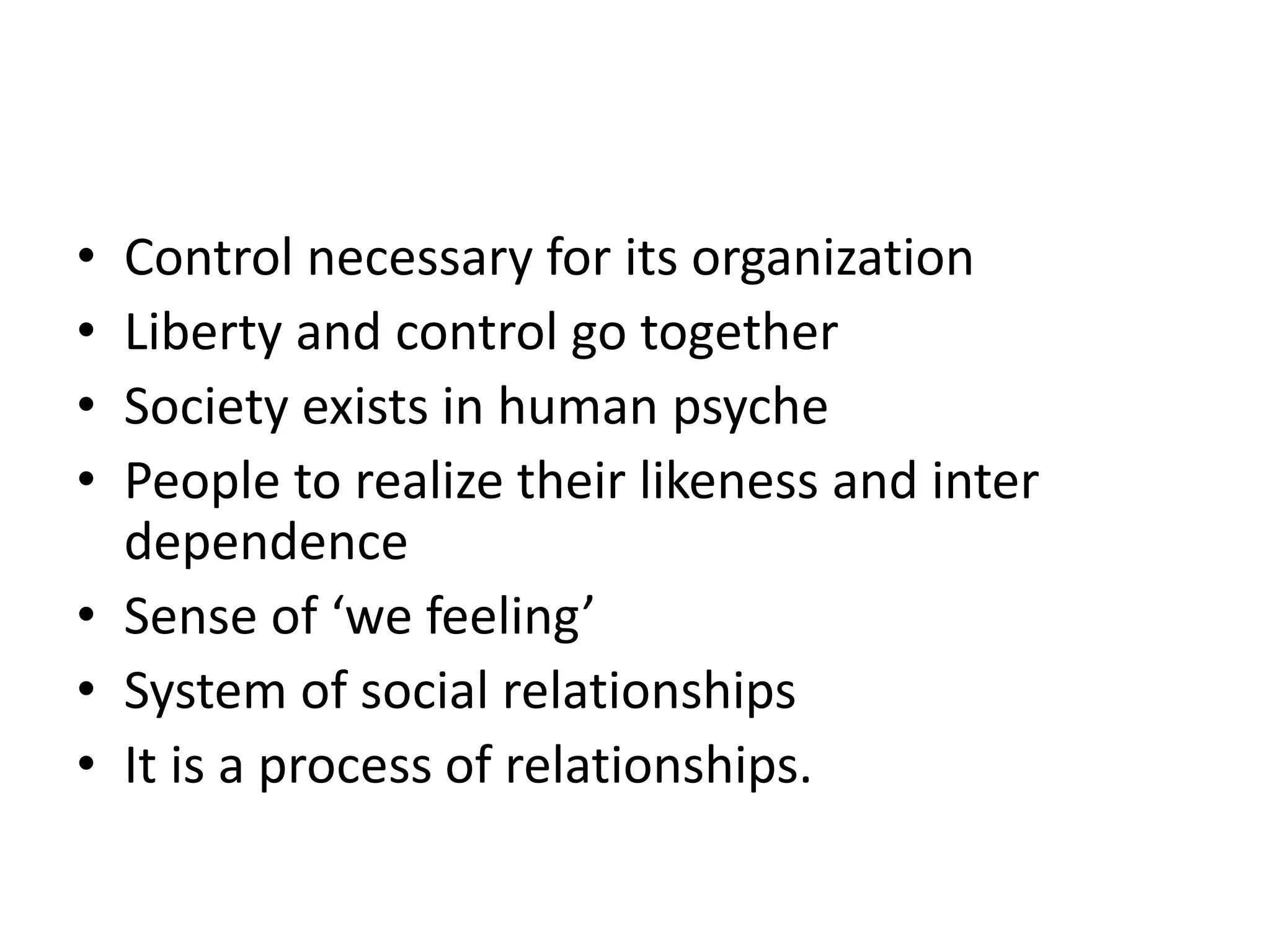
• Control necessary for its organization
• Liberty and control go together
• Society exists in human psyche
• People to realize their likeness and inter
dependence
• Sense of ‘we feeling’
• System of social relationships
• It is a process of relationships.

Basic concepts

  • 1.
    BASIC CONCEPTS Society: • Complexpattern of interactions • Society – a process rather than a thing • System of relationships • Derived from Latin word “socious” • Means companionship or friendship • Companionship - sociability
  • 2.
    George Simmel • Gregariousinstinct of man • Compels to live in company of others
  • 3.
    Aristotel • Man isa social animal • Man needs society for his existence • Human life and society go together
  • 4.
    Definition of Society 1.Mociver and Page • Society – system of usages • Authority, Mutual aid • Many grouping, divisions • Controls of human behavior • And of liberties
  • 5.
    2. G.D.M. Cole •Complex of organized associations • Institutions within community 3. Ginsberg • Collection of individuals united by relations, mode of behavior • Which make them off from others.
  • 6.
    4. Maciver • Webof social relationships 5. Giddings • it is the union itself • The organization • The sum of formal relations
  • 7.
    6. Lapiere • Complexpattern of norms of interaction 7. Green • It is the larger group • Any individual belongs
  • 8.
    Society • Structural andfunctional organization • Mutual interactions • Structure formed by relations • It is a pattern • A system, not the people • Total heritage of folkways, mores, institutions • Habits, sentiments and ideas
  • 9.
    • Complex ofgroups in reciprocal relationships • To help human organisms • To carry on life activities • Helping to fulfill his desire
  • 10.
    Characteristics • Web ofsocial relationships • Awareness of presence of one another • Reciprocal awareness • Conscious of kind • We feeling
  • 11.
    1. Society meanslikeness and difference Maciver • Society means likeness • Blood relationships, nationality, one world • Society also implies difference • Similarities, differences, both needed • If men are alike, social intercourse limited • Biological differences, natural differences of aptitude, interest, capacity • Conflict, agreement, dissent • Division of labor
  • 12.
    2. Interdependence • Familybased on biological interdependence of man and women • They are mutually interdependent • Interdependence of nations • Global village, SAARC • UNESCO, WHO, etc
  • 13.
    3. Cooperation • Essentialto constitute society • No society can exist without cooperation • It avoids mutual destructiveness • In its absence, society may collapse
  • 14.
    The seven elementswhich constitute society Maciver • Usages pertaining to marriage, education religion • Some procedures to maintain unity • Authority to maintain order • Stability with mutual aid • Society includes several groupings; family, village, etc
  • 15.
    • Control necessaryfor its organization • Liberty and control go together • Society exists in human psyche • People to realize their likeness and inter dependence • Sense of ‘we feeling’ • System of social relationships • It is a process of relationships.