Department of Environmental Science and Engineering
Jatiya Kabi Kazi Nazrul Islam University
Trishal-2224, Mymensingh
Bangladesh National Building
Code (BNBC) – 2020
Submitted By,
Saida Islam Sejuti
ID no: 18103432
Reg no: 6829
4th
Year, 2nd
Semester (2017-18)
Submitted To,
Dr. Md. Badiuzzaman Khan
Professor and Former Head
Department of Environmental Science
Bangladesh Agricultural University
Course Name: Environmental Planning and Design
Course Code: ESE 4203
Presentation on
Outline of the Presentation
 Introduction to BNBC 2020
 Volume 1
 Part 1: Scope and Definition
 Part 2: Administration and
Enforcement
 Part 3: General Building
Requirements, Control and Regulation
 Part 4: Fire Protection
 Part 5: Building Materials
 Volume 2
 Part 6: STRUCTURAL DESIGN
 Volume 3
 Part 7: Construction Practices and Safety
 Part 8: Building Services
 Part 9: Alteration, Addition to and
Change of Existing Buildings
 Part 10: Signs and Outdoor Display
 Conclusion
Introduction to BNBC 2020
History of Building Codes in Bangladesh
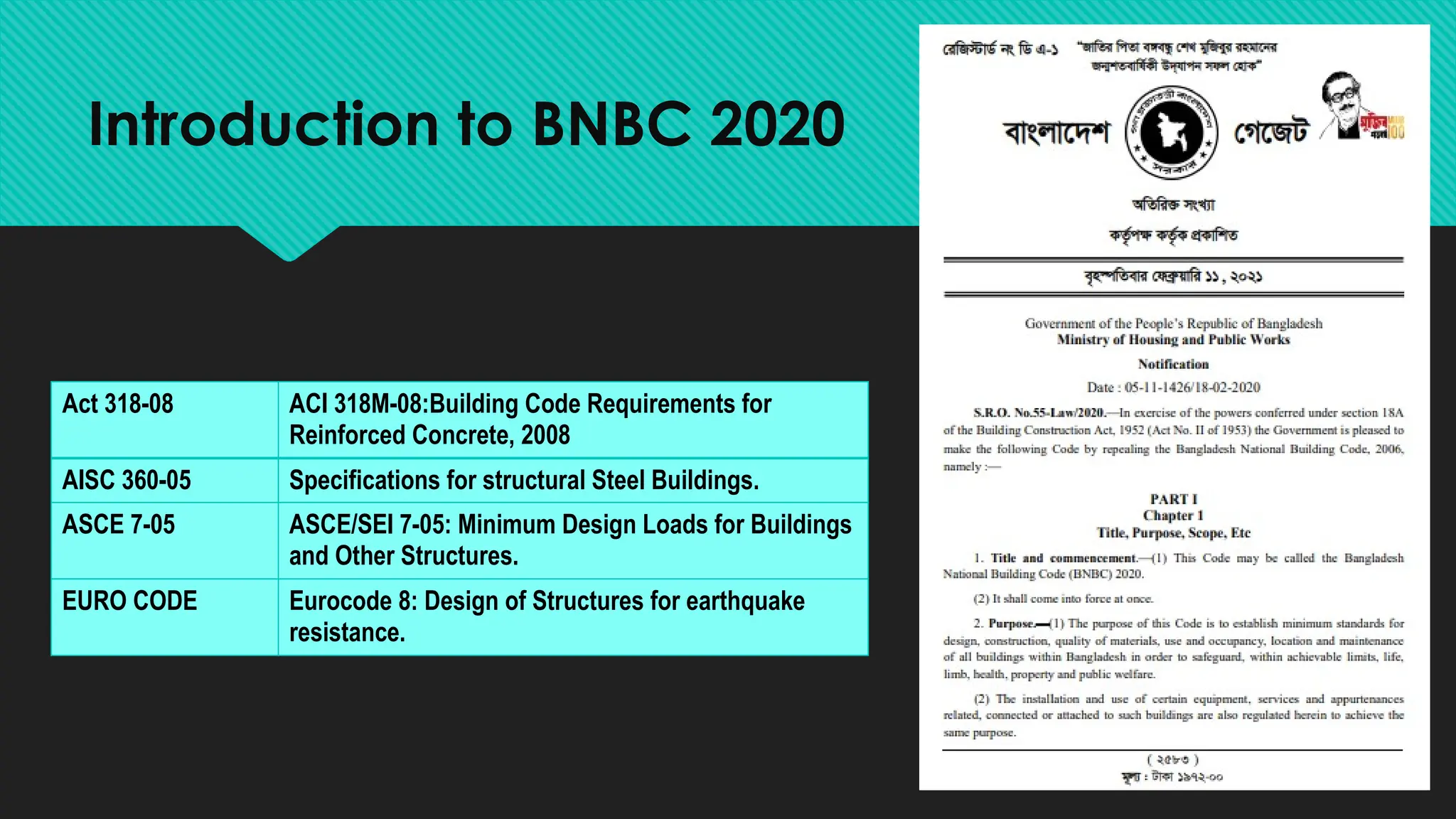
 The Building Construction Act was enacted in 1952
 The first draft building code was drafted in1993 by HBRI.
 The BC Act 1952 was amended in 2006 by giving power to make
Bangladesh National Building Code.
 BNBC was enacted through a Statutory Regulatory Order (SRO) in
2006.
 HBRI undertook BNBC updating project in 2009.
 Final version of the updated code was submitted in 2015.
 Final version has already been approved by the steering committee and
the Ministry of Housing and Public Works and vetted by the Law Ministry.
 The updated code was gazette on February 2021.
Introduction to BNBC 2020
Act 318-08 ACI 318M-08:Building Code Requirements for
Reinforced Concrete, 2008
AISC 360-05 Specifications for structural Steel Buildings.
ASCE 7-05 ASCE/SEI 7-05: Minimum Design Loads for Buildings
and Other Structures.
EURO CODE Eurocode 8: Design of Structures for earthquake
resistance.
Introduction to BNBC 2020
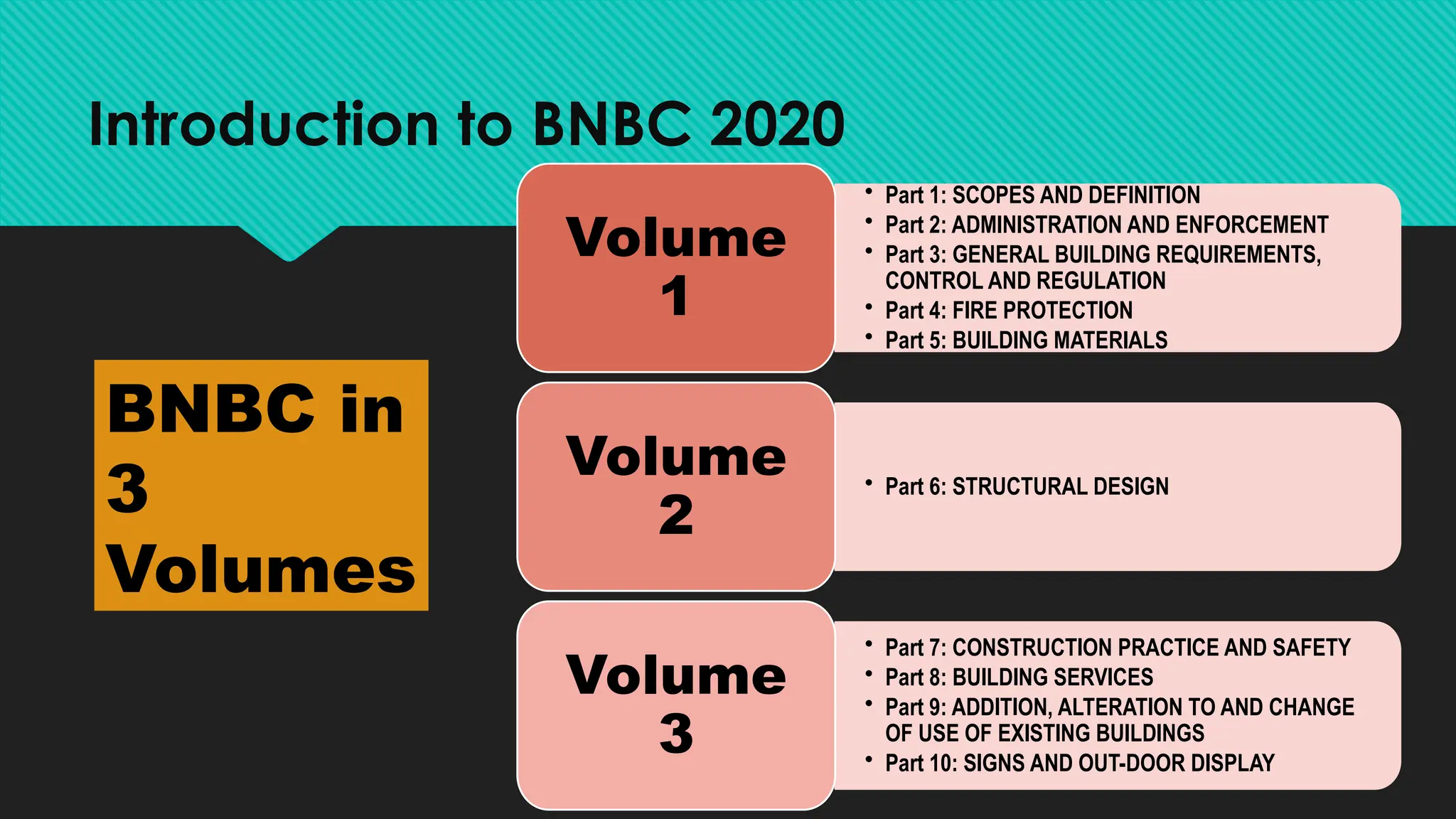
BNBC in
3
Volumes
• Part 1: SCOPES AND DEFINITION
• Part 2: ADMINISTRATION AND ENFORCEMENT
• Part 3: GENERAL BUILDING REQUIREMENTS,
CONTROL AND REGULATION
• Part 4: FIRE PROTECTION
• Part 5: BUILDING MATERIALS
Volume
1
• Part 6: STRUCTURAL DESIGN
Volume
2
• Part 7: CONSTRUCTION PRACTICE AND SAFETY
• Part 8: BUILDING SERVICES
• Part 9: ADDITION, ALTERATION TO AND CHANGE
OF USE OF EXISTING BUILDINGS
• Part 10: SIGNS AND OUT-DOOR DISPLAY
Volume
3
VOLUME - 1
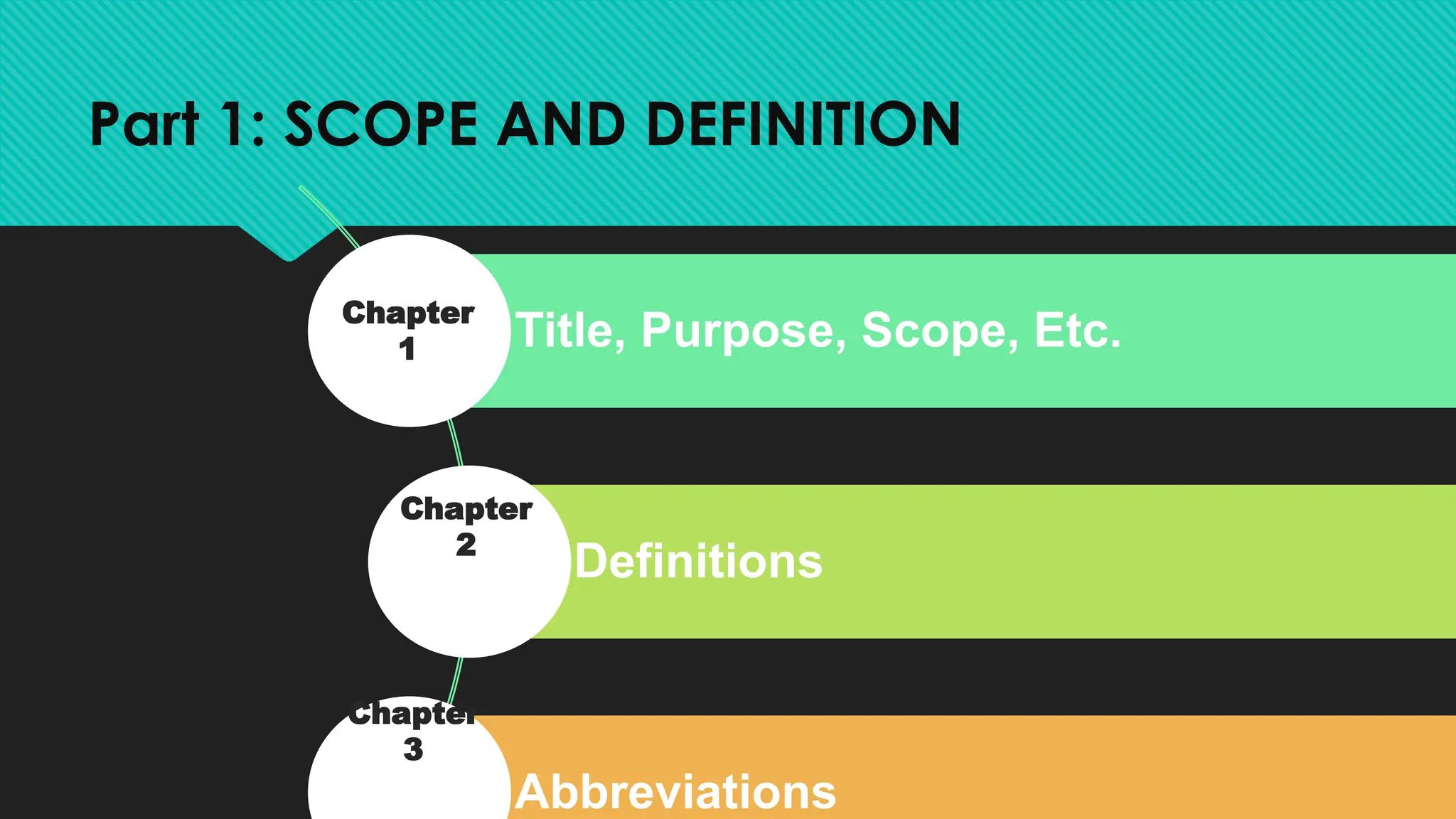
Part 1: SCOPE AND DEFINITION
Title, Purpose, Scope, Etc.
Definitions
Abbreviations
Chapter
1
Chapter
2
Chapter
3
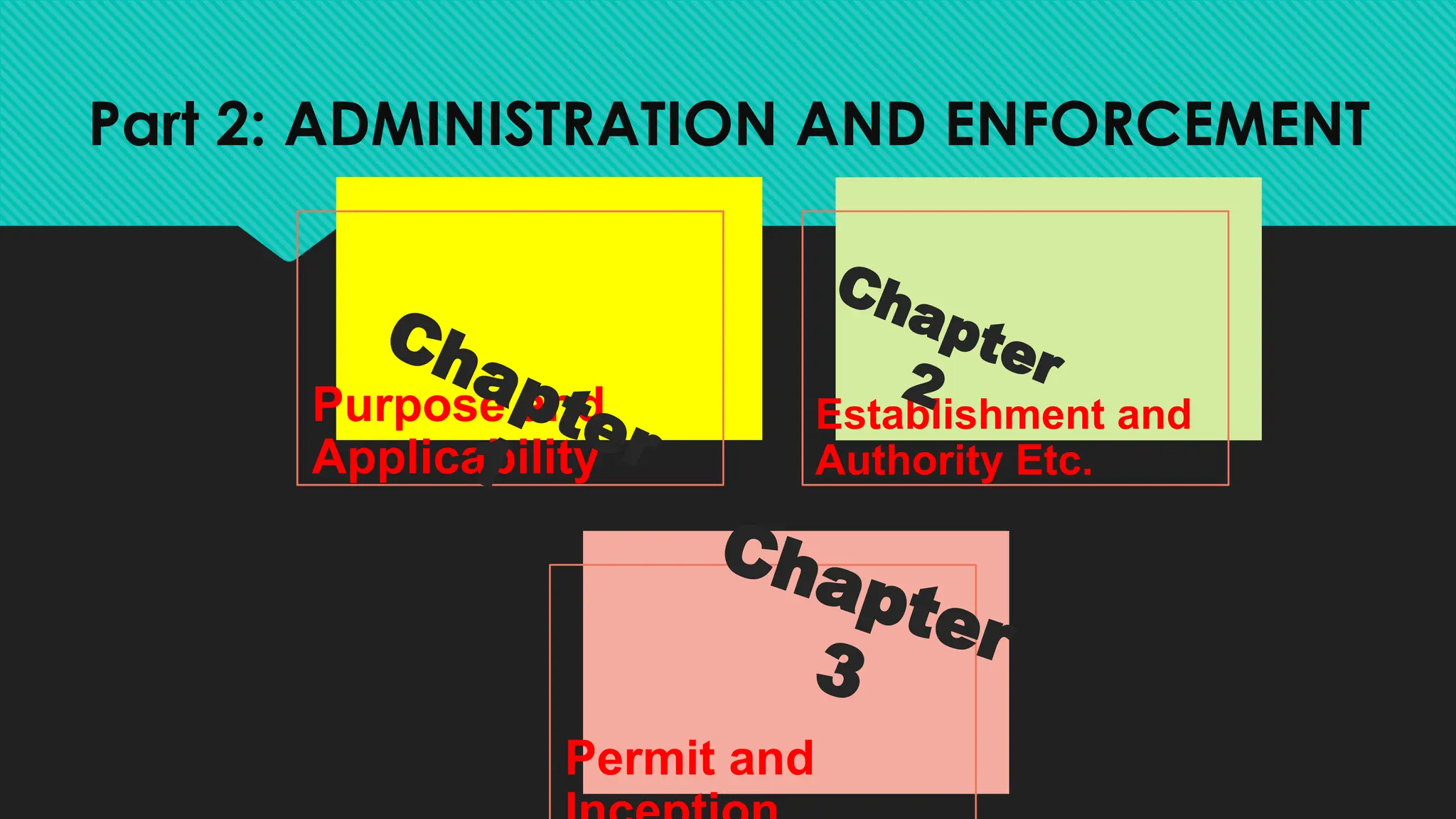
Part 2: ADMINISTRATION AND ENFORCEMENT
Purpose and
Applicability
Establishment and
Authority Etc.
Permit and
Chapter
1
Chapter
2
Chapter
3
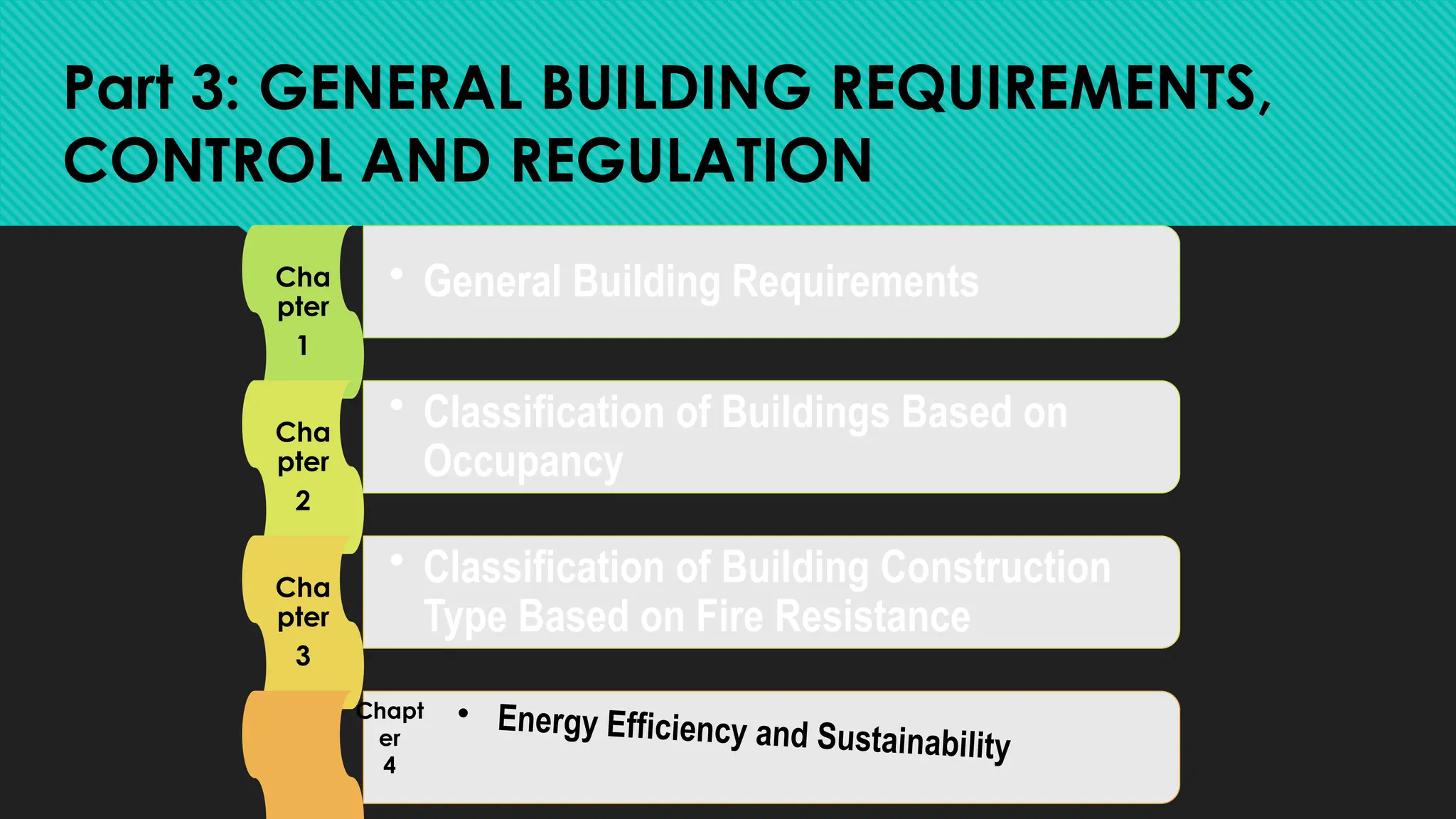
Part 3: GENERAL BUILDING REQUIREMENTS,
CONTROL AND REGULATION
Cha
pter
1
• General Building Requirements
Cha
pter
2
• Classification of Buildings Based on
Occupancy
Cha
pter
3
• Classification of Building Construction
Type Based on Fire Resistance
Chapt
er
4
• Energy Efficiency and Sustainability
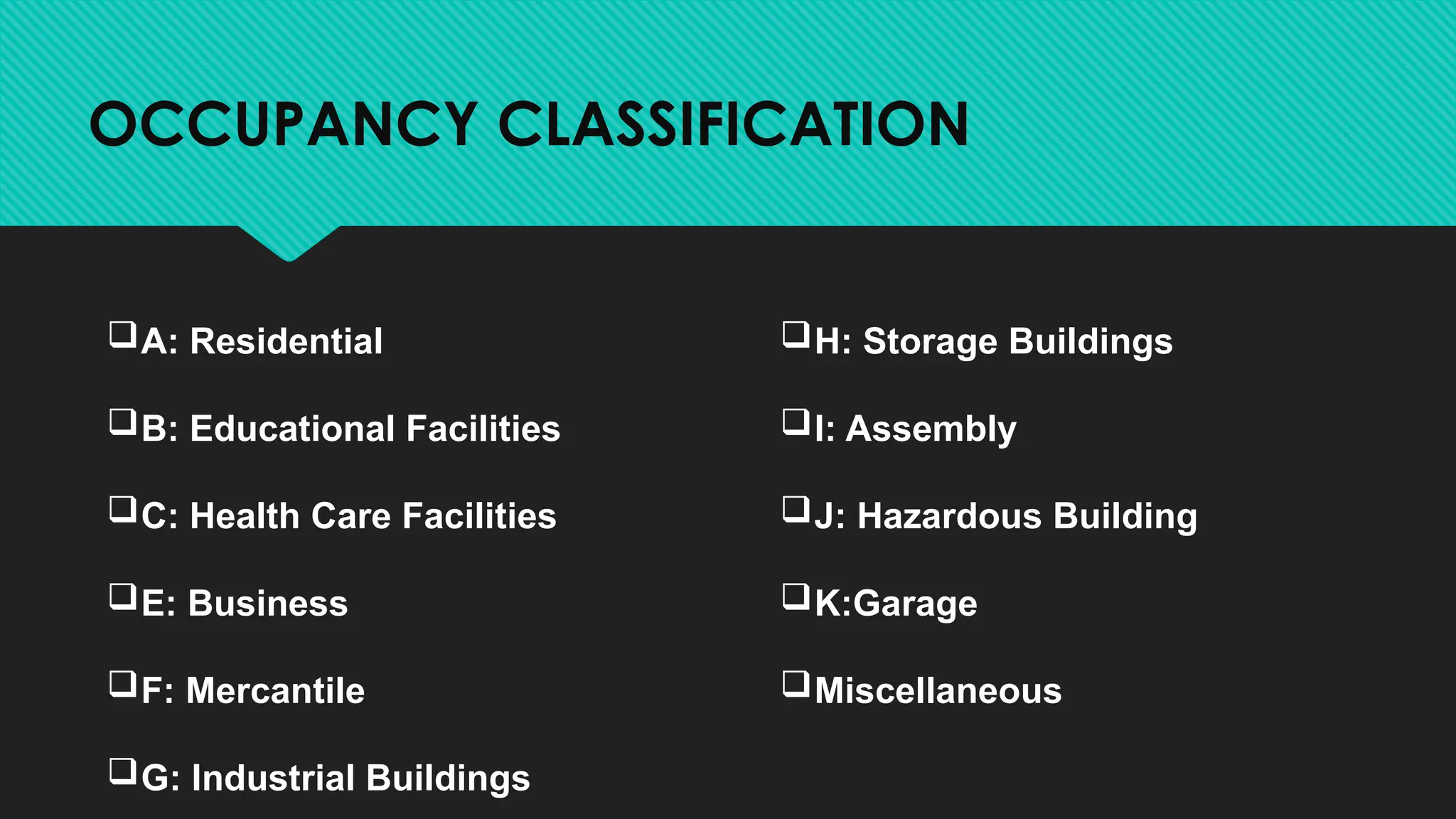
OCCUPANCY CLASSIFICATION
A: Residential
B: Educational Facilities
C: Health Care Facilities
E: Business
F: Mercantile
G: Industrial Buildings
H: Storage Buildings
I: Assembly
J: Hazardous Building
K:Garage
Miscellaneous
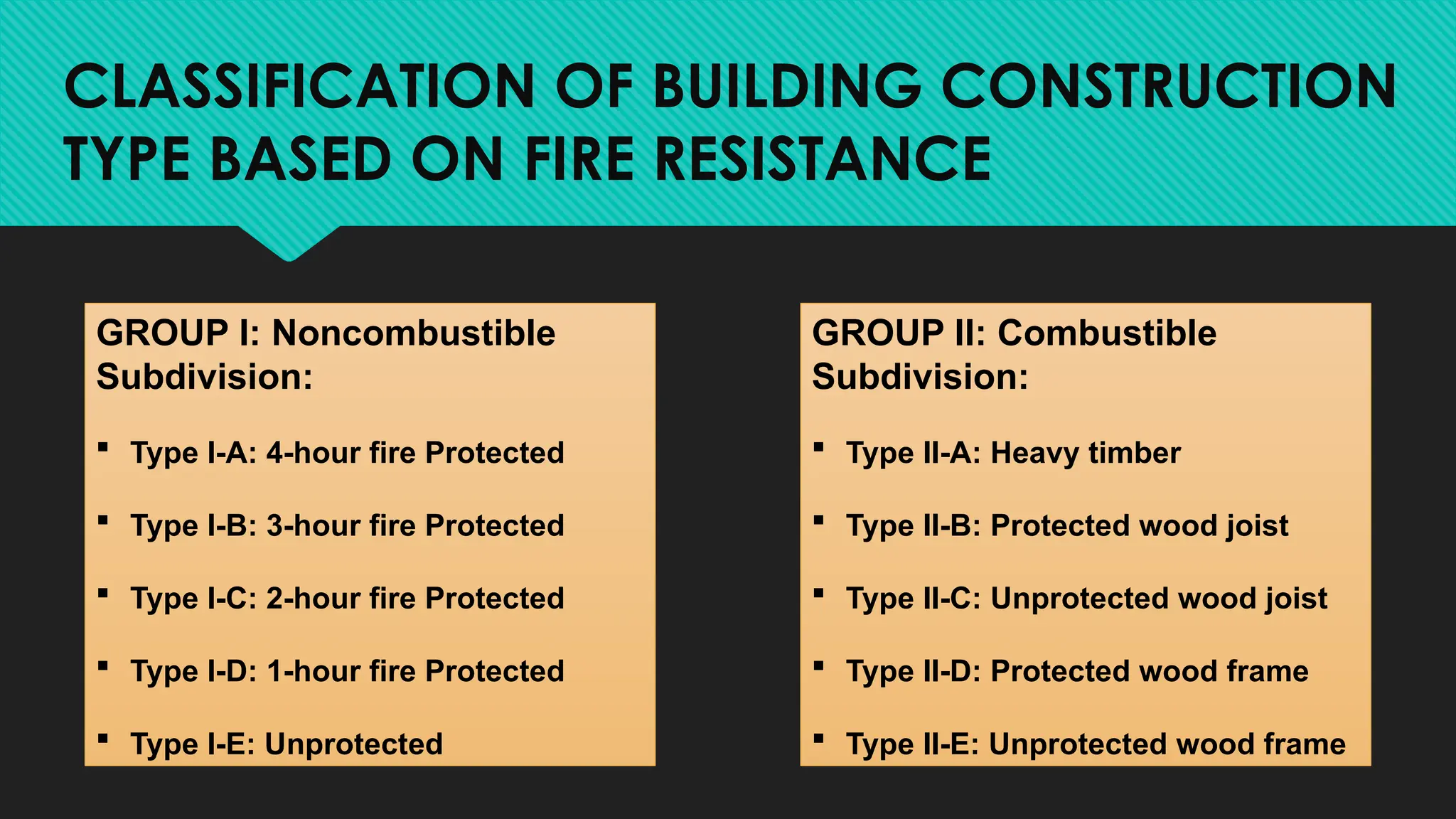
CLASSIFICATION OF BUILDING CONSTRUCTION
TYPE BASED ON FIRE RESISTANCE
GROUP I: Noncombustible
Subdivision:
 Type I-A: 4-hour fire Protected
 Type I-B: 3-hour fire Protected
 Type I-C: 2-hour fire Protected
 Type I-D: 1-hour fire Protected
 Type I-E: Unprotected
GROUP II: Combustible
Subdivision:
 Type II-A: Heavy timber
 Type II-B: Protected wood joist
 Type II-C: Unprotected wood joist
 Type II-D: Protected wood frame
 Type II-E: Unprotected wood frame
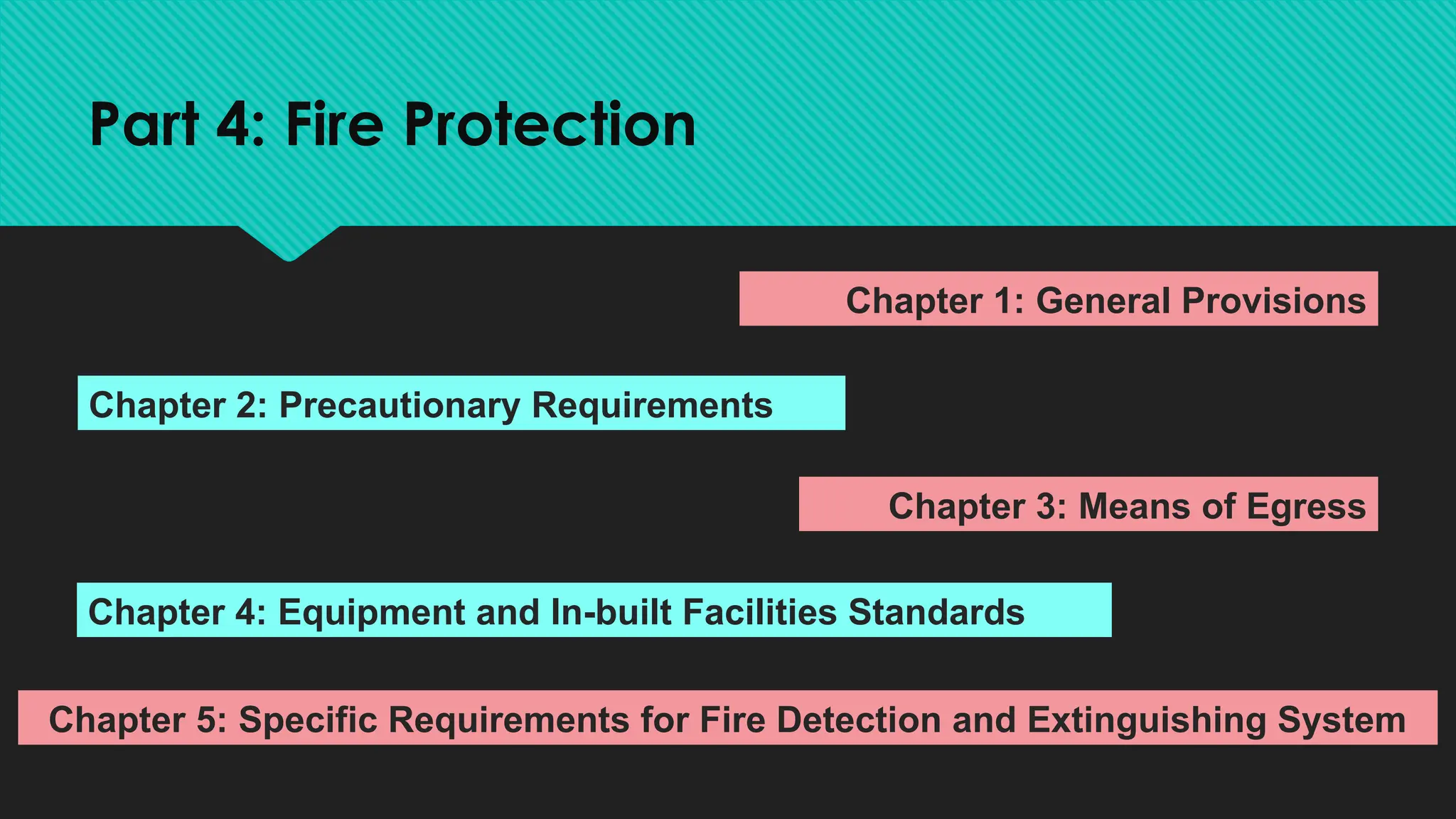
Part 4: Fire Protection
Chapter 1: General Provisions
Chapter 2: Precautionary Requirements
Chapter 3: Means of Egress
Chapter 4: Equipment and In-built Facilities Standards
Chapter 5: Specific Requirements for Fire Detection and Extinguishing System
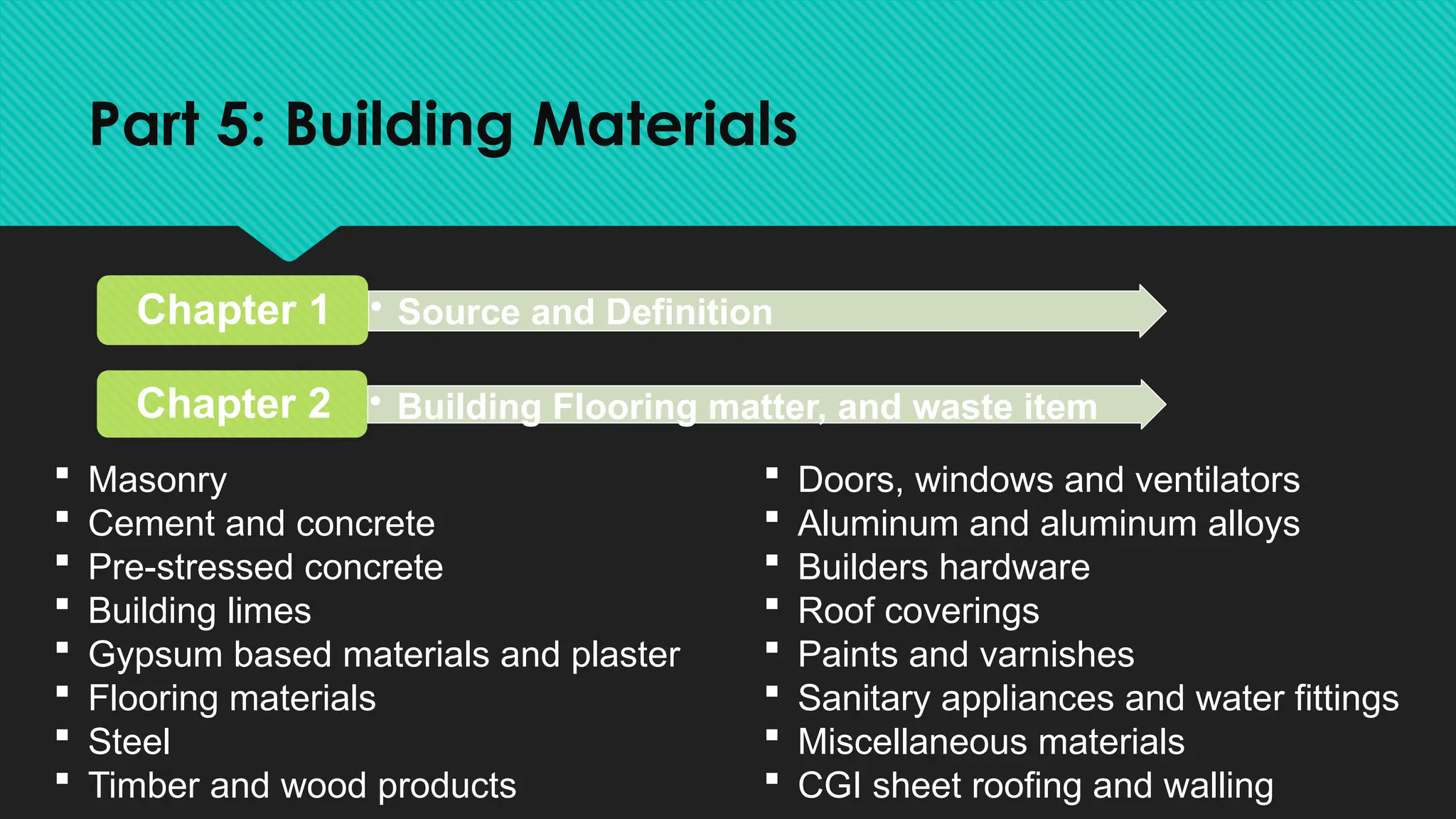
Part 5: Building Materials
• Source and Definition
Chapter 1
• Building Flooring matter, and waste item
Chapter 2
 Masonry
 Cement and concrete
 Pre-stressed concrete
 Building limes
 Gypsum based materials and plaster
 Flooring materials
 Steel
 Timber and wood products
 Doors, windows and ventilators
 Aluminum and aluminum alloys
 Builders hardware
 Roof coverings
 Paints and varnishes
 Sanitary appliances and water fittings
 Miscellaneous materials
 CGI sheet roofing and walling
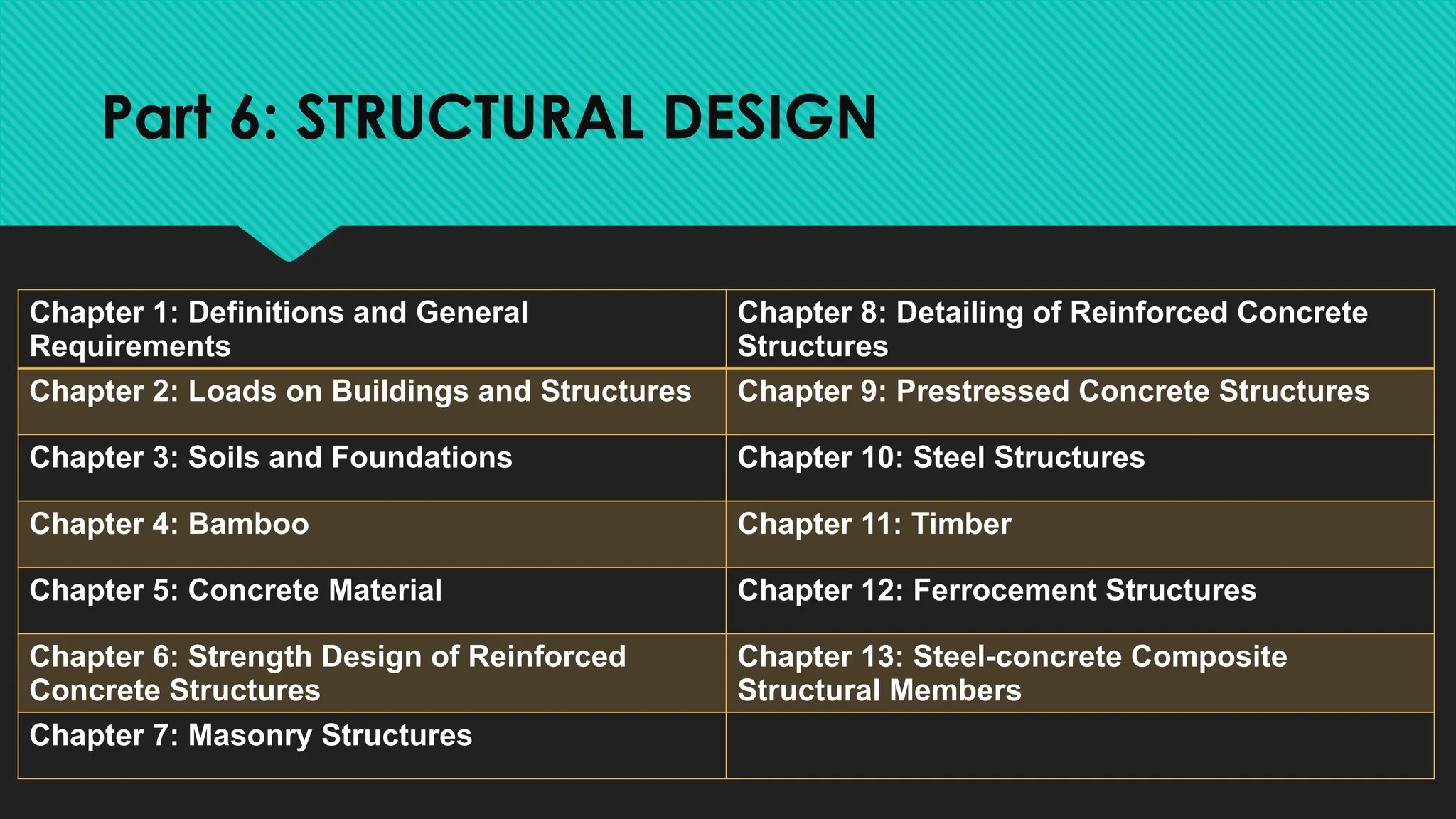
VOLUME - 2
Chapter 1: Definitions and General
Requirements
Chapter 8: Detailing of Reinforced Concrete
Structures
Chapter 2: Loads on Buildings and Structures Chapter 9: Prestressed Concrete Structures
Chapter 3: Soils and Foundations Chapter 10: Steel Structures
Chapter 4: Bamboo Chapter 11: Timber
Chapter 5: Concrete Material Chapter 12: Ferrocement Structures
Chapter 6: Strength Design of Reinforced
Concrete Structures
Chapter 13: Steel-concrete Composite
Structural Members
Chapter 7: Masonry Structures
Part 6: STRUCTURAL DESIGN
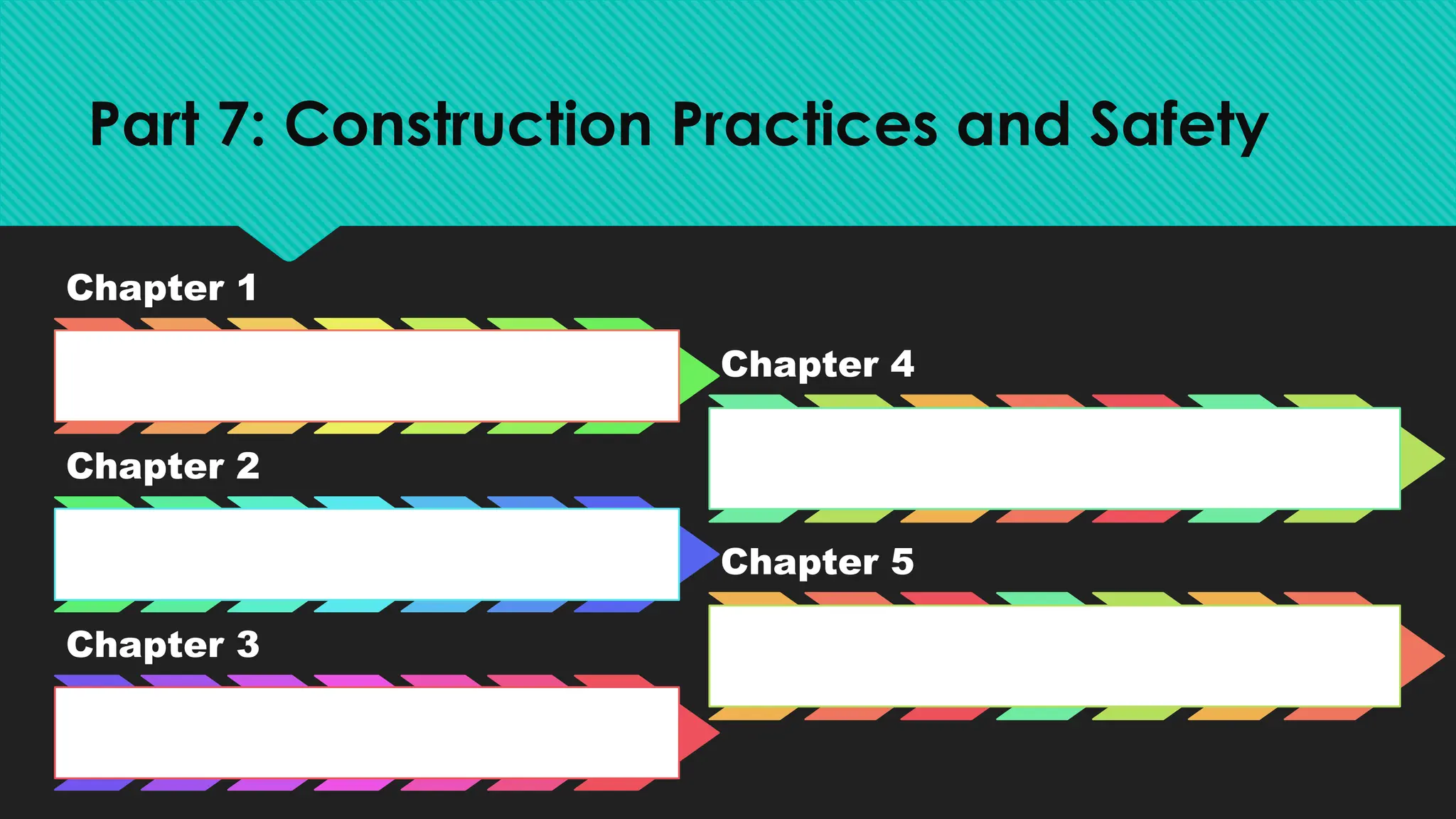
VOLUME - 3
Part 7: Construction Practices and Safety
Chapter 1
Constructional Responsibilities and
Practices
Chapter 2
Storage, Stacking and Handling Practices
Chapter 3
Safety During Construction
Chapter 4
Demolition Work
Chapter 5
Maintenance Management, Repair, Retrofitting
and Strengthening of Buildings
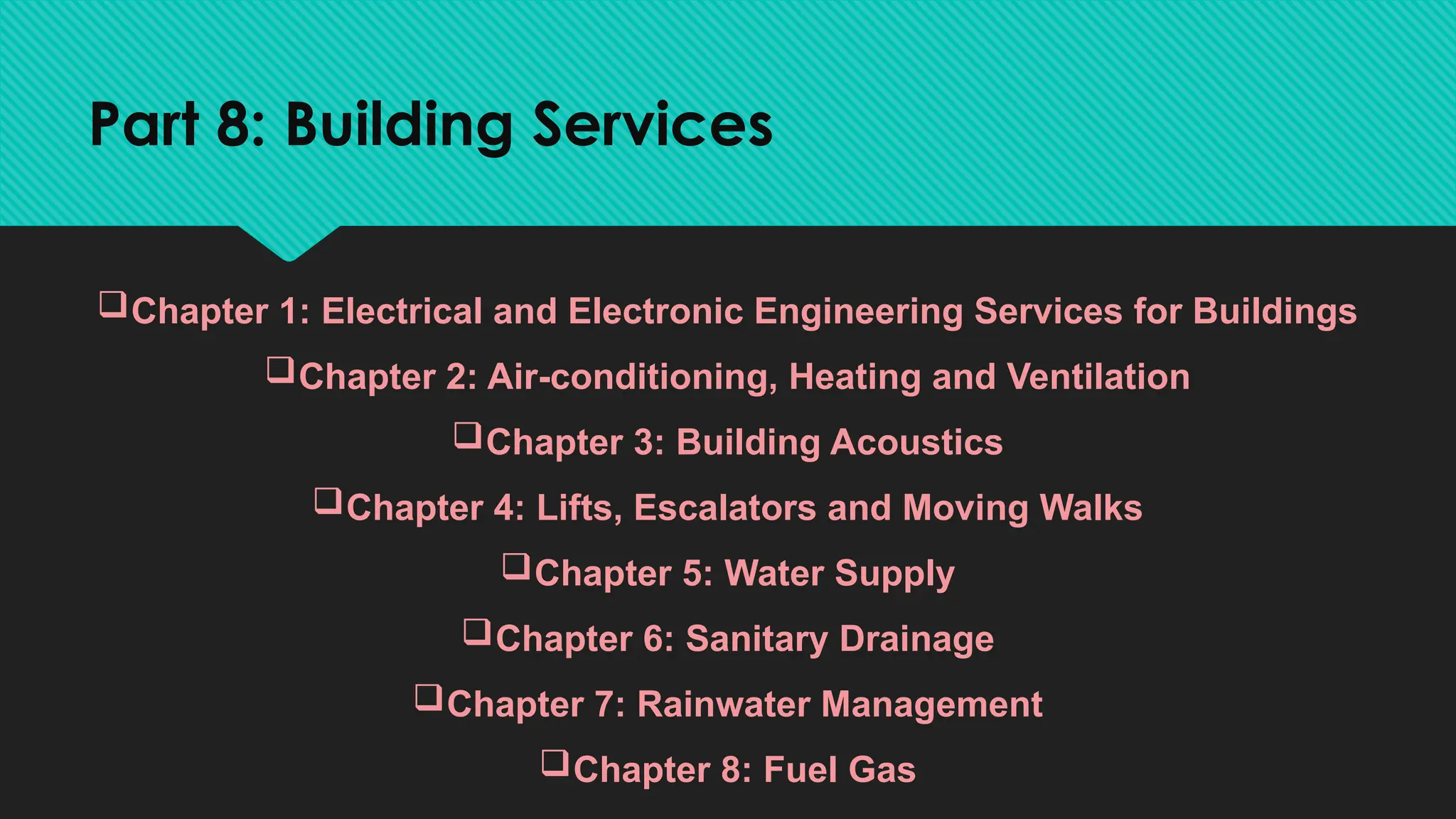
Part 8: Building Services
Chapter 1: Electrical and Electronic Engineering Services for Buildings
Chapter 2: Air-conditioning, Heating and Ventilation
Chapter 3: Building Acoustics
Chapter 4: Lifts, Escalators and Moving Walks
Chapter 5: Water Supply
Chapter 6: Sanitary Drainage
Chapter 7: Rainwater Management
Chapter 8: Fuel Gas
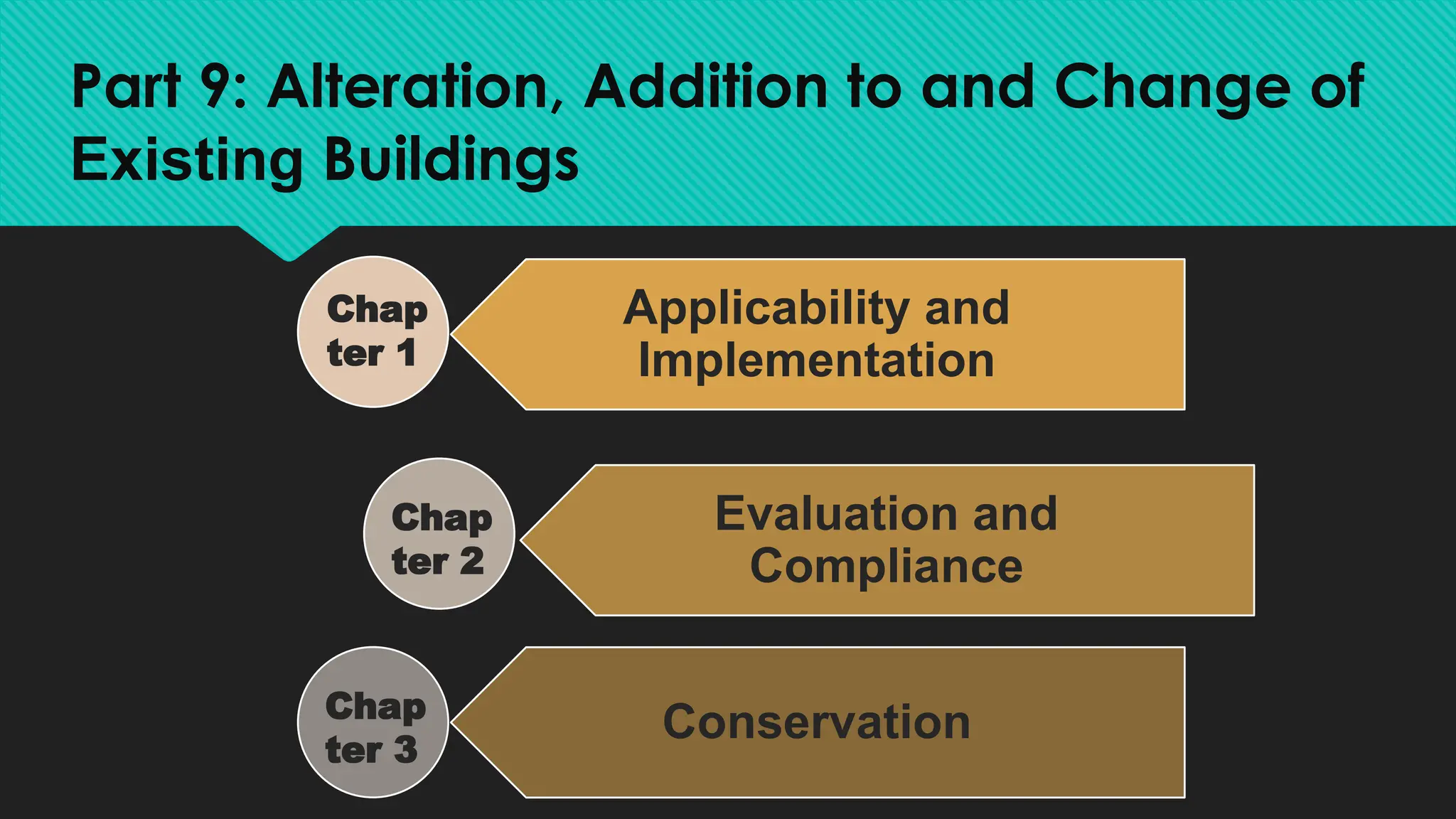
Part 9: Alteration, Addition to and Change of
Existing Buildings
Applicability and
Implementation
Evaluation and
Compliance
Conservation
Chap
ter 1
Chap
ter 2
Chap
ter 3
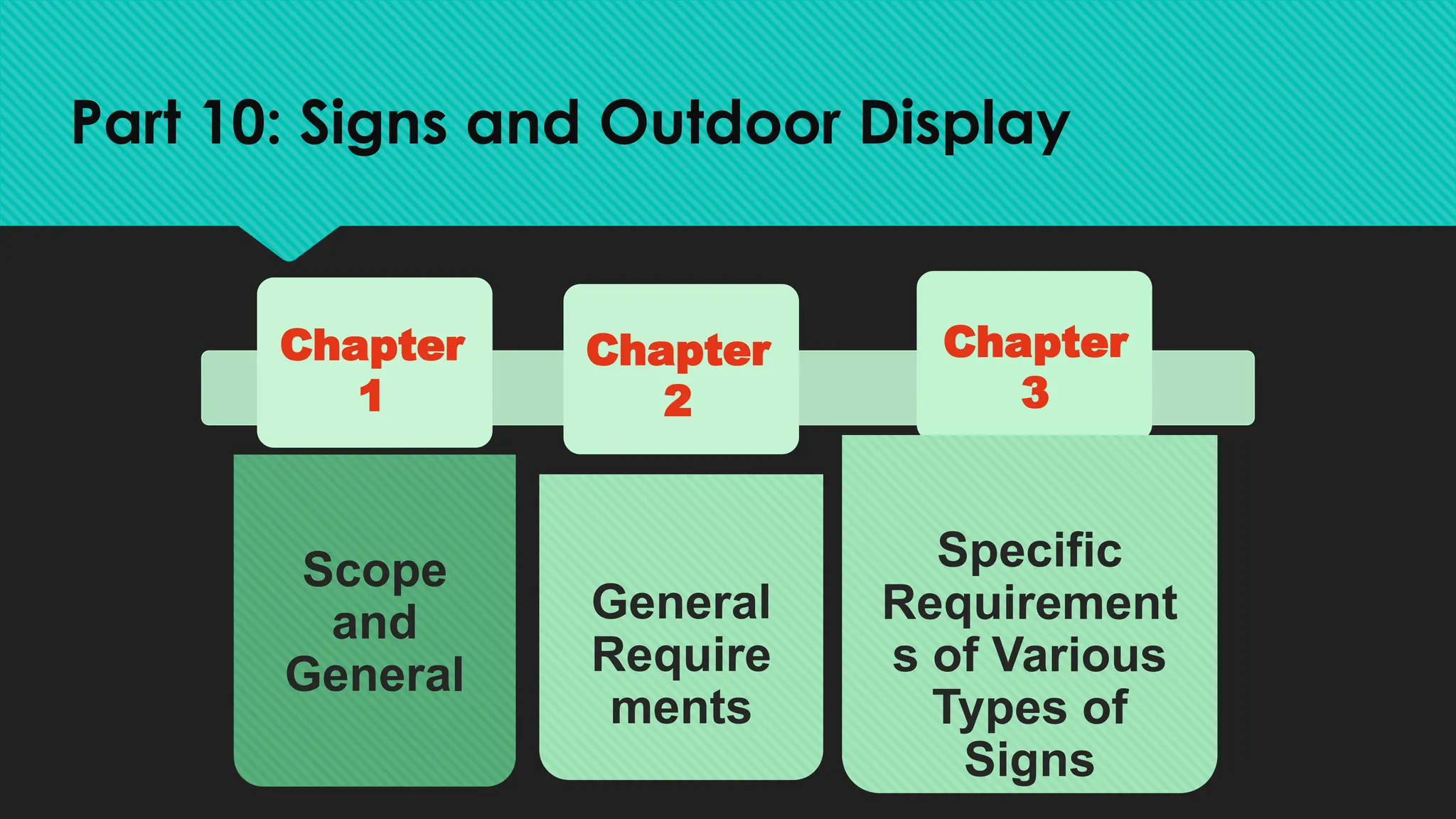
Part 10: Signs and Outdoor Display
Scope
and
General
General
Require
ments
Specific
Requirement
s of Various
Types of
Signs
Chapter
1
Chapter
2
Chapter
3
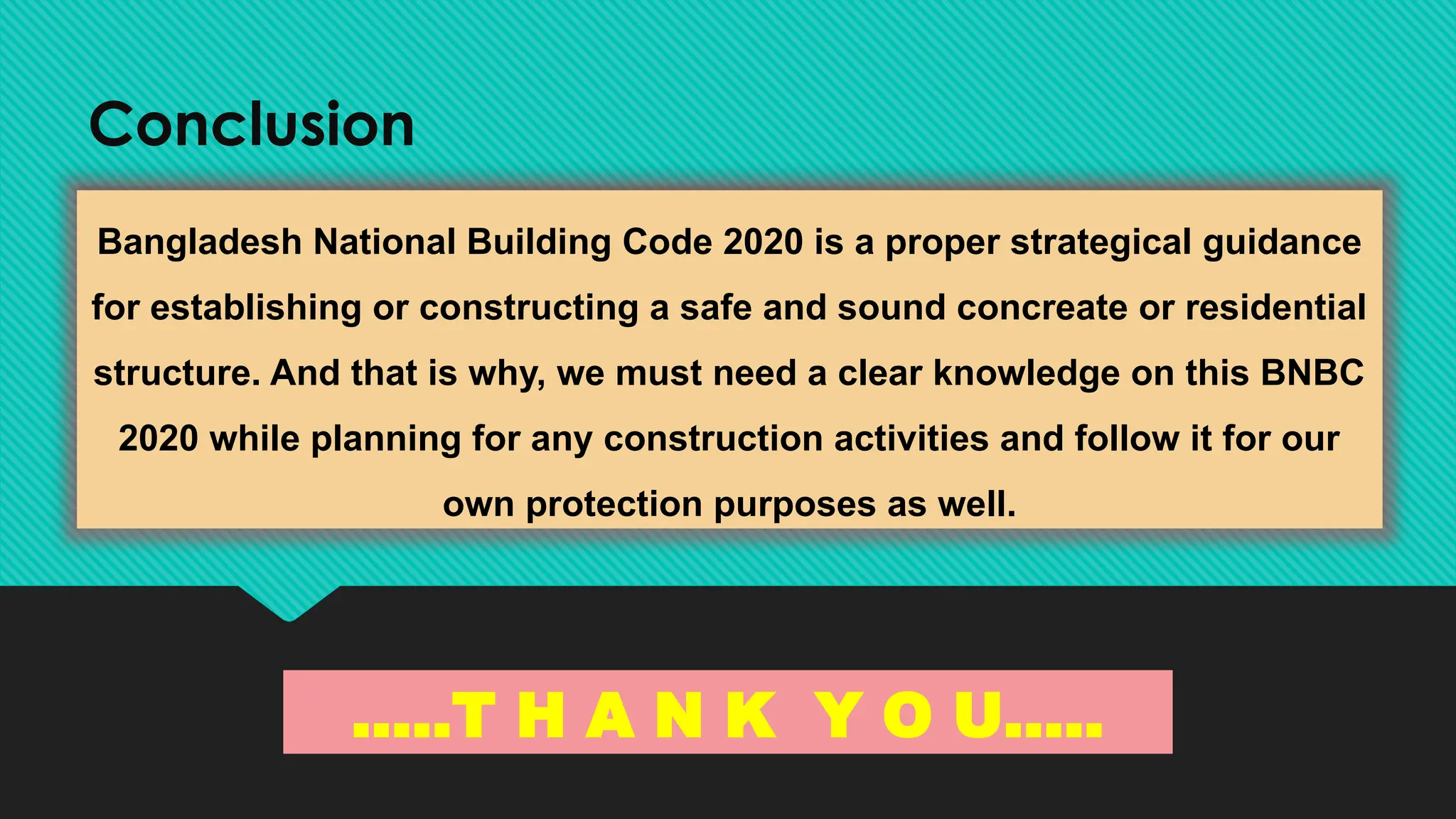
…..T H A N K Y O U…..
Conclusion
Bangladesh National Building Code 2020 is a proper strategical guidance
for establishing or constructing a safe and sound concreate or residential
structure. And that is why, we must need a clear knowledge on this BNBC
2020 while planning for any construction activities and follow it for our
own protection purposes as well.


Bangladesh National Building Code (BNBC) – 2020

  • 1.
    Department of EnvironmentalScience and Engineering Jatiya Kabi Kazi Nazrul Islam University Trishal-2224, Mymensingh Bangladesh National Building Code (BNBC) – 2020 Submitted By, Saida Islam Sejuti ID no: 18103432 Reg no: 6829 4th Year, 2nd Semester (2017-18) Submitted To, Dr. Md. Badiuzzaman Khan Professor and Former Head Department of Environmental Science Bangladesh Agricultural University Course Name: Environmental Planning and Design Course Code: ESE 4203 Presentation on
  • 2.
    Outline of thePresentation  Introduction to BNBC 2020  Volume 1  Part 1: Scope and Definition  Part 2: Administration and Enforcement  Part 3: General Building Requirements, Control and Regulation  Part 4: Fire Protection  Part 5: Building Materials  Volume 2  Part 6: STRUCTURAL DESIGN  Volume 3  Part 7: Construction Practices and Safety  Part 8: Building Services  Part 9: Alteration, Addition to and Change of Existing Buildings  Part 10: Signs and Outdoor Display  Conclusion
  • 3.
    Introduction to BNBC2020 History of Building Codes in Bangladesh  The Building Construction Act was enacted in 1952  The first draft building code was drafted in1993 by HBRI.  The BC Act 1952 was amended in 2006 by giving power to make Bangladesh National Building Code.  BNBC was enacted through a Statutory Regulatory Order (SRO) in 2006.  HBRI undertook BNBC updating project in 2009.  Final version of the updated code was submitted in 2015.  Final version has already been approved by the steering committee and the Ministry of Housing and Public Works and vetted by the Law Ministry.  The updated code was gazette on February 2021.
  • 4.
    Introduction to BNBC2020 Act 318-08 ACI 318M-08:Building Code Requirements for Reinforced Concrete, 2008 AISC 360-05 Specifications for structural Steel Buildings. ASCE 7-05 ASCE/SEI 7-05: Minimum Design Loads for Buildings and Other Structures. EURO CODE Eurocode 8: Design of Structures for earthquake resistance.
  • 5.
    Introduction to BNBC2020 BNBC in 3 Volumes • Part 1: SCOPES AND DEFINITION • Part 2: ADMINISTRATION AND ENFORCEMENT • Part 3: GENERAL BUILDING REQUIREMENTS, CONTROL AND REGULATION • Part 4: FIRE PROTECTION • Part 5: BUILDING MATERIALS Volume 1 • Part 6: STRUCTURAL DESIGN Volume 2 • Part 7: CONSTRUCTION PRACTICE AND SAFETY • Part 8: BUILDING SERVICES • Part 9: ADDITION, ALTERATION TO AND CHANGE OF USE OF EXISTING BUILDINGS • Part 10: SIGNS AND OUT-DOOR DISPLAY Volume 3
  • 6.
  • 7.
    Part 1: SCOPEAND DEFINITION Title, Purpose, Scope, Etc. Definitions Abbreviations Chapter 1 Chapter 2 Chapter 3
  • 8.
    Part 2: ADMINISTRATIONAND ENFORCEMENT Purpose and Applicability Establishment and Authority Etc. Permit and Chapter 1 Chapter 2 Chapter 3
  • 9.
    Part 3: GENERALBUILDING REQUIREMENTS, CONTROL AND REGULATION Cha pter 1 • General Building Requirements Cha pter 2 • Classification of Buildings Based on Occupancy Cha pter 3 • Classification of Building Construction Type Based on Fire Resistance Chapt er 4 • Energy Efficiency and Sustainability
  • 10.
    OCCUPANCY CLASSIFICATION A: Residential B:Educational Facilities C: Health Care Facilities E: Business F: Mercantile G: Industrial Buildings H: Storage Buildings I: Assembly J: Hazardous Building K:Garage Miscellaneous
  • 11.
    CLASSIFICATION OF BUILDINGCONSTRUCTION TYPE BASED ON FIRE RESISTANCE GROUP I: Noncombustible Subdivision:  Type I-A: 4-hour fire Protected  Type I-B: 3-hour fire Protected  Type I-C: 2-hour fire Protected  Type I-D: 1-hour fire Protected  Type I-E: Unprotected GROUP II: Combustible Subdivision:  Type II-A: Heavy timber  Type II-B: Protected wood joist  Type II-C: Unprotected wood joist  Type II-D: Protected wood frame  Type II-E: Unprotected wood frame
  • 12.
    Part 4: FireProtection Chapter 1: General Provisions Chapter 2: Precautionary Requirements Chapter 3: Means of Egress Chapter 4: Equipment and In-built Facilities Standards Chapter 5: Specific Requirements for Fire Detection and Extinguishing System
  • 13.
    Part 5: BuildingMaterials • Source and Definition Chapter 1 • Building Flooring matter, and waste item Chapter 2  Masonry  Cement and concrete  Pre-stressed concrete  Building limes  Gypsum based materials and plaster  Flooring materials  Steel  Timber and wood products  Doors, windows and ventilators  Aluminum and aluminum alloys  Builders hardware  Roof coverings  Paints and varnishes  Sanitary appliances and water fittings  Miscellaneous materials  CGI sheet roofing and walling
  • 14.
  • 15.
    Chapter 1: Definitionsand General Requirements Chapter 8: Detailing of Reinforced Concrete Structures Chapter 2: Loads on Buildings and Structures Chapter 9: Prestressed Concrete Structures Chapter 3: Soils and Foundations Chapter 10: Steel Structures Chapter 4: Bamboo Chapter 11: Timber Chapter 5: Concrete Material Chapter 12: Ferrocement Structures Chapter 6: Strength Design of Reinforced Concrete Structures Chapter 13: Steel-concrete Composite Structural Members Chapter 7: Masonry Structures Part 6: STRUCTURAL DESIGN
  • 16.
  • 17.
    Part 7: ConstructionPractices and Safety Chapter 1 Constructional Responsibilities and Practices Chapter 2 Storage, Stacking and Handling Practices Chapter 3 Safety During Construction Chapter 4 Demolition Work Chapter 5 Maintenance Management, Repair, Retrofitting and Strengthening of Buildings
  • 18.
    Part 8: BuildingServices Chapter 1: Electrical and Electronic Engineering Services for Buildings Chapter 2: Air-conditioning, Heating and Ventilation Chapter 3: Building Acoustics Chapter 4: Lifts, Escalators and Moving Walks Chapter 5: Water Supply Chapter 6: Sanitary Drainage Chapter 7: Rainwater Management Chapter 8: Fuel Gas
  • 19.
    Part 9: Alteration,Addition to and Change of Existing Buildings Applicability and Implementation Evaluation and Compliance Conservation Chap ter 1 Chap ter 2 Chap ter 3
  • 20.
    Part 10: Signsand Outdoor Display Scope and General General Require ments Specific Requirement s of Various Types of Signs Chapter 1 Chapter 2 Chapter 3
  • 21.
    …..T H AN K Y O U….. Conclusion Bangladesh National Building Code 2020 is a proper strategical guidance for establishing or constructing a safe and sound concreate or residential structure. And that is why, we must need a clear knowledge on this BNBC 2020 while planning for any construction activities and follow it for our own protection purposes as well.