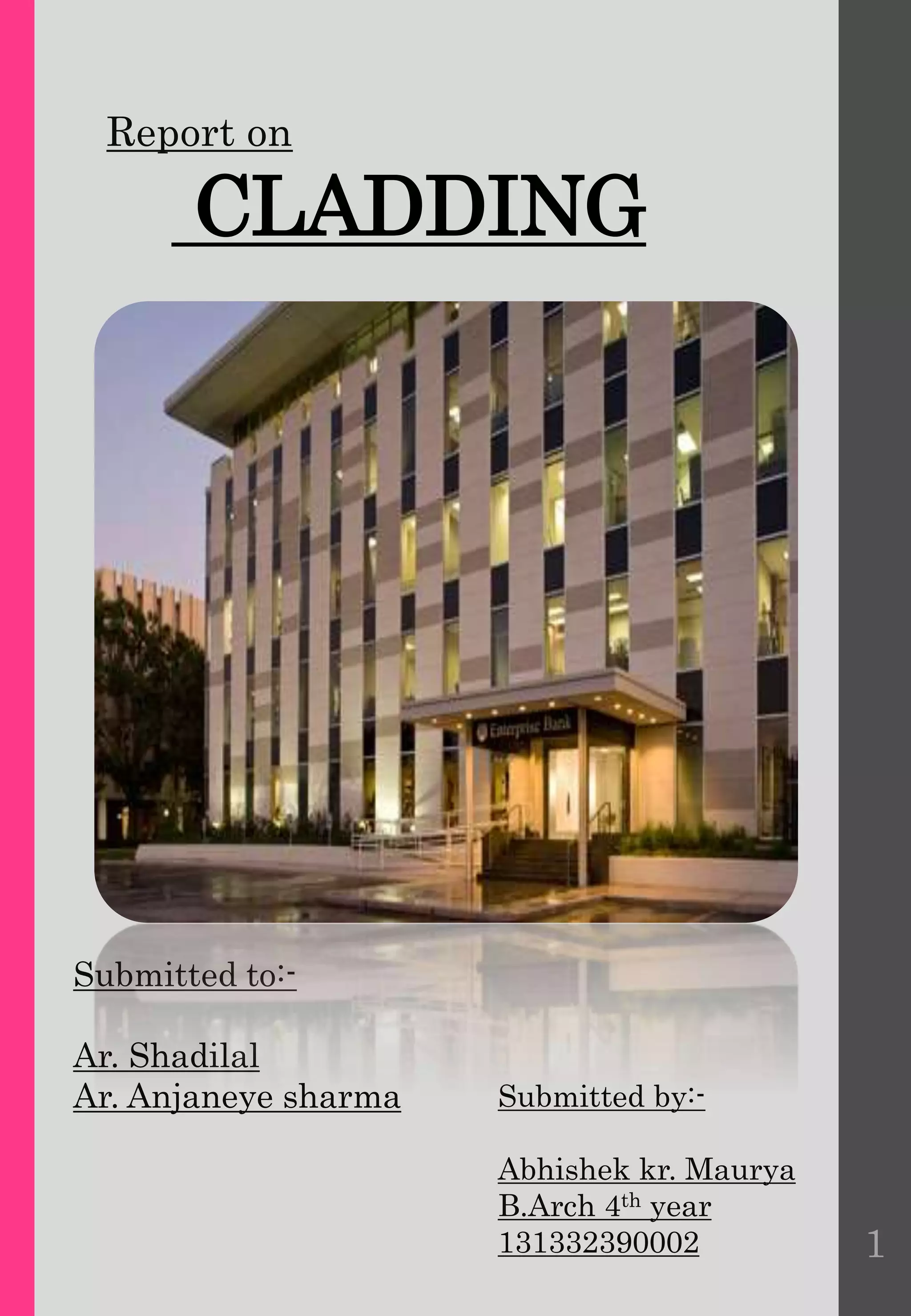
CLADDING
Report on
Submitted to:-
Ar. Shadilal
Ar. Anjaneye sharma Submitted by:-
Abhishek kr. Maurya
B.Arch 4th year
131332390002 1
CLADDING
 Cladding is a layer of a building frame
structure and it mounted on the outer
surface of a structure
 In the context of a framed building the
primary objectives of the cladding system
itself are:
i) Provide an enclosure to the structure
which will give the necessary protection
against the elements
ii) Exploit dry construction methods where
possible, including the use of off-site
prefabrication
iii) Impose the minimal additional dead load
onto the frame
iv) Enhance the architectural
concept/appearance of the building
2
Strength and stability
• Strength to support its own self weight
between points of supports or fixings to the
structural frame.
• Stability against lateral wind pressures.
• Allowance for differential movements
between itself, the structural frame and
other adjacent building elements.
• To fulfil these objectives the cladding
system must meet the following
functional requirements;
• Strength and stability
• Compatibility with Integration with
vertical and horizontal frame
members/elements
• Weather resistance
• Durability
• Thermal insulation
• Fire requirements
• Sound insulation
• Aesthetic
3
Strength and stability
• Strength to support its own self weight
between points of supports or fixings to the
structural frame.
• Stability against lateral wind pressures.
• Allowance for differential movements
between itself, the structural frame and
other adjacent building elements.
•Compatibility with Integration
with vertical and horizontal frame
memberselements, including
• Structure wind bracing arrangements.
• Ability to cater for frame movements
Weather resistance
Resistance to wind, rain and other forms of
precipitation (cladding and joints).
Durability
Durability, freedom from maintenance, and
ability to weather well.
4
Thermal insulation
• Avoidance of problems arising from ‘cold
bridging’ and from surface and interstitial
condensation.
• Minimisation of air leakage
Fire requirements
Restriction of flame spread to internal and
external surfaces and within voids
Sound insulation
Prevention of sound originating in one part
of the building being transmitted to other
areas via cladding members/elements.
Aesthetic
• The need to respond to the context
within which the building is situated.
• The need to satisfy the aesthetic
aspirations of the client. (Weathering
characteristics/durability of materials).
5
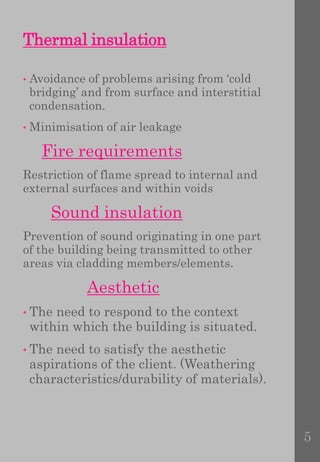
Installation process
6
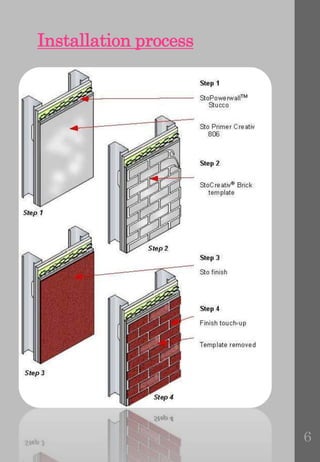
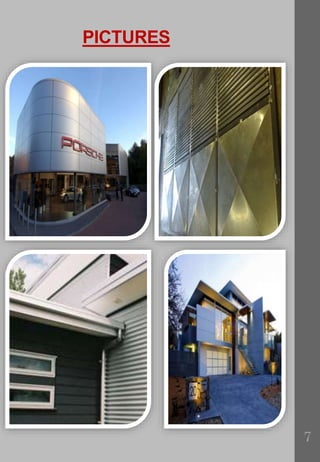
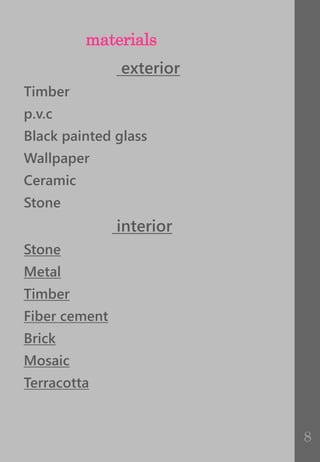
PICTURES
7
materials
exterior
Timber
p.v.c
Black painted glass
Wallpaper
Ceramic
Stone
interior
Stone
Metal
Timber
Fiber cement
Brick
Mosaic
Terracotta
8
Key points
The primary roles
1. Control the infiltration of weather
elements.
2. Observe the egress of water vapour.
3. Durable, aesthetical , pleasing
appearances.
The secondary roles
1. Sound and thermal insulation.
2. Fire resistance.
3. Capacity of cleaning in dusty, polluted or
vandal prone environment.
9

Cladding

  • 1.
    CLADDING Report on Submitted to:- Ar.Shadilal Ar. Anjaneye sharma Submitted by:- Abhishek kr. Maurya B.Arch 4th year 131332390002 1
  • 2.
    CLADDING  Cladding isa layer of a building frame structure and it mounted on the outer surface of a structure  In the context of a framed building the primary objectives of the cladding system itself are: i) Provide an enclosure to the structure which will give the necessary protection against the elements ii) Exploit dry construction methods where possible, including the use of off-site prefabrication iii) Impose the minimal additional dead load onto the frame iv) Enhance the architectural concept/appearance of the building 2
  • 3.
    Strength and stability •Strength to support its own self weight between points of supports or fixings to the structural frame. • Stability against lateral wind pressures. • Allowance for differential movements between itself, the structural frame and other adjacent building elements. • To fulfil these objectives the cladding system must meet the following functional requirements; • Strength and stability • Compatibility with Integration with vertical and horizontal frame members/elements • Weather resistance • Durability • Thermal insulation • Fire requirements • Sound insulation • Aesthetic 3
  • 4.
    Strength and stability •Strength to support its own self weight between points of supports or fixings to the structural frame. • Stability against lateral wind pressures. • Allowance for differential movements between itself, the structural frame and other adjacent building elements. •Compatibility with Integration with vertical and horizontal frame memberselements, including • Structure wind bracing arrangements. • Ability to cater for frame movements Weather resistance Resistance to wind, rain and other forms of precipitation (cladding and joints). Durability Durability, freedom from maintenance, and ability to weather well. 4
  • 5.
    Thermal insulation • Avoidanceof problems arising from ‘cold bridging’ and from surface and interstitial condensation. • Minimisation of air leakage Fire requirements Restriction of flame spread to internal and external surfaces and within voids Sound insulation Prevention of sound originating in one part of the building being transmitted to other areas via cladding members/elements. Aesthetic • The need to respond to the context within which the building is situated. • The need to satisfy the aesthetic aspirations of the client. (Weathering characteristics/durability of materials). 5
  • 6.
  • 7.
  • 8.
  • 9.
    Key points The primaryroles 1. Control the infiltration of weather elements. 2. Observe the egress of water vapour. 3. Durable, aesthetical , pleasing appearances. The secondary roles 1. Sound and thermal insulation. 2. Fire resistance. 3. Capacity of cleaning in dusty, polluted or vandal prone environment. 9