Orientation Program on
Building Code: Need, Formulation and
Implementation Strategy
Er.Achyut Paudel
28 May, 2020
Objectives:
At the end of the session, participants will:
 Be able to describe the need of Building Code
 Be able to describe the formulation of Building
Code
 Be able to describe the implementation strategy of
Building Code in Nepal
2
Nepal National Building Code:
 A building code is a set of rules that specify the
minimum acceptable level of safety for constructed
objects such as building and non-building structures.
 The main purpose of building codes is to protect public
health, safety and general welfare as they relate to the
construction and occupancy of buildings and structures.
 The building code becomes law of a particular
jurisdiction when formally enacted by the appropriate
authority.
Necessity of Building Code
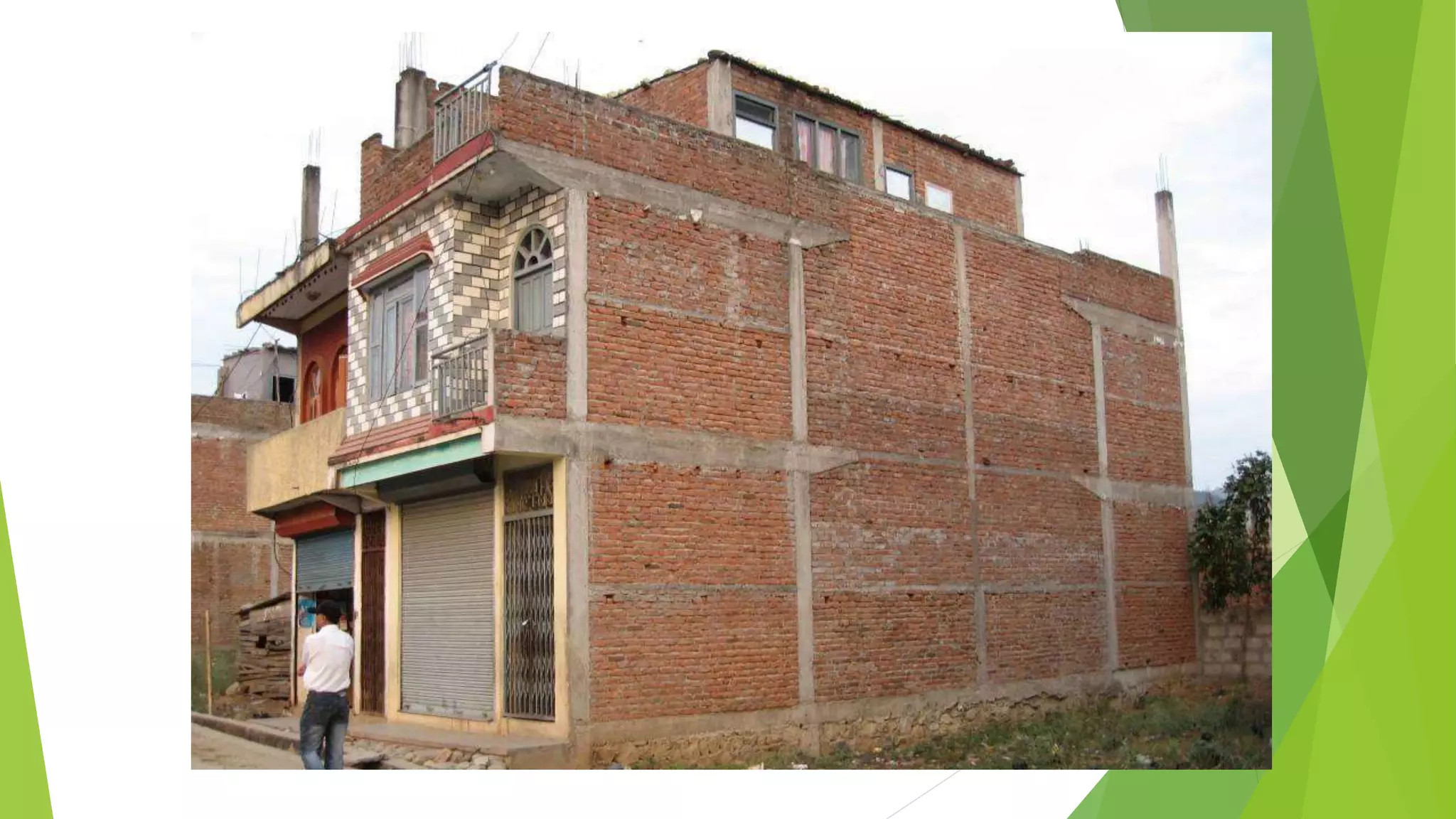
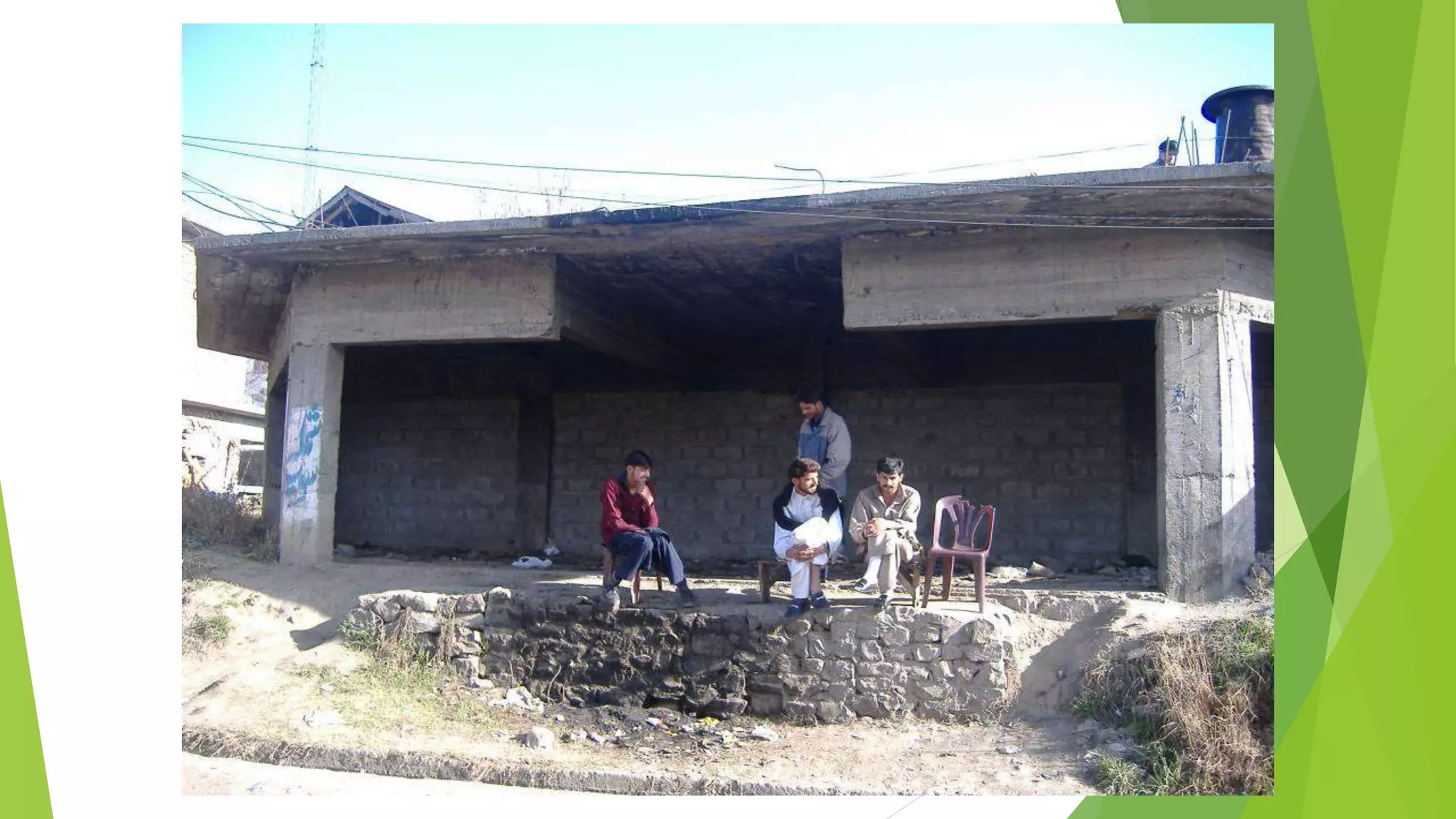
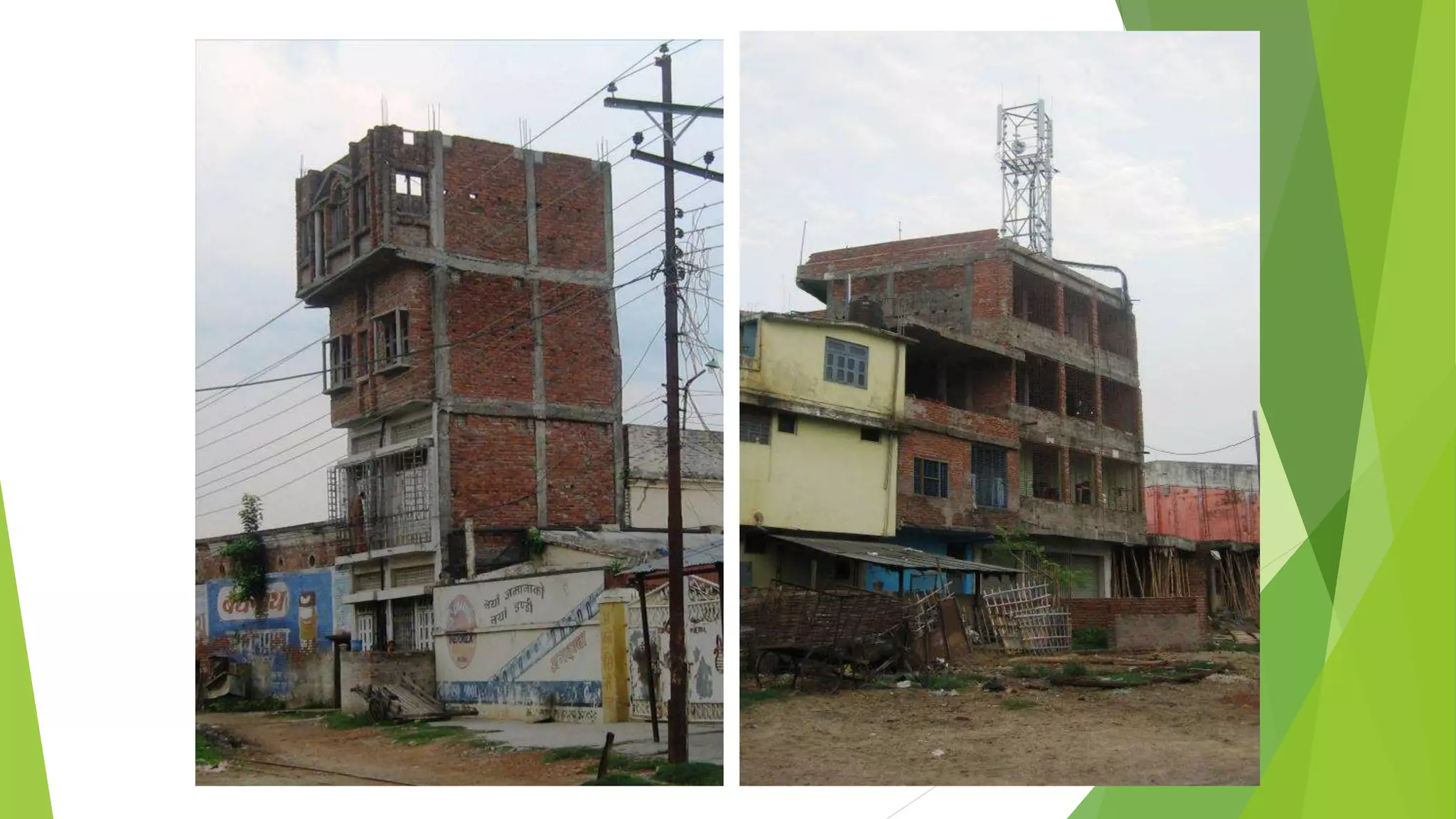
 In the context of Nepal, more than 95% of residential
buildings in Nepal are constructed in absence of
Technical Supervision by Technical Professional by the
House-owner himself.
 Instead of locally available material, use of new
construction technologies and materials in growing
 At local level to the masons and the house-owner, there
is no proper knowledge about new construction
materials and technology
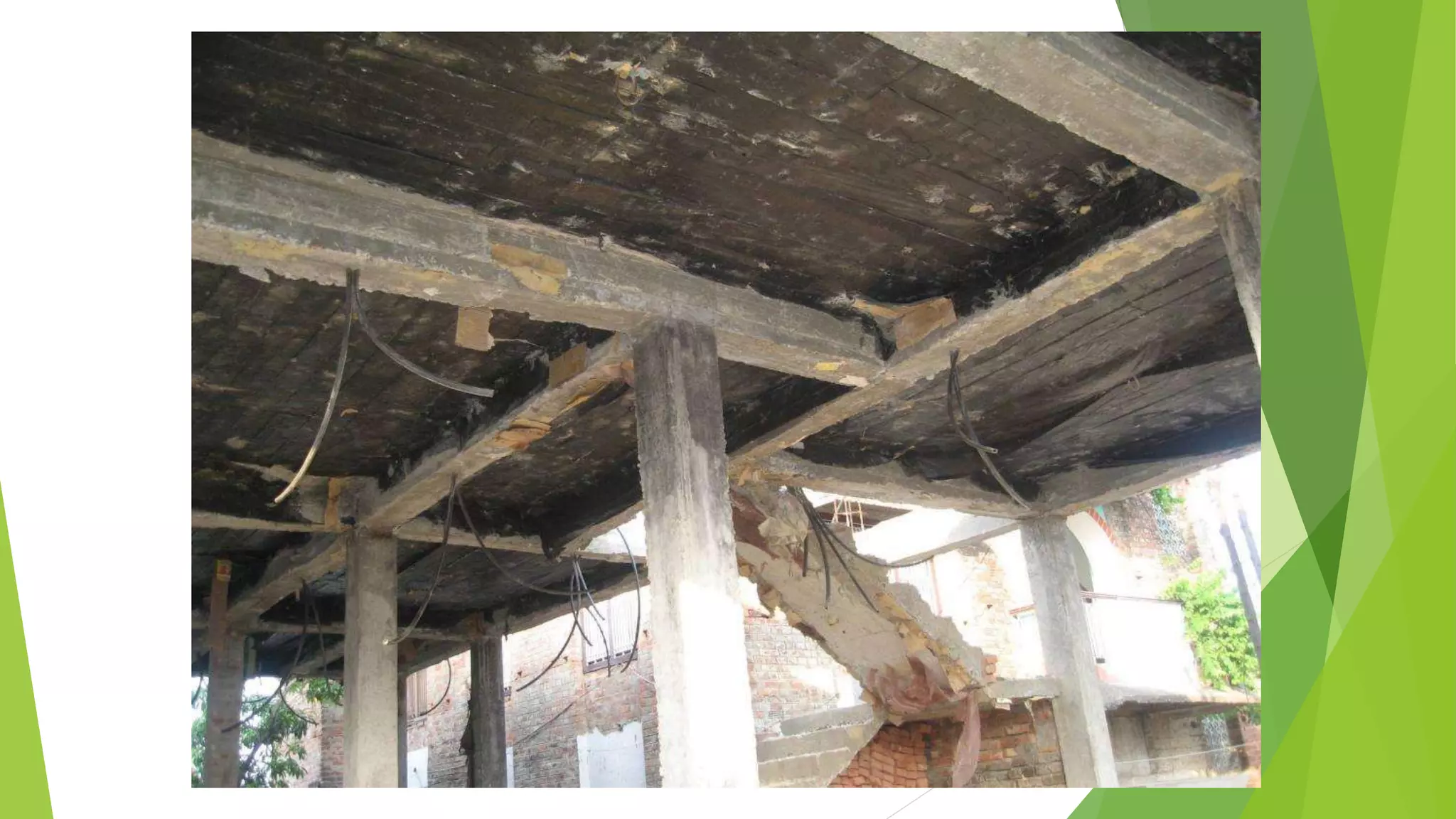
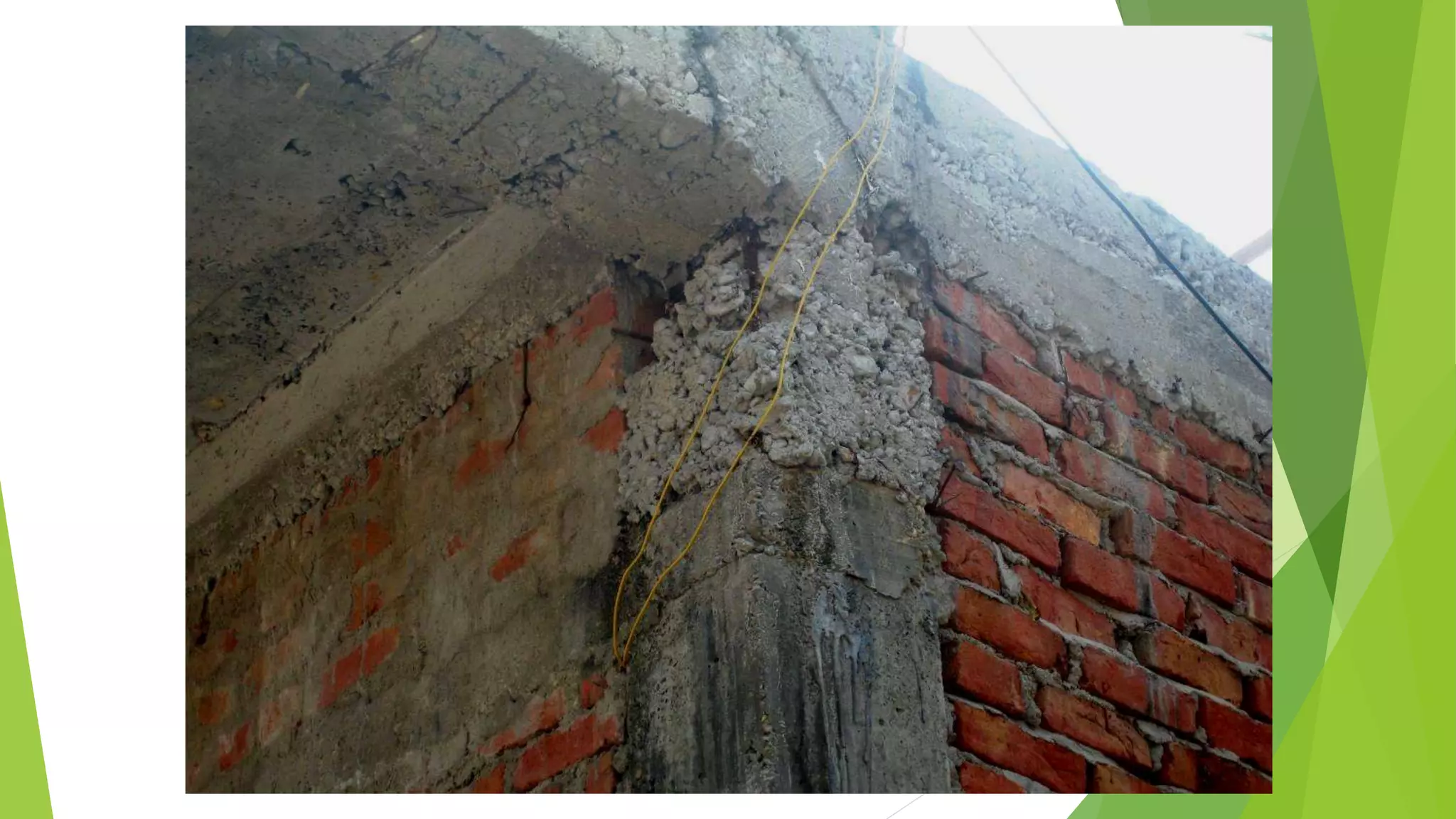
 In general, the housing construction quality is degrading
with time.
Formulation of Building Code:
Brahma Shamser J.B.R in his book ““!(();fnsf]dxfe"sDk” explained the
following:
 What were the effects of Earthquake? How rescue, relief and
rehabilitation was done?
 What are the Causes of Earthquake and If there is Possibility of
anther Great Earthquake in Nepal?
 What are the measures that need to be taken to minimize the effect
of Earthquake?
 What need to be considered while constructing a new house?
 How can we make cement using locally available materials at
local level?
However, then government as well as local people didn’t gave much
interest about this.
Start of Building Code Formulation:
After 2045 Bhadra 5 Earthquake:
 Resettlement and Reconstruction Project on Earthquake
Affected Area was implemented
 Earthquake Reconstruction Project suggested to develop
“Housing Policy” in Nepal
 “First Housing Survey” was completed in 2048/049 BS in
Nepal
 From the housing survey, importance of Building Code was
prioritize in Nepal
 “Nepal National Building Code formation plan” started from
2050/51 by then Ministry of Housing and Physical Planning
under the financial assistance of UNDP/UNCHS(Habitat)
 “Nepal National Building Code” was prepared in 2052 BS
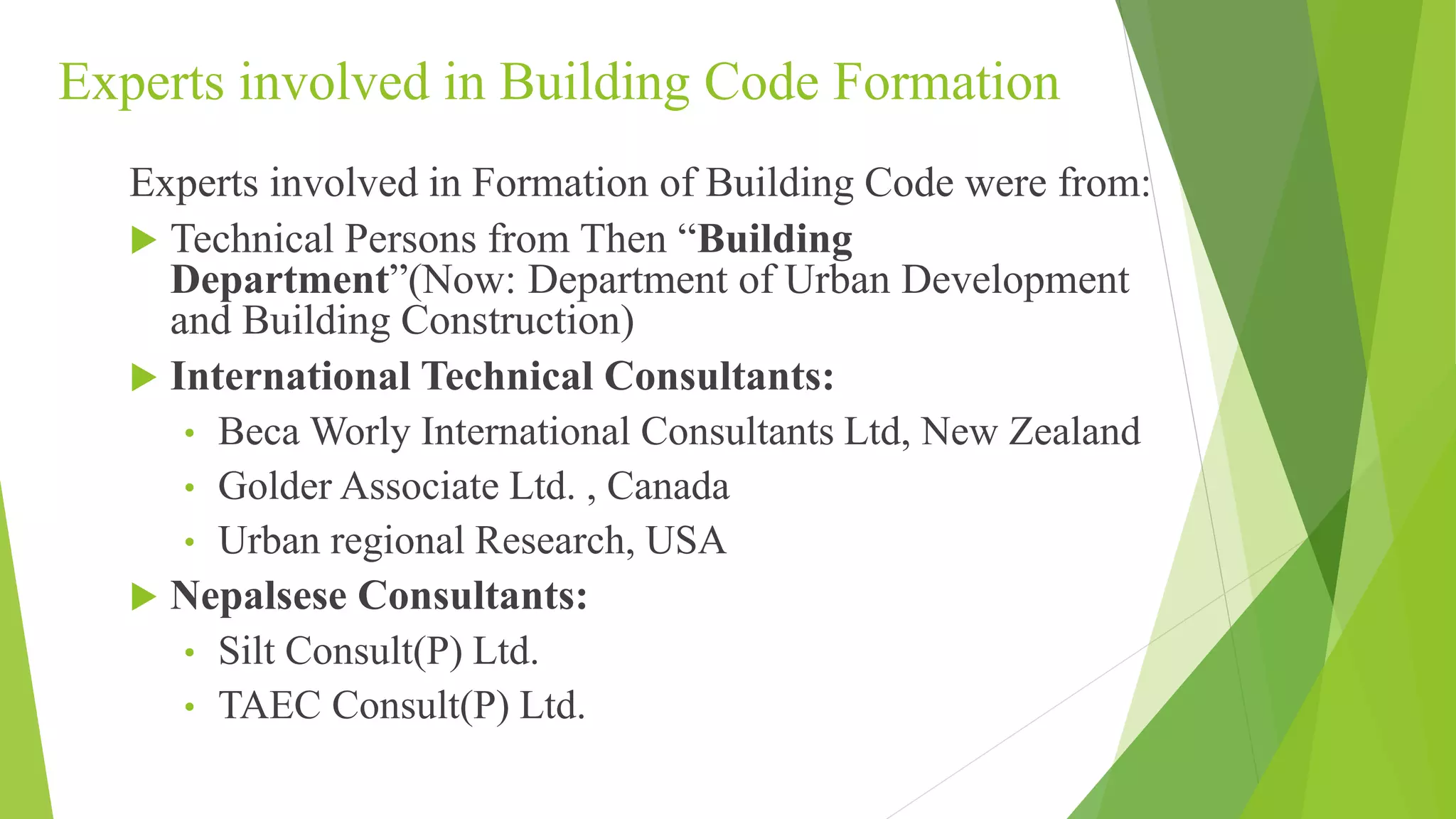
Experts involved in Building Code Formation
Experts involved in Formation of Building Code were from:
 Technical Persons from Then “Building
Department”(Now: Department of Urban Development
and Building Construction)
 International Technical Consultants:
• Beca Worly International Consultants Ltd, New Zealand
• Golder Associate Ltd. , Canada
• Urban regional Research, USA
 Nepalsese Consultants:
• Silt Consult(P) Ltd.
• TAEC Consult(P) Ltd.
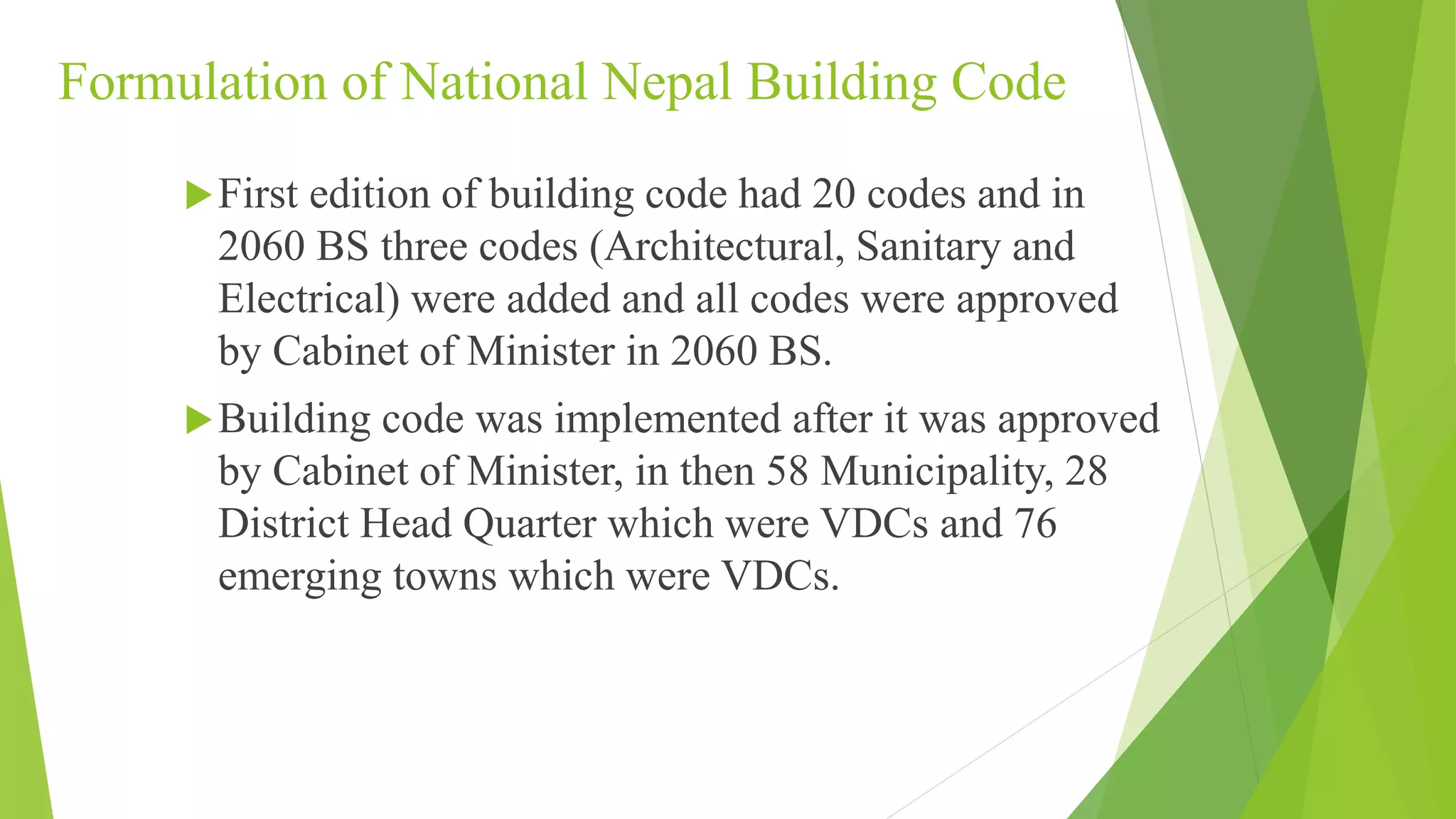
Formulation of National Nepal Building Code
First edition of building code had 20 codes and in
2060 BS three codes (Architectural, Sanitary and
Electrical) were added and all codes were approved
by Cabinet of Minister in 2060 BS.
Building code was implemented after it was approved
by Cabinet of Minister, in then 58 Municipality, 28
District Head Quarter which were VDCs and 76
emerging towns which were VDCs.
Formulation of National Nepal Building Code
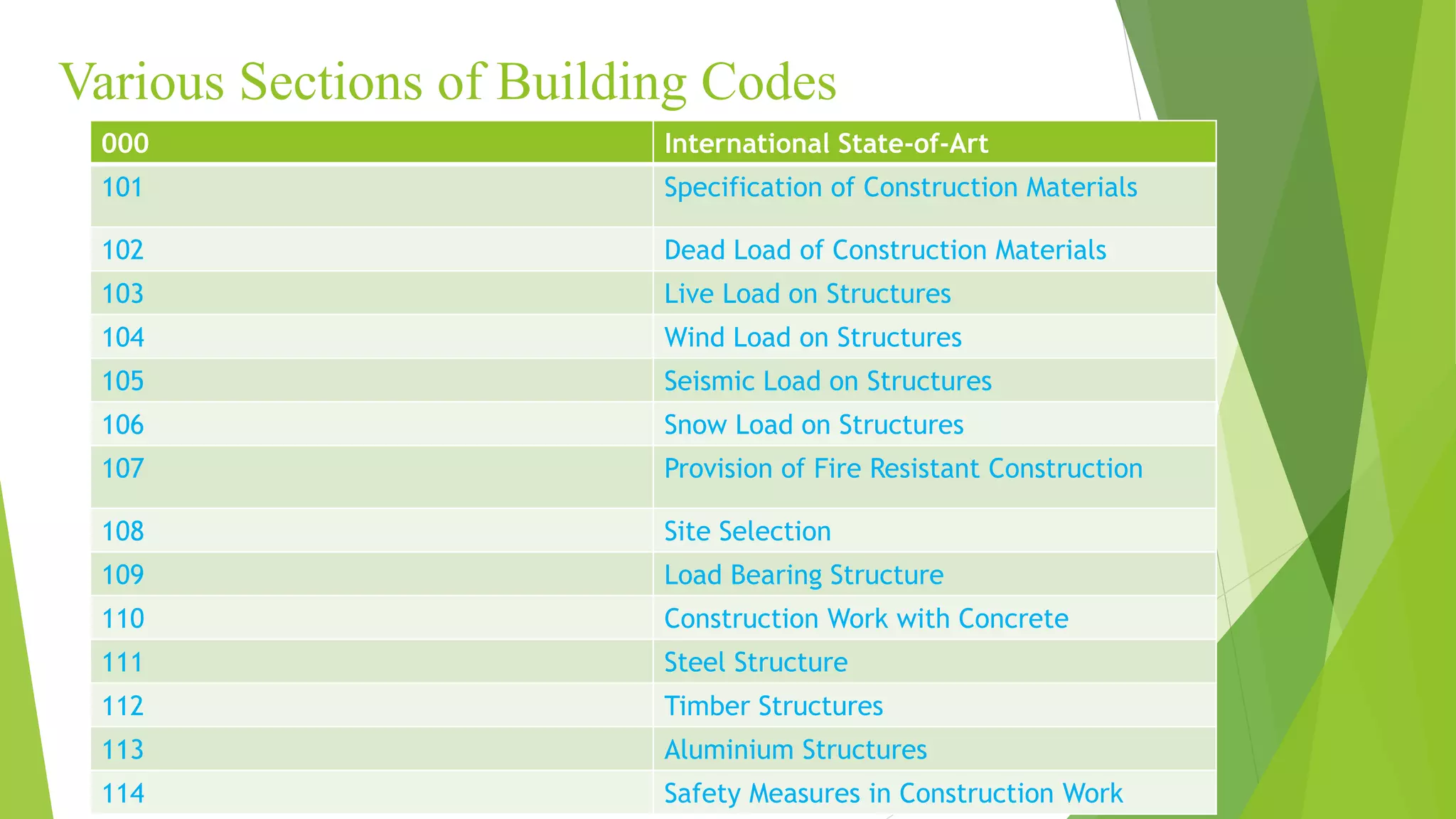
Various Sections of Building Codes
000 International State-of-Art
101 Specification of Construction Materials
102 Dead Load of Construction Materials
103 Live Load on Structures
104 Wind Load on Structures
105 Seismic Load on Structures
106 Snow Load on Structures
107 Provision of Fire Resistant Construction
108 Site Selection
109 Load Bearing Structure
110 Construction Work with Concrete
111 Steel Structure
112 Timber Structures
113 Aluminium Structures
114 Safety Measures in Construction Work
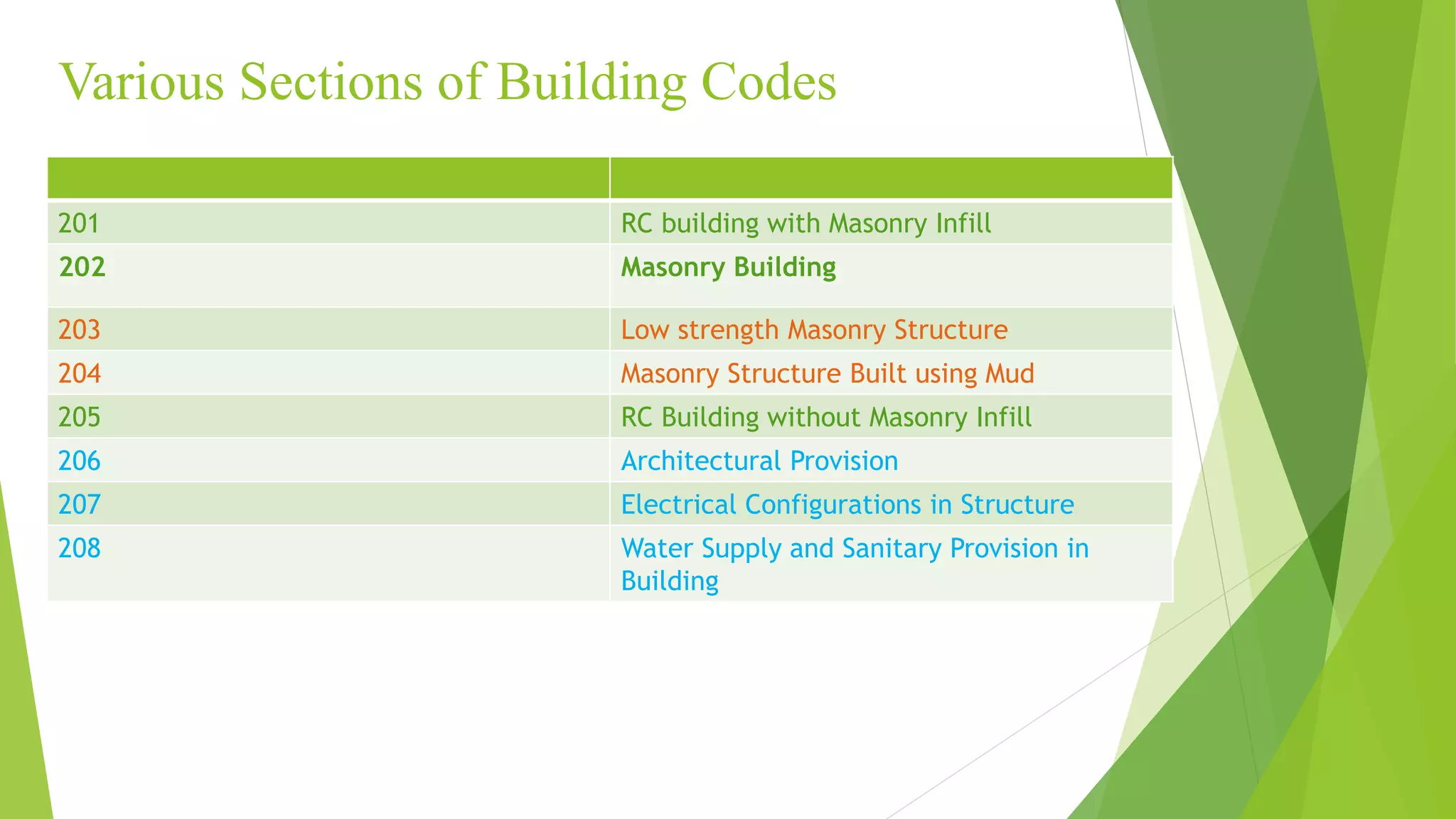
Various Sections of Building Codes
201 RC building with Masonry Infill
202 Masonry Building
203 Low strength Masonry Structure
204 Masonry Structure Built using Mud
205 RC Building without Masonry Infill
206 Architectural Provision
207 Electrical Configurations in Structure
208 Water Supply and Sanitary Provision in
Building
Formulation of National Nepal Building Code
Nepal National Building Code has been divided into 4
Volumes for its better implementation:
1. International State-of-Art
2. Professionally Engineered Building
3. Mandatory Rules-of-Thumb
4. Guidelines for Remote Rural Buildings-Low
Strengths Masonry/Earthen Building
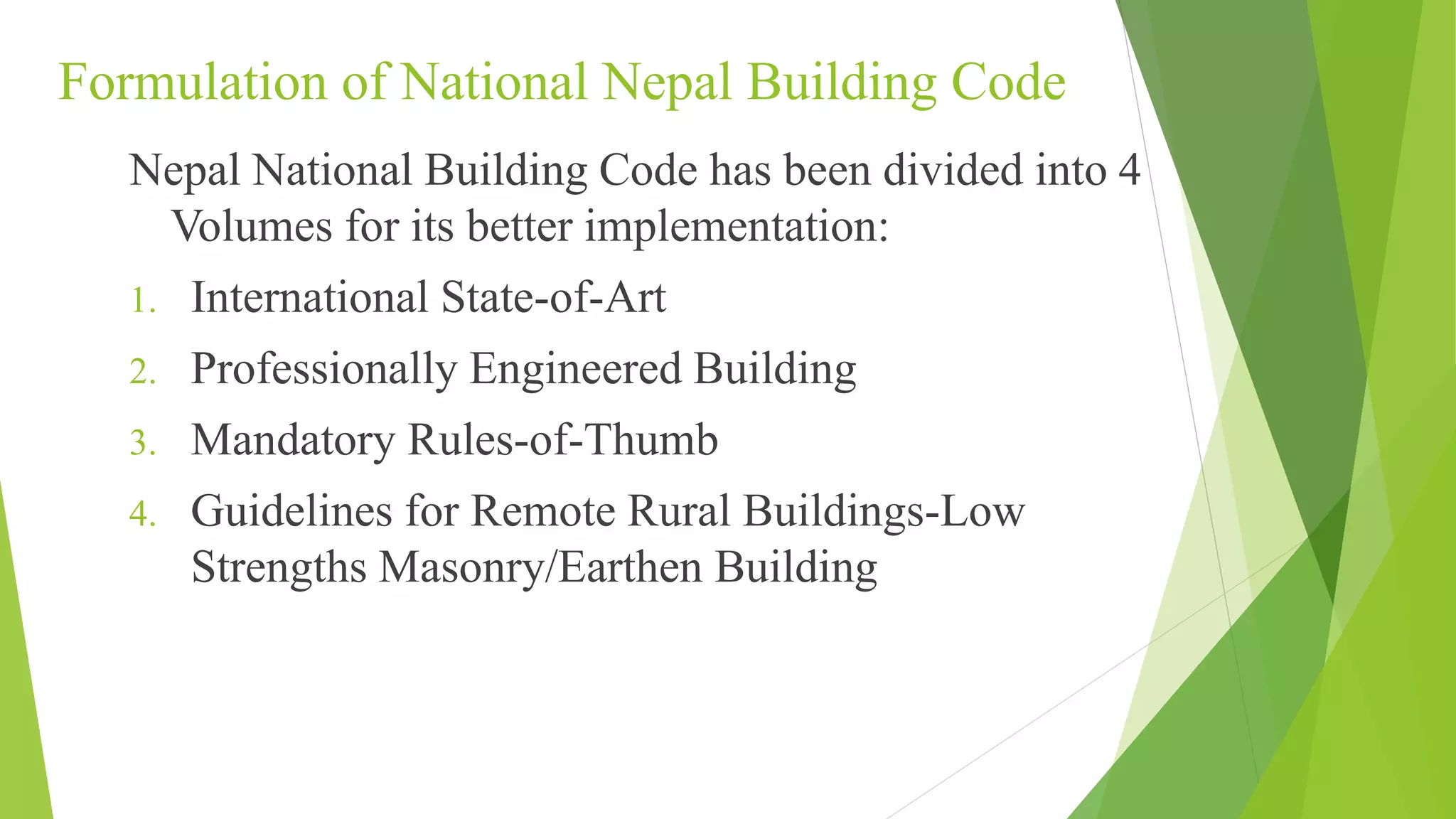
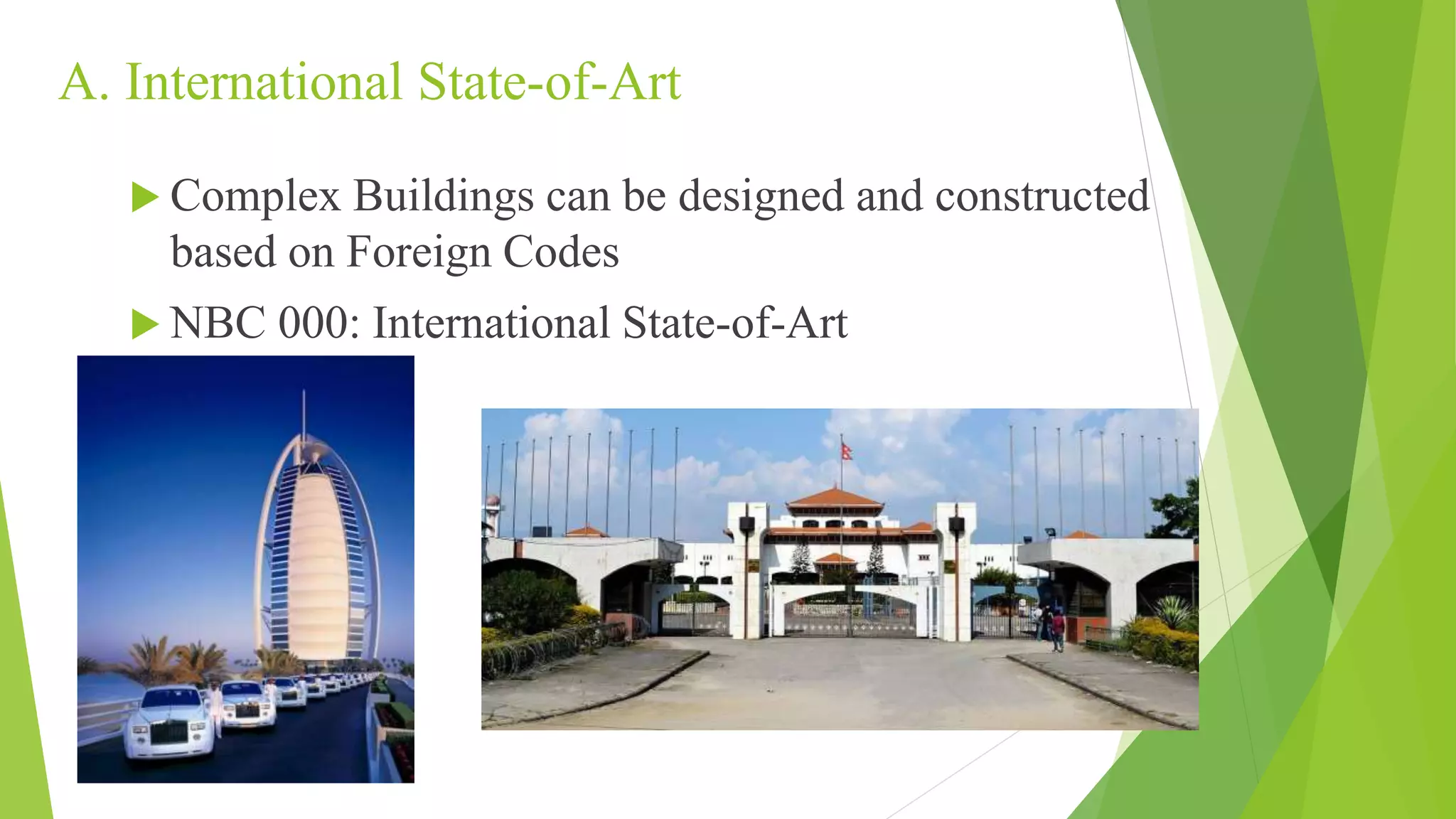
A. International State-of-Art
 Complex Buildings can be designed and constructed
based on Foreign Codes
 NBC 000: International State-of-Art
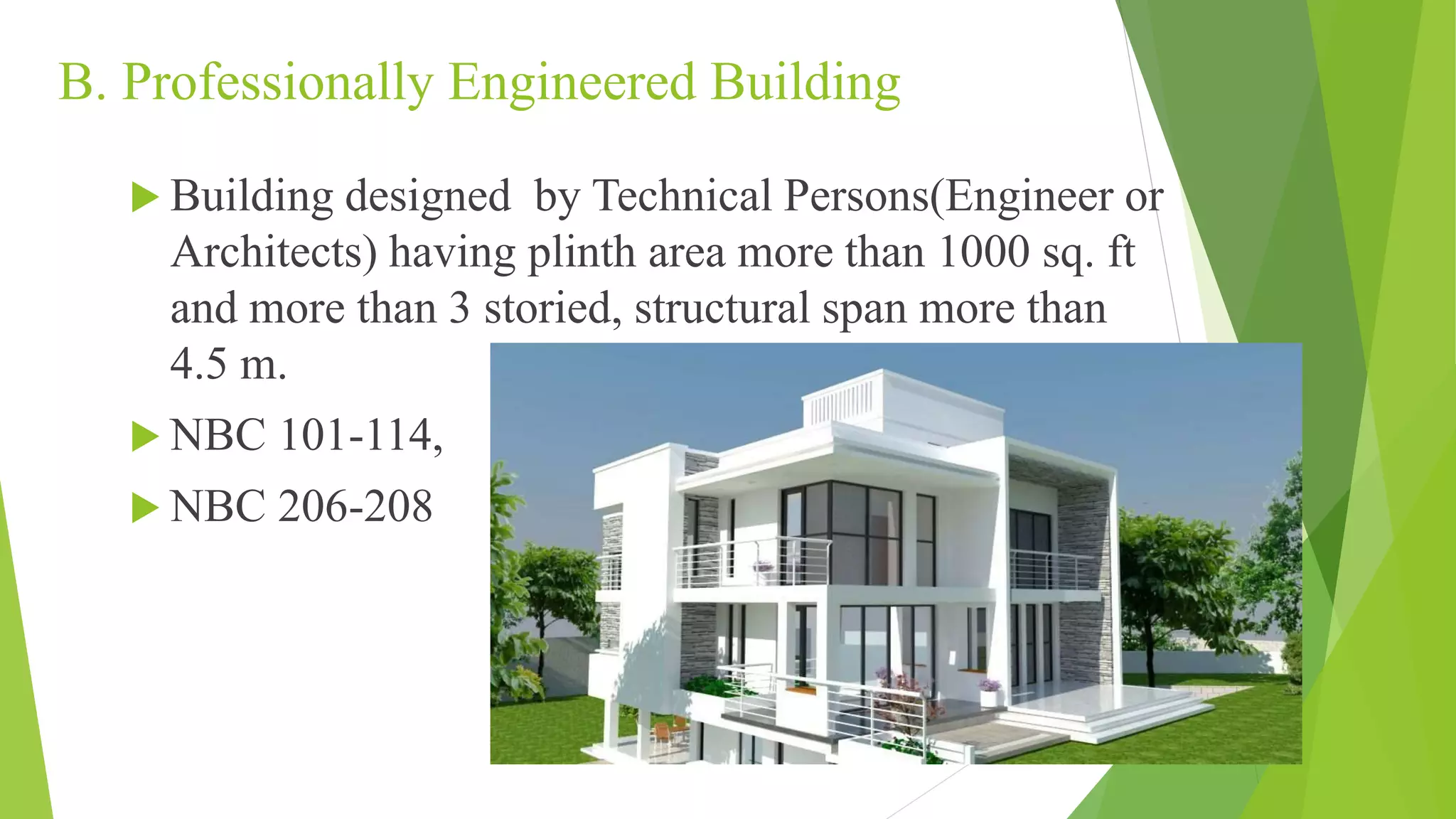
B. Professionally Engineered Building
 Building designed by Technical Persons(Engineer or
Architects) having plinth area more than 1000 sq. ft
and more than 3 storied, structural span more than
4.5 m.
 NBC 101-114,
 NBC 206-208
C. Mandatory Rule of Thumb
 Building that can be designed by mid level technical
professional with plinth area less than 1000 sq ft and
less than 3 storied building, structural span less than
4.5 m.
 NBC 201-202
 NBC 205
D. Guideline for Rural Building
 Dwellings up to 2 storied in place where it is not
possible for regular supervision of Technical
Professionals
 NBC 203 and NBC 204
Building Code Implementation Stages:
 ldlt @)^).)$.!@ sf]g]kfn;/sf/sf]lg0f{oaf6 ;/sf/L/ ;/sf/L:jfldTjdf /x]sf]
;+ul7t ;+:yfx?sf]tk{maf6 lgdf{0fx'g] ejgdf tTsfn nfu"ePsf].
 ldlt @)^@ ;fn kmfu'g ! ut] /fhkqdf;"rgf k|sflzt ePkl5 %* j6f gu/kflnsf If]q,
@* j6f lhNnf ;b/d'sfd /x]sfufpFljsf; ;ldltx? / &^ j6f gu/f]Gd'vufpFljsf;
;ldltx?df lgdf{0fx'g] s'g} klg ejgdf ;Flxtf nfu‘ ePsf].
 ejg P]g, @)%% ldlt @)^$.%.!$ df klxnf] ;+zf]wge} /fli6«o ejg ;+lxtf, @)^)
tf]lsPsfgu/kflnsf /tf]lsPsfuflj;x?df nfu'ePsf]
 t/xfn;Dd 3f]lift?kdf l;ldt gu/kflnsfx?n] dfqof];Flxtf sfo{fGjogdfNofPsf]
cj:yf5 .
Strategy for Building Code Implementation:
 Make new construction safe in disasters based on
building code compliance
 Retrofit of Existing Structure based on codal
provision to make it safe in disasters.
Process:
Requirement for Building Code Implementation:
 Policy Development, Capacity Development at Local Level,
Awareness Campaign, Development of National Level Program
for Building Code Implementation
Objectives:
At the end of the session, participants will:
 Know about Building Code
 Be able to describe the need of Building Code
 Be able to describe the formulation of Building
Code
 Be able to describe the implementation strategy of
Building Code in Nepal
29
Thank You!!!
If any Question, Lets Discuss
30

Nepal National Building Code: Need, Formulation and Implementation Strategy

  • 1.
    Orientation Program on BuildingCode: Need, Formulation and Implementation Strategy Er.Achyut Paudel 28 May, 2020
  • 2.
    Objectives: At the endof the session, participants will:  Be able to describe the need of Building Code  Be able to describe the formulation of Building Code  Be able to describe the implementation strategy of Building Code in Nepal 2
  • 3.
    Nepal National BuildingCode:  A building code is a set of rules that specify the minimum acceptable level of safety for constructed objects such as building and non-building structures.  The main purpose of building codes is to protect public health, safety and general welfare as they relate to the construction and occupancy of buildings and structures.  The building code becomes law of a particular jurisdiction when formally enacted by the appropriate authority.
  • 4.
    Necessity of BuildingCode  In the context of Nepal, more than 95% of residential buildings in Nepal are constructed in absence of Technical Supervision by Technical Professional by the House-owner himself.  Instead of locally available material, use of new construction technologies and materials in growing  At local level to the masons and the house-owner, there is no proper knowledge about new construction materials and technology  In general, the housing construction quality is degrading with time.
  • 5.
    Formulation of BuildingCode: Brahma Shamser J.B.R in his book ““!(();fnsf]dxfe"sDk” explained the following:  What were the effects of Earthquake? How rescue, relief and rehabilitation was done?  What are the Causes of Earthquake and If there is Possibility of anther Great Earthquake in Nepal?  What are the measures that need to be taken to minimize the effect of Earthquake?  What need to be considered while constructing a new house?  How can we make cement using locally available materials at local level? However, then government as well as local people didn’t gave much interest about this.
  • 6.
    Start of BuildingCode Formulation: After 2045 Bhadra 5 Earthquake:  Resettlement and Reconstruction Project on Earthquake Affected Area was implemented  Earthquake Reconstruction Project suggested to develop “Housing Policy” in Nepal  “First Housing Survey” was completed in 2048/049 BS in Nepal  From the housing survey, importance of Building Code was prioritize in Nepal  “Nepal National Building Code formation plan” started from 2050/51 by then Ministry of Housing and Physical Planning under the financial assistance of UNDP/UNCHS(Habitat)  “Nepal National Building Code” was prepared in 2052 BS
  • 7.
    Experts involved inBuilding Code Formation Experts involved in Formation of Building Code were from:  Technical Persons from Then “Building Department”(Now: Department of Urban Development and Building Construction)  International Technical Consultants: • Beca Worly International Consultants Ltd, New Zealand • Golder Associate Ltd. , Canada • Urban regional Research, USA  Nepalsese Consultants: • Silt Consult(P) Ltd. • TAEC Consult(P) Ltd.
  • 8.
    Formulation of NationalNepal Building Code First edition of building code had 20 codes and in 2060 BS three codes (Architectural, Sanitary and Electrical) were added and all codes were approved by Cabinet of Minister in 2060 BS. Building code was implemented after it was approved by Cabinet of Minister, in then 58 Municipality, 28 District Head Quarter which were VDCs and 76 emerging towns which were VDCs.
  • 9.
    Formulation of NationalNepal Building Code
  • 10.
    Various Sections ofBuilding Codes 000 International State-of-Art 101 Specification of Construction Materials 102 Dead Load of Construction Materials 103 Live Load on Structures 104 Wind Load on Structures 105 Seismic Load on Structures 106 Snow Load on Structures 107 Provision of Fire Resistant Construction 108 Site Selection 109 Load Bearing Structure 110 Construction Work with Concrete 111 Steel Structure 112 Timber Structures 113 Aluminium Structures 114 Safety Measures in Construction Work
  • 11.
    Various Sections ofBuilding Codes 201 RC building with Masonry Infill 202 Masonry Building 203 Low strength Masonry Structure 204 Masonry Structure Built using Mud 205 RC Building without Masonry Infill 206 Architectural Provision 207 Electrical Configurations in Structure 208 Water Supply and Sanitary Provision in Building
  • 12.
    Formulation of NationalNepal Building Code Nepal National Building Code has been divided into 4 Volumes for its better implementation: 1. International State-of-Art 2. Professionally Engineered Building 3. Mandatory Rules-of-Thumb 4. Guidelines for Remote Rural Buildings-Low Strengths Masonry/Earthen Building
  • 13.
    A. International State-of-Art Complex Buildings can be designed and constructed based on Foreign Codes  NBC 000: International State-of-Art
  • 14.
    B. Professionally EngineeredBuilding  Building designed by Technical Persons(Engineer or Architects) having plinth area more than 1000 sq. ft and more than 3 storied, structural span more than 4.5 m.  NBC 101-114,  NBC 206-208
  • 15.
    C. Mandatory Ruleof Thumb  Building that can be designed by mid level technical professional with plinth area less than 1000 sq ft and less than 3 storied building, structural span less than 4.5 m.  NBC 201-202  NBC 205
  • 16.
    D. Guideline forRural Building  Dwellings up to 2 storied in place where it is not possible for regular supervision of Technical Professionals  NBC 203 and NBC 204
  • 17.
    Building Code ImplementationStages:  ldlt @)^).)$.!@ sf]g]kfn;/sf/sf]lg0f{oaf6 ;/sf/L/ ;/sf/L:jfldTjdf /x]sf] ;+ul7t ;+:yfx?sf]tk{maf6 lgdf{0fx'g] ejgdf tTsfn nfu"ePsf].  ldlt @)^@ ;fn kmfu'g ! ut] /fhkqdf;"rgf k|sflzt ePkl5 %* j6f gu/kflnsf If]q, @* j6f lhNnf ;b/d'sfd /x]sfufpFljsf; ;ldltx? / &^ j6f gu/f]Gd'vufpFljsf; ;ldltx?df lgdf{0fx'g] s'g} klg ejgdf ;Flxtf nfu‘ ePsf].  ejg P]g, @)%% ldlt @)^$.%.!$ df klxnf] ;+zf]wge} /fli6«o ejg ;+lxtf, @)^) tf]lsPsfgu/kflnsf /tf]lsPsfuflj;x?df nfu'ePsf]  t/xfn;Dd 3f]lift?kdf l;ldt gu/kflnsfx?n] dfqof];Flxtf sfo{fGjogdfNofPsf] cj:yf5 .
  • 28.
    Strategy for BuildingCode Implementation:  Make new construction safe in disasters based on building code compliance  Retrofit of Existing Structure based on codal provision to make it safe in disasters. Process: Requirement for Building Code Implementation:  Policy Development, Capacity Development at Local Level, Awareness Campaign, Development of National Level Program for Building Code Implementation
  • 29.
    Objectives: At the endof the session, participants will:  Know about Building Code  Be able to describe the need of Building Code  Be able to describe the formulation of Building Code  Be able to describe the implementation strategy of Building Code in Nepal 29
  • 30.
    Thank You!!! If anyQuestion, Lets Discuss 30