Muhammad Zulqarnain
17-Arid-4757
Arid Agriculture University Rawalpindi
Bamboo Properties, Production and
Utilization
Properties
Tensile strength
 It is strength of
material how hard it is
to pull it part
 Bamboo has greater
tensile strength than
steel
Compressive strength
 The resistance of a
material to breaking
under compression.
 The compressive
strength of bamboo is
roughly situated
between 40 and 80
N/mm2
Bamboo Types
CLUMPING
 The rhizomes are
generally short and thick
in appearance.
 At the nodes, new
rhizomes or roots can be
produced.
 New culms can only form
at the very tip of the
rhizome.
 They will generally form
discrete circular clumps.
 They are sympodial
RUNNING
 They have thin rhizomes
which extend horizontally
underground for long
distances
 They grow in scattered
state, and can spread over
a large distance.
 They are invasive by
design
 They are monopodial
 They are usually grown in
temperate regions
Bamboo Production
 Bamboo has been cultivated in tropical and temperate
climates and especially in southeast Asia
 China is largest producer of bamboo
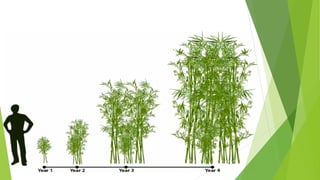
 It’s been recorded that some bamboo species under the
right circumstances can grow 1 foot (30 centimeters) in
only one day.
 The best conditions for bamboo to grow is generally in
tropical climates with a good amount of humidity.
 Generally bamboo is planted in autumn or spring
 Bamboo does not prefer very cold temperature
 Bamboo is generally grown in loamy soil
 Ph 4.5 to 6
 Bamboo is generally propagated through cuttings
culms and Rhizomes
 Pit size of 60 to 60cm is dug and plant spacing
should be 5m×4m
 Density of plants per acre is 200
 Flowering in bamboo happens once in lifetime and
bamboo quickly die afterwards. IN some plants it
does not happen
Production
 Generally nitrogen and potassium are applied to bamboo
 The best and most preferred fertilizer for bamboo is organic
compost or manure
 In bamboo 3 or 4 irrigations are given per week when plant is in
the nursery at the stage when it is planted in nursery
 After transplanting irrigation is also requires this till reaches
maturity
 It is a desirable to create a layer of mulch around the bamboo to
protect its roots and rhizomes, which are especially vulnerable
during the early stages of growth
Utilizaion Of Bamboo
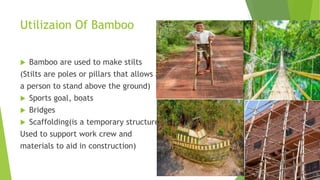
 Bamboo are used to make stilts
(Stilts are poles or pillars that allows a
a person to stand above the ground)
 Sports goal, boats
 Bridges
 Scaffolding(is a temporary structure
Used to support work crew and
materials to aid in construction)
Utilization
 It is also used in furniture
 It is also used to make clothes of
good quality
These fabrics are anti fungal and anti
Bacterial.
 Softest fabrics and it is also insulatin
 Bamboo is also used to make ladders
Utilization
 Bamboo is eco friendly as it provides more than 35%
oxygen than common tree stand
 It can be used to create oxygen friendly environment
 It can be used to make fences, musical instruments
and water pipes
 It has greater tensile strength than steel
 It can be used as reinforcement to concrete
 Bamboo is also edible. They are rich source of
dietary fiber
Bamboo properties and utilization

Bamboo properties and utilization

  • 2.
    Muhammad Zulqarnain 17-Arid-4757 Arid AgricultureUniversity Rawalpindi Bamboo Properties, Production and Utilization
  • 3.
    Properties Tensile strength  Itis strength of material how hard it is to pull it part  Bamboo has greater tensile strength than steel Compressive strength  The resistance of a material to breaking under compression.  The compressive strength of bamboo is roughly situated between 40 and 80 N/mm2
  • 4.
  • 5.
    CLUMPING  The rhizomesare generally short and thick in appearance.  At the nodes, new rhizomes or roots can be produced.  New culms can only form at the very tip of the rhizome.  They will generally form discrete circular clumps.  They are sympodial RUNNING  They have thin rhizomes which extend horizontally underground for long distances  They grow in scattered state, and can spread over a large distance.  They are invasive by design  They are monopodial  They are usually grown in temperate regions
  • 6.
    Bamboo Production  Bamboohas been cultivated in tropical and temperate climates and especially in southeast Asia  China is largest producer of bamboo  It’s been recorded that some bamboo species under the right circumstances can grow 1 foot (30 centimeters) in only one day.  The best conditions for bamboo to grow is generally in tropical climates with a good amount of humidity.  Generally bamboo is planted in autumn or spring
  • 7.
     Bamboo doesnot prefer very cold temperature  Bamboo is generally grown in loamy soil  Ph 4.5 to 6  Bamboo is generally propagated through cuttings culms and Rhizomes  Pit size of 60 to 60cm is dug and plant spacing should be 5m×4m  Density of plants per acre is 200  Flowering in bamboo happens once in lifetime and bamboo quickly die afterwards. IN some plants it does not happen
  • 8.
    Production  Generally nitrogenand potassium are applied to bamboo  The best and most preferred fertilizer for bamboo is organic compost or manure  In bamboo 3 or 4 irrigations are given per week when plant is in the nursery at the stage when it is planted in nursery  After transplanting irrigation is also requires this till reaches maturity  It is a desirable to create a layer of mulch around the bamboo to protect its roots and rhizomes, which are especially vulnerable during the early stages of growth
  • 11.
    Utilizaion Of Bamboo Bamboo are used to make stilts (Stilts are poles or pillars that allows a a person to stand above the ground)  Sports goal, boats  Bridges  Scaffolding(is a temporary structure Used to support work crew and materials to aid in construction)
  • 12.
    Utilization  It isalso used in furniture  It is also used to make clothes of good quality These fabrics are anti fungal and anti Bacterial.  Softest fabrics and it is also insulatin  Bamboo is also used to make ladders
  • 13.
    Utilization  Bamboo iseco friendly as it provides more than 35% oxygen than common tree stand  It can be used to create oxygen friendly environment  It can be used to make fences, musical instruments and water pipes  It has greater tensile strength than steel  It can be used as reinforcement to concrete  Bamboo is also edible. They are rich source of dietary fiber