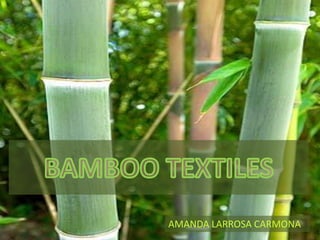
AMANDA LARROSA CARMONA
Environmental degradation is the deterioration of the
environment through depletion of resources such as air,
water and soil, the destruction of ecosystems and the
extinction of wildlife.
Bamboo textiles are cloth, yarn, and clothing made out of bamboo
fibres. In recent years a range of technologies have been developed
allowing bamboo fibre to be used in a wide range of textile and
fashion applications. Modern bamboo clothing is made from either
100% bamboo yarn or a blend of bamboo and cotton yarn, or other
textile fibres.
Growth
Bamboo reaching up to 35 meters tall is the fastest growing woody
plant in the world. There is bamboo in diverse climates from cold
mountains to hot tropical regions.
 Growth
About 40 million hectares of the earth are covered with bamboo,
mostly in Asia. These facts make bamboo a sustainable and versatile
resource.
 Harvesting
Once a new shoot emerges from the ground, the new cane will
reach its full height in just 8–10 weeks. Each cane reaches maturity
in 3–5 years. Bamboo can be continually re-harvested with no
damage to the surrounding environment. It regenerates after being
cut just like a lawn without the need for replanting.
 Yield and land use
Bamboo can be used as food, fibre and shelter and due to its ease of
growth and extraordinary growth rate is a cheap, sustainable and
efficient crop. Yields of bamboo greatly exceed the yield of most
trees and needs little care and maintenance.
Greenhouse gases and global warming
Bamboo minimizes CO2 and generates up to 35% more oxygen than
equivalent stands of trees. One hectare of bamboo sequesters 62
tones of carbon dioxide per year while one hectare of young forest
only sequesters 15 tones of carbon dioxide per year.
 Deforestation
Bamboo planting can slow deforestation, providing an alternative
source of timber for the construction industry and cellulose fiber for
the textile industry. Bamboo doesn’t need replanting.
Water use
Very little bamboo is irrigated and there is sound evidence that the
water-use efficiency of bamboo is twice that of other trees. This
makes bamboo more able to handle harsh weather conditions such
as drought, flood and high temperatures.
 Soil erosion
Yearly replanting of crops such as cotton leads to soil erosion. The
extensive root system of bamboo and the fact that it is not uprooted
during harvesting means bamboo actually helps preserve soil and
prevent soil erosion.
Biodegradable
As a natural product derived entirely from plant cellulose, bamboo
fibre is biodegradable in soil by micro organisms and sunlight.
Clothing made from bamboo can be composted and disposed of in
an organic and environmentally friendly manner.
 Biodegradable
Synthetic fibres
such as nylon and
polyester are not
biodegradable and
remain in landfill
for longer.
Pesticides and fertilizers
Bamboo doesn’t need pesticides or fertilizers for growing.
Bamboo also contains a substance called bamboo-kun, an
antimicrobial agent which gives the plant a natural resistance to
pest and fungi infestation. However, the finished bamboo fabric
does not retain this antibacterial property.
• The growth cycle of bamboo is utterly sustainable.
• Bamboo thrives naturally without using any pesticides
or fertilizers.
• Bamboo fibre is 100% biodegradable.
• Bamboo is the fastest growing plant in the world.
• As a grass, bamboo is cut, not uprooted, helping soil
stability.
• The yield you get from an acre of bamboo is 10 times
greater than the yield you get from cotton.
• The water requirement for bamboo is little, mainly just
from what falls. As opposed to cotton, whose water
requirement per shirt's-worth is very big.
 Calculate the amount of clothes that you buy when the
   season changes.
    Calculate the average price of the expense involved in these
   clothes.
    Calculate also the emissions of co2 when these clothes are
   manufactured.
    Calculate now how much the same amount of clothing
   made ​from bamboo would cost. Consult internet to look for
   prices.
    Calculate also the cost of co2 when these clothes are
   manufactured with bamboo fiber.
    Finally, calculate the percentage saved.
 After some time, is it better to buy clothes manufactured with
bamboo fiber?

Presentació bamboo

  • 1.
  • 2.
    Environmental degradation isthe deterioration of the environment through depletion of resources such as air, water and soil, the destruction of ecosystems and the extinction of wildlife.
  • 3.
    Bamboo textiles arecloth, yarn, and clothing made out of bamboo fibres. In recent years a range of technologies have been developed allowing bamboo fibre to be used in a wide range of textile and fashion applications. Modern bamboo clothing is made from either 100% bamboo yarn or a blend of bamboo and cotton yarn, or other textile fibres.
  • 4.
    Growth Bamboo reaching upto 35 meters tall is the fastest growing woody plant in the world. There is bamboo in diverse climates from cold mountains to hot tropical regions.
  • 5.
     Growth About 40million hectares of the earth are covered with bamboo, mostly in Asia. These facts make bamboo a sustainable and versatile resource.
  • 6.
     Harvesting Once anew shoot emerges from the ground, the new cane will reach its full height in just 8–10 weeks. Each cane reaches maturity in 3–5 years. Bamboo can be continually re-harvested with no damage to the surrounding environment. It regenerates after being cut just like a lawn without the need for replanting.
  • 7.
     Yield andland use Bamboo can be used as food, fibre and shelter and due to its ease of growth and extraordinary growth rate is a cheap, sustainable and efficient crop. Yields of bamboo greatly exceed the yield of most trees and needs little care and maintenance.
  • 8.
    Greenhouse gases andglobal warming Bamboo minimizes CO2 and generates up to 35% more oxygen than equivalent stands of trees. One hectare of bamboo sequesters 62 tones of carbon dioxide per year while one hectare of young forest only sequesters 15 tones of carbon dioxide per year.
  • 9.
     Deforestation Bamboo plantingcan slow deforestation, providing an alternative source of timber for the construction industry and cellulose fiber for the textile industry. Bamboo doesn’t need replanting.
  • 10.
    Water use Very littlebamboo is irrigated and there is sound evidence that the water-use efficiency of bamboo is twice that of other trees. This makes bamboo more able to handle harsh weather conditions such as drought, flood and high temperatures.
  • 11.
     Soil erosion Yearlyreplanting of crops such as cotton leads to soil erosion. The extensive root system of bamboo and the fact that it is not uprooted during harvesting means bamboo actually helps preserve soil and prevent soil erosion.
  • 12.
    Biodegradable As a naturalproduct derived entirely from plant cellulose, bamboo fibre is biodegradable in soil by micro organisms and sunlight. Clothing made from bamboo can be composted and disposed of in an organic and environmentally friendly manner.
  • 13.
     Biodegradable Synthetic fibres suchas nylon and polyester are not biodegradable and remain in landfill for longer.
  • 14.
    Pesticides and fertilizers Bamboodoesn’t need pesticides or fertilizers for growing. Bamboo also contains a substance called bamboo-kun, an antimicrobial agent which gives the plant a natural resistance to pest and fungi infestation. However, the finished bamboo fabric does not retain this antibacterial property.
  • 15.
    • The growthcycle of bamboo is utterly sustainable. • Bamboo thrives naturally without using any pesticides or fertilizers. • Bamboo fibre is 100% biodegradable. • Bamboo is the fastest growing plant in the world.
  • 16.
    • As agrass, bamboo is cut, not uprooted, helping soil stability. • The yield you get from an acre of bamboo is 10 times greater than the yield you get from cotton. • The water requirement for bamboo is little, mainly just from what falls. As opposed to cotton, whose water requirement per shirt's-worth is very big.
  • 17.
     Calculate theamount of clothes that you buy when the season changes.  Calculate the average price of the expense involved in these clothes.  Calculate also the emissions of co2 when these clothes are manufactured.  Calculate now how much the same amount of clothing made ​from bamboo would cost. Consult internet to look for prices.  Calculate also the cost of co2 when these clothes are manufactured with bamboo fiber.  Finally, calculate the percentage saved.  After some time, is it better to buy clothes manufactured with bamboo fiber?