
POWER SYSTEM
NAME:MUHAMMAD SHAZWAN
ZAFRAN BIN ABDUL KHAI
COURSE:ELECTRIC
SEMESTER:2
Kolej vokasional temerloh
content
INTRODUCTION
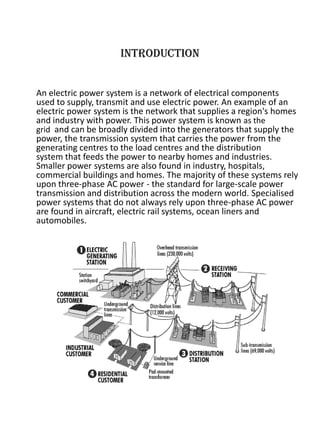
An electric power system is a network of electrical components
used to supply, transmit and use electric power. An example of an
electric power system is the network that supplies a region's homes
and industry with power. This power system is known as the
grid and can be broadly divided into the generators that supply the
power, the transmission system that carries the power from the
generating centres to the load centres and the distribution
system that feeds the power to nearby homes and industries.
Smaller power systems are also found in industry, hospitals,
commercial buildings and homes. The majority of these systems rely
upon three-phase AC power - the standard for large-scale power
transmission and distribution across the modern world. Specialised
power systems that do not always rely upon three-phase AC power
are found in aircraft, electric rail systems, ocean liners and
automobiles.
Electricity generation
Electricity generation is the process of
generating electrical power from other sources
of primary energy.
The fundamental principles of electricity
generation were discovered during the 1820s and
early 1830s by the British scientist Michael Faraday.
His basic method is still used today.Electricity is
generated by the movement of a loop of wire, or disc
of copper between the poles of a magnet.
For electric utilities, it is the first process in the
delivery of electricity to consumers. The other
processes, electricity transmission distribution, and
electrical power storage and recovery using pumped-
storage methods are normally carried out by
the electric power industry.
Electricity is most often generated at a power
station by electromechanical generators, primarily
driven by heat engines fueled by chemical combustion
or nuclear fission but also by other means such as
the kinetic energy of flowing water and wind. Other
energy sources include
solar photovoltaics and geothermal power.
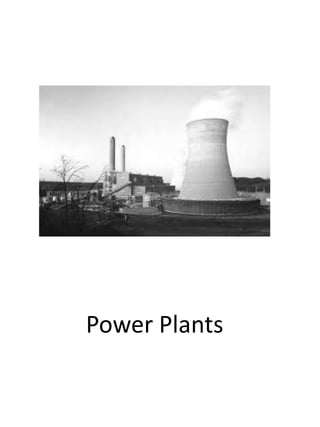
Power Plants
ELECTRIC POWER TRANSMISSION
Electric power transmission is the process by which
large amounts of electricity produced at power plants, such
as industrial-scale solar facilities, is transported over long
distances for eventual use by consumers. In North America,
electricity is sent from power plants to the North American
transmission grid, a vast network of electric power lines and
associated facilities in the United States, Canada, and
Mexico. Due to the large amount of power involved, and the
properties of electricity, transmission normally takes place at
high voltage (69 kV or above). Electricity is usually shipped
to a substation near a populated area. At the substation, the
high voltage electricity is converted to lower voltages
suitable for consumer use, and then shipped to end users
through (relatively) low-voltage electric distribution lines.
For newly constructed solar energy power plants, if no
existing suitable transmission facilities were available, new
transmission lines and associated facilities would be
required. The construction, operation, and decommissioning
of high-voltage transmission lines and associated facilities
would create a range of environmental impacts. The type and
magnitude of the impacts associated with transmission line
construction, operation, and decommissioning would vary
depending on line type and size, as well as the length of the
transmission line, and a variety of other site-specific factors.
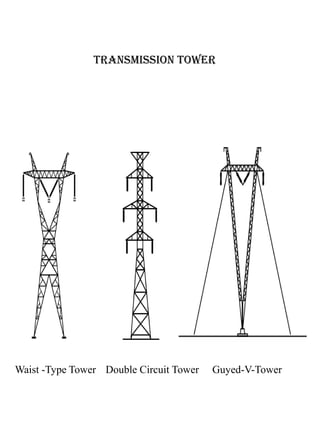
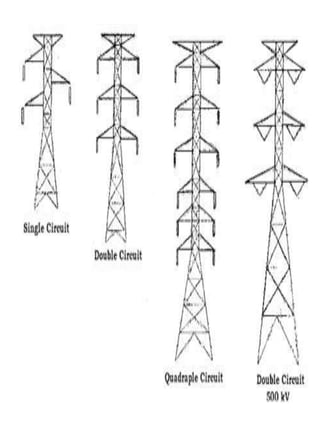
TRANSMISSION TOWER
Waist -Type Tower Double Circuit Tower Guyed-V-Tower
ELECTRIC DISTRIBUTION
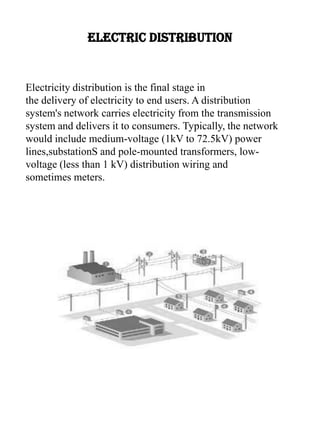
Electricity distribution is the final stage in
the delivery of electricity to end users. A distribution
system's network carries electricity from the transmission
system and delivers it to consumers. Typically, the network
would include medium-voltage (1kV to 72.5kV) power
lines,substationS and pole-mounted transformers, low-
voltage (less than 1 kV) distribution wiring and
sometimes meters.
references
Internet: http://en.wikipedia.org/wiki/Electric_power_
system
SUMMARY
In conclusion,electric power system is the most important system to supply
the electrical for the consumer and it consist of generation,transmission an
distribution system.

Bahasa omputeh

  • 1.
    POWER SYSTEM NAME:MUHAMMAD SHAZWAN ZAFRANBIN ABDUL KHAI COURSE:ELECTRIC SEMESTER:2 Kolej vokasional temerloh
  • 2.
  • 3.
    INTRODUCTION An electric powersystem is a network of electrical components used to supply, transmit and use electric power. An example of an electric power system is the network that supplies a region's homes and industry with power. This power system is known as the grid and can be broadly divided into the generators that supply the power, the transmission system that carries the power from the generating centres to the load centres and the distribution system that feeds the power to nearby homes and industries. Smaller power systems are also found in industry, hospitals, commercial buildings and homes. The majority of these systems rely upon three-phase AC power - the standard for large-scale power transmission and distribution across the modern world. Specialised power systems that do not always rely upon three-phase AC power are found in aircraft, electric rail systems, ocean liners and automobiles.
  • 4.
    Electricity generation Electricity generationis the process of generating electrical power from other sources of primary energy. The fundamental principles of electricity generation were discovered during the 1820s and early 1830s by the British scientist Michael Faraday. His basic method is still used today.Electricity is generated by the movement of a loop of wire, or disc of copper between the poles of a magnet. For electric utilities, it is the first process in the delivery of electricity to consumers. The other processes, electricity transmission distribution, and electrical power storage and recovery using pumped- storage methods are normally carried out by the electric power industry. Electricity is most often generated at a power station by electromechanical generators, primarily driven by heat engines fueled by chemical combustion or nuclear fission but also by other means such as the kinetic energy of flowing water and wind. Other energy sources include solar photovoltaics and geothermal power.
  • 5.
  • 6.
    ELECTRIC POWER TRANSMISSION Electricpower transmission is the process by which large amounts of electricity produced at power plants, such as industrial-scale solar facilities, is transported over long distances for eventual use by consumers. In North America, electricity is sent from power plants to the North American transmission grid, a vast network of electric power lines and associated facilities in the United States, Canada, and Mexico. Due to the large amount of power involved, and the properties of electricity, transmission normally takes place at high voltage (69 kV or above). Electricity is usually shipped to a substation near a populated area. At the substation, the high voltage electricity is converted to lower voltages suitable for consumer use, and then shipped to end users through (relatively) low-voltage electric distribution lines. For newly constructed solar energy power plants, if no existing suitable transmission facilities were available, new transmission lines and associated facilities would be required. The construction, operation, and decommissioning of high-voltage transmission lines and associated facilities would create a range of environmental impacts. The type and magnitude of the impacts associated with transmission line construction, operation, and decommissioning would vary depending on line type and size, as well as the length of the transmission line, and a variety of other site-specific factors.
  • 7.
    TRANSMISSION TOWER Waist -TypeTower Double Circuit Tower Guyed-V-Tower
  • 9.
    ELECTRIC DISTRIBUTION Electricity distributionis the final stage in the delivery of electricity to end users. A distribution system's network carries electricity from the transmission system and delivers it to consumers. Typically, the network would include medium-voltage (1kV to 72.5kV) power lines,substationS and pole-mounted transformers, low- voltage (less than 1 kV) distribution wiring and sometimes meters.
  • 10.
  • 11.
    SUMMARY In conclusion,electric powersystem is the most important system to supply the electrical for the consumer and it consist of generation,transmission an distribution system.