1
Introduction of Electrical
Grid
2
Contents
• Introduction
• Grid structure
• Generation
• Transmission
• Distribution
3
What is an Electrical Grid
• An electric grid is defined as a network of electrical components used
to supply, transfer, and consume electric power.
• The supply is done through some form of generation (e.g., a power plant)
• The transfer is done through a transmission (via a transmission line) and
distribution system.
• The consumption can be through residential or industrial applications.
• An example of a power system is the electrical grid that provides
power to homes and industry within an extended area.
4
Need for an Electrical Grid
• From an economic point of view, generating stations are constructed
where resources are readily available.
• Consumers consume electrical energy, but they may stay in such
locations where the resources for producing electricity are not available.
• So instead, we use an externally located generation source and then
transmit this generated power to the load centers through a long
transmission line and a distribution system.
• We call the entire arrangement from generating plants to consumer ends
for delivering electricity efficiently and reliably as the Electric Power
System or Electric Grid.
5
Goal
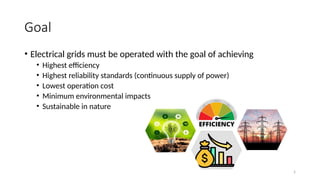
• Electrical grids must be operated with the goal of achieving
• Highest efficiency
• Highest reliability standards (continuous supply of power)
• Lowest operation cost
• Minimum environmental impacts
• Sustainable in nature
6
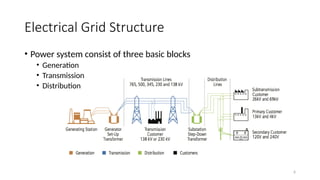
Electrical Grid Structure
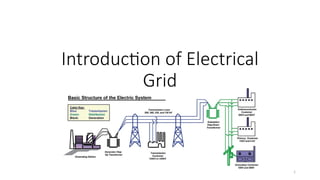
• Power system consist of three basic blocks
• Generation
• Transmission
• Distribution
7
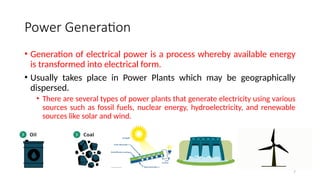
Power Generation
• Generation of electrical power is a process whereby available energy
is transformed into electrical form.
• Usually takes place in Power Plants which may be geographically
dispersed.
• There are several types of power plants that generate electricity using various
sources such as fossil fuels, nuclear energy, hydroelectricity, and renewable
sources like solar and wind.
8
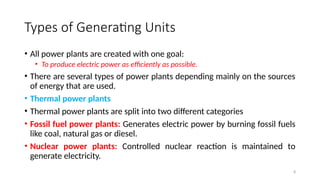
Types of Generating Units
• All power plants are created with one goal:
• To produce electric power as efficiently as possible.
• There are several types of power plants depending mainly on the sources
of energy that are used.
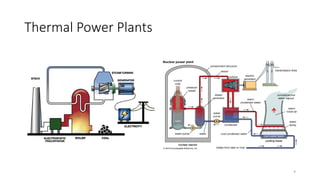
• Thermal power plants
• Thermal power plants are split into two different categories
• Fossil fuel power plants: Generates electric power by burning fossil fuels
like coal, natural gas or diesel.
• Nuclear power plants: Controlled nuclear reaction is maintained to
generate electricity.
9
Thermal Power Plants
10
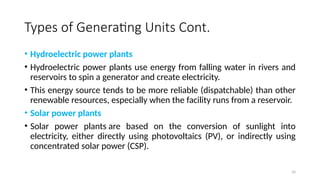
Types of Generating Units Cont.
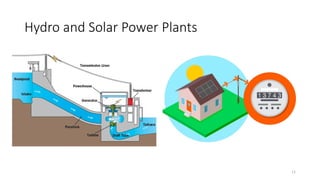
• Hydroelectric power plants
• Hydroelectric power plants use energy from falling water in rivers and
reservoirs to spin a generator and create electricity.
• This energy source tends to be more reliable (dispatchable) than other
renewable resources, especially when the facility runs from a reservoir.
• Solar power plants
• Solar power plants are based on the conversion of sunlight into
electricity, either directly using photovoltaics (PV), or indirectly using
concentrated solar power (CSP).
11
Hydro and Solar Power Plants
12
Types of Generating Units Cont.
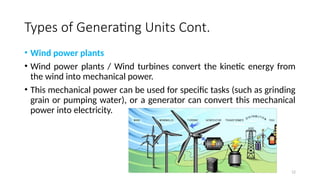
• Wind power plants
• Wind power plants / Wind turbines convert the kinetic energy from
the wind into mechanical power.
• This mechanical power can be used for specific tasks (such as grinding
grain or pumping water), or a generator can convert this mechanical
power into electricity.
13
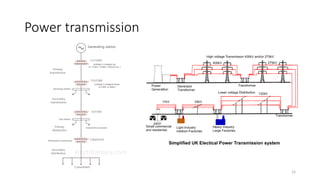
Power Transmission
• Once the power is generated it must be transmitted to the consumers
• Depending on locality and type of the power plants
• Goal is to interconnect the generating plants (usually located at far off
areas) to the consumption points with
• Reduced cost of implementation
• Limited losses
• Increased reliability
• Interoperability (power in one area can be supplied from another region)
14
Power transmission
15
Power Transmission Equipment
• Step-up transformers
• Step-down transformers
• Voltage regulators (maintain the voltage at desirable levels)
• Phase shifters (maintain the real power flow through the transmission
lines)
• Transmission lines and cables
• Circuit breakers (used to disconnect the lines in case of faults)
16
Power Transmission Equipment Cont.
• Lightning arresters
• Protective relays
• Used to identity and isolate the fault as soon as possible.
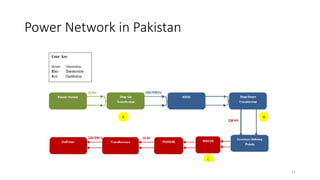
• Standard transmission voltages in Pakistan
• 500 KV by NTDC
• 220 KV by NTDC
17
Power Distribution
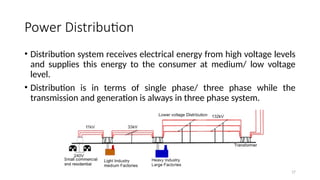
• Distribution system receives electrical energy from high voltage levels
and supplies this energy to the consumer at medium/ low voltage
level.
• Distribution is in terms of single phase/ three phase while the
transmission and generation is always in three phase system.
18
Main Components
• Distribution Transformer
• Feeder
• Overhead or underground cables to provide the transmission of energy
• Switches, fuses, etc.
• Protective relays (to remove faults)
• Lightening arresters
19
PESCO
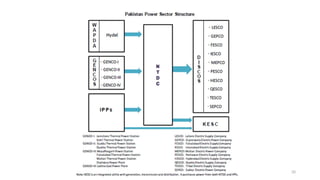
• PESCO networks own and maintain KPK's electricity distribution
system via
• 132, 66, 33KV sub-transmission lines.
• Sub-stations.
• 11KV & 440V low tension lines with distribution transformers that deliver
electricity to your home or business.
20
21
Power Network in Pakistan

Lec 1 - Electrical Grid step by step explaiation.pptx

  • 1.
  • 2.
    2 Contents • Introduction • Gridstructure • Generation • Transmission • Distribution
  • 3.
    3 What is anElectrical Grid • An electric grid is defined as a network of electrical components used to supply, transfer, and consume electric power. • The supply is done through some form of generation (e.g., a power plant) • The transfer is done through a transmission (via a transmission line) and distribution system. • The consumption can be through residential or industrial applications. • An example of a power system is the electrical grid that provides power to homes and industry within an extended area.
  • 4.
    4 Need for anElectrical Grid • From an economic point of view, generating stations are constructed where resources are readily available. • Consumers consume electrical energy, but they may stay in such locations where the resources for producing electricity are not available. • So instead, we use an externally located generation source and then transmit this generated power to the load centers through a long transmission line and a distribution system. • We call the entire arrangement from generating plants to consumer ends for delivering electricity efficiently and reliably as the Electric Power System or Electric Grid.
  • 5.
    5 Goal • Electrical gridsmust be operated with the goal of achieving • Highest efficiency • Highest reliability standards (continuous supply of power) • Lowest operation cost • Minimum environmental impacts • Sustainable in nature
  • 6.
    6 Electrical Grid Structure •Power system consist of three basic blocks • Generation • Transmission • Distribution
  • 7.
    7 Power Generation • Generationof electrical power is a process whereby available energy is transformed into electrical form. • Usually takes place in Power Plants which may be geographically dispersed. • There are several types of power plants that generate electricity using various sources such as fossil fuels, nuclear energy, hydroelectricity, and renewable sources like solar and wind.
  • 8.
    8 Types of GeneratingUnits • All power plants are created with one goal: • To produce electric power as efficiently as possible. • There are several types of power plants depending mainly on the sources of energy that are used. • Thermal power plants • Thermal power plants are split into two different categories • Fossil fuel power plants: Generates electric power by burning fossil fuels like coal, natural gas or diesel. • Nuclear power plants: Controlled nuclear reaction is maintained to generate electricity.
  • 9.
  • 10.
    10 Types of GeneratingUnits Cont. • Hydroelectric power plants • Hydroelectric power plants use energy from falling water in rivers and reservoirs to spin a generator and create electricity. • This energy source tends to be more reliable (dispatchable) than other renewable resources, especially when the facility runs from a reservoir. • Solar power plants • Solar power plants are based on the conversion of sunlight into electricity, either directly using photovoltaics (PV), or indirectly using concentrated solar power (CSP).
  • 11.
    11 Hydro and SolarPower Plants
  • 12.
    12 Types of GeneratingUnits Cont. • Wind power plants • Wind power plants / Wind turbines convert the kinetic energy from the wind into mechanical power. • This mechanical power can be used for specific tasks (such as grinding grain or pumping water), or a generator can convert this mechanical power into electricity.
  • 13.
    13 Power Transmission • Oncethe power is generated it must be transmitted to the consumers • Depending on locality and type of the power plants • Goal is to interconnect the generating plants (usually located at far off areas) to the consumption points with • Reduced cost of implementation • Limited losses • Increased reliability • Interoperability (power in one area can be supplied from another region)
  • 14.
  • 15.
    15 Power Transmission Equipment •Step-up transformers • Step-down transformers • Voltage regulators (maintain the voltage at desirable levels) • Phase shifters (maintain the real power flow through the transmission lines) • Transmission lines and cables • Circuit breakers (used to disconnect the lines in case of faults)
  • 16.
    16 Power Transmission EquipmentCont. • Lightning arresters • Protective relays • Used to identity and isolate the fault as soon as possible. • Standard transmission voltages in Pakistan • 500 KV by NTDC • 220 KV by NTDC
  • 17.
    17 Power Distribution • Distributionsystem receives electrical energy from high voltage levels and supplies this energy to the consumer at medium/ low voltage level. • Distribution is in terms of single phase/ three phase while the transmission and generation is always in three phase system.
  • 18.
    18 Main Components • DistributionTransformer • Feeder • Overhead or underground cables to provide the transmission of energy • Switches, fuses, etc. • Protective relays (to remove faults) • Lightening arresters
  • 19.
    19 PESCO • PESCO networksown and maintain KPK's electricity distribution system via • 132, 66, 33KV sub-transmission lines. • Sub-stations. • 11KV & 440V low tension lines with distribution transformers that deliver electricity to your home or business.
  • 20.
  • 21.