


POWER SYSTEM
BY – ABHIPSALENKA
Introduction
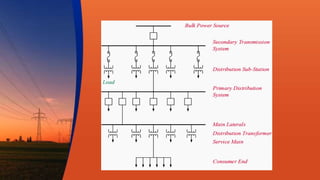
• The power system is a network which consists generation,
distribution and transmission system. It uses the form of
energy (like coal and diesel) and converts it into electrical
energy. The power system includes the devices connected to
the system like the synchronous generator,
motor, transformer, circuit breaker, conductor, etc.
• The power plant, transformer, transmission line, substations,
distribution line, and distribution transformer are the six main
components of the power system. The power plant generates
the power which is step-up or step-down through
the transformer for transmission.
Defination of power generation
• Electricity generation is the process of generating electric
power from sources of primary energy.
• For utilities in the electric power industry, it is the stage
prior to its delivery to end users
(transmission, distribution, etc.) or its storage (using, for
example, the pumped-storage method).
• Electricity is not freely available in nature, so it must be
"produced" (that is, transforming other forms of energy
to electricity).
• Production is carried out in power stations (also called
"power plants").
• Electricity is most often generated at a power plant
by electromechanical generators, primarily driven
by heat engines fueled by combustion or nuclear
fission but also by other means such as the kinetic
energy of flowing water and wind.
• Other energy sources include
solar photovoltaics and geothermal power.
Power stations
• An installation where electrical power is generated for
distribution
• A power station, also referred to as a power plant and
sometimes generating station or generating plant, is an
industrial facility for the generation of electric power.
• Power stations are generally connected to an electrical grid.
• Many power stations contain one or more generators, a
rotating machine that converts mechanical power into three-
phase electric power.
• The relative motion between a magnetic field and
a conductor creates an electric current.
Types of generations
• Steam power stations
• Hydroelectric power stations
• Nuclear power stations
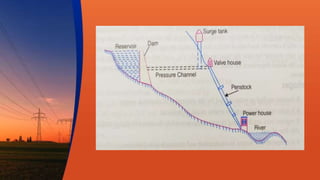
HYDROELECTRIC POWER STATIONS
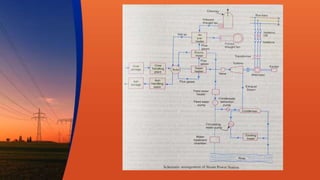
STEAM POWER STATION
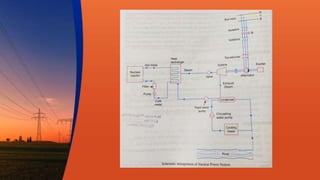
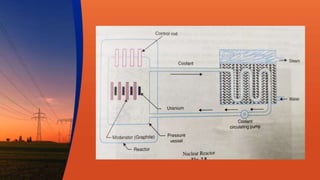
NUCLEAR POWER STATIONS
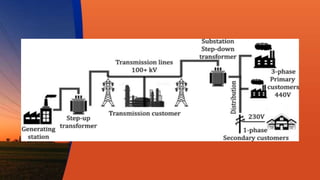
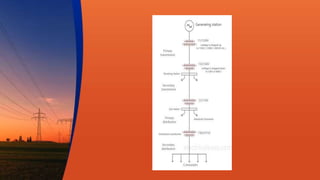
• Transmission lines are sets of wires, called conductors, that carry electric
power from generating plants to the substations that deliver power to
customers.
• At a generating plant, electric power is “stepped up” to several thousand
volts by a transformer and delivered to the transmission line.
• At numerous substations on the transmission system, transformers step
down the power to a lower voltage and deliver it to distribution lines.
• Distribution lines carry power to farms, homes and businesses.
• The type of transmission structures used for any project is determined by
the characteristics of the transmission line’s route, including terrain and
existing infrastructure.
Typical transmission line structures
• High-voltage (230-kV, 345-kV, 400-kV
(DC), 500-kV (DC)
• Lower voltage transmission systems
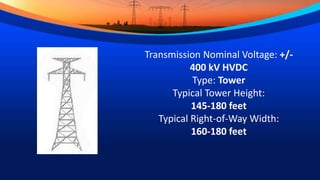
Transmission Nominal Voltage: +/-
400 kV HVDC
Type: Tower
Typical Tower Height:
145-180 feet
Typical Right-of-Way Width:
160-180 feet
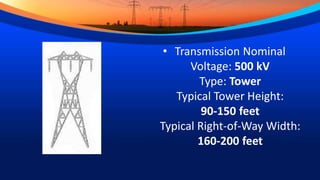
• Transmission Nominal
Voltage: 500 kV
Type: Tower
Typical Tower Height:
90-150 feet
Typical Right-of-Way Width:
160-200 feet
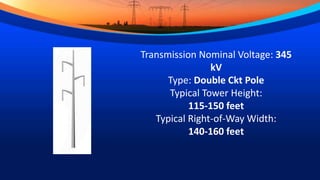
Transmission Nominal Voltage: 345
kV
Type: Double Ckt Pole
Typical Tower Height:
115-150 feet
Typical Right-of-Way Width:
140-160 feet
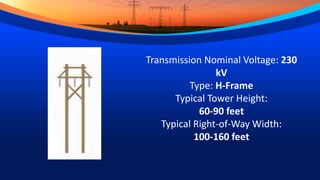
Transmission Nominal Voltage: 230
kV
Type: H-Frame
Typical Tower Height:
60-90 feet
Typical Right-of-Way Width:
100-160 feet
S.c.a.d.a
Present and future ………….
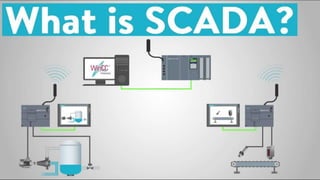
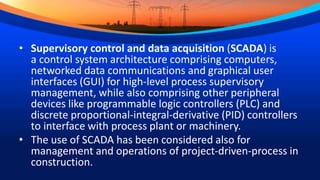
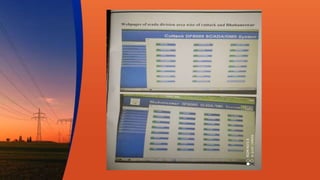
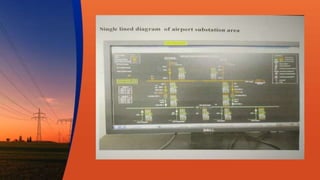
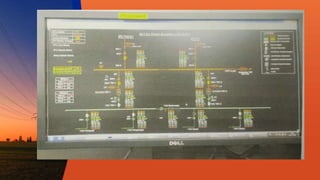
• Supervisory control and data acquisition (SCADA) is
a control system architecture comprising computers,
networked data communications and graphical user
interfaces (GUI) for high-level process supervisory
management, while also comprising other peripheral
devices like programmable logic controllers (PLC) and
discrete proportional-integral-derivative (PID) controllers
to interface with process plant or machinery.
• The use of SCADA has been considered also for
management and operations of project-driven-process in
construction.
Thank you
Websites:-
• http://www.minnelectrans.com/transmission-
system.html#:~:text=Transmission%20lines%20are%20sets%20of,delivered%20to%20the%20
transmission%20line.
• https://www.inductiveautomation.com/resources/article/what-is-scada
• https://www.youtube.com/watch?v=nlFM1q9QPJw

GENERATION, TRANSMISSION, DISTRIBUTION AND SCADA power point

  • 1.
    POWER SYSTEM BY –ABHIPSALENKA
  • 2.
    Introduction • The powersystem is a network which consists generation, distribution and transmission system. It uses the form of energy (like coal and diesel) and converts it into electrical energy. The power system includes the devices connected to the system like the synchronous generator, motor, transformer, circuit breaker, conductor, etc. • The power plant, transformer, transmission line, substations, distribution line, and distribution transformer are the six main components of the power system. The power plant generates the power which is step-up or step-down through the transformer for transmission.
  • 5.
    Defination of powergeneration • Electricity generation is the process of generating electric power from sources of primary energy. • For utilities in the electric power industry, it is the stage prior to its delivery to end users (transmission, distribution, etc.) or its storage (using, for example, the pumped-storage method). • Electricity is not freely available in nature, so it must be "produced" (that is, transforming other forms of energy to electricity).
  • 6.
    • Production iscarried out in power stations (also called "power plants"). • Electricity is most often generated at a power plant by electromechanical generators, primarily driven by heat engines fueled by combustion or nuclear fission but also by other means such as the kinetic energy of flowing water and wind. • Other energy sources include solar photovoltaics and geothermal power.
  • 7.
    Power stations • Aninstallation where electrical power is generated for distribution • A power station, also referred to as a power plant and sometimes generating station or generating plant, is an industrial facility for the generation of electric power. • Power stations are generally connected to an electrical grid. • Many power stations contain one or more generators, a rotating machine that converts mechanical power into three- phase electric power. • The relative motion between a magnetic field and a conductor creates an electric current.
  • 8.
    Types of generations •Steam power stations • Hydroelectric power stations • Nuclear power stations
  • 9.
  • 11.
  • 13.
  • 17.
    • Transmission linesare sets of wires, called conductors, that carry electric power from generating plants to the substations that deliver power to customers. • At a generating plant, electric power is “stepped up” to several thousand volts by a transformer and delivered to the transmission line. • At numerous substations on the transmission system, transformers step down the power to a lower voltage and deliver it to distribution lines. • Distribution lines carry power to farms, homes and businesses. • The type of transmission structures used for any project is determined by the characteristics of the transmission line’s route, including terrain and existing infrastructure.
  • 19.
    Typical transmission linestructures • High-voltage (230-kV, 345-kV, 400-kV (DC), 500-kV (DC) • Lower voltage transmission systems
  • 20.
    Transmission Nominal Voltage:+/- 400 kV HVDC Type: Tower Typical Tower Height: 145-180 feet Typical Right-of-Way Width: 160-180 feet
  • 21.
    • Transmission Nominal Voltage:500 kV Type: Tower Typical Tower Height: 90-150 feet Typical Right-of-Way Width: 160-200 feet
  • 22.
    Transmission Nominal Voltage:345 kV Type: Double Ckt Pole Typical Tower Height: 115-150 feet Typical Right-of-Way Width: 140-160 feet
  • 23.
    Transmission Nominal Voltage:230 kV Type: H-Frame Typical Tower Height: 60-90 feet Typical Right-of-Way Width: 100-160 feet
  • 26.
  • 28.
    • Supervisory controland data acquisition (SCADA) is a control system architecture comprising computers, networked data communications and graphical user interfaces (GUI) for high-level process supervisory management, while also comprising other peripheral devices like programmable logic controllers (PLC) and discrete proportional-integral-derivative (PID) controllers to interface with process plant or machinery. • The use of SCADA has been considered also for management and operations of project-driven-process in construction.
  • 32.
  • 33.