mm bagali
Research Guide / HR area / Jain University
M M Bagali, PhD in HR
        Professor of Management and Human Resources,
             Coordinating, Research in Management,
                          JAIN University,
     319 / 17TH CROSS / 25TH MAIN / 6th PHASE / JP NAGAR,
            Jain University/ Bengalore -560 078 / India
              Tel: 80 43430400 / Fax: 080 26532730
                  mm.bagali@jainuniversity.ac.in
               http://in.linkedin.com/in/mmbagali


Organizational Transformation
Developing the admired organization
The Matrix of Organizational Transformation:
   Excellent workplace
   Peoples Policy
   Culture Change
Excellent workplace:
Great Place to work in India, 2011
•   Do I have a Vision
•   Do I have a Mission
•   Do I have a Philosophy
•   Do I have a Apt Leadership
•   Do I have a High Performance Policy
•   Do I have a Great Culture
•   Do I have a Disciplined Workplace / workforce
Some best ways
•   Grand Entrance
•   Scooters are out…. Bikes are in
•   Free food, and can order also
•   Part of something larger
•   Retainership Arrangement
•   Pride within the organization
•   Allows you to be distinctive, unique,
    different
Transforming your Organization
•   Where do we want to go?
•   How ready are we to get started?
•   What practical steps do we need to take?
•   How do we manage the journey?
•   How do we keep moving forward?
Strategic Thinking
•   Establish a Sense of Urgency
•   Form a Powerful guiding coalition
•   Create a Vision
•   Communicate the Vision
•   Empowerment
•   Have WINS now and than
•   Look at failures
Research Theme in this area


• An invaluable HR input for HR strategy: Road
  map based on Great place to work
• Key drivers for employee engagement
• Internal Employer Branding
• Employee Centric Change Agenda
Look at these....
•   Identify Best Practices
•   Identify Critical Policies
•   Identify Critical HR Practices / Systems
•   Identify Critical What works
•   Identify Critical KRA/KPA
•   Identify Critical Performance Evaluation
•   Identify Profit Sharing Systems
•   Identify Benefit Management
Leaders role in transformation


 How do you determine and define strategies for
 improving the organizational changes you are
 leading?
How do customer-focused behaviors work?
What makes them so effective for building
partnerships with customers?
What is the importance of personal values to
leadership success?
How can you delegate more effectively and
create more accountability on your team?
How do you keep moving forward? How to
create processes that support ongoing goal
achievement.
Create a follow-up methodology to ensure
successful implementation of your plans.
Great Strategic Interventions

By Leader
Establish a Sense of Urgency
• Talk of change
• The threat of losing ground in some way sparks
• Create enough urgency to prompt action. "Without
  motivation, people won’t help and the effort goes nowhere
• To drive people out of their comfort zones
• When is the urgency level high enough?

• Kotter suggests it is when 75% of your leadership is
  honestly convinced that business as usual is no longer an
  acceptable plan.
Form a Powerful Guiding Coalition

• Change efforts often start with just one or two people,
  include more and more

• Gather a large enough initial core of believers.

• change needs to have 3-5 people leading the effort.
Create a Vision

• A picture of the future

• Appeals all ….to customers, stockholders, and employees.

• Clarify the direction

• "A useful rule of thumb: if you can’t communicate the
  vision to someone in five minutes or less and get a reaction
  that signifies both understanding and interest, you are not
  yet done with this phase of the transformation process".
Communicate that Vision

• Leadership should estimate how much communication
  of the vision is needed, and then multiply that effort by
  a factor of ten.

• The guiding principle is simple: use every existing
  communication channel and opportunity.
Empower Others to Act
on the Vision


• Allow people
• Remove any obstacles
Plan for and Create Short-
 Term Wins

• Most people won’t go on a long march for
  change
Consolidate Improvements and Keep the
  Momentum for Change Moving


• "Do not declare victory too soon".

• Leaders of change must go into the process
  believing that their efforts will take years.
Institutionalize the New
Approaches


• Embody the new ways.
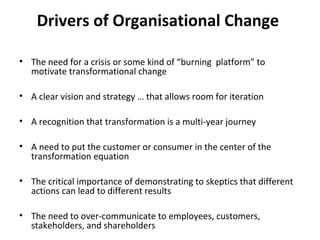
Drivers of Organisational Change

• The need for a crisis or some kind of “burning platform” to
  motivate transformational change

• A clear vision and strategy … that allows room for iteration

• A recognition that transformation is a multi-year journey

• A need to put the customer or consumer in the center of the
  transformation equation

• The critical importance of demonstrating to skeptics that different
  actions can lead to different results

• The need to over-communicate to employees, customers,
  stakeholders, and shareholders
Any questions or comments about the presentation can be sent to
   sanbag@rediffmail.com / sanbagsanbag@rediffmail.com

Bagali MM., HR, HRM, HRD

  • 1.
    mm bagali Research Guide/ HR area / Jain University
  • 2.
    M M Bagali,PhD in HR Professor of Management and Human Resources, Coordinating, Research in Management, JAIN University, 319 / 17TH CROSS / 25TH MAIN / 6th PHASE / JP NAGAR, Jain University/ Bengalore -560 078 / India Tel: 80 43430400 / Fax: 080 26532730 mm.bagali@jainuniversity.ac.in http://in.linkedin.com/in/mmbagali Organizational Transformation Developing the admired organization
  • 3.
    The Matrix ofOrganizational Transformation: Excellent workplace Peoples Policy Culture Change
  • 4.
    Excellent workplace: Great Placeto work in India, 2011
  • 5.
    Do I have a Vision • Do I have a Mission • Do I have a Philosophy • Do I have a Apt Leadership • Do I have a High Performance Policy • Do I have a Great Culture • Do I have a Disciplined Workplace / workforce
  • 6.
    Some best ways • Grand Entrance • Scooters are out…. Bikes are in • Free food, and can order also • Part of something larger • Retainership Arrangement • Pride within the organization • Allows you to be distinctive, unique, different
  • 7.
  • 8.
    Where do we want to go? • How ready are we to get started? • What practical steps do we need to take? • How do we manage the journey? • How do we keep moving forward?
  • 9.
    Strategic Thinking • Establish a Sense of Urgency • Form a Powerful guiding coalition • Create a Vision • Communicate the Vision • Empowerment • Have WINS now and than • Look at failures
  • 10.
    Research Theme inthis area • An invaluable HR input for HR strategy: Road map based on Great place to work • Key drivers for employee engagement • Internal Employer Branding • Employee Centric Change Agenda
  • 11.
    Look at these.... • Identify Best Practices • Identify Critical Policies • Identify Critical HR Practices / Systems • Identify Critical What works • Identify Critical KRA/KPA • Identify Critical Performance Evaluation • Identify Profit Sharing Systems • Identify Benefit Management
  • 12.
    Leaders role intransformation
  • 13.
    Leaders role intransformation How do you determine and define strategies for improving the organizational changes you are leading?
  • 14.
    How do customer-focusedbehaviors work? What makes them so effective for building partnerships with customers?
  • 15.
    What is theimportance of personal values to leadership success?
  • 16.
    How can youdelegate more effectively and create more accountability on your team?
  • 17.
    How do youkeep moving forward? How to create processes that support ongoing goal achievement.
  • 18.
    Create a follow-upmethodology to ensure successful implementation of your plans.
  • 19.
  • 20.
    Establish a Senseof Urgency • Talk of change • The threat of losing ground in some way sparks • Create enough urgency to prompt action. "Without motivation, people won’t help and the effort goes nowhere • To drive people out of their comfort zones • When is the urgency level high enough? • Kotter suggests it is when 75% of your leadership is honestly convinced that business as usual is no longer an acceptable plan.
  • 21.
    Form a PowerfulGuiding Coalition • Change efforts often start with just one or two people, include more and more • Gather a large enough initial core of believers. • change needs to have 3-5 people leading the effort.
  • 22.
    Create a Vision •A picture of the future • Appeals all ….to customers, stockholders, and employees. • Clarify the direction • "A useful rule of thumb: if you can’t communicate the vision to someone in five minutes or less and get a reaction that signifies both understanding and interest, you are not yet done with this phase of the transformation process".
  • 23.
    Communicate that Vision •Leadership should estimate how much communication of the vision is needed, and then multiply that effort by a factor of ten. • The guiding principle is simple: use every existing communication channel and opportunity.
  • 24.
    Empower Others toAct on the Vision • Allow people • Remove any obstacles
  • 25.
    Plan for andCreate Short- Term Wins • Most people won’t go on a long march for change
  • 26.
    Consolidate Improvements andKeep the Momentum for Change Moving • "Do not declare victory too soon". • Leaders of change must go into the process believing that their efforts will take years.
  • 27.
  • 28.
    Drivers of OrganisationalChange • The need for a crisis or some kind of “burning platform” to motivate transformational change • A clear vision and strategy … that allows room for iteration • A recognition that transformation is a multi-year journey • A need to put the customer or consumer in the center of the transformation equation • The critical importance of demonstrating to skeptics that different actions can lead to different results • The need to over-communicate to employees, customers, stakeholders, and shareholders
  • 29.
    Any questions orcomments about the presentation can be sent to sanbag@rediffmail.com / sanbagsanbag@rediffmail.com