WHAT is AIDS ?
HIV- (Human Immunodeficiency Virus) the virus compromises the
body’s ability to handle disease and causes AIDS.
AIDS- AIDS is the final stage of HIV infection. When the immune
system CD4 cells drop to a low level, a person ability to fight
infection is lost.
HISTORY
AIDS is the biggest threat to mankind in last three decades.
The first case of aids was described from New York (USA) in 1981.
Due to its large population size, India has the third largest HIV
epidemic in the world
There were approximately 36.9 million people living with HIV at the
end of 2017 with 1.8 million people becoming newly infected in 2017
globally reported by WHO.
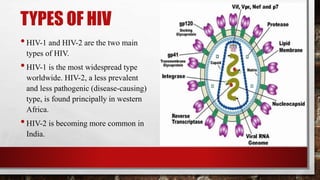
TYPES OF HIV
•HIV-1 and HIV-2 are the two main
types of HIV.
•HIV-1 is the most widespread type
worldwide. HIV-2, a less prevalent
and less pathogenic (disease-causing)
type, is found principally in western
Africa.
•HIV-2 is becoming more common in
India.
SYMPTOMS
When HIV emerges from latency (The
period when someone with HIV
shows no signs of it) symptoms can
include:
Dry, flaky skin
Chronic fatigue
Fever that comes and goes (pyrexia)
Diarrhoea that lasts more than a
week
Heavy night sweats
Rapid weight loss
Swollen lymph nodes
White spots on tongue, mouth
& throat
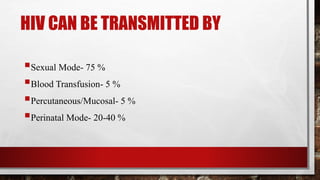
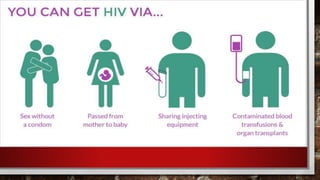
HIV CAN BE TRANSMITTED BY
Sexual Mode- 75 %
Blood Transfusion- 5 %
Percutaneous/Mucosal- 5 %
Perinatal Mode- 20-40 %
WHICH BODY FLUID CONTAIN HIV ?
HIV lives and reproduces in blood and other body
fluids. we know that the following fluids can contain
high levels of HIV-
Blood
Semen
Pre-seminal fluid
Breast milk
Vaginal fluids
Rectal (anal) mucous
GET
EDUCATED
HIV/ AIDS
IS A
SILENT
KILLER
Other body fluids and waste products—like feces,
nasal fluid, saliva, sweat, tears, urine, or vomit—don’t
contain enough HIV to infect you, unless they have
blood mixed in them and you have significant and
direct contact with them. healthcare workers may be
exposed to some other body fluids with high
concentrations of HIV, including:
Amniotic fluid
CSF
Synovial fluid
HIV CANNOT BE TRANSMITTED BY
Casual contact
Sharing food or water
Kissing and Touching
Helping an injured person with HIV
Bite of Mosquitoes and other insects
Toilet seats
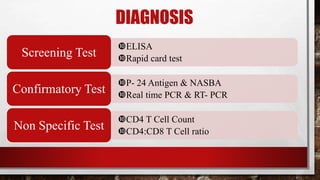
ELISA
Rapid card test
Screening Test
P- 24 Antigen & NASBA
Real time PCR & RT- PCR
Confirmatory Test
CD4 T Cell Count
CD4:CD8 T Cell ratio
Non Specific Test
DIAGNOSIS
TREATMENT
There is no cure for HIV.
Anti-retroviral therapy can
reduce the presence of the virus
in the body, but can not
eliminate it.
AIDS

AIDS

  • 2.
    WHAT is AIDS? HIV- (Human Immunodeficiency Virus) the virus compromises the body’s ability to handle disease and causes AIDS. AIDS- AIDS is the final stage of HIV infection. When the immune system CD4 cells drop to a low level, a person ability to fight infection is lost.
  • 3.
    HISTORY AIDS is thebiggest threat to mankind in last three decades. The first case of aids was described from New York (USA) in 1981. Due to its large population size, India has the third largest HIV epidemic in the world There were approximately 36.9 million people living with HIV at the end of 2017 with 1.8 million people becoming newly infected in 2017 globally reported by WHO.
  • 4.
    TYPES OF HIV •HIV-1and HIV-2 are the two main types of HIV. •HIV-1 is the most widespread type worldwide. HIV-2, a less prevalent and less pathogenic (disease-causing) type, is found principally in western Africa. •HIV-2 is becoming more common in India.
  • 5.
    SYMPTOMS When HIV emergesfrom latency (The period when someone with HIV shows no signs of it) symptoms can include: Dry, flaky skin Chronic fatigue Fever that comes and goes (pyrexia) Diarrhoea that lasts more than a week Heavy night sweats Rapid weight loss Swollen lymph nodes White spots on tongue, mouth & throat
  • 6.
    HIV CAN BETRANSMITTED BY Sexual Mode- 75 % Blood Transfusion- 5 % Percutaneous/Mucosal- 5 % Perinatal Mode- 20-40 %
  • 8.
    WHICH BODY FLUIDCONTAIN HIV ? HIV lives and reproduces in blood and other body fluids. we know that the following fluids can contain high levels of HIV- Blood Semen Pre-seminal fluid Breast milk Vaginal fluids Rectal (anal) mucous GET EDUCATED HIV/ AIDS IS A SILENT KILLER
  • 9.
    Other body fluidsand waste products—like feces, nasal fluid, saliva, sweat, tears, urine, or vomit—don’t contain enough HIV to infect you, unless they have blood mixed in them and you have significant and direct contact with them. healthcare workers may be exposed to some other body fluids with high concentrations of HIV, including: Amniotic fluid CSF Synovial fluid
  • 10.
    HIV CANNOT BETRANSMITTED BY Casual contact Sharing food or water Kissing and Touching Helping an injured person with HIV Bite of Mosquitoes and other insects Toilet seats
  • 11.
    ELISA Rapid card test ScreeningTest P- 24 Antigen & NASBA Real time PCR & RT- PCR Confirmatory Test CD4 T Cell Count CD4:CD8 T Cell ratio Non Specific Test DIAGNOSIS
  • 12.
    TREATMENT There is nocure for HIV. Anti-retroviral therapy can reduce the presence of the virus in the body, but can not eliminate it.