Rooney - English 127
What & How
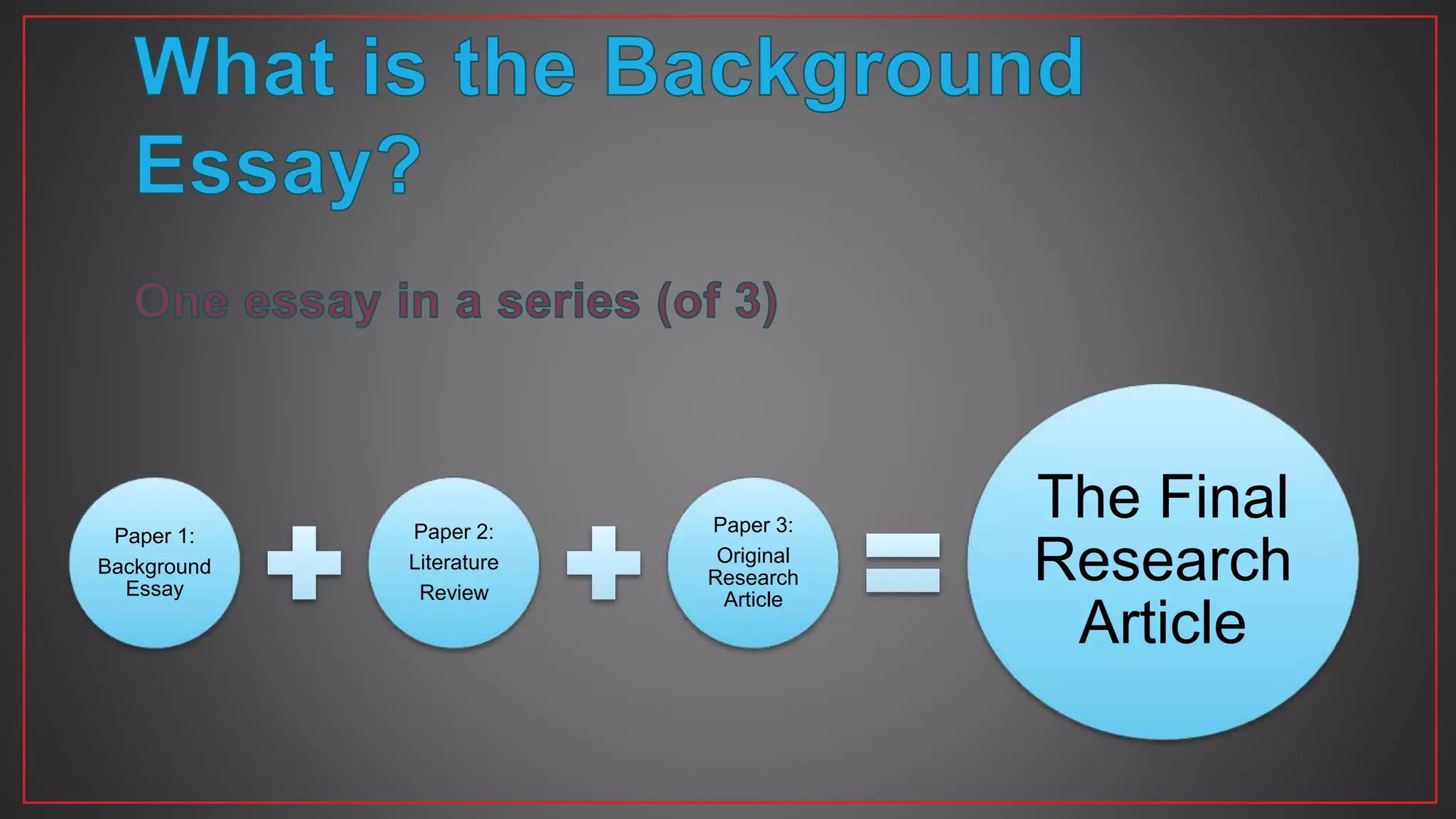
Paper 1:
Background
Essay
Paper 2:
Literature
Review
Paper 3:
Original
Research
Article
The Final
Research
Article
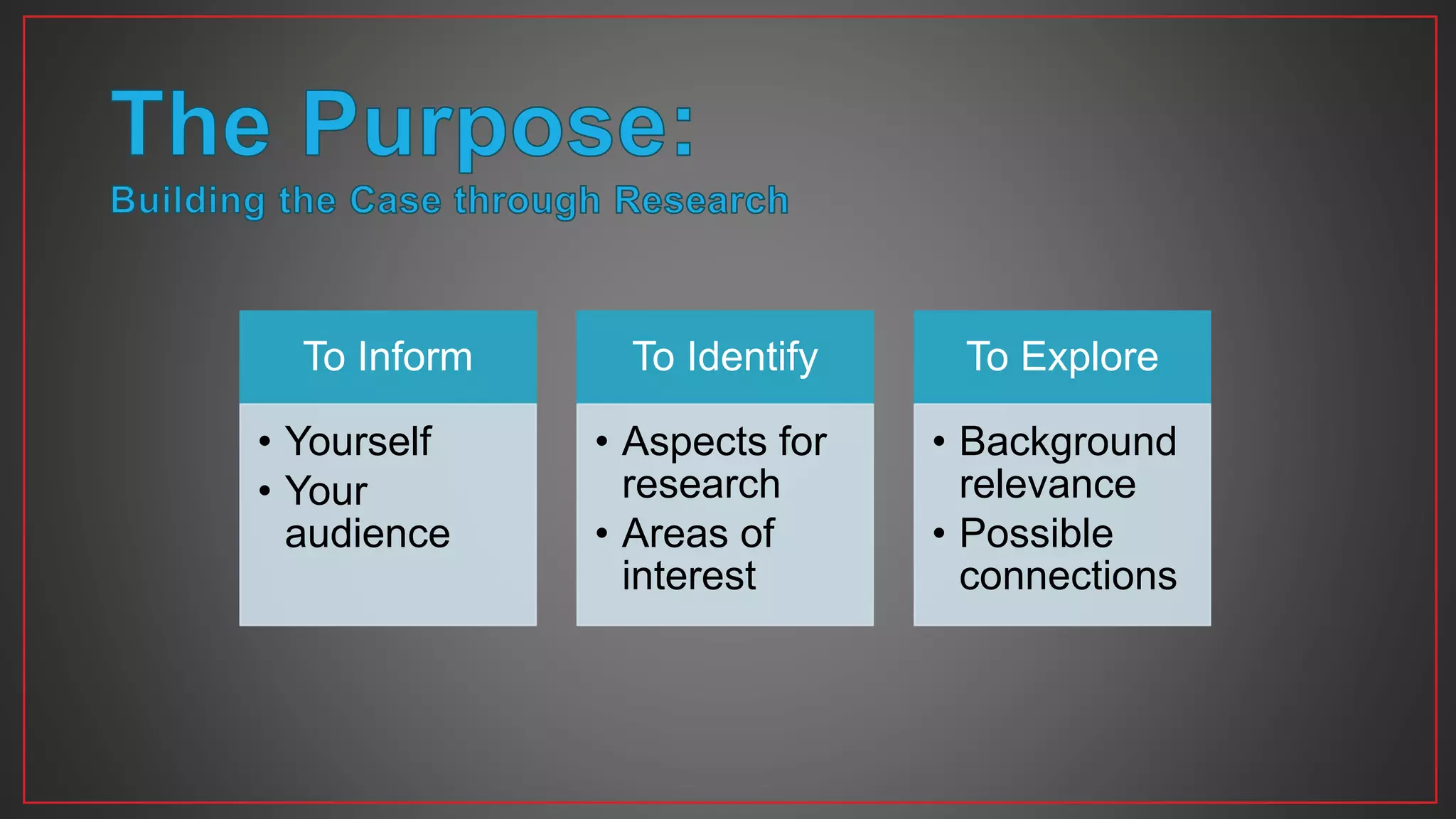
To Inform
• Yourself
• Your
audience
To Identify
• Aspects for
research
• Areas of
interest
To Explore
• Background
relevance
• Possible
connections
Parts of the Paper
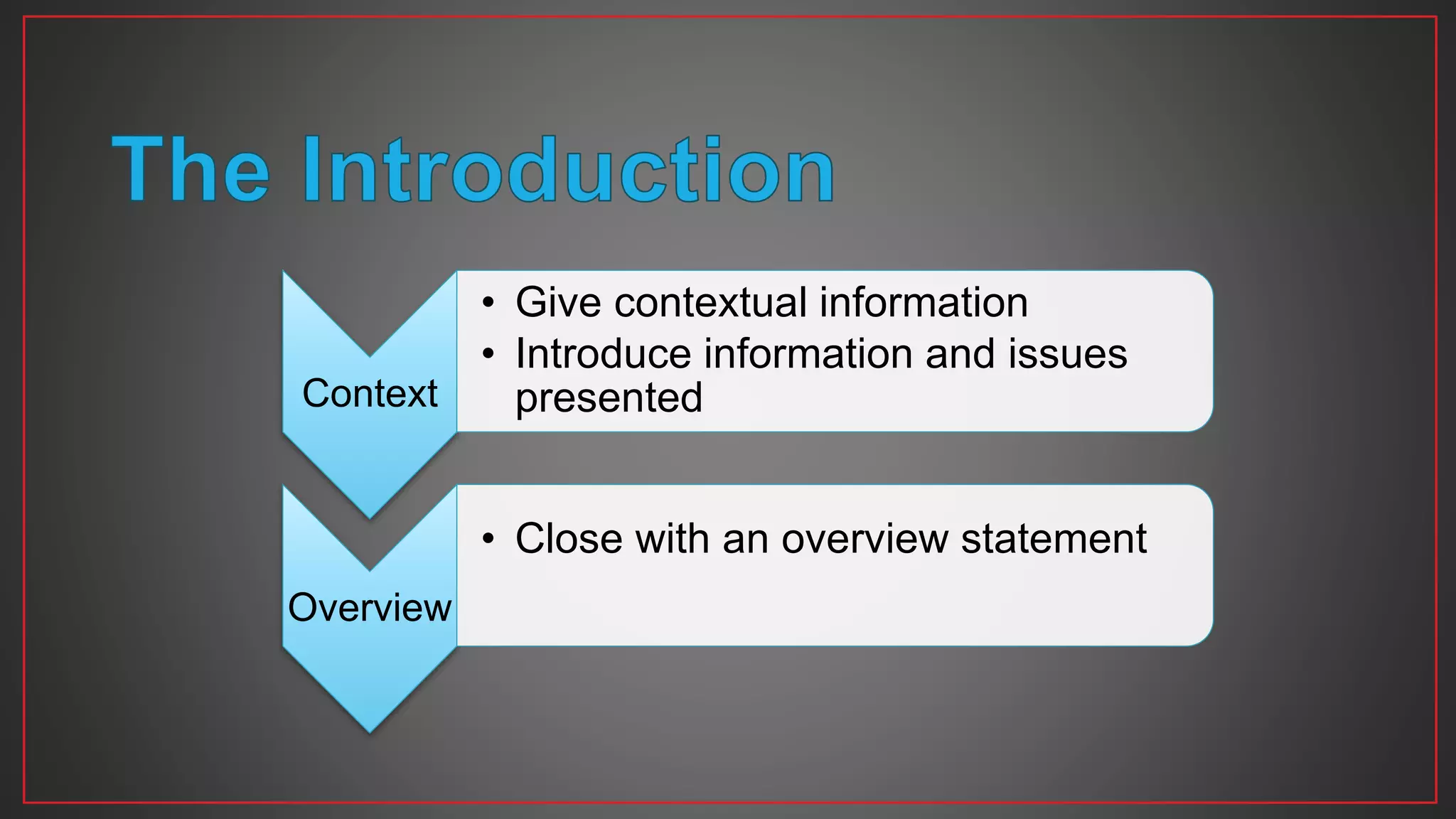
Context
• Give contextual information
• Introduce information and issues
presented
Overview
• Close with an overview statement
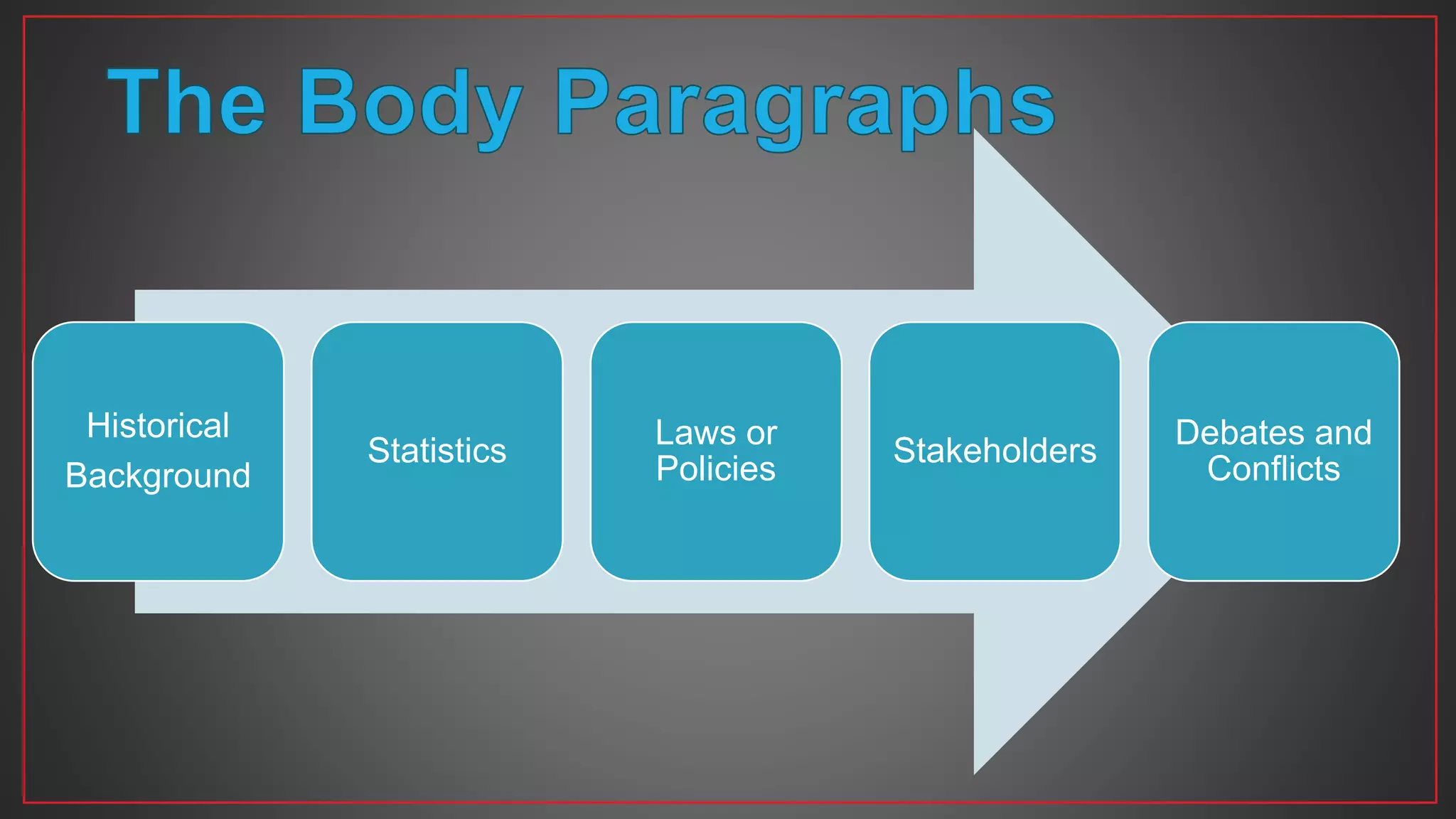
Historical
Background
Statistics
Laws or
Policies
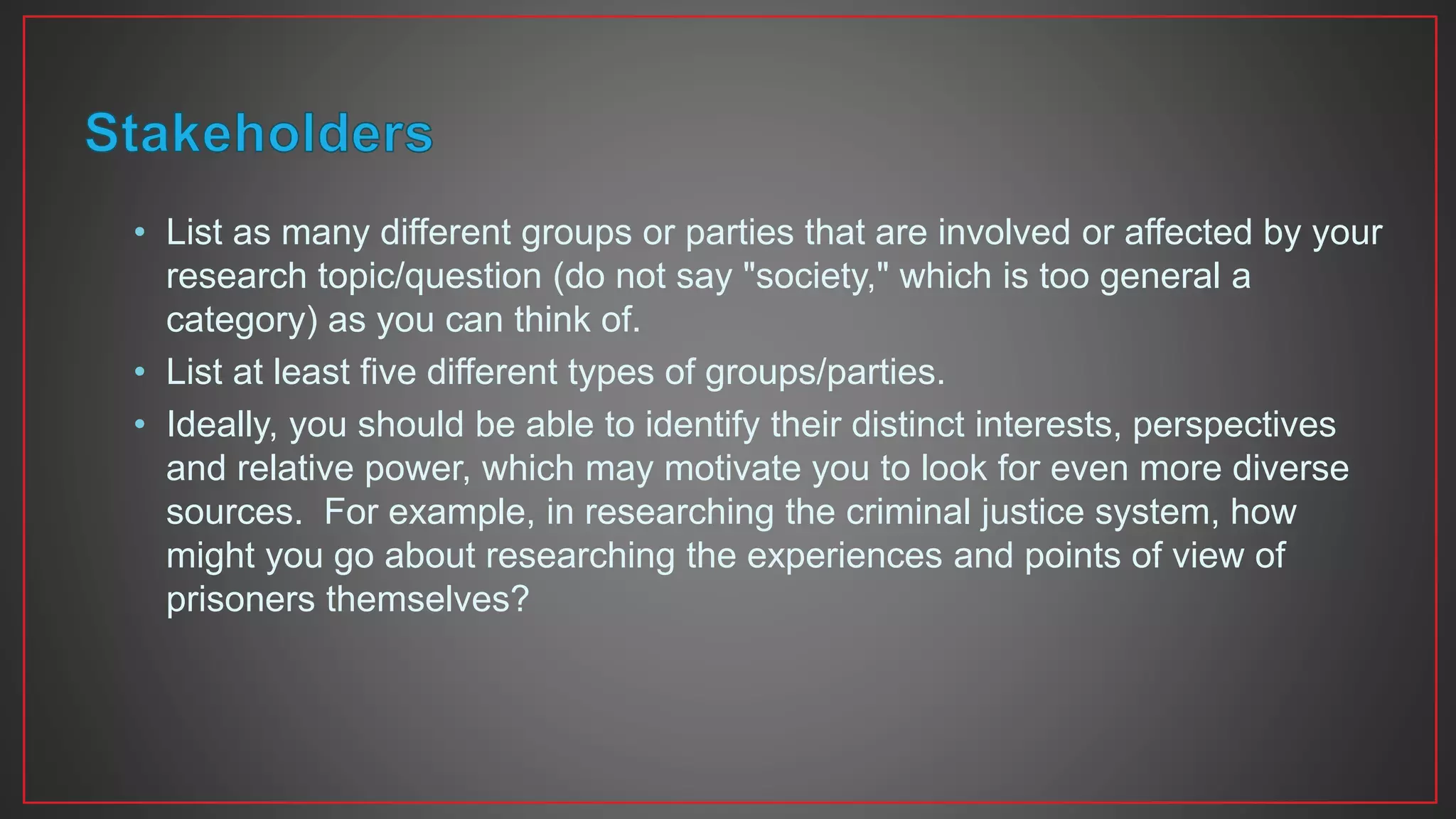
Stakeholders
Debates and
Conflicts
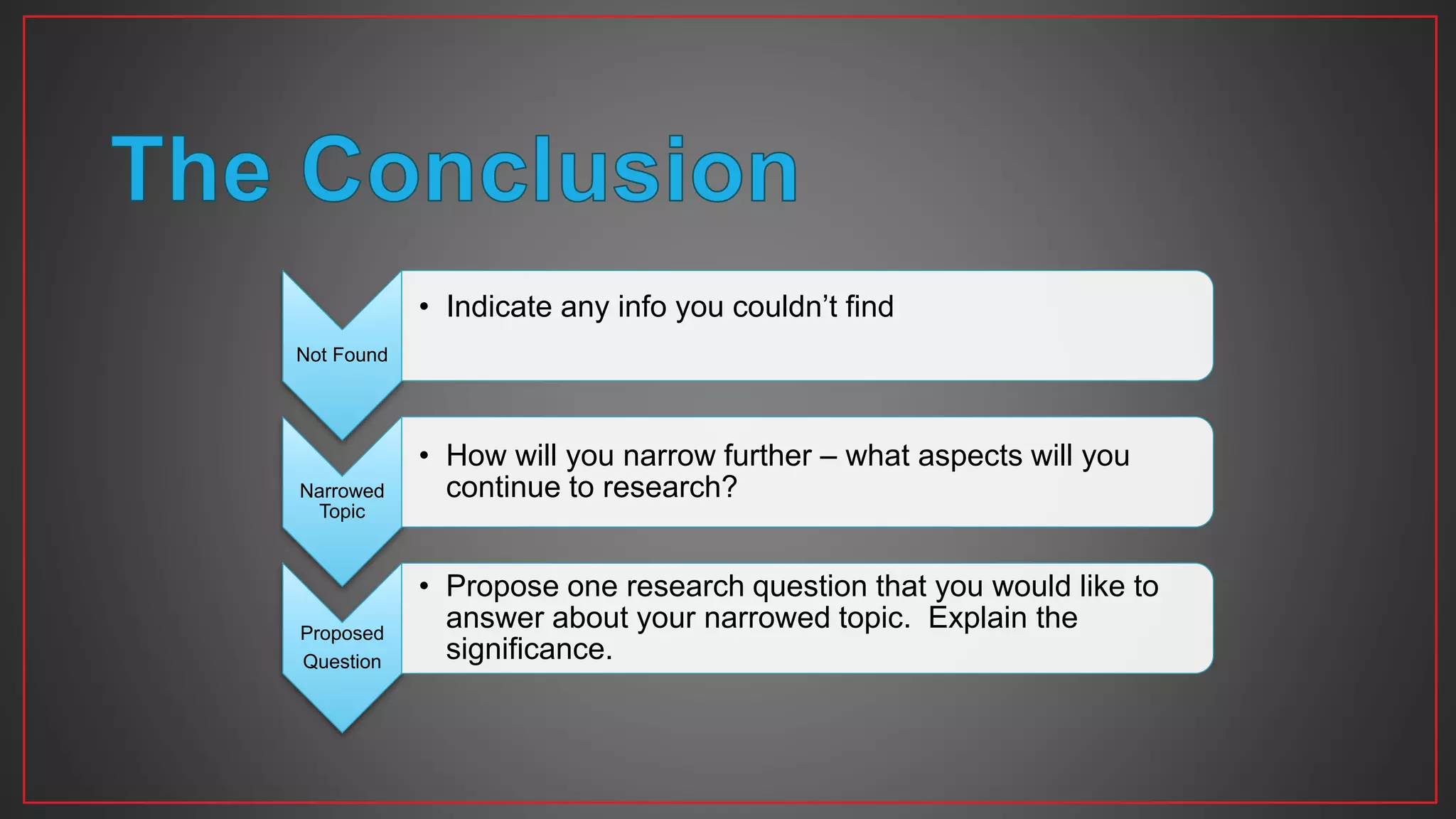
Not Found
• Indicate any info you couldn’t find
Narrowed
Topic
• How will you narrow further – what aspects will you
continue to research?
Proposed
Question
• Propose one research question that you would like to
answer about your narrowed topic. Explain the
significance.
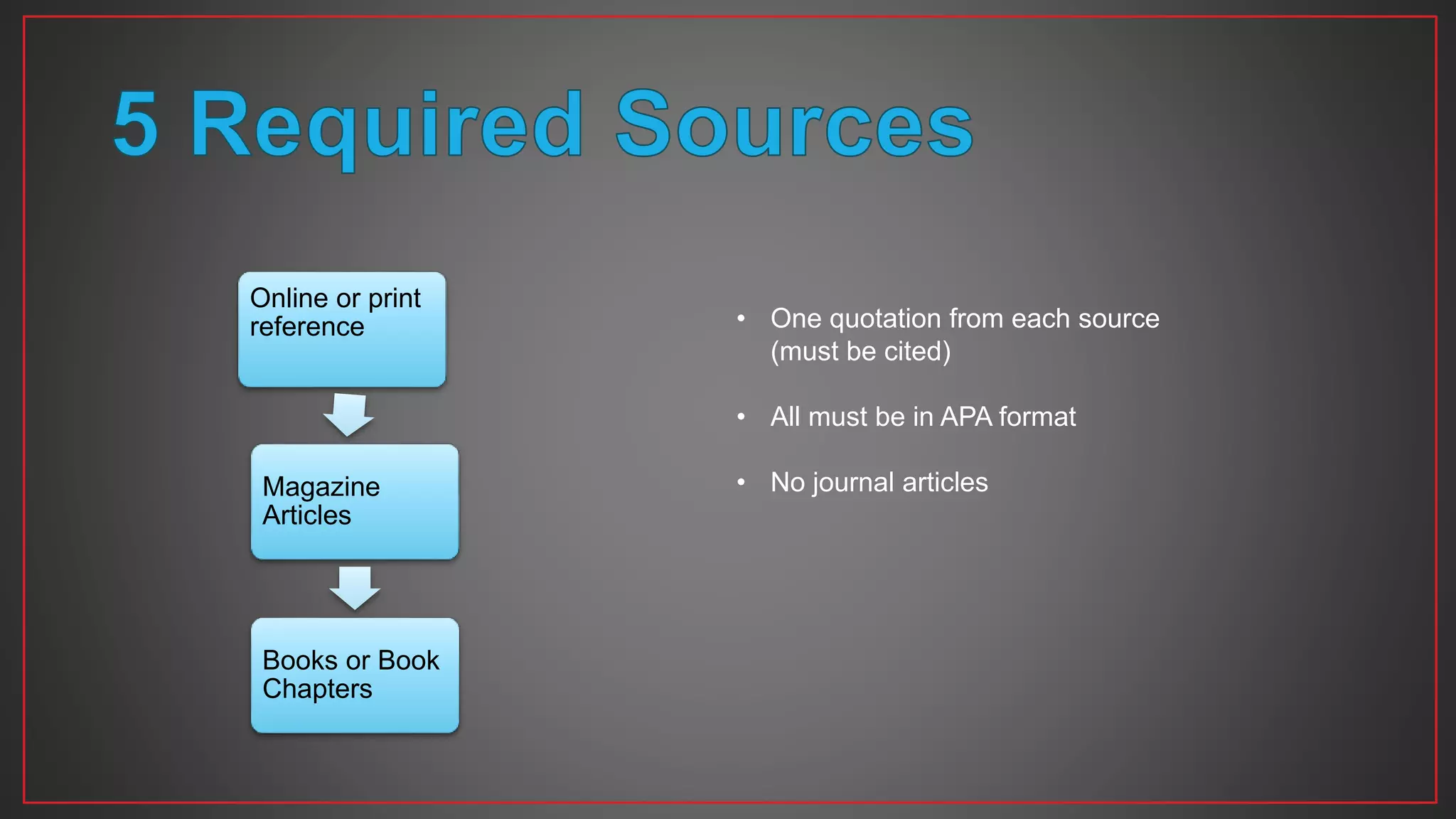
Online or print
reference
Magazine
Articles
Books or Book
Chapters
• One quotation from each source
(must be cited)
• All must be in APA format
• No journal articles
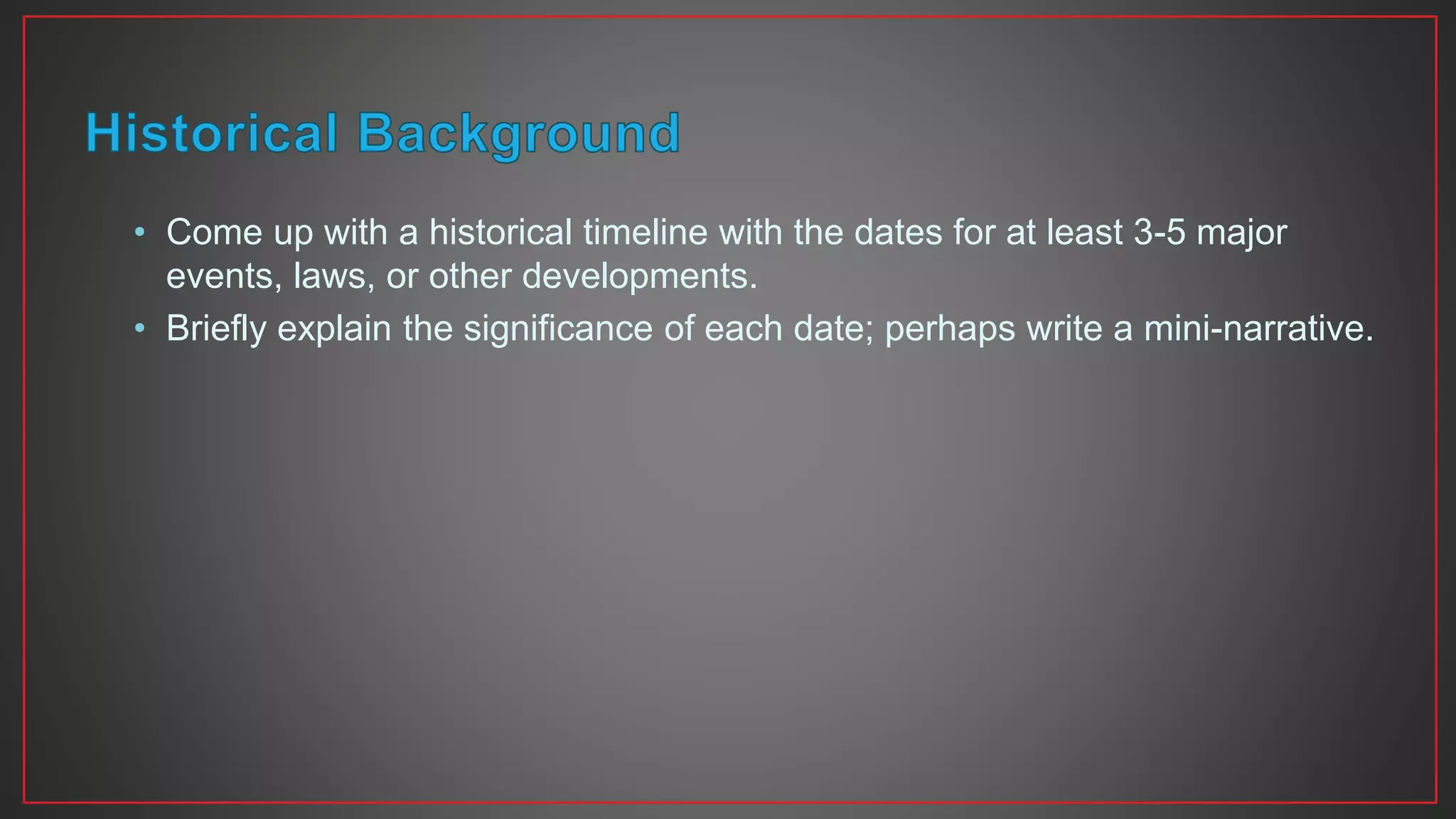
• Come up with a historical timeline with the dates for at least 3-5 major
events, laws, or other developments.
• Briefly explain the significance of each date; perhaps write a mini-narrative.
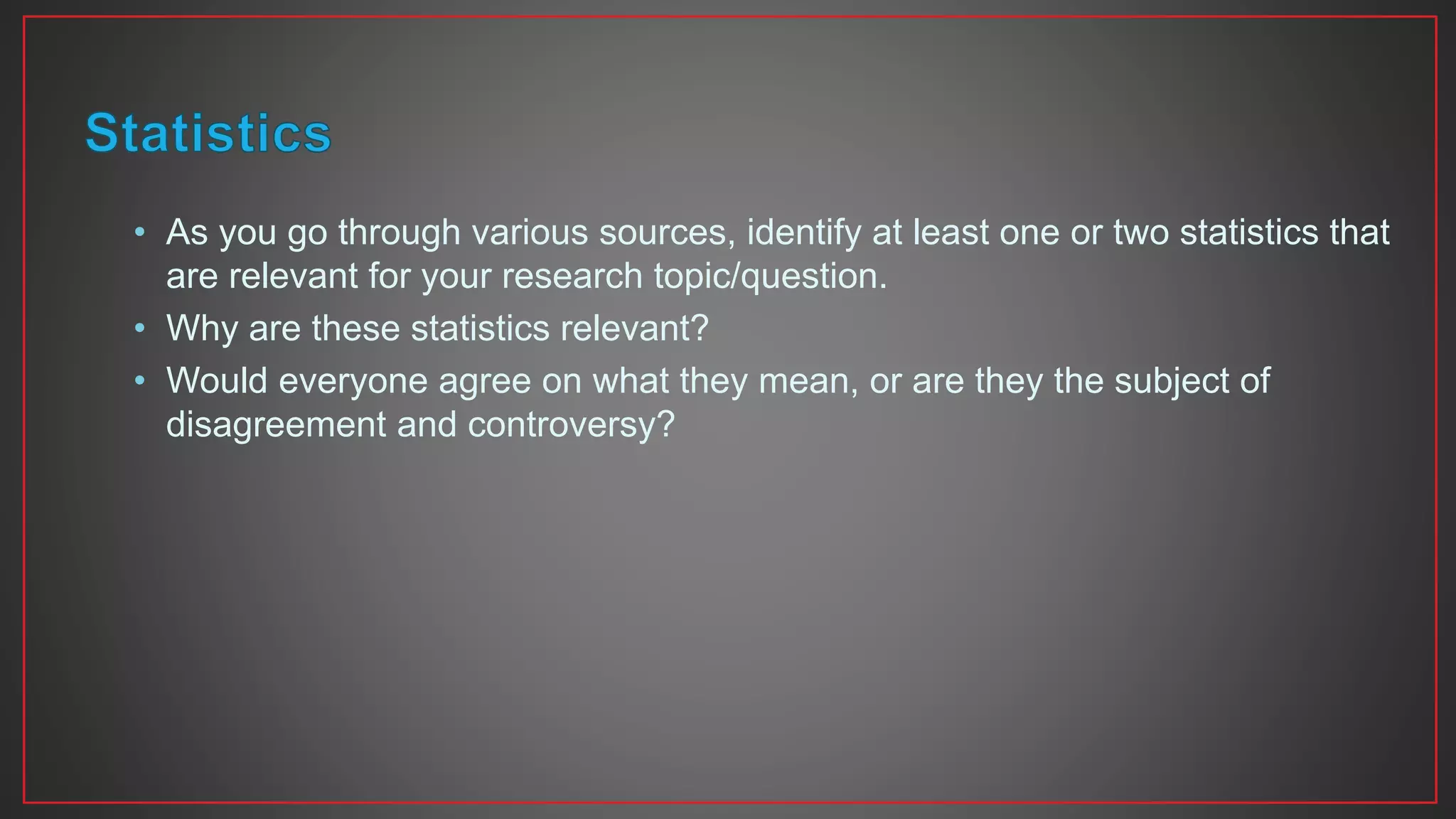
• As you go through various sources, identify at least one or two statistics that
are relevant for your research topic/question.
• Why are these statistics relevant?
• Would everyone agree on what they mean, or are they the subject of
disagreement and controversy?
• List as many different groups or parties that are involved or affected by your
research topic/question (do not say "society," which is too general a
category) as you can think of.
• List at least five different types of groups/parties.
• Ideally, you should be able to identify their distinct interests, perspectives
and relative power, which may motivate you to look for even more diverse
sources. For example, in researching the criminal justice system, how
might you go about researching the experiences and points of view of
prisoners themselves?
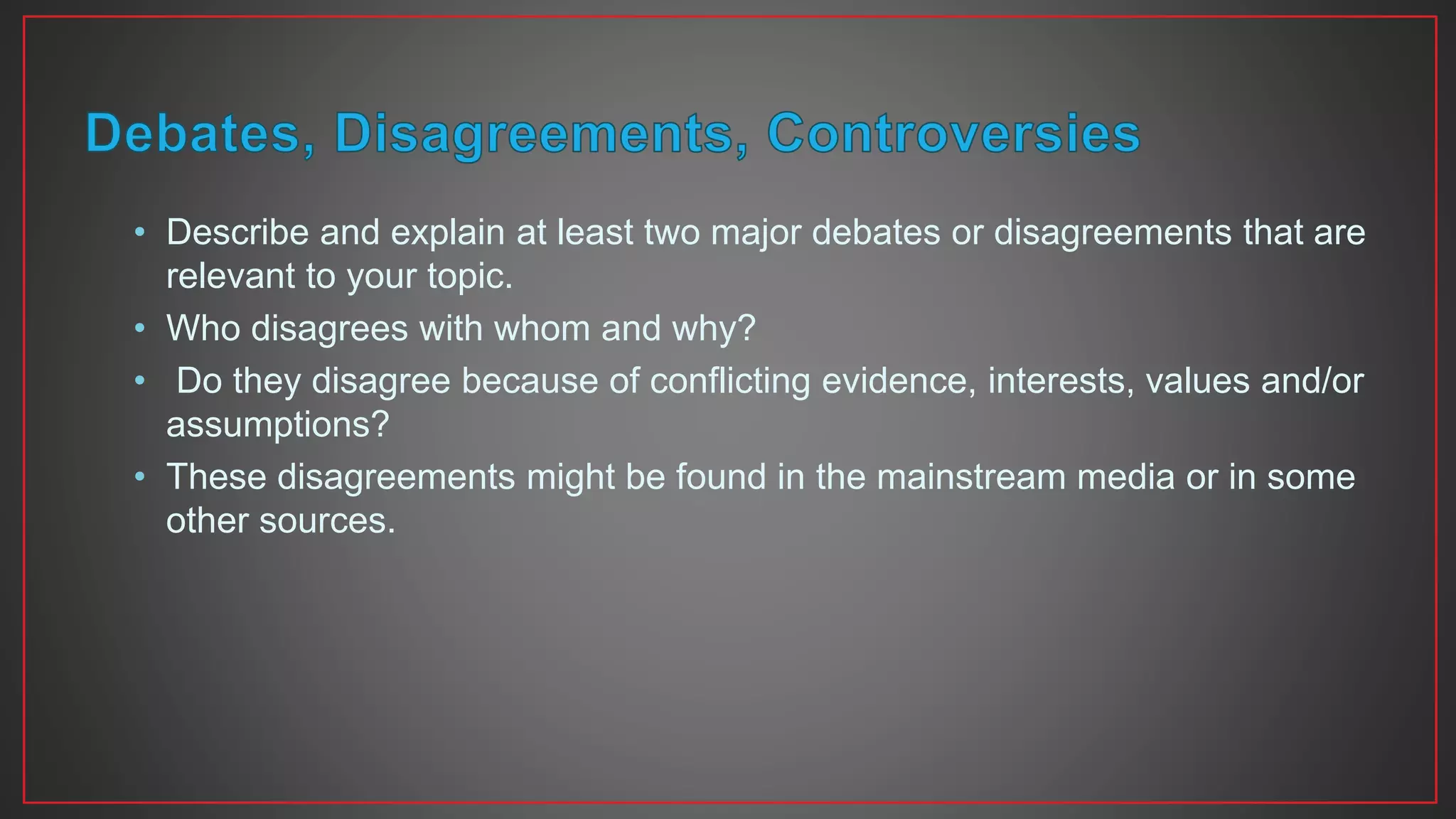
• Describe and explain at least two major debates or disagreements that are
relevant to your topic.
• Who disagrees with whom and why?
• Do they disagree because of conflicting evidence, interests, values and/or
assumptions?
• These disagreements might be found in the mainstream media or in some
other sources.
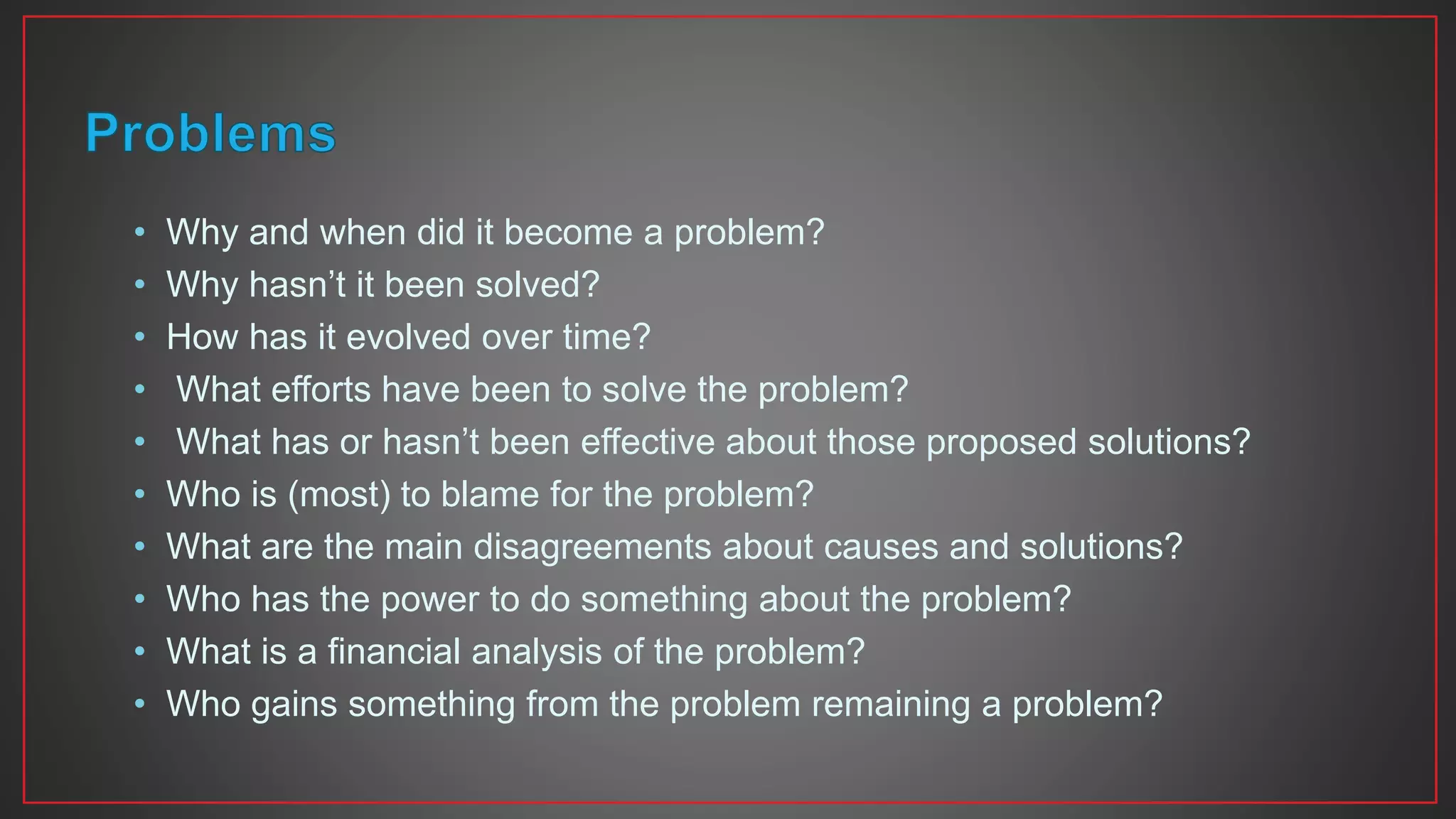
• Why and when did it become a problem?
• Why hasn’t it been solved?
• How has it evolved over time?
• What efforts have been to solve the problem?
• What has or hasn’t been effective about those proposed solutions?
• Who is (most) to blame for the problem?
• What are the main disagreements about causes and solutions?
• Who has the power to do something about the problem?
• What is a financial analysis of the problem?
• Who gains something from the problem remaining a problem?

Background essay overview lecture

  • 1.
  • 2.
  • 3.
    Paper 1: Background Essay Paper 2: Literature Review Paper3: Original Research Article The Final Research Article
  • 4.
    To Inform • Yourself •Your audience To Identify • Aspects for research • Areas of interest To Explore • Background relevance • Possible connections
  • 5.
  • 6.
    Context • Give contextualinformation • Introduce information and issues presented Overview • Close with an overview statement
  • 7.
  • 8.
    Not Found • Indicateany info you couldn’t find Narrowed Topic • How will you narrow further – what aspects will you continue to research? Proposed Question • Propose one research question that you would like to answer about your narrowed topic. Explain the significance.
  • 9.
    Online or print reference Magazine Articles Booksor Book Chapters • One quotation from each source (must be cited) • All must be in APA format • No journal articles
  • 11.
    • Come upwith a historical timeline with the dates for at least 3-5 major events, laws, or other developments. • Briefly explain the significance of each date; perhaps write a mini-narrative.
  • 12.
    • As yougo through various sources, identify at least one or two statistics that are relevant for your research topic/question. • Why are these statistics relevant? • Would everyone agree on what they mean, or are they the subject of disagreement and controversy?
  • 13.
    • List asmany different groups or parties that are involved or affected by your research topic/question (do not say "society," which is too general a category) as you can think of. • List at least five different types of groups/parties. • Ideally, you should be able to identify their distinct interests, perspectives and relative power, which may motivate you to look for even more diverse sources. For example, in researching the criminal justice system, how might you go about researching the experiences and points of view of prisoners themselves?
  • 14.
    • Describe andexplain at least two major debates or disagreements that are relevant to your topic. • Who disagrees with whom and why? • Do they disagree because of conflicting evidence, interests, values and/or assumptions? • These disagreements might be found in the mainstream media or in some other sources.
  • 15.
    • Why andwhen did it become a problem? • Why hasn’t it been solved? • How has it evolved over time? • What efforts have been to solve the problem? • What has or hasn’t been effective about those proposed solutions? • Who is (most) to blame for the problem? • What are the main disagreements about causes and solutions? • Who has the power to do something about the problem? • What is a financial analysis of the problem? • Who gains something from the problem remaining a problem?