International Refereed Journal of Engineering and Science (IRJES)
ISSN (Online) 2319-183X, (Print) 2319-1821
Volume 2, Issue 3(March 2013), PP.07-16
www.irjes.com

        Reactive Compatibilization of Natural Rubber
 (NR)/Carboxylated Nitrile Rubber (XNBR) Blends By Maleic
Anhydride-Grafted-Polyisoprene (MAPI) And Epoxy Resin Dual
                      Compatibilizers

                                              G.N.Onyeagoro
      Department of Polymer and Textile Engineering, Federal University of Technology, Owerri, Nigeria


ABSTRACT: Cure characteristics and mechanical properties of reactive compatibilized natural rubber
(NR)/carboxylated nitrile rubber (XNBR) blends were studied using maleic anhydride-grafted-polyisoprene
(MAPI) and epoxy resin (EPX) dual compatibilizers. The results show that the scorch time and cure time
decrease with increasing composition of XNBR in the blend. The presence of MAPI/EPX dual compatibilizers
exhibited improvement in processability by decreasing and increasing the cure time and scorch time of the
NR/XNBR blends, respectively. Whereas increasing compositions of XNBR brought decreases in tensile
strength, tear strength and elongation at break, these properties were found to increase in the presence of
MAPI/EPX dual compatibilizers. The results also show that increasing compositions of XNBR and the presence
of MAPI/EPX dual compatibilizers resulted in increases in solvent resistance of NR/XNBR blends.
Keywords: blends, carboxylated nitrile rubber, natural rubber, reactive compatibilization

                                               I. Introduction
       Natural rubber (NR) is an important elastomer which exhibits excellent mechanical properties, and has
been widely used in several areas of engineering and industry. However, due to its non-polar nature and reactive
double bonds in the structure, the resistance of NR in oil and aging on exposure to oxygen, ozone and heat is
poor.
       In order to achieve properties that cannot be obtained by individual polymers, polymer blends are often
used to combine the physical characteristics of both polymers. Thus, elastomer blends are frequently used in a
wide range of engineering and industrial applications to obtain the best compromise in compound physical
properties, processability and cost [1]. However,except for a few polymer pairs that are known to be
thermodynamically miscible, most polymer pairs are immiscible.
       Immiscible polymer systems display lower mechanical properties than those of their components, due to
their unstable morphology and poor adhesion between phases. The desired properties of immiscible polymer
systems are not achieved without a third component, i.e., a compatibilizer, which reduces the interfacial tension
and enhances the interfacial adhesion between component phases so that applied force can be effectively
transmitted between component phases [2, 3].
       Over the years, traditional compatibilization strategies have been employed to alleviate the problem of
poor interfacial adhesion between polymer phases, which involve the addition of a pre-made block or graft
copolymers composed of the blocks or grafts, which are identical with or miscible with the component polymers
[4, 5]. A more recent approach which has proved to be generally more effective and less expensive, and more
frequently used for industrial applications is the reactive processing or the reactive blending, in which the block
or graft copolymer can be generated in-situ at the interface between phases by the coupling reaction of
functionalized components [6, 7, 8, 9].
       Basically, the performance of elastomer blends is largely governed by various factors which includes the
nature of elastomers [10, 11, 12], blend compositions [13], phase morphology of elastomer blends [14], nature
of compatibilizer [15, 16] and interfacial cross-linking in elastomer blends [17]. For example, in a study by
Kwaruethai et al. [16], zinc salts of sulphonated natural rubber (Zn-SNR)(a rubbery ionomer) containing
17.5meq/100 of SNR was prepared and used as a new compatibilizer for the preparation of NR and
chlorosulphonated polyethylene rubber (CSM) blends. Epoxidized natural rubber (ENR-20) was also used as
compatibilizer for such blends. They found that the shear viscosity of the blends with ionomers was higher than
that of the neat blends, suggesting strong interaction between rubber phases. They also reported a greater level
of enhancement in 100% modulus, tensile and tear strength for the blends containing 17.57 Zn-SNR compared

                                                    www.irjes.com                                         7 | Page
Reactive Compatibilization of Natural Rubber (NR)/Carboxylated Nitrile Rubber (XNBR) Blends by

to those of ENR-20. Similarly, Sirinha et al. [11] reported improved oil and thermal aging resistance when NR
was blended with chlorinated polyethylene rubber.
      Blends of NR with carboxylated styrene-butadiene rubber (XSBR) [10] and ethylene-propylene-diene
rubber (EPDM) [12] were reported to have better aging and ozone resistance. Sirinha et al. [14] have
demonstrated that improved phase morphology in blends of NR and nitrile rubber (NBR) resulted in an
increased oil resistant property of the blends. Blends of CSM and NR have been studied by Tanrattanakul and
Petchkaew. [18]. They reported that blends of NR and CSM were immiscible, except for NR-rich blends (70-80
wt% of NR), and that oil and ozone resistant properties of the blends increased with increase in CSM loading.
They also found that further improvement in mechanical properties and compatibility of the blends could be
obtained when a suitable compatibilizer, such as epoxidized natural rubber (ENR), was added to the blends.
      Carboxylated nitrile rubber (XNBR) is an important elastomer which has found increasing use in many
engineering and industrial applications due to its outstanding oil and solvent resistant properties [13, 17]. In the
present study, the reactive compatibilization of NR/XNBR blends by maleic anhydride-grafted-polyisoprene
(MAPI) and epoxy resin dual compatibilizers is reported. The presence of a multifunctional epoxy resin in the
XNBR-NR-MAPI blend has the potential to produce XNBR-co-epoxy-co-MAPI copolymer at the interface,
which is able to function as an effective compatibilizer.
      To the author’s knowledge, there has been no attempt to use maleic anhydride-grafted-polyisoprene/epoxy
resin as compatibilizer for NR/XNBR blends. However, Naskar et al. [13] had reported a novel method for
preparation     of    carboxylated     nitrile  rubber    (XNBR)-natural       rubber     (NR)     blends      using
Bis(diisopropyl)thiophosphoryl polysulphides as a compatibilizer. They found that oil resistance and mechanical
properties of the NR/XNBR blends strongly depended on blend ratios and the degree of interfacial cross-linking
between NR and XNBR components.

                                               II. Experimental
2.1. Materials
      Natural rubber (Standard African Rubber, SAR 3) having the properties given in Table 1 was obtained
from the Rubber Research Institute of Nigeria (RRIN), Iyanomo, Benin City. The maleic anhydride-grafted-
polyisoprene containing 8wt% maleic anhydride (ARCO Chemical Co.); epoxy resin ( tetra-glycidylether of
diphenyldiaminomethane) (TGDDM), with the trade mark of NPEH-434 (Nan Yea Plastics Co. of Taiwan) and
carboxylated nitrile rubber ( acrylonitrle-butadiene-methacrylic acid terpolymer) (Dow Chemical Co.) were
purchased from Rovet Chemicals Ltd, Benin City, Nigeria. The rubber compounding ingredients such as carbon
black (N 330), sulphur, accelerator (MBT), Zinc Oxide, stearic acid, wax and anti-oxidant (TMQ) were of
commercial grade and kindly supplied by Dunlop Plc, Lagos, Nigeria. Table 2 represents the repeating units of
the polymers employed in this study.

                   Table 1: Properties of Standard African Rubber (SAR 3) [19]
                  Parameters
                  Volatile matter                                                   0.40
                  Dirt content retained on 45µm sieve (%)                           0.02
                  Nitrogen (%)                                                      0.23
                  Ash content (%)                                                   0.32
                  Initial Plasticity (P0)                                           36
                  Plasticity Retention Index (PRI)                                  67
                  Plasticity after aging for 30 min @ 1400C (P30)                   24
                  Mooney Viscosity, ML (1+4), 1000C                                 70


                                                     www.irjes.com                                         8 | Page
Reactive Compatibilization of Natural Rubber (NR)/Carboxylated Nitrile Rubber (XNBR) Blends by

        Table 2: Repeating units of each component

      Component                                                       Repeating unit

        NR                                                [ CH2 C(CH3)=CH             CH2 ]n


                                                                                                            CH3

        XNBR                                               [ CH2 CH(CN) CH2—CH=CH—CH2—CH2—C ]n

                                                                                                            COOH

                                                                                       CH3

       MAPI                                                [ HC           CH    CH2        C=CH   CH2 ]n

                                                          O=C                  C=O

                                                                    O
                                         O
O

                                   H2C           CH       CH2                                                   H 2C
HC      CH2
      TGDDM                                                     N                    CH2          N
                                   H2C            CH      CH2                                                   H2 C
HC          CH2

                                             O
O


2.2. Preparation of NR/XNBR Blends
      The recipe used in the formulation of NR/XNBR is given in Table 3. TGDDM WAS DRIED AT 60 0C for
2 hours before using. Mixing was carried out in an internal mixer, Haake Rheomix, Model CTW 1OO. NR and
XNBR were first pre-mixed, prior to the addition of other ingredients. Mixing was done at a temperature of
600C and at a rotor speed of 60 rpm. The total mixing cycle was ~ 10 min. Finally, the blend was sheeted out on
a laboratory two-roll mill size (160 x 320 mm) in accordance with ASTM-D 3184-80. The nip gap and mill roll
speed ratio were kept the same for all the blend samples. The sheeted rubber compound was conditioned at room
temperature, 270C for 24 hours in a closed container and was further processed by curing. The cured samples
were coded accordingly for property testing.

                            Table 3: Compounding recipe for NR/XNBR blends
     Ingredients (Phr)                                                  Formulation
     NRα                                                     80            50                         20

     XNBRβ                                                          20                     50         80
     Stearic acid                                                   2                      2          2
     Zinc Oxide                                                     5                      5          5
     TMQ                                                            1                      1          1
     MBT                                                            1                      1          1
     Sulphur                                                        2                      2          2
     Processing aid                                                 2                      2          2
     MAPIª                                                          3.5                    3.5        3.5
     EPX#                                                           1.5                    1.5        1.5

                                                      www.irjes.com                                         9 | Page
Reactive Compatibilization of Natural Rubber (NR)/Carboxylated Nitrile Rubber (XNBR) Blends by

ªMaleic anhydride-graft-polyisoprene
#
  Epoxy resin
α
  Natural rubber
β
  Carboxylated nitrile rubber

2.3. Measurement of Cure Characteristics
      The cure characteristics of the blends, such as scorch times (t 2), cure times (t90) and torque values (ML)
were measured at 1500C using a Monsanto Moving Die Rheometer (MDR 2000 Model) as described in ASTM
Standard Test Method D 1646-94.

2.4. Measurement of Mechanical Properties
      The tensile properties and tear strength of the blends were measured on a Monsanto Tensometer (Model
T10), according to BS 903. The cross-head speed for the tensile and tear tests was set at 500 mm/min. All tests
were performed at room temperature, 270C.

 2.5. Measurement of Solvent Resistance
       Toluene, a solvent commonly used in the rubber industry was chosen in this study. The test for solvent
resistance of the blend was conducted according to ASTM D 471. The tensile and tear test specimens were
immersed in toluene at room temperature, 27 0C for 20, 60, and 160 hours. When the specific time was reached,
the test specimens were removed from the toluene, wiped with tissue paper to remove excess toluene from the
surface and tested for tensile properties and tear strength.

                                                                     III. Results and Discussion
3.1. Cure Characteristics of NR/XNBR Blends
       A compound or a copolymer containing reactive functional groups that are able to react with one or more
of the blend components to form a new graft or block copolymer in the blend is referred to as a reactive
compatibilizer. This in-situ formed copolymer containing segments of the blend constituents tends to remain at
the interface between the two incompatible polymers and acts as a phase emulsifier of the blend. The viscosity
of the blend will increase when reactions occur among functional groups due to increase in molecular weight of
the blend. Torque measurement has proved successful as a method for obtaining qualitative information
concerning the chemical reactivity and the extent of reaction in a reactively compatibilized blend [3, 20].
       Fig. 1 shows the effect of compatibilizer and blend ratio on maximum torque (MT) value of the
NR/XNBR blends. Hanafi and Hairunezam {15] reported that maximum torque generally correlates with
durometer hardness and/or modulus.

80/20                          8       50/50         20/80
                                   3           4.6           7.5
                               7

                               6
    Maximum Torque, MT (min)


                               5

                               4
                                                                                                   With Compatibilizer
                               3                                                                   Without Compatibilizer

                               2

                               1

                               0
                                               80/20                   50/50             20/80

                                                                   NR/XNBR blends

Figure 1. Effect of compatibilizer and blend ratio on maximum torque value of NR/XNBR blends.


The improved compatibility of the NR/XNBR blends in the presence of MAPI/EPX compatibilizer is shown in
Fig. 1 where maximum torque (MT) value for NR/XNBR blends with MAPI/EPX compatibilizer is higher than
                                                                               www.irjes.com                             10 | Page
Reactive Compatibilization of Natural Rubber (NR)/Carboxylated Nitrile Rubber (XNBR) Blends by

the similar blends without MAPI/EPX compatibilizer. Fig. 1 also shows that maximum torque (MT) increases
with increase in XNBR composition in the blend. According to Zanzig et al. [1], one way to improve
compatibility of immiscible blends is through the use of block copolymers with segments chemically identical to
the individual homopolymers. The XNBR carboxyl terminal groups do not react with the anhydride of MAPI,
while the reaction between XNBR cyano groups (-CN) and the anhydride is insignificant without the presence
of a catalyst. A similar problem is expected when MAPI is used as a compatibilizer in NR/XNBR blends and
only secondary physical interaction is expected. Sevaral authors [21, 22, 23, 24, 25] have reported that epoxy is
able to react with polyester terminal carboxyl group to compatibilize effectively many polyester-related blends.
Epoxy is also well known to react with anhydride readily. These reactions are attributed to the multi-
functionality of epoxy. In the present, from moleculer structural perspective, MAPI should be compatible with
NR, whereas EPX should be compatible with XNBR. Thus, the presence of a multi-functional epoxy (EPX) in
the XNBR-NR-MAPI blend is expected to produce XNBR-Co-EPX-Co-MAPI copolymer at the interface,
which is able to function as an effective compatibilizer. This explains the increase in maximum torque (MT)
with increase in XNBR composition due to increase in the number of reactive terminal carboxyl groups arising
from increase in XNBR composition.
        Fig. 2 shows the effect of compatibilizer and blend ratio on scorch time, t 2 of NR/XNBR blends. Clearly,
t2 decreases with increase in XNBR composition in the blends. The result also shows that the t 2 for XNBR is
shorter than that of NR. This is due to the activation of an adjacent double bond by the carboxyl group.
However, at a similar blend ratio, NR/XNBR blends with MAPI/EPX compatibilizer exhibit longer scorch time,
t2 than the NR/XNBR blends without MAPI/EPX compatibilizer. This indicates that the incorporation of
MAPI/EPX compatibilizer increases the processing safety of the blends. Fig. 3 shows the effect of
compatibilizer and blend ratio on cure time, t90 of NR/XNBR blends. As for scorch time, t2, the t90 value also
exhibited a decreasing trend with increase in XNBR composition in the blends. However, at a similar blend
ratio, in contrast to the scorch time, t2, the incorporation of MAPI/EPX compatibilizer reduced the cure time, t 90
of the blends. This again indicates the beneficial effect of MAPI/EPX compatibilizer.


                        6
    Scorch Time (min)


                        5

                        4                                                              With Compatibilizer
                                                                                       Without Compatibilizer
                        3

                        2

                        1

                        0
                            80/20             50/50                   20/80

                                            NR/XNBR


Figure 2. Effect of compatibilizer and blend ratio on scorch time of NR/XNBR blends.


                                                       www.irjes.com                                         11 | Page
Reactive Compatibilization of Natural Rubber (NR)/Carboxylated Nitrile Rubber (XNBR) Blends by

80/20 14 50/50     20/80
       9.3     7.2       5.8
                     12


                     10
   Cure Time (min)


                     8


                     6                                                                With Compatibilizer
                                                                                      Without Compatibilizer
                     4


                     2


                     0
                          80/20               50/50                   20/80

                                            NR/XNBR

Figure 3. Effect of compatibilizer and blend ratio on cure time of NR/XNBR blends.


3.2. Mechanical Properties
        The effect of compatibilizer and blend ratio on tensile strength, tear strength and elongation at break of
NR/XNBR blends is shown in Figs. 4, 5 and 6, respectively. It can be seen that all properties decreased with
increase in XNBR composition in the blends, but increased with MAPI/EPX compatibilizer in the blends. NR is
a strain-crystallizing rubber due to its stereo-regular chain structure, whereas XNBR is a non-strain crystallizing
rubber. The decrease in tensile strength and tear strength of NR/XNBR blends with increase in XNBR
composition is attributed to the decrease in the strain-induced crystallization of NR arising from the decrease in
NR composition in the blends. This observation is consistent with the report of Hanafi and Hairunezam [15]. In
their study on the effect of a compatibilizer on curing characteristics, mechanical properties and oil resistance of
SBR/ENR blends, the authors reported an increase in the tensile strength and tear strength of the blends with
increasing ENR composition, which they attributed to strain-induced crystallization of ENR due to its stereo-
regular cis 1, 4-configuration. Similarly, Folt and Smith [26] had earlier reported that the strength of strain-
crystallizing rubbers is substantially superior to that of non-crystallizing rubbers, where the dissipative process
is predominantly visco-elastic. The decrease in elongation at break with increase in XNBR composition (Fig. 6)
is attributed to the greater chain mobility of NR than XNBR since the Glass transition temperature (T g) of NR (-
720C) is lower than that of XNBR (-260C) (AL-Gahtani [27]).


                                                       www.irjes.com                                        12 | Page
Reactive Compatibilization of Natural Rubber (NR)/Carboxylated Nitrile Rubber (XNBR) Blends by

80/20 40 50/50     20/80
     15.7     19.3      21.2
      35
     14.5     14.6      16.8

                               30
      Tensile Strength (MPa)


                               25


                               20
                                                                                            With Compatibilizer
                               15                                                           Without Compatibilizer


                               10


                                5


                                0
                                    80/20       50/50              20/80

                                            NR/XNBR blend


Figure 4. Effect of compatibilizer and blend ratio on tensile strength of NR/XNBR blends.


80/20     50/50     20/80
      70
     31.5      24.5      21.3
                               60


                               50
   Tear strength (N/m)


                               40


                                                                                            With Compatibilizer
                               30
                                                                                            Without Compatibilizer

                               20


                               10


                               0
                                    80/20      50/50               20/80

                                            NR/XNBR blend


Figure 5. Effect of compatibilizer and blend ratio on tear strength of NR/XNBR blends.


                                                        www.irjes.com                                             13 | Page
Reactive Compatibilization of Natural Rubber (NR)/Carboxylated Nitrile Rubber (XNBR) Blends by

80/20 500 50/50     20/80
      250       220       210
                             450

                             400

                             350
   Elongation at Break (%)


                             300

                             250
                                                                                               With Compatibilizer
                             200
                                                                                               Without Compatibilizer
                             150

                             100

                             50

                                 0
                                     80/20             50/50               20/80

                                                   NR/XNBR blend


Figure 6. Effect of compatibilizer and blend ratio on elongation at break of NR/XNBR blends.


3.3. Solvent Resistance
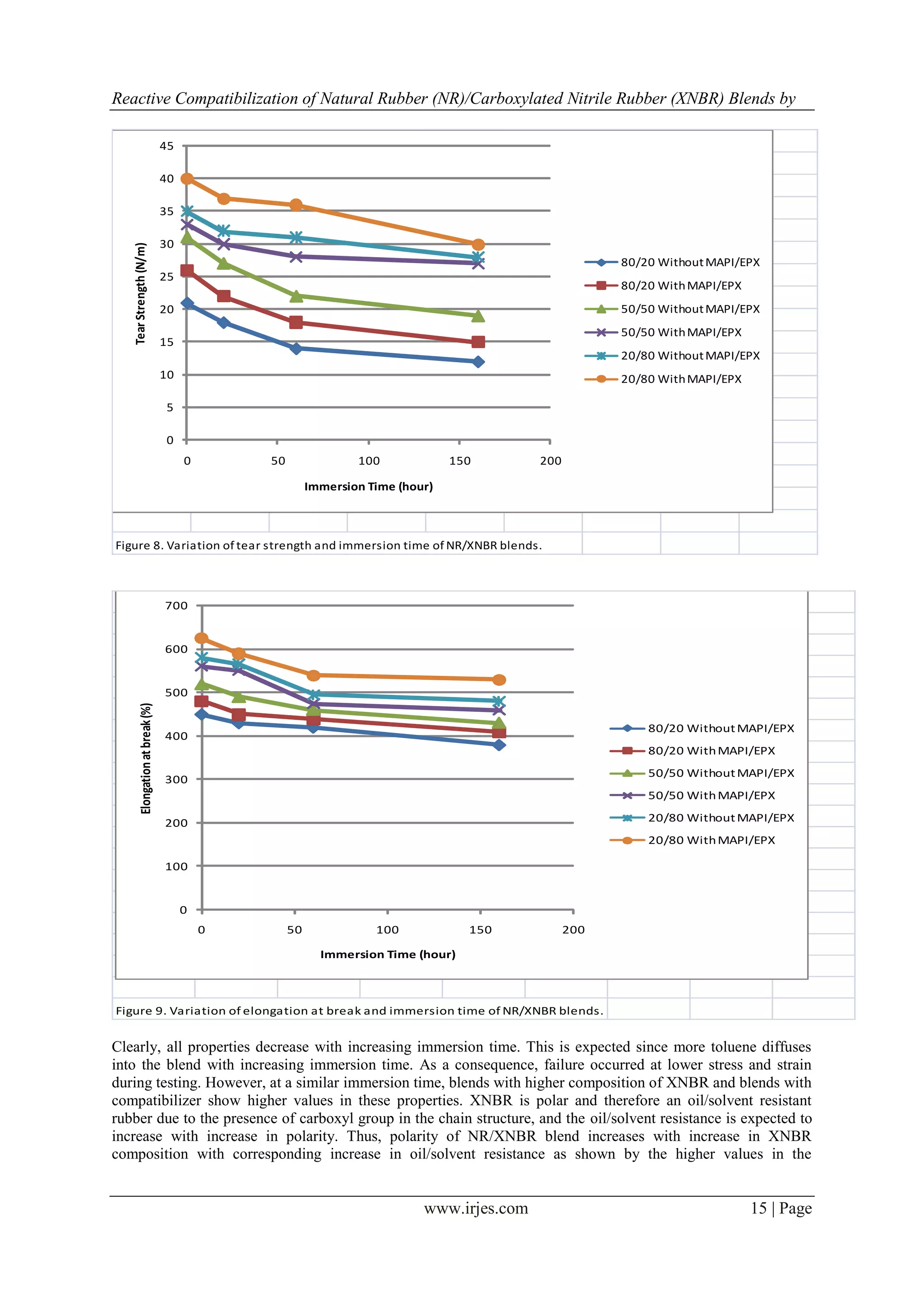
     Figs. 7-9 show the relationship between tensile strength, tear strength and elongation at break with
immersion time at room temperature (270C) for NR/XNBR blends in the presence and absence of
compatibilizer.
                             9
                             4.7     4.3        3.8
                             8

                             7
   Tensile Strength (MPa)


                             6
                                                                                          80/20 Without MAPI/EPX
                             5
                                                                                          80/20 With MAPI/EPX
                             4                                                            50/50 Without MAPI/EPX
                                                                                          50/50 With MAPI/EPX
                             3
                                                                                          20/80 Without MAPI/EPX
                             2                                                            20/80 With MAPI/EPX

                             1

                             0
                                 0      50            100            150           200

                                             Immersion Time (hour)


Figure 7. Variation of tensile strength and immersion time of NR/XNBR blends with and without
MAPI/EPX compatibilizer.


                                                                 www.irjes.com                                       14 | Page
Reactive Compatibilization of Natural Rubber (NR)/Carboxylated Nitrile Rubber (XNBR) Blends by

                                    450          20                60           160
                                     21          18                14            12
                                    40

                                    35

                                    30
   Tear Strength (N/m)


                                                                                                                  80/20 Without MAPI/EPX
                                    25
                                                                                                                  80/20 With MAPI/EPX
                                    20                                                                            50/50 Without MAPI/EPX
                                                                                                                  50/50 With MAPI/EPX
                                    15
                                                                                                                  20/80 Without MAPI/EPX
                                    10                                                                            20/80 With MAPI/EPX

                                    5

                                    0
                                         0            50                  100            150          200

                                                                Immersion Time (hour)


Figure 8. Variation of tear strength and immersion time of NR/XNBR blends.


                                      0
                                    700           20                 60           160
                                    450          430                420           380
                                    600


                                    500
          Elongation at break (%)


                                                                                                                      80/20 Without MAPI/EPX
                                    400
                                                                                                                      80/20 With MAPI/EPX
                                                                                                                      50/50 Without MAPI/EPX
                                    300
                                                                                                                      50/50 With MAPI/EPX

                                    200                                                                               20/80 Without MAPI/EPX
                                                                                                                      20/80 With MAPI/EPX

                                    100


                                         0
                                             0             50               100            150              200

                                                                  Immersion Time (hour)


Figure 9. Variation of elongation at break and immersion time of NR/XNBR blends.


Clearly, all properties decrease with increasing immersion time. This is expected since more toluene diffuses
into the blend with increasing immersion time. As a consequence, failure occurred at lower stress and strain
during testing. However, at a similar immersion time, blends with higher composition of XNBR and blends with
compatibilizer show higher values in these properties. XNBR is polar and therefore an oil/solvent resistant
rubber due to the presence of carboxyl group in the chain structure, and the oil/solvent resistance is expected to
increase with increase in polarity. Thus, polarity of NR/XNBR blend increases with increase in XNBR
composition with corresponding increase in oil/solvent resistance as shown by the higher values in the


                                                                                      www.irjes.com                                     15 | Page
Reactive Compatibilization of Natural Rubber (NR)/Carboxylated Nitrile Rubber (XNBR) Blends by

properties investigated. Similarly, MAPI/EPX is a suitable compatibilizer for NR/XNBR blends as shown by the
better properties of the blends with MAPI/EPX compatibilizer.

                                                      IV. CONCLUSIONS
The following conclusions can be drawn from this study:
    (1) Processability of NR/XNBR blends is improved by the presence of MAPI/EPX dual compatibilizers
         and by increasing the composition of XNBR.
    (2) MAPI/EPX dual compatibilizers exhibitbeneficial effect by decreasing the cure time and increasing the
         scorch time of the NR/XNBR blends.
    (3) Increasing compositions of XNBR brought decreases in tensile strength, tear strength and elongation at
         break. However, these properties increased in the presence of MAPI/EPX dual compatibilizers.

                                                          REFERENCES
[1]    D.J Zanzig, F.L Magnus, W.L Hsu, A.F Halasa, and M.E Testa, Rubber. Chem. Technol, 66, 1993, 456.
[2]    R.H Miettinen and J. Seppala, J. Polym. Engng. Sci, 32, 1992, 868.
[3]    J Ming-Yih and C. Feng-Chih, J. Appl. Polym. Sci, 73, 1999, 2029-2040.
[4]    R Fayt, R. Jerome, and P. Teyssiee, Makromol. Chem, 187, 1986, 837.
[5]    B.D Favis and J.M Willis, J. Polym. Sci : Polym. Phys, 28, 1990, 2259.
[6]    M Okamoto and T. Inoue, J. Polym. Engng. Sci, 33, 1993, 175.
[7]    E.C Scott and C.W Macosko, Polymer, 36, 1995, 461.
[8]    H Li, T. Chiba, N. Higashida, Y. Yang, and T. Inoue, Polymer, 38, 1997,3921.
[9]    L.A Ultracki, Commercial Polymer Blends, London, Chapman & Hall, 1998.
[10]    R Stephen, S. Jose, K. Joseph, S. Thomas, and Z. Oommen, Thermal stability and aging properties of sulphur and gamma radiation
        vulcanized natural rubber (NR) and carboxylated styrene butadiene rubber (XSBR) lattices and their blends, Polym. Degrad. Stab, 91
        (8), 2006, 1717-1725.
[11]    C Sirisinha, P. Saeoui, and J. Guaysomboon, Oil and thermal aging resistance in compatibilized and thermally stabilized chlorinated
        polyethylene/natural rubber blends, Polymer, 45, 4909-4916.
[12]    A.S Sirqueira and B.G Soares, The effect of mercapto- and thioacetate-modified EPDM on the curing parameters and mechanical
        properties of natural rubber/EPDM blends, European Polymer Journal, 39, 2003, 2283-2290.
[13]    N Naskar, S.C Debnath, and D.K Basu, Novel method for preparation of carboxylated nitrile rubber-natural rubber blends using Bis
        (diisopropyl) thiophosphoryl polysulphides, Journal of Applied Polymer Science, 80, 2001, 1725-1736.
[14]    C Sirisinha, S. Baulek-Limcharoen, and J. Thunyarittikorn, Relationships among blending conditions, size of dispersed Phase and oil
        resistance in natural rubber and nitrile rubber blends, Journal of Applied Polymer Science, 82, 2003, 1232-1237.
[15]    I Hanafi and H.M Hairunezam, The effect of a compatibilizer on curing characteristics, mechanical properties and oil resistance of
        styrene-butadiene rubber/epoxidized natural rubber blends, European Polymer Journal, 37, 2001, 39-44.
[16]    B Kwanruethai, S. Manus, and L. Natinee, Compatibilization of natural rubber (NR) and chlorosulphonated polyethylene (CSM)
        blends with Zinc salts of sulphonated rubber, Songklanakarin Journal of Science and Technology, 30 (4), 2008, 491- 499.
[17]    N Naskar, T. Biswas, and D.K Basu, Polymer blend: A novel method for the preparation of a natural rubber-carboxylated nitrile
        rubber blend, Journal of Applied Polymer Science, 52, 1994, 1007-1014.
[18]    V Tanrattanakul and A. Petchkaew, Mechanical properties and blend compatibility of natural rubber-chlorosulphonated polyethylene
        blends, Journal of Applied Polymer Science, 99, 2006, 127-140.
[19]    Professional Association of Natural Rubber in Africa, Standard African Rubber (SAR) Manual, 2, Specification and Test Methods,
        1998.
[20]   C.T Maa and F.C Chang, Journal of Applied Polymer Science, 49, 1993, 913.
[21]   C.H Tsai and F.C Chang, Journal of Applied Polymer Science, 61, 1996,321.
[22]   C.C Huang and F.C Chang, Polymer, 38, 1997, 2135.
[23]   H.C Chin and F.C Chang, Polymer, 38, 1997, 2947.
[24]   D.W Lo, C.R Chiang and F.C Chang, Journal of Applied Polymer Science, 65, 1997, 739.
[25]   C.R Chiang, C.R Tseng and F.C Chang, J. Polym. Res, 4, 1997, 91.
[26]   V.L Folt and R.W Smith, Rubb. Chem. Technol, 46, 1973, 1193.
[27]    S.A AL-Gahtani, Mechanical properties of acrylonitrile-butadiene/ethylene-propylene-diene monomer blends, Journal of American
        Science, 7(8), 2011, 804-809.


                                                              www.irjes.com                                                   16 | Page

B230716

  • 1.
    International Refereed Journalof Engineering and Science (IRJES) ISSN (Online) 2319-183X, (Print) 2319-1821 Volume 2, Issue 3(March 2013), PP.07-16 www.irjes.com Reactive Compatibilization of Natural Rubber (NR)/Carboxylated Nitrile Rubber (XNBR) Blends By Maleic Anhydride-Grafted-Polyisoprene (MAPI) And Epoxy Resin Dual Compatibilizers G.N.Onyeagoro Department of Polymer and Textile Engineering, Federal University of Technology, Owerri, Nigeria ABSTRACT: Cure characteristics and mechanical properties of reactive compatibilized natural rubber (NR)/carboxylated nitrile rubber (XNBR) blends were studied using maleic anhydride-grafted-polyisoprene (MAPI) and epoxy resin (EPX) dual compatibilizers. The results show that the scorch time and cure time decrease with increasing composition of XNBR in the blend. The presence of MAPI/EPX dual compatibilizers exhibited improvement in processability by decreasing and increasing the cure time and scorch time of the NR/XNBR blends, respectively. Whereas increasing compositions of XNBR brought decreases in tensile strength, tear strength and elongation at break, these properties were found to increase in the presence of MAPI/EPX dual compatibilizers. The results also show that increasing compositions of XNBR and the presence of MAPI/EPX dual compatibilizers resulted in increases in solvent resistance of NR/XNBR blends. Keywords: blends, carboxylated nitrile rubber, natural rubber, reactive compatibilization I. Introduction Natural rubber (NR) is an important elastomer which exhibits excellent mechanical properties, and has been widely used in several areas of engineering and industry. However, due to its non-polar nature and reactive double bonds in the structure, the resistance of NR in oil and aging on exposure to oxygen, ozone and heat is poor. In order to achieve properties that cannot be obtained by individual polymers, polymer blends are often used to combine the physical characteristics of both polymers. Thus, elastomer blends are frequently used in a wide range of engineering and industrial applications to obtain the best compromise in compound physical properties, processability and cost [1]. However,except for a few polymer pairs that are known to be thermodynamically miscible, most polymer pairs are immiscible. Immiscible polymer systems display lower mechanical properties than those of their components, due to their unstable morphology and poor adhesion between phases. The desired properties of immiscible polymer systems are not achieved without a third component, i.e., a compatibilizer, which reduces the interfacial tension and enhances the interfacial adhesion between component phases so that applied force can be effectively transmitted between component phases [2, 3]. Over the years, traditional compatibilization strategies have been employed to alleviate the problem of poor interfacial adhesion between polymer phases, which involve the addition of a pre-made block or graft copolymers composed of the blocks or grafts, which are identical with or miscible with the component polymers [4, 5]. A more recent approach which has proved to be generally more effective and less expensive, and more frequently used for industrial applications is the reactive processing or the reactive blending, in which the block or graft copolymer can be generated in-situ at the interface between phases by the coupling reaction of functionalized components [6, 7, 8, 9]. Basically, the performance of elastomer blends is largely governed by various factors which includes the nature of elastomers [10, 11, 12], blend compositions [13], phase morphology of elastomer blends [14], nature of compatibilizer [15, 16] and interfacial cross-linking in elastomer blends [17]. For example, in a study by Kwaruethai et al. [16], zinc salts of sulphonated natural rubber (Zn-SNR)(a rubbery ionomer) containing 17.5meq/100 of SNR was prepared and used as a new compatibilizer for the preparation of NR and chlorosulphonated polyethylene rubber (CSM) blends. Epoxidized natural rubber (ENR-20) was also used as compatibilizer for such blends. They found that the shear viscosity of the blends with ionomers was higher than that of the neat blends, suggesting strong interaction between rubber phases. They also reported a greater level of enhancement in 100% modulus, tensile and tear strength for the blends containing 17.57 Zn-SNR compared www.irjes.com 7 | Page
  • 2.
    Reactive Compatibilization ofNatural Rubber (NR)/Carboxylated Nitrile Rubber (XNBR) Blends by to those of ENR-20. Similarly, Sirinha et al. [11] reported improved oil and thermal aging resistance when NR was blended with chlorinated polyethylene rubber. Blends of NR with carboxylated styrene-butadiene rubber (XSBR) [10] and ethylene-propylene-diene rubber (EPDM) [12] were reported to have better aging and ozone resistance. Sirinha et al. [14] have demonstrated that improved phase morphology in blends of NR and nitrile rubber (NBR) resulted in an increased oil resistant property of the blends. Blends of CSM and NR have been studied by Tanrattanakul and Petchkaew. [18]. They reported that blends of NR and CSM were immiscible, except for NR-rich blends (70-80 wt% of NR), and that oil and ozone resistant properties of the blends increased with increase in CSM loading. They also found that further improvement in mechanical properties and compatibility of the blends could be obtained when a suitable compatibilizer, such as epoxidized natural rubber (ENR), was added to the blends. Carboxylated nitrile rubber (XNBR) is an important elastomer which has found increasing use in many engineering and industrial applications due to its outstanding oil and solvent resistant properties [13, 17]. In the present study, the reactive compatibilization of NR/XNBR blends by maleic anhydride-grafted-polyisoprene (MAPI) and epoxy resin dual compatibilizers is reported. The presence of a multifunctional epoxy resin in the XNBR-NR-MAPI blend has the potential to produce XNBR-co-epoxy-co-MAPI copolymer at the interface, which is able to function as an effective compatibilizer. To the author’s knowledge, there has been no attempt to use maleic anhydride-grafted-polyisoprene/epoxy resin as compatibilizer for NR/XNBR blends. However, Naskar et al. [13] had reported a novel method for preparation of carboxylated nitrile rubber (XNBR)-natural rubber (NR) blends using Bis(diisopropyl)thiophosphoryl polysulphides as a compatibilizer. They found that oil resistance and mechanical properties of the NR/XNBR blends strongly depended on blend ratios and the degree of interfacial cross-linking between NR and XNBR components. II. Experimental 2.1. Materials Natural rubber (Standard African Rubber, SAR 3) having the properties given in Table 1 was obtained from the Rubber Research Institute of Nigeria (RRIN), Iyanomo, Benin City. The maleic anhydride-grafted- polyisoprene containing 8wt% maleic anhydride (ARCO Chemical Co.); epoxy resin ( tetra-glycidylether of diphenyldiaminomethane) (TGDDM), with the trade mark of NPEH-434 (Nan Yea Plastics Co. of Taiwan) and carboxylated nitrile rubber ( acrylonitrle-butadiene-methacrylic acid terpolymer) (Dow Chemical Co.) were purchased from Rovet Chemicals Ltd, Benin City, Nigeria. The rubber compounding ingredients such as carbon black (N 330), sulphur, accelerator (MBT), Zinc Oxide, stearic acid, wax and anti-oxidant (TMQ) were of commercial grade and kindly supplied by Dunlop Plc, Lagos, Nigeria. Table 2 represents the repeating units of the polymers employed in this study. Table 1: Properties of Standard African Rubber (SAR 3) [19] Parameters Volatile matter 0.40 Dirt content retained on 45µm sieve (%) 0.02 Nitrogen (%) 0.23 Ash content (%) 0.32 Initial Plasticity (P0) 36 Plasticity Retention Index (PRI) 67 Plasticity after aging for 30 min @ 1400C (P30) 24 Mooney Viscosity, ML (1+4), 1000C 70 www.irjes.com 8 | Page
  • 3.
    Reactive Compatibilization ofNatural Rubber (NR)/Carboxylated Nitrile Rubber (XNBR) Blends by Table 2: Repeating units of each component Component Repeating unit NR [ CH2 C(CH3)=CH CH2 ]n CH3 XNBR [ CH2 CH(CN) CH2—CH=CH—CH2—CH2—C ]n COOH CH3 MAPI [ HC CH CH2 C=CH CH2 ]n O=C C=O O O O H2C CH CH2 H 2C HC CH2 TGDDM N CH2 N H2C CH CH2 H2 C HC CH2 O O 2.2. Preparation of NR/XNBR Blends The recipe used in the formulation of NR/XNBR is given in Table 3. TGDDM WAS DRIED AT 60 0C for 2 hours before using. Mixing was carried out in an internal mixer, Haake Rheomix, Model CTW 1OO. NR and XNBR were first pre-mixed, prior to the addition of other ingredients. Mixing was done at a temperature of 600C and at a rotor speed of 60 rpm. The total mixing cycle was ~ 10 min. Finally, the blend was sheeted out on a laboratory two-roll mill size (160 x 320 mm) in accordance with ASTM-D 3184-80. The nip gap and mill roll speed ratio were kept the same for all the blend samples. The sheeted rubber compound was conditioned at room temperature, 270C for 24 hours in a closed container and was further processed by curing. The cured samples were coded accordingly for property testing. Table 3: Compounding recipe for NR/XNBR blends Ingredients (Phr) Formulation NRα 80 50 20 XNBRβ 20 50 80 Stearic acid 2 2 2 Zinc Oxide 5 5 5 TMQ 1 1 1 MBT 1 1 1 Sulphur 2 2 2 Processing aid 2 2 2 MAPIª 3.5 3.5 3.5 EPX# 1.5 1.5 1.5 www.irjes.com 9 | Page
  • 4.
    Reactive Compatibilization ofNatural Rubber (NR)/Carboxylated Nitrile Rubber (XNBR) Blends by ªMaleic anhydride-graft-polyisoprene # Epoxy resin α Natural rubber β Carboxylated nitrile rubber 2.3. Measurement of Cure Characteristics The cure characteristics of the blends, such as scorch times (t 2), cure times (t90) and torque values (ML) were measured at 1500C using a Monsanto Moving Die Rheometer (MDR 2000 Model) as described in ASTM Standard Test Method D 1646-94. 2.4. Measurement of Mechanical Properties The tensile properties and tear strength of the blends were measured on a Monsanto Tensometer (Model T10), according to BS 903. The cross-head speed for the tensile and tear tests was set at 500 mm/min. All tests were performed at room temperature, 270C. 2.5. Measurement of Solvent Resistance Toluene, a solvent commonly used in the rubber industry was chosen in this study. The test for solvent resistance of the blend was conducted according to ASTM D 471. The tensile and tear test specimens were immersed in toluene at room temperature, 27 0C for 20, 60, and 160 hours. When the specific time was reached, the test specimens were removed from the toluene, wiped with tissue paper to remove excess toluene from the surface and tested for tensile properties and tear strength. III. Results and Discussion 3.1. Cure Characteristics of NR/XNBR Blends A compound or a copolymer containing reactive functional groups that are able to react with one or more of the blend components to form a new graft or block copolymer in the blend is referred to as a reactive compatibilizer. This in-situ formed copolymer containing segments of the blend constituents tends to remain at the interface between the two incompatible polymers and acts as a phase emulsifier of the blend. The viscosity of the blend will increase when reactions occur among functional groups due to increase in molecular weight of the blend. Torque measurement has proved successful as a method for obtaining qualitative information concerning the chemical reactivity and the extent of reaction in a reactively compatibilized blend [3, 20]. Fig. 1 shows the effect of compatibilizer and blend ratio on maximum torque (MT) value of the NR/XNBR blends. Hanafi and Hairunezam {15] reported that maximum torque generally correlates with durometer hardness and/or modulus. 80/20 8 50/50 20/80 3 4.6 7.5 7 6 Maximum Torque, MT (min) 5 4 With Compatibilizer 3 Without Compatibilizer 2 1 0 80/20 50/50 20/80 NR/XNBR blends Figure 1. Effect of compatibilizer and blend ratio on maximum torque value of NR/XNBR blends. The improved compatibility of the NR/XNBR blends in the presence of MAPI/EPX compatibilizer is shown in Fig. 1 where maximum torque (MT) value for NR/XNBR blends with MAPI/EPX compatibilizer is higher than www.irjes.com 10 | Page
  • 5.
    Reactive Compatibilization ofNatural Rubber (NR)/Carboxylated Nitrile Rubber (XNBR) Blends by the similar blends without MAPI/EPX compatibilizer. Fig. 1 also shows that maximum torque (MT) increases with increase in XNBR composition in the blend. According to Zanzig et al. [1], one way to improve compatibility of immiscible blends is through the use of block copolymers with segments chemically identical to the individual homopolymers. The XNBR carboxyl terminal groups do not react with the anhydride of MAPI, while the reaction between XNBR cyano groups (-CN) and the anhydride is insignificant without the presence of a catalyst. A similar problem is expected when MAPI is used as a compatibilizer in NR/XNBR blends and only secondary physical interaction is expected. Sevaral authors [21, 22, 23, 24, 25] have reported that epoxy is able to react with polyester terminal carboxyl group to compatibilize effectively many polyester-related blends. Epoxy is also well known to react with anhydride readily. These reactions are attributed to the multi- functionality of epoxy. In the present, from moleculer structural perspective, MAPI should be compatible with NR, whereas EPX should be compatible with XNBR. Thus, the presence of a multi-functional epoxy (EPX) in the XNBR-NR-MAPI blend is expected to produce XNBR-Co-EPX-Co-MAPI copolymer at the interface, which is able to function as an effective compatibilizer. This explains the increase in maximum torque (MT) with increase in XNBR composition due to increase in the number of reactive terminal carboxyl groups arising from increase in XNBR composition. Fig. 2 shows the effect of compatibilizer and blend ratio on scorch time, t 2 of NR/XNBR blends. Clearly, t2 decreases with increase in XNBR composition in the blends. The result also shows that the t 2 for XNBR is shorter than that of NR. This is due to the activation of an adjacent double bond by the carboxyl group. However, at a similar blend ratio, NR/XNBR blends with MAPI/EPX compatibilizer exhibit longer scorch time, t2 than the NR/XNBR blends without MAPI/EPX compatibilizer. This indicates that the incorporation of MAPI/EPX compatibilizer increases the processing safety of the blends. Fig. 3 shows the effect of compatibilizer and blend ratio on cure time, t90 of NR/XNBR blends. As for scorch time, t2, the t90 value also exhibited a decreasing trend with increase in XNBR composition in the blends. However, at a similar blend ratio, in contrast to the scorch time, t2, the incorporation of MAPI/EPX compatibilizer reduced the cure time, t 90 of the blends. This again indicates the beneficial effect of MAPI/EPX compatibilizer. 6 Scorch Time (min) 5 4 With Compatibilizer Without Compatibilizer 3 2 1 0 80/20 50/50 20/80 NR/XNBR Figure 2. Effect of compatibilizer and blend ratio on scorch time of NR/XNBR blends. www.irjes.com 11 | Page
  • 6.
    Reactive Compatibilization ofNatural Rubber (NR)/Carboxylated Nitrile Rubber (XNBR) Blends by 80/20 14 50/50 20/80 9.3 7.2 5.8 12 10 Cure Time (min) 8 6 With Compatibilizer Without Compatibilizer 4 2 0 80/20 50/50 20/80 NR/XNBR Figure 3. Effect of compatibilizer and blend ratio on cure time of NR/XNBR blends. 3.2. Mechanical Properties The effect of compatibilizer and blend ratio on tensile strength, tear strength and elongation at break of NR/XNBR blends is shown in Figs. 4, 5 and 6, respectively. It can be seen that all properties decreased with increase in XNBR composition in the blends, but increased with MAPI/EPX compatibilizer in the blends. NR is a strain-crystallizing rubber due to its stereo-regular chain structure, whereas XNBR is a non-strain crystallizing rubber. The decrease in tensile strength and tear strength of NR/XNBR blends with increase in XNBR composition is attributed to the decrease in the strain-induced crystallization of NR arising from the decrease in NR composition in the blends. This observation is consistent with the report of Hanafi and Hairunezam [15]. In their study on the effect of a compatibilizer on curing characteristics, mechanical properties and oil resistance of SBR/ENR blends, the authors reported an increase in the tensile strength and tear strength of the blends with increasing ENR composition, which they attributed to strain-induced crystallization of ENR due to its stereo- regular cis 1, 4-configuration. Similarly, Folt and Smith [26] had earlier reported that the strength of strain- crystallizing rubbers is substantially superior to that of non-crystallizing rubbers, where the dissipative process is predominantly visco-elastic. The decrease in elongation at break with increase in XNBR composition (Fig. 6) is attributed to the greater chain mobility of NR than XNBR since the Glass transition temperature (T g) of NR (- 720C) is lower than that of XNBR (-260C) (AL-Gahtani [27]). www.irjes.com 12 | Page
  • 7.
    Reactive Compatibilization ofNatural Rubber (NR)/Carboxylated Nitrile Rubber (XNBR) Blends by 80/20 40 50/50 20/80 15.7 19.3 21.2 35 14.5 14.6 16.8 30 Tensile Strength (MPa) 25 20 With Compatibilizer 15 Without Compatibilizer 10 5 0 80/20 50/50 20/80 NR/XNBR blend Figure 4. Effect of compatibilizer and blend ratio on tensile strength of NR/XNBR blends. 80/20 50/50 20/80 70 31.5 24.5 21.3 60 50 Tear strength (N/m) 40 With Compatibilizer 30 Without Compatibilizer 20 10 0 80/20 50/50 20/80 NR/XNBR blend Figure 5. Effect of compatibilizer and blend ratio on tear strength of NR/XNBR blends. www.irjes.com 13 | Page
  • 8.
    Reactive Compatibilization ofNatural Rubber (NR)/Carboxylated Nitrile Rubber (XNBR) Blends by 80/20 500 50/50 20/80 250 220 210 450 400 350 Elongation at Break (%) 300 250 With Compatibilizer 200 Without Compatibilizer 150 100 50 0 80/20 50/50 20/80 NR/XNBR blend Figure 6. Effect of compatibilizer and blend ratio on elongation at break of NR/XNBR blends. 3.3. Solvent Resistance Figs. 7-9 show the relationship between tensile strength, tear strength and elongation at break with immersion time at room temperature (270C) for NR/XNBR blends in the presence and absence of compatibilizer. 9 4.7 4.3 3.8 8 7 Tensile Strength (MPa) 6 80/20 Without MAPI/EPX 5 80/20 With MAPI/EPX 4 50/50 Without MAPI/EPX 50/50 With MAPI/EPX 3 20/80 Without MAPI/EPX 2 20/80 With MAPI/EPX 1 0 0 50 100 150 200 Immersion Time (hour) Figure 7. Variation of tensile strength and immersion time of NR/XNBR blends with and without MAPI/EPX compatibilizer. www.irjes.com 14 | Page
  • 9.
    Reactive Compatibilization ofNatural Rubber (NR)/Carboxylated Nitrile Rubber (XNBR) Blends by 450 20 60 160 21 18 14 12 40 35 30 Tear Strength (N/m) 80/20 Without MAPI/EPX 25 80/20 With MAPI/EPX 20 50/50 Without MAPI/EPX 50/50 With MAPI/EPX 15 20/80 Without MAPI/EPX 10 20/80 With MAPI/EPX 5 0 0 50 100 150 200 Immersion Time (hour) Figure 8. Variation of tear strength and immersion time of NR/XNBR blends. 0 700 20 60 160 450 430 420 380 600 500 Elongation at break (%) 80/20 Without MAPI/EPX 400 80/20 With MAPI/EPX 50/50 Without MAPI/EPX 300 50/50 With MAPI/EPX 200 20/80 Without MAPI/EPX 20/80 With MAPI/EPX 100 0 0 50 100 150 200 Immersion Time (hour) Figure 9. Variation of elongation at break and immersion time of NR/XNBR blends. Clearly, all properties decrease with increasing immersion time. This is expected since more toluene diffuses into the blend with increasing immersion time. As a consequence, failure occurred at lower stress and strain during testing. However, at a similar immersion time, blends with higher composition of XNBR and blends with compatibilizer show higher values in these properties. XNBR is polar and therefore an oil/solvent resistant rubber due to the presence of carboxyl group in the chain structure, and the oil/solvent resistance is expected to increase with increase in polarity. Thus, polarity of NR/XNBR blend increases with increase in XNBR composition with corresponding increase in oil/solvent resistance as shown by the higher values in the www.irjes.com 15 | Page
  • 10.
    Reactive Compatibilization ofNatural Rubber (NR)/Carboxylated Nitrile Rubber (XNBR) Blends by properties investigated. Similarly, MAPI/EPX is a suitable compatibilizer for NR/XNBR blends as shown by the better properties of the blends with MAPI/EPX compatibilizer. IV. CONCLUSIONS The following conclusions can be drawn from this study: (1) Processability of NR/XNBR blends is improved by the presence of MAPI/EPX dual compatibilizers and by increasing the composition of XNBR. (2) MAPI/EPX dual compatibilizers exhibitbeneficial effect by decreasing the cure time and increasing the scorch time of the NR/XNBR blends. (3) Increasing compositions of XNBR brought decreases in tensile strength, tear strength and elongation at break. However, these properties increased in the presence of MAPI/EPX dual compatibilizers. REFERENCES [1] D.J Zanzig, F.L Magnus, W.L Hsu, A.F Halasa, and M.E Testa, Rubber. Chem. Technol, 66, 1993, 456. [2] R.H Miettinen and J. Seppala, J. Polym. Engng. Sci, 32, 1992, 868. [3] J Ming-Yih and C. Feng-Chih, J. Appl. Polym. Sci, 73, 1999, 2029-2040. [4] R Fayt, R. Jerome, and P. Teyssiee, Makromol. Chem, 187, 1986, 837. [5] B.D Favis and J.M Willis, J. Polym. Sci : Polym. Phys, 28, 1990, 2259. [6] M Okamoto and T. Inoue, J. Polym. Engng. Sci, 33, 1993, 175. [7] E.C Scott and C.W Macosko, Polymer, 36, 1995, 461. [8] H Li, T. Chiba, N. Higashida, Y. Yang, and T. Inoue, Polymer, 38, 1997,3921. [9] L.A Ultracki, Commercial Polymer Blends, London, Chapman & Hall, 1998. [10] R Stephen, S. Jose, K. Joseph, S. Thomas, and Z. Oommen, Thermal stability and aging properties of sulphur and gamma radiation vulcanized natural rubber (NR) and carboxylated styrene butadiene rubber (XSBR) lattices and their blends, Polym. Degrad. Stab, 91 (8), 2006, 1717-1725. [11] C Sirisinha, P. Saeoui, and J. Guaysomboon, Oil and thermal aging resistance in compatibilized and thermally stabilized chlorinated polyethylene/natural rubber blends, Polymer, 45, 4909-4916. [12] A.S Sirqueira and B.G Soares, The effect of mercapto- and thioacetate-modified EPDM on the curing parameters and mechanical properties of natural rubber/EPDM blends, European Polymer Journal, 39, 2003, 2283-2290. [13] N Naskar, S.C Debnath, and D.K Basu, Novel method for preparation of carboxylated nitrile rubber-natural rubber blends using Bis (diisopropyl) thiophosphoryl polysulphides, Journal of Applied Polymer Science, 80, 2001, 1725-1736. [14] C Sirisinha, S. Baulek-Limcharoen, and J. Thunyarittikorn, Relationships among blending conditions, size of dispersed Phase and oil resistance in natural rubber and nitrile rubber blends, Journal of Applied Polymer Science, 82, 2003, 1232-1237. [15] I Hanafi and H.M Hairunezam, The effect of a compatibilizer on curing characteristics, mechanical properties and oil resistance of styrene-butadiene rubber/epoxidized natural rubber blends, European Polymer Journal, 37, 2001, 39-44. [16] B Kwanruethai, S. Manus, and L. Natinee, Compatibilization of natural rubber (NR) and chlorosulphonated polyethylene (CSM) blends with Zinc salts of sulphonated rubber, Songklanakarin Journal of Science and Technology, 30 (4), 2008, 491- 499. [17] N Naskar, T. Biswas, and D.K Basu, Polymer blend: A novel method for the preparation of a natural rubber-carboxylated nitrile rubber blend, Journal of Applied Polymer Science, 52, 1994, 1007-1014. [18] V Tanrattanakul and A. Petchkaew, Mechanical properties and blend compatibility of natural rubber-chlorosulphonated polyethylene blends, Journal of Applied Polymer Science, 99, 2006, 127-140. [19] Professional Association of Natural Rubber in Africa, Standard African Rubber (SAR) Manual, 2, Specification and Test Methods, 1998. [20] C.T Maa and F.C Chang, Journal of Applied Polymer Science, 49, 1993, 913. [21] C.H Tsai and F.C Chang, Journal of Applied Polymer Science, 61, 1996,321. [22] C.C Huang and F.C Chang, Polymer, 38, 1997, 2135. [23] H.C Chin and F.C Chang, Polymer, 38, 1997, 2947. [24] D.W Lo, C.R Chiang and F.C Chang, Journal of Applied Polymer Science, 65, 1997, 739. [25] C.R Chiang, C.R Tseng and F.C Chang, J. Polym. Res, 4, 1997, 91. [26] V.L Folt and R.W Smith, Rubb. Chem. Technol, 46, 1973, 1193. [27] S.A AL-Gahtani, Mechanical properties of acrylonitrile-butadiene/ethylene-propylene-diene monomer blends, Journal of American Science, 7(8), 2011, 804-809. www.irjes.com 16 | Page