Bioassay of ACTH/
Adrenocorticotropic Hormone/
corticotropin
Mr. Vishal Balakrushna Jadhav
Assistant Professor (Pharmacology)
School of Pharmaceutical Sciences (SOPS)
Sandip University, Nashik
1
About ACTH
 ACTH (corticotropin) is polypeptide tropic
hormone (39 amino acids) secreted by the
anterior pituitary gland.
 ACTH stimulates the production of cortisol,
a steroid hormone important for regulating
glucose, protein and lipid metabolism,
suppressing the immune system response,
and helping to maintain blood pressure.
Regulation of cortisol synthesis
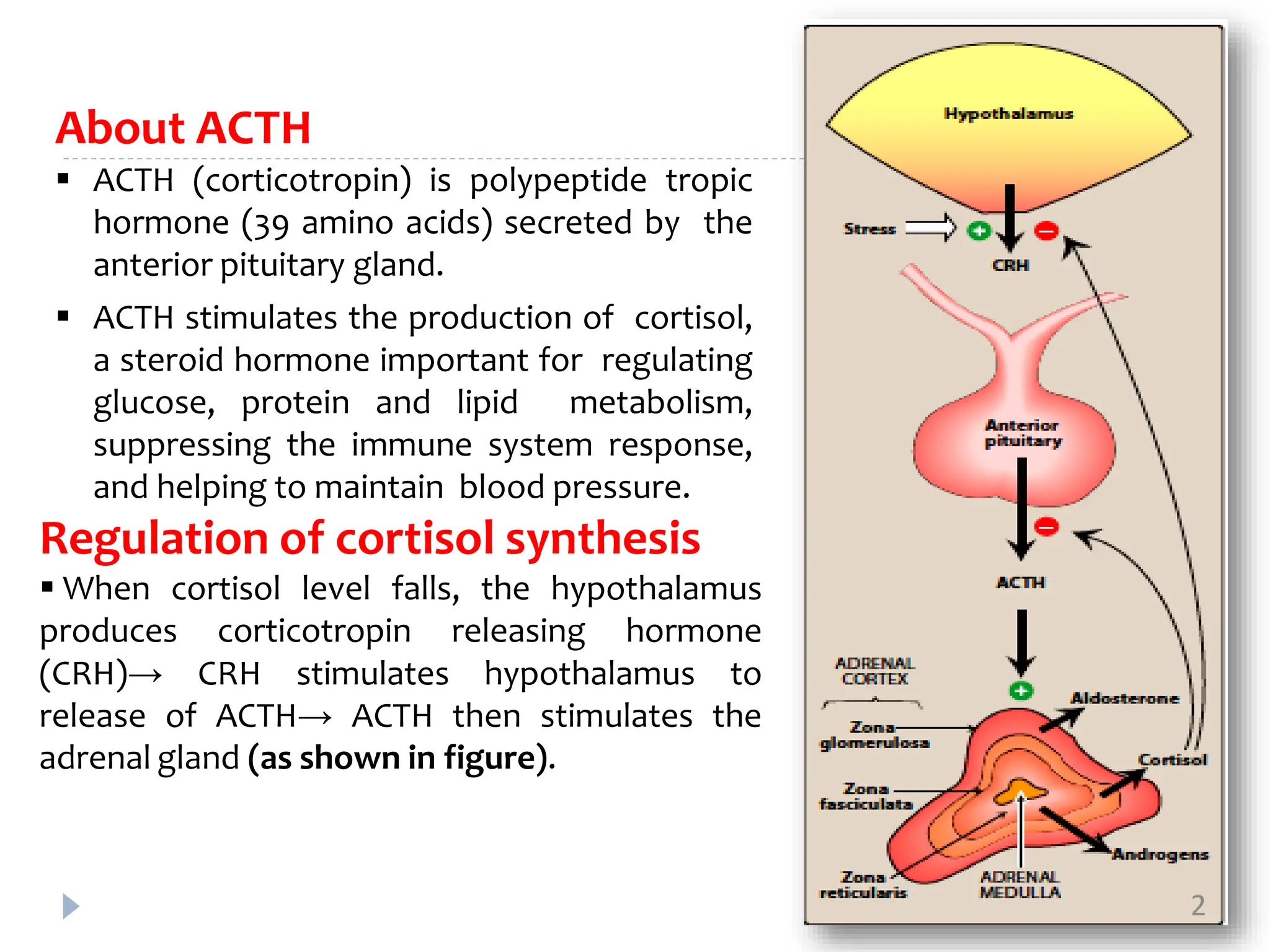
 When cortisol level falls, the hypothalamus
produces corticotropin releasing hormone
(CRH)→ CRH stimulates hypothalamus to
release of ACTH→ ACTH then stimulates the
adrenal gland (as shown in figure).
2
1) Addison syndrome
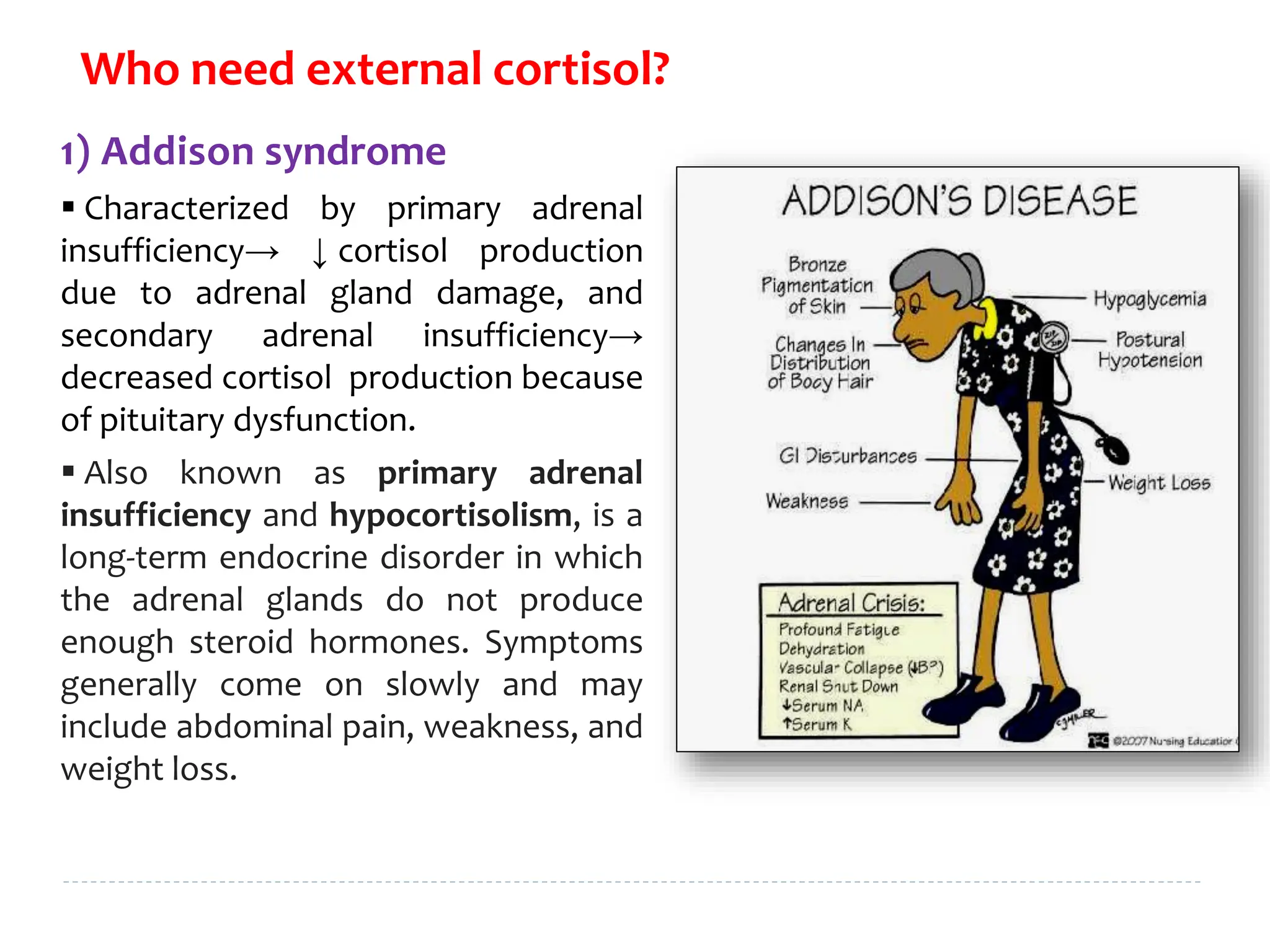
 Characterized by primary adrenal
insufficiency→ ↓ cortisol production
due to adrenal gland damage, and
secondary adrenal insufficiency→
decreased cortisol production because
of pituitary dysfunction.
 Also known as primary adrenal
insufficiency and hypocortisolism, is a
long-term endocrine disorder in which
the adrenal glands do not produce
enough steroid hormones. Symptoms
generally come on slowly and may
include abdominal pain, weakness, and
weight loss.
Who need external cortisol?
2) Hypopituitarism
Also called pituitary insufficiency, is a rare condition in which your pituitary
gland doesn't make enough of certain hormones. Symptoms can include one or
more of the following:
 Stomach pain, decreased appetite, nausea and vomiting, constipation,
 Excessive thirst and urination,
 Fatigue and/or weakness,
 Anemia (not having enough red blood cells),
 Headache and dizziness,
 Sensitivity to cold,
 Weight loss or weight gain,
 Muscles aches,
 In women: loss of armpit or pubic hair, decreased sex drive, infertility,
problems with breast feeding, irregular or no menstrual periods,
 In men: loss of hair (on the face, or in the armpits or pubic area), decreased
sex drive, infertility, erectile dysfunction, and
 In children, problems with growth (including height) and sexual development.
ACTH Official Preparations
Corticotropin injection is a sterile solution, in a suitable diluent, of
the polypeptide from the pituitary glands of mammals. Potency
range should be 80.0–120.0 % of USP cartiotropin units.
Corticotropin for injection, antimicrobial agent.
Repository corticotropin injection is corticotropin in a sterile
solution of partially hydrolyzed gelatin and is intended for
subcutaneous and intramuscular use. This solution has been
adopted as the reference standard for the bioassay.
Packing Preserve in single-dose or multiple-dose containers of
Type-1 glass.
Storage Store in cold place.
Labeling Injection recommends intravenous administration.
5
Bioassay of ACTH
6
1) Adrenal Ascorbic Acid Depletion
 Purpose and rationale
This is now a historical assay, which however has been used extensively for
standardization of ACTH preparations.
The administration of pituitary adrenocorticotropic hormone (ACTH) is
followed by a decrease in the amount of ascorbic acid present in the
adrenals.
The depletion of adrenal ascorbic acid is a function of the dose of ACTH
administered.
This relationship was used for a quantitative assay of ACTH by Sayers et al.
(1948). Furthermore, the test has been used for evaluation of synthetic
corticotropin analogs.
A similar test is used for luteinizing hormone action in the rat ovary.
 Solution
Five units of the International Standard for corticotropin (Bangham et al.
1962) or an amount of test preparation supposed to contain about 5 units are
dissolved in 0.25 ml of 0.5% phenol solution and diluted with 8.1ml of 15%
gelatin solution. In this way, 0.5ml contains 300mU ACTH.
Then 3 ml of this solution is diluted with 6.0ml gelatin solution (to prevent
adsorption to glassware), resulting in 100mU ACTH per 0.5ml.
Then 3ml of this solution is again diluted with 6.0ml gelatin solution, resulting
in a content of 33mU ACTH per 0.5ml.
7
 Procedure
Male Wistar rats weighing between 100 and 200 g are hypophysectomized 1 day
prior to the test. The range of weights in any one test should not exceed 15 g.
For one test with three doses of test preparation and standard, at least 36,
preferably 60, hypophysectomized rats are necessary.
The hypophysectomized rats are randomly distributed to six groups.
Each rat receives subcutaneously 0.5ml of one of the various concentrations of
test preparation or standard.
Three hours after injection, the animals are anesthetized, both adrenals
removed,
freed from extraneous tissue and weighed.
The rats are sacrificed and the skull opened to verify completeness of
hypophysectomy.
The adrenals are homogenized in 4% trichloroacetic acid and the ascorbic acid
determined according to the method of Roe and Kuether (1943).
8
Hypophysis or pituitary gland
Hypophysectomy is the surgical removal of the hypophysis. 9
 Ascorbic acid determination
 Reagents
First 100mg L-ascorbic acid is dissolved in 100 ml 4% trichloroacetic acid
and 20ml of this solution is diluted with 4% trichloroacetic acid to achieve
a 0.2% ascorbic acid solution; 2ml of this solution is diluted with 4%
trichloroacetic acid to achieve a 0.02% ascorbic acid solution.
Sulfuric acid (85%) is obtained by adding 900 ml concentrated sulfuric
acid to 100 ml distilled water.
Then 2 g dinitrophenylhydrazine (DNPH) is dissolved in 100 ml of 9 N
H2SO4 (75ml distilled water and 25ml concentrated sulfuric acid), and
6 g thiourea is dissolved in 100ml distilled water.
10
 Calibration
Trichloroacetic acid (4%) is added to 0.0, 0.5, 1.0, 2.0, 3.0, 4.0, 6.0, and 8.0
ml of the 0.02% ascorbic acid solution and 1.0, 1.5, and 2.0 ml of the 0.2%
ascorbic acid solution to reach a final volume of 8.0 ml.
Then 100 mg charcoal is added to each sample and thoroughly mixed by
shaking for 1min.
After 5min the solutions are filtered.
An aliquot of 0.1ml of the 6% thiourea solution is added to 2.0ml of the
filtrate followed by 0.5 ml dinitrophenylhydrazine solution.
The mixture is shaken and heated for 45min at 57°C in a water bath.
The solutions are placed in an ice-cold water bath and with further
cooling 2.5 ml of the 85% sulfuric acid is added.
The calibration curve is established at a wavelength of 540μm using the
solutions without ascorbic acid as blank. 11
 Preparation of the adrenals
Both adrenals are homogenized in glass tubes containing 200 mg
purified sand and 8.0 ml of 4% trichloroacetic acid. The reagents are
added as described for the calibration curve.
 Evaluation
The potency ratio including confidence limits is calculated with the 3+3-
point assay (three point bioassay, latin square design shown below) by
using mean concentrations of standard and test.
12
S1 S2 S3 T1 T2 T3
S2 S3 T1 T2 T3 S1
S3 T1 T2 T3 S1 S2
T1 T2 T3 S1 S2 S3
T2 T3 S1 S2 S3 T1
T3 S1 S2 S3 T1 T2
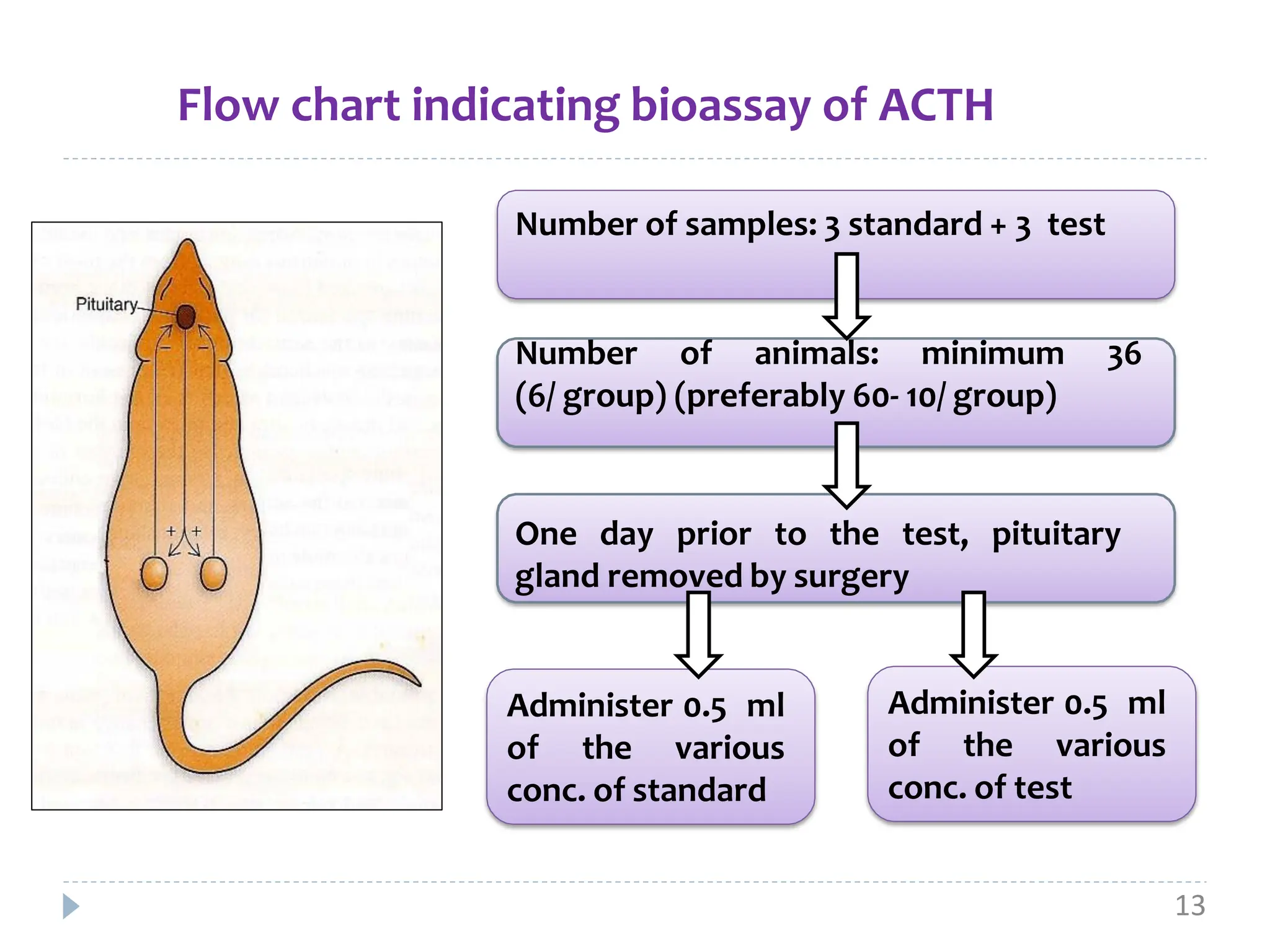
Flow chart indicating bioassay of ACTH
Number of samples: 3 standard + 3 test
Number of animals: minimum 36
(6/ group) (preferably 60- 10/ group)
One day prior to the test, pituitary
gland removed by surgery
Administer 0.5 ml
of the various
conc. of standard
Administer 0.5 ml
of the various
conc. of test
13
sacrificed and the
scull opened to
verify completeness
of hypophysectomy
The adrenals are homogenized in glass tubes
contains 200 mg pure sand and 8.0 ml of 4%
trichloroacetic acid and the ascorbic acid
determined. (Roe and Kuether 1943).
3 hr after inj. animals are anesthetized and both
adrenals removed for ascorbic acid estimation
Administer 0.5 ml of the
various conc. of STD
Administer 0.5 ml of the
various conc. of test
Potency ratio calculated by 3 +3 point assay
14
Flow chart indicating estimation of ascorbic acid
Prepare 1 mg/ml conc. of
ascorbic acid in 4% TCA (stock)
Solution A
Use solution A to prepare 0.2% of
ascorbic acid in 4% TCA (Solution B)
Use solution B to prepare 0.02% of
ascorbic acid in 4% TCA (Solution B)
Preparation of calibration curve using standard
15
2) Corticosterone Blood Levels in Dexamethasone-Blocked Rats
 Purpose and rationale
Corticotropin activity can be measured by the increase of corticosterone in
venous blood of hypophysectomized rats (no longer required) or
dexamethasone- blocked rats.
The test can be used to measure time- response curves of corticotropin
analogs or depot preparations.
The sensitivity can be increased by determining corticosterone in adrenal
venous blood after cannulation of the adrenal vein.
16
17
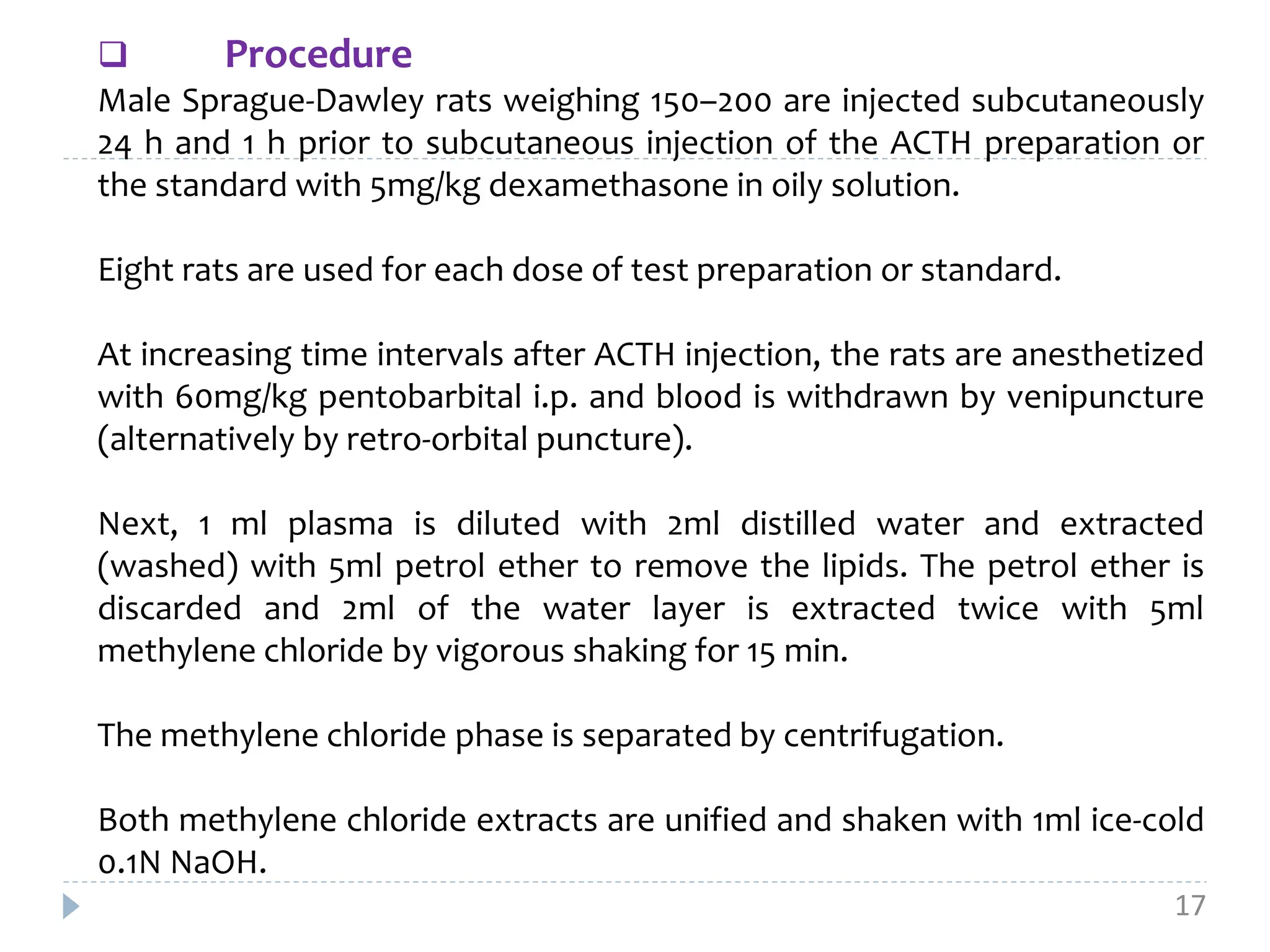
 Procedure
Male Sprague-Dawley rats weighing 150–200 are injected subcutaneously
24 h and 1 h prior to subcutaneous injection of the ACTH preparation or
the standard with 5mg/kg dexamethasone in oily solution.
Eight rats are used for each dose of test preparation or standard.
At increasing time intervals after ACTH injection, the rats are anesthetized
with 60mg/kg pentobarbital i.p. and blood is withdrawn by venipuncture
(alternatively by retro-orbital puncture).
Next, 1 ml plasma is diluted with 2ml distilled water and extracted
(washed) with 5ml petrol ether to remove the lipids. The petrol ether is
discarded and 2ml of the water layer is extracted twice with 5ml
methylene chloride by vigorous shaking for 15 min.
The methylene chloride phase is separated by centrifugation.
Both methylene chloride extracts are unified and shaken with 1ml ice-cold
0.1N NaOH.
18
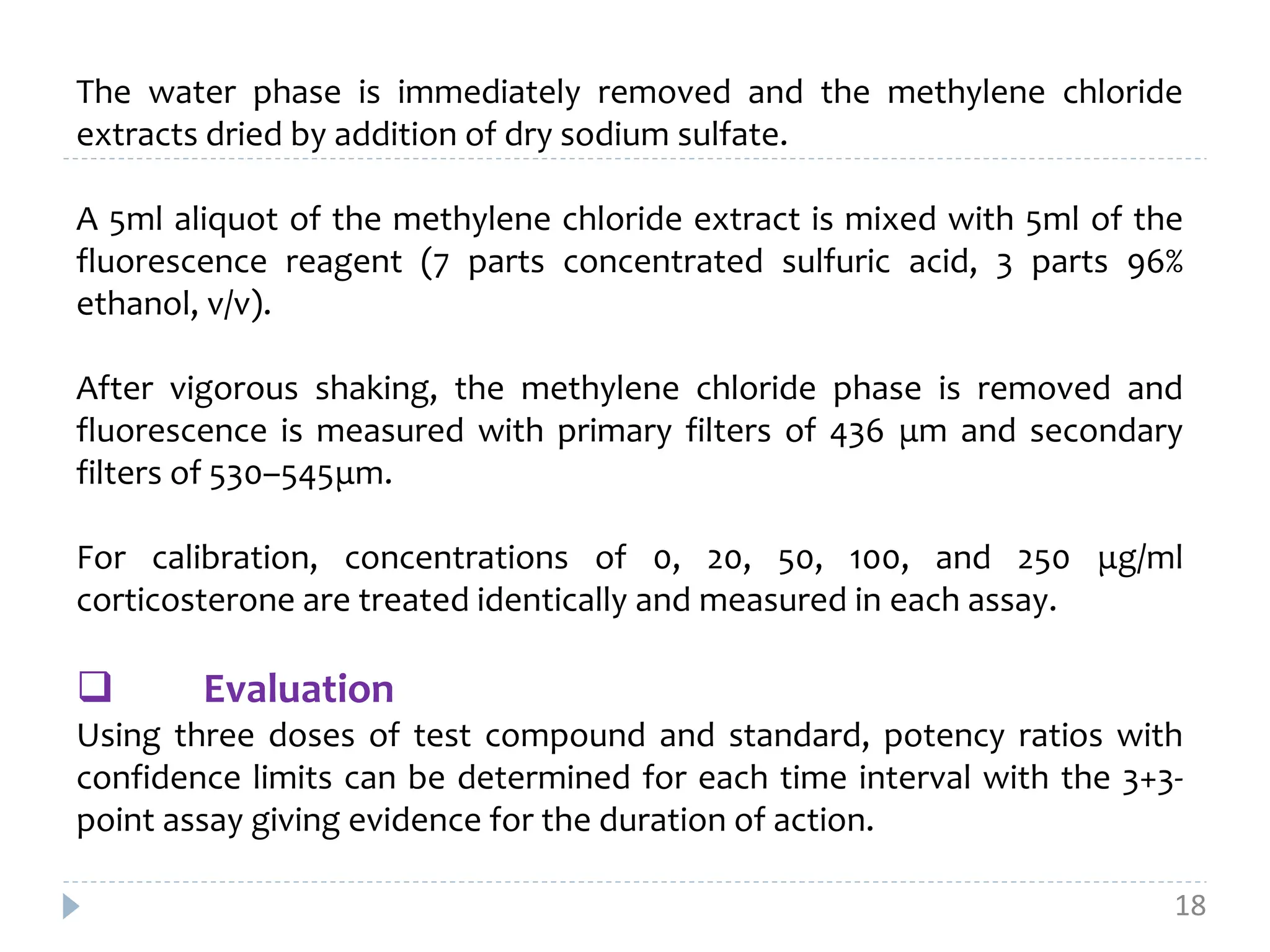
The water phase is immediately removed and the methylene chloride
extracts dried by addition of dry sodium sulfate.
A 5ml aliquot of the methylene chloride extract is mixed with 5ml of the
fluorescence reagent (7 parts concentrated sulfuric acid, 3 parts 96%
ethanol, v/v).
After vigorous shaking, the methylene chloride phase is removed and
fluorescence is measured with primary filters of 436 μm and secondary
filters of 530–545μm.
For calibration, concentrations of 0, 20, 50, 100, and 250 μg/ml
corticosterone are treated identically and measured in each assay.
 Evaluation
Using three doses of test compound and standard, potency ratios with
confidence limits can be determined for each time interval with the 3+3-
point assay giving evidence for the duration of action.
19

b1. Bioassay of ACTH.pdf

  • 1.
    Bioassay of ACTH/ AdrenocorticotropicHormone/ corticotropin Mr. Vishal Balakrushna Jadhav Assistant Professor (Pharmacology) School of Pharmaceutical Sciences (SOPS) Sandip University, Nashik 1
  • 2.
    About ACTH  ACTH(corticotropin) is polypeptide tropic hormone (39 amino acids) secreted by the anterior pituitary gland.  ACTH stimulates the production of cortisol, a steroid hormone important for regulating glucose, protein and lipid metabolism, suppressing the immune system response, and helping to maintain blood pressure. Regulation of cortisol synthesis  When cortisol level falls, the hypothalamus produces corticotropin releasing hormone (CRH)→ CRH stimulates hypothalamus to release of ACTH→ ACTH then stimulates the adrenal gland (as shown in figure). 2
  • 3.
    1) Addison syndrome Characterized by primary adrenal insufficiency→ ↓ cortisol production due to adrenal gland damage, and secondary adrenal insufficiency→ decreased cortisol production because of pituitary dysfunction.  Also known as primary adrenal insufficiency and hypocortisolism, is a long-term endocrine disorder in which the adrenal glands do not produce enough steroid hormones. Symptoms generally come on slowly and may include abdominal pain, weakness, and weight loss. Who need external cortisol?
  • 4.
    2) Hypopituitarism Also calledpituitary insufficiency, is a rare condition in which your pituitary gland doesn't make enough of certain hormones. Symptoms can include one or more of the following:  Stomach pain, decreased appetite, nausea and vomiting, constipation,  Excessive thirst and urination,  Fatigue and/or weakness,  Anemia (not having enough red blood cells),  Headache and dizziness,  Sensitivity to cold,  Weight loss or weight gain,  Muscles aches,  In women: loss of armpit or pubic hair, decreased sex drive, infertility, problems with breast feeding, irregular or no menstrual periods,  In men: loss of hair (on the face, or in the armpits or pubic area), decreased sex drive, infertility, erectile dysfunction, and  In children, problems with growth (including height) and sexual development.
  • 5.
    ACTH Official Preparations Corticotropininjection is a sterile solution, in a suitable diluent, of the polypeptide from the pituitary glands of mammals. Potency range should be 80.0–120.0 % of USP cartiotropin units. Corticotropin for injection, antimicrobial agent. Repository corticotropin injection is corticotropin in a sterile solution of partially hydrolyzed gelatin and is intended for subcutaneous and intramuscular use. This solution has been adopted as the reference standard for the bioassay. Packing Preserve in single-dose or multiple-dose containers of Type-1 glass. Storage Store in cold place. Labeling Injection recommends intravenous administration. 5
  • 6.
    Bioassay of ACTH 6 1)Adrenal Ascorbic Acid Depletion  Purpose and rationale This is now a historical assay, which however has been used extensively for standardization of ACTH preparations. The administration of pituitary adrenocorticotropic hormone (ACTH) is followed by a decrease in the amount of ascorbic acid present in the adrenals. The depletion of adrenal ascorbic acid is a function of the dose of ACTH administered. This relationship was used for a quantitative assay of ACTH by Sayers et al. (1948). Furthermore, the test has been used for evaluation of synthetic corticotropin analogs. A similar test is used for luteinizing hormone action in the rat ovary.
  • 7.
     Solution Five unitsof the International Standard for corticotropin (Bangham et al. 1962) or an amount of test preparation supposed to contain about 5 units are dissolved in 0.25 ml of 0.5% phenol solution and diluted with 8.1ml of 15% gelatin solution. In this way, 0.5ml contains 300mU ACTH. Then 3 ml of this solution is diluted with 6.0ml gelatin solution (to prevent adsorption to glassware), resulting in 100mU ACTH per 0.5ml. Then 3ml of this solution is again diluted with 6.0ml gelatin solution, resulting in a content of 33mU ACTH per 0.5ml. 7
  • 8.
     Procedure Male Wistarrats weighing between 100 and 200 g are hypophysectomized 1 day prior to the test. The range of weights in any one test should not exceed 15 g. For one test with three doses of test preparation and standard, at least 36, preferably 60, hypophysectomized rats are necessary. The hypophysectomized rats are randomly distributed to six groups. Each rat receives subcutaneously 0.5ml of one of the various concentrations of test preparation or standard. Three hours after injection, the animals are anesthetized, both adrenals removed, freed from extraneous tissue and weighed. The rats are sacrificed and the skull opened to verify completeness of hypophysectomy. The adrenals are homogenized in 4% trichloroacetic acid and the ascorbic acid determined according to the method of Roe and Kuether (1943). 8
  • 9.
    Hypophysis or pituitarygland Hypophysectomy is the surgical removal of the hypophysis. 9
  • 10.
     Ascorbic aciddetermination  Reagents First 100mg L-ascorbic acid is dissolved in 100 ml 4% trichloroacetic acid and 20ml of this solution is diluted with 4% trichloroacetic acid to achieve a 0.2% ascorbic acid solution; 2ml of this solution is diluted with 4% trichloroacetic acid to achieve a 0.02% ascorbic acid solution. Sulfuric acid (85%) is obtained by adding 900 ml concentrated sulfuric acid to 100 ml distilled water. Then 2 g dinitrophenylhydrazine (DNPH) is dissolved in 100 ml of 9 N H2SO4 (75ml distilled water and 25ml concentrated sulfuric acid), and 6 g thiourea is dissolved in 100ml distilled water. 10
  • 11.
     Calibration Trichloroacetic acid(4%) is added to 0.0, 0.5, 1.0, 2.0, 3.0, 4.0, 6.0, and 8.0 ml of the 0.02% ascorbic acid solution and 1.0, 1.5, and 2.0 ml of the 0.2% ascorbic acid solution to reach a final volume of 8.0 ml. Then 100 mg charcoal is added to each sample and thoroughly mixed by shaking for 1min. After 5min the solutions are filtered. An aliquot of 0.1ml of the 6% thiourea solution is added to 2.0ml of the filtrate followed by 0.5 ml dinitrophenylhydrazine solution. The mixture is shaken and heated for 45min at 57°C in a water bath. The solutions are placed in an ice-cold water bath and with further cooling 2.5 ml of the 85% sulfuric acid is added. The calibration curve is established at a wavelength of 540μm using the solutions without ascorbic acid as blank. 11
  • 12.
     Preparation ofthe adrenals Both adrenals are homogenized in glass tubes containing 200 mg purified sand and 8.0 ml of 4% trichloroacetic acid. The reagents are added as described for the calibration curve.  Evaluation The potency ratio including confidence limits is calculated with the 3+3- point assay (three point bioassay, latin square design shown below) by using mean concentrations of standard and test. 12 S1 S2 S3 T1 T2 T3 S2 S3 T1 T2 T3 S1 S3 T1 T2 T3 S1 S2 T1 T2 T3 S1 S2 S3 T2 T3 S1 S2 S3 T1 T3 S1 S2 S3 T1 T2
  • 13.
    Flow chart indicatingbioassay of ACTH Number of samples: 3 standard + 3 test Number of animals: minimum 36 (6/ group) (preferably 60- 10/ group) One day prior to the test, pituitary gland removed by surgery Administer 0.5 ml of the various conc. of standard Administer 0.5 ml of the various conc. of test 13
  • 14.
    sacrificed and the scullopened to verify completeness of hypophysectomy The adrenals are homogenized in glass tubes contains 200 mg pure sand and 8.0 ml of 4% trichloroacetic acid and the ascorbic acid determined. (Roe and Kuether 1943). 3 hr after inj. animals are anesthetized and both adrenals removed for ascorbic acid estimation Administer 0.5 ml of the various conc. of STD Administer 0.5 ml of the various conc. of test Potency ratio calculated by 3 +3 point assay 14
  • 15.
    Flow chart indicatingestimation of ascorbic acid Prepare 1 mg/ml conc. of ascorbic acid in 4% TCA (stock) Solution A Use solution A to prepare 0.2% of ascorbic acid in 4% TCA (Solution B) Use solution B to prepare 0.02% of ascorbic acid in 4% TCA (Solution B) Preparation of calibration curve using standard 15
  • 16.
    2) Corticosterone BloodLevels in Dexamethasone-Blocked Rats  Purpose and rationale Corticotropin activity can be measured by the increase of corticosterone in venous blood of hypophysectomized rats (no longer required) or dexamethasone- blocked rats. The test can be used to measure time- response curves of corticotropin analogs or depot preparations. The sensitivity can be increased by determining corticosterone in adrenal venous blood after cannulation of the adrenal vein. 16
  • 17.
    17  Procedure Male Sprague-Dawleyrats weighing 150–200 are injected subcutaneously 24 h and 1 h prior to subcutaneous injection of the ACTH preparation or the standard with 5mg/kg dexamethasone in oily solution. Eight rats are used for each dose of test preparation or standard. At increasing time intervals after ACTH injection, the rats are anesthetized with 60mg/kg pentobarbital i.p. and blood is withdrawn by venipuncture (alternatively by retro-orbital puncture). Next, 1 ml plasma is diluted with 2ml distilled water and extracted (washed) with 5ml petrol ether to remove the lipids. The petrol ether is discarded and 2ml of the water layer is extracted twice with 5ml methylene chloride by vigorous shaking for 15 min. The methylene chloride phase is separated by centrifugation. Both methylene chloride extracts are unified and shaken with 1ml ice-cold 0.1N NaOH.
  • 18.
    18 The water phaseis immediately removed and the methylene chloride extracts dried by addition of dry sodium sulfate. A 5ml aliquot of the methylene chloride extract is mixed with 5ml of the fluorescence reagent (7 parts concentrated sulfuric acid, 3 parts 96% ethanol, v/v). After vigorous shaking, the methylene chloride phase is removed and fluorescence is measured with primary filters of 436 μm and secondary filters of 530–545μm. For calibration, concentrations of 0, 20, 50, 100, and 250 μg/ml corticosterone are treated identically and measured in each assay.  Evaluation Using three doses of test compound and standard, potency ratios with confidence limits can be determined for each time interval with the 3+3- point assay giving evidence for the duration of action.
  • 19.