AVOIDANT
(ANXIOUS)
PERSONALITY
DISORDER
Definition
 Avoidant personality disorder is
characterized by feelings of extreme
social inhibition, inadequacy, and
sensitivity to negative criticism and
rejection
The core features of
this disorder are:
Negative Emotions
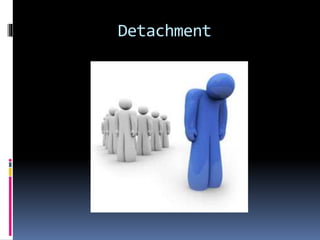
Detachment
Cluster C personality
disorders
 Cluster C personality disorders are
characterized by anxious, fearful thinking or
behavior.
 They include avoidant personality disorder,
dependent personality disorder and
obsessive-compulsive personality disorder.
 It's not necessary to exhibit all the signs and
symptoms listed for a disorder to be
diagnosed.
SYMPTOMS
Symptoms of Avoidant
Personality Disorder
 Avoids occupational activities
 Is unwilling to get involved with people
 Shows restraint within intimate
relationships
 Is preoccupied
 Is inhibited
 Socially Inept
 Reluctant to take personality risks
CAUSES
CAUSES
 The cause of APD and other personality
disorders is unknown. Researchers think
genetic and environmental factors might play
a role.
Avoidantpersonalitydisorder
 Prevalence: 0.5-1% of population
 Sex ratio: M=F
 Comorbidity: Social phobia, depression,
anxiety
 Family: Cluster C disorders
DIAGNOSIS
TREATMENT
 PSYCHOTHERAPY
(Individual and group
therapy, typically
interpersonal (IPT))
 MEDICATION
(Antidepressants and
anxiolytics )
FAMOUS PERSONALITIES WITH
APD………
Avoidant Personality Disorder

Avoidant Personality Disorder

Editor's Notes

  • #3 The major problems associated with this disorder occur in social and occupational functioning. The low self-esteem and hypersensitivity to rejection are associated with restricted interpersonal contacts. These individuals may become relatively isolated and usually do not have a large social support network that can help them weather crises. They desire affection and acceptance and may fantasize about idealized relationships with others. The avoidant behaviors can also adversely affect occupational functioning because these individuals try to avoid the types of social situations that may be important for meeting the basic demands of the job or for advancement.
  • #9 that involve significant interpersonal contact, because of fears of criticism, disapproval, or rejection unless certain of being liked because of the fear of being shamed or ridiculed with being criticized or rejected in social situations in new interpersonal situations because of feelings of inadequacy Views themself as socially inept, personally unappealing, or inferior to others Is unusually reluctant to take personal risks or to engage in any new activities because they may prove embarrassing