D R A M R U T A R A J A M A N Y A
D N B N E U R O L O G Y T R A I N E E
K M C M A N G A L O R E
Autonomic system and its disorders
 The term autonomic nervous system, meaning “self-
driven,” refers to an intellectually convenient but
physiologically artificial division of the neuraxis.
 The innervation of each end-organ is highly tailored
to a balance between the primary needs of the organ
itself and the importance of some degree of control
in daily function.
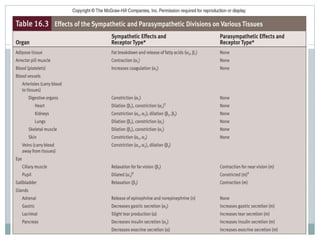
I. Divisions
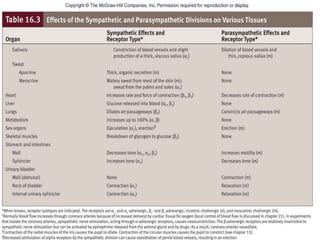
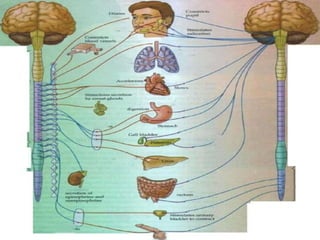
A. Sympathetic
• fight or flight response
B. Parasympathetic
• rest and digestion
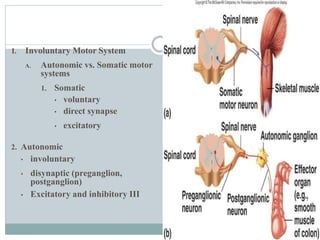
I. Involuntary Motor System
A. Autonomic vs. Somatic motor
systems
1. Somatic
• voluntary
• direct synapse
• excitatory
2. Autonomic
• involuntary
• disynaptic (preganglion,
postganglion)
• Excitatory and inhibitory III
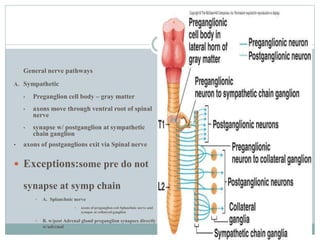
General nerve pathways
A. Sympathetic
• Preganglion cell body – gray matter
• axons move through ventral root of spinal
nerve
• synapse w/ postganglion at sympathetic
chain ganglion
• axons of postganglions exit via Spinal nerve
 Exceptions:some pre do not
synapse at symp chain
 A. Splanchnic nerve
• axons of preganglion exit Splanchnic nerve and
synapse at collateral ganglion
 B. w/post Adrenal gland preganglion synapses directly
w/adrenal
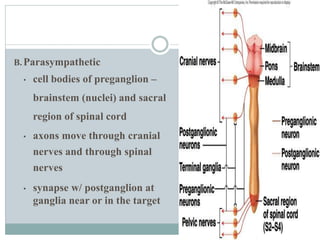
B.Parasympathetic
• cell bodies of preganglion –
brainstem (nuclei) and sacral
region of spinal cord
• axons move through cranial
nerves and through spinal
nerves
• synapse w/ postganglion at
ganglia near or in the target
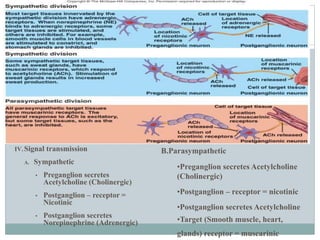
IV.Signal transmission
A. Sympathetic
• Preganglion secretes
Acetylcholine (Cholinergic)
• Postganglion – receptor =
Nicotinic
• Postganglion secretes
Norepinephrine (Adrenergic)
B.Parasympathetic
•Preganglion secretes Acetylcholine
(Cholinergic)
•Postganglion – receptor = nicotinic
•Postganglion secretes Acetylcholine
•Target (Smooth muscle, heart,
glands) receptor = muscarinic
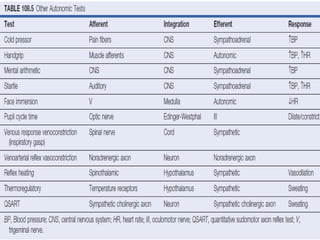
ASSESSMENT OF AUTONOMIC FUNCTION
Heartratevariation
duringrespiration
 The variation of heart rate with respiration is known
as sinus arrhythmia
 Inspiration increases the heart rate Expiration
decreases the heart rate
 This is also called Respiratory Sinus Arrhythmia
(RSA)
 This is an index of vagal control of heart rate
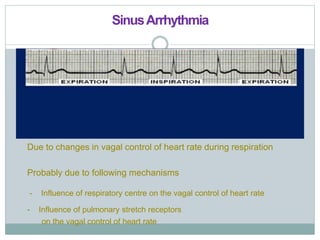
SinusArrhythmia
Due to changes in vagal control of heart rate during respiration
Probably due to following mechanisms
- Influence of respiratory centre on the vagal control of heart rate
- Influence of pulmonary stretch receptors
on the vagal control of heart rate
 Record maximum and minimum heart rate with
each respiratory cycle
 Average the 3 differences
 - Normal > 15 beats/min
 - Borderline = 11-14 beats/min
 - Abnormal < 10 beats/min
 E:I ratio = longest RR interval (expiration)
shortest RR interval (inspiration)
Normal E:I ratio = 1.2
Heartratevariationduring
posturalchange
 Changing posture from supine to standing leads to
an increase in heart rate immediately, usually by 10-
20 beats per minute
 On standing the heart rate increases until it
reaches a maximum at about 15t beat (shortest
R-R interval after standing)
 - after which it slows down to a stable state at
about 30th beat
 The ratio of R-R intervals corresponding to the 30th
and 15th heart beat 30:15 ratio
 30:15 ratio = RR interval at 30th
RR interval at 15th beat
 This ratio is a measure of parasympathetic response
 Normal > 1.04 = 1.01-1.04
 Abnormal =<1.00
Valsalva Maneuver
 The Valsalva maneuver consists of respiratory strain
which increases intrathoracic and intraabdominal
pressures and alters hemodynamic and cardiac
functions
 Valsalva maneuver evaluates
 - 1. sympathetic adrenergic functions using the
blood pressure responses
 - 2. cardiovagal (parasympathetic)
 functions using the heart rate responses
Protocol of Valsalva Ratio
The patient is supine or with head slightly elevated to about 30°.
• Most labs have the patient strain against 40 mmHg applied for 15 s by blowing into a mouthpiece
attached to a sphygmomanometer.
• The system should have a slow leak to ensure the patient strains continuously
Following cessation of the Valsalva strain, the patient relaxes and breathes at a normal comfortable rate.
The ECG is monitored during the strain and 30-45 s following its release.
The maximal heart rate of phase II actually occurs about 1 s following cessation of the strain
The minimal heart rate occurs about 15-20 s after releasing the strain.
The ratio of the maximal-to-minimal heart rate is determined as a simple ratio. •
After a brief rest, the maneuver is repeated until three ratios are determined.
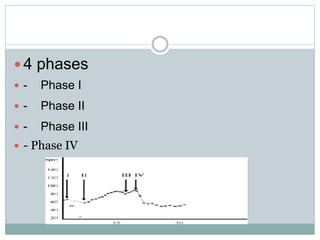
 4 phases
 - Phase I
 - Phase II
 - Phase III
 - Phase IV
PhaseI-Onsetofstraining
 Transient increase in BP which lasts for a few
seconds
 - HR does not change much
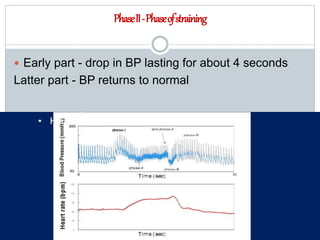
PhaseII-Phaseofstraining
 Early part - drop in BP lasting for about 4 seconds
Latter part - BP returns to normal
Mechanism
 Early part
 - venous return decreases with compression of veins by increased
intrathoracic pressure central venous pressure decreases BP decreases
 • Latter part
 - drop in BP in early part will stimulate baroreceptor reflex increased
sympathetic activity increased peripheral resistance increased BP ( returns to
normal )
 • Heart rate increase steadily throughout this phase due to vagal withdrawal in
early part & sympathetic activation in latter part
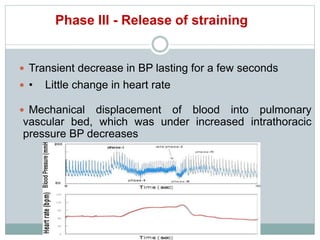
Phase III - Release of straining
 Transient decrease in BP lasting for a few seconds
 • Little change in heart rate
 Mechanical displacement of blood into pulmonary
vascular bed, which was under increased intrathoracic
pressure BP decreases
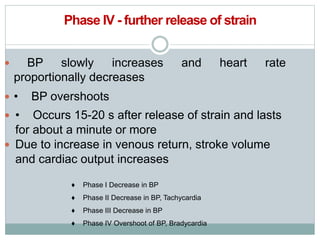
Phase IV - further release of strain
 BP slowly increases and heart rate
proportionally decreases
 • BP overshoots
 • Occurs 15-20 s after release of strain and lasts
for about a minute or more
 Due to increase in venous return, stroke volume
and cardiac output increases
♦ Phase I Decrease in BP
♦ Phase II Decrease in BP, Tachycardia
♦ Phase III Decrease in BP
♦ Phase IV Overshoot of BP, Bradycardia
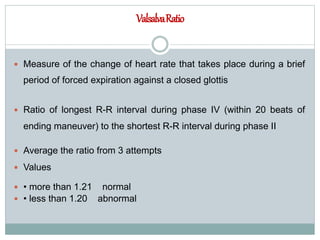
ValsalvaRatio
 Measure of the change of heart rate that takes place during a brief
period of forced expiration against a closed glottis
 Ratio of longest R-R interval during phase IV (within 20 beats of
ending maneuver) to the shortest R-R interval during phase II
 Average the ratio from 3 attempts
 Values
 • more than 1.21 normal
 • less than 1.20 abnormal
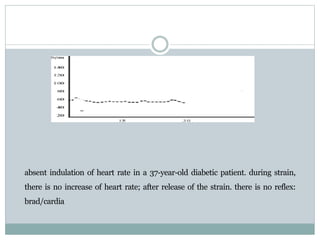
absent indulation of heart rate in a 37-year-old diabetic patient. during strain,
there is no increase of heart rate; after release of the strain. there is no reflex:
brad/cardia
Coldpressortest
 Submerge the hand in ice cold water
This increases
 - systolic pressure by about 20 mmHg
 - diastolic pressure by 10 mmHg
Thermoregulatory Sweat Test
 The TST is a sensitive semiquantitative test of
sweating
 After a color indicator (quinizarin powder or
povidone-iodine) is applied to the skin,
 the environmental temperature is increased until
an adequate core temperature rise is attained
(usually a 2°C rise in core temperature or a core
temperature of 38.5°C, whichever is less)
 the presence of sweating causes a change in the
indicator
TST
 Estimating the percent of anterior surface anhidrosis
quantitates the results, and the sweat rates may be measured
Some characteristic patterns of anhidrosis include
(1) the peripheral pattern of distal anhidrosis, seen in distal small-fiber
neuropathy and length-dependent axonal neuropathy;
(2) the central patterns of distal sparing or segmental involvement,
generally seen in MSA or PD; and
(3) a sudotomal pattern suggesting involvement at the root or ganglion
level, seen in disorders involving nerve roots or specific ganglia, such as
diabetes, Sjögren disease, and pure autonomic failure.
The TST pattern is therefore helpful in distinguishing between
postganglionic, preganglionic, and central lesions.
Quantitative Sudomotor Axon Reflex Test
 The physiological basis of the QSART is elicitation of an
axon reflex mediated by the postganglionic sympathetic
sudomotor axon
 Acetylcholine (ACh) activates the axon terminal.
 The impulse travels antidromically, reaches a branch-
point, then travels orthodromically to release ACh from
the nerve terminal.
 ACh traverses the neuroglandular junction and binds to
M3 muscarinic receptors on eccrine sweat glands to
evoke the sweat response.
 The QSART specifically evaluates the functional status of
postganglionic sympathetic axons.
QSART
 Current is applied to one compartment of a
multicompartmental sweat cell,
 the sweat response is recorded from a second
compartment with a sudorometer.
 The multicompartmental sweat cells are attached to
sites on the upper and lower limbs.
 This distribution permits the detection of dysfunction
localizable to one specific peripheral nerve territory or
of a length-dependent autonomic neuropathy.
 An absent response indicates a lesion of the
postganglionic axon.
Sympathetic skin response (SSR)
 The SSR requires integrity of hypothalamic, brainstem,
and spinal circuits, as well as postganglionic
sympathetic neurons.
 It is performed by applying a strong electrical stimulus
to the median nerve while a long time course (≈2
seconds) recording of skin potential is made in the
contralateral palm and sole.
 The potential change linked to the median nerve
stimulus is generated in the skin by the activation of
sweat glands.
 Following a latency period, the typical response
includes a negative (upward) deflection followed by a
positive (downward) correction over several hundred
milliseconds
 The SSR is usually recorded as present or absent in the
hand and in the foot.
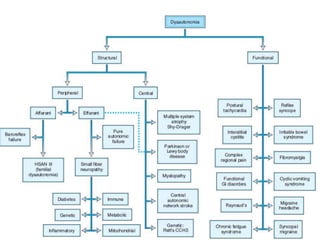
FUNCTIONAL AUTONOMIC DISORDERS
Reflex Syncope
 transient loss of consciousness due to loss of brain
perfusion as a protective reflex occurs at least once in
50% of healthy young adults, usually as an emotional
faint with a well-recognized precipitating stimulus.
 Syncope is defined as a transient loss of
consciousness secondary to a transient global
cerebral hypoperfusion which is of rapid onset, short
duration, and spontaneous complete recovery
 The loss of consciousness is also short, usually less than 20
seconds, and recovery is very fast.
 The guidelines divide syncope in 4 groups:
(1) vaso-vagal: produced by either orthostatic stress or
emotionally mediated (fear, blood phobia, etc.);
(2) situational: can be triggered by exercise,
defecation, post-prandial, visceral pain cough, etc.;
(3) carotid sinus syncope and
(4) atypical without an apparent trigger or with an
atypical presentation
Tilt-table testing
 Subject patients to head-up tilt at angles of 60 to 80
degrees ,
induce either syncope or intense presyncope with
reproduction of presenting symptoms.
Passive tilt tests simply use upright tilt for up to 45
minutes to induce vasovagal syncope (sensitivity ≈ 40%,
specificity ≈ 90%).
Provocative tilt tests use a combination of orthostatic
stress and drugs such as isoproterenol, nitroglycerin, or
adenosine to provoke syncope with a slightly higher
sensitivity but reduced specificity.
 The use of support stockings
 increased salt intake may help - 2 g of salt in the
morning and 2 g in the early afternoon
 physical countermaneuvers
 and tilt training
Syncopal Migraine(basilar migraine )
 headache with migrainous features immediately
prior to or after the syncopal spell
 increased duration of loss of consciousness (up to 15
minutes in this series),
 and longer time to full recovery
 prompt response to anti-migrainous medications
such as verapamil and topiramate
Carotid Sinus Hypersensitivity
 defined as an asystole of 3 seconds, a fall in systolic
pressure of 50 mm Hg, or both in response to carotid
artery massage in a patient with otherwise unexplained
dizziness or syncope
 35 to 100 patients per million per year present
 diagnosis is by manual massage of the carotid sinus
 Longitudinal massage should be performed for 5 seconds
 Hypotension, bradycardia, or both may dominate the clinical picture
 Weiss–Baker syndrome
headache, dizziness, vertigo, paresthesias, homonymous
hemianopsia, and hemiplegia occur in the absence of measured blood
pressure or heart rate change
Gravity-Induced Loss of Consciousness
 during aerial maneuvers is a special kind of
syncope seen occasionally in aircraft pilots when
the aircraft pulls up quickly after descent, during
which gravitational forces may be greatly increased
 At about 4G, without an antigravity suit or use of
the antigravity straining maneuver, blood flow to
the brain will cease, and the individual loses
consciousness and may then experience jerking
movements of the arms or legs.
 With resolution of acceleration stress,
consciousness recovers over the succeeding 10 to
60 seconds, but confusion may persist for 1 to 2
minutes
Postural Tachycardia Syndrome
 defined as an increase of at least 30 bpm on standing
(> 40 bpm in subjects <19 yrs of age) , associated
with symptoms of sympathetic activation
 Orthostatic symptoms include light-headedness,
palpitations, tremulousness, visual changes,
discomfort or throbbing of the head, poor
concentration, tiredness, weakness, and occasionally
fainting
 an elevated plasma norepinephrine concentration of
600 pg/mL or more on standing
POTS
 4 : 1 female preponderance
 typically in the 15- to 45-year age group
 250,000 to 500,000 Americans
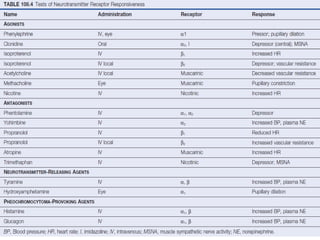
 propranolol 10 to 20 mg three times daily; increased
dietary salt; fludrocortisone 0.1 mg orally daily;
clonidine 0.05 mg once or twice daily; and
midodrine 5 mg orally twice daily.
Functional Gastrointestinal Disorders
 frequent symptom of nausea.
 Hyperalgesia is very common, from increased rectal
sensation to distention of anal balloons to increased
sensitivity and discomfort with normal physiological
functions
 The role of either increased intestinal bacterial in the
foregut (small-bowel bacterial overgrowth) or altered
bacteria is well documented.
 IBS is defined as 3 months of abdominal discomfort
relieved by a bowel movement or associated with a change
in bowel movement frequency or consistency and occurs in
10% to 20% of the general population.
AUTONOMIC DISORDERS CHARACTERIZED BY
EXCESSIVE AUTONOMIC OUTFLOW
Autonomic Storm and Takotsubo Cardiomyopathy
 autonomic storms result in acute alterations in body
temperature, blood pressure, heart rate, respiratory rate,
sweating, and muscle tone.
 a massive catecholamine surge occurs that can induce
seizures, neurogenic pulmonary edema, and myocardial
injury
 (heightened activity of diencephalic or brainstem
sympathoexcitatory pathways appears to be the major
substrate of these episodes.)
Takotsubo “Broken Heart” Syndrome
 It mimics myocardial infarction and is characterized by
chest pain and shortness of breath. It was described
initially in Japan as tako tsubo (octopus trap) syndrome
and in the United States as apical ballooning syndrome
or broken heart syndrome
 Diagnosis is from nonspecific ST–T abnormalities, ST
elevation, or QT prolongation with large negative T
waves, often occurring over days in succession
 Plasma and urinary catecholamines are typically elevated
 Treatment is supportive, and while 95% of patients
experience complete recovery, approximately 10% will
have recurrence over a 4-year period.
STRUCTURAL AUTONOMIC DISORDERS
 PREDOMINANTLY PERIPHERAL AFFERENT
STRUCTURAL AUTONOMIC DISORDERS
Familial Dysautonomia
(Riley–Day syndrome )
 Ashkenazi Jewish extraction carrying mutations in
the IB kinase-associated protein gene (IKBKAP)
 FD is part of a group of disorders termed
hereditary sensory and autonomic neuropathies
(HSANs) and is classified as HSAN I
 pathophysiology originates from loss of afferent
nerve function, particularly baroreceptor
information
 decreased pain and temperature perception, with relative
preservation of large-fiber sensory function such as proprioception
and touch sensation, labile autonomic responses, hyporeflexia,
alacrima, poor oropharyngeal coordination, and absence of lingual
fungiform papillae serving the taste modality of sweet.
 Histamine injection produces no widespread flare response but a
very circumscribed response, usually measuring less than 2 to 3 cm
in diameter, because of the absence of C-fibers that mediate the
neuroinflammatory response.
 episodes (dysautonomic crises) are usually associated with
agitation, tachycardia, and hypertension. Vasomotor and
cardiovascular perturbations, manifesting as erythematous skin
blotching and hyperhidrosis, occ
 extreme hypertension or profound postural hypotension without
compensatory tachycardia. Supersensitivity to cholinergic and
adrenergic agents is present.
 Preventive and supportive strategies
 for maintaining eye moisture,
 fundoplication with gastrostomy to provide nutrition and avoid
risk of aspiration,
 use of central agents such as benzodiazepines, clonidine, or
carbidopa to control vomiting and the dysautonomic crisis,
 and fludrocortisone and midodrine to combat cardiovascular
lability
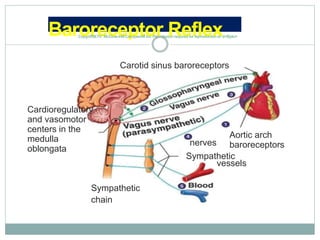
Baroreceptor ReflexCopynfft&Th* McOow-HillCompemM Inc Permissionrequredlor leprodoctonor d<Bplo>
Carotid sinus baroreceptors
vessels
Cardioregulatory
and vasomotor
centers in the
medulla
oblongata
Aortic arch
baroreceptors
Sympathetic
nerves
Sympathetic
chain
Baroreflex Failure
 Acute baroreflex failure
 display stress-induced systolic blood pressure surges of
more than 300 mm Hg
 hypertensive crisis
 bilateral destruction of baroreflex afferent function
results in concomitant destruction of much efferent
vagal function
 if the baroreflex failure occurs with relative sparing
of the parasympathetic efferent vagal fibers, sleep
or sedation may lead to malignant vagotonia with
severe bradycardia and hypotension and episodes
of sinus arrest
 chronic baroreflex failure
 Abnormalities in the vascular baroreceptors, the
glossopharyngeal or vagal nerves, or their brainstem
connections
 Trauma from injury, tumor, radiation, surgical intervention, or
brainstem stroke
 Leigh syndrome
 baroreflex failure patient with impaired function of the nucleus
tractus solitarii but no history of radiation, tumor, or trauma
 Groll–Hirschowitz syndrome
 carotid sinus nerve dysfunction, progressive sensory
neuropathy, and duodenal diverticula
 Syndrome of autosomal dominant hypertension and
brachydactyly with loss of baroreflex buffering
DD’s of baroreflex failure
 Pheochromocytoma
 panic attack,
 generalized anxiety disorder,
 migraine,
 pure autonomic failure,
 hyperthyroidism,
 alcohol withdrawal, and drug use (e.g.,
amphetamine, cocaine)
 The best test is to document normal or excess
excursions of heart rate during normal daily
activities (confirming autonomic control of heart
rate), and then document an absence of bradycardic
response of heart rate to the pressor effect of
phenylephrine or the tachycardic heart rate response
to a depressor agent.
 Alternatively, the observation of wide heart rate and
blood pressure swings in the same direction at the
same time
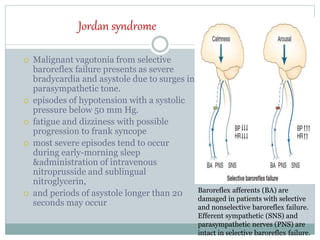
Jordan syndrome
 Malignant vagotonia from selective
baroreflex failure presents as severe
bradycardia and asystole due to surges in
parasympathetic tone.
 episodes of hypotension with a systolic
pressure below 50 mm Hg.
 fatigue and dizziness with possible
progression to frank syncope
 most severe episodes tend to occur
during early-morning sleep
&administration of intravenous
nitroprusside and sublingual
nitroglycerin,
 and periods of asystole longer than 20
seconds may occur
Baroreflex afferents (BA) are
damaged in patients with selective
and nonselective baroreflex failure.
Efferent sympathetic (SNS) and
parasympathetic nerves (PNS) are
intact in selective baroreflex failure.
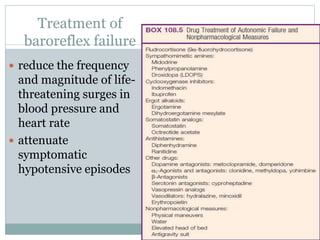
Treatment of
baroreflex failure
 reduce the frequency
and magnitude of life-
threatening surges in
blood pressure and
heart rate
 attenuate
symptomatic
hypotensive episodes
PREDOMINANTLY PERIPHERAL EFFERENT STRUCTURAL
AUTONOMIC DISORDERS CHARACTERIZED BY IMPAIRED
AUTONOMIC OUTFLOW
Pure Autonomic Failure
 synucleinopathy with synuclein found within Lewy bodies confined to
autonomic ganglia, presenting in mid- to late life
 The initial feature in men is impotence,
 but OH usually brings patients to the physician with unsteadiness or
faintness on standing.
 It is worst in the morning and improves as the day progresses.
 Supine hypertension may occur during the night while supine. Meals,
exercise, fever, or environmental heat worsen OH.
 orthostatic pain in the neck, shoulders, or occiput, relieved by lying
down.
 Although a decline in systolic blood pressure of 20 mm Hg and diastolic
blood pressure of 10 mm Hg after at least 1 minute of standing defines
OH, most PAF patients suffer from profound OH with a decrease in
systolic blood pressure of 50 mm Hg and sometimes more than 100
mmHg.
 Convulsive near-syncope may occur.
 Urinary hesitancy, urgency, dribbling, and occasional incontinence may
also occur related to specific bladder dysfunction.
 Lewy bodies characterize the pathology of PAF, along
with a loss of cells in the intermediolateral column of
the spinal cord and a loss of catecholamine uptake
and catecholamine fluorescence in sympathetic
postganglionic neurons.
 reduced catecholamine levels
 most common cause of death in these patients is
pulmonary embolus or intercurrent infection
Autoimmune Autonomic Ganglionopathy (acute pandysautonomia )
 Severe generalized sympathetic and parasympathetic
autonomic failure unfolds over a few days to a few
weeks.
 Orthostatic hypotension, fixed heart rate, anhidrosis,
dry mouth, dry eyes, sexual dysfunction,
constipation, and impaired pupillary function
,Anorexia, early satiety, postprandial abdominal pain
and vomiting, constipation, or diarrhea
 autoimmune pathogenesis is the demonstration of
ganglionic nicotinic acetylcholine receptor (AChR)
antibodies in high titers
 response of this disorder to intravenous globulin and
plasma exchange
Autonomic Neuropathy
 involving both autonomic and small unmyelinated
or thinly myelinated sensory nerves
 distal burning pain and changes in color of the
distal limb reflecting poor vasomotor control
 affect erectile function first, may then affect bowel
or bladder function with constipation or urgency,
followed by parasympathetic glandular function
resulting in dry eyes or mouth, and ultimately lead
to OH
 Causes- diabetes or metabolic syndrome , Sjögren
syndrome
 , paraneoplastic autonomic neuropathy, postinfectious
causes,
 collagen vascular disorders such as lupus or rheumatoid
arthritis
 Infectious causes include herpes zoster, Lyme disease,
and syphilis.
 infiltrative disorders such as α-galactosidase deficiency
(Fabry disease), porphyria, heavy metal poisoning,
 and other drugs and toxins
Drug-Induced Dysautonomia
 mechanisms :
 blood volume depletion-hyperadrenergic orthostatic
hypotension.
 sympathoplegic effects causing impairment in maintenance
of vascular resistance, venous tone, or cardiac output -
hypoadrenergic orthostatic hypotension ;
 and direct vasodilatation, which lowers vascular resistance
or venous tone
 sedatives, hypnotics, antidepressants, diuretics,
antihypertensive drugs, or nitrates , Oncological
agents such as vincristine and cisplatin ,
zonisamide,
Dopamine β-Hydroxylase Deficiency
 selective absence of norepinephrine and all its metabolite
 absent sympathetic noradrenergic function but normal
parasympathetic and sympathetic cholinergic functions
 Symptoms in the perinatal period include
 vomiting, dehydration, hypotension, hypothermia, and profound
hypoglycemia requiring repeated hospitalization.
 Exercise capacity is poor.
 By early adulthood,
 profound orthostatic hypotension,
 greatly reduced exercise tolerance, ptosis of the eyelids, and supine
nasal stuffiness.
 Presyncopal symptoms include dizziness, blurred vision, dyspnea,
nuchal discomfort, and chest pain.
 During adult life, some DBH-deficient patients develop renal function
abnormalities, including raised blood urea nitrogen and creatinine
levels.
 Biochemical features
 minimal or undetectable plasma, CSF, and urinary
norepinephrine and epinephrine and a fivefold to tenfold
elevation of plasma dopamine
 lack urinary normetanephrine, metanephrine, and
vanillylmandelic acid.
Menkes Kinky Hair Syndrome (Trichopolydystrophy, X-linked Copper
Deficiency)
 DBH deficiency -copper-containing enzyme, and
congenital disorders of impaired copper
metabolism
 stubby, tangled, sparse hair (often white or gray in
color), pudgy cheeks, spasticity, seizures,
hypothermia, retarded growth, and decreased
visual function. Subdural hematoma, jaundice, and
osteoporosis
 Administration of droxidopa (l-threo-3,4-
dihydroxyphenylserine), or LDOPS alleviates OH
PREDOMINANTLY CENTRAL STRUCTURAL AUTONOMIC
DISORDERS CHARACTERIZED BY IMPAIRED AUTONOMIC
OUTFLOW
Multiple System Atrophy
(Shy-Drager syndrome )
 progressive neurodegenerative disorder
encompassing
 autonomic,
 extrapyramidal,
 cerebellar, and
 pyramidal features
 Pathological hallmark of MSA is neuronal loss and
gliosis within multiple sites in the brain,
intermediolateral columns, and the Onuf nucleus,
with characteristic glial cytoplasmic inclusions
(GCIs) containing α-synuclein and ubiquitin
glial cytoplasmic inclusions (GCIs)
 1. Shape: GCIs tend to be irregular in outline, in
contrast to the target-shaped concentric circular
Lewy bodies of PD.
 2. Cellular location: GCIs are in glia, whereas Lewy
bodies are in neurons.
 3. Neuraxis location: GCIs dominate in the basal
ganglia and pons, whereas Lewy bodies occur in
midbrain, cortex, and autonomic ganglia.
 The clinical picture is usually dominated by three
major issues:
 a dysautonomia manifested by severe orthostatic hypotension
 and severe (most often lower motor neuron) urinary
dysfunction,
 and their motor system disturbance that results in wheelchair
requirement early in the course of the disorder.
 Patients may have multiple other related complaints
impotence, slurred speech, sleep apnea, vivid
nightmares, orthostatic headache, neck pain,
dimming of vision, and leg discomfort. emotional
,periodic gasping respirations
 management continues to be symptomatic
 rifampicin was shown to inhibit aggregation of α-
synuclein in vitro and in this mouse model, leading to a
National Institutes of Health-sponsored trial of
rifampicin in MSA
 intravenous globulin showed guarded promise
Parkinson Disease
 the Lewy bodies of PD directly involve ganglia, and
hence postganglionic neurons, with degeneration of
peripheral autonomic fibers
 reduction in axon reflex sweating more frequently in
PD than in MSA
 this peripheral predilection in PD is the basis
for the denervation seen on
metaiodobenzylguanidine (MIBG) scanning of
the heart, diagnostic test to distinguish PD
from MSA
Myelopathy
 Following spinal cord injury,
 the initial response is hypoexcitability (spinal shock) with flaccid
paralysis, impaired tendon reflexes, and spinal autonomic
dysfunction presenting as atonic bladder and bowel, vasodilation,
and absent spinal autonomic reflexes. This stage lasts days to weeks,
and then activity below the transected cord returns.
 Chronically, a quite distinct autonomic dysfunction emerges
 Head- Riddoch syndrome
 Severe hypertension may occur during autonomic dysreflexia after
noxious stimulation below the level of the lesion
 Guttmann sign
 The nasal stuffiness from vasodilation in the nasal mucosa
autonomic dysfunction and itz bedside tests

autonomic dysfunction and itz bedside tests

  • 1.
    D R AM R U T A R A J A M A N Y A D N B N E U R O L O G Y T R A I N E E K M C M A N G A L O R E Autonomic system and its disorders
  • 2.
     The termautonomic nervous system, meaning “self- driven,” refers to an intellectually convenient but physiologically artificial division of the neuraxis.  The innervation of each end-organ is highly tailored to a balance between the primary needs of the organ itself and the importance of some degree of control in daily function.
  • 3.
    I. Divisions A. Sympathetic •fight or flight response B. Parasympathetic • rest and digestion
  • 4.
    I. Involuntary MotorSystem A. Autonomic vs. Somatic motor systems 1. Somatic • voluntary • direct synapse • excitatory 2. Autonomic • involuntary • disynaptic (preganglion, postganglion) • Excitatory and inhibitory III
  • 5.
    General nerve pathways A.Sympathetic • Preganglion cell body – gray matter • axons move through ventral root of spinal nerve • synapse w/ postganglion at sympathetic chain ganglion • axons of postganglions exit via Spinal nerve  Exceptions:some pre do not synapse at symp chain  A. Splanchnic nerve • axons of preganglion exit Splanchnic nerve and synapse at collateral ganglion  B. w/post Adrenal gland preganglion synapses directly w/adrenal
  • 6.
    B.Parasympathetic • cell bodiesof preganglion – brainstem (nuclei) and sacral region of spinal cord • axons move through cranial nerves and through spinal nerves • synapse w/ postganglion at ganglia near or in the target
  • 7.
    IV.Signal transmission A. Sympathetic •Preganglion secretes Acetylcholine (Cholinergic) • Postganglion – receptor = Nicotinic • Postganglion secretes Norepinephrine (Adrenergic) B.Parasympathetic •Preganglion secretes Acetylcholine (Cholinergic) •Postganglion – receptor = nicotinic •Postganglion secretes Acetylcholine •Target (Smooth muscle, heart, glands) receptor = muscarinic
  • 12.
  • 13.
    Heartratevariation duringrespiration  The variationof heart rate with respiration is known as sinus arrhythmia  Inspiration increases the heart rate Expiration decreases the heart rate  This is also called Respiratory Sinus Arrhythmia (RSA)  This is an index of vagal control of heart rate
  • 14.
    SinusArrhythmia Due to changesin vagal control of heart rate during respiration Probably due to following mechanisms - Influence of respiratory centre on the vagal control of heart rate - Influence of pulmonary stretch receptors on the vagal control of heart rate
  • 15.
     Record maximumand minimum heart rate with each respiratory cycle  Average the 3 differences  - Normal > 15 beats/min  - Borderline = 11-14 beats/min  - Abnormal < 10 beats/min  E:I ratio = longest RR interval (expiration) shortest RR interval (inspiration) Normal E:I ratio = 1.2
  • 16.
    Heartratevariationduring posturalchange  Changing posturefrom supine to standing leads to an increase in heart rate immediately, usually by 10- 20 beats per minute  On standing the heart rate increases until it reaches a maximum at about 15t beat (shortest R-R interval after standing)  - after which it slows down to a stable state at about 30th beat
  • 17.
     The ratioof R-R intervals corresponding to the 30th and 15th heart beat 30:15 ratio  30:15 ratio = RR interval at 30th RR interval at 15th beat  This ratio is a measure of parasympathetic response  Normal > 1.04 = 1.01-1.04  Abnormal =<1.00
  • 18.
    Valsalva Maneuver  TheValsalva maneuver consists of respiratory strain which increases intrathoracic and intraabdominal pressures and alters hemodynamic and cardiac functions  Valsalva maneuver evaluates  - 1. sympathetic adrenergic functions using the blood pressure responses  - 2. cardiovagal (parasympathetic)  functions using the heart rate responses
  • 19.
    Protocol of ValsalvaRatio The patient is supine or with head slightly elevated to about 30°. • Most labs have the patient strain against 40 mmHg applied for 15 s by blowing into a mouthpiece attached to a sphygmomanometer. • The system should have a slow leak to ensure the patient strains continuously Following cessation of the Valsalva strain, the patient relaxes and breathes at a normal comfortable rate. The ECG is monitored during the strain and 30-45 s following its release. The maximal heart rate of phase II actually occurs about 1 s following cessation of the strain The minimal heart rate occurs about 15-20 s after releasing the strain. The ratio of the maximal-to-minimal heart rate is determined as a simple ratio. • After a brief rest, the maneuver is repeated until three ratios are determined.
  • 20.
     4 phases - Phase I  - Phase II  - Phase III  - Phase IV
  • 21.
    PhaseI-Onsetofstraining  Transient increasein BP which lasts for a few seconds  - HR does not change much
  • 22.
    PhaseII-Phaseofstraining  Early part- drop in BP lasting for about 4 seconds Latter part - BP returns to normal
  • 23.
    Mechanism  Early part - venous return decreases with compression of veins by increased intrathoracic pressure central venous pressure decreases BP decreases  • Latter part  - drop in BP in early part will stimulate baroreceptor reflex increased sympathetic activity increased peripheral resistance increased BP ( returns to normal )  • Heart rate increase steadily throughout this phase due to vagal withdrawal in early part & sympathetic activation in latter part
  • 24.
    Phase III -Release of straining  Transient decrease in BP lasting for a few seconds  • Little change in heart rate  Mechanical displacement of blood into pulmonary vascular bed, which was under increased intrathoracic pressure BP decreases
  • 25.
    Phase IV -further release of strain  BP slowly increases and heart rate proportionally decreases  • BP overshoots  • Occurs 15-20 s after release of strain and lasts for about a minute or more  Due to increase in venous return, stroke volume and cardiac output increases ♦ Phase I Decrease in BP ♦ Phase II Decrease in BP, Tachycardia ♦ Phase III Decrease in BP ♦ Phase IV Overshoot of BP, Bradycardia
  • 26.
    ValsalvaRatio  Measure ofthe change of heart rate that takes place during a brief period of forced expiration against a closed glottis  Ratio of longest R-R interval during phase IV (within 20 beats of ending maneuver) to the shortest R-R interval during phase II  Average the ratio from 3 attempts  Values  • more than 1.21 normal  • less than 1.20 abnormal
  • 27.
    absent indulation ofheart rate in a 37-year-old diabetic patient. during strain, there is no increase of heart rate; after release of the strain. there is no reflex: brad/cardia
  • 28.
    Coldpressortest  Submerge thehand in ice cold water This increases  - systolic pressure by about 20 mmHg  - diastolic pressure by 10 mmHg
  • 29.
    Thermoregulatory Sweat Test The TST is a sensitive semiquantitative test of sweating  After a color indicator (quinizarin powder or povidone-iodine) is applied to the skin,  the environmental temperature is increased until an adequate core temperature rise is attained (usually a 2°C rise in core temperature or a core temperature of 38.5°C, whichever is less)  the presence of sweating causes a change in the indicator
  • 30.
    TST  Estimating thepercent of anterior surface anhidrosis quantitates the results, and the sweat rates may be measured Some characteristic patterns of anhidrosis include (1) the peripheral pattern of distal anhidrosis, seen in distal small-fiber neuropathy and length-dependent axonal neuropathy; (2) the central patterns of distal sparing or segmental involvement, generally seen in MSA or PD; and (3) a sudotomal pattern suggesting involvement at the root or ganglion level, seen in disorders involving nerve roots or specific ganglia, such as diabetes, Sjögren disease, and pure autonomic failure. The TST pattern is therefore helpful in distinguishing between postganglionic, preganglionic, and central lesions.
  • 31.
    Quantitative Sudomotor AxonReflex Test  The physiological basis of the QSART is elicitation of an axon reflex mediated by the postganglionic sympathetic sudomotor axon  Acetylcholine (ACh) activates the axon terminal.  The impulse travels antidromically, reaches a branch- point, then travels orthodromically to release ACh from the nerve terminal.  ACh traverses the neuroglandular junction and binds to M3 muscarinic receptors on eccrine sweat glands to evoke the sweat response.  The QSART specifically evaluates the functional status of postganglionic sympathetic axons.
  • 32.
    QSART  Current isapplied to one compartment of a multicompartmental sweat cell,  the sweat response is recorded from a second compartment with a sudorometer.  The multicompartmental sweat cells are attached to sites on the upper and lower limbs.  This distribution permits the detection of dysfunction localizable to one specific peripheral nerve territory or of a length-dependent autonomic neuropathy.  An absent response indicates a lesion of the postganglionic axon.
  • 33.
    Sympathetic skin response(SSR)  The SSR requires integrity of hypothalamic, brainstem, and spinal circuits, as well as postganglionic sympathetic neurons.  It is performed by applying a strong electrical stimulus to the median nerve while a long time course (≈2 seconds) recording of skin potential is made in the contralateral palm and sole.  The potential change linked to the median nerve stimulus is generated in the skin by the activation of sweat glands.  Following a latency period, the typical response includes a negative (upward) deflection followed by a positive (downward) correction over several hundred milliseconds  The SSR is usually recorded as present or absent in the hand and in the foot.
  • 37.
  • 38.
    Reflex Syncope  transientloss of consciousness due to loss of brain perfusion as a protective reflex occurs at least once in 50% of healthy young adults, usually as an emotional faint with a well-recognized precipitating stimulus.  Syncope is defined as a transient loss of consciousness secondary to a transient global cerebral hypoperfusion which is of rapid onset, short duration, and spontaneous complete recovery  The loss of consciousness is also short, usually less than 20 seconds, and recovery is very fast.
  • 39.
     The guidelinesdivide syncope in 4 groups: (1) vaso-vagal: produced by either orthostatic stress or emotionally mediated (fear, blood phobia, etc.); (2) situational: can be triggered by exercise, defecation, post-prandial, visceral pain cough, etc.; (3) carotid sinus syncope and (4) atypical without an apparent trigger or with an atypical presentation
  • 40.
    Tilt-table testing  Subjectpatients to head-up tilt at angles of 60 to 80 degrees , induce either syncope or intense presyncope with reproduction of presenting symptoms. Passive tilt tests simply use upright tilt for up to 45 minutes to induce vasovagal syncope (sensitivity ≈ 40%, specificity ≈ 90%). Provocative tilt tests use a combination of orthostatic stress and drugs such as isoproterenol, nitroglycerin, or adenosine to provoke syncope with a slightly higher sensitivity but reduced specificity.
  • 41.
     The useof support stockings  increased salt intake may help - 2 g of salt in the morning and 2 g in the early afternoon  physical countermaneuvers  and tilt training
  • 42.
    Syncopal Migraine(basilar migraine)  headache with migrainous features immediately prior to or after the syncopal spell  increased duration of loss of consciousness (up to 15 minutes in this series),  and longer time to full recovery  prompt response to anti-migrainous medications such as verapamil and topiramate
  • 43.
    Carotid Sinus Hypersensitivity defined as an asystole of 3 seconds, a fall in systolic pressure of 50 mm Hg, or both in response to carotid artery massage in a patient with otherwise unexplained dizziness or syncope  35 to 100 patients per million per year present  diagnosis is by manual massage of the carotid sinus  Longitudinal massage should be performed for 5 seconds  Hypotension, bradycardia, or both may dominate the clinical picture  Weiss–Baker syndrome headache, dizziness, vertigo, paresthesias, homonymous hemianopsia, and hemiplegia occur in the absence of measured blood pressure or heart rate change
  • 44.
    Gravity-Induced Loss ofConsciousness  during aerial maneuvers is a special kind of syncope seen occasionally in aircraft pilots when the aircraft pulls up quickly after descent, during which gravitational forces may be greatly increased  At about 4G, without an antigravity suit or use of the antigravity straining maneuver, blood flow to the brain will cease, and the individual loses consciousness and may then experience jerking movements of the arms or legs.  With resolution of acceleration stress, consciousness recovers over the succeeding 10 to 60 seconds, but confusion may persist for 1 to 2 minutes
  • 45.
    Postural Tachycardia Syndrome defined as an increase of at least 30 bpm on standing (> 40 bpm in subjects <19 yrs of age) , associated with symptoms of sympathetic activation  Orthostatic symptoms include light-headedness, palpitations, tremulousness, visual changes, discomfort or throbbing of the head, poor concentration, tiredness, weakness, and occasionally fainting  an elevated plasma norepinephrine concentration of 600 pg/mL or more on standing
  • 47.
    POTS  4 :1 female preponderance  typically in the 15- to 45-year age group  250,000 to 500,000 Americans  propranolol 10 to 20 mg three times daily; increased dietary salt; fludrocortisone 0.1 mg orally daily; clonidine 0.05 mg once or twice daily; and midodrine 5 mg orally twice daily.
  • 48.
    Functional Gastrointestinal Disorders frequent symptom of nausea.  Hyperalgesia is very common, from increased rectal sensation to distention of anal balloons to increased sensitivity and discomfort with normal physiological functions  The role of either increased intestinal bacterial in the foregut (small-bowel bacterial overgrowth) or altered bacteria is well documented.  IBS is defined as 3 months of abdominal discomfort relieved by a bowel movement or associated with a change in bowel movement frequency or consistency and occurs in 10% to 20% of the general population.
  • 49.
    AUTONOMIC DISORDERS CHARACTERIZEDBY EXCESSIVE AUTONOMIC OUTFLOW
  • 50.
    Autonomic Storm andTakotsubo Cardiomyopathy  autonomic storms result in acute alterations in body temperature, blood pressure, heart rate, respiratory rate, sweating, and muscle tone.  a massive catecholamine surge occurs that can induce seizures, neurogenic pulmonary edema, and myocardial injury  (heightened activity of diencephalic or brainstem sympathoexcitatory pathways appears to be the major substrate of these episodes.)
  • 51.
    Takotsubo “Broken Heart”Syndrome  It mimics myocardial infarction and is characterized by chest pain and shortness of breath. It was described initially in Japan as tako tsubo (octopus trap) syndrome and in the United States as apical ballooning syndrome or broken heart syndrome  Diagnosis is from nonspecific ST–T abnormalities, ST elevation, or QT prolongation with large negative T waves, often occurring over days in succession  Plasma and urinary catecholamines are typically elevated  Treatment is supportive, and while 95% of patients experience complete recovery, approximately 10% will have recurrence over a 4-year period.
  • 52.
  • 53.
     PREDOMINANTLY PERIPHERALAFFERENT STRUCTURAL AUTONOMIC DISORDERS
  • 54.
    Familial Dysautonomia (Riley–Day syndrome)  Ashkenazi Jewish extraction carrying mutations in the IB kinase-associated protein gene (IKBKAP)  FD is part of a group of disorders termed hereditary sensory and autonomic neuropathies (HSANs) and is classified as HSAN I  pathophysiology originates from loss of afferent nerve function, particularly baroreceptor information
  • 55.
     decreased painand temperature perception, with relative preservation of large-fiber sensory function such as proprioception and touch sensation, labile autonomic responses, hyporeflexia, alacrima, poor oropharyngeal coordination, and absence of lingual fungiform papillae serving the taste modality of sweet.  Histamine injection produces no widespread flare response but a very circumscribed response, usually measuring less than 2 to 3 cm in diameter, because of the absence of C-fibers that mediate the neuroinflammatory response.  episodes (dysautonomic crises) are usually associated with agitation, tachycardia, and hypertension. Vasomotor and cardiovascular perturbations, manifesting as erythematous skin blotching and hyperhidrosis, occ  extreme hypertension or profound postural hypotension without compensatory tachycardia. Supersensitivity to cholinergic and adrenergic agents is present.
  • 56.
     Preventive andsupportive strategies  for maintaining eye moisture,  fundoplication with gastrostomy to provide nutrition and avoid risk of aspiration,  use of central agents such as benzodiazepines, clonidine, or carbidopa to control vomiting and the dysautonomic crisis,  and fludrocortisone and midodrine to combat cardiovascular lability
  • 57.
    Baroreceptor ReflexCopynfft&Th* McOow-HillCompemMInc Permissionrequredlor leprodoctonor d<Bplo> Carotid sinus baroreceptors vessels Cardioregulatory and vasomotor centers in the medulla oblongata Aortic arch baroreceptors Sympathetic nerves Sympathetic chain
  • 58.
    Baroreflex Failure  Acutebaroreflex failure  display stress-induced systolic blood pressure surges of more than 300 mm Hg  hypertensive crisis  bilateral destruction of baroreflex afferent function results in concomitant destruction of much efferent vagal function  if the baroreflex failure occurs with relative sparing of the parasympathetic efferent vagal fibers, sleep or sedation may lead to malignant vagotonia with severe bradycardia and hypotension and episodes of sinus arrest
  • 59.
     chronic baroreflexfailure  Abnormalities in the vascular baroreceptors, the glossopharyngeal or vagal nerves, or their brainstem connections  Trauma from injury, tumor, radiation, surgical intervention, or brainstem stroke
  • 60.
     Leigh syndrome baroreflex failure patient with impaired function of the nucleus tractus solitarii but no history of radiation, tumor, or trauma  Groll–Hirschowitz syndrome  carotid sinus nerve dysfunction, progressive sensory neuropathy, and duodenal diverticula  Syndrome of autosomal dominant hypertension and brachydactyly with loss of baroreflex buffering
  • 61.
    DD’s of baroreflexfailure  Pheochromocytoma  panic attack,  generalized anxiety disorder,  migraine,  pure autonomic failure,  hyperthyroidism,  alcohol withdrawal, and drug use (e.g., amphetamine, cocaine)
  • 62.
     The besttest is to document normal or excess excursions of heart rate during normal daily activities (confirming autonomic control of heart rate), and then document an absence of bradycardic response of heart rate to the pressor effect of phenylephrine or the tachycardic heart rate response to a depressor agent.  Alternatively, the observation of wide heart rate and blood pressure swings in the same direction at the same time
  • 63.
    Jordan syndrome  Malignantvagotonia from selective baroreflex failure presents as severe bradycardia and asystole due to surges in parasympathetic tone.  episodes of hypotension with a systolic pressure below 50 mm Hg.  fatigue and dizziness with possible progression to frank syncope  most severe episodes tend to occur during early-morning sleep &administration of intravenous nitroprusside and sublingual nitroglycerin,  and periods of asystole longer than 20 seconds may occur Baroreflex afferents (BA) are damaged in patients with selective and nonselective baroreflex failure. Efferent sympathetic (SNS) and parasympathetic nerves (PNS) are intact in selective baroreflex failure.
  • 64.
    Treatment of baroreflex failure reduce the frequency and magnitude of life- threatening surges in blood pressure and heart rate  attenuate symptomatic hypotensive episodes
  • 65.
    PREDOMINANTLY PERIPHERAL EFFERENTSTRUCTURAL AUTONOMIC DISORDERS CHARACTERIZED BY IMPAIRED AUTONOMIC OUTFLOW
  • 66.
    Pure Autonomic Failure synucleinopathy with synuclein found within Lewy bodies confined to autonomic ganglia, presenting in mid- to late life  The initial feature in men is impotence,  but OH usually brings patients to the physician with unsteadiness or faintness on standing.  It is worst in the morning and improves as the day progresses.  Supine hypertension may occur during the night while supine. Meals, exercise, fever, or environmental heat worsen OH.  orthostatic pain in the neck, shoulders, or occiput, relieved by lying down.  Although a decline in systolic blood pressure of 20 mm Hg and diastolic blood pressure of 10 mm Hg after at least 1 minute of standing defines OH, most PAF patients suffer from profound OH with a decrease in systolic blood pressure of 50 mm Hg and sometimes more than 100 mmHg.  Convulsive near-syncope may occur.  Urinary hesitancy, urgency, dribbling, and occasional incontinence may also occur related to specific bladder dysfunction.
  • 67.
     Lewy bodiescharacterize the pathology of PAF, along with a loss of cells in the intermediolateral column of the spinal cord and a loss of catecholamine uptake and catecholamine fluorescence in sympathetic postganglionic neurons.  reduced catecholamine levels  most common cause of death in these patients is pulmonary embolus or intercurrent infection
  • 68.
    Autoimmune Autonomic Ganglionopathy(acute pandysautonomia )  Severe generalized sympathetic and parasympathetic autonomic failure unfolds over a few days to a few weeks.  Orthostatic hypotension, fixed heart rate, anhidrosis, dry mouth, dry eyes, sexual dysfunction, constipation, and impaired pupillary function ,Anorexia, early satiety, postprandial abdominal pain and vomiting, constipation, or diarrhea
  • 69.
     autoimmune pathogenesisis the demonstration of ganglionic nicotinic acetylcholine receptor (AChR) antibodies in high titers  response of this disorder to intravenous globulin and plasma exchange
  • 70.
    Autonomic Neuropathy  involvingboth autonomic and small unmyelinated or thinly myelinated sensory nerves  distal burning pain and changes in color of the distal limb reflecting poor vasomotor control  affect erectile function first, may then affect bowel or bladder function with constipation or urgency, followed by parasympathetic glandular function resulting in dry eyes or mouth, and ultimately lead to OH
  • 71.
     Causes- diabetesor metabolic syndrome , Sjögren syndrome  , paraneoplastic autonomic neuropathy, postinfectious causes,  collagen vascular disorders such as lupus or rheumatoid arthritis  Infectious causes include herpes zoster, Lyme disease, and syphilis.  infiltrative disorders such as α-galactosidase deficiency (Fabry disease), porphyria, heavy metal poisoning,  and other drugs and toxins
  • 72.
    Drug-Induced Dysautonomia  mechanisms:  blood volume depletion-hyperadrenergic orthostatic hypotension.  sympathoplegic effects causing impairment in maintenance of vascular resistance, venous tone, or cardiac output - hypoadrenergic orthostatic hypotension ;  and direct vasodilatation, which lowers vascular resistance or venous tone  sedatives, hypnotics, antidepressants, diuretics, antihypertensive drugs, or nitrates , Oncological agents such as vincristine and cisplatin , zonisamide,
  • 73.
    Dopamine β-Hydroxylase Deficiency selective absence of norepinephrine and all its metabolite  absent sympathetic noradrenergic function but normal parasympathetic and sympathetic cholinergic functions  Symptoms in the perinatal period include  vomiting, dehydration, hypotension, hypothermia, and profound hypoglycemia requiring repeated hospitalization.  Exercise capacity is poor.  By early adulthood,  profound orthostatic hypotension,  greatly reduced exercise tolerance, ptosis of the eyelids, and supine nasal stuffiness.  Presyncopal symptoms include dizziness, blurred vision, dyspnea, nuchal discomfort, and chest pain.  During adult life, some DBH-deficient patients develop renal function abnormalities, including raised blood urea nitrogen and creatinine levels.
  • 74.
     Biochemical features minimal or undetectable plasma, CSF, and urinary norepinephrine and epinephrine and a fivefold to tenfold elevation of plasma dopamine  lack urinary normetanephrine, metanephrine, and vanillylmandelic acid.
  • 75.
    Menkes Kinky HairSyndrome (Trichopolydystrophy, X-linked Copper Deficiency)  DBH deficiency -copper-containing enzyme, and congenital disorders of impaired copper metabolism  stubby, tangled, sparse hair (often white or gray in color), pudgy cheeks, spasticity, seizures, hypothermia, retarded growth, and decreased visual function. Subdural hematoma, jaundice, and osteoporosis  Administration of droxidopa (l-threo-3,4- dihydroxyphenylserine), or LDOPS alleviates OH
  • 76.
    PREDOMINANTLY CENTRAL STRUCTURALAUTONOMIC DISORDERS CHARACTERIZED BY IMPAIRED AUTONOMIC OUTFLOW
  • 77.
    Multiple System Atrophy (Shy-Dragersyndrome )  progressive neurodegenerative disorder encompassing  autonomic,  extrapyramidal,  cerebellar, and  pyramidal features  Pathological hallmark of MSA is neuronal loss and gliosis within multiple sites in the brain, intermediolateral columns, and the Onuf nucleus, with characteristic glial cytoplasmic inclusions (GCIs) containing α-synuclein and ubiquitin
  • 78.
    glial cytoplasmic inclusions(GCIs)  1. Shape: GCIs tend to be irregular in outline, in contrast to the target-shaped concentric circular Lewy bodies of PD.  2. Cellular location: GCIs are in glia, whereas Lewy bodies are in neurons.  3. Neuraxis location: GCIs dominate in the basal ganglia and pons, whereas Lewy bodies occur in midbrain, cortex, and autonomic ganglia.
  • 79.
     The clinicalpicture is usually dominated by three major issues:  a dysautonomia manifested by severe orthostatic hypotension  and severe (most often lower motor neuron) urinary dysfunction,  and their motor system disturbance that results in wheelchair requirement early in the course of the disorder.
  • 80.
     Patients mayhave multiple other related complaints impotence, slurred speech, sleep apnea, vivid nightmares, orthostatic headache, neck pain, dimming of vision, and leg discomfort. emotional ,periodic gasping respirations  management continues to be symptomatic  rifampicin was shown to inhibit aggregation of α- synuclein in vitro and in this mouse model, leading to a National Institutes of Health-sponsored trial of rifampicin in MSA  intravenous globulin showed guarded promise
  • 81.
    Parkinson Disease  theLewy bodies of PD directly involve ganglia, and hence postganglionic neurons, with degeneration of peripheral autonomic fibers  reduction in axon reflex sweating more frequently in PD than in MSA  this peripheral predilection in PD is the basis for the denervation seen on metaiodobenzylguanidine (MIBG) scanning of the heart, diagnostic test to distinguish PD from MSA
  • 82.
    Myelopathy  Following spinalcord injury,  the initial response is hypoexcitability (spinal shock) with flaccid paralysis, impaired tendon reflexes, and spinal autonomic dysfunction presenting as atonic bladder and bowel, vasodilation, and absent spinal autonomic reflexes. This stage lasts days to weeks, and then activity below the transected cord returns.  Chronically, a quite distinct autonomic dysfunction emerges  Head- Riddoch syndrome  Severe hypertension may occur during autonomic dysreflexia after noxious stimulation below the level of the lesion  Guttmann sign  The nasal stuffiness from vasodilation in the nasal mucosa