DYSAUTONOMIA
PRESENTED BY:
SIRTRARASAN BHARATHIDHASAN
1217
DATE: 27-11-2014
AUTONOMOUS NERVOUS
SYSTEM AND ITS
DYSFUNCTION
INTRODUCTION
• Much of the action of the body in maintaining,
cardiovascular, gastrointestinal and thermal
homeostasis occurs through the autonomic
nervous system (ANS).
• The ANS is our primary defense against
challenges, to maintain homeostasis. It
provides involuntary control and organization
of both maintenance and stress responses.
HISTORY
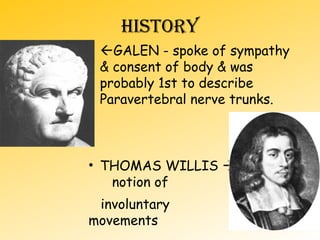
• GALEN - spoke of sympathy
& consent of body & was
probably 1st to describe
Paravertebral nerve trunks.
• THOMAS WILLIS 
notion of
involuntary
movements
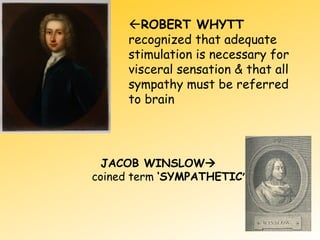
JACOB WINSLOW
coined term ‘SYMPATHETIC’
ROBERT WHYTT
recognized that adequate
stimulation is necessary for
visceral sensation & that all
sympathy must be referred
to brain
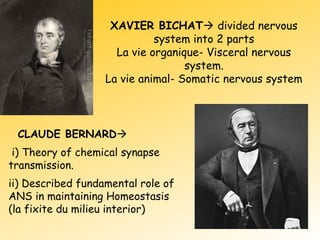
XAVIER BICHAT divided nervous
system into 2 parts
La vie organique- Visceral nervous
system.
La vie animal- Somatic nervous system
CLAUDE BERNARD
i) Theory of chemical synapse
transmission.
ii) Described fundamental role of
ANS in maintaining Homeostasis
(la fixite du milieu interior)
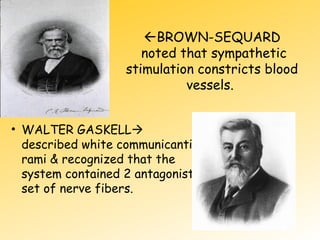
BROWN-SEQUARD
noted that sympathetic
stimulation constricts blood
vessels.
• WALTER GASKELL
described white communicanti
rami & recognized that the
system contained 2 antagonist
set of nerve fibers.
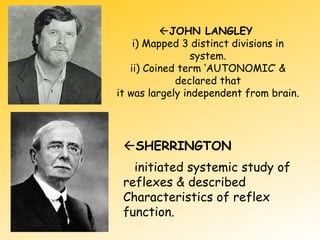
JOHN LANGLEY
i) Mapped 3 distinct divisions in
system.
ii) Coined term ‘AUTONOMIC’ &
declared that
it was largely independent from brain.
SHERRINGTON
initiated systemic study of
reflexes & described
Characteristics of reflex
function.
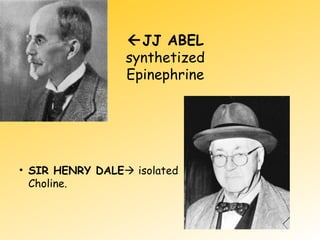
JJ ABEL
synthetized
Epinephrine
• SIR HENRY DALE isolated
Choline.
DEFINITION
• It is network of nerves & ganglia that controls
involuntary physiologic parameters & maintains
internal homeostasis & stress responses.
• It is primarily peripheral efferent system.
• Autonomic - self governing
PURPOSE OF AUTONOMIC NERVOUS
SYSTEM
• A major goal of anesthetic administration is
maintaining optimum homeostasis in the patient.
• The intelligent administration of anesthetic care to
patients requires knowledge of ANS pharmacology in
order to achieve desirable interactions of anesthetics
with the involuntary control system and to avoid
responses or interactions with deleterious effects.
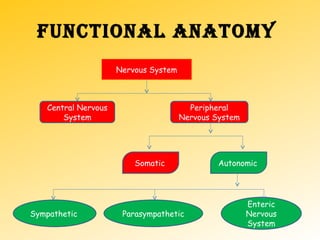
FUNCTIONAL ANATOMY
Nervous System
Central Nervous
System
Peripheral
Nervous System
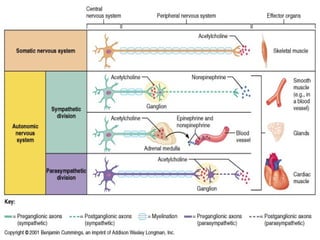
Somatic Autonomic
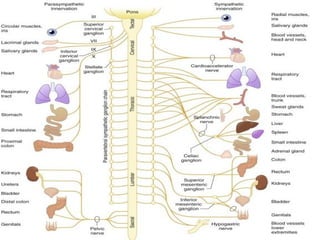
Sympathetic Parasympathetic
Enteric
Nervous
System
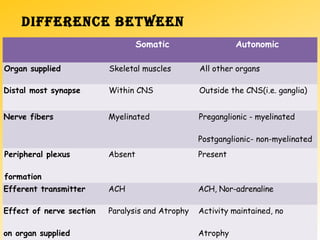
DIFFERENCE bETwEEN
Somatic Autonomic
Organ supplied Skeletal muscles All other organs
Distal most synapse Within CNS Outside the CNS(i.e. ganglia)
Nerve fibers Myelinated Preganglionic - myelinated
Postganglionic- non­myelinated
Peripheral plexus
formation
Absent Present
Efferent transmitter ACH ACH, Nor-adrenaline
Effect of nerve section
on organ supplied
Paralysis and Atrophy Activity maintained, no
Atrophy
CENTRAL AUTONOMIC ORGANIZATION
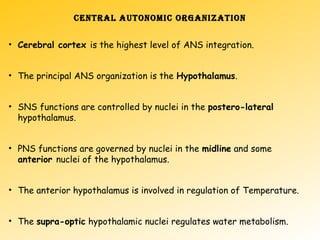
• Cerebral cortex is the highest level of ANS integration.
• The principal ANS organization is the Hypothalamus.
• SNS functions are controlled by nuclei in the postero-lateral
hypothalamus.
• PNS functions are governed by nuclei in the midline and some
anterior nuclei of the hypothalamus.
• The anterior hypothalamus is involved in regulation of Temperature.
• The supra-optic hypothalamic nuclei regulates water metabolism.
DIffERENCE bETwEEN
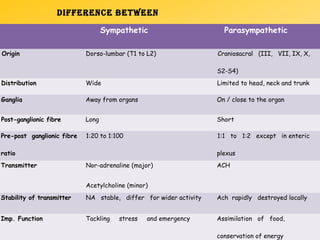
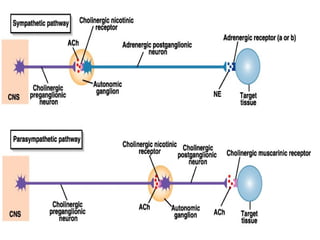
Sympathetic Parasympathetic
Origin Dorso-lumbar (T1 to L2) Craniosacral (III, VII, IX, X,
S2-S4)
Distribution Wide Limited to head, neck and trunk
Ganglia Away from organs On / close to the organ
Post-ganglionic fibre Long Short
Pre-post ganglionic fibre
ratio
1:20 to 1:100 1:1 to 1:2 except in enteric
plexus
Transmitter Nor-adrenaline (major)
Acetylcholine (minor)
ACH
Stability of transmitter NA stable, differ for wider activity Ach rapidly destroyed locally
Imp. Function Tackling stress and emergency Assimilation of food,
conservation of energy
fUNCTIONS Of ANS
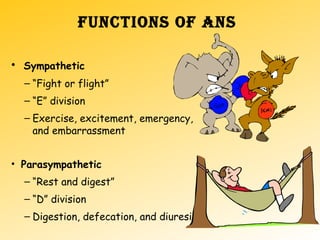
• Sympathetic
– “Fight or flight”
– “E” division
– Exercise, excitement, emergency,
and embarrassment
• Parasympathetic
– “Rest and digest”
– “D” division
– Digestion, defecation, and diuresis
AUTONOMIC DYSfUNCTION
.
• Dysautonomia is a condition in which the ANS
malfunctions.It is an umbrella term used to
denote many ANS disorders.It is a type of
neuropathy affecting the nerves that carries
information from the brain and spinal cord to
various visceral organs
The diagnosis is achieved through the functional
testing of the ANS,focussing on the affected
organ system.
CAUSES
• Dysautonomia may be due to inherited or
degenerative neurological disorders[primary
dusautonomia] or may be due to injury of ANS
due to an acquired disorder[secondary
dysautonomia
• Side effects of some drugs can cause
abnormalities in the function of
ANS,producing an iatrogenic form of
dysautonomia
.
• Diabetes mellitus
• Multiple sclerosis
• Parkinson’s disease
• HIV and AIDS
• Amyloidosis
• Boutilism
• Pure autonomic failure
• Lyme disease amd Tuberculosis
• Lupus,Sjogen’s syndrome,sarcodiasis[A-I disorders]
• Chronic alcohol misuse
• Spinal cord injury
• Physical trauma or injury
.
• Signs and symptoms
• The symptoms of dysautonomia are numerous and vary widely from person
to person depending on the nerves affected and underlying cause.
Symptoms often develop gradually over years. Each patient with
dysautonomia is different—some are affected only mildly, while others are
often left disabled.
• The primary symptoms present in patients with dysautonomia include:
• Excessive fatigue
• Excessive thirst (polydipsia)
• Lightheadedness or dizziness, often associated with orthostatic hypotension
(abnormally low blood pressure on standing), sometimes resulting in
syncope (fainting)
• Rapid heart rate or slow heart rate
• Blood pressure fluctuations
• Difficulty with breathing or swallowing
..
• Shortness of breath with activity or exercise
• Distension of the abdomen
• Mydriasis (abnormal dilation of the pupils) leading to blurry vision
• Urinary incontinence or neurogenic bladder dysfunction
• Gastroparesis (delayed gastric emptying) with associated nausea,
acid reflux and vomiting
• Constipation
• Excessive sweating or lack of sweating (ahydrosis)
• Heat intolerance brought on with activity and exercise
• Sexual problems including erectile dysfunction in men and vaginal
dryness and orgasmic difficulties in women
TESTS OF AUTONOMIC SYSTEM
FUNCTION
• These tests measure how the various systems in the body, controlled
by autonomic nerves, respond to stimulation. The data collected
during testing will indicate functioning of ANS.
• These tests help to identify patients with autonomic neuropathy and
is predictive of mortality and morbidity.
• Early autonomic dysfunction is defined as a single abnormal or two
borderline-abnormal results on the tests involving changes in heart
rate.
• Definite involvement comes when two of the tests of changes in
heart rate are abnormal. Severe dysfunction is defined as
abnormalities in the blood pressure assessments.
• Tests are done to monitor BP, blood flow, heart rate, skin
temperature and sweating
Indications for ANS testing
• Syncope[sudden loss of consciousness]
• Central autonomic degeneration ex. Parkinsons
• Pure autonomic failure
• Postural tachycardia syndrome
• Autonomic and small fiber peripheral neuropathies ex.-
diabetic neuropathy
• Sympathetically mediated pain
• Evaluating response to therapy
• Differentiating benign symptoms from autonomic
disorders
VALSALVA MANOEUVER
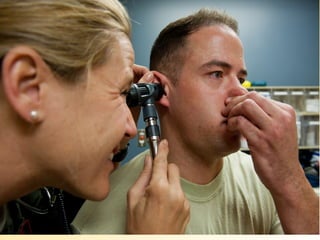
• It is performed by moderately forceful attempted exhalation
against a closed airway,
• Usually done by closing one’s mouth,pinching one’s nose
shut while pressing out asif blowing up a balloon
• This is used for medical examination, as a test of cardiac
function and autonomic nervous control of heart or to clear
the ears and sinuses during ambint changes happens during
diving,hyperbaric oxygen therapy,and air travel
Parasympathetic function tests
HR response with valsalva manoeuver
• Valsalva manoeuver: valsalva ratio is an index of HR response to BP
changes that occur during valsalva manoeuver resulting from
mechanical and cardiovascular effects.
• Measure baseline HR and BP 3 minutes before this test
• Patient takes a deep inhalation, a complete exhalation, inhales
again and then blows into a mouthpiece for 15 seconds
• Expiratory pressure is maintained at 40 mm Hg. This pressure can
be measured by having the patient to exhale through a mouth
piece attached to a transducer
• BP and HR are measured throughout the manoeuver for 60
seconds after temination of the manoeuver
• An average of 2 trials are taken for analysis
• Caution while performing the test in elderly with pulmonary
disease who may not be able to perform the test satisfactorily
• As intraocular pressure is known to rise, the test must not be
performed in those with recent retinal surgery
• VR values are aggregated. There is a decrease with age.
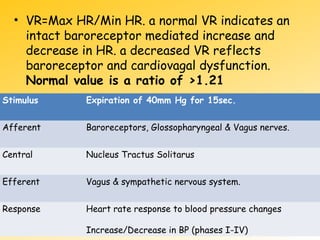
• VR=Max HR/Min HR. a normal VR indicates an
intact baroreceptor mediated increase and
decrease in HR. a decreased VR reflects
baroreceptor and cardiovagal dysfunction.
Normal value is a ratio of >1.21
Stimulus Expiration of 40mm Hg for 15sec.
Afferent Baroreceptors, Glossopharyngeal & Vagus nerves.
Central Nucleus Tractus Solitarus
Efferent Vagus & sympathetic nervous system.
Response Heart rate response to blood pressure changes
Increase/Decrease in BP (phases I-IV)
HR variability with respiration (respiratory sinus arrhythmia)
• Respiratory sinus arrhythmia is recorded with patient supine &
breathing at fixed rate of 6 breaths/min with slow inhalation &
exhalation. This provides close to maximum HR variability.
• 6-8 cycles are recorded with one or two trials being performed.
• Timed breathing potentiates normal sinus arrhythmia that occurs
during the normal respiratory cycles
• Reduced HR variability with respiration is seen in aging, autonomic
peripheral neuropathies and central autonomic degenerations.
• Other factors which can influence this test are poor respiratory
efforts, hypercapnia, salicylates poisoning, obesity
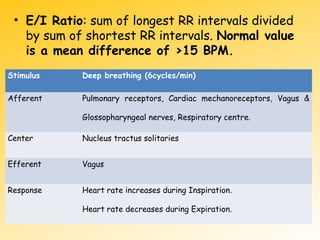
• E/I Ratio: sum of longest RR intervals divided
by sum of shortest RR intervals. Normal value
is a mean difference of >15 BPM.
Stimulus Deep breathing (6cycles/min)
Afferent Pulmonary receptors, Cardiac mechanoreceptors, Vagus &
Glossopharyngeal nerves, Respiratory centre.
Center Nucleus tractus solitaries
Efferent Vagus
Response Heart rate increases during Inspiration.
Heart rate decreases during Expiration.
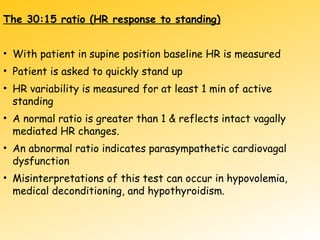
The 30:15 ratio (HR response to standing)
• With patient in supine position baseline HR is measured
• Patient is asked to quickly stand up
• HR variability is measured for at least 1 min of active
standing
• A normal ratio is greater than 1 & reflects intact vagally
mediated HR changes.
• An abnormal ratio indicates parasympathetic cardiovagal
dysfunction
• Misinterpretations of this test can occur in hypovolemia,
medical deconditioning, and hypothyroidism.
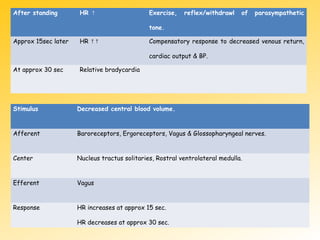
After standing HR ↑ Exercise, reflex/withdrawl of parasympathetic
tone.
Approx 15sec later HR ↑↑ Compensatory response to decreased venous return,
cardiac output & BP.
At approx 30 sec Relative bradycardia
Stimulus Decreased central blood volume.
Afferent Baroreceptors, Ergoreceptors, Vagus & Glossopharyngeal nerves.
Center Nucleus tractus solitaries, Rostral ventrolateral medulla.
Efferent Vagus
Response HR increases at approx 15 sec.
HR decreases at approx 30 sec.
Sympathetic function tests
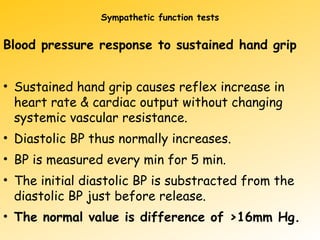
Blood pressure response to sustained hand grip
• Sustained hand grip causes reflex increase in
heart rate & cardiac output without changing
systemic vascular resistance.
• Diastolic BP thus normally increases.
• BP is measured every min for 5 min.
• The initial diastolic BP is substracted from the
diastolic BP just before release.
• The normal value is difference of >16mm Hg.
Blood pressure response to standing
• The patient moves from resting supine
to standing position.
• The standing Systolic BP is substracted
from the supine Systolic BP.
• The normal value is difference of
<10mm Hg.
Head Up Tilt Table Test
• This test determines BP & HR response to an orthostatic
challenge as a measure of sympathetic function.
• Used to access orthostatic intolerance caused by sympathetic
nervous system dysfunction & to detect any predisposition to
vasovagal syncope.
• Patient lies supine on a tilt table & a belt is placed around the
waist to secure them in case of syncope.
• BP & ECG are monitored throughout the tests & recorded.
• Baseline BP is recorded for atleast 3 min.
• Patient is slowly tilted upright to an angle of 60-80°.
• Patient is asked to report any symptoms.
• Patient is returned to horizontal supine position.
• HR & BP are monitored in supine position until it returns
to baseline.
• IV Isoproterenol, a pharmacological measure to
potentiate orthostatic challenge to the tilt table test,
is frequently used.
• A normal tilt table test is one in which there are no
symptoms & a modest fall in BP.
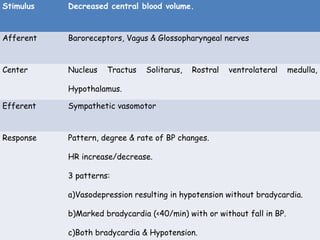
Stimulus Decreased central blood volume.
Afferent Baroreceptors, Vagus & Glossopharyngeal nerves
Center Nucleus Tractus Solitarus, Rostral ventrolateral medulla,
Hypothalamus.
Efferent Sympathetic vasomotor
Response Pattern, degree & rate of BP changes.
HR increase/decrease.
3 patterns:
a)Vasodepression resulting in hypotension without bradycardia.
b)Marked bradycardia (<40/min) with or without fall in BP.
c)Both bradycardia & Hypotension.
• Other tests used are-
– Sympathetic Cholinergic Sweat Function
– Quantitative Sudomotor Axon Reflex Test.
– Silastic Imprint Test.
– Thermoregulatory Sweat Test.
– Microneurography.
DISEASES ASSOCIATED
WITH PROGRESSIVE
NEUROLOGICAL
IMPAIRMENT OF
AUTONOMIC NERVOUS
SYSTEM
• They can be primary, familial or due to secondary
systemic disease or idiopathic.
Primary :
• 1. Idiopathic Orthostatic Hypotension
• 2. Shy-Drager type of Orthostatic Hypotension
Familial :
• 1. Riley-Day Syndrome (Autonomic neuropathy in
infants and children)
• 2. Lesch-Nyhan Syndrome
• 3. Gill Familial dysautonomia
Secondary to systemic diseases:
• Aging
• Diabetes Mellitus
• Chronic Alcoholism
• Chronic Renal Failure
• Hypertension
• Rheumatoid Arthritis
• Carcinomatosis
• Chaga's disease
• Tetanus
• Spinal cord injury – Transection
– Acute
– Chronic
• Neurological diseases
– Tabes Dorsalis
– Syringomyelia
– Amyloidosis
Ageing
• Approximately 20% of people over 65 years of age have
postural hypotension.
• Half of these patients are symptomatic i.e they experience
dizziness, faintness or loss of consciousness.
• It is well known that the reflex regulation of heart rate
which is mediated primarily by parasympathetic mechanisms
declines progressively with age.
• There will be a selective or earlier impairment of
parasympathetic function with aging with a minimal or a more
gradual involvement of the sympathetic nervous system
Diabetes Mellitus
• Diabetic autonomic neuropathy is a well known clinical entity. It may result
from neuronal degeneration or metabolically related neuronal dysfunction.
• The afferent central or efferent reflex pathways each can be involved.
• It has been suggested that the Vagal neuropathy occurs earlier in the course
of DM than the sympathetic neuropathy.
• The most sensitive test of cardiac parasympathetic impairment is that of
determining RSA during forceful breathing. Intolerance to upright posture is
often evident. The presence of symptomatic postural hypotension is
associated with a poor prognosis. These patients are prone to sudden cardiac
death.
For those scheduled for surgery there are several
implications that are important to anaesthesiologist.
• Esophageal dysfunction and gastric hypotonia
increase the risk of regurgitation and aspiration.
• Bradycardia, hypotension and cardiopulmonary
arrest have been reported.
• Abnormal blood pressure falls with induction and
highest requirement for intraoperative pressor agents
to maintain stable haemodynamics.
• ANS dysfunction may also interfere with control of
ventilation, making diabetics more susceptible to
respiratory depressant effects of drugs.
• Painless myocardial infarction and unexplained cardio
respiratory arrest have been reported.
Autonomic changes in Spinal Cord
Transection
• It can cause various degrees of autonomic dysfunction
depending on site, extent & timing of the lesion.
• Many autonomic reflexes are inhibited by Supraspinal
feedback that is lost after spinal cord transaction.
• In Paraplegic patient, small stimuli can cause exaggerated
sympathetic discharges.
• The only intact efferent component of baroreflex pathways
in Quadriplegic patients is Vagus.
• There are fundamental differences between acute & chronic
spinal cord transaction.
• First, a transient state of decreased excitability occurs,
known as Spinal Shock. It may last for days to weeks.
– In these patients, the periphery is generally atonic & peripheral
blood vessels are dilated.
– In case of recent High Thoracic lesion, basal supine blood
pressure is usually low & accompanied by plasma catecholamine
levels that are approx 35% of normal.
– In case of recent Low spinal injuries, compensatory tachycardia
is exhibited from intact part of ANS.
– In cases of chronic High spinal lesion, patient may fail to
respond to hypovolemia with increased heart rate & may exhibit
bradycardia. Renin-angiotensin-aldosterone system compensates
for maintenance of blood pressure in these patients.
• The phenomenon of Autonomic dysreflexia can
occur with stimulation below the lesion.
• Bladder & bowel distension can elicit Mass
Reflex.
– Dramatic rise in blood pressure.
– Marked reduction in flow to periphery.
– Flushing & sweating in areas above the lesion.
– In addition there may be contraction of bladder &
bowel, skeletal muscle spasm & penile erection.
PREVENTION AND TREATMENT OF
ADVERSE AUTONOMIC REFLEXES
• Atropine commonly used for both prevention and treatment.
• Topical anaesthesia can eliminate the reflex.
• Intravenous lidocaine is more effective than topical anaesthesia.
• Cessation of applied stimulus immediately.
• Vasopressors injected if there is persistent hypotensive response.
• Depth of anaesthesia should be increased. Most of the intrathoracic and
intraabdominal reflexes are observed during surgery when anaesthesia is
to light or relaxation is inadequate.
REFERENCES
1. Miller`s Anaesthesia- 7th ed.
2. Barash Clinical Anesthesia- 6th ed.
3. Stoelting`s Principles of Anesthesiology-3rd ed.
4. Collin`s Anesthesiology
5. Ganong`s Review of Medical Physiology-23rd ed.
6. K.D Tripathi`s Essentials of Medical Pharmacology 5th
ed.
7. ISACON 2009.

Dysautonomia

  • 1.
    DYSAUTONOMIA PRESENTED BY: SIRTRARASAN BHARATHIDHASAN 1217 DATE:27-11-2014 AUTONOMOUS NERVOUS SYSTEM AND ITS DYSFUNCTION
  • 2.
    INTRODUCTION • Much ofthe action of the body in maintaining, cardiovascular, gastrointestinal and thermal homeostasis occurs through the autonomic nervous system (ANS). • The ANS is our primary defense against challenges, to maintain homeostasis. It provides involuntary control and organization of both maintenance and stress responses.
  • 3.
    HISTORY • GALEN -spoke of sympathy & consent of body & was probably 1st to describe Paravertebral nerve trunks. • THOMAS WILLIS  notion of involuntary movements
  • 4.
    JACOB WINSLOW coined term‘SYMPATHETIC’ ROBERT WHYTT recognized that adequate stimulation is necessary for visceral sensation & that all sympathy must be referred to brain
  • 5.
    XAVIER BICHAT dividednervous system into 2 parts La vie organique- Visceral nervous system. La vie animal- Somatic nervous system CLAUDE BERNARD i) Theory of chemical synapse transmission. ii) Described fundamental role of ANS in maintaining Homeostasis (la fixite du milieu interior)
  • 6.
    BROWN-SEQUARD noted that sympathetic stimulationconstricts blood vessels. • WALTER GASKELL described white communicanti rami & recognized that the system contained 2 antagonist set of nerve fibers.
  • 7.
    JOHN LANGLEY i) Mapped3 distinct divisions in system. ii) Coined term ‘AUTONOMIC’ & declared that it was largely independent from brain. SHERRINGTON initiated systemic study of reflexes & described Characteristics of reflex function.
  • 8.
    JJ ABEL synthetized Epinephrine • SIRHENRY DALE isolated Choline.
  • 9.
    DEFINITION • It isnetwork of nerves & ganglia that controls involuntary physiologic parameters & maintains internal homeostasis & stress responses. • It is primarily peripheral efferent system. • Autonomic - self governing
  • 10.
    PURPOSE OF AUTONOMICNERVOUS SYSTEM • A major goal of anesthetic administration is maintaining optimum homeostasis in the patient. • The intelligent administration of anesthetic care to patients requires knowledge of ANS pharmacology in order to achieve desirable interactions of anesthetics with the involuntary control system and to avoid responses or interactions with deleterious effects.
  • 11.
    FUNCTIONAL ANATOMY Nervous System CentralNervous System Peripheral Nervous System Somatic Autonomic Sympathetic Parasympathetic Enteric Nervous System
  • 12.
    DIFFERENCE bETwEEN Somatic Autonomic Organsupplied Skeletal muscles All other organs Distal most synapse Within CNS Outside the CNS(i.e. ganglia) Nerve fibers Myelinated Preganglionic - myelinated Postganglionic- non­myelinated Peripheral plexus formation Absent Present Efferent transmitter ACH ACH, Nor-adrenaline Effect of nerve section on organ supplied Paralysis and Atrophy Activity maintained, no Atrophy
  • 14.
    CENTRAL AUTONOMIC ORGANIZATION •Cerebral cortex is the highest level of ANS integration. • The principal ANS organization is the Hypothalamus. • SNS functions are controlled by nuclei in the postero-lateral hypothalamus. • PNS functions are governed by nuclei in the midline and some anterior nuclei of the hypothalamus. • The anterior hypothalamus is involved in regulation of Temperature. • The supra-optic hypothalamic nuclei regulates water metabolism.
  • 16.
    DIffERENCE bETwEEN Sympathetic Parasympathetic OriginDorso-lumbar (T1 to L2) Craniosacral (III, VII, IX, X, S2-S4) Distribution Wide Limited to head, neck and trunk Ganglia Away from organs On / close to the organ Post-ganglionic fibre Long Short Pre-post ganglionic fibre ratio 1:20 to 1:100 1:1 to 1:2 except in enteric plexus Transmitter Nor-adrenaline (major) Acetylcholine (minor) ACH Stability of transmitter NA stable, differ for wider activity Ach rapidly destroyed locally Imp. Function Tackling stress and emergency Assimilation of food, conservation of energy
  • 18.
    fUNCTIONS Of ANS •Sympathetic – “Fight or flight” – “E” division – Exercise, excitement, emergency, and embarrassment • Parasympathetic – “Rest and digest” – “D” division – Digestion, defecation, and diuresis
  • 19.
  • 20.
    . • Dysautonomia isa condition in which the ANS malfunctions.It is an umbrella term used to denote many ANS disorders.It is a type of neuropathy affecting the nerves that carries information from the brain and spinal cord to various visceral organs The diagnosis is achieved through the functional testing of the ANS,focussing on the affected organ system.
  • 21.
    CAUSES • Dysautonomia maybe due to inherited or degenerative neurological disorders[primary dusautonomia] or may be due to injury of ANS due to an acquired disorder[secondary dysautonomia • Side effects of some drugs can cause abnormalities in the function of ANS,producing an iatrogenic form of dysautonomia
  • 22.
    . • Diabetes mellitus •Multiple sclerosis • Parkinson’s disease • HIV and AIDS • Amyloidosis • Boutilism • Pure autonomic failure • Lyme disease amd Tuberculosis • Lupus,Sjogen’s syndrome,sarcodiasis[A-I disorders] • Chronic alcohol misuse • Spinal cord injury • Physical trauma or injury
  • 23.
    . • Signs andsymptoms • The symptoms of dysautonomia are numerous and vary widely from person to person depending on the nerves affected and underlying cause. Symptoms often develop gradually over years. Each patient with dysautonomia is different—some are affected only mildly, while others are often left disabled. • The primary symptoms present in patients with dysautonomia include: • Excessive fatigue • Excessive thirst (polydipsia) • Lightheadedness or dizziness, often associated with orthostatic hypotension (abnormally low blood pressure on standing), sometimes resulting in syncope (fainting) • Rapid heart rate or slow heart rate • Blood pressure fluctuations • Difficulty with breathing or swallowing
  • 24.
    .. • Shortness ofbreath with activity or exercise • Distension of the abdomen • Mydriasis (abnormal dilation of the pupils) leading to blurry vision • Urinary incontinence or neurogenic bladder dysfunction • Gastroparesis (delayed gastric emptying) with associated nausea, acid reflux and vomiting • Constipation • Excessive sweating or lack of sweating (ahydrosis) • Heat intolerance brought on with activity and exercise • Sexual problems including erectile dysfunction in men and vaginal dryness and orgasmic difficulties in women
  • 25.
    TESTS OF AUTONOMICSYSTEM FUNCTION • These tests measure how the various systems in the body, controlled by autonomic nerves, respond to stimulation. The data collected during testing will indicate functioning of ANS. • These tests help to identify patients with autonomic neuropathy and is predictive of mortality and morbidity. • Early autonomic dysfunction is defined as a single abnormal or two borderline-abnormal results on the tests involving changes in heart rate. • Definite involvement comes when two of the tests of changes in heart rate are abnormal. Severe dysfunction is defined as abnormalities in the blood pressure assessments. • Tests are done to monitor BP, blood flow, heart rate, skin temperature and sweating
  • 26.
    Indications for ANStesting • Syncope[sudden loss of consciousness] • Central autonomic degeneration ex. Parkinsons • Pure autonomic failure • Postural tachycardia syndrome • Autonomic and small fiber peripheral neuropathies ex.- diabetic neuropathy • Sympathetically mediated pain • Evaluating response to therapy • Differentiating benign symptoms from autonomic disorders
  • 27.
    VALSALVA MANOEUVER • Itis performed by moderately forceful attempted exhalation against a closed airway, • Usually done by closing one’s mouth,pinching one’s nose shut while pressing out asif blowing up a balloon • This is used for medical examination, as a test of cardiac function and autonomic nervous control of heart or to clear the ears and sinuses during ambint changes happens during diving,hyperbaric oxygen therapy,and air travel
  • 29.
    Parasympathetic function tests HRresponse with valsalva manoeuver • Valsalva manoeuver: valsalva ratio is an index of HR response to BP changes that occur during valsalva manoeuver resulting from mechanical and cardiovascular effects. • Measure baseline HR and BP 3 minutes before this test • Patient takes a deep inhalation, a complete exhalation, inhales again and then blows into a mouthpiece for 15 seconds • Expiratory pressure is maintained at 40 mm Hg. This pressure can be measured by having the patient to exhale through a mouth piece attached to a transducer
  • 30.
    • BP andHR are measured throughout the manoeuver for 60 seconds after temination of the manoeuver • An average of 2 trials are taken for analysis • Caution while performing the test in elderly with pulmonary disease who may not be able to perform the test satisfactorily • As intraocular pressure is known to rise, the test must not be performed in those with recent retinal surgery • VR values are aggregated. There is a decrease with age.
  • 31.
    • VR=Max HR/MinHR. a normal VR indicates an intact baroreceptor mediated increase and decrease in HR. a decreased VR reflects baroreceptor and cardiovagal dysfunction. Normal value is a ratio of >1.21 Stimulus Expiration of 40mm Hg for 15sec. Afferent Baroreceptors, Glossopharyngeal & Vagus nerves. Central Nucleus Tractus Solitarus Efferent Vagus & sympathetic nervous system. Response Heart rate response to blood pressure changes Increase/Decrease in BP (phases I-IV)
  • 32.
    HR variability withrespiration (respiratory sinus arrhythmia) • Respiratory sinus arrhythmia is recorded with patient supine & breathing at fixed rate of 6 breaths/min with slow inhalation & exhalation. This provides close to maximum HR variability. • 6-8 cycles are recorded with one or two trials being performed. • Timed breathing potentiates normal sinus arrhythmia that occurs during the normal respiratory cycles • Reduced HR variability with respiration is seen in aging, autonomic peripheral neuropathies and central autonomic degenerations. • Other factors which can influence this test are poor respiratory efforts, hypercapnia, salicylates poisoning, obesity
  • 33.
    • E/I Ratio:sum of longest RR intervals divided by sum of shortest RR intervals. Normal value is a mean difference of >15 BPM. Stimulus Deep breathing (6cycles/min) Afferent Pulmonary receptors, Cardiac mechanoreceptors, Vagus & Glossopharyngeal nerves, Respiratory centre. Center Nucleus tractus solitaries Efferent Vagus Response Heart rate increases during Inspiration. Heart rate decreases during Expiration.
  • 34.
    The 30:15 ratio(HR response to standing) • With patient in supine position baseline HR is measured • Patient is asked to quickly stand up • HR variability is measured for at least 1 min of active standing • A normal ratio is greater than 1 & reflects intact vagally mediated HR changes. • An abnormal ratio indicates parasympathetic cardiovagal dysfunction • Misinterpretations of this test can occur in hypovolemia, medical deconditioning, and hypothyroidism.
  • 35.
    After standing HR↑ Exercise, reflex/withdrawl of parasympathetic tone. Approx 15sec later HR ↑↑ Compensatory response to decreased venous return, cardiac output & BP. At approx 30 sec Relative bradycardia Stimulus Decreased central blood volume. Afferent Baroreceptors, Ergoreceptors, Vagus & Glossopharyngeal nerves. Center Nucleus tractus solitaries, Rostral ventrolateral medulla. Efferent Vagus Response HR increases at approx 15 sec. HR decreases at approx 30 sec.
  • 36.
    Sympathetic function tests Bloodpressure response to sustained hand grip • Sustained hand grip causes reflex increase in heart rate & cardiac output without changing systemic vascular resistance. • Diastolic BP thus normally increases. • BP is measured every min for 5 min. • The initial diastolic BP is substracted from the diastolic BP just before release. • The normal value is difference of >16mm Hg.
  • 37.
    Blood pressure responseto standing • The patient moves from resting supine to standing position. • The standing Systolic BP is substracted from the supine Systolic BP. • The normal value is difference of <10mm Hg.
  • 38.
    Head Up TiltTable Test • This test determines BP & HR response to an orthostatic challenge as a measure of sympathetic function. • Used to access orthostatic intolerance caused by sympathetic nervous system dysfunction & to detect any predisposition to vasovagal syncope. • Patient lies supine on a tilt table & a belt is placed around the waist to secure them in case of syncope. • BP & ECG are monitored throughout the tests & recorded. • Baseline BP is recorded for atleast 3 min.
  • 39.
    • Patient isslowly tilted upright to an angle of 60-80°. • Patient is asked to report any symptoms. • Patient is returned to horizontal supine position. • HR & BP are monitored in supine position until it returns to baseline. • IV Isoproterenol, a pharmacological measure to potentiate orthostatic challenge to the tilt table test, is frequently used. • A normal tilt table test is one in which there are no symptoms & a modest fall in BP.
  • 40.
    Stimulus Decreased centralblood volume. Afferent Baroreceptors, Vagus & Glossopharyngeal nerves Center Nucleus Tractus Solitarus, Rostral ventrolateral medulla, Hypothalamus. Efferent Sympathetic vasomotor Response Pattern, degree & rate of BP changes. HR increase/decrease. 3 patterns: a)Vasodepression resulting in hypotension without bradycardia. b)Marked bradycardia (<40/min) with or without fall in BP. c)Both bradycardia & Hypotension.
  • 41.
    • Other testsused are- – Sympathetic Cholinergic Sweat Function – Quantitative Sudomotor Axon Reflex Test. – Silastic Imprint Test. – Thermoregulatory Sweat Test. – Microneurography.
  • 42.
  • 43.
    • They canbe primary, familial or due to secondary systemic disease or idiopathic. Primary : • 1. Idiopathic Orthostatic Hypotension • 2. Shy-Drager type of Orthostatic Hypotension Familial : • 1. Riley-Day Syndrome (Autonomic neuropathy in infants and children) • 2. Lesch-Nyhan Syndrome • 3. Gill Familial dysautonomia
  • 44.
    Secondary to systemicdiseases: • Aging • Diabetes Mellitus • Chronic Alcoholism • Chronic Renal Failure • Hypertension • Rheumatoid Arthritis • Carcinomatosis • Chaga's disease • Tetanus • Spinal cord injury – Transection – Acute – Chronic • Neurological diseases – Tabes Dorsalis – Syringomyelia – Amyloidosis
  • 45.
    Ageing • Approximately 20%of people over 65 years of age have postural hypotension. • Half of these patients are symptomatic i.e they experience dizziness, faintness or loss of consciousness. • It is well known that the reflex regulation of heart rate which is mediated primarily by parasympathetic mechanisms declines progressively with age. • There will be a selective or earlier impairment of parasympathetic function with aging with a minimal or a more gradual involvement of the sympathetic nervous system
  • 46.
    Diabetes Mellitus • Diabeticautonomic neuropathy is a well known clinical entity. It may result from neuronal degeneration or metabolically related neuronal dysfunction. • The afferent central or efferent reflex pathways each can be involved. • It has been suggested that the Vagal neuropathy occurs earlier in the course of DM than the sympathetic neuropathy. • The most sensitive test of cardiac parasympathetic impairment is that of determining RSA during forceful breathing. Intolerance to upright posture is often evident. The presence of symptomatic postural hypotension is associated with a poor prognosis. These patients are prone to sudden cardiac death.
  • 47.
    For those scheduledfor surgery there are several implications that are important to anaesthesiologist. • Esophageal dysfunction and gastric hypotonia increase the risk of regurgitation and aspiration. • Bradycardia, hypotension and cardiopulmonary arrest have been reported. • Abnormal blood pressure falls with induction and highest requirement for intraoperative pressor agents to maintain stable haemodynamics. • ANS dysfunction may also interfere with control of ventilation, making diabetics more susceptible to respiratory depressant effects of drugs. • Painless myocardial infarction and unexplained cardio respiratory arrest have been reported.
  • 48.
    Autonomic changes inSpinal Cord Transection • It can cause various degrees of autonomic dysfunction depending on site, extent & timing of the lesion. • Many autonomic reflexes are inhibited by Supraspinal feedback that is lost after spinal cord transaction. • In Paraplegic patient, small stimuli can cause exaggerated sympathetic discharges. • The only intact efferent component of baroreflex pathways in Quadriplegic patients is Vagus. • There are fundamental differences between acute & chronic spinal cord transaction.
  • 49.
    • First, atransient state of decreased excitability occurs, known as Spinal Shock. It may last for days to weeks. – In these patients, the periphery is generally atonic & peripheral blood vessels are dilated. – In case of recent High Thoracic lesion, basal supine blood pressure is usually low & accompanied by plasma catecholamine levels that are approx 35% of normal. – In case of recent Low spinal injuries, compensatory tachycardia is exhibited from intact part of ANS. – In cases of chronic High spinal lesion, patient may fail to respond to hypovolemia with increased heart rate & may exhibit bradycardia. Renin-angiotensin-aldosterone system compensates for maintenance of blood pressure in these patients.
  • 50.
    • The phenomenonof Autonomic dysreflexia can occur with stimulation below the lesion. • Bladder & bowel distension can elicit Mass Reflex. – Dramatic rise in blood pressure. – Marked reduction in flow to periphery. – Flushing & sweating in areas above the lesion. – In addition there may be contraction of bladder & bowel, skeletal muscle spasm & penile erection.
  • 51.
    PREVENTION AND TREATMENTOF ADVERSE AUTONOMIC REFLEXES • Atropine commonly used for both prevention and treatment. • Topical anaesthesia can eliminate the reflex. • Intravenous lidocaine is more effective than topical anaesthesia. • Cessation of applied stimulus immediately. • Vasopressors injected if there is persistent hypotensive response. • Depth of anaesthesia should be increased. Most of the intrathoracic and intraabdominal reflexes are observed during surgery when anaesthesia is to light or relaxation is inadequate.
  • 52.
    REFERENCES 1. Miller`s Anaesthesia-7th ed. 2. Barash Clinical Anesthesia- 6th ed. 3. Stoelting`s Principles of Anesthesiology-3rd ed. 4. Collin`s Anesthesiology 5. Ganong`s Review of Medical Physiology-23rd ed. 6. K.D Tripathi`s Essentials of Medical Pharmacology 5th ed. 7. ISACON 2009.