TYPHOID FEVER
● This is an acute generalized infection of the
intestinal lymphoid tissue,
gall-bladder and
reticuloendothelial system.
• It includes typhoid fever which affects 90% of the
cases and paratyphoid which affects 10% of the
cases.
• Transmission is fecal oral.
INTRODUCTION.
• Recent large-scale data and modelling efforts estimate that
14.3 million cases of typhoid and paratyphoid fevers occurred
globally in 2017, a decline from 25.9 million cases in 1990.
• Incidence rates peak in the 5 to 9-year-old age-group, with
roughly 13% of cases occurring in children younger than 5
years and roughly 56% of cases among children younger than
15 years of age
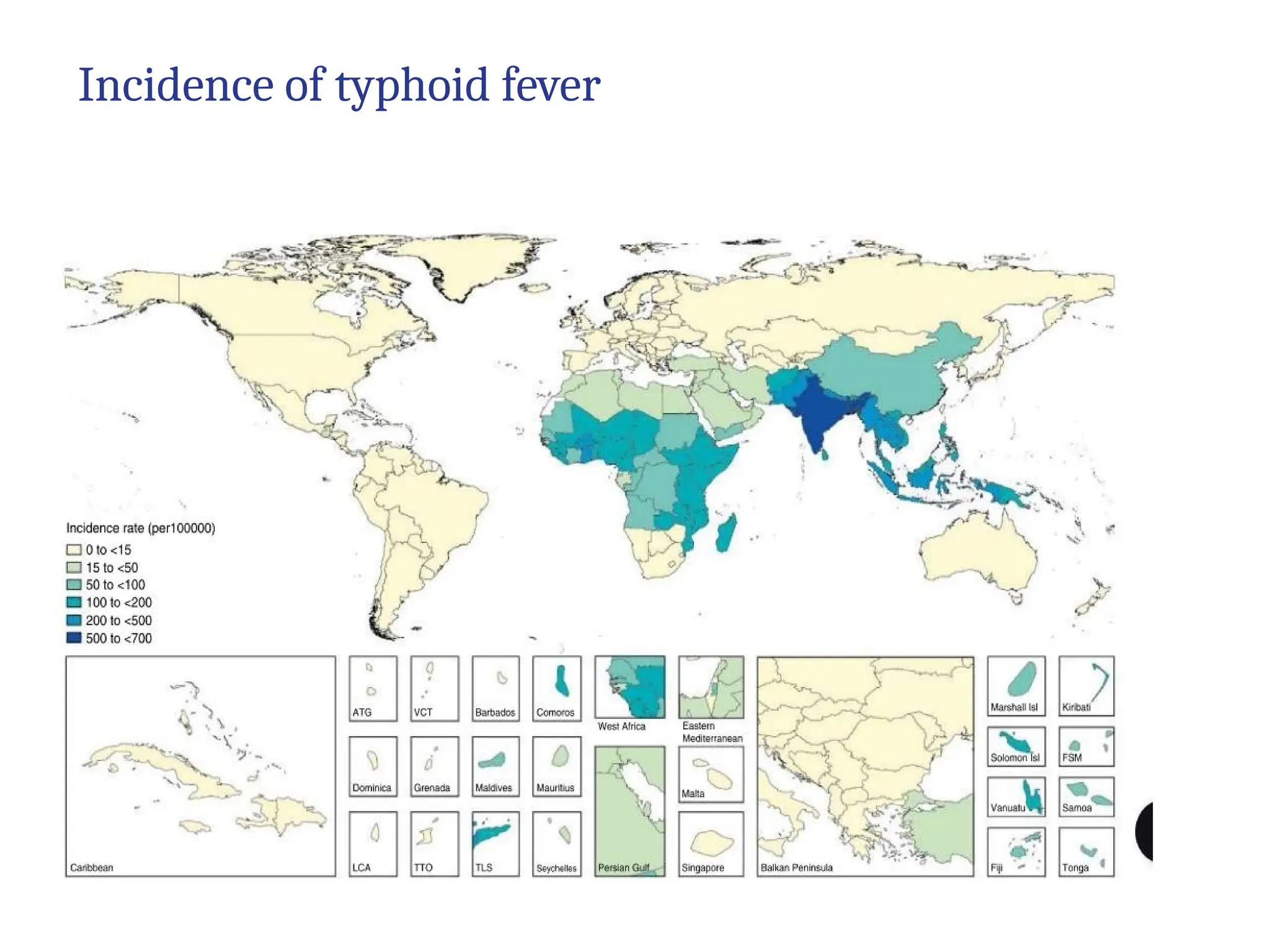
• South and Southeast Asia have notably high incidence rates,
whereas moderate incidence rates are reported from Central
and South America, Africa, Central and East Asia, and
Oceania.
• Disease occurs exclusively in human
EPIDEMIOLOGY
Incidence of typhoid fever
AGENT
HOST ENVIRONMENT
Disease
AGENT-
• Salmonella typhi –majorcause
• S.paratyphi A , B and C
• Family- Enterobactericeae
• Gram negative bacilli
• Motile with peritrichate flagella
• Non acid-fast
• Non capsulated
• Non spore forming
• Facultative anerobe
The Enteric bacilli have 3 important
antigens:
✔O antigen (body or somatic)
• Less immunogenic
• Cross reacts
✔H antigen or flagellar antigen,
• Strongly anigenic
• Rapid rise of Ab in infection/immunisation
• Lasts longer and specific
✔Vi antigen (virulence antigen)
• S. Typhi and S.Paratyphi C
• Poorly immunogenic
• Disappears….. May persist in chronic carriers
HOST
• Humans are only reservoir and only known
susceptible host
• Peak incidence ---- 5 to 9 years.
• 10% of cases occur in infant age group.
• No sex predliction
• Children constitute 40-50% MDR typhoid cases with
higher case fatality rate
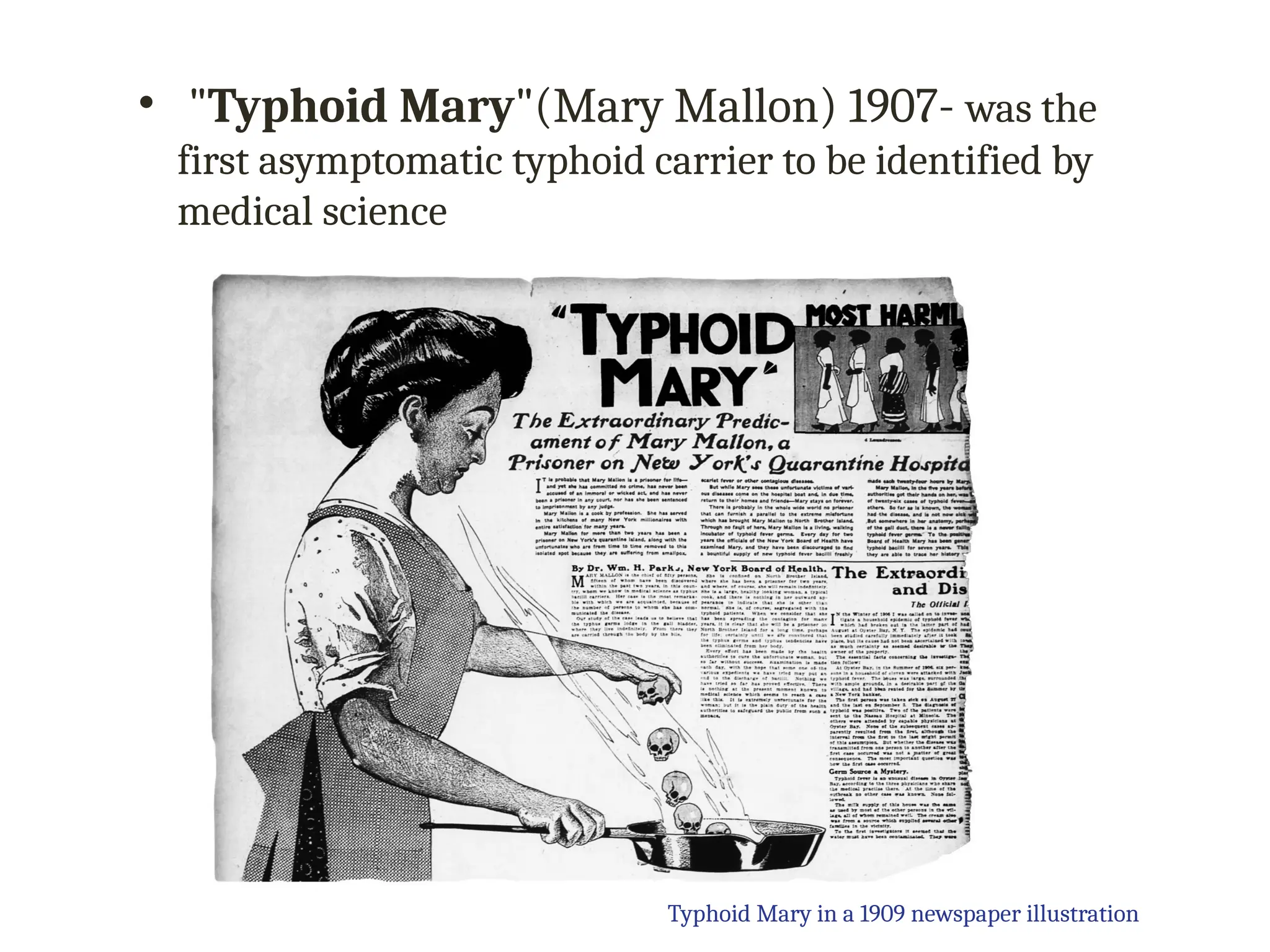
• "Typhoid Mary"(Mary Mallon) 1907- was the
first asymptomatic typhoid carrier to be identified by
medical science
Typhoid Mary in a 1909 newspaper illustration
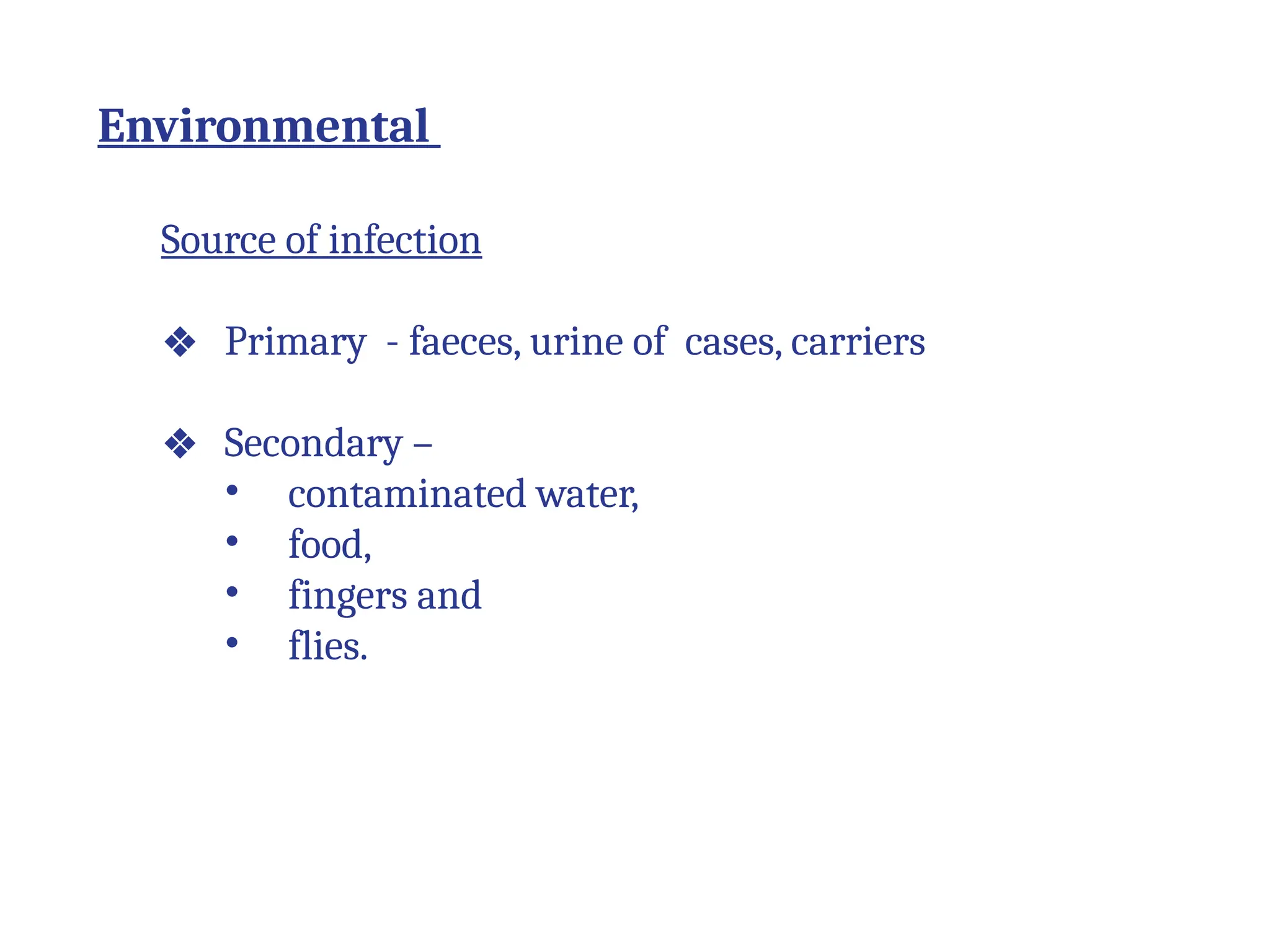
Environmental
Source of infection
❖ Primary - faeces, urine of cases, carriers
❖ Secondary –
• contaminated water,
• food,
• fingers and
• flies.
Spread of infecion
• Water contamination
• Food contamination
• Houseflies
Predisposing factors
• Over crowding
• Poor personal hygiene
• Poverty and illiteracy
• Poor sanitary and water supply suituations
• Open defecation
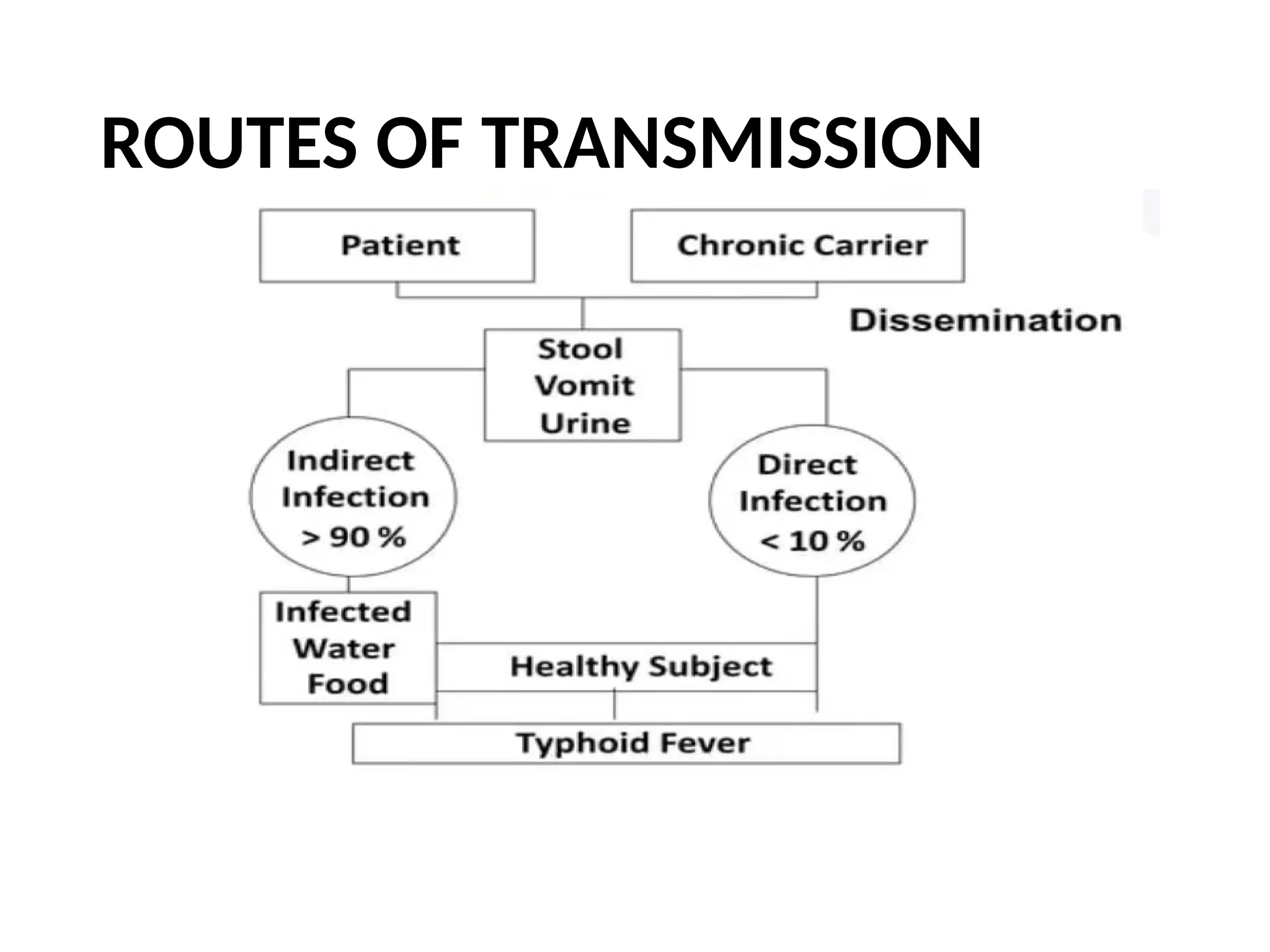
ROUTES OF TRANSMISSION
Pathogenesis
● Infecting dose of about 10^5–10^9 organisms,
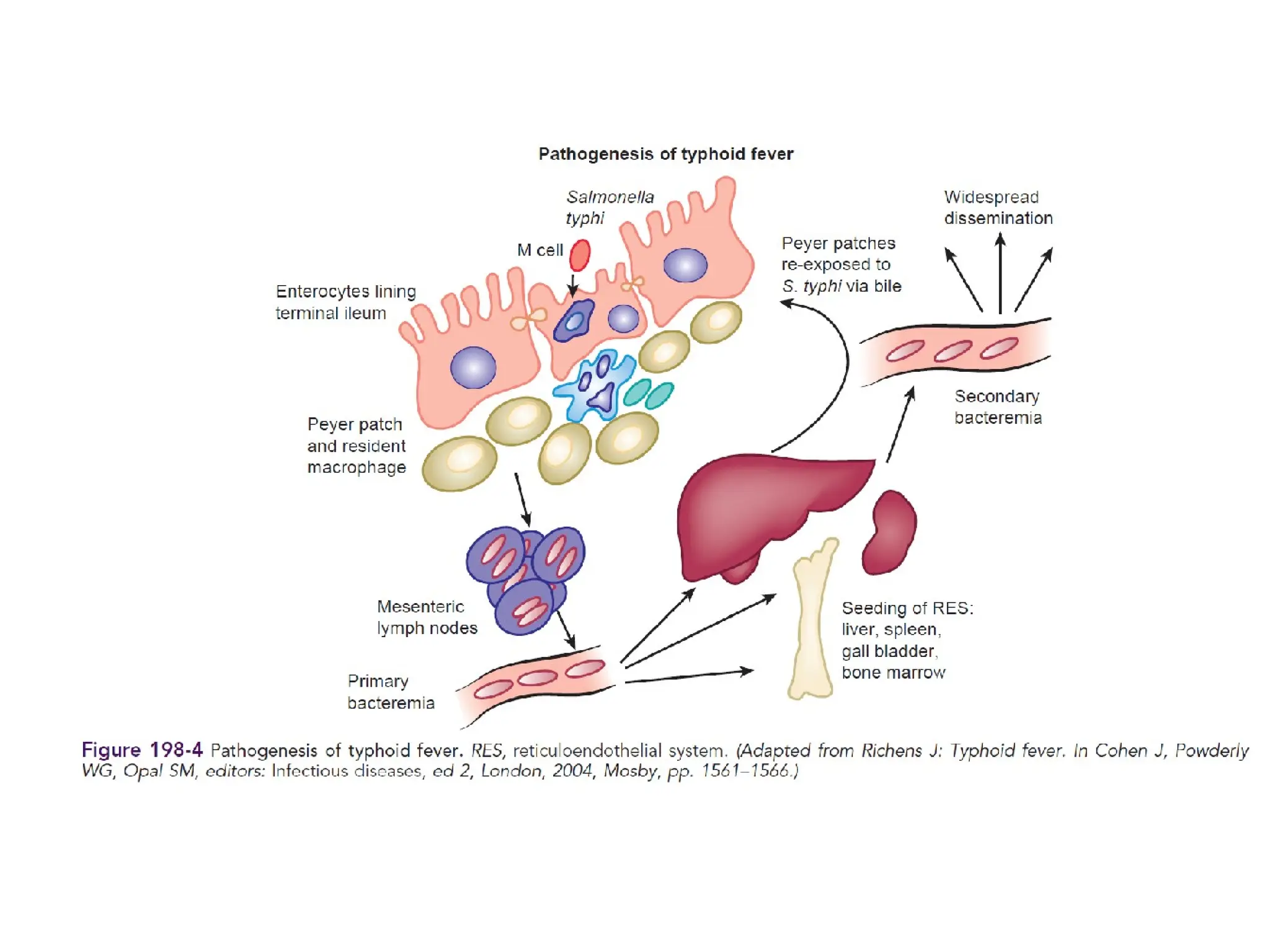
PATHOGENESIS
Ingestion
Invade body through gut mucosa in terminal ileum.(possibly
through specialized antigen sampling cells known as M cells)
Pass through intestinal mucosa
S. Typhi enter mesenteric lymphoid system
Lymphatics
Bloodstream (Asymptomatic bacteremia, Culture negative)
Colonize Reticuloendothelial system (replicate in
macrophages)
Shed back into blood (Secondary bacteremia-Symptoms
Virulence factors
• Genes – regulate invasion of Payer’s patches
• Inoculum size
▪ 25% for 105
▪ 50% for 107
▪ 75% for 109
• Gastric pH
• Vi polysaccharide antigen
• Concommitant H. Pylori infection/HIV infection
• Immunocompetence
Clinical features
• Incubation period- 3 to 30 days – depending on
size of inoculum……(usually 7-14days)
• Symptoms occur in 1-2 weeks
• Clinical picture exhibits a wide range of clinical
severity and varies according to age
• Mild pyrexia ------------> fatal severe disease
In neonates
▪ infection is transmitted vertically
▪ Mother has chorioamnionitis- may lead to
abortion or premature delivery.
▪ Presents with
• Hypothermia or hyperthermia
• Vomiting
• Diarrhoea
• Abdominal distention
• Seizures
• Jaundice
• Hepatomegaly
• Failure to thrive
In infants and children up to 5 years
• Disease may be mild
• Presenting only as diarrhea
• Or mimicking a viral illness
• The early stages of the disease may be very difficult to
differentiate from other endemic diseases, such as
malaria and dengue fever.
• In some cases, a macular or maculopapular rash (“rose
spots”) may be visible around the seventh to tenth day
of the illness.
• In in older children and adolescents, the onset is
insidious.
Initial symptoms –over 2-3 days
• fever(95%)
• coated tongue(76%)
• anorexia(70%)
• Vomiting
• Hepatomegaly
• Splenomegaly
• diarrhoea
• malaise
• myalgia , headache
• abdominal pain
• Diarrhoea - constipation
• cough and epistaxis
• Severe lethargy
• Relative bradycardia seen in older children and
adults
CLINICAL FEATURES
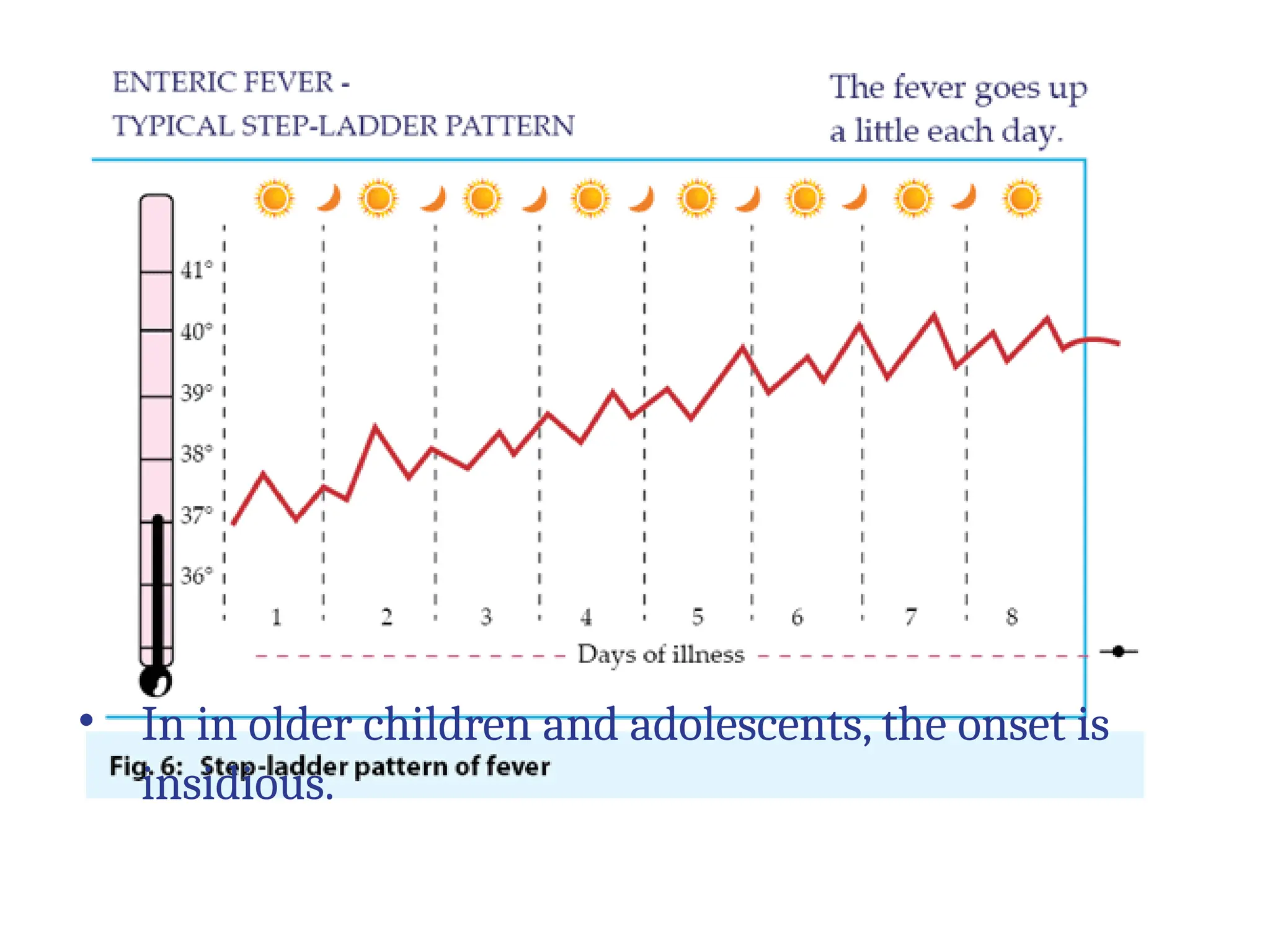
• First week: malaise, headache, cough & sore throat in prodromal stage.
The disease classically presents with step-ladder fashion rise temperature
(40 - 41°C) over 4 to 5 days, accompanied by headache, vague abdominal
pain, and constipation or pea soup Diarrhoea.
• Second week: Between the 7th -10th day of illness, mild
hepatosplenomegally occurs in majority of patients. Relative bradycardia
may occur and rose-spots may be seen.
• Third week: The patient will appear in the "typhoid state" which is a state
of prolonged apathy, toxemia, delirium, disorientation and/or coma.
Diarrhoea will then become apparent. If left untreated by this time, there
is a high risk (5-10%) of intestinal hemorrhage and perforation.
• Rare complications: Hepatitis, Pneumonia, Thrombophlebitis,
Myocarditis, Cholecystitis, Nephritis, Osteomyelitis, and Psychosis. 2-5%
patients may become Gall-bladder carriers
• In in older children and adolescents, the onset is
insidious.
Complications
Hemorrhage and Perforation
• Intestinal haemorrhage (<1%) and perforation (0.5-1%)
are infrequent among children.
• Intestinal perforation may be preceded by a marked
increase in abdominal pain, tenderness, vomiting, and
features of peritonitis
Intestinal perforation and peritonitis may be accompanied by
• a sudden rise in pulse rate,
• hypotension,
• marked abdominal tenderness and guarding and
subsequent abdominal rigidity.
• A rising white blood cell count with a left shift and
• free air on abdominal radiographs
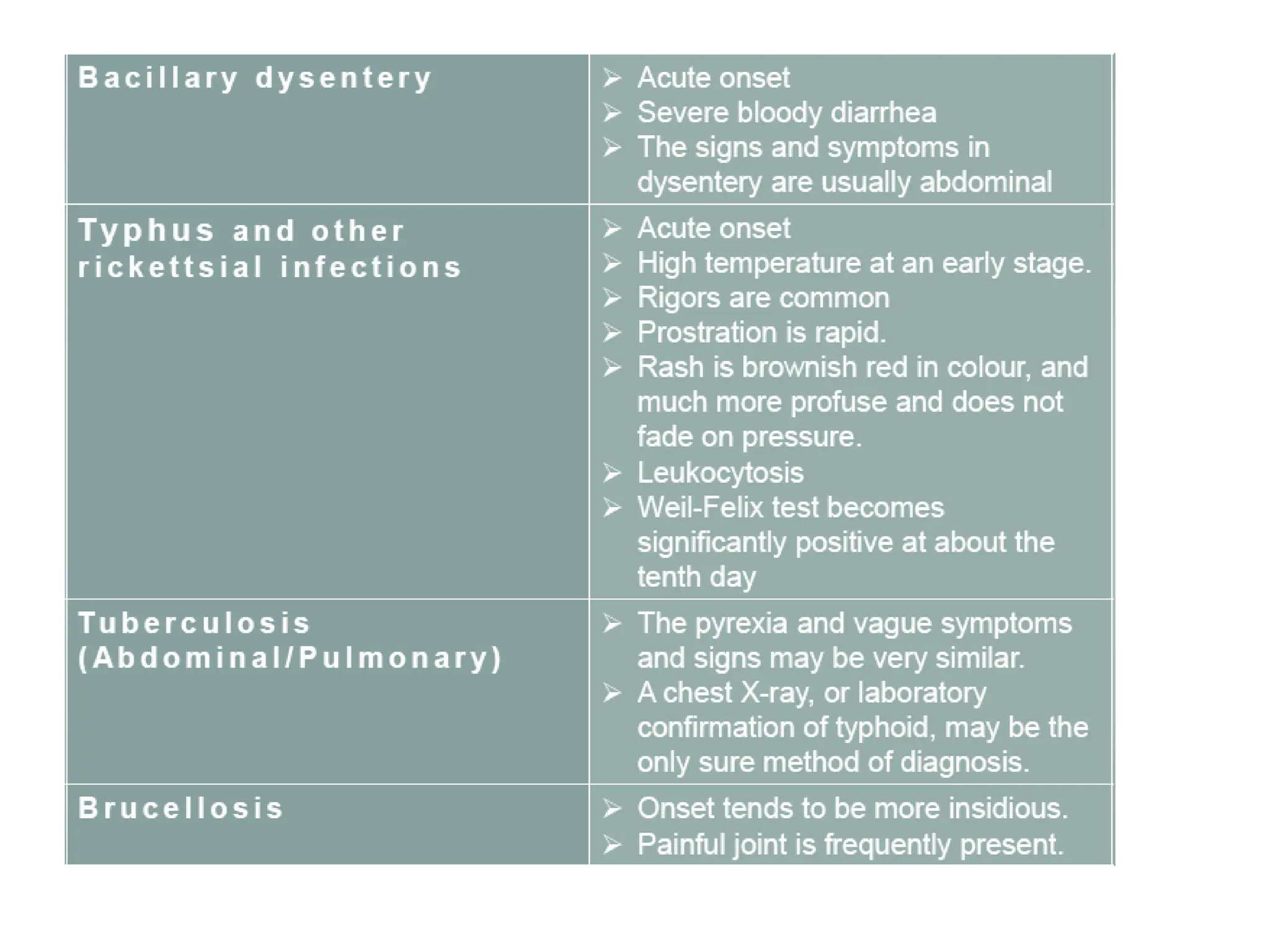
DIFFERENTIAL DIAGNOSIS
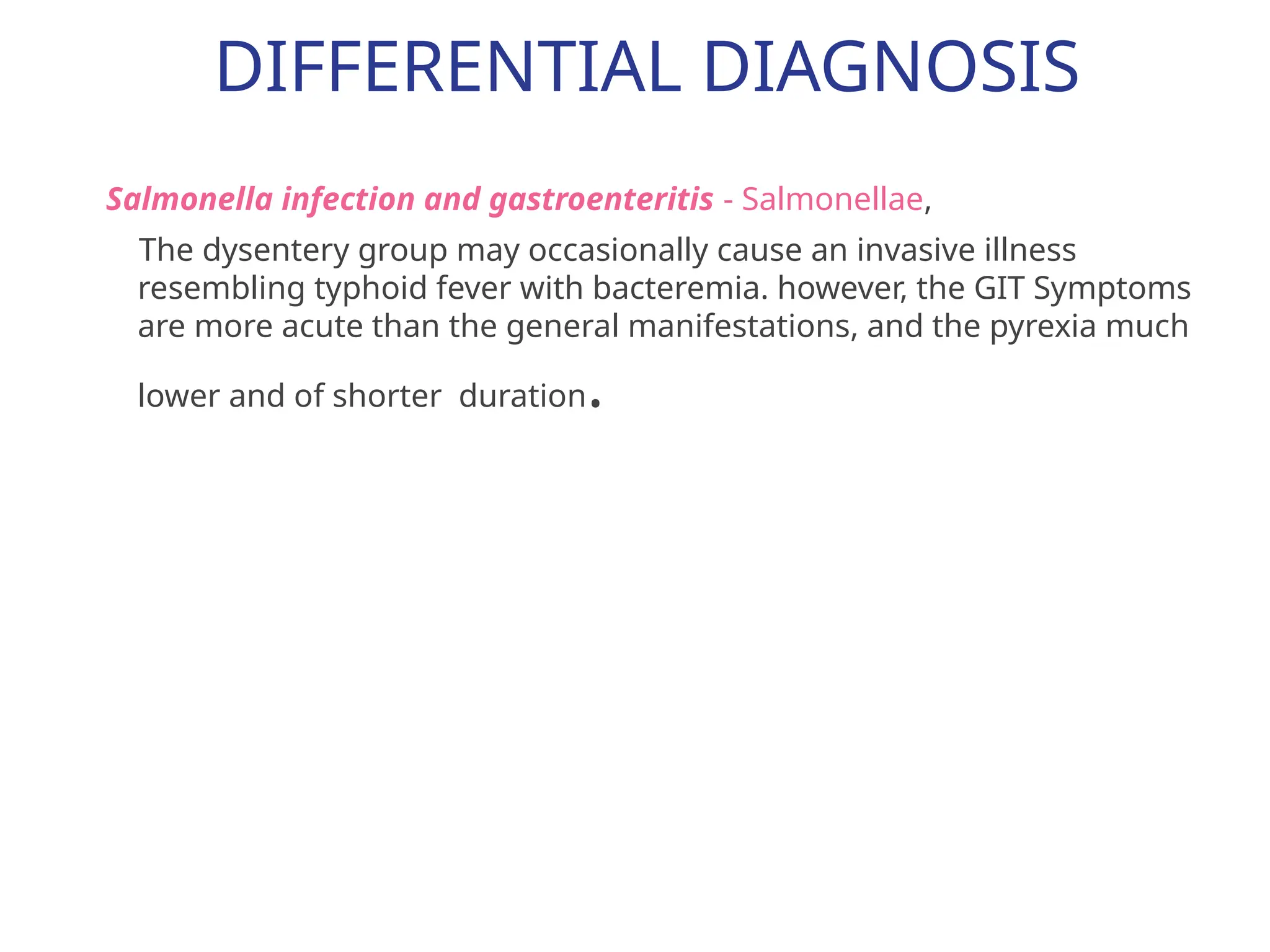
Salmonella infection and gastroenteritis - Salmonellae,
The dysentery group may occasionally cause an invasive illness
resembling typhoid fever with bacteremia. however, the GIT Symptoms
are more acute than the general manifestations, and the pyrexia much
lower and of shorter duration.
DIFFERENTIAL
DIAGNOSIS
LAB
INVESTIGATIONS
Lab investigations..
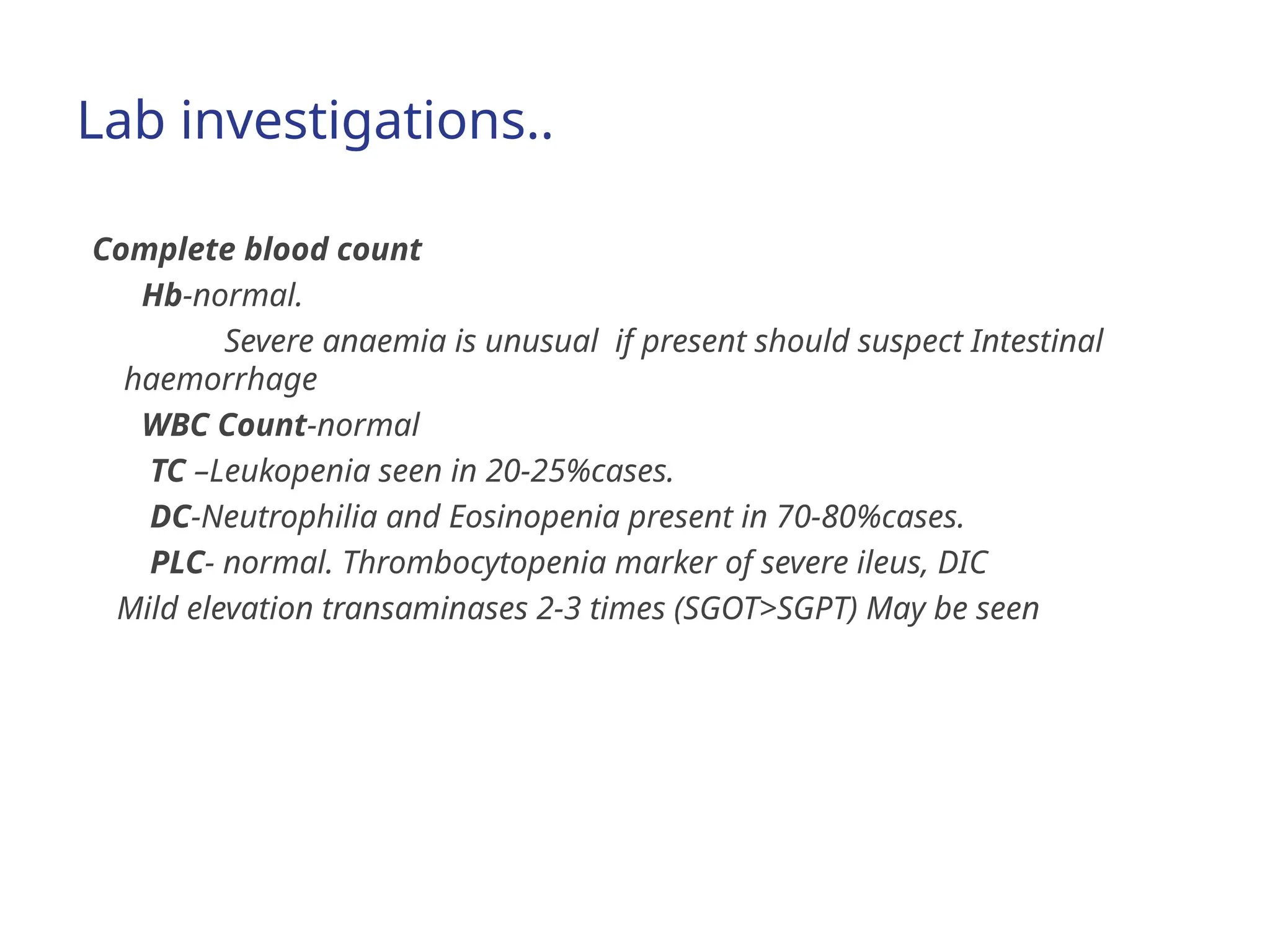
Complete blood count
Hb-normal.
Severe anaemia is unusual if present should suspect Intestinal
haemorrhage
WBC Count-normal
TC –Leukopenia seen in 20-25%cases.
DC-Neutrophilia and Eosinopenia present in 70-80%cases.
PLC- normal. Thrombocytopenia marker of severe ileus, DIC
Mild elevation transaminases 2-3 times (SGOT>SGPT) May be seen
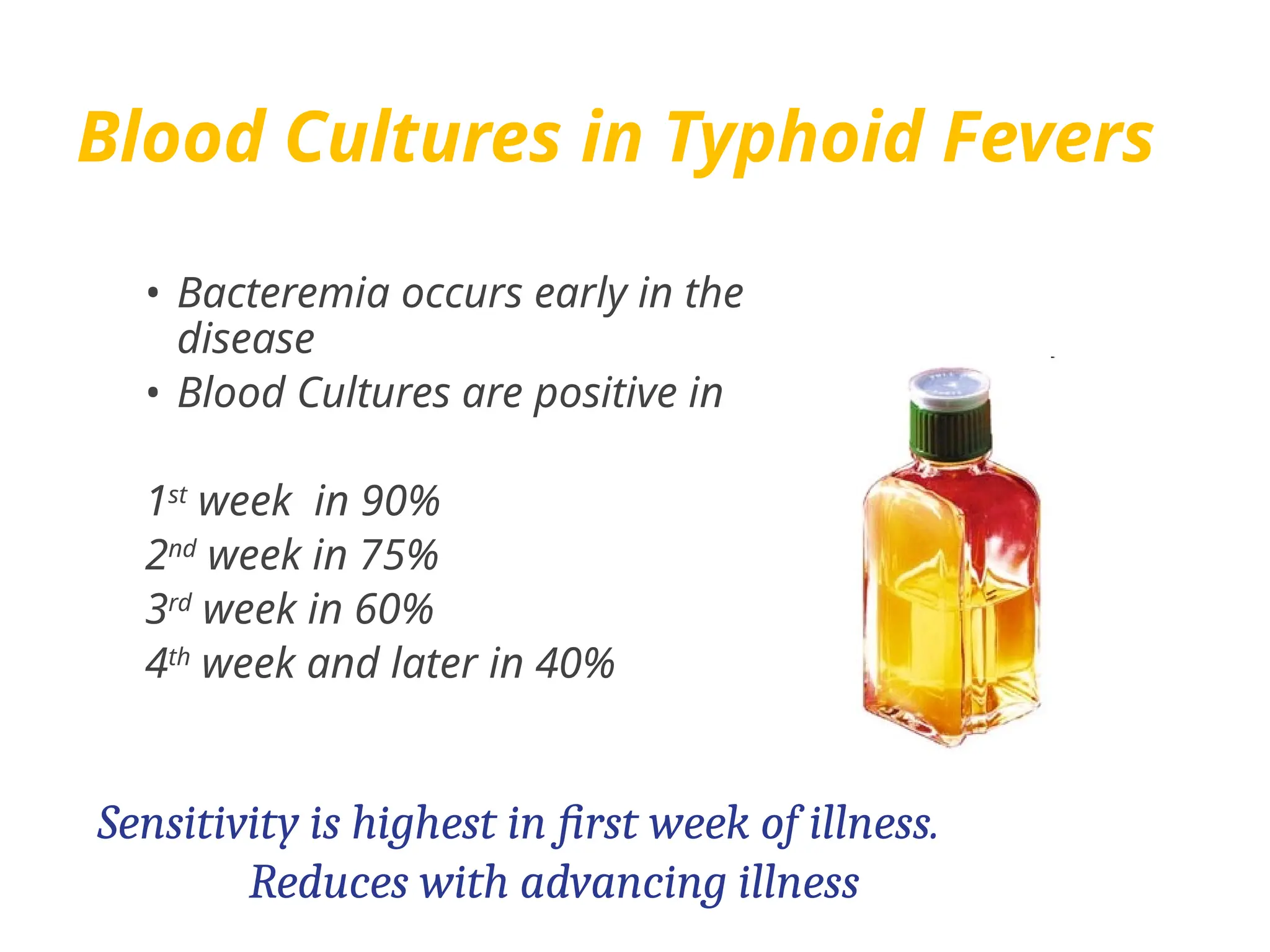
Blood Cultures in Typhoid Fevers
• Bacteremia occurs early in the
disease
• Blood Cultures are positive in
1st
week in 90%
2nd
week in 75%
3rd
week in 60%
4th
week and later in 40%
Sensitivity is highest in first week of illness.
Reduces with advancing illness
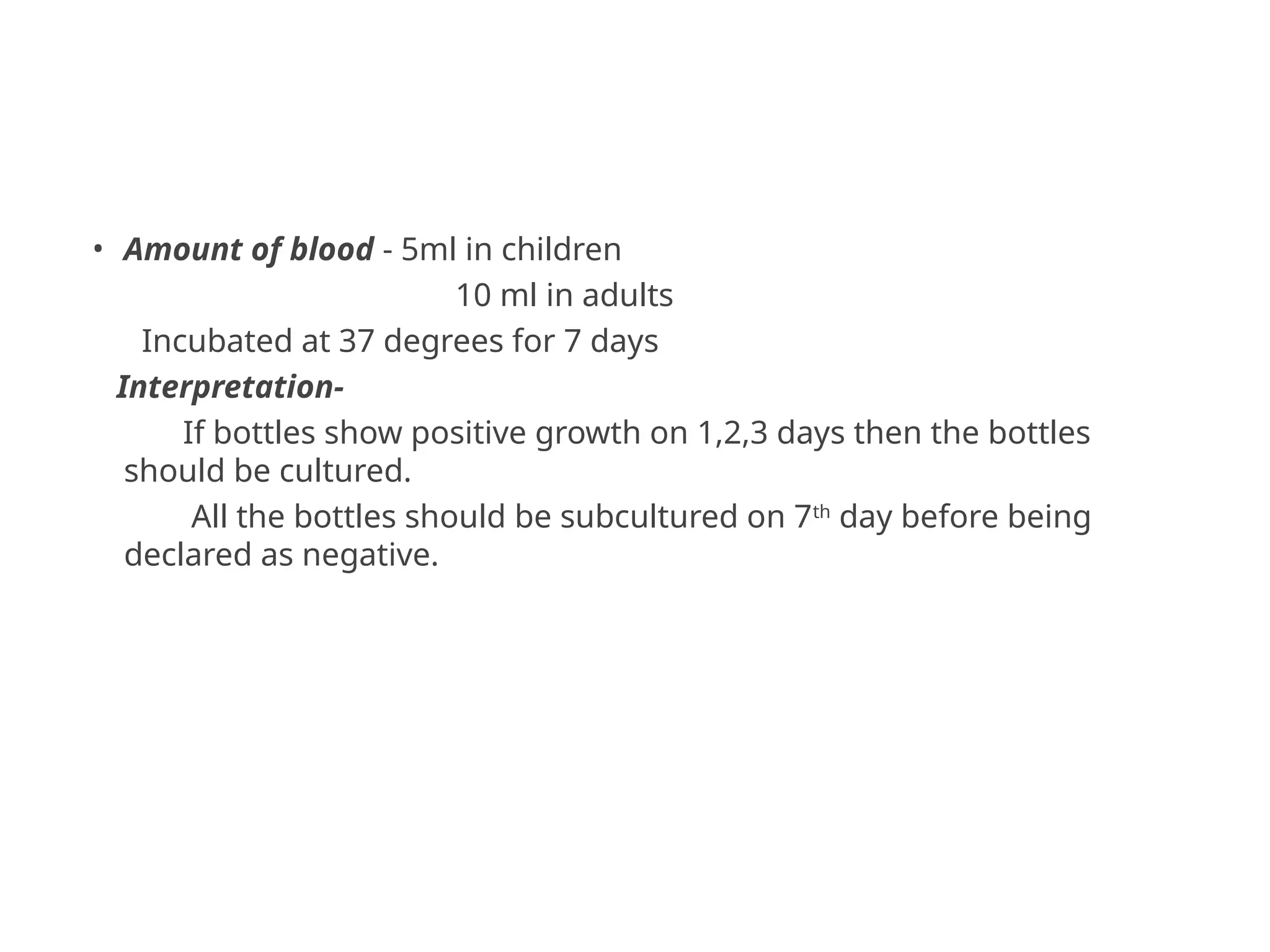
• Amount of blood - 5ml in children
10 ml in adults
Incubated at 37 degrees for 7 days
Interpretation-
If bottles show positive growth on 1,2,3 days then the bottles
should be cultured.
All the bottles should be subcultured on 7th
day before being
declared as negative.
Bone marrow culture
• S.Typhi is an intracellular pathogen in
reticuloendothelial cells of body including
bonemarrow.
• Median Bacterial count-9CFU/ml
compared to blood 0.3 CFU/ml
(Bone marrow:peripheral blood ratio of
bacteremia-
4.8 in 1st
week 158 in 3rd
week
• Sensitivity -90%
• Advantages-good even in late disease despite
prior antibiotic therapy .
Other methods in Isolation of Enteric
Pathogens
1st week B Blood cultre
(bone marrow culture
rarely)
2nd week A Agglutination test
3rd week S Stool culture
4th week U Urine cultre
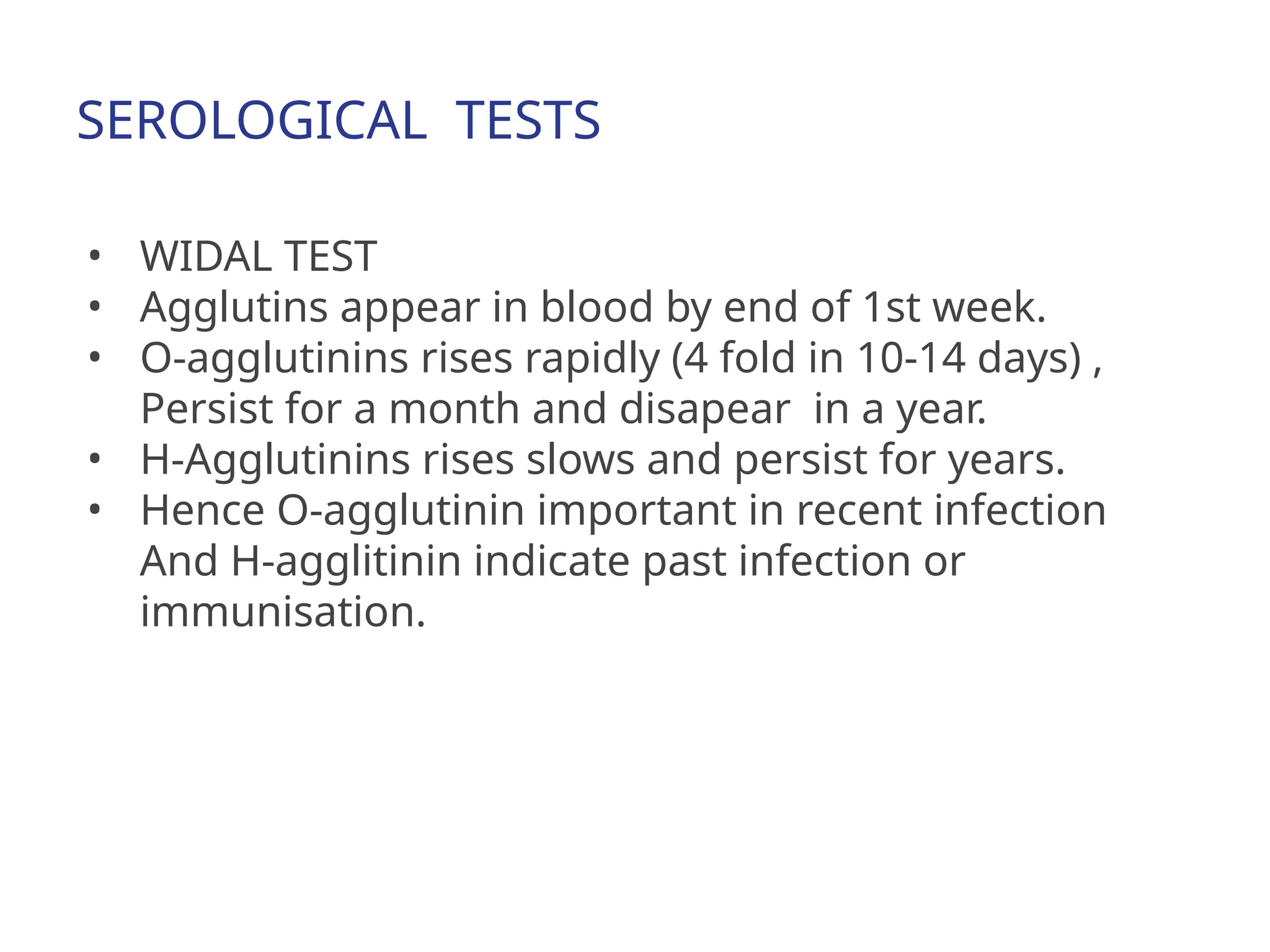
SEROLOGICAL TESTS
SEROLOGICAL TESTS
• WIDAL TEST
• Agglutins appear in blood by end of 1st week.
• O-agglutinins rises rapidly (4 fold in 10-14 days) ,
Persist for a month and disapear in a year.
• H-Agglutinins rises slows and persist for years.
• Hence O-agglutinin important in recent infection
And H-agglitinin indicate past infection or
immunisation.
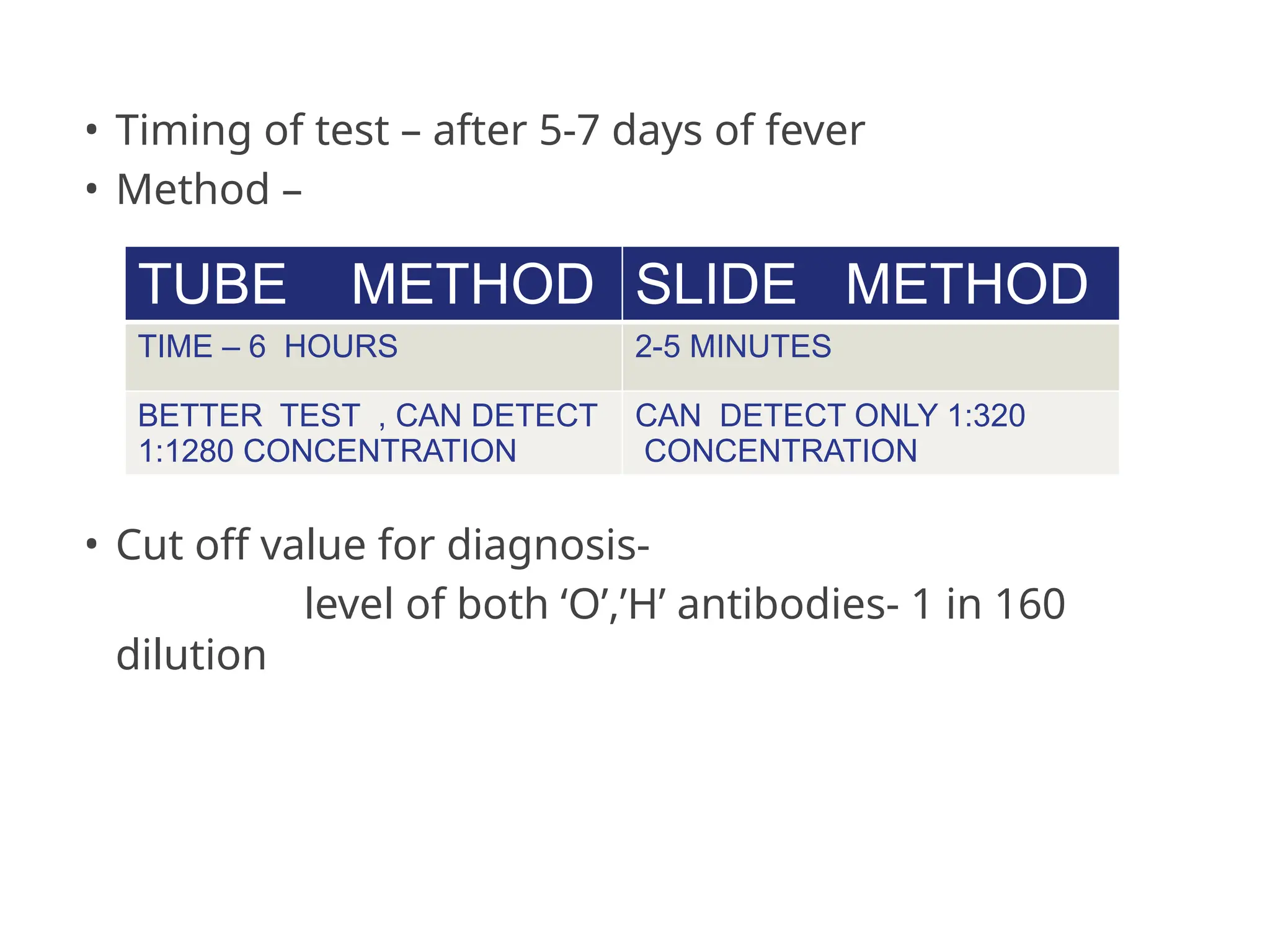
• Timing of test – after 5-7 days of fever
• Method –
• Cut off value for diagnosis-
level of both ‘O’,’H’ antibodies- 1 in 160
dilution
TUBE METHOD SLIDE METHOD
TIME – 6 HOURS 2-5 MINUTES
BETTER TEST , CAN DETECT
1:1280 CONCENTRATION
CAN DETECT ONLY 1:320
CONCENTRATION
• Demonstration of a rise in titer of antibodies , by
testing paired blood samples 10-14 days apart is
preferred.
• Anamnestic response-
persons who have had prior infection or
immunization may develop an Anamnestic
response during an unrelated fever.
differentiated by repetition of test after 1 week
1.Typhidot test: detects IgM and IgG antibodies against the outer
membrane protein (OMP)
2.lDLTubex test: detects IgM O9 antibodies within few minutes.
3.lgM dip stick test and ELISA: detects anti-LPS IgM antibodies.
4.Dot blot assay: detects IgG antibodies.
5. Nested PCR analysis using H1-d primers.
New diagnostic tests
TREATMENT OF
TYPHOID FEVER
MANAGEMENT
• SUPPORTIVE CARE
- FLUIDS
- NUTRITION
-ANTIPYRETICS
▪ SPECIFIC ANTIMICROBIAL THERAPY
-ANTIBIOTICS
• DIET- fluids and electrolytes –monitored
-oral nutrition with soft digestible diet
• ACTIVITY
- encouraged rest till recovery
• SURGICAL CARE
-for intestinal perforation
UNCOMPLICATED TYPHOID-IAP
GUIDELINES
• Patient with shock, obtundation stupor and coma
Dexamethasone 3mg/kg
1mg/kg every 6 hourly for 48 hours
PREVENTION
PREVENTION
• Enteric fever is a WASH disease
• Unsafe water sanitation and food with poor hygiene practices
How can Typhoid be avoided?
• Avoid risky foods or drinks
• Get vaccinated
• Use only clean water
• Ask for drinks without ice unless you know
where it’s coming from
• Only eat foods that have been thoroughly
cooked
• Avoid foods and drinks from street vendors
CONTROL OF SANITATION
• PROTECTION AND PURIFICATION OF DRINKING WATER SUPPLY
• IMPROVEMENT OF BASIC SANITATION
• PROMOTION OF FOOD HYGIENE
Simple hand hygiene and
washing can reduce several
cases of Typhoid
Best prevention Scrub of them off your hands
Best prevention Scrub them off your hands
IMMUNIZATION
• PARENTERAL WHOLE CELL INACTIVATED VACCINE
• ORAL LIVE ATTENUATED Ty21a VACCINE
• POLYSACCHARIDE SUBUNIT VACCINE (Vi Ag)
• VI-CAPSULAR POLYSACCHARIDE CONJUGATE VACCINES
VACCINES
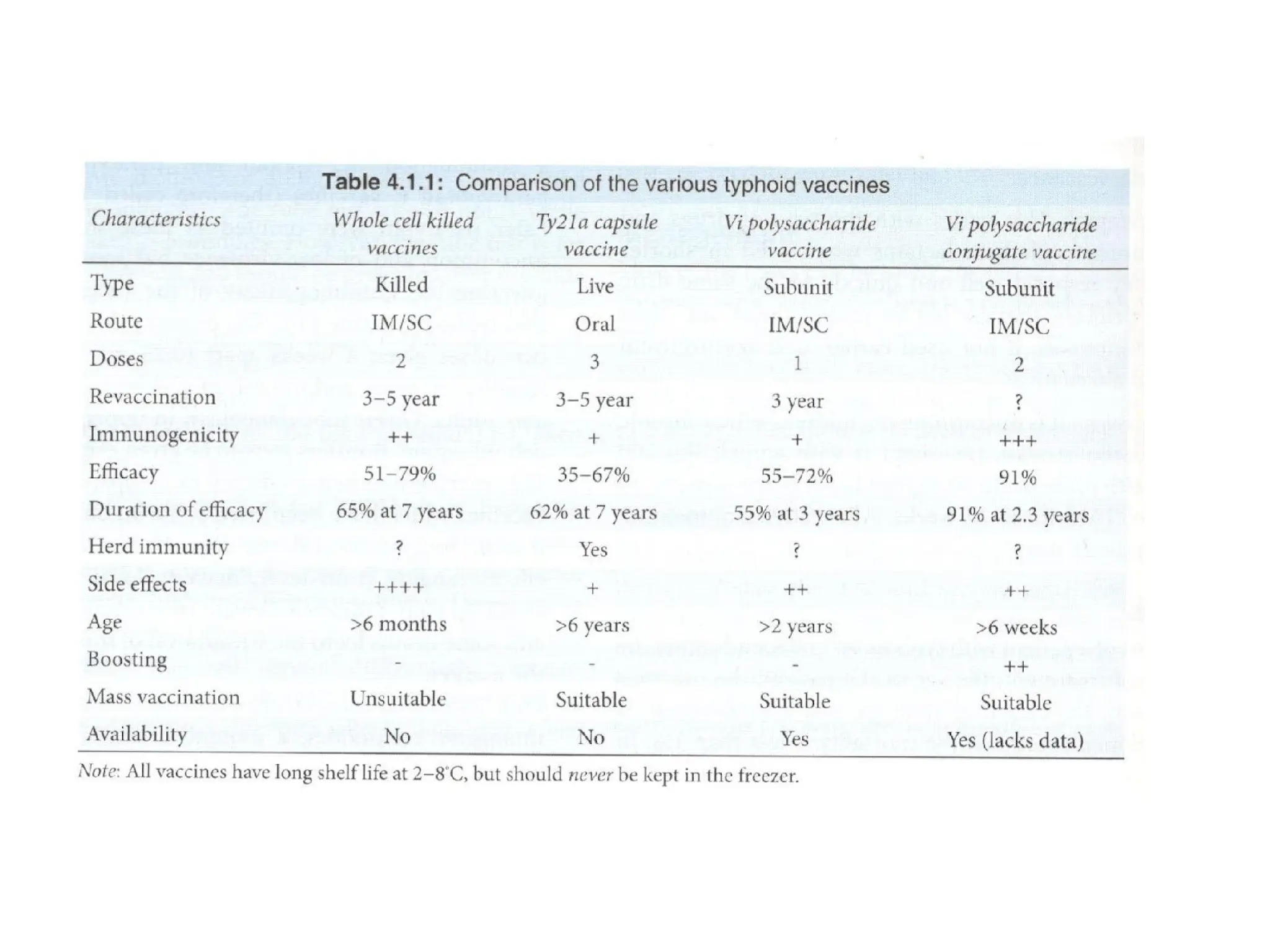
1. Classic heat inactivated whole cell vaccine
• Very high side effects
• Currently withdrawn
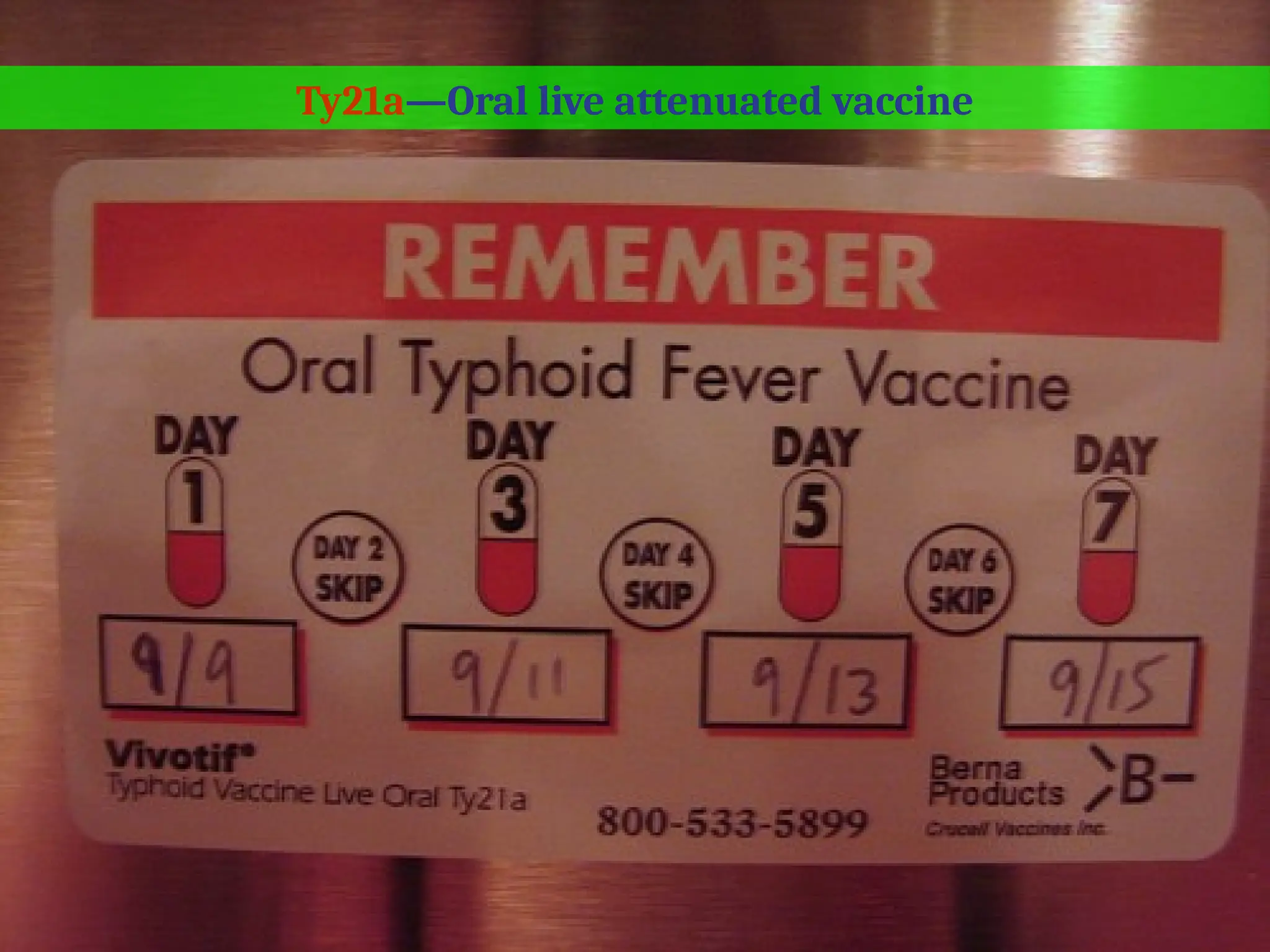
2. Ty21a ( oral live attenuated )
• Efficacy 67-82% for up to 5 years
• 3-4 doses
• Capsules
• Repeated every 3 years
• For children above 5 years
• Drugs to stop : Proguanil, mefloquine and
antibiotics 3 days before and 3 days after.
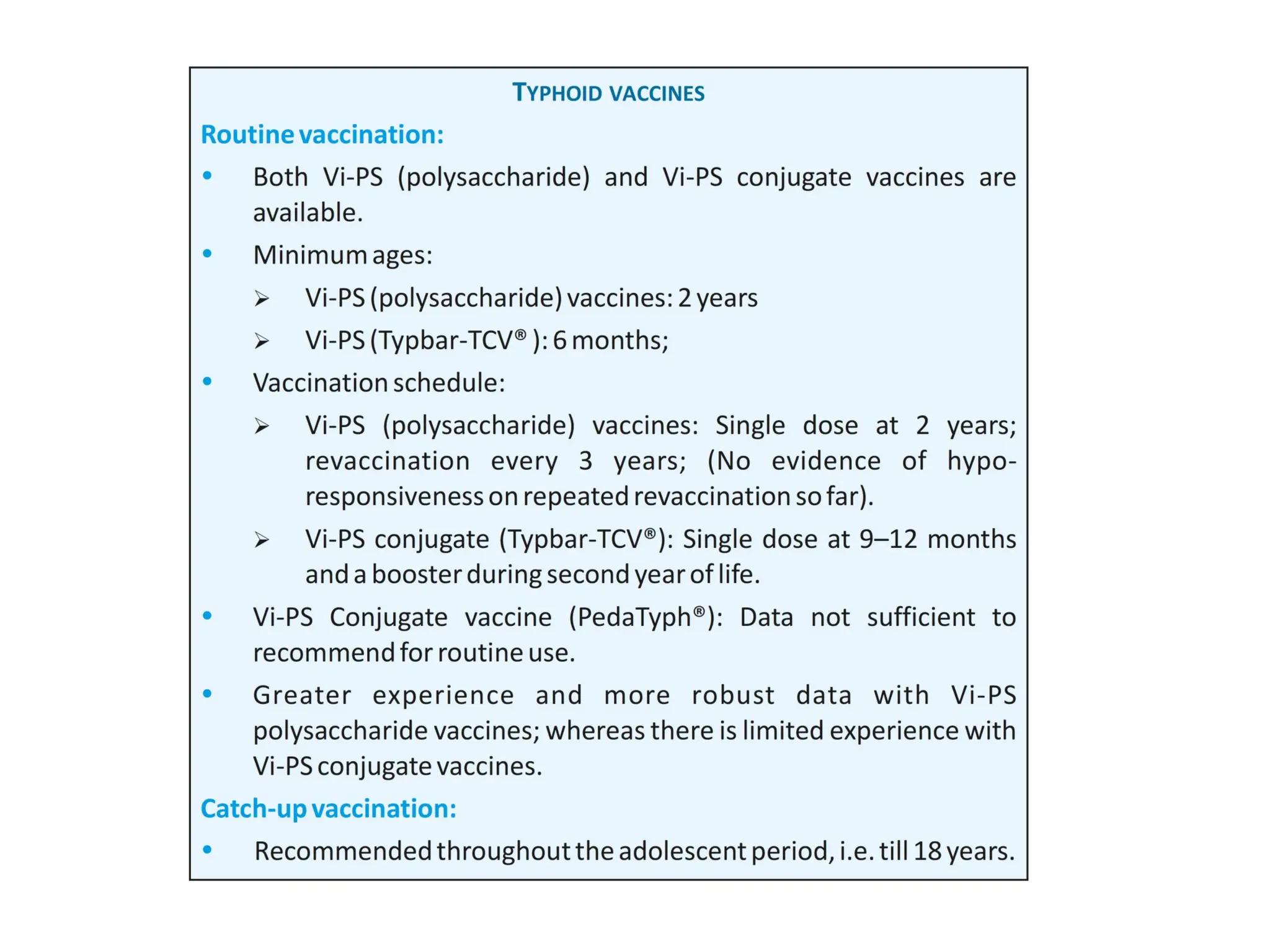
3. Vi capsular polysaccharide
• Single intramuscular
• For more than equal to 2 years
• Efficacy 70-80%
• Repeat dose every 3 years
• Traveler's to endemic areas
4. Protein conjugated Vi polysaccharide
• Very effective
Ty21a—Oral live attenuated vaccine
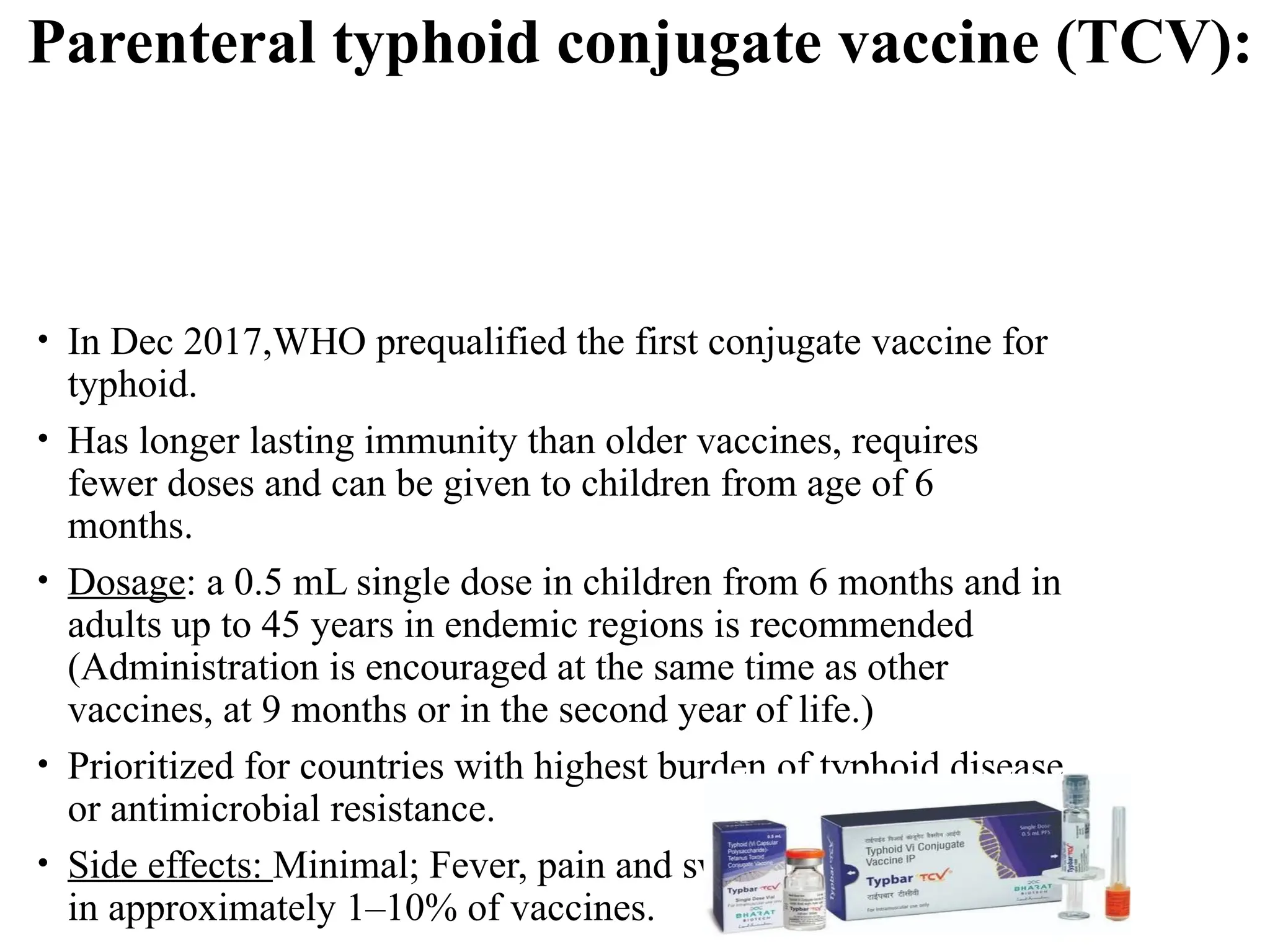
• In Dec 2017,WHO prequalified the first conjugate vaccine for
typhoid.
• Has longer lasting immunity than older vaccines, requires
fewer doses and can be given to children from age of 6
months.
• Dosage: a 0.5 mL single dose in children from 6 months and in
adults up to 45 years in endemic regions is recommended
(Administration is encouraged at the same time as other
vaccines, at 9 months or in the second year of life.)
• Prioritized for countries with highest burden of typhoid disease
or antimicrobial resistance.
• Side effects: Minimal; Fever, pain and swelling were reported
in approximately 1–10% of vaccines.
Parenteral typhoid conjugate vaccine (TCV):
Vi-CPS— parenteral vaccine
Who should get the Typhoid Vaccine?
• Travelers to parts of the
world where Typhoid
Fever is very common.
• People who work with
or come in contact with
a carrier of the disease.
• Laboratory analysts
who work with the
Salmonella Typhi
bacteria.
Management of carriers
• An individual is considered to be a chronic carrier if he or she is
asymptomatic and continues to have positive stool or rectal swab
cultures for S. typhi a year following recovery from acute illness.
• The rate of carriage is slightly higher among female patients,
patients older than 50 years, and patients with cholelithiasis or
schistosomiasis.
• If cholelithiasis or schistosomiasis is present the patient probably
requires cholecystectomy or antiparasitic medication in addition
to antibiotics in order to achieve bacteriological cure
• amoxicillin or ampicillin (100 mg per kg per day)
plus
probenecid ( 23 mg per kg for children) or
• TMP-SMZ (160 to 800 mg twice daily)
• Given for 6 weeks
• 60% cure rate
• 750 mg of ciprofloxacin or
400 mg of norfloxacin
• twice daily for 28 days
• 80 % cure rate
• Carriers should be excluded from any activities involving food
preparation and serving, as should convalescent patients and any
persons with possible symptoms of typhoid fever.
• Vi antibody determination has been used as a screening
technique to identify carriers among food handlers and in
outbreak investigations. Vi antibodies are very high in chronic S.
typhi carriers
THANK YOU

Typhoid fever .pptx latest guidelines nelson

  • 1.
  • 2.
    ● This isan acute generalized infection of the intestinal lymphoid tissue, gall-bladder and reticuloendothelial system. • It includes typhoid fever which affects 90% of the cases and paratyphoid which affects 10% of the cases. • Transmission is fecal oral. INTRODUCTION.
  • 3.
    • Recent large-scaledata and modelling efforts estimate that 14.3 million cases of typhoid and paratyphoid fevers occurred globally in 2017, a decline from 25.9 million cases in 1990. • Incidence rates peak in the 5 to 9-year-old age-group, with roughly 13% of cases occurring in children younger than 5 years and roughly 56% of cases among children younger than 15 years of age • South and Southeast Asia have notably high incidence rates, whereas moderate incidence rates are reported from Central and South America, Africa, Central and East Asia, and Oceania. • Disease occurs exclusively in human EPIDEMIOLOGY
  • 4.
  • 5.
  • 6.
    AGENT- • Salmonella typhi–majorcause • S.paratyphi A , B and C • Family- Enterobactericeae • Gram negative bacilli • Motile with peritrichate flagella • Non acid-fast • Non capsulated • Non spore forming • Facultative anerobe
  • 7.
    The Enteric bacillihave 3 important antigens: ✔O antigen (body or somatic) • Less immunogenic • Cross reacts ✔H antigen or flagellar antigen, • Strongly anigenic • Rapid rise of Ab in infection/immunisation • Lasts longer and specific ✔Vi antigen (virulence antigen) • S. Typhi and S.Paratyphi C • Poorly immunogenic • Disappears….. May persist in chronic carriers
  • 9.
    HOST • Humans areonly reservoir and only known susceptible host • Peak incidence ---- 5 to 9 years. • 10% of cases occur in infant age group. • No sex predliction • Children constitute 40-50% MDR typhoid cases with higher case fatality rate
  • 10.
    • "Typhoid Mary"(MaryMallon) 1907- was the first asymptomatic typhoid carrier to be identified by medical science Typhoid Mary in a 1909 newspaper illustration
  • 11.
    Environmental Source of infection ❖Primary - faeces, urine of cases, carriers ❖ Secondary – • contaminated water, • food, • fingers and • flies.
  • 12.
    Spread of infecion •Water contamination • Food contamination • Houseflies Predisposing factors • Over crowding • Poor personal hygiene • Poverty and illiteracy • Poor sanitary and water supply suituations • Open defecation
  • 13.
  • 14.
    Pathogenesis ● Infecting doseof about 10^5–10^9 organisms,
  • 15.
    PATHOGENESIS Ingestion Invade body throughgut mucosa in terminal ileum.(possibly through specialized antigen sampling cells known as M cells) Pass through intestinal mucosa S. Typhi enter mesenteric lymphoid system Lymphatics Bloodstream (Asymptomatic bacteremia, Culture negative) Colonize Reticuloendothelial system (replicate in macrophages) Shed back into blood (Secondary bacteremia-Symptoms
  • 18.
    Virulence factors • Genes– regulate invasion of Payer’s patches • Inoculum size ▪ 25% for 105 ▪ 50% for 107 ▪ 75% for 109 • Gastric pH • Vi polysaccharide antigen • Concommitant H. Pylori infection/HIV infection • Immunocompetence
  • 19.
    Clinical features • Incubationperiod- 3 to 30 days – depending on size of inoculum……(usually 7-14days) • Symptoms occur in 1-2 weeks • Clinical picture exhibits a wide range of clinical severity and varies according to age • Mild pyrexia ------------> fatal severe disease
  • 20.
    In neonates ▪ infectionis transmitted vertically ▪ Mother has chorioamnionitis- may lead to abortion or premature delivery. ▪ Presents with • Hypothermia or hyperthermia • Vomiting • Diarrhoea • Abdominal distention • Seizures • Jaundice • Hepatomegaly • Failure to thrive
  • 21.
    In infants andchildren up to 5 years • Disease may be mild • Presenting only as diarrhea • Or mimicking a viral illness • The early stages of the disease may be very difficult to differentiate from other endemic diseases, such as malaria and dengue fever. • In some cases, a macular or maculopapular rash (“rose spots”) may be visible around the seventh to tenth day of the illness. • In in older children and adolescents, the onset is insidious.
  • 22.
    Initial symptoms –over2-3 days • fever(95%) • coated tongue(76%) • anorexia(70%) • Vomiting • Hepatomegaly • Splenomegaly • diarrhoea • malaise • myalgia , headache • abdominal pain • Diarrhoea - constipation • cough and epistaxis • Severe lethargy • Relative bradycardia seen in older children and adults
  • 23.
    CLINICAL FEATURES • Firstweek: malaise, headache, cough & sore throat in prodromal stage. The disease classically presents with step-ladder fashion rise temperature (40 - 41°C) over 4 to 5 days, accompanied by headache, vague abdominal pain, and constipation or pea soup Diarrhoea. • Second week: Between the 7th -10th day of illness, mild hepatosplenomegally occurs in majority of patients. Relative bradycardia may occur and rose-spots may be seen. • Third week: The patient will appear in the "typhoid state" which is a state of prolonged apathy, toxemia, delirium, disorientation and/or coma. Diarrhoea will then become apparent. If left untreated by this time, there is a high risk (5-10%) of intestinal hemorrhage and perforation. • Rare complications: Hepatitis, Pneumonia, Thrombophlebitis, Myocarditis, Cholecystitis, Nephritis, Osteomyelitis, and Psychosis. 2-5% patients may become Gall-bladder carriers
  • 24.
    • In inolder children and adolescents, the onset is insidious.
  • 25.
  • 26.
    Hemorrhage and Perforation •Intestinal haemorrhage (<1%) and perforation (0.5-1%) are infrequent among children. • Intestinal perforation may be preceded by a marked increase in abdominal pain, tenderness, vomiting, and features of peritonitis Intestinal perforation and peritonitis may be accompanied by • a sudden rise in pulse rate, • hypotension, • marked abdominal tenderness and guarding and subsequent abdominal rigidity. • A rising white blood cell count with a left shift and • free air on abdominal radiographs
  • 29.
    DIFFERENTIAL DIAGNOSIS Salmonella infectionand gastroenteritis - Salmonellae, The dysentery group may occasionally cause an invasive illness resembling typhoid fever with bacteremia. however, the GIT Symptoms are more acute than the general manifestations, and the pyrexia much lower and of shorter duration.
  • 30.
  • 32.
  • 33.
    Lab investigations.. Complete bloodcount Hb-normal. Severe anaemia is unusual if present should suspect Intestinal haemorrhage WBC Count-normal TC –Leukopenia seen in 20-25%cases. DC-Neutrophilia and Eosinopenia present in 70-80%cases. PLC- normal. Thrombocytopenia marker of severe ileus, DIC Mild elevation transaminases 2-3 times (SGOT>SGPT) May be seen
  • 34.
    Blood Cultures inTyphoid Fevers • Bacteremia occurs early in the disease • Blood Cultures are positive in 1st week in 90% 2nd week in 75% 3rd week in 60% 4th week and later in 40% Sensitivity is highest in first week of illness. Reduces with advancing illness
  • 35.
    • Amount ofblood - 5ml in children 10 ml in adults Incubated at 37 degrees for 7 days Interpretation- If bottles show positive growth on 1,2,3 days then the bottles should be cultured. All the bottles should be subcultured on 7th day before being declared as negative.
  • 36.
    Bone marrow culture •S.Typhi is an intracellular pathogen in reticuloendothelial cells of body including bonemarrow. • Median Bacterial count-9CFU/ml compared to blood 0.3 CFU/ml (Bone marrow:peripheral blood ratio of bacteremia- 4.8 in 1st week 158 in 3rd week • Sensitivity -90% • Advantages-good even in late disease despite prior antibiotic therapy .
  • 37.
    Other methods inIsolation of Enteric Pathogens 1st week B Blood cultre (bone marrow culture rarely) 2nd week A Agglutination test 3rd week S Stool culture 4th week U Urine cultre
  • 38.
  • 39.
    SEROLOGICAL TESTS • WIDALTEST • Agglutins appear in blood by end of 1st week. • O-agglutinins rises rapidly (4 fold in 10-14 days) , Persist for a month and disapear in a year. • H-Agglutinins rises slows and persist for years. • Hence O-agglutinin important in recent infection And H-agglitinin indicate past infection or immunisation.
  • 40.
    • Timing oftest – after 5-7 days of fever • Method – • Cut off value for diagnosis- level of both ‘O’,’H’ antibodies- 1 in 160 dilution TUBE METHOD SLIDE METHOD TIME – 6 HOURS 2-5 MINUTES BETTER TEST , CAN DETECT 1:1280 CONCENTRATION CAN DETECT ONLY 1:320 CONCENTRATION
  • 41.
    • Demonstration ofa rise in titer of antibodies , by testing paired blood samples 10-14 days apart is preferred. • Anamnestic response- persons who have had prior infection or immunization may develop an Anamnestic response during an unrelated fever. differentiated by repetition of test after 1 week
  • 42.
    1.Typhidot test: detectsIgM and IgG antibodies against the outer membrane protein (OMP) 2.lDLTubex test: detects IgM O9 antibodies within few minutes. 3.lgM dip stick test and ELISA: detects anti-LPS IgM antibodies. 4.Dot blot assay: detects IgG antibodies. 5. Nested PCR analysis using H1-d primers. New diagnostic tests
  • 43.
  • 44.
    MANAGEMENT • SUPPORTIVE CARE -FLUIDS - NUTRITION -ANTIPYRETICS ▪ SPECIFIC ANTIMICROBIAL THERAPY -ANTIBIOTICS
  • 45.
    • DIET- fluidsand electrolytes –monitored -oral nutrition with soft digestible diet • ACTIVITY - encouraged rest till recovery • SURGICAL CARE -for intestinal perforation
  • 46.
  • 48.
    • Patient withshock, obtundation stupor and coma Dexamethasone 3mg/kg 1mg/kg every 6 hourly for 48 hours
  • 49.
  • 50.
    PREVENTION • Enteric feveris a WASH disease • Unsafe water sanitation and food with poor hygiene practices
  • 51.
    How can Typhoidbe avoided? • Avoid risky foods or drinks • Get vaccinated • Use only clean water • Ask for drinks without ice unless you know where it’s coming from • Only eat foods that have been thoroughly cooked • Avoid foods and drinks from street vendors
  • 52.
    CONTROL OF SANITATION •PROTECTION AND PURIFICATION OF DRINKING WATER SUPPLY • IMPROVEMENT OF BASIC SANITATION • PROMOTION OF FOOD HYGIENE
  • 53.
    Simple hand hygieneand washing can reduce several cases of Typhoid
  • 54.
    Best prevention Scrubof them off your hands Best prevention Scrub them off your hands
  • 55.
    IMMUNIZATION • PARENTERAL WHOLECELL INACTIVATED VACCINE • ORAL LIVE ATTENUATED Ty21a VACCINE • POLYSACCHARIDE SUBUNIT VACCINE (Vi Ag) • VI-CAPSULAR POLYSACCHARIDE CONJUGATE VACCINES
  • 56.
    VACCINES 1. Classic heatinactivated whole cell vaccine • Very high side effects • Currently withdrawn 2. Ty21a ( oral live attenuated ) • Efficacy 67-82% for up to 5 years • 3-4 doses • Capsules • Repeated every 3 years • For children above 5 years • Drugs to stop : Proguanil, mefloquine and antibiotics 3 days before and 3 days after.
  • 57.
    3. Vi capsularpolysaccharide • Single intramuscular • For more than equal to 2 years • Efficacy 70-80% • Repeat dose every 3 years • Traveler's to endemic areas 4. Protein conjugated Vi polysaccharide • Very effective
  • 58.
  • 59.
    • In Dec2017,WHO prequalified the first conjugate vaccine for typhoid. • Has longer lasting immunity than older vaccines, requires fewer doses and can be given to children from age of 6 months. • Dosage: a 0.5 mL single dose in children from 6 months and in adults up to 45 years in endemic regions is recommended (Administration is encouraged at the same time as other vaccines, at 9 months or in the second year of life.) • Prioritized for countries with highest burden of typhoid disease or antimicrobial resistance. • Side effects: Minimal; Fever, pain and swelling were reported in approximately 1–10% of vaccines. Parenteral typhoid conjugate vaccine (TCV):
  • 60.
  • 63.
    Who should getthe Typhoid Vaccine? • Travelers to parts of the world where Typhoid Fever is very common. • People who work with or come in contact with a carrier of the disease. • Laboratory analysts who work with the Salmonella Typhi bacteria.
  • 64.
    Management of carriers •An individual is considered to be a chronic carrier if he or she is asymptomatic and continues to have positive stool or rectal swab cultures for S. typhi a year following recovery from acute illness. • The rate of carriage is slightly higher among female patients, patients older than 50 years, and patients with cholelithiasis or schistosomiasis. • If cholelithiasis or schistosomiasis is present the patient probably requires cholecystectomy or antiparasitic medication in addition to antibiotics in order to achieve bacteriological cure
  • 65.
    • amoxicillin orampicillin (100 mg per kg per day) plus probenecid ( 23 mg per kg for children) or • TMP-SMZ (160 to 800 mg twice daily) • Given for 6 weeks • 60% cure rate
  • 66.
    • 750 mgof ciprofloxacin or 400 mg of norfloxacin • twice daily for 28 days • 80 % cure rate
  • 67.
    • Carriers shouldbe excluded from any activities involving food preparation and serving, as should convalescent patients and any persons with possible symptoms of typhoid fever. • Vi antibody determination has been used as a screening technique to identify carriers among food handlers and in outbreak investigations. Vi antibodies are very high in chronic S. typhi carriers
  • 68.